Waste
Management At
Agricultural
SectorPrepared by
Zesrin Rezoana
Debabrata Roy Titu
What can be called
waste?
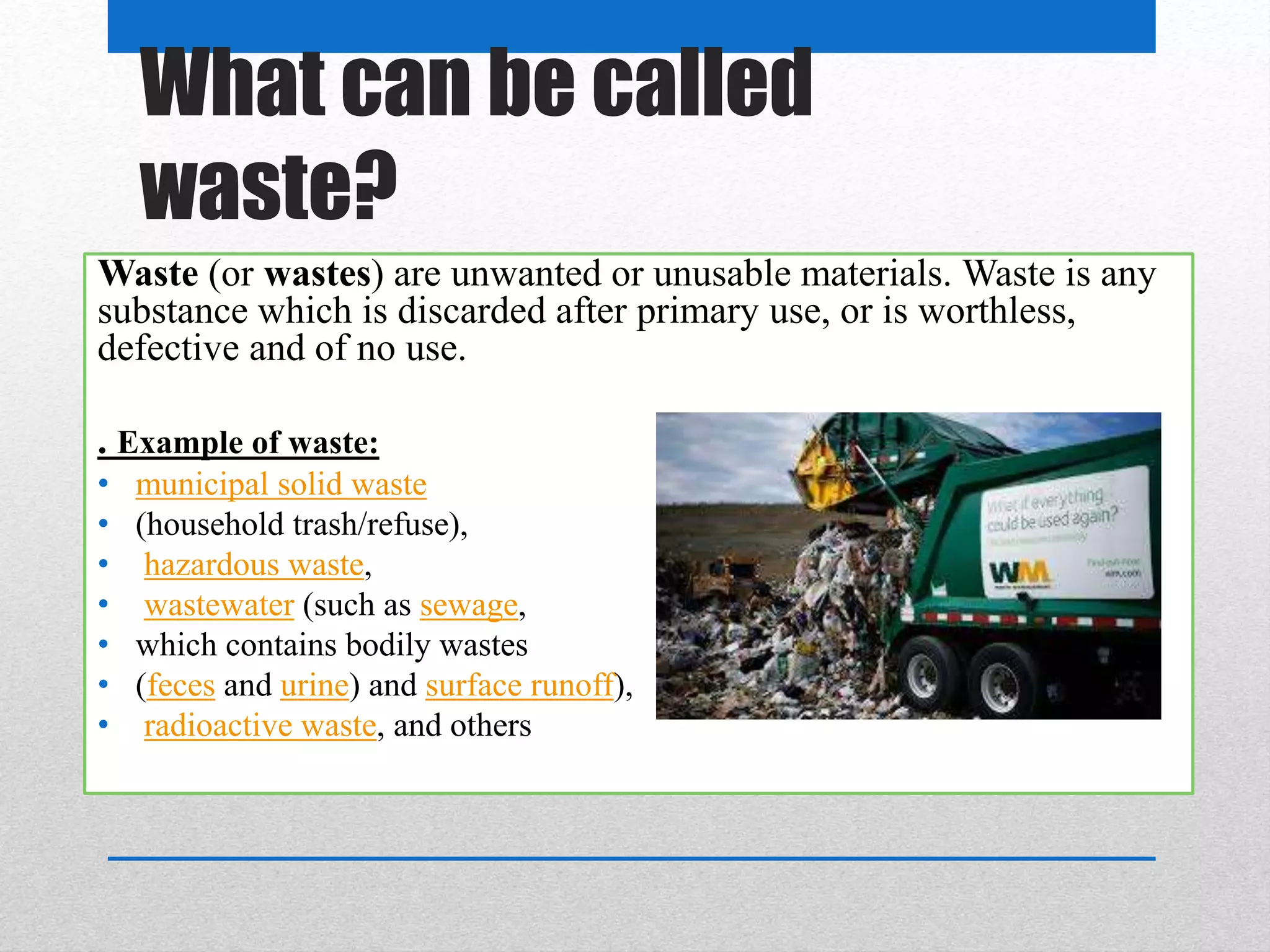
Waste (or wastes) are unwanted or unusable materials. Waste is any
substance which is discarded after primary use, or is worthless,
defective and of no use.
. Example of waste:
• municipal solid waste
• (household trash/refuse),
• hazardous waste,
• wastewater (such as sewage,
• which contains bodily wastes
• (feces and urine) and surface runoff),
• radioactive waste, and others
Type of waste
Solid waste:
Waste in the solid from.
example: waste tires ,septagescrap metal
,latex paints,furniture and toys
,Garbage,
Appliances and vehicles, oil and
anti-freeze.
Liquid waste:
Waste in the liquid from.
Example: Some include water, blood,
and gasoline. The other states of matter
include gases and solids.
According to their effects on human health:
Hazardous type:
Hazardous or harmful waste are those
that potentially threaten public health or
the environment. Such waste could be,
 inflammable (can easily catch fire),
 reactive (can easily explode),
 corrosive or toxic.
Non-Hazardous type:
Substance safe to use commercially, industrially agriculturally or
economically.
• paper / card
• packaging from laboratory
consumables and equipment
• uncontaminated paper towels / tissues
non-hazardous chemical containers
(rinsed out and labels removed)
According to their properties:
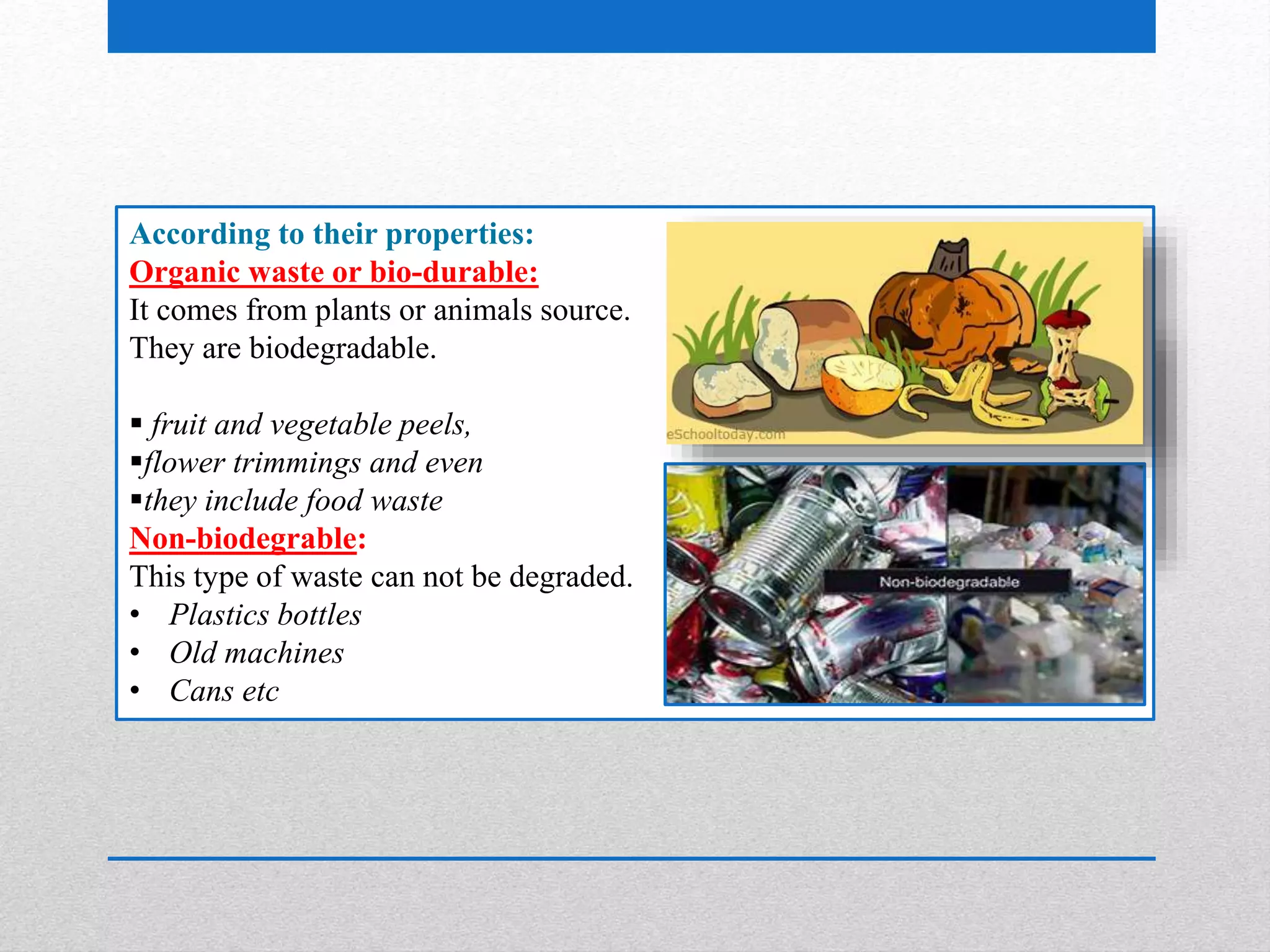
Organic waste or bio-durable:
It comes from plants or animals source.
They are biodegradable.
 fruit and vegetable peels,
flower trimmings and even
they include food waste
Non-biodegrable:
This type of waste can not be degraded.
• Plastics bottles
• Old machines
• Cans etc
Sources of waste
 Household
 Commerce & industry
 Agriculture
 Fisheries
About Agricultural waste• Definition - What does Agricultural Waste mean ?
Agricultural waste refers to waste produced from agricultural
operations, including waste from farms, poultry houses, and
slaughterhouses.
Sources of agricultural waste:
 Animal
 Plant
 Field or farm
The main types of agricultural waste are
• biological
• solid
• hazardous and
Biological Waste
Biological waste:
Any material that contains or has been contaminated by a bio hazardous
agent
 . Biological waste includes:
 Petri dishes,
 surgical wraps,
 culture tubes,
 syringes,
 needles,
 blood vials,
 absorbent material,
 personal protective equipment and
 pipette tips.
Solid waste
The useless and unwanted products in the solid state.
arise form the domestic or commercial sector.
 Garbage,
 Rubbish,
 Refuse,
 Litter.
Hazardous waste
Hazardous waste:
refers to any type of waste cause harm to human or animal health or
contribute to environmental damage.
• Specific biohazards related to agricultural waste include:
• Fungi
• Molds
• Bacteria
• Viruses
• Animal-borne
diseases (zoonosis)
Waste and it’s impact on
environment:
 potentially damaging to the environment,
 expose workers to harmful
biological material (biohazards).
 including health risks and
 contamination of surrounding
water bodies and the atmosphere.
Effect of improper disposal of
waste
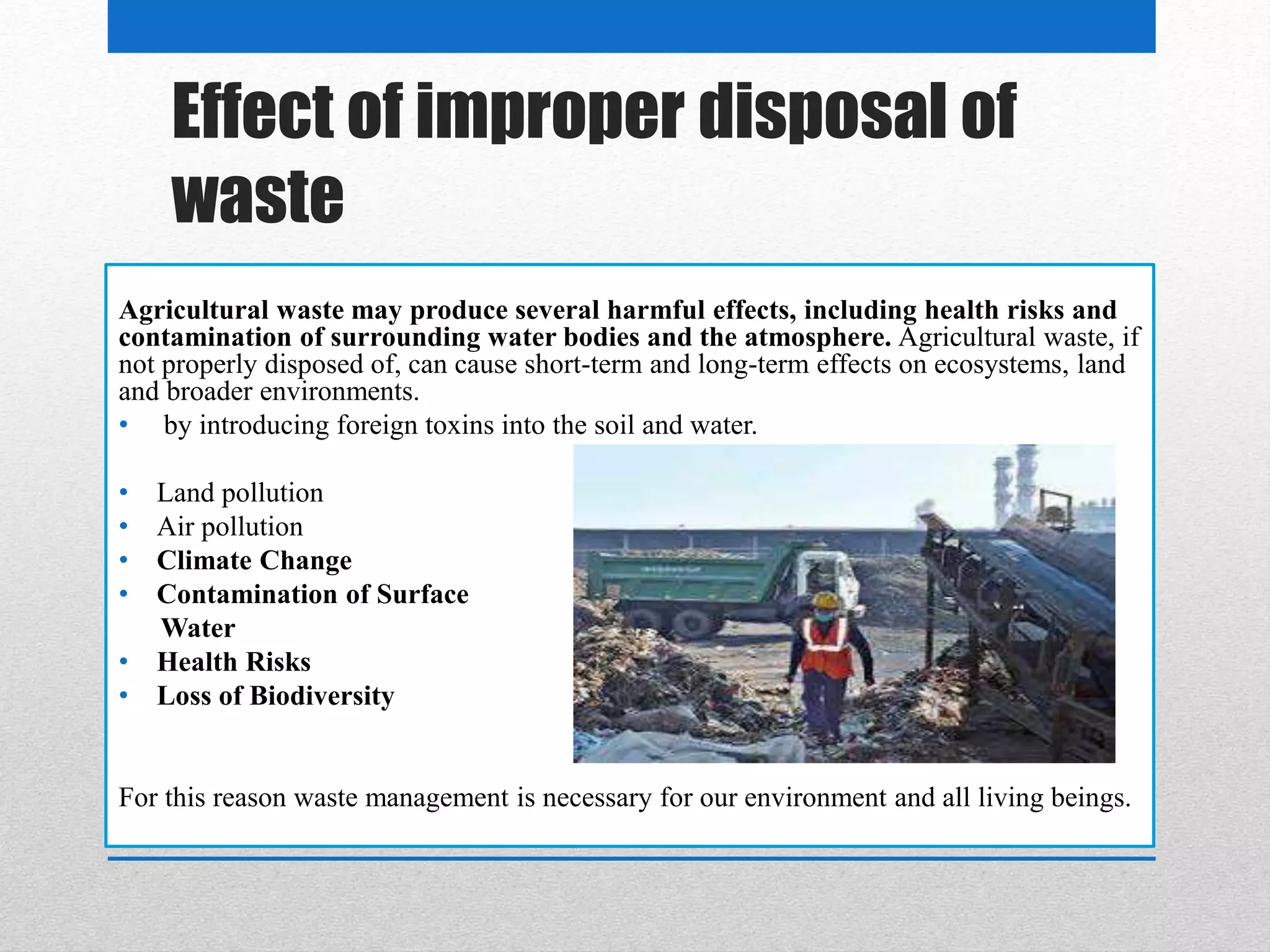
Agricultural waste may produce several harmful effects, including health risks and
contamination of surrounding water bodies and the atmosphere. Agricultural waste, if
not properly disposed of, can cause short-term and long-term effects on ecosystems, land
and broader environments.
• by introducing foreign toxins into the soil and water.
• Land pollution
• Air pollution
• Climate Change
• Contamination of Surface
Water
• Health Risks
• Loss of Biodiversity
For this reason waste management is necessary for our environment and all living beings.
Waste
Management
Most of the waste comes from agricultural production(crops root, straw
or other remaining parts),poulty,leather industriesand garments
industries and others.If the wastes are not managed then our
environment will notbe suitable for living.For reducing waste 4 R is
important .
Reduce : Here reduce means limited the use of product from while
waste material is produces.e.g:perfume bottle, shampoo bottles and all
kind of bottles
.Reuse:product whice are reusable should be reused.e.g plasitic bottle,
paper.
Recycle: Recycling reduces pollution by cutting down on the amount of
waste that sits in landfills and clutter that dirties streets, parks,
roadsides, rivers and lakes.
Recycle: it is a large process of managing waste.
• Process to change
waste into new product.
• Prevent waste of
potentially useful
materials,reduce the
consumpitation of fresh
raw materials,reduces
• Energ usage
• Reduce air pollution
from land filling.
 Lower green house gas emissions.
Reeducate: primary source of pollution
of water and lakes is agricultural waste
and human waste.caused for ignorance.
,this leads to health issues such as blue
baby syndrome and neurological
ailments.
For this we need to make good
habites of throwing waste at the right
place,in the dustbean.And for every
waste there is a different bean.blue for
paper,green for glass,yellow for plastic,red for metal.
Waste treatment plant
Production of bio gas in waste management
plant
For managing waste a waste
management plant should be
stabilished in the farm or
industries.In the waste management
plant biodegrable waste is being used
to produce biogas,which is economic
in all purpose.from the plant biogas
is produced and remaining is used as
humas,humas is good for plant and
crop.as a result it helps to use less
fertiliser in the land and decrease
soil pollutionand also manange farm
and poultry waste.
Other methods of disposal
waste
Sanitery land fill: this is also a process of reducing waste.
• Waste iscompacted & covered with soil.
• When disposal site has reached its capacity a final layer ois applied.
Land fill:A land fill is a site (rabbish dumpm od dumping ground) is a site
for the disposal of waste materials by burial.
• Most common method.
• Some landfill is used for waste management purpose,such
sorting,treatment,or recyling.
We need to take care our health by taking care of the environment,for
this purpose environment need to be free from wastge and their harmfull
effects.Bt waste can not be eradicate completely,it can be reduce to a
minimum level.To day our scientist is trying to go toward ZERO
WASTAGE.An it is only possible if we all work togather.
Moto of waste management –is
towards zero wastage.
We need to take care our health by taking care of the environment,for
this purpose environment need to be free from wasteges and their
harmful effects.But waste can not be eradicate completely,it can be
reduce to a minimum level.To day our scientist is trying to go toward
ZERO WASTAGE.An it is only possible if we all work together then
we will remain safe and will be able to give safe environment to the
next generation.
Keep the environment clean.
Thank you.

Waste management at agricultural sector

  • 1.
  • 2.
    What can becalled waste? Waste (or wastes) are unwanted or unusable materials. Waste is any substance which is discarded after primary use, or is worthless, defective and of no use. . Example of waste: • municipal solid waste • (household trash/refuse), • hazardous waste, • wastewater (such as sewage, • which contains bodily wastes • (feces and urine) and surface runoff), • radioactive waste, and others
  • 3.
    Type of waste Solidwaste: Waste in the solid from. example: waste tires ,septagescrap metal ,latex paints,furniture and toys ,Garbage, Appliances and vehicles, oil and anti-freeze. Liquid waste: Waste in the liquid from. Example: Some include water, blood, and gasoline. The other states of matter include gases and solids.
  • 4.
    According to theireffects on human health: Hazardous type: Hazardous or harmful waste are those that potentially threaten public health or the environment. Such waste could be,  inflammable (can easily catch fire),  reactive (can easily explode),  corrosive or toxic. Non-Hazardous type: Substance safe to use commercially, industrially agriculturally or economically. • paper / card • packaging from laboratory consumables and equipment • uncontaminated paper towels / tissues non-hazardous chemical containers (rinsed out and labels removed)
  • 5.
    According to theirproperties: Organic waste or bio-durable: It comes from plants or animals source. They are biodegradable.  fruit and vegetable peels, flower trimmings and even they include food waste Non-biodegrable: This type of waste can not be degraded. • Plastics bottles • Old machines • Cans etc
  • 6.
    Sources of waste Household  Commerce & industry  Agriculture  Fisheries
  • 7.
    About Agricultural waste•Definition - What does Agricultural Waste mean ? Agricultural waste refers to waste produced from agricultural operations, including waste from farms, poultry houses, and slaughterhouses. Sources of agricultural waste:  Animal  Plant  Field or farm The main types of agricultural waste are • biological • solid • hazardous and
  • 8.
    Biological Waste Biological waste: Anymaterial that contains or has been contaminated by a bio hazardous agent  . Biological waste includes:  Petri dishes,  surgical wraps,  culture tubes,  syringes,  needles,  blood vials,  absorbent material,  personal protective equipment and  pipette tips.
  • 9.
    Solid waste The uselessand unwanted products in the solid state. arise form the domestic or commercial sector.  Garbage,  Rubbish,  Refuse,  Litter.
  • 10.
    Hazardous waste Hazardous waste: refersto any type of waste cause harm to human or animal health or contribute to environmental damage. • Specific biohazards related to agricultural waste include: • Fungi • Molds • Bacteria • Viruses • Animal-borne diseases (zoonosis)
  • 11.
    Waste and it’simpact on environment:  potentially damaging to the environment,  expose workers to harmful biological material (biohazards).  including health risks and  contamination of surrounding water bodies and the atmosphere.
  • 12.
    Effect of improperdisposal of waste Agricultural waste may produce several harmful effects, including health risks and contamination of surrounding water bodies and the atmosphere. Agricultural waste, if not properly disposed of, can cause short-term and long-term effects on ecosystems, land and broader environments. • by introducing foreign toxins into the soil and water. • Land pollution • Air pollution • Climate Change • Contamination of Surface Water • Health Risks • Loss of Biodiversity For this reason waste management is necessary for our environment and all living beings.
  • 13.
    Waste Management Most of thewaste comes from agricultural production(crops root, straw or other remaining parts),poulty,leather industriesand garments industries and others.If the wastes are not managed then our environment will notbe suitable for living.For reducing waste 4 R is important . Reduce : Here reduce means limited the use of product from while waste material is produces.e.g:perfume bottle, shampoo bottles and all kind of bottles .Reuse:product whice are reusable should be reused.e.g plasitic bottle, paper. Recycle: Recycling reduces pollution by cutting down on the amount of waste that sits in landfills and clutter that dirties streets, parks, roadsides, rivers and lakes.
  • 14.
    Recycle: it isa large process of managing waste. • Process to change waste into new product. • Prevent waste of potentially useful materials,reduce the consumpitation of fresh raw materials,reduces • Energ usage • Reduce air pollution from land filling.  Lower green house gas emissions.
  • 15.
    Reeducate: primary sourceof pollution of water and lakes is agricultural waste and human waste.caused for ignorance. ,this leads to health issues such as blue baby syndrome and neurological ailments. For this we need to make good habites of throwing waste at the right place,in the dustbean.And for every waste there is a different bean.blue for paper,green for glass,yellow for plastic,red for metal.
  • 16.
  • 17.
    Production of biogas in waste management plant For managing waste a waste management plant should be stabilished in the farm or industries.In the waste management plant biodegrable waste is being used to produce biogas,which is economic in all purpose.from the plant biogas is produced and remaining is used as humas,humas is good for plant and crop.as a result it helps to use less fertiliser in the land and decrease soil pollutionand also manange farm and poultry waste.
  • 18.
    Other methods ofdisposal waste Sanitery land fill: this is also a process of reducing waste. • Waste iscompacted & covered with soil. • When disposal site has reached its capacity a final layer ois applied. Land fill:A land fill is a site (rabbish dumpm od dumping ground) is a site for the disposal of waste materials by burial. • Most common method. • Some landfill is used for waste management purpose,such sorting,treatment,or recyling. We need to take care our health by taking care of the environment,for this purpose environment need to be free from wastge and their harmfull effects.Bt waste can not be eradicate completely,it can be reduce to a minimum level.To day our scientist is trying to go toward ZERO WASTAGE.An it is only possible if we all work togather.
  • 20.
    Moto of wastemanagement –is towards zero wastage.
  • 21.
    We need totake care our health by taking care of the environment,for this purpose environment need to be free from wasteges and their harmful effects.But waste can not be eradicate completely,it can be reduce to a minimum level.To day our scientist is trying to go toward ZERO WASTAGE.An it is only possible if we all work together then we will remain safe and will be able to give safe environment to the next generation.
  • 22.
    Keep the environmentclean. Thank you.