LIFE CYCLE
ANALYSIS
COMPILED BY:
AMIT KUMAR BUNDELA
M.Sc. Environment Science and Technology
IESD BHU
What is life cycle analysis?
 Life Cycle Analysis is the technique which is used
to analyse the environmental impacts which are an
outcome of the processes involved in the life cycle of
a particular product.
 Also known as “Cradle-to-grave” or “life cycle
assessment”
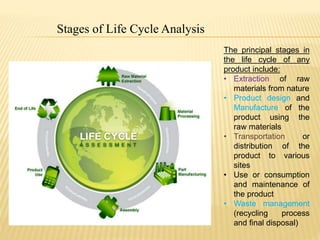
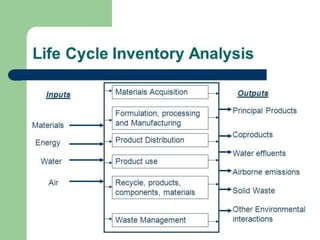
Stages of Life Cycle Analysis
The principal stages in
the life cycle of any
product include:
• Extraction of raw
materials from nature
• Product design and
Manufacture of the
product using the
raw materials
• Transportation or
distribution of the
product to various
sites
• Use or consumption
and maintenance of
the product
• Waste management
(recycling process
and final disposal)
Goals and Purpose of Life Cycle Analysis
Analysing the quality of input and output of
materials during the life cycle of a product
 Quantifying the inputs and outputs
 Assessing the various environmental
implications
 Using the information collected to improve the
various processes involved in life cycle of a
product.
 Making public policies
 Achieving sustainability
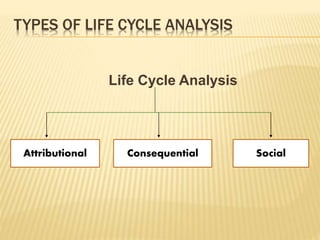
TYPES OF LIFE CYCLE ANALYSIS
Life Cycle Analysis
Attributional Consequential Social
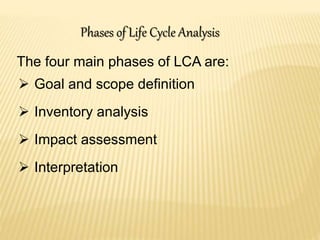
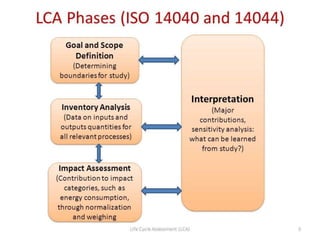
Phases of Life Cycle Analysis
The four main phases of LCA are:
 Goal and scope definition
 Inventory analysis
 Impact assessment
 Interpretation
Impact Assessment and Interpretation
 Impact Assessment: This phase is required for the evaluation of how
significant the potential environmental implication is.The impact is a set
of consequences on the human health and welfare of flora and fauna
and future availability of resources which attributes to the input and
output of the system.
 Interpretation: It is a method to identify, quantify, check and evaluate the
information collected from the LCI (life cycle inventory) and LCIA (life cycle
impact assessment). Interpretation phase includes the summarisation of the
results in the above two phases. Interpretation is required to check the
accuracy of the results and communicate them accurately.
Advantages of LCA:
 LCA allows analysis of all steps within the life
cycle of a product.
 LCAs offer valuable quantitative comparisons.
 LCAs can serve as an effective marketing tool
when used appropriately.
 LCAs are currently becoming a hot button issue
in industry and regulatory organizations alike.
Disadvantages of LCA :
 Completing a full life cycle analysis on complicated
products is much easier said than done (the larger
your scope, the more complicated the LCA).
 Requires complete data which sometimes are very
daunting.
 LCAs depending on the specific product or process,
can be very time intensive.
 Lack of Global Strandards.
Life Cycle Analysis helps to improve the
environmental conditions by proper analysis and
proper steps taken.
For example: Extending product life , substituting
materials ,improving collection efficiencies and
improving waste management.
LCA is undoubtedly an essential tool for
achieving sustainability.
 Life  Cycle Assessment

Life Cycle Assessment

  • 1.
    LIFE CYCLE ANALYSIS COMPILED BY: AMITKUMAR BUNDELA M.Sc. Environment Science and Technology IESD BHU
  • 2.
    What is lifecycle analysis?  Life Cycle Analysis is the technique which is used to analyse the environmental impacts which are an outcome of the processes involved in the life cycle of a particular product.  Also known as “Cradle-to-grave” or “life cycle assessment”
  • 3.
    Stages of LifeCycle Analysis The principal stages in the life cycle of any product include: • Extraction of raw materials from nature • Product design and Manufacture of the product using the raw materials • Transportation or distribution of the product to various sites • Use or consumption and maintenance of the product • Waste management (recycling process and final disposal)
  • 4.
    Goals and Purposeof Life Cycle Analysis Analysing the quality of input and output of materials during the life cycle of a product  Quantifying the inputs and outputs  Assessing the various environmental implications  Using the information collected to improve the various processes involved in life cycle of a product.  Making public policies  Achieving sustainability
  • 5.
    TYPES OF LIFECYCLE ANALYSIS Life Cycle Analysis Attributional Consequential Social
  • 6.
    Phases of LifeCycle Analysis The four main phases of LCA are:  Goal and scope definition  Inventory analysis  Impact assessment  Interpretation
  • 9.
    Impact Assessment andInterpretation  Impact Assessment: This phase is required for the evaluation of how significant the potential environmental implication is.The impact is a set of consequences on the human health and welfare of flora and fauna and future availability of resources which attributes to the input and output of the system.  Interpretation: It is a method to identify, quantify, check and evaluate the information collected from the LCI (life cycle inventory) and LCIA (life cycle impact assessment). Interpretation phase includes the summarisation of the results in the above two phases. Interpretation is required to check the accuracy of the results and communicate them accurately.
  • 10.
    Advantages of LCA: LCA allows analysis of all steps within the life cycle of a product.  LCAs offer valuable quantitative comparisons.  LCAs can serve as an effective marketing tool when used appropriately.  LCAs are currently becoming a hot button issue in industry and regulatory organizations alike.
  • 11.
    Disadvantages of LCA:  Completing a full life cycle analysis on complicated products is much easier said than done (the larger your scope, the more complicated the LCA).  Requires complete data which sometimes are very daunting.  LCAs depending on the specific product or process, can be very time intensive.  Lack of Global Strandards.
  • 13.
    Life Cycle Analysishelps to improve the environmental conditions by proper analysis and proper steps taken. For example: Extending product life , substituting materials ,improving collection efficiencies and improving waste management. LCA is undoubtedly an essential tool for achieving sustainability.