SEMINAR ON
AGRICULTURAL WASTE MANAGEMENT
BY
NATTHU T. SHRIRAME
M-TECH 1ST YEAR (ENV)
Guided By
Prof. S. G. KALAMKAR
INDEX :-
1) Meaning of agriculture and waste management.
2) Management process
3) Types of agricultural waste
4) Treatment process
5) Concerns about agricultural waste management
6) Benefit of agricultural waste management
7) Implementation waste management
8) References
AGRICULTURAL WASTE MANAGEMENT
Agriculture :-
• Agriculture is the largest contributor of any resource
sector, to the economy.
• It is also a large generator of waste materials.
• Agriculture is also called as farming which is the
cultivation of animals, plants, fungi, and other life forms
for food, fiber, biofuel, drugs and other products used to
sustain and enhance human life.
Agricultural waste :-
Agricultural waste is composed of organic wastes (animal
excreta in the form of slurries and farmyard manures , spent
mushroom compost , soiled water and silage effluent)
Include :-
- Natural waste
- Animal waste
- Plant waste
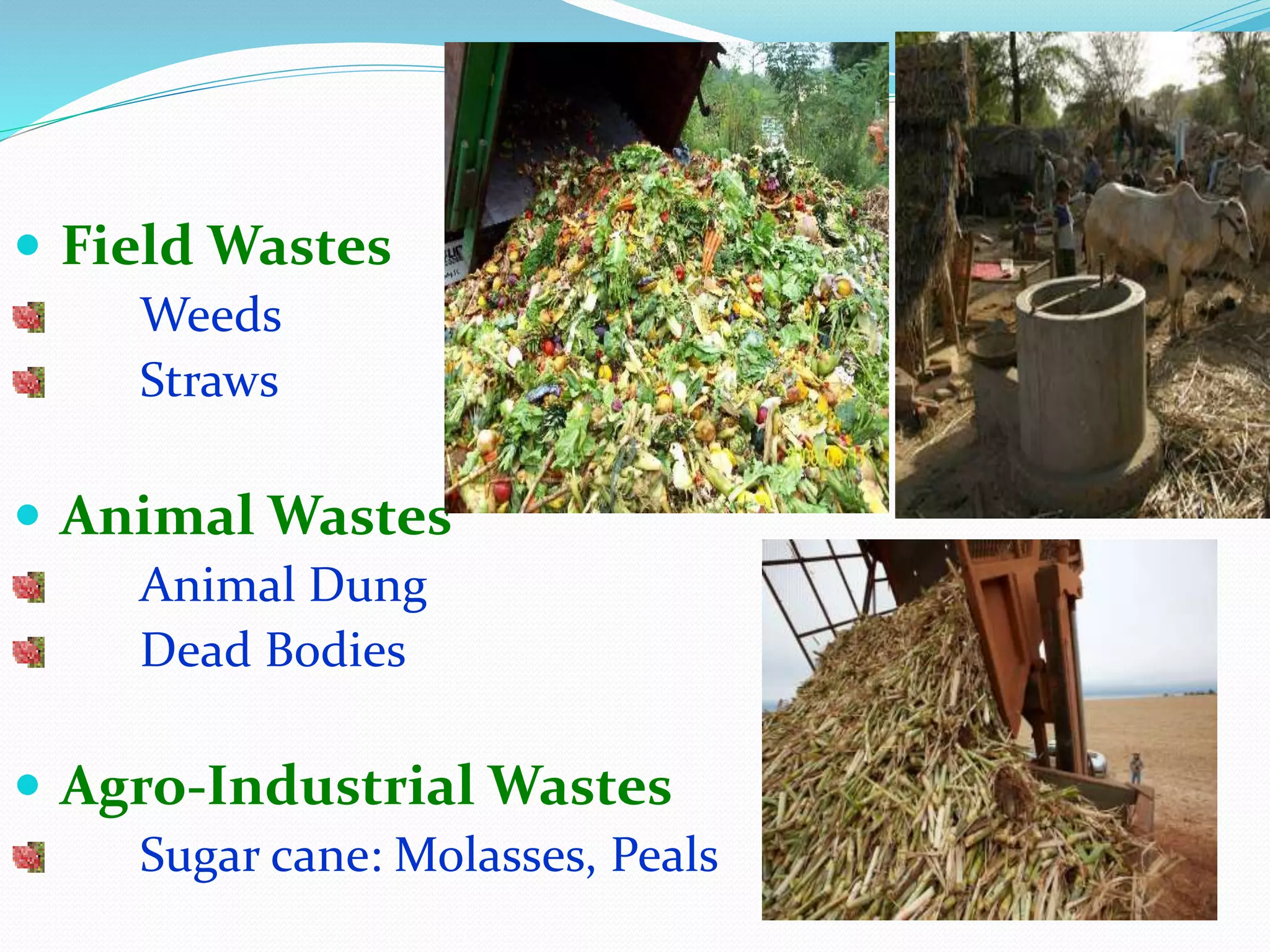
 Field Wastes
Weeds
Straws
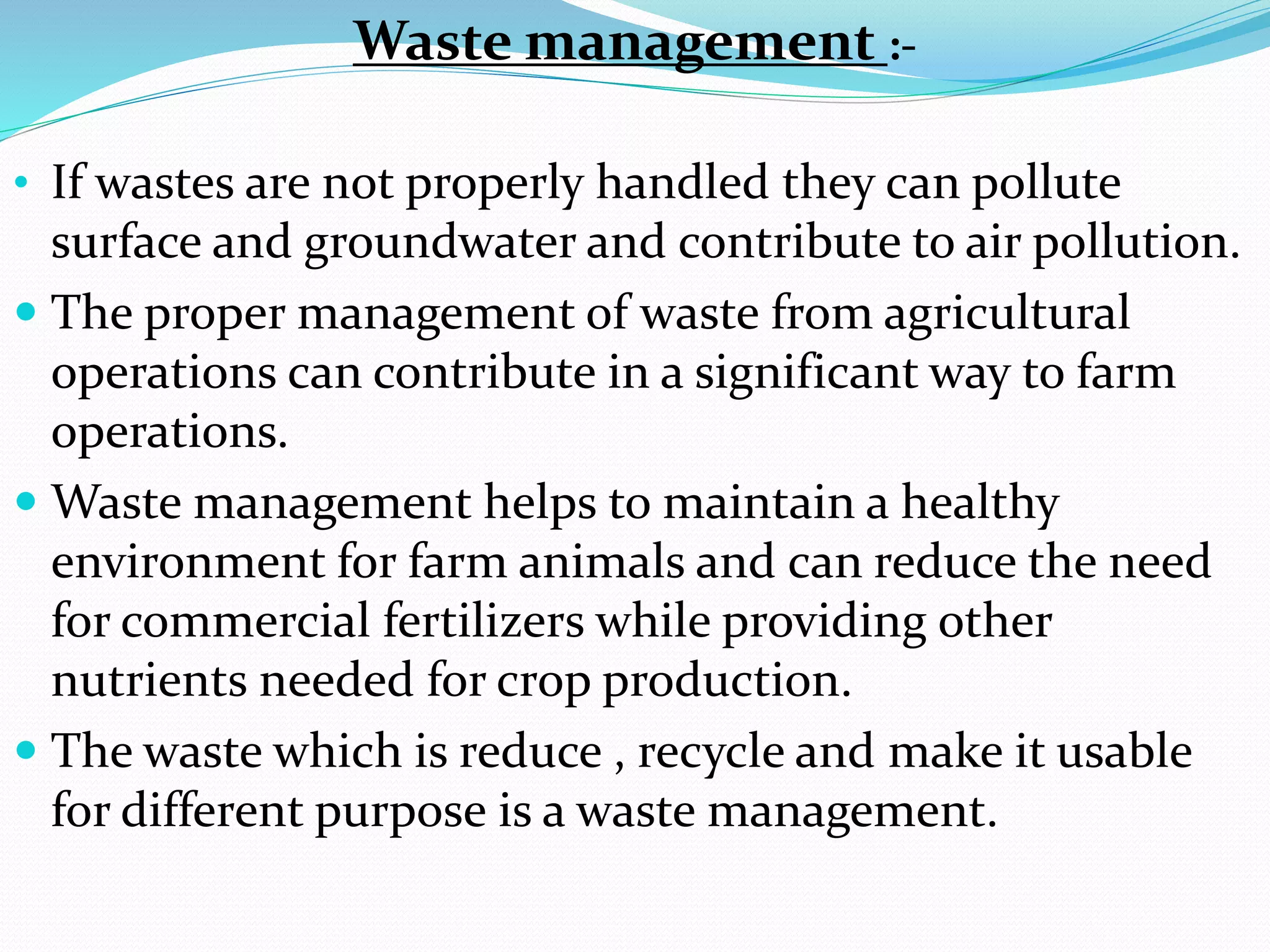
 Animal Wastes
Animal Dung
Dead Bodies
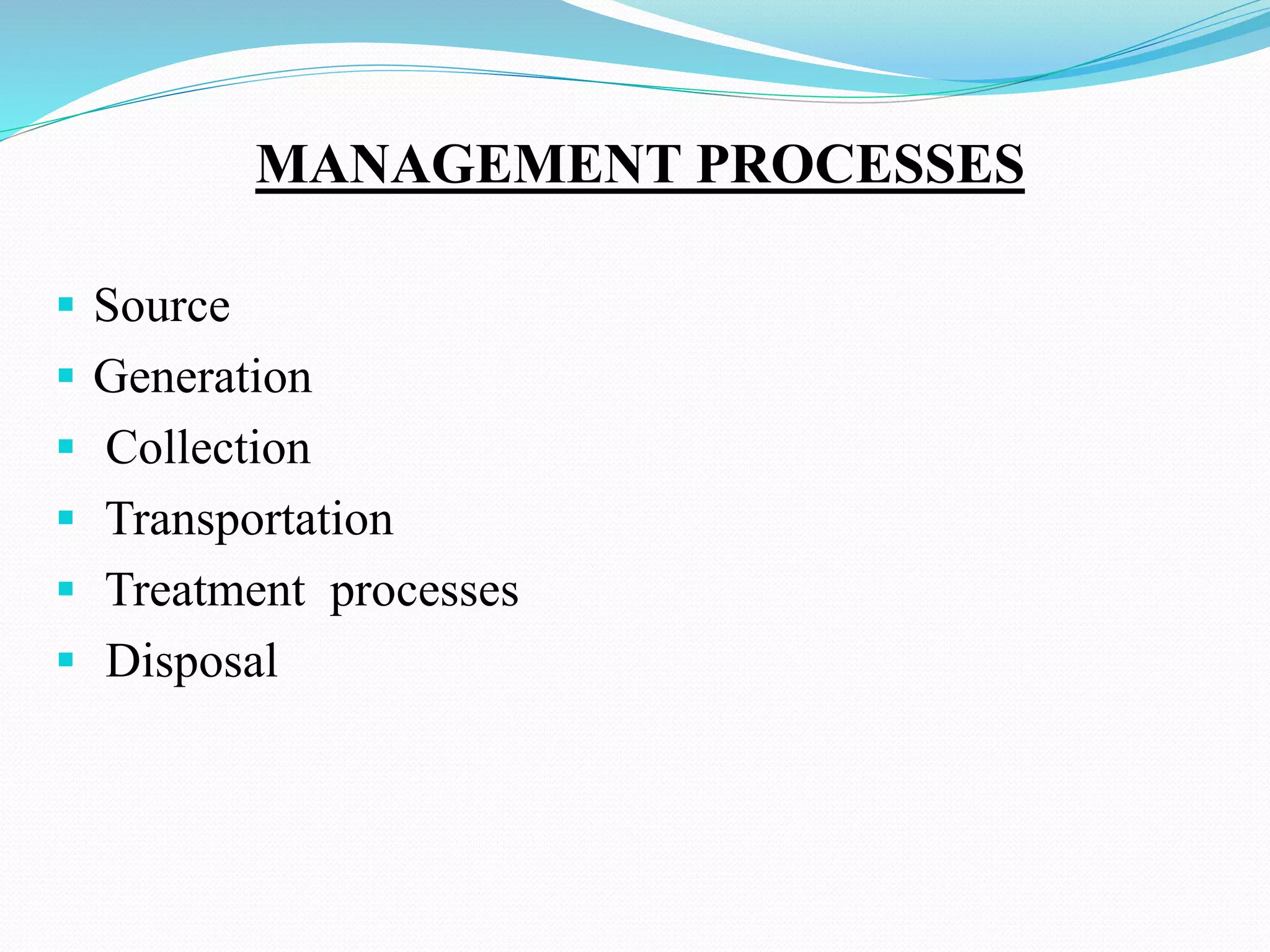
 Agro-Industrial Wastes
Sugar cane: Molasses, Peals
Waste management :-
• If wastes are not properly handled they can pollute
surface and groundwater and contribute to air pollution.
 The proper management of waste from agricultural
operations can contribute in a significant way to farm
operations.
 Waste management helps to maintain a healthy
environment for farm animals and can reduce the need
for commercial fertilizers while providing other
nutrients needed for crop production.
 The waste which is reduce , recycle and make it usable
for different purpose is a waste management.
MANAGEMENT PROCESSES
 Source
 Generation
 Collection
 Transportation
 Treatment processes
 Disposal
Generation:-
 India is one of the richest country in agricultural resources.
 Presently in India, annually 350 MT are organic wastes
from agricultural sources.
 The major quantity of solid waste generated from
agricultural sources are sugarcane baggage, paddy and
wheat straw and husk, waste of vegetables', food products,
tea, oil production, jute fibres, groundnut shell, wooden
mill waste, coconut husk, cotton stalk, etc.
Collection :-
 Waste like fruit and vegetable waste are collected form
houses called domestic waste
 Waste collected form road street or side .
 Collected waste like dry refuse and green waste , animal
dung from agricultural field.
Transportation process :-
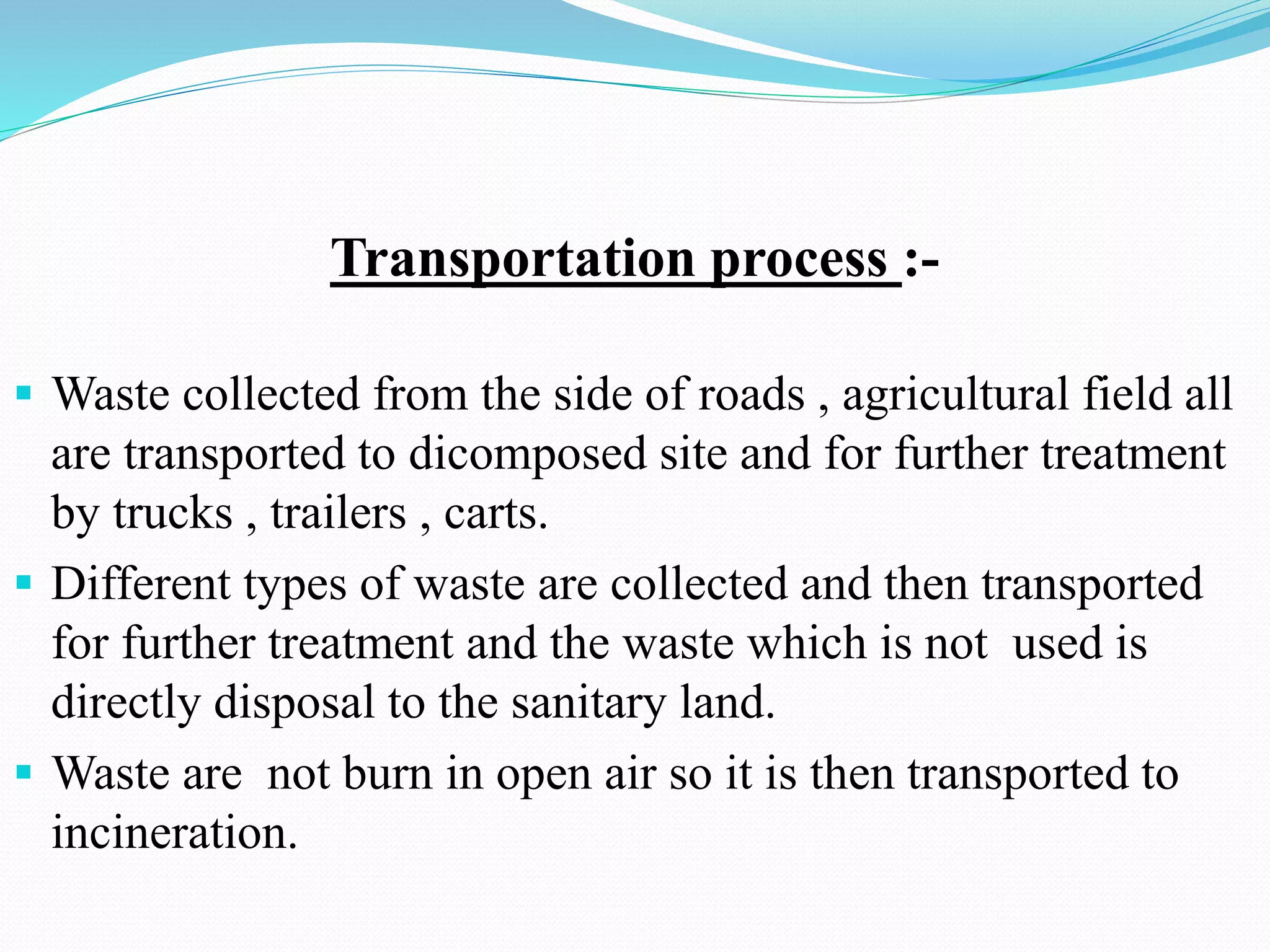
 Waste collected from the side of roads , agricultural field all
are transported to dicomposed site and for further treatment
by trucks , trailers , carts.
 Different types of waste are collected and then transported
for further treatment and the waste which is not used is
directly disposal to the sanitary land.
 Waste are not burn in open air so it is then transported to
incineration.
Straw and stubble waste Green waste
Dry waste from farm
Roadside and vegetable market waste
Treatment process :-
Various treatment process are performed on agricultural
waste are as follows :-
 When dealing with agricultural waste , we must follow
health and safety regulations .
 We should provide written instructions for storing and
disposing of each type of waste we produce.
 We must dispose of waste if we have determined that we
can not use prevention , preparation for reuse , recycling
or any other recovery method.
Treatment process :-
 Composting
 Recycling
 Incineration
COMPOSTING :-
Composting is a method in which organic matter present
in agricultural waste is decomposed by aerobically /
anaerobically through a biochemical process and
converted into humus .
Composting is divided into-
 Three step operation:
1. Preparation of agricultural waste
2. Decomposition
3. Product preparation & marketing
Preparation of agricultural waste :-
 Shall be free of material that is not produced in agricultural
field.
 Shall be reasonably free of dirt , soil and visible surface
 Shall be arranged so that it will burn with a minimum of
smoke.
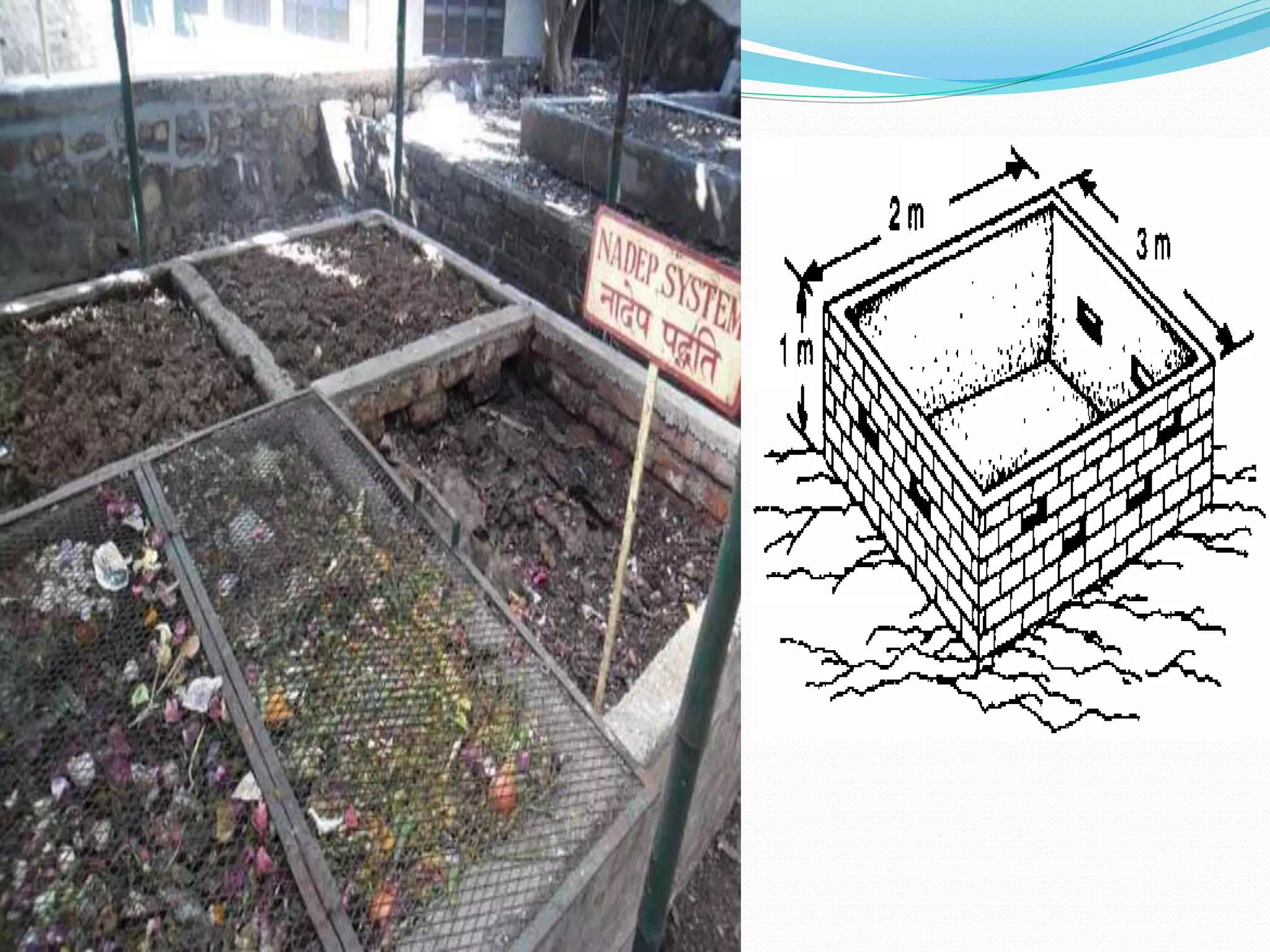
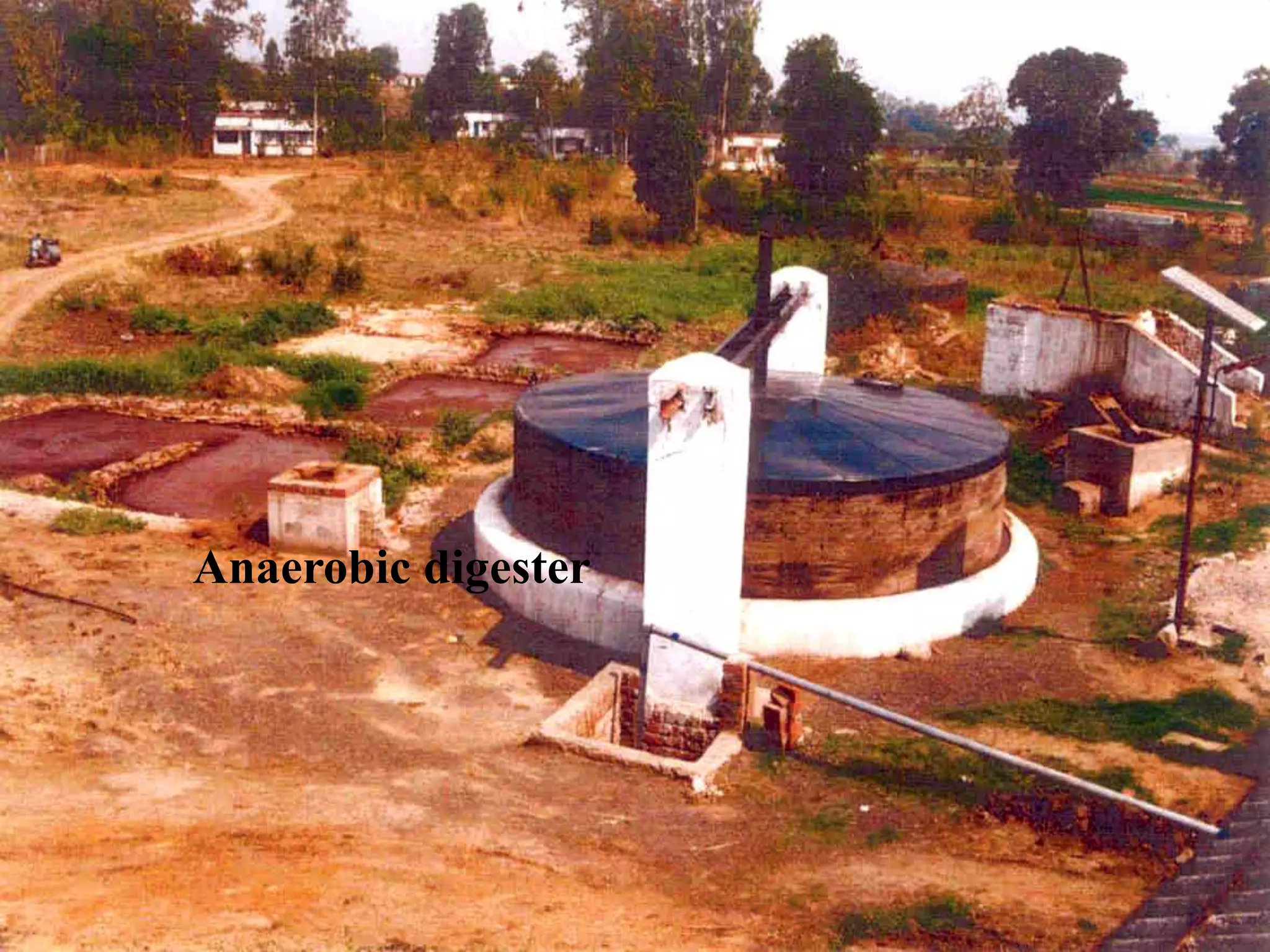
Decomposition :-
Waste is decomposed by three way-
 Nadep system
 Vermiculture decomposition
 Anaerobically decomposition
Vermi compost Unit
Anaerobic digester
Landfill :-
• A landfill site (rubbish dump or dumping ground) is a site for
the disposal of waste materials by burial
•have been most common method
•Some landfills are also used for waste management purposes,
such as sorting, treatment, or recycling
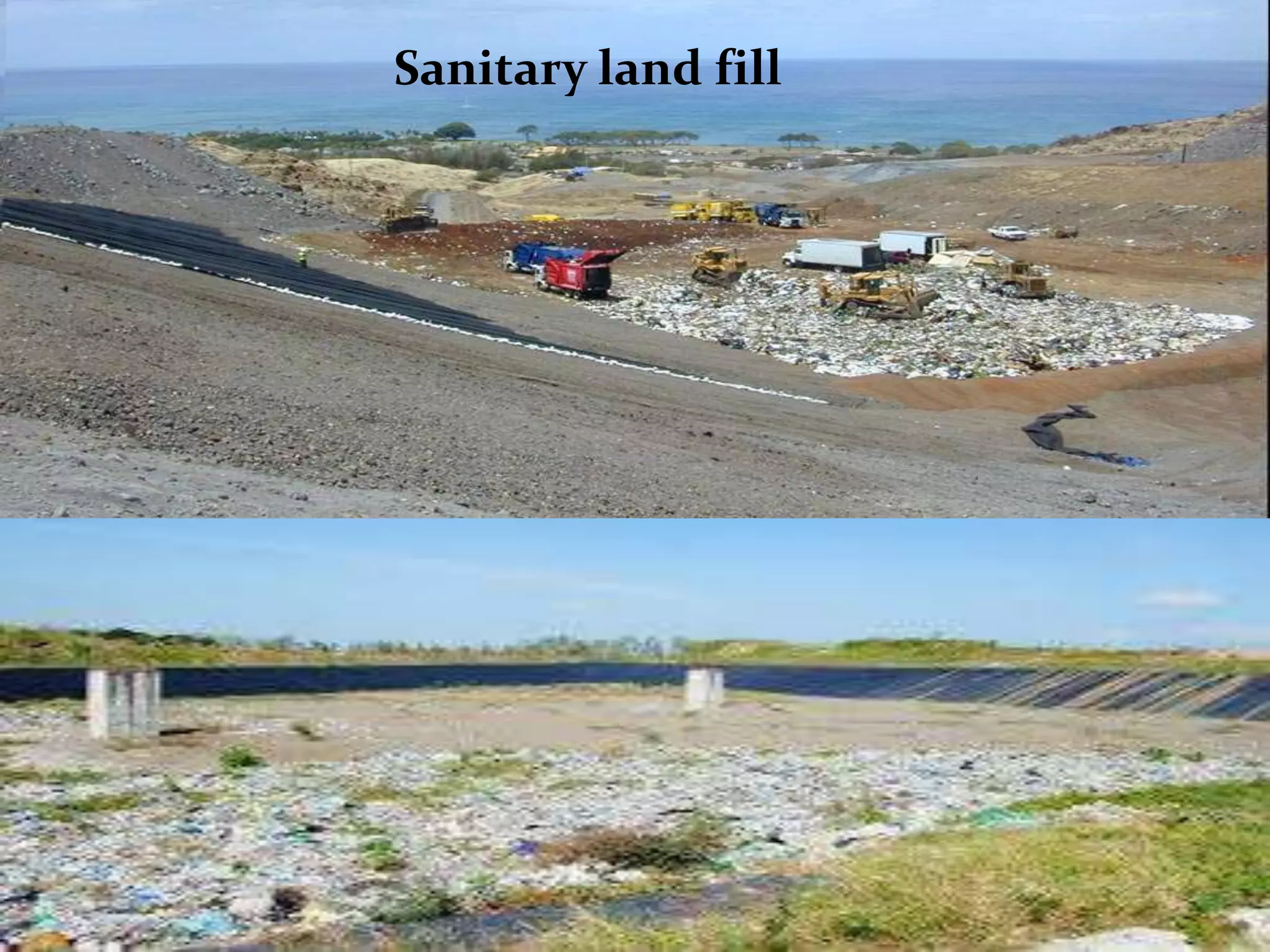
Sanitary landfill
• Waste is compacted
• & covered with soil
• When disposal site has reached its capacity-a final
layer of 2ft is applied
Sanitary land fill
Recycling
 Process to change waste into new products
 Prevent waste of potentially useful materials, reduce
the consumption of fresh raw materials, reduce energy
usage
 Reduce air pollution from incineration and water
pollution from land filling
 Lower greenhouse gas emissions
 Key component of modern waste reduction and is the
third component of the "Reduce, Reuse, Recycle"
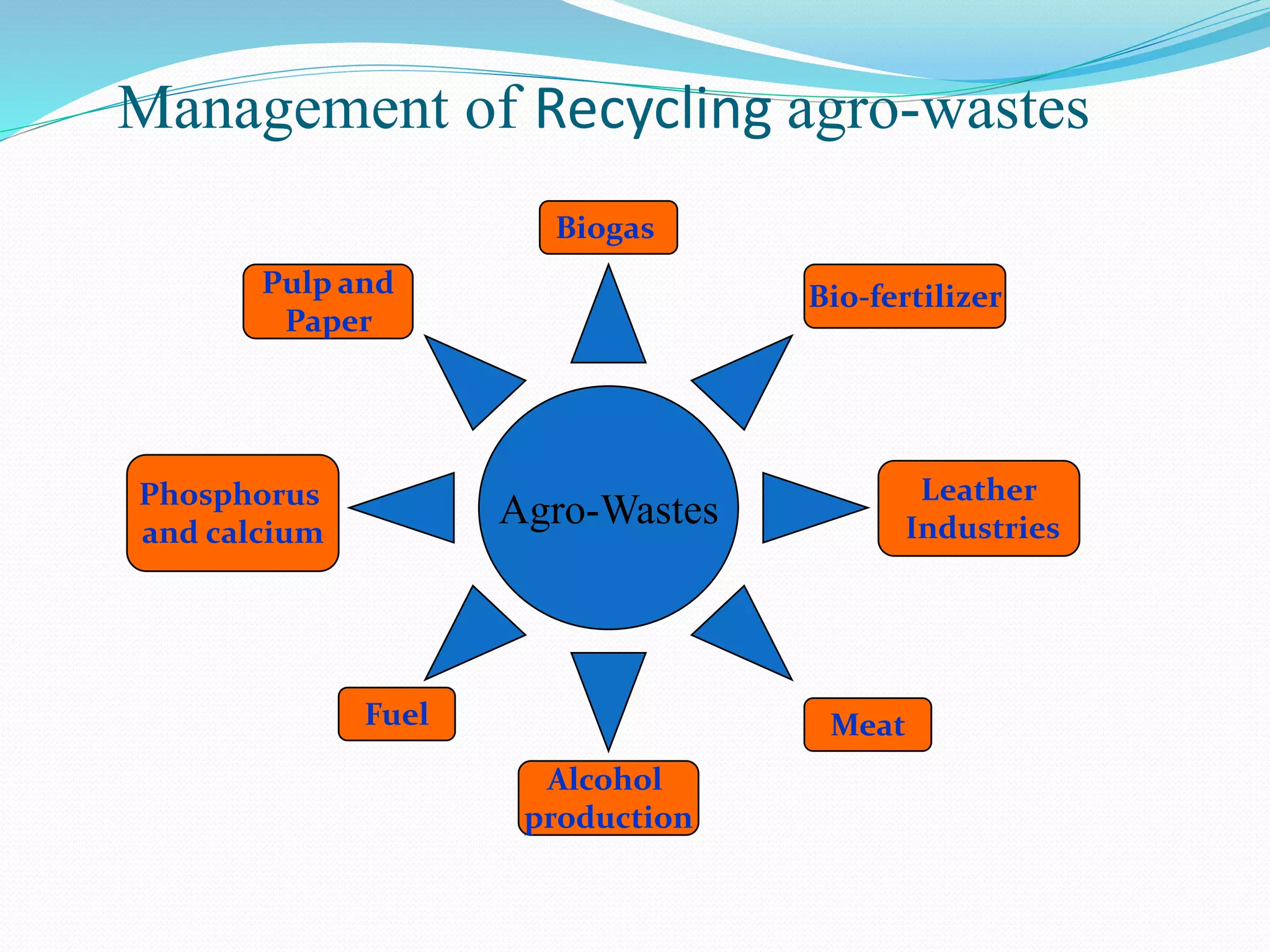
Management of Recycling agro-wastes
Agro-Wastes
Meat
Leather
Industries
Bio-fertilizer
Biogas
Pulp and
Paper
Phosphorus
and calcium
Alcohol
production
Fuel
Biogas Production
Animal Dung Biogas plant
Fuel
Light
Biofertilizer
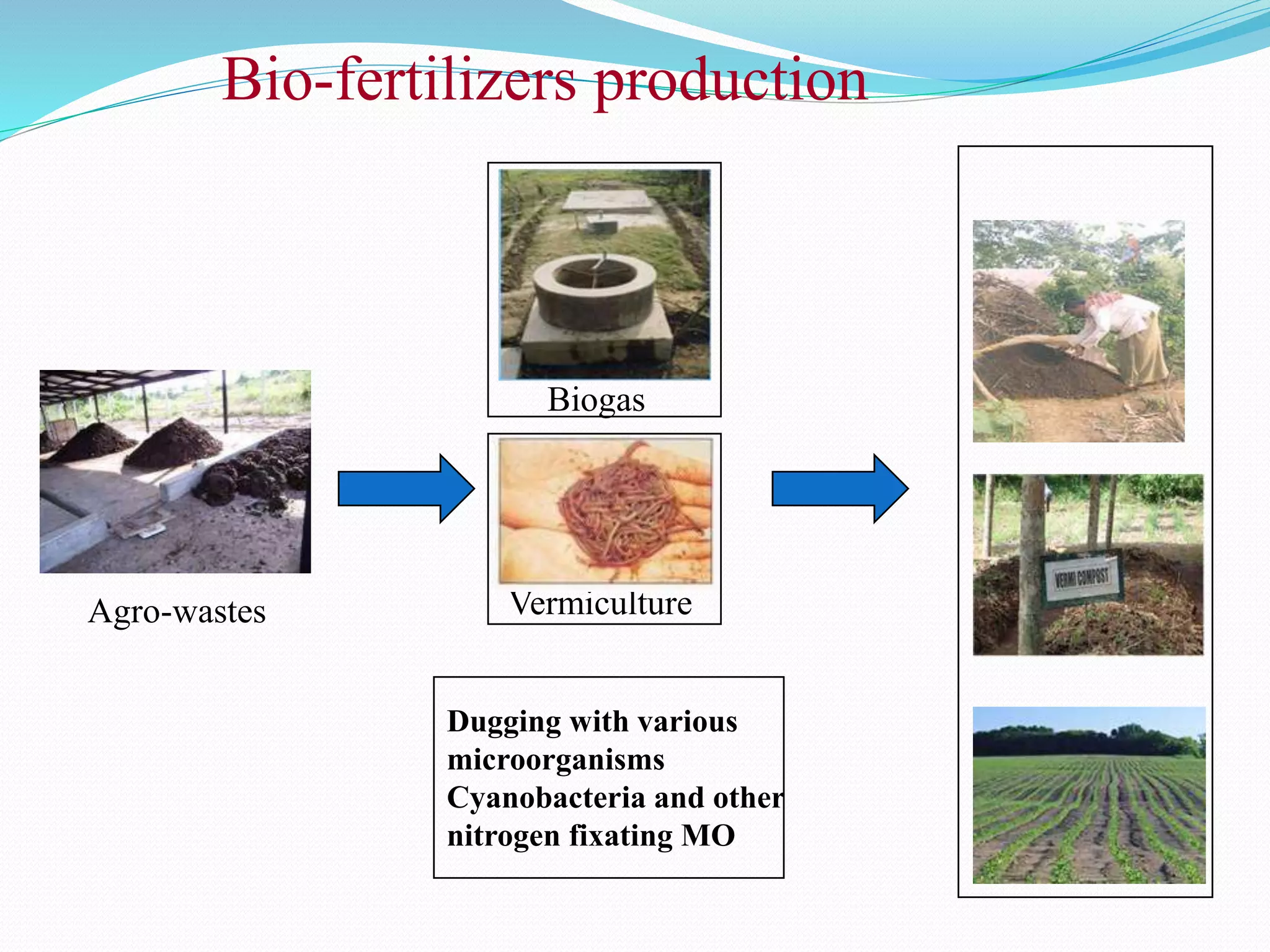
Agro-wastes
Biogas
Vermiculture
Dugging with various
microorganisms
Cyanobacteria and other
nitrogen fixating MO
Bio-fertilizers production
Leather and Meat Industry
Old animals
Leather
Slaughtering
Slaughtering
Meat
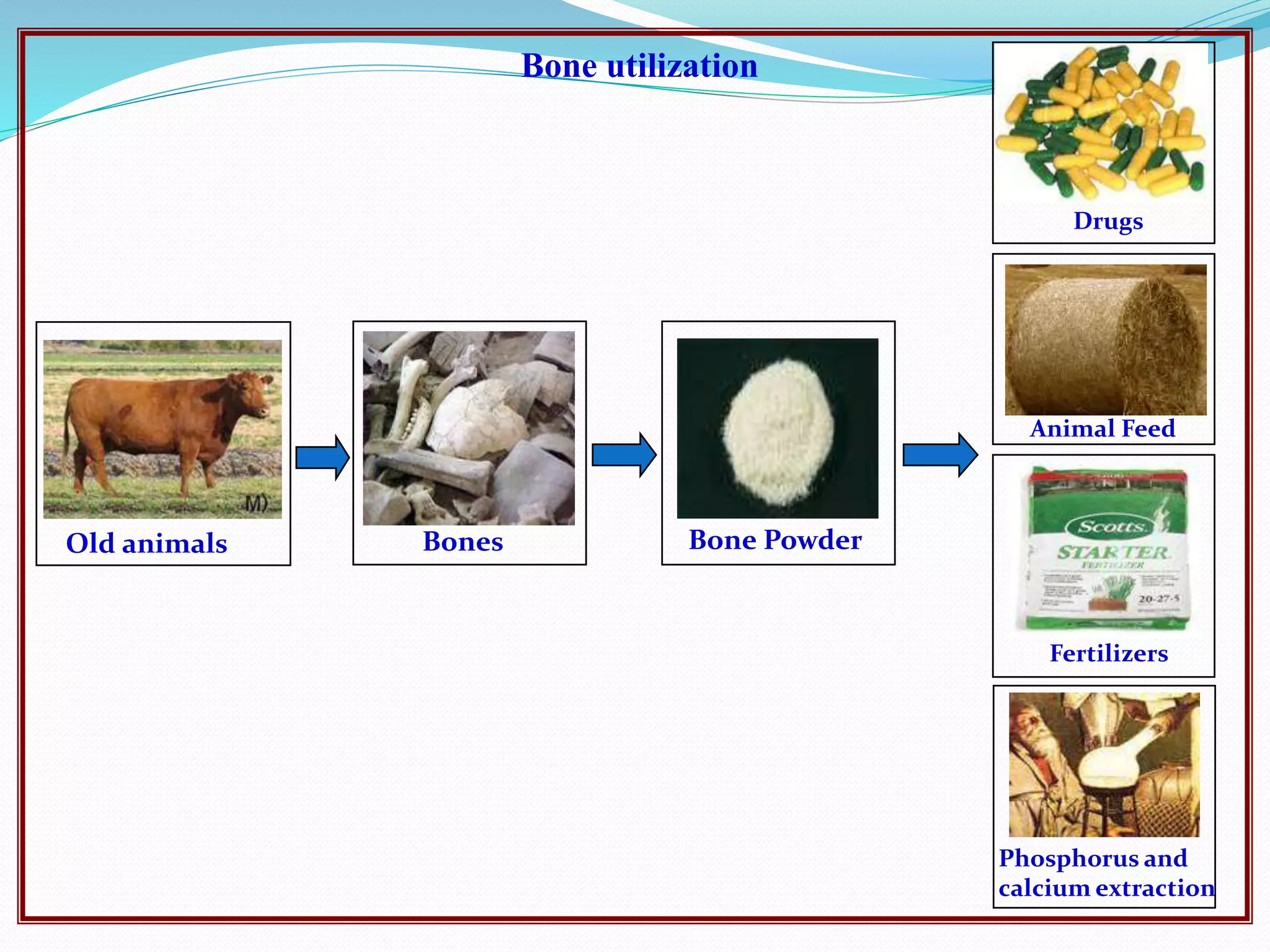
Bone utilization
Old animals Bones Bone Powder
Animal Feed
Drugs
Phosphorus and
calcium extraction
Fertilizers
Sugarcane – Source of Green Energy
JUICE
BAGASSE
LEAVES & TOPS
SUGAR
CO-GENERATION
OF ELECTRICITY
Ethanol
MASH
JUICE FOR SUGAR
FACTORY
SUGAR
ETHANO
L
FROM
SUGARS
SUGARCANE
MILLING
FERMENTATION
DISTILLATION
MOLASSES
JUICE FOR ETHANOL
ETHANOL
FROM
MOLASSES
ETHANOL
DISTILLERY
Ethanol from Molasses and Juice
Straws and peals used for Pulp and Paper Production
Straws and peals
Paper
Wood/ Ply
Pulp
Incineration :-
 Incineration is a modern and most hygienic method of
disposal of dry refuse.
 It is widely used in western countries , like , USA , UK , etc.
and in INDIA this it is gradually popular especially for large
cities.
 The method consist of burning the dry refuse in incinerator.
Uncontrolled incineration Controlled incineration
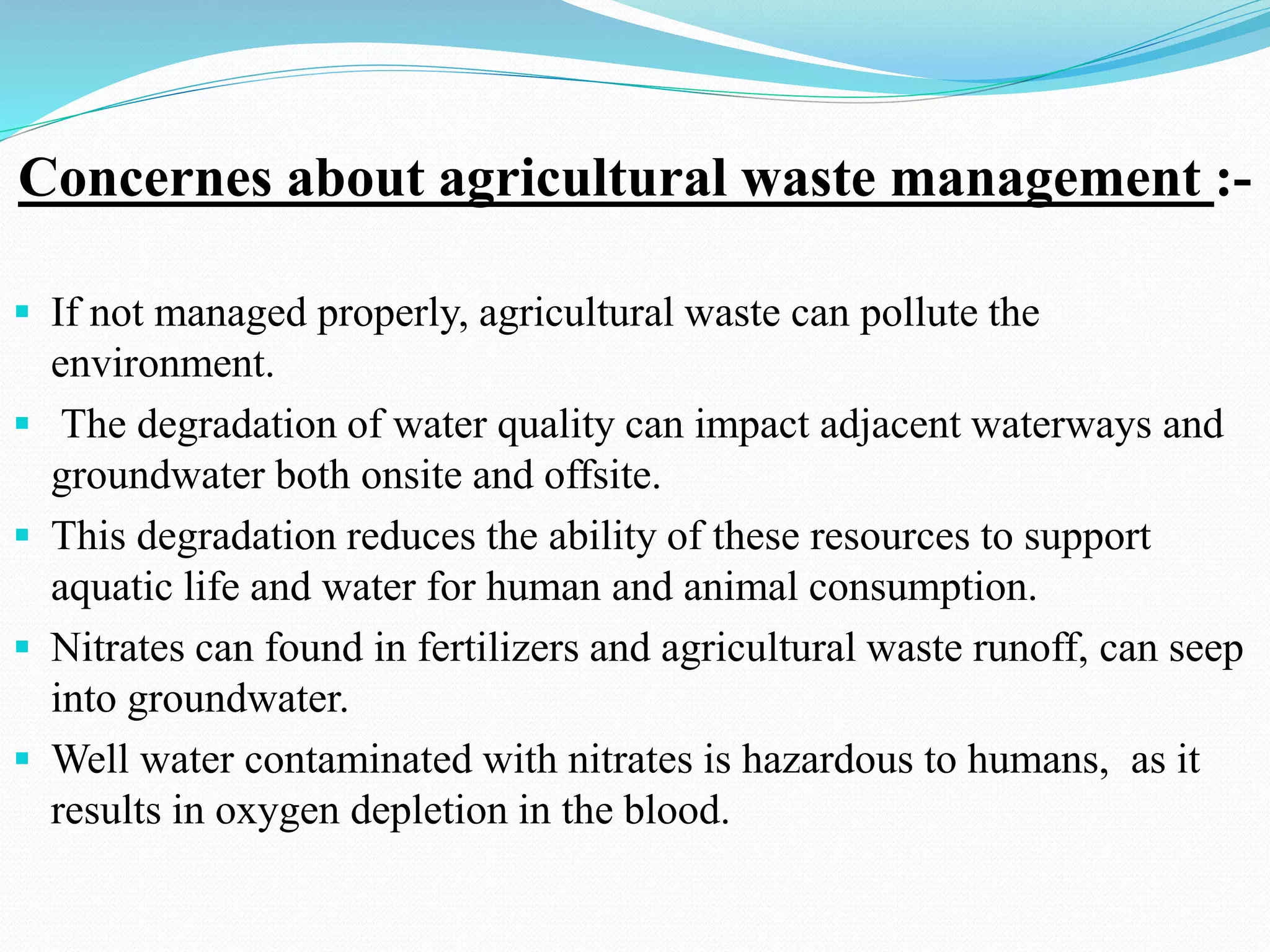
Concernes about agricultural waste management :-
 If not managed properly, agricultural waste can pollute the
environment.
 The degradation of water quality can impact adjacent waterways and
groundwater both onsite and offsite.
 This degradation reduces the ability of these resources to support
aquatic life and water for human and animal consumption.
 Nitrates can found in fertilizers and agricultural waste runoff, can seep
into groundwater.
 Well water contaminated with nitrates is hazardous to humans, as it
results in oxygen depletion in the blood.
Drawbacks of Improper Agro-Waste Management
Global warming Field filling
Mosquito generated diseases
Benefits of agricultural waste management :-
 The reuse of animal waste in farming operations can
reduce the quantity and hauling costs of commercial
fertilizer.
 The contribution of animal waste increases the organic
matter content of soils, which increases nutrient
availability for crops and improves the water holding
capacity.
 Good waste management reduces the instances of well
water contamination and minimizes surface water
pollution.
Agricultural waste management

Agricultural waste management

  • 1.
    SEMINAR ON AGRICULTURAL WASTEMANAGEMENT BY NATTHU T. SHRIRAME M-TECH 1ST YEAR (ENV) Guided By Prof. S. G. KALAMKAR
  • 2.
    INDEX :- 1) Meaningof agriculture and waste management. 2) Management process 3) Types of agricultural waste 4) Treatment process 5) Concerns about agricultural waste management 6) Benefit of agricultural waste management 7) Implementation waste management 8) References
  • 3.
    AGRICULTURAL WASTE MANAGEMENT Agriculture:- • Agriculture is the largest contributor of any resource sector, to the economy. • It is also a large generator of waste materials. • Agriculture is also called as farming which is the cultivation of animals, plants, fungi, and other life forms for food, fiber, biofuel, drugs and other products used to sustain and enhance human life.
  • 4.
    Agricultural waste :- Agriculturalwaste is composed of organic wastes (animal excreta in the form of slurries and farmyard manures , spent mushroom compost , soiled water and silage effluent) Include :- - Natural waste - Animal waste - Plant waste
  • 5.
     Field Wastes Weeds Straws Animal Wastes Animal Dung Dead Bodies  Agro-Industrial Wastes Sugar cane: Molasses, Peals
  • 6.
    Waste management :- •If wastes are not properly handled they can pollute surface and groundwater and contribute to air pollution.  The proper management of waste from agricultural operations can contribute in a significant way to farm operations.  Waste management helps to maintain a healthy environment for farm animals and can reduce the need for commercial fertilizers while providing other nutrients needed for crop production.  The waste which is reduce , recycle and make it usable for different purpose is a waste management.
  • 7.
    MANAGEMENT PROCESSES  Source Generation  Collection  Transportation  Treatment processes  Disposal
  • 8.
    Generation:-  India isone of the richest country in agricultural resources.  Presently in India, annually 350 MT are organic wastes from agricultural sources.  The major quantity of solid waste generated from agricultural sources are sugarcane baggage, paddy and wheat straw and husk, waste of vegetables', food products, tea, oil production, jute fibres, groundnut shell, wooden mill waste, coconut husk, cotton stalk, etc.
  • 9.
    Collection :-  Wastelike fruit and vegetable waste are collected form houses called domestic waste  Waste collected form road street or side .  Collected waste like dry refuse and green waste , animal dung from agricultural field.
  • 10.
    Transportation process :- Waste collected from the side of roads , agricultural field all are transported to dicomposed site and for further treatment by trucks , trailers , carts.  Different types of waste are collected and then transported for further treatment and the waste which is not used is directly disposal to the sanitary land.  Waste are not burn in open air so it is then transported to incineration.
  • 11.
    Straw and stubblewaste Green waste Dry waste from farm Roadside and vegetable market waste
  • 12.
    Treatment process :- Varioustreatment process are performed on agricultural waste are as follows :-  When dealing with agricultural waste , we must follow health and safety regulations .  We should provide written instructions for storing and disposing of each type of waste we produce.  We must dispose of waste if we have determined that we can not use prevention , preparation for reuse , recycling or any other recovery method.
  • 13.
    Treatment process :- Composting  Recycling  Incineration
  • 14.
    COMPOSTING :- Composting isa method in which organic matter present in agricultural waste is decomposed by aerobically / anaerobically through a biochemical process and converted into humus .
  • 15.
    Composting is dividedinto-  Three step operation: 1. Preparation of agricultural waste 2. Decomposition 3. Product preparation & marketing
  • 16.
    Preparation of agriculturalwaste :-  Shall be free of material that is not produced in agricultural field.  Shall be reasonably free of dirt , soil and visible surface  Shall be arranged so that it will burn with a minimum of smoke.
  • 17.
    Decomposition :- Waste isdecomposed by three way-  Nadep system  Vermiculture decomposition  Anaerobically decomposition
  • 19.
  • 20.
  • 21.
    Landfill :- • Alandfill site (rubbish dump or dumping ground) is a site for the disposal of waste materials by burial •have been most common method •Some landfills are also used for waste management purposes, such as sorting, treatment, or recycling
  • 22.
    Sanitary landfill • Wasteis compacted • & covered with soil • When disposal site has reached its capacity-a final layer of 2ft is applied
  • 23.
  • 24.
    Recycling  Process tochange waste into new products  Prevent waste of potentially useful materials, reduce the consumption of fresh raw materials, reduce energy usage  Reduce air pollution from incineration and water pollution from land filling  Lower greenhouse gas emissions  Key component of modern waste reduction and is the third component of the "Reduce, Reuse, Recycle"
  • 25.
    Management of Recyclingagro-wastes Agro-Wastes Meat Leather Industries Bio-fertilizer Biogas Pulp and Paper Phosphorus and calcium Alcohol production Fuel
  • 26.
    Biogas Production Animal DungBiogas plant Fuel Light Biofertilizer
  • 27.
    Agro-wastes Biogas Vermiculture Dugging with various microorganisms Cyanobacteriaand other nitrogen fixating MO Bio-fertilizers production
  • 28.
    Leather and MeatIndustry Old animals Leather Slaughtering Slaughtering Meat
  • 29.
    Bone utilization Old animalsBones Bone Powder Animal Feed Drugs Phosphorus and calcium extraction Fertilizers
  • 30.
    Sugarcane – Sourceof Green Energy JUICE BAGASSE LEAVES & TOPS SUGAR CO-GENERATION OF ELECTRICITY Ethanol
  • 31.
    MASH JUICE FOR SUGAR FACTORY SUGAR ETHANO L FROM SUGARS SUGARCANE MILLING FERMENTATION DISTILLATION MOLASSES JUICEFOR ETHANOL ETHANOL FROM MOLASSES ETHANOL DISTILLERY Ethanol from Molasses and Juice
  • 32.
    Straws and pealsused for Pulp and Paper Production Straws and peals Paper Wood/ Ply Pulp
  • 33.
    Incineration :-  Incinerationis a modern and most hygienic method of disposal of dry refuse.  It is widely used in western countries , like , USA , UK , etc. and in INDIA this it is gradually popular especially for large cities.  The method consist of burning the dry refuse in incinerator.
  • 34.
  • 35.
    Concernes about agriculturalwaste management :-  If not managed properly, agricultural waste can pollute the environment.  The degradation of water quality can impact adjacent waterways and groundwater both onsite and offsite.  This degradation reduces the ability of these resources to support aquatic life and water for human and animal consumption.  Nitrates can found in fertilizers and agricultural waste runoff, can seep into groundwater.  Well water contaminated with nitrates is hazardous to humans, as it results in oxygen depletion in the blood.
  • 36.
    Drawbacks of ImproperAgro-Waste Management Global warming Field filling Mosquito generated diseases
  • 38.
    Benefits of agriculturalwaste management :-  The reuse of animal waste in farming operations can reduce the quantity and hauling costs of commercial fertilizer.  The contribution of animal waste increases the organic matter content of soils, which increases nutrient availability for crops and improves the water holding capacity.  Good waste management reduces the instances of well water contamination and minimizes surface water pollution.