Police in America
Chapter Three
The Contemporary Law
Enforcement Industry

McGraw-Hill

© 2013 McGraw-Hill Companies. All Rights Reserved.
Basic Features of American Law
Enforcement
 Local Political Control
 Tradition inherited from England
 Primary responsibility for police protection rests with
local governments
 Result is a highly fragmented, decentralized system
for regulating the different agencies

 Police services provided on 4 different

levels
 City, County, State, Federal
3-2
An “Industry” vs. International
Perspective
 “Industry” Perspective
 This approach provides a consumer perspective on
policing
 Average citizen receive police services from several
different agencies

 International Perspective
 Other countries have less fragmented systems
 England only has 43 law enforcement agencies and Japan has
47
• Their national governments provides a significant part of their local agency ’s budgets

3-3
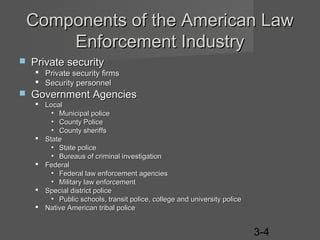
Components of the American Law
Enforcement Industry


Private security
 Private security firms
 Security personnel



Government Agencies
 Local
• Municipal police
• County Police
• County sheriffs
 State
• State police
• Bureaus of criminal investigation
 Federal
• Federal law enforcement agencies
• Military law enforcement
 Special district police
• Public schools, transit police, college and university police
 Native American tribal police

3-4
Employment by state and local
law enforcement

Local police
Sheriff
State police
Special police
   
   



3-5
Basic Sources on Law Enforcement
Agencies






The most comprehensive source of data on American
law enforcement agencies is the report from the Bureau
of Justice Statistics (BJS), Law Enforcement
Management and Administrative Statistics.
The most recent report is for 2010; BJS intends to
conduct new surveys every 2-3 years.
Additional data can be found in the FBI’s Uniform Crime
Reports (UCR), published annually.
Many law enforcement agencies now maintain their own
website, which provides information about organizational
structure and current programs.

3-6
Contemporary Law Enforcement




Sworn officers vs. total
number of employees
Civilianization
Police-population ratio
 Officers per 1,000
population



Cost



Municipal police



County Sheriff






Law enforcement
Courts
Corrections

State
 State police - full service
 Highway Patrol

 Labor


Private Security
 Over 2,000,000 people
employed

3-7
The Fragmentation Issue






Lack of coordination between agencies
Crime displacement
Duplication of services
Inconsistent standards
Alternative





Consolidation
Contracting

However, the problem may not be as serious as
some have argued
 The PSS concluded that small police departments were not
necessarily less efficient than large departments
 Small departments put more officers on the street
performing direct police services

3-8
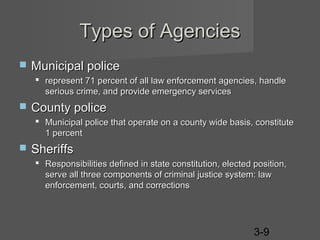
Types of Agencies


Municipal police
 represent 71 percent of all law enforcement agencies, handle
serious crime, and provide emergency services



County police
 Municipal police that operate on a county wide basis, constitute
1 percent



Sheriffs
 Responsibilities defined in state constitution, elected position,
serve all three components of criminal justice system: law
enforcement, courts, and corrections

3-9
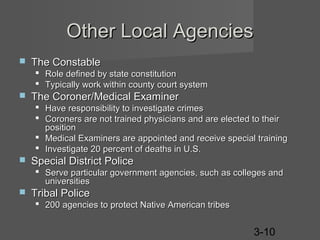
Other Local Agencies


The Constable
 Role defined by state constitution
 Typically work within county court system



The Coroner/Medical Examiner
 Have responsibility to investigate crimes
 Coroners are not trained physicians and are elected to their
position
 Medical Examiners are appointed and receive special training
 Investigate 20 percent of deaths in U.S.



Special District Police
 Serve particular government agencies, such as colleges and
universities



Tribal Police
 200 agencies to protect Native American tribes

3-10
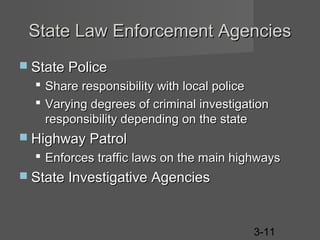
State Law Enforcement Agencies
 State Police




Share responsibility with local police
Varying degrees of criminal investigation
responsibility depending on the state

 Highway Patrol

 Enforces traffic laws on the main highways
 State Investigative Agencies

3-11
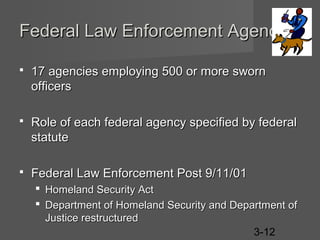
Federal Law Enforcement Agencies


17 agencies employing 500 or more sworn
officers



Role of each federal agency specified by federal
statute



Federal Law Enforcement Post 9/11/01
 Homeland Security Act
 Department of Homeland Security and Department of
Justice restructured
3-12
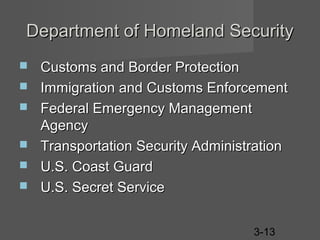
Department of Homeland Security







Customs and Border Protection
Immigration and Customs Enforcement
Federal Emergency Management
Agency
Transportation Security Administration
U.S. Coast Guard
U.S. Secret Service
3-13
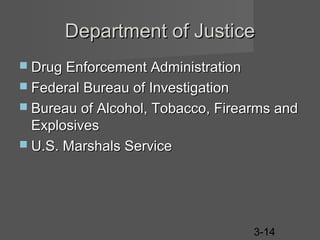
Department of Justice
 Drug Enforcement Administration
 Federal Bureau of Investigation
 Bureau of Alcohol, Tobacco, Firearms and

Explosives
 U.S. Marshals Service

3-14
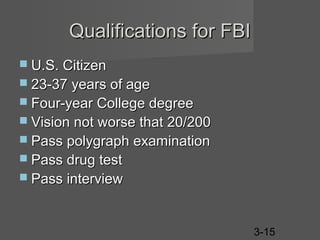
Qualifications for FBI
 U.S. Citizen
 23-37 years of age
 Four-year College degree
 Vision not worse that 20/200
 Pass polygraph examination
 Pass drug test
 Pass interview

3-15
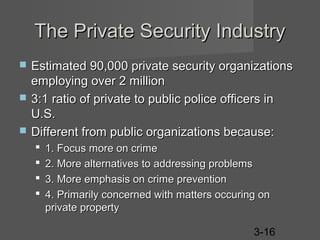
The Private Security Industry




Estimated 90,000 private security organizations
employing over 2 million
3:1 ratio of private to public police officers in
U.S.
Different from public organizations because:





1. Focus more on crime
2. More alternatives to addressing problems
3. More emphasis on crime prevention
4. Primarily concerned with matters occuring on
private property
3-16
Minimum Standards


No national police system
or national standards



U.S. Supreme Court
 Based on the Constitution



State Government
 Licensing or certification



Accreditation
3-17

Walker-8-chapter-3

  • 1.
    Police in America ChapterThree The Contemporary Law Enforcement Industry McGraw-Hill © 2013 McGraw-Hill Companies. All Rights Reserved.
  • 2.
    Basic Features ofAmerican Law Enforcement  Local Political Control  Tradition inherited from England  Primary responsibility for police protection rests with local governments  Result is a highly fragmented, decentralized system for regulating the different agencies  Police services provided on 4 different levels  City, County, State, Federal 3-2
  • 3.
    An “Industry” vs.International Perspective  “Industry” Perspective  This approach provides a consumer perspective on policing  Average citizen receive police services from several different agencies  International Perspective  Other countries have less fragmented systems  England only has 43 law enforcement agencies and Japan has 47 • Their national governments provides a significant part of their local agency ’s budgets 3-3
  • 4.
    Components of theAmerican Law Enforcement Industry  Private security  Private security firms  Security personnel  Government Agencies  Local • Municipal police • County Police • County sheriffs  State • State police • Bureaus of criminal investigation  Federal • Federal law enforcement agencies • Military law enforcement  Special district police • Public schools, transit police, college and university police  Native American tribal police 3-4
  • 5.
    Employment by stateand local law enforcement Local police Sheriff State police Special police           3-5
  • 6.
    Basic Sources onLaw Enforcement Agencies     The most comprehensive source of data on American law enforcement agencies is the report from the Bureau of Justice Statistics (BJS), Law Enforcement Management and Administrative Statistics. The most recent report is for 2010; BJS intends to conduct new surveys every 2-3 years. Additional data can be found in the FBI’s Uniform Crime Reports (UCR), published annually. Many law enforcement agencies now maintain their own website, which provides information about organizational structure and current programs. 3-6
  • 7.
    Contemporary Law Enforcement    Swornofficers vs. total number of employees Civilianization Police-population ratio  Officers per 1,000 population  Cost  Municipal police  County Sheriff     Law enforcement Courts Corrections State  State police - full service  Highway Patrol  Labor  Private Security  Over 2,000,000 people employed 3-7
  • 8.
    The Fragmentation Issue      Lackof coordination between agencies Crime displacement Duplication of services Inconsistent standards Alternative    Consolidation Contracting However, the problem may not be as serious as some have argued  The PSS concluded that small police departments were not necessarily less efficient than large departments  Small departments put more officers on the street performing direct police services 3-8
  • 9.
    Types of Agencies  Municipalpolice  represent 71 percent of all law enforcement agencies, handle serious crime, and provide emergency services  County police  Municipal police that operate on a county wide basis, constitute 1 percent  Sheriffs  Responsibilities defined in state constitution, elected position, serve all three components of criminal justice system: law enforcement, courts, and corrections 3-9
  • 10.
    Other Local Agencies  TheConstable  Role defined by state constitution  Typically work within county court system  The Coroner/Medical Examiner  Have responsibility to investigate crimes  Coroners are not trained physicians and are elected to their position  Medical Examiners are appointed and receive special training  Investigate 20 percent of deaths in U.S.  Special District Police  Serve particular government agencies, such as colleges and universities  Tribal Police  200 agencies to protect Native American tribes 3-10
  • 11.
    State Law EnforcementAgencies  State Police   Share responsibility with local police Varying degrees of criminal investigation responsibility depending on the state  Highway Patrol  Enforces traffic laws on the main highways  State Investigative Agencies 3-11
  • 12.
    Federal Law EnforcementAgencies  17 agencies employing 500 or more sworn officers  Role of each federal agency specified by federal statute  Federal Law Enforcement Post 9/11/01  Homeland Security Act  Department of Homeland Security and Department of Justice restructured 3-12
  • 13.
    Department of HomelandSecurity       Customs and Border Protection Immigration and Customs Enforcement Federal Emergency Management Agency Transportation Security Administration U.S. Coast Guard U.S. Secret Service 3-13
  • 14.
    Department of Justice Drug Enforcement Administration  Federal Bureau of Investigation  Bureau of Alcohol, Tobacco, Firearms and Explosives  U.S. Marshals Service 3-14
  • 15.
    Qualifications for FBI U.S. Citizen  23-37 years of age  Four-year College degree  Vision not worse that 20/200  Pass polygraph examination  Pass drug test  Pass interview 3-15
  • 16.
    The Private SecurityIndustry    Estimated 90,000 private security organizations employing over 2 million 3:1 ratio of private to public police officers in U.S. Different from public organizations because:     1. Focus more on crime 2. More alternatives to addressing problems 3. More emphasis on crime prevention 4. Primarily concerned with matters occuring on private property 3-16
  • 17.
    Minimum Standards  No nationalpolice system or national standards  U.S. Supreme Court  Based on the Constitution  State Government  Licensing or certification  Accreditation 3-17