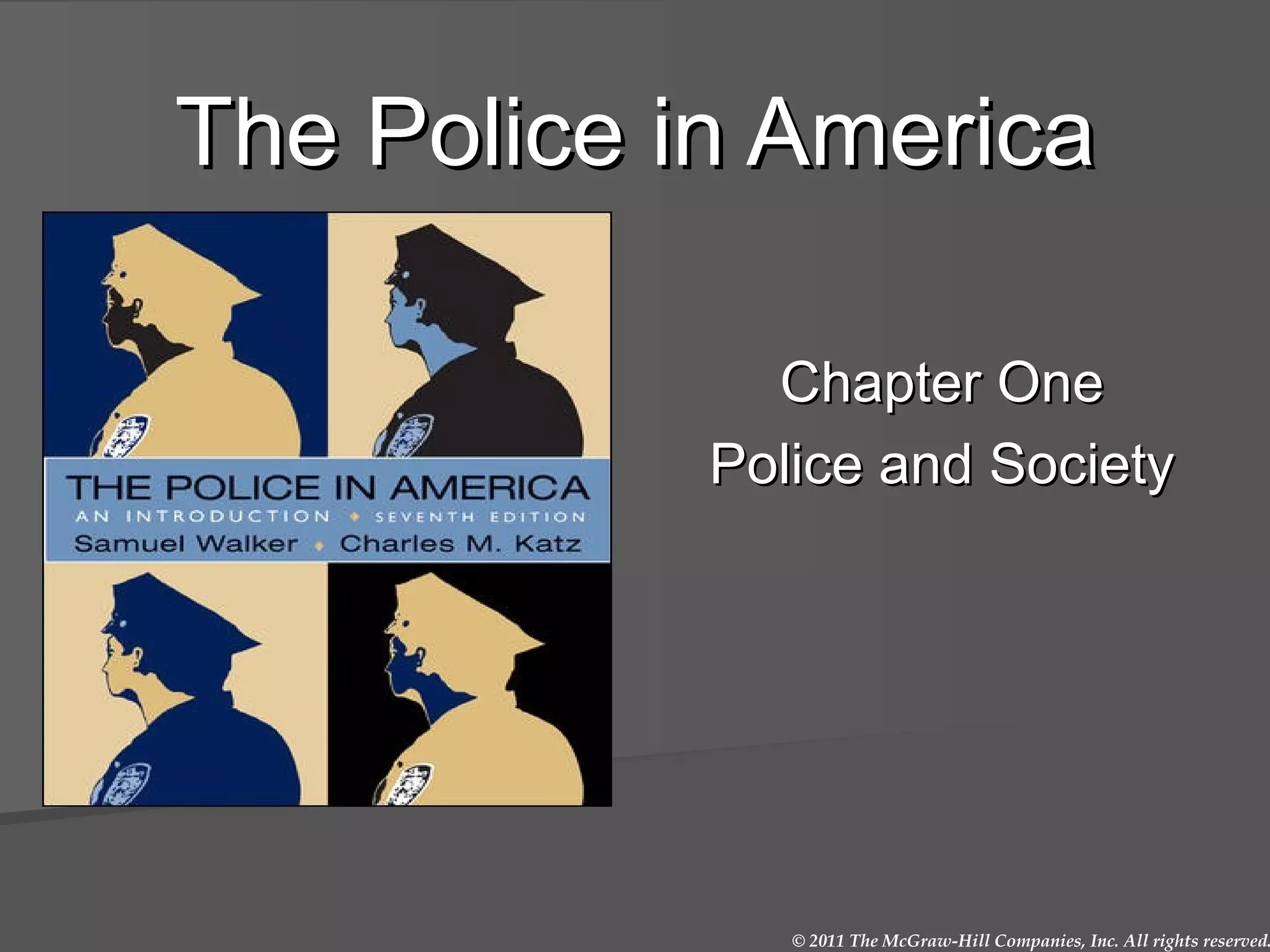
The Police in America Chapter One Police and Society
The Goals of the Book The purpose of this book is to provide the necessary background information about policing to help you, the reader, discuss such innovative programs as community policing, problem-oriented policing, zero-tolerance policing, and team policing. The book does not argue for or against any one of these innovations in policing.
Definition:  Law Enforcement Agency A General Service Law Enforcement Agency: Prevents crime Investigates crime and apprehends criminals Maintains order Provides many other miscellaneous services
Definition: Police Officer and Peace Officer A police officer is a nonmilitary person who is employed by a government agency and has the legal status of a peace officer. A peace officer is a status granted to individuals who have certain powers not available to ordinary citizens and who provide certain legal protections.  A peace officer can be police, probation, parole, or corrections officer.
Myths About Policing The Crime Fighter Myth Enforce the Law  Investigate Crimes Arrest Criminals Perpetuating the Crime Fighter Image Entertainment Media  News Media Police themselves Ignores order, maintenance, and peacekeeping
The Realities of Policing Complexity of the Police Role Ambiguities Discretion Conflict Studies of Police Work The Police Service Study Standards for Police Work The American Bar Association
American Bar Association,  Standards Relating to the Urban Police Function Identify criminal offenders and criminal activity and, when appropriate, apprehend offenders and participate in subsequent court proceedings Reduce the opportunities for the commission of some crimes through preventive patrol and other measures Aid individuals who are in danger of physical harm Protect constitutional guarantees Facilitate the movement of people and vehicles Assist those who cannot care for themselves Identify potentially serious law enforcement or government problems Create and maintain a feeling of security in the community Promote and preserve civil order Provide other services on an emergency basis
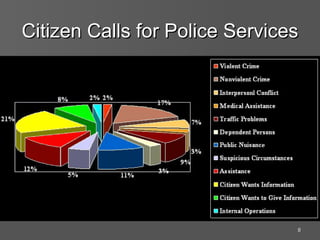
Citizen Calls for Police Services
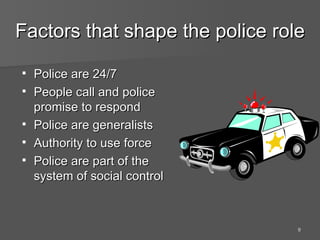
Factors that shape the police role Police are 24/7 People call and police promise to respond Police are generalists Authority to use force Police are part of the system of social control
Alternative Possibilities Problem-Oriented Policing Community Policing Zero-Tolerance Policing Honest Law Enforcement These topics will be discussed in future chapters.

Walker, Chapter 1

  • 1.
    The Police inAmerica Chapter One Police and Society
  • 2.
    The Goals ofthe Book The purpose of this book is to provide the necessary background information about policing to help you, the reader, discuss such innovative programs as community policing, problem-oriented policing, zero-tolerance policing, and team policing. The book does not argue for or against any one of these innovations in policing.
  • 3.
    Definition: LawEnforcement Agency A General Service Law Enforcement Agency: Prevents crime Investigates crime and apprehends criminals Maintains order Provides many other miscellaneous services
  • 4.
    Definition: Police Officerand Peace Officer A police officer is a nonmilitary person who is employed by a government agency and has the legal status of a peace officer. A peace officer is a status granted to individuals who have certain powers not available to ordinary citizens and who provide certain legal protections. A peace officer can be police, probation, parole, or corrections officer.
  • 5.
    Myths About PolicingThe Crime Fighter Myth Enforce the Law Investigate Crimes Arrest Criminals Perpetuating the Crime Fighter Image Entertainment Media News Media Police themselves Ignores order, maintenance, and peacekeeping
  • 6.
    The Realities ofPolicing Complexity of the Police Role Ambiguities Discretion Conflict Studies of Police Work The Police Service Study Standards for Police Work The American Bar Association
  • 7.
    American Bar Association, Standards Relating to the Urban Police Function Identify criminal offenders and criminal activity and, when appropriate, apprehend offenders and participate in subsequent court proceedings Reduce the opportunities for the commission of some crimes through preventive patrol and other measures Aid individuals who are in danger of physical harm Protect constitutional guarantees Facilitate the movement of people and vehicles Assist those who cannot care for themselves Identify potentially serious law enforcement or government problems Create and maintain a feeling of security in the community Promote and preserve civil order Provide other services on an emergency basis
  • 8.
    Citizen Calls forPolice Services
  • 9.
    Factors that shapethe police role Police are 24/7 People call and police promise to respond Police are generalists Authority to use force Police are part of the system of social control
  • 10.
    Alternative Possibilities Problem-OrientedPolicing Community Policing Zero-Tolerance Policing Honest Law Enforcement These topics will be discussed in future chapters.