VULVAR CANCER
GROUP 4 PRESENTATION
OBJECTIVES
By the end of this presentation, participants should be able to;
Describe vulvar cancer
Explain the risk factors of vulvar cancer
Explain the signs and symptoms of vulvar cancer
Explain how to prevent vulvar cancer
Explain the treatment of vulvar cancer
Explain the terminal care of the vulvar cancer
INTRODUCTION
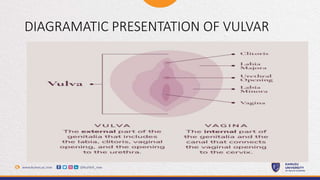
vulva is the external female genitalia that surround the opening to the
vagina; collectively these consist of the labia majora, the labia minora,
clitoris, vestibule of the vagina, bulb of the vestibule, and the glands of
Bartholin. All of these organs are located in front of the anus and below
the Mons pubis (the pad of fatty tissue at the forward junction of the
pelvic bones).
DIAGRAMATIC PRESENTATION OF VULVAR
VULVAR CANCER
Is the type of cancer that occurs on the outer surface area of the
female genitals and its commonly diagnosed in older women.
Its mostly caused by human papilloma virus.
It may be related to genital warts (sexually transmitted disease caused
by human papilloma virus).
Preverance of
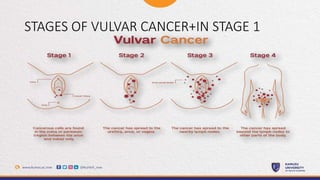
STAGES OF VULVAR CANCER+IN STAGE 1
RISK FACTORS OF VULVAR
• STIs like genital warts
• Age
• Smoking
• Low immunity (HIV and AIDS)
• Other genital cancers like cervical cancer
• Skin condition like lichen sclerosis
• Obesity-it often leads to insulin resistance where the body cells
become less responsive to insulin. This lead to higher levels of insulin
and insulin-like growth factors which can promote cell growth and
division contributing to cancer development.
CONT…
• Family history
• Previous cancer treatment like radiation therapy can increase the risk
of developing vulvar cancer
• Personal hygiene practices like use of harsh soaps
• Multiple sexual partners
SIGNS AND SYMPTOMS OF VULVAR CANCER
Bleeding that is not from menstruation
Itching and pain that doesn’t go away
A lump or wart like bumps or an open sore
Skin changes which looks slightly dark and thickening of skin
on the vulvar
Abnormal vaginal discharge which is foul smelling, watery and
bloody
Swelling of the vulvar with unknown cause
Painful urination
 enlarged groin lymph nodes
PREVENTION OF VULVAR CANCER
PRIMARY PREVENTION
Getting HPV vaccine
Avoid sexual intercourse with multiple partners
Delaying first sexual intercourse
Safe sex practices
Life style modification like quitting smoking
Abstainance
Education and campaign awareness
Screening for vulva cancer
CONTI…
SECONDARY PREVENTION
 Regular screening-regular gynecological check-ups can help detect
any abnormal changes in the vulvar
Self-Exams this will help woman to detect any abnormal appearance
of the vulvar
CONT …
TERTIARY PREVENTION
Regular follow-ups
Supportive care
Palliative care
Nutritional support
Pyscho-social support
TREATMENT OF VULVAR CANCER
1 AND 2 STAGES
Surgery-wide local excision and vulvectomy with removal of lymph
nodes in the groin and upper thigh
Radiation therapy
STAGE 3 AND 4
Surgery
Radiation
chemotherapy
TERMINAL CARE OF VULVAR CANCER
• Terminal refers to the advanced stage of cancer when it has spread
extensively and is no longer respond to the treatment.
• In the context of vulva cancer it would mean that the cancer has
progressed to an advanced stage and spread to other parts of the
body.
• The focus of terminal care is providing palliative care aiming at
managing symptoms, relieving pain, and improving the patients
quality of life rather than attempting to cure. Alternative treatments
can also be beneficial for those with terminal cancer.
CONT…
Alternative treatments can also be beneficial for those with terminal
cancer. Acupuncture, massage therapy, and relaxation techniques can
help alleviate pain and discomfort while also potentially decreasing
stress.
References
• World health organization ;International agency for research on
cancer (2020)malawi
• https://weillcornell.org/services/obstetrics-and-
gynecology/gynecologic-oncology/conditions-we-treat/vulvar-cancer
REFERENCES
VULVAR CANCER group 4.pptx

VULVAR CANCER group 4.pptx

  • 1.
  • 2.
    OBJECTIVES By the endof this presentation, participants should be able to; Describe vulvar cancer Explain the risk factors of vulvar cancer Explain the signs and symptoms of vulvar cancer Explain how to prevent vulvar cancer Explain the treatment of vulvar cancer Explain the terminal care of the vulvar cancer
  • 3.
    INTRODUCTION vulva is theexternal female genitalia that surround the opening to the vagina; collectively these consist of the labia majora, the labia minora, clitoris, vestibule of the vagina, bulb of the vestibule, and the glands of Bartholin. All of these organs are located in front of the anus and below the Mons pubis (the pad of fatty tissue at the forward junction of the pelvic bones).
  • 4.
  • 5.
    VULVAR CANCER Is thetype of cancer that occurs on the outer surface area of the female genitals and its commonly diagnosed in older women. Its mostly caused by human papilloma virus. It may be related to genital warts (sexually transmitted disease caused by human papilloma virus).
  • 6.
  • 7.
    STAGES OF VULVARCANCER+IN STAGE 1
  • 8.
    RISK FACTORS OFVULVAR • STIs like genital warts • Age • Smoking • Low immunity (HIV and AIDS) • Other genital cancers like cervical cancer • Skin condition like lichen sclerosis • Obesity-it often leads to insulin resistance where the body cells become less responsive to insulin. This lead to higher levels of insulin and insulin-like growth factors which can promote cell growth and division contributing to cancer development.
  • 9.
    CONT… • Family history •Previous cancer treatment like radiation therapy can increase the risk of developing vulvar cancer • Personal hygiene practices like use of harsh soaps • Multiple sexual partners
  • 10.
    SIGNS AND SYMPTOMSOF VULVAR CANCER Bleeding that is not from menstruation Itching and pain that doesn’t go away A lump or wart like bumps or an open sore Skin changes which looks slightly dark and thickening of skin on the vulvar Abnormal vaginal discharge which is foul smelling, watery and bloody Swelling of the vulvar with unknown cause Painful urination  enlarged groin lymph nodes
  • 11.
    PREVENTION OF VULVARCANCER PRIMARY PREVENTION Getting HPV vaccine Avoid sexual intercourse with multiple partners Delaying first sexual intercourse Safe sex practices Life style modification like quitting smoking Abstainance Education and campaign awareness Screening for vulva cancer
  • 12.
    CONTI… SECONDARY PREVENTION  Regularscreening-regular gynecological check-ups can help detect any abnormal changes in the vulvar Self-Exams this will help woman to detect any abnormal appearance of the vulvar
  • 13.
    CONT … TERTIARY PREVENTION Regularfollow-ups Supportive care Palliative care Nutritional support Pyscho-social support
  • 14.
    TREATMENT OF VULVARCANCER 1 AND 2 STAGES Surgery-wide local excision and vulvectomy with removal of lymph nodes in the groin and upper thigh Radiation therapy STAGE 3 AND 4 Surgery Radiation chemotherapy
  • 15.
    TERMINAL CARE OFVULVAR CANCER • Terminal refers to the advanced stage of cancer when it has spread extensively and is no longer respond to the treatment. • In the context of vulva cancer it would mean that the cancer has progressed to an advanced stage and spread to other parts of the body. • The focus of terminal care is providing palliative care aiming at managing symptoms, relieving pain, and improving the patients quality of life rather than attempting to cure. Alternative treatments can also be beneficial for those with terminal cancer.
  • 16.
    CONT… Alternative treatments canalso be beneficial for those with terminal cancer. Acupuncture, massage therapy, and relaxation techniques can help alleviate pain and discomfort while also potentially decreasing stress.
  • 17.
    References • World healthorganization ;International agency for research on cancer (2020)malawi • https://weillcornell.org/services/obstetrics-and- gynecology/gynecologic-oncology/conditions-we-treat/vulvar-cancer
  • 18.