Vocal Cord Nodule


Dr. Ornouma Sriwanishvipat MD, ENT
       Otorhinolaryngologist
       Voice Change Surgeon (Transgender)
       Snoring, Nose, Sinus Surgeon

 Yanhee International Hospital
 Charansanitwong, Bangok, Thaiand
 Website: dr-ornouma.com
 Email: yanhee_ent@yahoo.com
What are nodules?
   Nodules are symmetric, broad-based masses
    (“mass” simply means “lump,” and does not imply
    cancer) which occur at the midpoint of both vocal
    folds. This location suggests that nodules are the
    result of phonotrauma, the physical stresses on the
    vocal fold which occur with heavy voice use or
    voice use under adverse circumstances. It is a fact
    that nodules are found almost exclusively in young
    women and pre-adolescent boys, which suggest
    that laryngeal size may also be a factor that
    predisposes to nodule formation. Nodules are a
    well-known problem of professional and amateur
    singers. Some have hypothesized that it is due to
    the particular style of singing prevalent in musical
    theater, and others have proposed that it is simply
    related to the increased amount of voice use or the
    intensity of the performance schedule.
What are nodules?


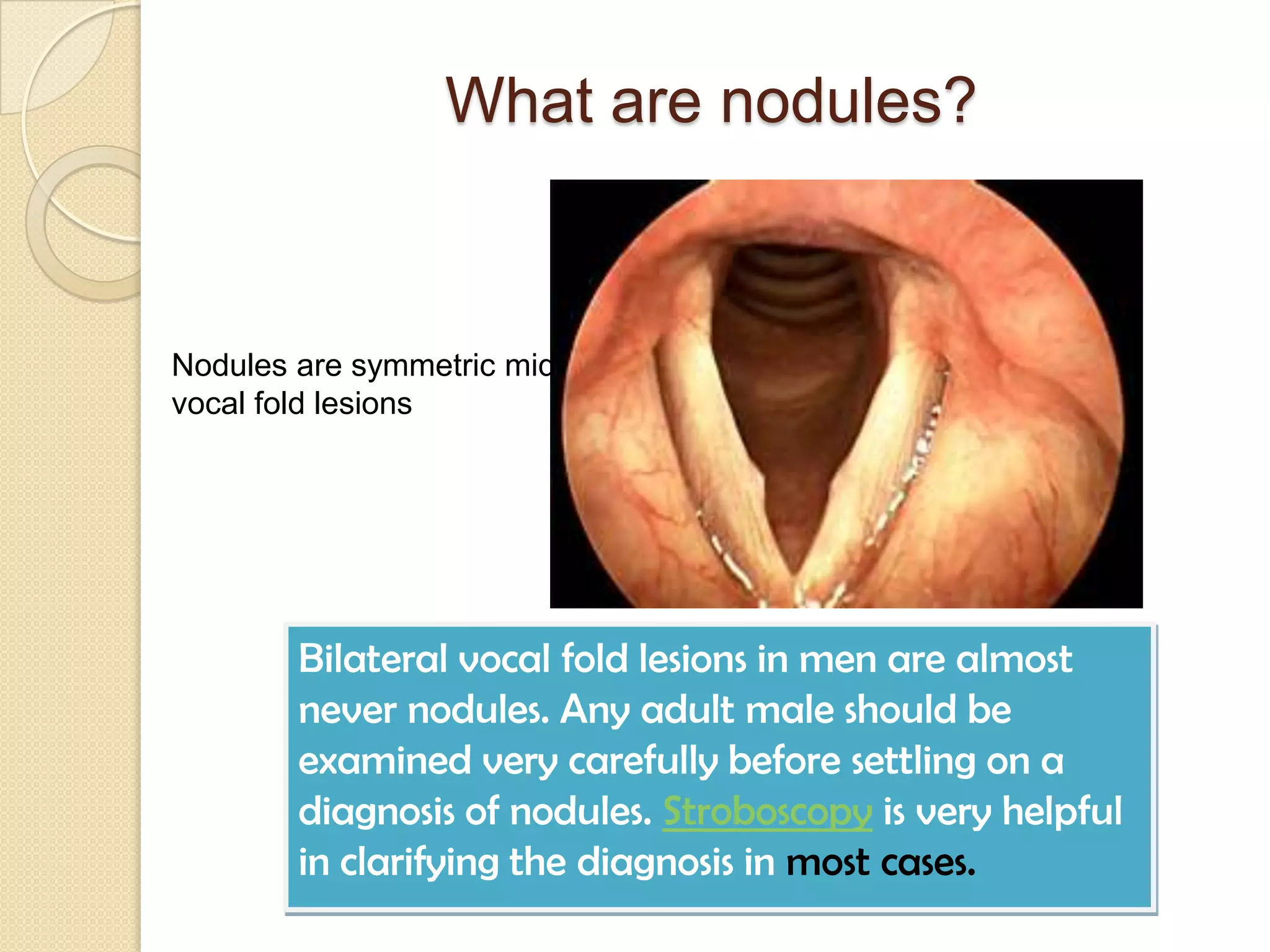
Nodules are symmetric mid-
vocal fold lesions


        Bilateral vocal fold lesions in men are almost
        never nodules. Any adult male should be
        examined very carefully before settling on a
        diagnosis of nodules. Stroboscopy is very helpful
        in clarifying the diagnosis in most cases.
What are nodules?
   Nodules are not precancerous or
    cancerous lesions. In general, the
    symmetric bilateral nature of
    nodules, and the fact that they occur
    in younger people is enough to
    remove any doubts about malignancy
    and make a biopsy unnecessary.
What are nodules?
   The term „nodules‟ is sometimes used
    to refer to any mass of the vocal folds,
    even by otolaryngologists. In addition
    to being imprecise, this can lead to
    confusion and errors in treatment and
    should be avoided.
What are the symptoms of
nodules?
   Nodules generally cause painless
    hoarseness. The hoarseness results
    from irregularities in vocal fold closure as
    well as irregularities in vibration, both the
    result of the bulk of the nodules. The
    hoarseness of nodules typically worsens
    with voice use or during a cold or sore
    throat and improves with voice rest.
    People with vocal fold nodules typically
    find their voice worse after cheering at a
    game, or an evening out with friends, or
    a strenuous vocal performance.
What are the symptoms of
nodules?
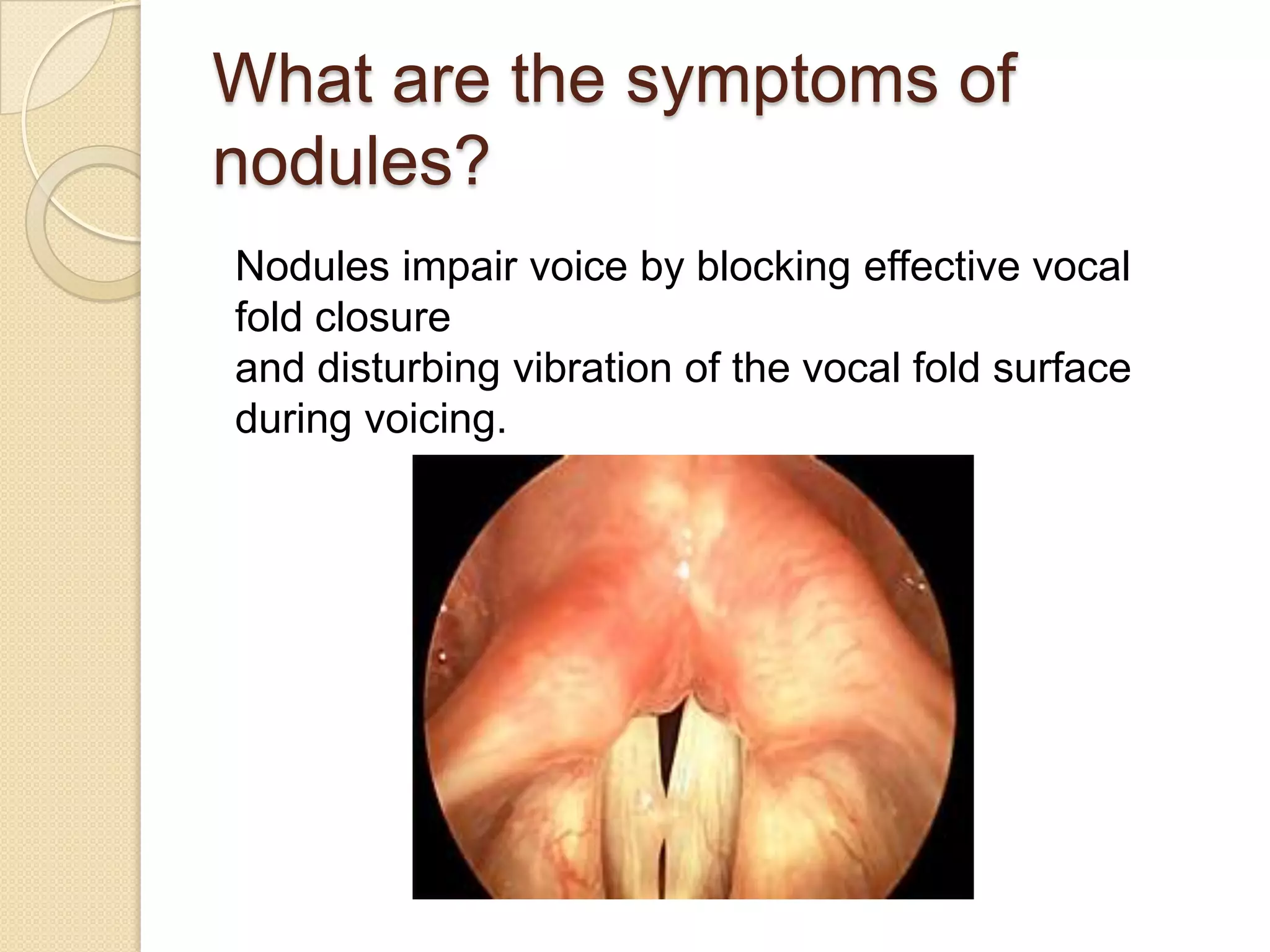
Nodules impair voice by blocking effective vocal
fold closure
and disturbing vibration of the vocal fold surface
during voicing.
What do nodules look like?
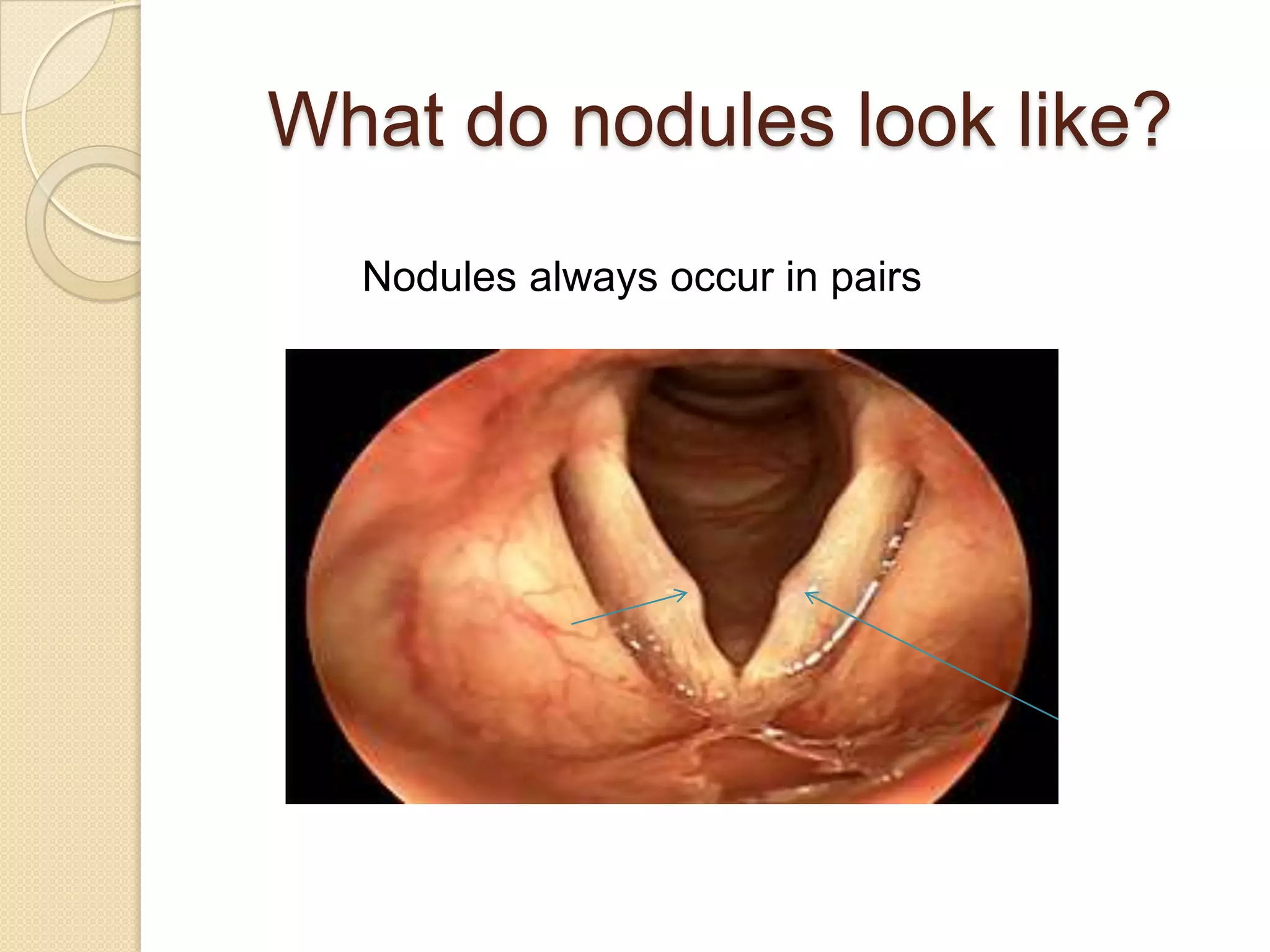
   Nodules are symmetric or nearly
    symmetric mid-vocal fold masses.
    They may vary in size from patient to
    patient. They are broad-based and
    resemble a mound of tissue that
    stands out from the edge of the fold.
    Nodules are the same color as the
    rest of the vocal fold. Nodules do not
    grow dramatically over the short-term,
    although they may swell with repeated
    trauma from voice use.
What do nodules look like?
  Nodules always occur in pairs
How are nodules treated?
   Voice rest, often prescribed in cases of
    hoarseness, may improve the voice
    somewhat, and even shrink the nodules, but
    is not likely to make them go away. Voice rest
    serves soften and dissolve swelling
    associated with phonotrauma. Voice rest can
    help restore baseline voice, but the
    hoarseness will recur the next time the voice
    is used strenuously unless underlying
    patterns of voice use change.
    Similarly, steroids, an anti-inflammatory
    medication, are often used to reduce
    swelling, but do not address the root problem.
How are nodules treated?
   Voice therapy is the mainstay of treatment for
    nodules. The goal is to make the person
    aware of circumstances and habits of voice
    use that have led to the problem, and to find
    strategies of voice use that will be less
    troublesome. It is important to understand
    that even excellent voice therapy and a
    determined patient usually do not make
    nodules disappear, because nodules appear
    to be partly a product of other factors like
    anatomy. Voice therapy will make nodules
    softer and more flexible and thereby improve
    the voice.
How are nodules treated?
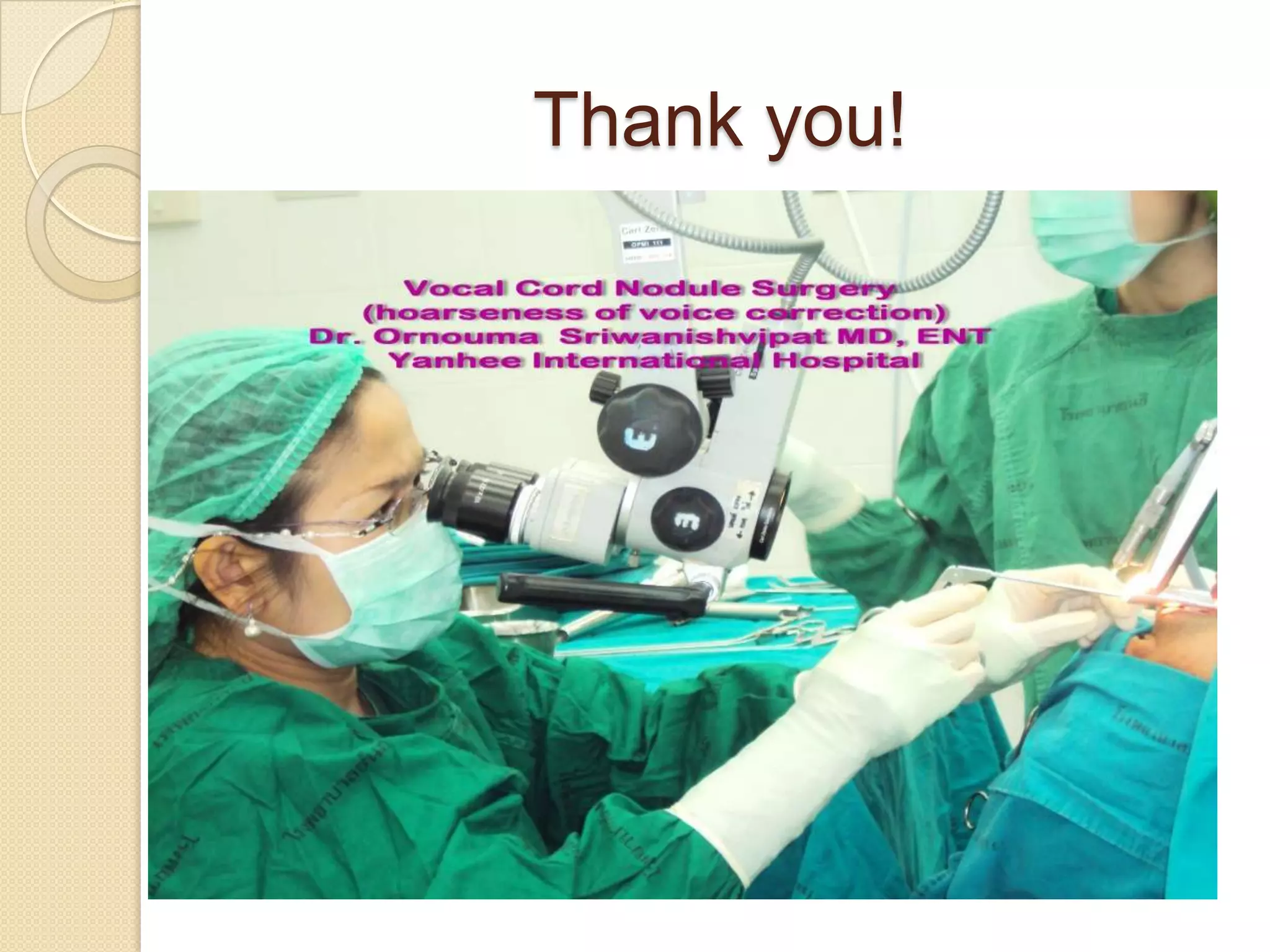
Microlaryngoscopic Surgery is
 considered in the management of
 nodules. Sometimes, however,
 nodules are so well-formed as a result
 of long-standing and repeated
 phonatory damage that no amount of
 voice therapy can improve the voice.
 Microlaryngoscopic surgery may be
 used to remove the tangle of
 hardened tissue that has
 accumulated.
Misconception
Misconceptions about nodules abound,
particularly in the performing arts
community. Because nodules result from
many factors, some beyond our ability to
change, they represent a condition that
needs to be managed over time, rather
than “fixed” once and for all. Also,
nodules are not a “career-ender” for the
professional vocalist. With discipline and
good judgment, nodules need not impair
a performing arts career.
Thank you!

Vocal cord nodule

  • 1.
    Vocal Cord Nodule Dr.Ornouma Sriwanishvipat MD, ENT Otorhinolaryngologist Voice Change Surgeon (Transgender) Snoring, Nose, Sinus Surgeon Yanhee International Hospital Charansanitwong, Bangok, Thaiand Website: dr-ornouma.com Email: yanhee_ent@yahoo.com
  • 2.
    What are nodules?  Nodules are symmetric, broad-based masses (“mass” simply means “lump,” and does not imply cancer) which occur at the midpoint of both vocal folds. This location suggests that nodules are the result of phonotrauma, the physical stresses on the vocal fold which occur with heavy voice use or voice use under adverse circumstances. It is a fact that nodules are found almost exclusively in young women and pre-adolescent boys, which suggest that laryngeal size may also be a factor that predisposes to nodule formation. Nodules are a well-known problem of professional and amateur singers. Some have hypothesized that it is due to the particular style of singing prevalent in musical theater, and others have proposed that it is simply related to the increased amount of voice use or the intensity of the performance schedule.
  • 3.
    What are nodules? Nodulesare symmetric mid- vocal fold lesions Bilateral vocal fold lesions in men are almost never nodules. Any adult male should be examined very carefully before settling on a diagnosis of nodules. Stroboscopy is very helpful in clarifying the diagnosis in most cases.
  • 4.
    What are nodules?  Nodules are not precancerous or cancerous lesions. In general, the symmetric bilateral nature of nodules, and the fact that they occur in younger people is enough to remove any doubts about malignancy and make a biopsy unnecessary.
  • 5.
    What are nodules?  The term „nodules‟ is sometimes used to refer to any mass of the vocal folds, even by otolaryngologists. In addition to being imprecise, this can lead to confusion and errors in treatment and should be avoided.
  • 6.
    What are thesymptoms of nodules?  Nodules generally cause painless hoarseness. The hoarseness results from irregularities in vocal fold closure as well as irregularities in vibration, both the result of the bulk of the nodules. The hoarseness of nodules typically worsens with voice use or during a cold or sore throat and improves with voice rest. People with vocal fold nodules typically find their voice worse after cheering at a game, or an evening out with friends, or a strenuous vocal performance.
  • 7.
    What are thesymptoms of nodules? Nodules impair voice by blocking effective vocal fold closure and disturbing vibration of the vocal fold surface during voicing.
  • 8.
    What do noduleslook like?  Nodules are symmetric or nearly symmetric mid-vocal fold masses. They may vary in size from patient to patient. They are broad-based and resemble a mound of tissue that stands out from the edge of the fold. Nodules are the same color as the rest of the vocal fold. Nodules do not grow dramatically over the short-term, although they may swell with repeated trauma from voice use.
  • 9.
    What do noduleslook like? Nodules always occur in pairs
  • 10.
    How are nodulestreated?  Voice rest, often prescribed in cases of hoarseness, may improve the voice somewhat, and even shrink the nodules, but is not likely to make them go away. Voice rest serves soften and dissolve swelling associated with phonotrauma. Voice rest can help restore baseline voice, but the hoarseness will recur the next time the voice is used strenuously unless underlying patterns of voice use change. Similarly, steroids, an anti-inflammatory medication, are often used to reduce swelling, but do not address the root problem.
  • 11.
    How are nodulestreated?  Voice therapy is the mainstay of treatment for nodules. The goal is to make the person aware of circumstances and habits of voice use that have led to the problem, and to find strategies of voice use that will be less troublesome. It is important to understand that even excellent voice therapy and a determined patient usually do not make nodules disappear, because nodules appear to be partly a product of other factors like anatomy. Voice therapy will make nodules softer and more flexible and thereby improve the voice.
  • 12.
    How are nodulestreated? Microlaryngoscopic Surgery is considered in the management of nodules. Sometimes, however, nodules are so well-formed as a result of long-standing and repeated phonatory damage that no amount of voice therapy can improve the voice. Microlaryngoscopic surgery may be used to remove the tangle of hardened tissue that has accumulated.
  • 13.
    Misconception Misconceptions about nodulesabound, particularly in the performing arts community. Because nodules result from many factors, some beyond our ability to change, they represent a condition that needs to be managed over time, rather than “fixed” once and for all. Also, nodules are not a “career-ender” for the professional vocalist. With discipline and good judgment, nodules need not impair a performing arts career.
  • 14.