Cure for Snoring and
                Sleep Apnea
Dr. Ornouma Sriwanishvipat MD, ENT
      - Otorhinolaryngologist
      - Snoring Surgeon
      - Nose & Sinus Surgeon
      - Head and Neck surgeon
      - Voice Surgeon
   Yanhee International Hospital
   Charansanitwong, Bangok, Thaiand
   Website: dr-ornouma.com
   Email: yanhee_ent@yahoo.com
What is Snoring?
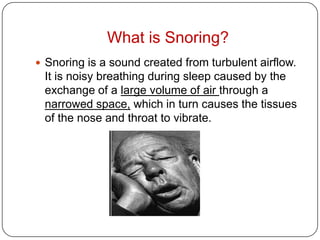
 Snoring is a sound created from turbulent airflow.
 It is noisy breathing during sleep caused by the
 exchange of a large volume of air through a
 narrowed space, which in turn causes the tissues
 of the nose and throat to vibrate.
How does snoring affect your
               health?
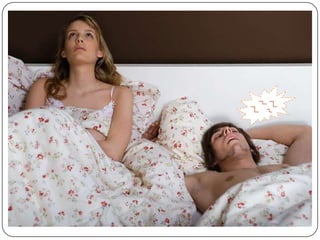
 This nighttime annoyance may indicate a serious
    health condition, and it can disrupt household and
    strain relationships.
   Snoring is common. More than one-third of adults
    snore at least a few nights each week.
   Habitual snoring may be more than just a nuisance
    and a cause of daytime sleepiness.
   Untreated, persistent snoring caused by obstructive
    sleep apnea may raise lifetime risk of developing such
    health problems as high blood pressure, heart failure
    and stroke.
   In children, obstructive sleep apnea may increase
    their risk of attention-deficit/hyperactivity disorder
    (ADHD.
What are the causes of snoring?
 As patient doze off and progress from a lighter
    sleep to a deep sleep, the muscles in the roof of
    the mouth (soft palate), tongue and throat relax.
   If the tissues in the throat relax enough, they
    vibrate and may partially obstruct the airway.
   The more narrowed airway, the more forceful the
    airflow becomes.
   Tissue vibration increases, and snoring grows
    louder.
   Snoring may be an occasional problem, or it may
    be habitual.
What contributes to snoring?
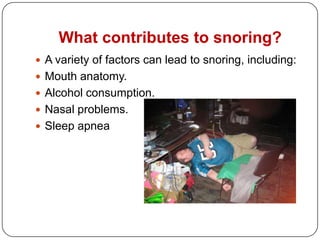
 A variety of factors can lead to snoring, including:
 Mouth anatomy.
 Alcohol consumption.
 Nasal problems.
 Sleep apnea
What contributes to snoring?

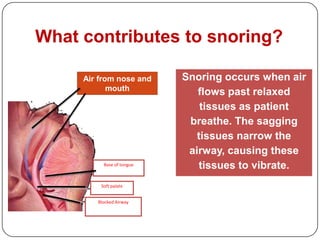
     Air from nose and     Snoring occurs when air
            mouth
                              flows past relaxed
                               tissues as patient
                            breathe. The sagging
                              tissues narrow the
                            airway, causing these
          Base of tongue      tissues to vibrate.
         Soft palate


        Blocked Airway
When to seek medical advice?
 Patient may not be aware that he snores, but bed
    partner likely is.
   Snoring may indicate another health concern, such as
    obstructive sleep apnea, nasal obstruction or obesity.
   If child snores, ask pediatrician about the problem.
    Children, too, can have obstructive sleep apnea,
    though most don't.
   Nose and throat problems, such as enlarged tonsils,
    and obesity often underlie habitual snoring in children.
   Treating these conditions could help the child sleep
    better at night.
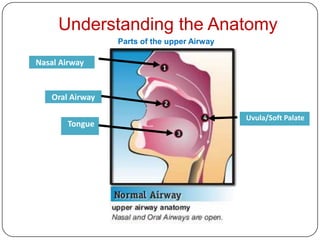
Understanding the Anatomy
                 Parts of the upper Airway

Nasal Airway


   Oral Airway

                                             Uvula/Soft Palate
       Tongue
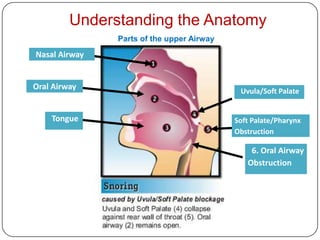
Understanding the Anatomy
               Parts of the upper Airway
Nasal Airway


Oral Airway                                 Uvula/Soft Palate


    Tongue                                 Soft Palate/Pharynx
                                           Obstruction

                                               6. Oral Airway
                                              Obstruction
How can Dr. Ornouma be of help?
Here is a bunch of advice
 Self Care: To restore peace and quiet as well as domestic
    harmony, lifestyle changes, such as…
   Loose weight- Being overweight is a common cause of
    snoring. Loose throat tissues are more likely to vibrate as
    patient breathes, and extra bulkiness in the throat narrows
    airway.
   Sleep on one side.
   Nasal strips.
   Treat nasal congestion or obstruction.
   Limit or avoid alcohol and sedatives.
   YOGA- It helps :
     STRESS REDUCTION
     RELIEF OF PAIN
     MEDICATION REDUCTION
advice
 In addition, surgery is available that may reduce
  disruptive snoring.
 However, surgery isn't suitable for everyone who
  snores.
 People with obstructive sleep apnea, a potentially
  serious disorder characterized by episodes of loud
  snoring followed by periods of silence when breathing
  briefly stops, aren't always good candidates for
  surgery.
advice
 Physical examination:
 The partner may need to answer some questions
 about when and how his/her partner snores to
 help doctor assess the severity of the problem.

 Parents are asked about the severity of a child's
 snoring.

 This may require that to stay overnight at a sleep
 center to undergo an in-depth analysis of sleep
 habits by a team of specialists.
Treatments
 First recommends lifestyle changes, such as
  losing weight, avoiding alcohol close to
  bedtime and changing sleeping positions.
 If lifestyle changes don't eliminate snoring:
   Oral appliances.
   Traditional surgery / uvulopalatopharyngoplasty
    (UPPP).
   Laser surgery.
   Radio frequency tissue ablation (somnoplasty).
   Continuous positive airway pressure (CPAP)
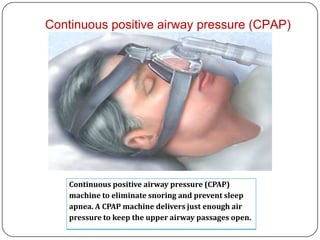
Continuous positive airway pressure (CPAP)


    Continuous positive airway pressure (CPAP)
    machine to eliminate snoring and prevent sleep
    apnea. A CPAP machine delivers just enough air
    pressure to keep the upper airway passages open.
The Surgical Procedure
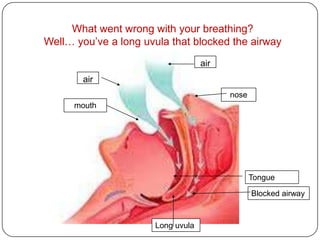
What went wrong with your breathing?
Well… you’ve a long uvula that blocked the airway
                                   air
        air
                                         nose
      mouth


                                                Tongue

                                                Blocked airway


                      Long uvula
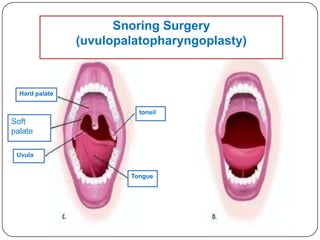
Snoring Surgery
                (uvulopalatopharyngoplasty)


  Hard palate

                          tonsil
Soft                      ring
palate

 Uvula


                        Tongue
Now you can sleep
   like a baby!

Cure for snoring and Sleep Apnea

  • 1.
    Cure for Snoringand Sleep Apnea Dr. Ornouma Sriwanishvipat MD, ENT - Otorhinolaryngologist - Snoring Surgeon - Nose & Sinus Surgeon - Head and Neck surgeon - Voice Surgeon Yanhee International Hospital Charansanitwong, Bangok, Thaiand Website: dr-ornouma.com Email: yanhee_ent@yahoo.com
  • 3.
    What is Snoring? Snoring is a sound created from turbulent airflow. It is noisy breathing during sleep caused by the exchange of a large volume of air through a narrowed space, which in turn causes the tissues of the nose and throat to vibrate.
  • 4.
    How does snoringaffect your health?  This nighttime annoyance may indicate a serious health condition, and it can disrupt household and strain relationships.  Snoring is common. More than one-third of adults snore at least a few nights each week.  Habitual snoring may be more than just a nuisance and a cause of daytime sleepiness.  Untreated, persistent snoring caused by obstructive sleep apnea may raise lifetime risk of developing such health problems as high blood pressure, heart failure and stroke.  In children, obstructive sleep apnea may increase their risk of attention-deficit/hyperactivity disorder (ADHD.
  • 5.
    What are thecauses of snoring?  As patient doze off and progress from a lighter sleep to a deep sleep, the muscles in the roof of the mouth (soft palate), tongue and throat relax.  If the tissues in the throat relax enough, they vibrate and may partially obstruct the airway.  The more narrowed airway, the more forceful the airflow becomes.  Tissue vibration increases, and snoring grows louder.  Snoring may be an occasional problem, or it may be habitual.
  • 6.
    What contributes tosnoring?  A variety of factors can lead to snoring, including:  Mouth anatomy.  Alcohol consumption.  Nasal problems.  Sleep apnea
  • 7.
    What contributes tosnoring? Air from nose and Snoring occurs when air mouth flows past relaxed tissues as patient breathe. The sagging tissues narrow the airway, causing these Base of tongue tissues to vibrate. Soft palate Blocked Airway
  • 8.
    When to seekmedical advice?  Patient may not be aware that he snores, but bed partner likely is.  Snoring may indicate another health concern, such as obstructive sleep apnea, nasal obstruction or obesity.  If child snores, ask pediatrician about the problem. Children, too, can have obstructive sleep apnea, though most don't.  Nose and throat problems, such as enlarged tonsils, and obesity often underlie habitual snoring in children.  Treating these conditions could help the child sleep better at night.
  • 9.
    Understanding the Anatomy Parts of the upper Airway Nasal Airway Oral Airway Uvula/Soft Palate Tongue
  • 10.
    Understanding the Anatomy Parts of the upper Airway Nasal Airway Oral Airway Uvula/Soft Palate Tongue Soft Palate/Pharynx Obstruction 6. Oral Airway Obstruction
  • 11.
    How can Dr.Ornouma be of help?
  • 12.
    Here is abunch of advice  Self Care: To restore peace and quiet as well as domestic harmony, lifestyle changes, such as…  Loose weight- Being overweight is a common cause of snoring. Loose throat tissues are more likely to vibrate as patient breathes, and extra bulkiness in the throat narrows airway.  Sleep on one side.  Nasal strips.  Treat nasal congestion or obstruction.  Limit or avoid alcohol and sedatives.  YOGA- It helps :  STRESS REDUCTION  RELIEF OF PAIN  MEDICATION REDUCTION
  • 13.
    advice  In addition,surgery is available that may reduce disruptive snoring.  However, surgery isn't suitable for everyone who snores.  People with obstructive sleep apnea, a potentially serious disorder characterized by episodes of loud snoring followed by periods of silence when breathing briefly stops, aren't always good candidates for surgery.
  • 14.
    advice  Physical examination: The partner may need to answer some questions about when and how his/her partner snores to help doctor assess the severity of the problem.  Parents are asked about the severity of a child's snoring.  This may require that to stay overnight at a sleep center to undergo an in-depth analysis of sleep habits by a team of specialists.
  • 15.
    Treatments  First recommendslifestyle changes, such as losing weight, avoiding alcohol close to bedtime and changing sleeping positions.  If lifestyle changes don't eliminate snoring:  Oral appliances.  Traditional surgery / uvulopalatopharyngoplasty (UPPP).  Laser surgery.  Radio frequency tissue ablation (somnoplasty).  Continuous positive airway pressure (CPAP)
  • 16.
    Continuous positive airwaypressure (CPAP) Continuous positive airway pressure (CPAP) machine to eliminate snoring and prevent sleep apnea. A CPAP machine delivers just enough air pressure to keep the upper airway passages open.
  • 17.
  • 18.
    What went wrongwith your breathing? Well… you’ve a long uvula that blocked the airway air air nose mouth Tongue Blocked airway Long uvula
  • 19.
    Snoring Surgery (uvulopalatopharyngoplasty) Hard palate tonsil Soft ring palate Uvula Tongue
  • 20.
    Now you cansleep like a baby!