A study of different vitamins &
there purposes.
This is a study at a look at different vitamins
& supplements for 2019 for Literary Elegance
Ladies Book Club in Sign Language.
December 2018/January 2019
A snap shot at vitamins &
supplements.
● I, Beth Lynn & book club,Literary Elegance
Ladies Book Club in Sign Language for
2019 are looking at vitamins &
supplements & what they are for.
● All of this information is free on public
domain. You are welcome to this
presentation.
● This is our mini reference book on vitamins
& Supplements.
Disclaimer:
● We, Literary Elegance Ladies Book Club in Sign
Language, want this information accessible from our
laptops, phones, ipads, tablets,etc.
● This is for references purposes only.
● This is for personal use.
● This is of our/my own opinion. This is a group project, we
are all working on this.
● We,are not giving advise or dispensing advise
●
This doesn't replace doctors care.
A look at vitamins & Supplements
& their uses.
“Doctors don't cure disease; we merely help patients live
with their illness.”
by Dr. Alan R. Gaby, M.D., Professor of Nutrition, Bastyr
University, Bothwell Washington, had to say in the
forward of the book Nature's Medicines: From Asthma to
Weight Gain, from Colds to Heart Disease- The Most
Powerful All-Natural Cures Hardcover – August 27, 1999
by Gale Maleskey (Author)Publisher: Rodale Books
Mini Reference Guide for Vitamins
● We, will be doing this project for 2019 in sections and posting as we get each
section complete.
● We will be looking at all vitamins & Supplements & Herbs for their uses.
●
This is a handy dandy blues clues notebook reference guide.
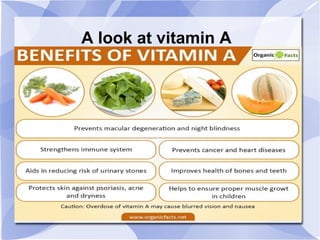
A look at vitamin A
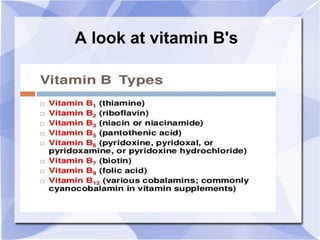
A look at vitamin B's
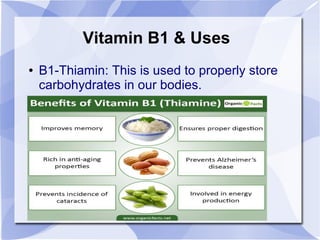
Vitamin B1 & Uses
● B1-Thiamin: This is used to properly store
carbohydrates in our bodies.
●
●
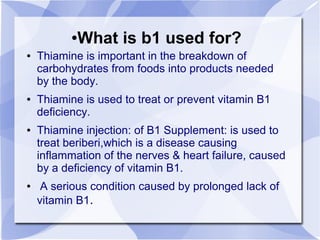
●What is b1 used for?
● Thiamine is important in the breakdown of
carbohydrates from foods into products needed
by the body.
● Thiamine is used to treat or prevent vitamin B1
deficiency.
● Thiamine injection: of B1 Supplement: is used to
treat beriberi,which is a disease causing
inflammation of the nerves & heart failure, caused
by a deficiency of vitamin B1.
● A serious condition caused by prolonged lack of
vitamin B1.
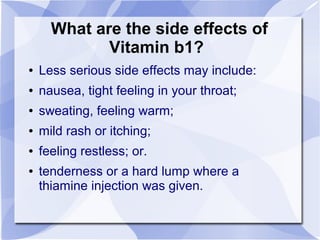
What are the side effects of
Vitamin b1?
● Less serious side effects may include:
● nausea, tight feeling in your throat;
● sweating, feeling warm;
● mild rash or itching;
● feeling restless; or.
● tenderness or a hard lump where a
thiamine injection was given.
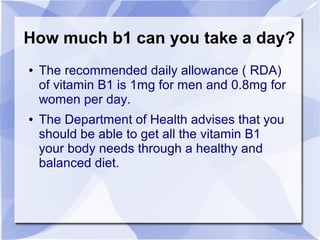
How much b1 can you take a day?
● The recommended daily allowance ( RDA)
of vitamin B1 is 1mg for men and 0.8mg for
women per day.
● The Department of Health advises that you
should be able to get all the vitamin B1
your body needs through a healthy and
balanced diet.
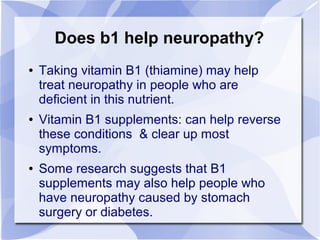
Does b1 help neuropathy?
● Taking vitamin B1 (thiamine) may help
treat neuropathy in people who are
deficient in this nutrient.
● Vitamin B1 supplements: can help reverse
these conditions & clear up most
symptoms.
● Some research suggests that B1
supplements may also help people who
have neuropathy caused by stomach
surgery or diabetes.
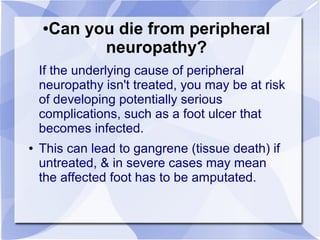
●Can you die from peripheral
neuropathy?
If the underlying cause of peripheral
neuropathy isn't treated, you may be at risk
of developing potentially serious
complications, such as a foot ulcer that
becomes infected.
● This can lead to gangrene (tissue death) if
untreated, & in severe cases may mean
the affected foot has to be amputated.
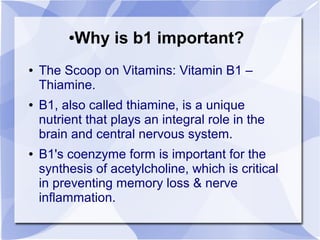
●Why is b1 important?
● The Scoop on Vitamins: Vitamin B1 –
Thiamine.
● B1, also called thiamine, is a unique
nutrient that plays an integral role in the
brain and central nervous system.
● B1's coenzyme form is important for the
synthesis of acetylcholine, which is critical
in preventing memory loss & nerve
inflammation.
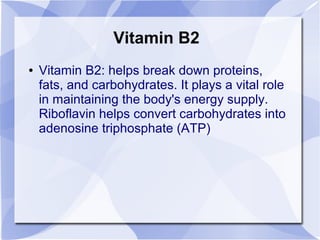
Vitamin B2
● Vitamin B2: helps break down proteins,
fats, and carbohydrates. It plays a vital role
in maintaining the body's energy supply.
Riboflavin helps convert carbohydrates into
adenosine triphosphate (ATP)
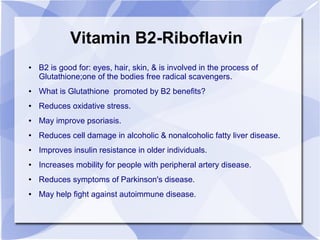
Vitamin B2-Riboflavin
● B2 is good for: eyes, hair, skin, & is involved in the process of
Glutathione;one of the bodies free radical scavengers.
● What is Glutathione promoted by B2 benefits?
● Reduces oxidative stress.
● May improve psoriasis.
● Reduces cell damage in alcoholic & nonalcoholic fatty liver disease.
● Improves insulin resistance in older individuals.
● Increases mobility for people with peripheral artery disease.
● Reduces symptoms of Parkinson's disease.
● May help fight against autoimmune disease.
What does B3 do?
● B3 is a blood sugar regulator.
● Having enough niacin, or vitamin B3, in the
body is important for general good health.
● As a treatment, higher amounts of niacin
can improve cholesterol levels and lower
cardiovascular risks
B4 uses
● Vitamin B4 :is a former designation given to several distinct chemical compounds,
none of which is currently considered a true vitamin: Adenine. Carnitine. Choline.
● What foods contain b4?
● Foods Rich In Vitamin B4 To Overcome Vitamin B4 Deficiency
● Whole Grains:. Whole grains are a good source of several B vitamins, including vitamin
B4.
● Whole Wheat Bread: Bread has long been a part of the human diet for several years.
● Cloves. Cloves are the widely used spices in India used in a variety of cooking dishes.
Caraway Seeds.
● Strawberry.
● Capsicum.
● Apples. .
● Ginger.
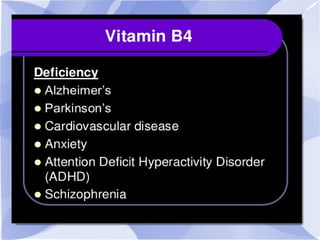
Vitamin B4 Uses
● Source: Vitamin B4 By Azamu Shahiullah BRAC
University
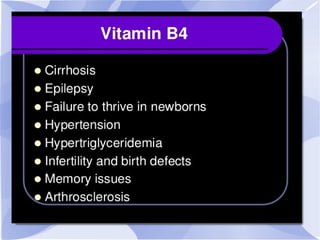
● Source: Vitamin B4 By Azamu Shahiullah BRAC University
●
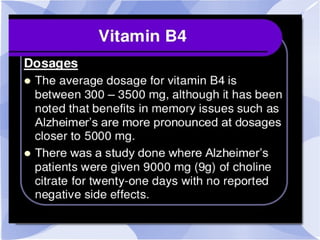
Source: Vitamin B4 By Azamu Shahiullah BRAC University
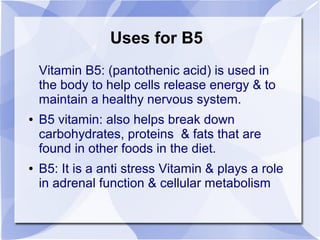
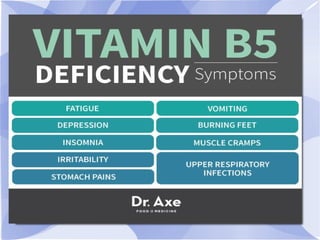
Uses for B5
Vitamin B5: (pantothenic acid) is used in
the body to help cells release energy & to
maintain a healthy nervous system.
● B5 vitamin: also helps break down
carbohydrates, proteins & fats that are
found in other foods in the diet.
● B5: It is a anti stress Vitamin & plays a role
in adrenal function & cellular metabolism
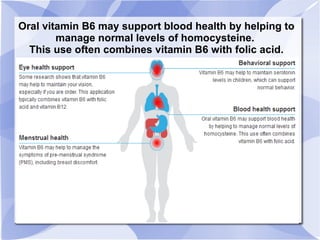
Oral vitamin B6 may support blood health by helping to
manage normal levels of homocysteine.
This use often combines vitamin B6 with folic acid.
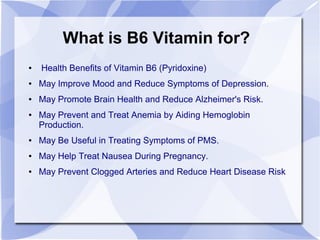
What is B6 Vitamin for?
● Health Benefits of Vitamin B6 (Pyridoxine)
● May Improve Mood and Reduce Symptoms of Depression.
● May Promote Brain Health and Reduce Alzheimer's Risk.
● May Prevent and Treat Anemia by Aiding Hemoglobin
Production.
● May Be Useful in Treating Symptoms of PMS.
● May Help Treat Nausea During Pregnancy.
● May Prevent Clogged Arteries and Reduce Heart Disease Risk
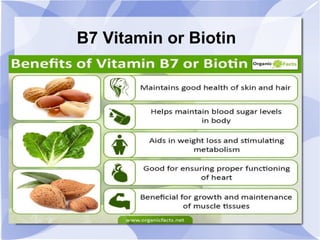
B7 Vitamin or Biotin
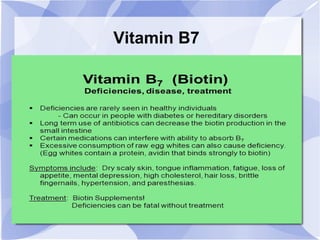
Vitamin B7
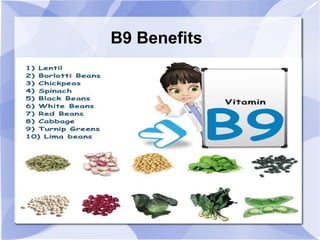
B9 Benefits
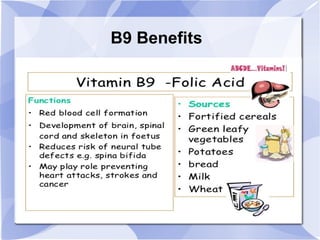
B9 Benefits
Vitamin uses with sources

Vitamin uses with sources

  • 1.
    A study ofdifferent vitamins & there purposes. This is a study at a look at different vitamins & supplements for 2019 for Literary Elegance Ladies Book Club in Sign Language. December 2018/January 2019
  • 2.
    A snap shotat vitamins & supplements. ● I, Beth Lynn & book club,Literary Elegance Ladies Book Club in Sign Language for 2019 are looking at vitamins & supplements & what they are for. ● All of this information is free on public domain. You are welcome to this presentation. ● This is our mini reference book on vitamins & Supplements.
  • 3.
    Disclaimer: ● We, LiteraryElegance Ladies Book Club in Sign Language, want this information accessible from our laptops, phones, ipads, tablets,etc. ● This is for references purposes only. ● This is for personal use. ● This is of our/my own opinion. This is a group project, we are all working on this. ● We,are not giving advise or dispensing advise ● This doesn't replace doctors care.
  • 4.
    A look atvitamins & Supplements & their uses. “Doctors don't cure disease; we merely help patients live with their illness.” by Dr. Alan R. Gaby, M.D., Professor of Nutrition, Bastyr University, Bothwell Washington, had to say in the forward of the book Nature's Medicines: From Asthma to Weight Gain, from Colds to Heart Disease- The Most Powerful All-Natural Cures Hardcover – August 27, 1999 by Gale Maleskey (Author)Publisher: Rodale Books
  • 5.
    Mini Reference Guidefor Vitamins ● We, will be doing this project for 2019 in sections and posting as we get each section complete. ● We will be looking at all vitamins & Supplements & Herbs for their uses. ● This is a handy dandy blues clues notebook reference guide.
  • 8.
    A look atvitamin A
  • 11.
    A look atvitamin B's
  • 12.
    Vitamin B1 &Uses ● B1-Thiamin: This is used to properly store carbohydrates in our bodies. ● ●
  • 13.
    ●What is b1used for? ● Thiamine is important in the breakdown of carbohydrates from foods into products needed by the body. ● Thiamine is used to treat or prevent vitamin B1 deficiency. ● Thiamine injection: of B1 Supplement: is used to treat beriberi,which is a disease causing inflammation of the nerves & heart failure, caused by a deficiency of vitamin B1. ● A serious condition caused by prolonged lack of vitamin B1.
  • 14.
    What are theside effects of Vitamin b1? ● Less serious side effects may include: ● nausea, tight feeling in your throat; ● sweating, feeling warm; ● mild rash or itching; ● feeling restless; or. ● tenderness or a hard lump where a thiamine injection was given.
  • 15.
    How much b1can you take a day? ● The recommended daily allowance ( RDA) of vitamin B1 is 1mg for men and 0.8mg for women per day. ● The Department of Health advises that you should be able to get all the vitamin B1 your body needs through a healthy and balanced diet.
  • 16.
    Does b1 helpneuropathy? ● Taking vitamin B1 (thiamine) may help treat neuropathy in people who are deficient in this nutrient. ● Vitamin B1 supplements: can help reverse these conditions & clear up most symptoms. ● Some research suggests that B1 supplements may also help people who have neuropathy caused by stomach surgery or diabetes.
  • 17.
    ●Can you diefrom peripheral neuropathy? If the underlying cause of peripheral neuropathy isn't treated, you may be at risk of developing potentially serious complications, such as a foot ulcer that becomes infected. ● This can lead to gangrene (tissue death) if untreated, & in severe cases may mean the affected foot has to be amputated.
  • 18.
    ●Why is b1important? ● The Scoop on Vitamins: Vitamin B1 – Thiamine. ● B1, also called thiamine, is a unique nutrient that plays an integral role in the brain and central nervous system. ● B1's coenzyme form is important for the synthesis of acetylcholine, which is critical in preventing memory loss & nerve inflammation.
  • 19.
    Vitamin B2 ● VitaminB2: helps break down proteins, fats, and carbohydrates. It plays a vital role in maintaining the body's energy supply. Riboflavin helps convert carbohydrates into adenosine triphosphate (ATP)
  • 20.
    Vitamin B2-Riboflavin ● B2is good for: eyes, hair, skin, & is involved in the process of Glutathione;one of the bodies free radical scavengers. ● What is Glutathione promoted by B2 benefits? ● Reduces oxidative stress. ● May improve psoriasis. ● Reduces cell damage in alcoholic & nonalcoholic fatty liver disease. ● Improves insulin resistance in older individuals. ● Increases mobility for people with peripheral artery disease. ● Reduces symptoms of Parkinson's disease. ● May help fight against autoimmune disease.
  • 21.
    What does B3do? ● B3 is a blood sugar regulator. ● Having enough niacin, or vitamin B3, in the body is important for general good health. ● As a treatment, higher amounts of niacin can improve cholesterol levels and lower cardiovascular risks
  • 22.
    B4 uses ● VitaminB4 :is a former designation given to several distinct chemical compounds, none of which is currently considered a true vitamin: Adenine. Carnitine. Choline. ● What foods contain b4? ● Foods Rich In Vitamin B4 To Overcome Vitamin B4 Deficiency ● Whole Grains:. Whole grains are a good source of several B vitamins, including vitamin B4. ● Whole Wheat Bread: Bread has long been a part of the human diet for several years. ● Cloves. Cloves are the widely used spices in India used in a variety of cooking dishes. Caraway Seeds. ● Strawberry. ● Capsicum. ● Apples. . ● Ginger.
  • 23.
    Vitamin B4 Uses ●Source: Vitamin B4 By Azamu Shahiullah BRAC University
  • 24.
    ● Source: VitaminB4 By Azamu Shahiullah BRAC University
  • 25.
    ● Source: VitaminB4 By Azamu Shahiullah BRAC University
  • 26.
    ● Source: VitaminB4 By Azamu Shahiullah BRAC University
  • 27.
    ● Source: VitaminB4 By Azamu Shahiullah BRAC University
  • 28.
    ● Source: VitaminB4 By Azamu Shahiullah BRAC University
  • 32.
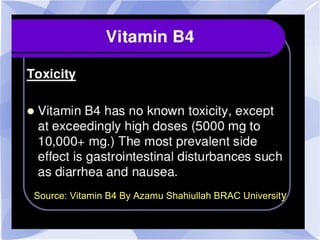
    ● Source: Vitamin B4By Azamu Shahiullah BRAC University
  • 33.
    Uses for B5 VitaminB5: (pantothenic acid) is used in the body to help cells release energy & to maintain a healthy nervous system. ● B5 vitamin: also helps break down carbohydrates, proteins & fats that are found in other foods in the diet. ● B5: It is a anti stress Vitamin & plays a role in adrenal function & cellular metabolism
  • 35.
    Oral vitamin B6may support blood health by helping to manage normal levels of homocysteine. This use often combines vitamin B6 with folic acid.
  • 36.
    What is B6Vitamin for? ● Health Benefits of Vitamin B6 (Pyridoxine) ● May Improve Mood and Reduce Symptoms of Depression. ● May Promote Brain Health and Reduce Alzheimer's Risk. ● May Prevent and Treat Anemia by Aiding Hemoglobin Production. ● May Be Useful in Treating Symptoms of PMS. ● May Help Treat Nausea During Pregnancy. ● May Prevent Clogged Arteries and Reduce Heart Disease Risk
  • 37.
  • 38.
  • 39.
  • 40.