Vitamins & Supplements
This is a look at vitamins & supplements.
December 2018
Vitamin C & it's uses
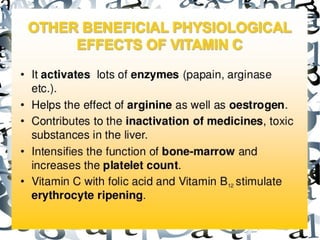
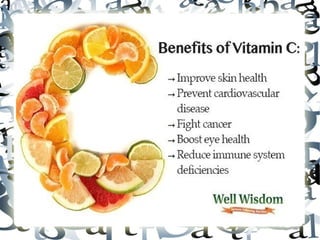
● Vitamin C: is a Ascorbic Acid: It is the body's
primary water soluble antioxidant.
● C is known to support collagen formation &
immune function.
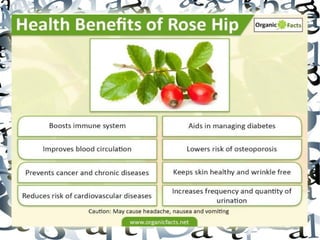
●Benefits of Vitamin C With Rose Hips
● Vitamin C is helpful to maintain the health of
blood vessels, bones.
● Cold and Flu Symptoms: with high concentration.
● Rheumatoid Arthritis.
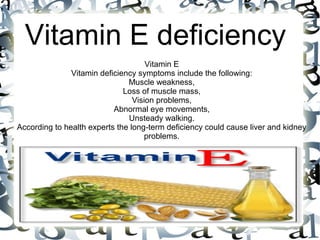
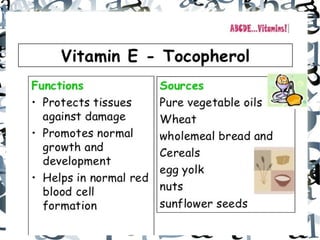
Vitamin E deficiency
Vitamin E
Vitamin deficiency symptoms include the following:
Muscle weakness,
Loss of muscle mass,
Vision problems,
Abnormal eye movements,
Unsteady walking.
According to health experts the long-term deficiency could cause liver and kidney
problems.
Benefits of Magnesium
● Health benefits have been associated with magnesium:
● Bone health. Magnesium is important for bone formation. ...
● Calcium absorption. Calcium and magnesium are important
for maintaining bone health and preventing osteoporosis. ...
● Diabetes. ...
● Heart health. ...
● Migraine headaches. ...
● Premenstrual syndrome. ...
●
Relieving anxiety.
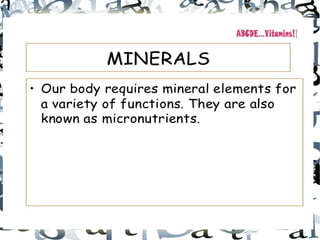
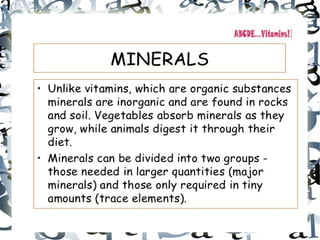
Why is manganese important to the human body?
*It aids in the formation of connective
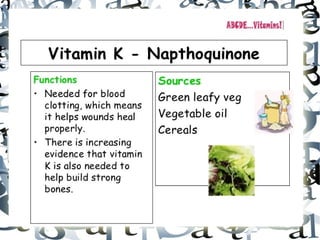
tissue, bones, blood-clotting factors,
and sex hormones and plays a role in
fat and carbohydrate metabolism,
calcium absorption, and blood sugar
regulation.
*Manganese is also necessary for
normal brain and nerve function.
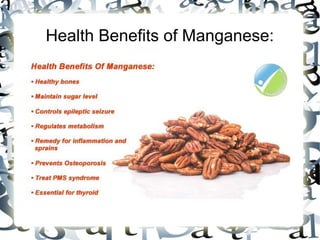
Health Benefits of Manganese:
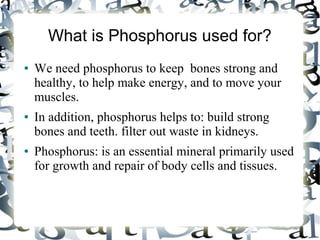
What is Phosphorus used for?
● We need phosphorus to keep bones strong and
healthy, to help make energy, and to move your
muscles.
● In addition, phosphorus helps to: build strong
bones and teeth. filter out waste in kidneys.
● Phosphorus: is an essential mineral primarily used
for growth and repair of body cells and tissues.
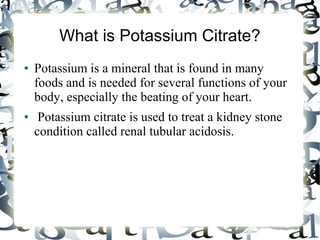
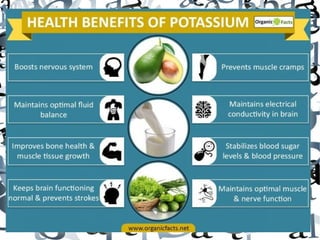
What is Potassium Citrate?
● Potassium is a mineral that is found in many
foods and is needed for several functions of your
body, especially the beating of your heart.
● Potassium citrate is used to treat a kidney stone
condition called renal tubular acidosis.
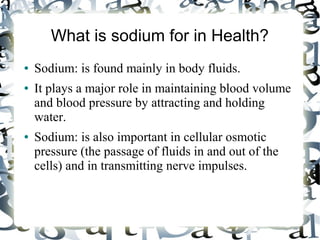
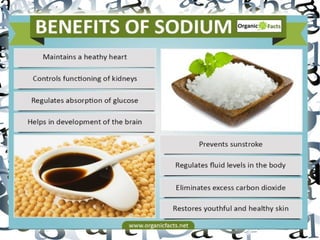
What is sodium for in Health?
● Sodium: is found mainly in body fluids.
● It plays a major role in maintaining blood volume
and blood pressure by attracting and holding
water.
● Sodium: is also important in cellular osmotic
pressure (the passage of fluids in and out of the
cells) and in transmitting nerve impulses.
Dangerous Sodium Levels:
● Hyponatremia is a low sodium level in the blood.
● It is generally defined as a sodium concentration
of less than 135 mmol/L (135 mEq/L), with
severe hyponatremia being below 120 mEql/L.
● Symptoms can be absent, mild or severe.
● Mild symptoms include a decreased ability to
think, headaches, nausea, and poor balance.
What happens when your body is low
on sodium?
● Low blood sodium: (hyponatremia) occurs when
you have an abnormally low amount of sodium in
your blood or when you have too much water in
your blood.
● Signs & symptoms of hyponatremia can include
altered personality, lethargy and confusion.
● Severe hyponatremia can cause seizures, coma
and even death.
●What is a critically low sodium level?
● Hyponatremia is a low sodium level in the blood.
● It is generally defined as a sodium concentration
of less than 135 mmol/L (135 mEq/L), with
severe hyponatremia being below 120 mEql/L.
● Symptoms can be absent, mild or severe.
● Mild symptoms include a decreased ability to
think, headaches, nausea, and poor balance.
What are good Sodium Levels?
● It helps maintain normal blood pressure, supports
the work of your nerves and muscles, and
regulates your body's fluid balance.
● A normal blood sodium level is between 135 and
145 milliequivalents per liter (mEq/L).
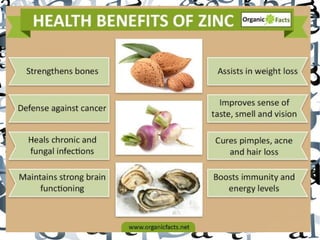
●What are the benefits of taking zinc?
● The following are some of the health benefits of
zinc:
● 1) Zinc and regulating immune function. ...
● 2) Zinc for treating diarrhea. ...
● 3) Zinc effects on learning and memory. ...
● 4) Zinc to treat the common cold. ...
● 5) Zinc's role in wound healing. ...
● 6) Zinc and decreased risk of age-related chronic
disease.
Source:
● Nature's Prescription: Foods, Vitamins, and
Supplements That Prevent Disease Paperback –
March 1, 1998,by Publisher:Frank W. Cawood
and Associates (Editor)
● Nature's Medicines: From Asthma to Weight
Gain, from Colds to Heart Disease- The Most
Powerful All-Natural Cures Hardcover – August
27, 1999 by Gale Maleskey (Author)Publisher:
Rodale Books

Vitamin D and minerals

  • 1.
    Vitamins & Supplements Thisis a look at vitamins & supplements. December 2018
  • 2.
    Vitamin C &it's uses ● Vitamin C: is a Ascorbic Acid: It is the body's primary water soluble antioxidant. ● C is known to support collagen formation & immune function.
  • 9.
    ●Benefits of VitaminC With Rose Hips ● Vitamin C is helpful to maintain the health of blood vessels, bones. ● Cold and Flu Symptoms: with high concentration. ● Rheumatoid Arthritis.
  • 14.
    Vitamin E deficiency VitaminE Vitamin deficiency symptoms include the following: Muscle weakness, Loss of muscle mass, Vision problems, Abnormal eye movements, Unsteady walking. According to health experts the long-term deficiency could cause liver and kidney problems.
  • 24.
    Benefits of Magnesium ●Health benefits have been associated with magnesium: ● Bone health. Magnesium is important for bone formation. ... ● Calcium absorption. Calcium and magnesium are important for maintaining bone health and preventing osteoporosis. ... ● Diabetes. ... ● Heart health. ... ● Migraine headaches. ... ● Premenstrual syndrome. ... ● Relieving anxiety.
  • 26.
    Why is manganeseimportant to the human body? *It aids in the formation of connective tissue, bones, blood-clotting factors, and sex hormones and plays a role in fat and carbohydrate metabolism, calcium absorption, and blood sugar regulation. *Manganese is also necessary for normal brain and nerve function.
  • 27.
  • 28.
    What is Phosphorusused for? ● We need phosphorus to keep bones strong and healthy, to help make energy, and to move your muscles. ● In addition, phosphorus helps to: build strong bones and teeth. filter out waste in kidneys. ● Phosphorus: is an essential mineral primarily used for growth and repair of body cells and tissues.
  • 29.
    What is PotassiumCitrate? ● Potassium is a mineral that is found in many foods and is needed for several functions of your body, especially the beating of your heart. ● Potassium citrate is used to treat a kidney stone condition called renal tubular acidosis.
  • 31.
    What is sodiumfor in Health? ● Sodium: is found mainly in body fluids. ● It plays a major role in maintaining blood volume and blood pressure by attracting and holding water. ● Sodium: is also important in cellular osmotic pressure (the passage of fluids in and out of the cells) and in transmitting nerve impulses.
  • 32.
    Dangerous Sodium Levels: ●Hyponatremia is a low sodium level in the blood. ● It is generally defined as a sodium concentration of less than 135 mmol/L (135 mEq/L), with severe hyponatremia being below 120 mEql/L. ● Symptoms can be absent, mild or severe. ● Mild symptoms include a decreased ability to think, headaches, nausea, and poor balance.
  • 33.
    What happens whenyour body is low on sodium? ● Low blood sodium: (hyponatremia) occurs when you have an abnormally low amount of sodium in your blood or when you have too much water in your blood. ● Signs & symptoms of hyponatremia can include altered personality, lethargy and confusion. ● Severe hyponatremia can cause seizures, coma and even death.
  • 34.
    ●What is acritically low sodium level? ● Hyponatremia is a low sodium level in the blood. ● It is generally defined as a sodium concentration of less than 135 mmol/L (135 mEq/L), with severe hyponatremia being below 120 mEql/L. ● Symptoms can be absent, mild or severe. ● Mild symptoms include a decreased ability to think, headaches, nausea, and poor balance.
  • 35.
    What are goodSodium Levels? ● It helps maintain normal blood pressure, supports the work of your nerves and muscles, and regulates your body's fluid balance. ● A normal blood sodium level is between 135 and 145 milliequivalents per liter (mEq/L).
  • 38.
    ●What are thebenefits of taking zinc? ● The following are some of the health benefits of zinc: ● 1) Zinc and regulating immune function. ... ● 2) Zinc for treating diarrhea. ... ● 3) Zinc effects on learning and memory. ... ● 4) Zinc to treat the common cold. ... ● 5) Zinc's role in wound healing. ... ● 6) Zinc and decreased risk of age-related chronic disease.
  • 39.
    Source: ● Nature's Prescription:Foods, Vitamins, and Supplements That Prevent Disease Paperback – March 1, 1998,by Publisher:Frank W. Cawood and Associates (Editor) ● Nature's Medicines: From Asthma to Weight Gain, from Colds to Heart Disease- The Most Powerful All-Natural Cures Hardcover – August 27, 1999 by Gale Maleskey (Author)Publisher: Rodale Books