• What is Vitamin ?
Introduction
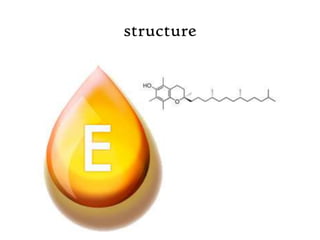
Chemistry of vitamin E
structure
structure
Sources of vitamin
Sunflower Seeds
• One ounce of dry-
roasted sunflower
seeds delivers 7.4 mg
of vitamin E.
• Almonds (7.3 mg of
vitamin E per ounce)
• Hazelnuts (4.3 mg of
vitamin E per ounce)
• peanuts (2.2 mg of
vitamin E per ounce)
• Pine nuts (One ounce
of pine nuts contains
2.6 mg of vitamin E)
Turnip Greens
• A half cup has 2.9 mg
of vitamin E
Tomatoes
• A quarter cup of
tomato paste has
2.8 mg of
vitamin E.
Avocado
• Half an avocado
has 2.1 mg of
vitamin E and
161 calories.
Pharmacological properties
1. Prevention of oxidative stress
2. Supporting healthy skin
3. Vitamin E inhibits platelet aggregation
4. Vitamin E may be involved in signal transduction in
neuronal cells
Therapeutic indications
• Angina
pectoris
• Acne
• Alzheimer’s
disease
• Cancer
• Cataracts
• complications in late
pregnancy
• Diabetes
• Psoriasis
• Parkinson’s disease
• Respiratory infection
etc.
Contraindications
• Contraindications have not yet been
identified.
Interactions
1. Vitamin E may increase the anticoagulant
effect of warfarin.
2. may decrease the benefits of atorvastatin
therapy.
3. Plasma levels of vitamin E may be lowered
by anticonvulsants.
Nutrient Interactions
1. Vitamin C
2. Glutathione
3. Selenium
4. Vitamin B3
Deficiency syndrome
1. digestive system problems
2. peripheral neuropathy
Side effects
• High doses of vitamin E may prolong
bleeding time.
Hypervitaminosis
1. Intestinal cramps
2. Diarrhea
3. Fatigue
4. Double vision
5. Muscle weakness
Sources
1. http://www.whfoods.com/genpage.php?tname=nutrient&dbid=111
2. http://painandbrainhealingcenter.com/vitaminearticle.html#.UnnXhHCBl
fB
3. http://news.vanderbilt.edu/2012/07/high-consumption-of-vitamin-e-may-
lower-liver-cancer-risk/
4. http://www.antioxidantsdetective.com/vitamin-e-facts.html
5. http://www.webmd.com/vitamins-supplements/ingredientmono-954-
VITAMIN%20E.aspx?activeIngredientId=954&activeIngredientName=VI
TAMIN%20E
Thank you.
Any Question
???

Vitamin E