
VITAMIN A
PROPHYLAXIS
Mrs.Nagamani.T
Dept of Community Health Nursing
Quality Health Care College of Nursing
Introduction
• Vitamin A is a micronutrient belonging to group of fat soluble
vitamins
• Vitamin A is necessary for the regulation of various bodily
functions such as growth, vision, reproduction, immunity etc.
• The vitamin A deficiency may lead to various health issues such
as susceptibility to various infections, stunting, eye health, and
vision issues.
• VAD also affects the systematic immunity and results in various
infections with increased severity.
• Vitamin A plays a major role in various biological
phenomenon and it can't be produced naturally in human body,
hence it must be consumed via diet resources.
• Vitamin A deficiency is a major controllable nutritional problem in
developing countries.
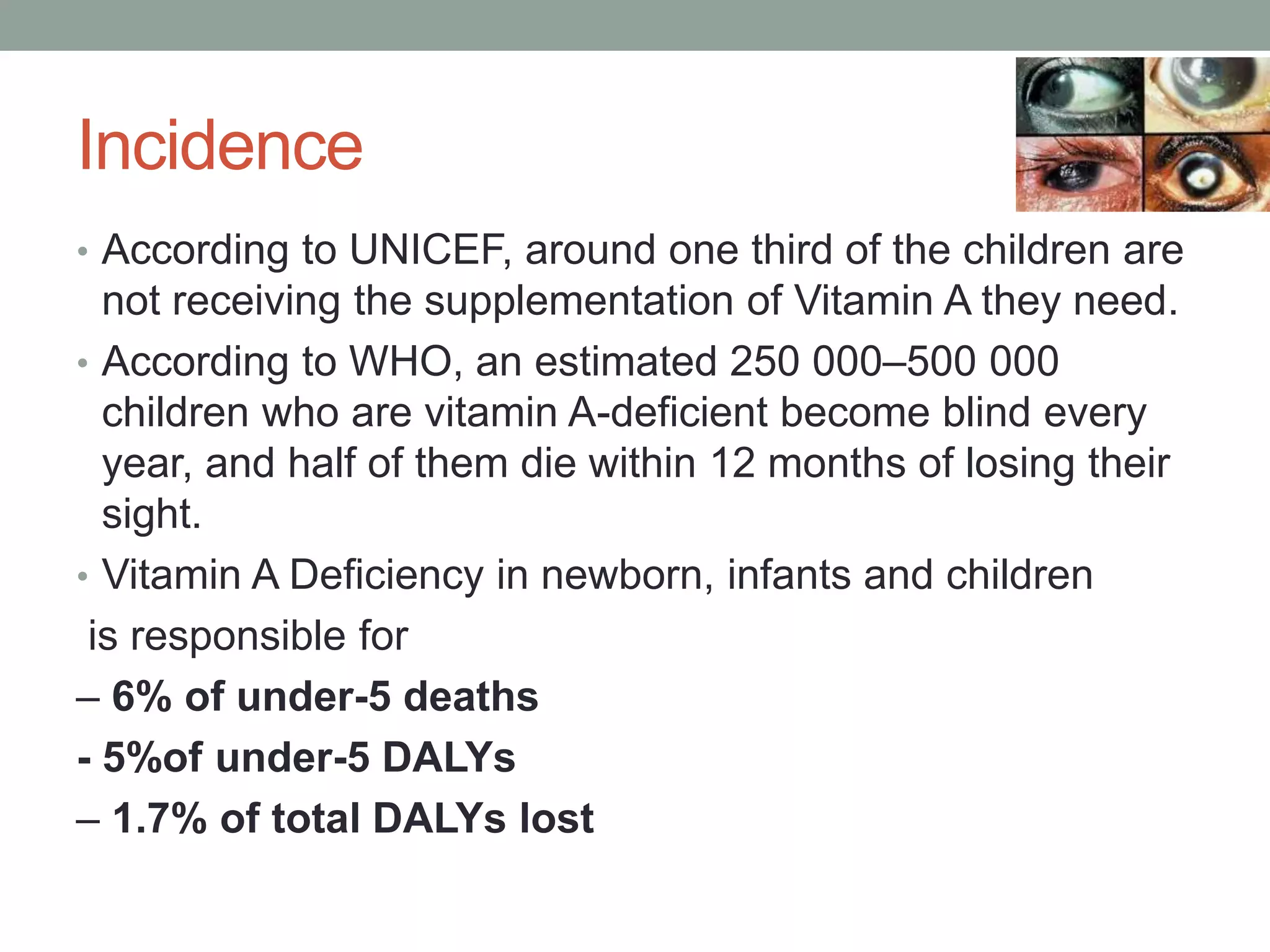
Incidence
• According to UNICEF, around one third of the children are
not receiving the supplementation of Vitamin A they need.
• According to WHO, an estimated 250 000–500 000
children who are vitamin A-deficient become blind every
year, and half of them die within 12 months of losing their
sight.
• Vitamin A Deficiency in newborn, infants and children
is responsible for
– 6% of under-5 deaths
- 5%of under-5 DALYs
– 1.7% of total DALYs lost
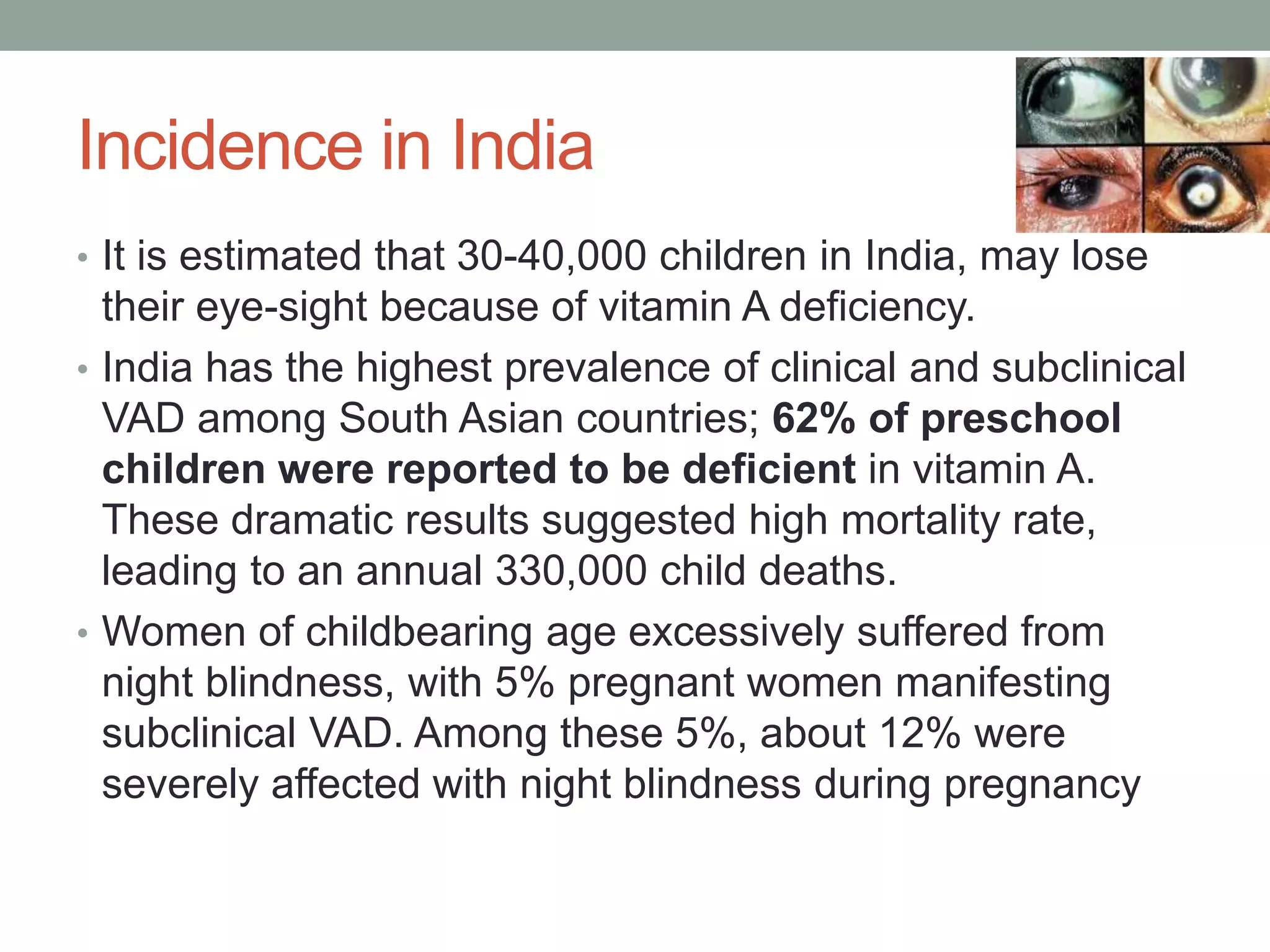
Incidence in India
• It is estimated that 30-40,000 children in India, may lose
their eye-sight because of vitamin A deficiency.
• India has the highest prevalence of clinical and subclinical
VAD among South Asian countries; 62% of preschool
children were reported to be deficient in vitamin A.
These dramatic results suggested high mortality rate,
leading to an annual 330,000 child deaths.
• Women of childbearing age excessively suffered from
night blindness, with 5% pregnant women manifesting
subclinical VAD. Among these 5%, about 12% were
severely affected with night blindness during pregnancy
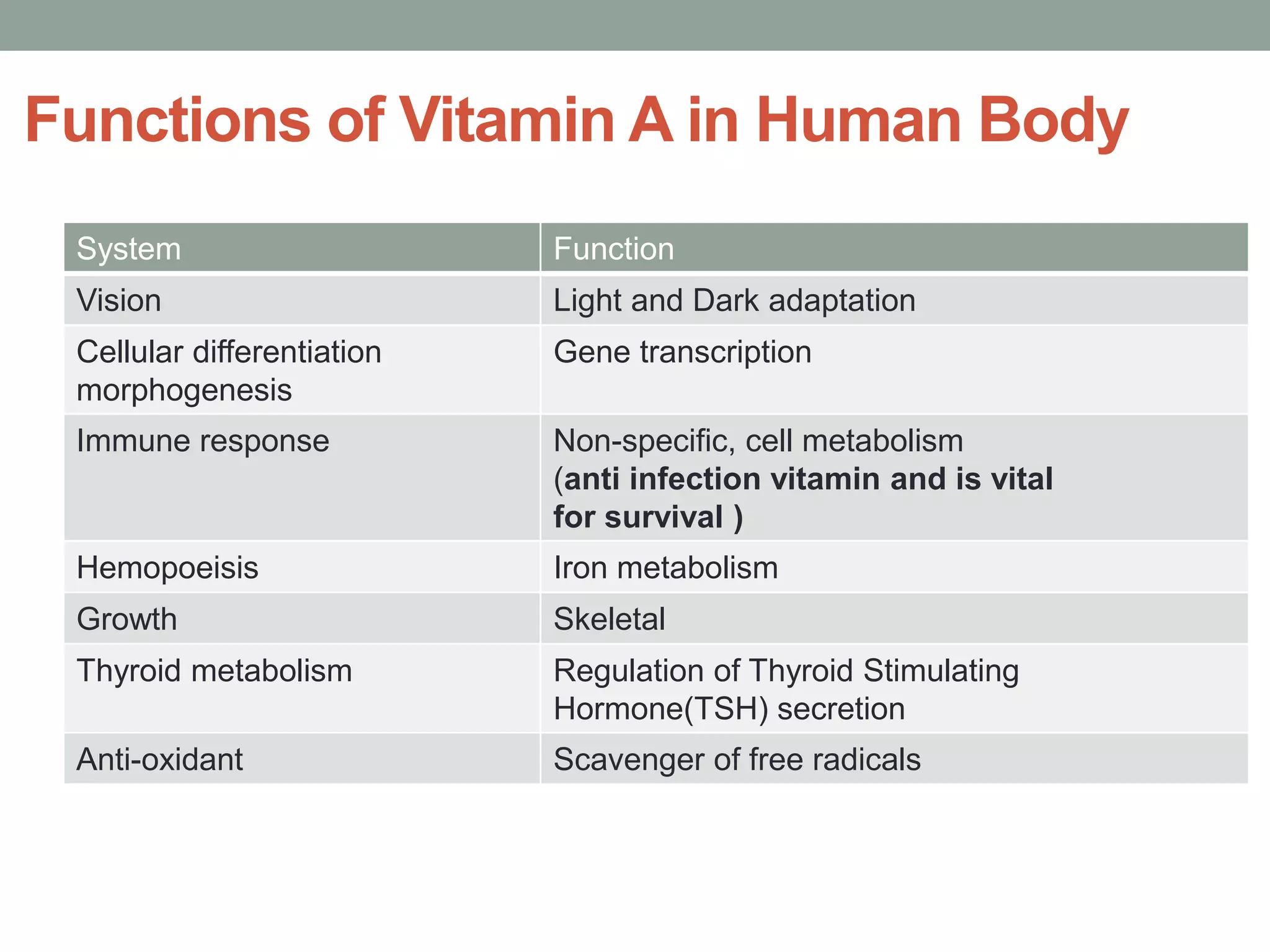
Functions of Vitamin A in Human Body
System Function
Vision Light and Dark adaptation
Cellular differentiation
morphogenesis
Gene transcription
Immune response Non-specific, cell metabolism
(anti infection vitamin and is vital
for survival )
Hemopoeisis Iron metabolism
Growth Skeletal
Thyroid metabolism Regulation of Thyroid Stimulating
Hormone(TSH) secretion
Anti-oxidant Scavenger of free radicals
Effects of Vitamin A Deficiency
• Vitamin A deficiency results from a dietary intake of
vitamin A that is inadequate to satisfy physiological
needs.
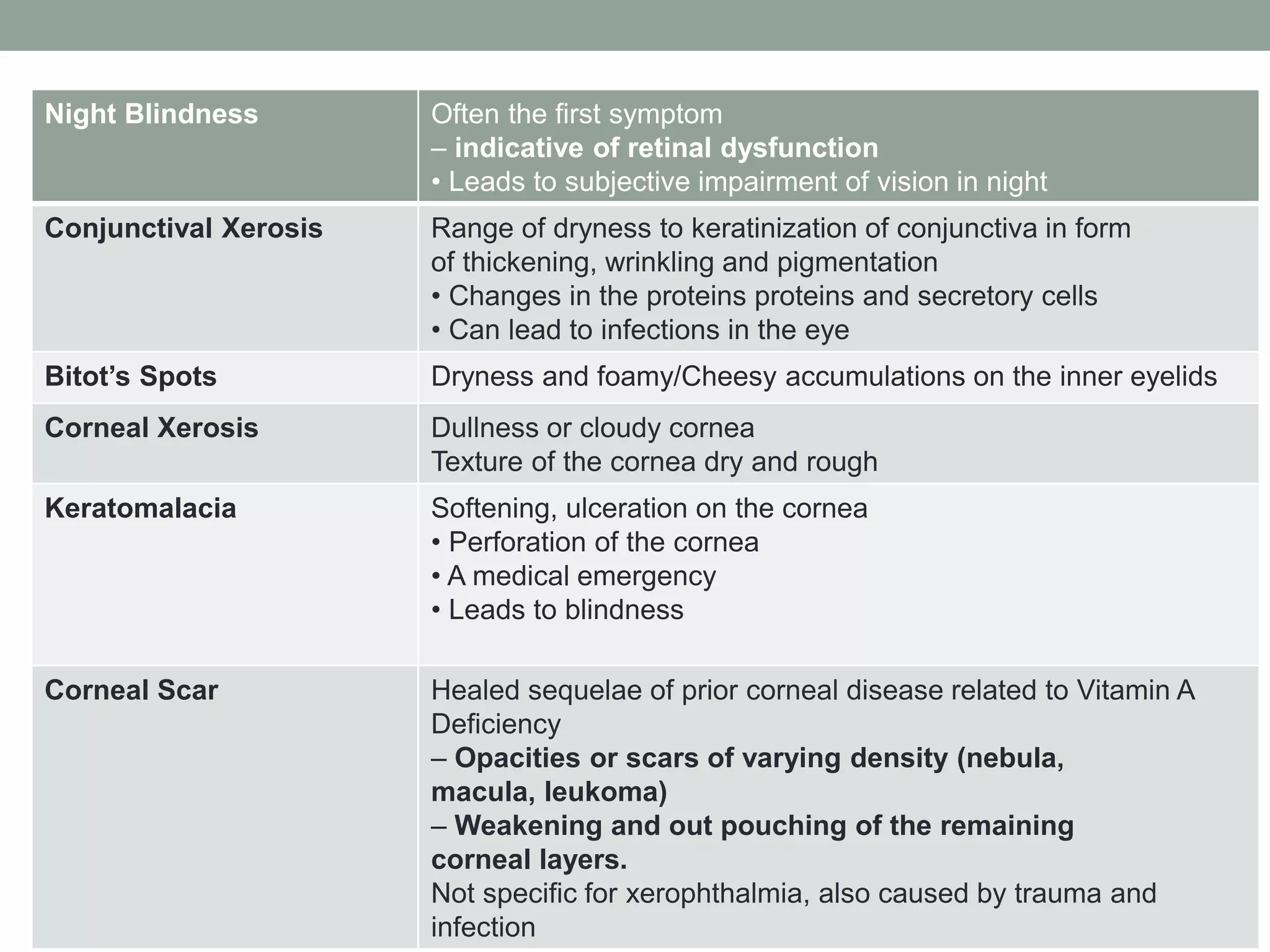
Night Blindness Often the first symptom
– indicative of retinal dysfunction
• Leads to subjective impairment of vision in night
Conjunctival Xerosis Range of dryness to keratinization of conjunctiva in form
of thickening, wrinkling and pigmentation
• Changes in the proteins proteins and secretory cells
• Can lead to infections in the eye
Bitot’s Spots Dryness and foamy/Cheesy accumulations on the inner eyelids
Corneal Xerosis Dullness or cloudy cornea
Texture of the cornea dry and rough
Keratomalacia Softening, ulceration on the cornea
• Perforation of the cornea
• A medical emergency
• Leads to blindness
Corneal Scar Healed sequelae of prior corneal disease related to Vitamin A
Deficiency
– Opacities or scars of varying density (nebula,
macula, leukoma)
– Weakening and out pouching of the remaining
corneal layers.
Not specific for xerophthalmia, also caused by trauma and
infection
• Deficiency of vitamin A is associated with significant morbidity and
mortality from common childhood infections, and is the world’s
leading preventable cause of childhood blindness.
• Vitamin A deficiency also contributes to maternal mortality and
other poor outcomes of pregnancy and lactation.
• It also diminishes the ability to fight infections. Even mild,
subclinical deficiency can be a problem, because it may increase
children's risk for respiratory and diarrheal infections, decrease
growth rates, slow bone development and decrease the likelihood
of survival from serious illness.
• Diet surveys have shown that the intake of Vitamin A is
significantly lower than the recommended daily allowance in
young children, adolescent girls and pregnant women.
Its time to relax
Walk around for a moment and stress out yourself……..
Activity
Q. Deficiency of vitamin A in children causes:
a) Goitre
b) Poor cognitive development
c) Poor bone growth
d) Increased risk of mortality
Answer_________
Vitamin A Prophylaxis Programme
• The National Prophylaxis Programme against Nutritional
Blindness due to vitamin A deficiency (NPPNB due to
VAD) was started in 1970 with an aim of preventing
nutritional blindness due to keratomalacia.
• The Programme was started as a 100 per cent centrally
sponsored programme.
• To begin with, this Programme was initiated in 11 States
of the country.
• It utilises technology developed by National Institute of
Nutrition, Hyderabad
• It has helped to decrease the preventable blindness in the
community
Aim:
to decrease the prevalence of Vitamin A deficiency
Objective:
Prevention of vitamin A deficiency
Treatment of Vitamin A deficient children
Prevention of vitamin A deficiency
o Promoting consumption of Vitamin A rich food –promotion of
regular dietary intake of Vitamin A rich foods by all pregnant and
lactating women and by children under 5 years of age by increasing
local production and consumption of green leafy vegetables and other
plant foods those are rich sources of carotenoids.
o Creating awareness about the importance of preventing Vitamin A
deficiency– among the women’s attending Antenatal clinics,
immunization session, as well as women and children registered under
ICDS programme.
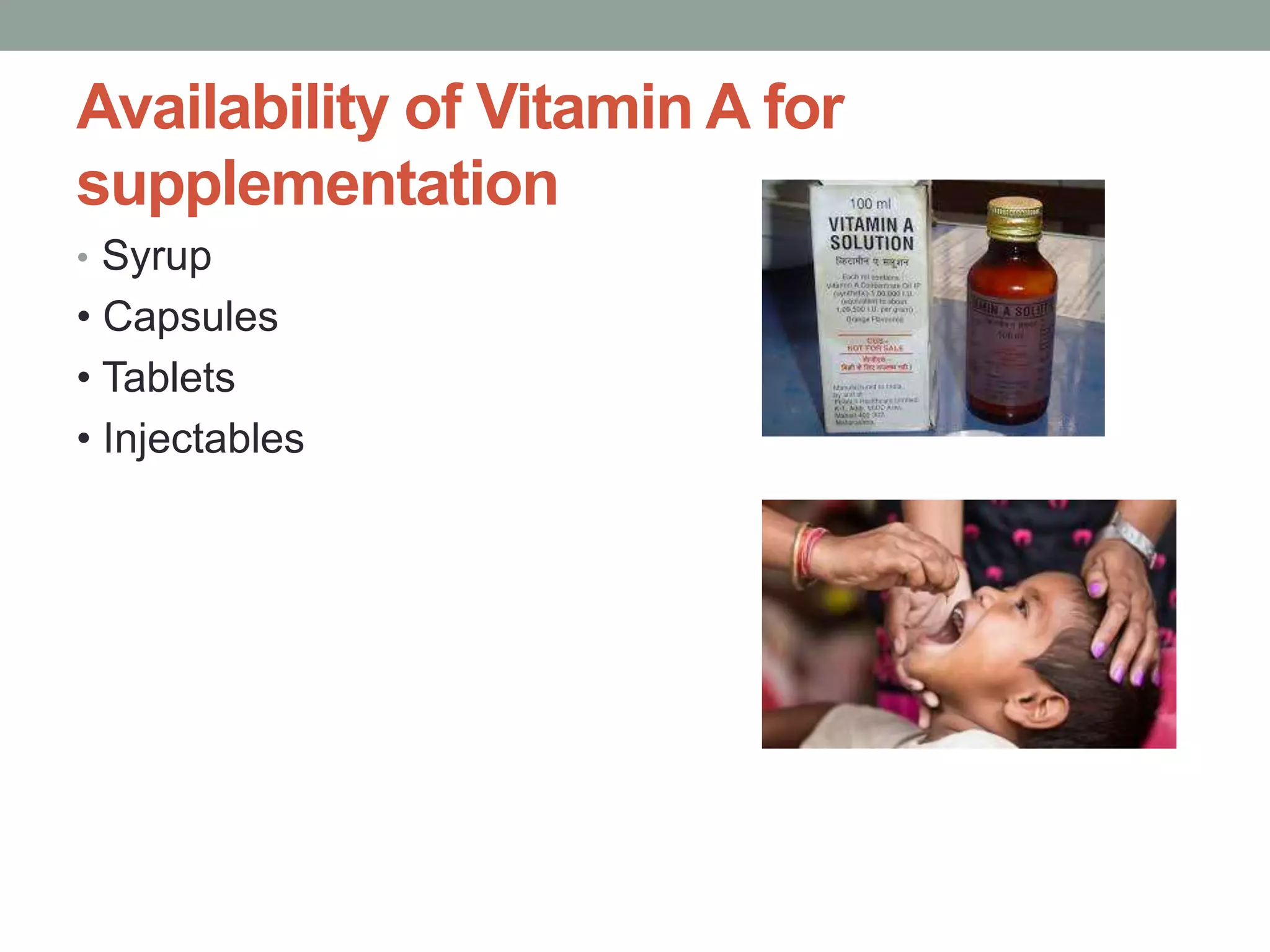
o Prophylactic Vitamin A as per the following dosage schedule:
• 100000 IU at 9 months with measles immunization
• 200000 IU at 16-18 months, with DPT booster
• 200000 IU every 6 months, up to the age of 5 years.
Thus, a total of 9 mega doses are to be given from 9
months of age up to 5 years.
Treatment of Vitamin A deficient children
• All children with xerophthalmia are to be treated at health
facilities.
• All children having measles, to be given 1 dose of Vitamin
A if they have not received it in the previous month.
• All cases of severe malnutrition to be given one additional
dose of Vitamin A.
Determinants of VADD
• The odds of bitot’s spots higher among children
• – With family size of more than four
• – Illiterate mothers
• – Households without a sanitary latrine
• – Not received even one dose of Vitamin A
supplementation
• – Be
• longing to backward communities
Source: Laxamaiah A et al. Prevalence of ocular signs and subclinical vitamin A
Deficiency and its determinants among rural pre-school children in India.
Public health Nutrition 2011;15:568-577
Vitamin A supplementation
• Vitamin A supplementation is
– Cost-effective
– Safe
– Sustainable
– Easily implemented on a national scale
• Over 6,00,000 lives can be saved each year
• 20 million disability adjusted life years can be gained
Availability of Vitamin A for
supplementation
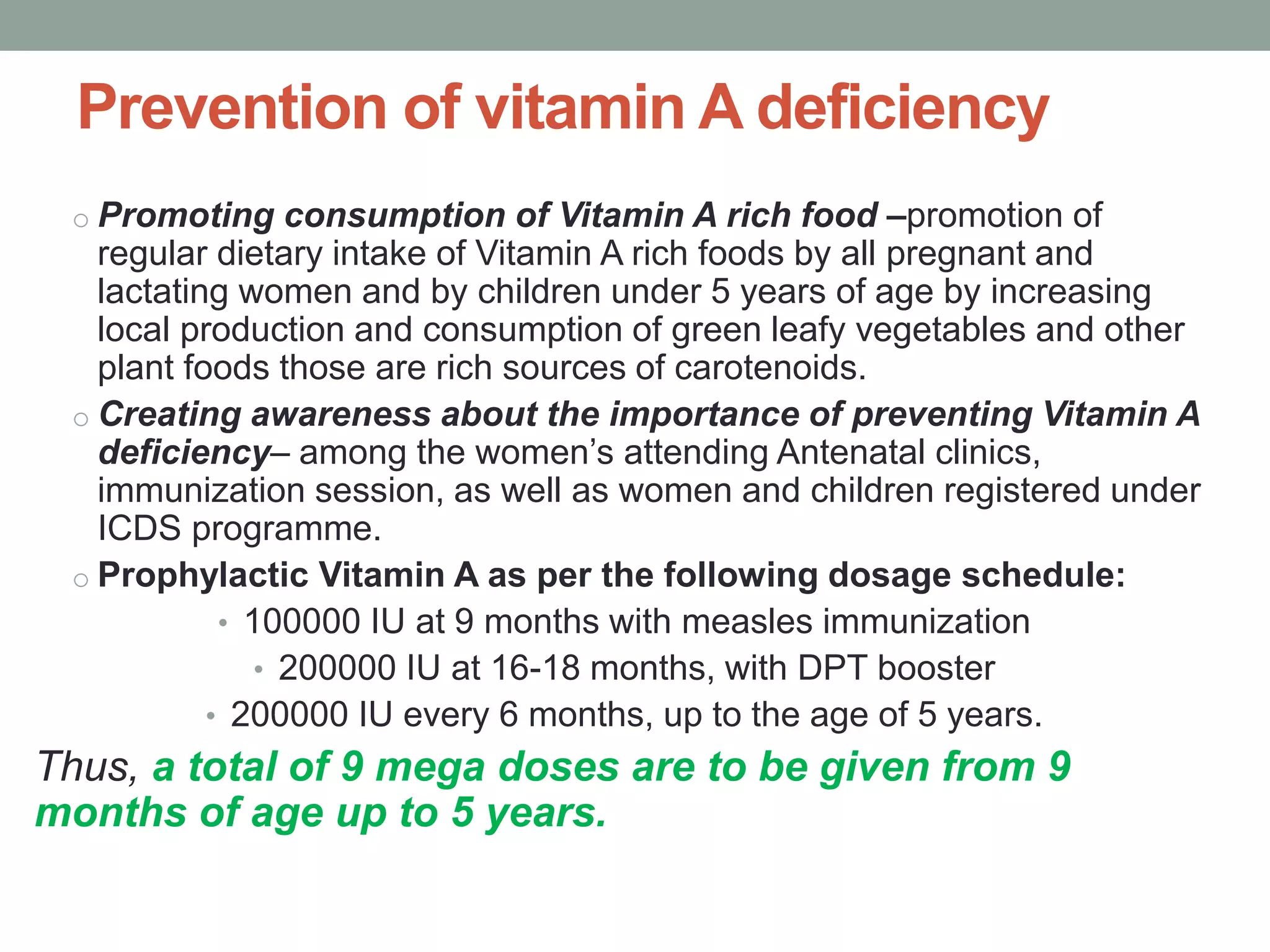
• Syrup
• Capsules
• Tablets
• Injectables
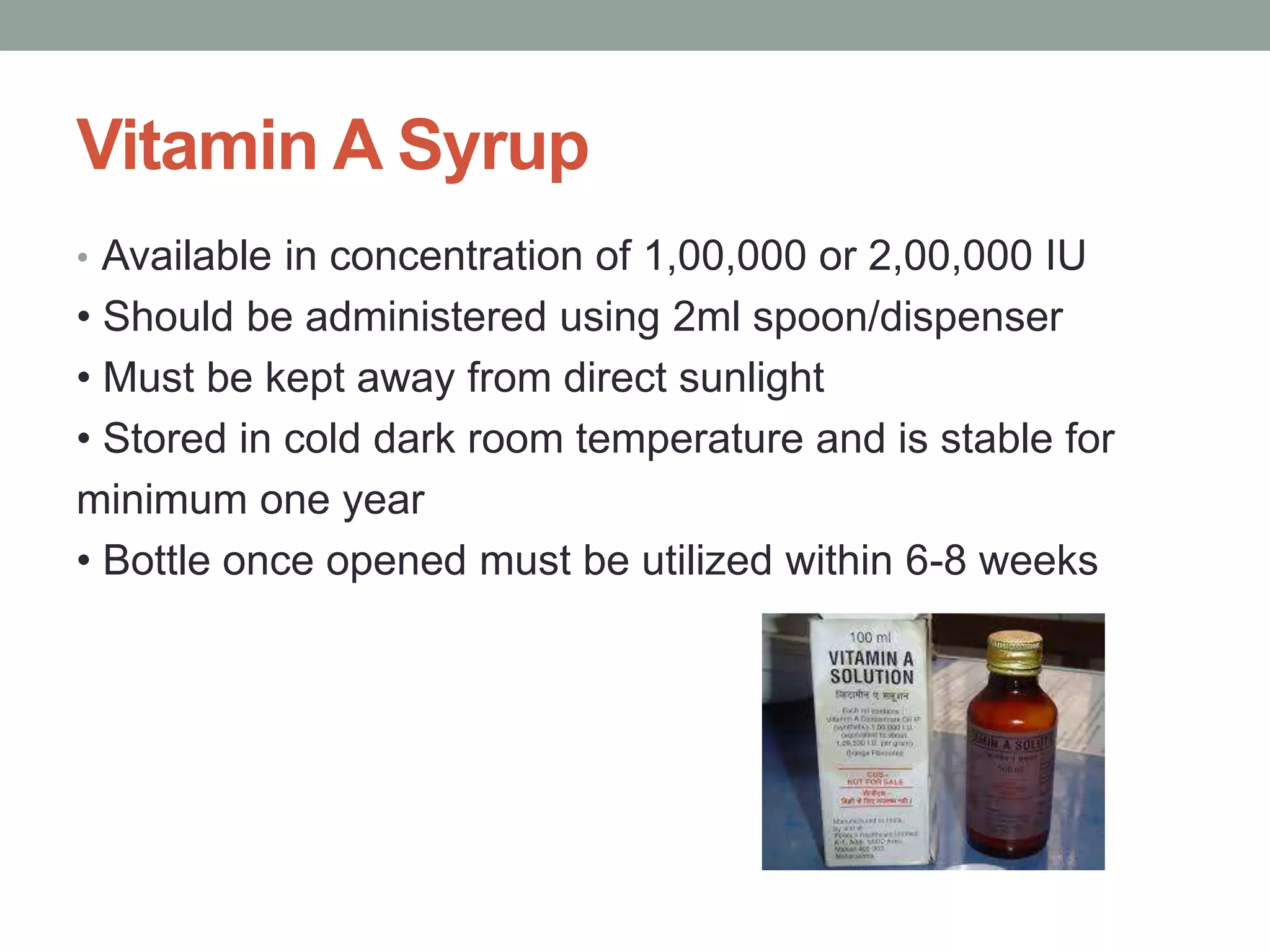
Vitamin A Syrup
• Available in concentration of 1,00,000 or 2,00,000 IU
• Should be administered using 2ml spoon/dispenser
• Must be kept away from direct sunlight
• Stored in cold dark room temperature and is stable for
minimum one year
• Bottle once opened must be utilized within 6-8 weeks
Vitamin A Supplementation
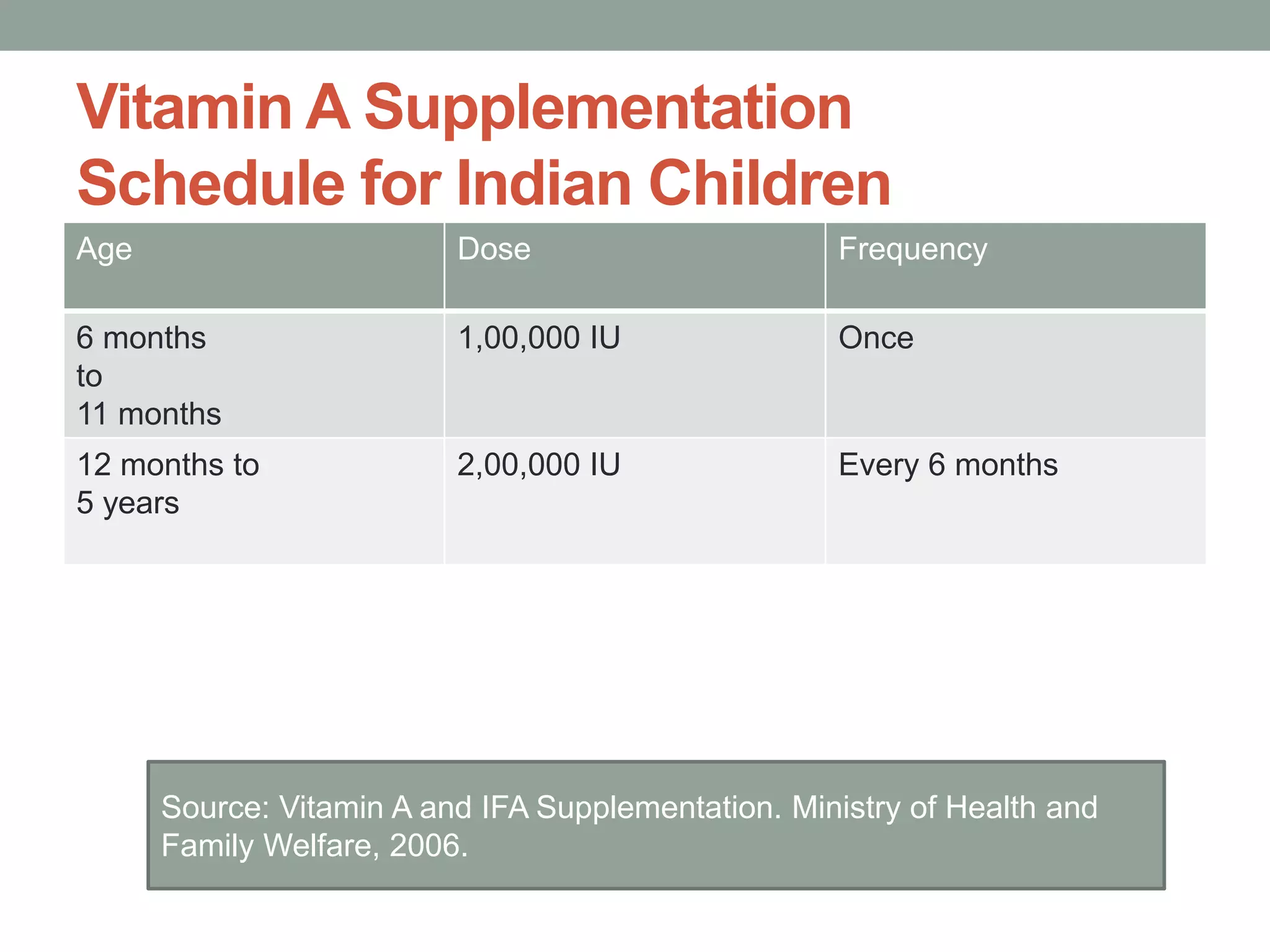
Schedule for Indian Children
Age Dose Frequency
6 months
to
11 months
1,00,000 IU Once
12 months to
5 years
2,00,000 IU Every 6 months
Source: Vitamin A and IFA Supplementation. Ministry of Health and
Family Welfare, 2006.
Why every 6 months
supplementation is required?
Body cannot make Vitamin A on its own
– Vitamin A is stored in the liver
• Illness, if occurs, depletes stored Vitamin A
• Vitamin A stores lasts for 4-6 months only
Food fortification with Vitamin A
Fortification of staple foods such as
– Wheat and rice and other grains
– Vegetable oil
– Dairy foods
– Margarine
– Sugar
Activity
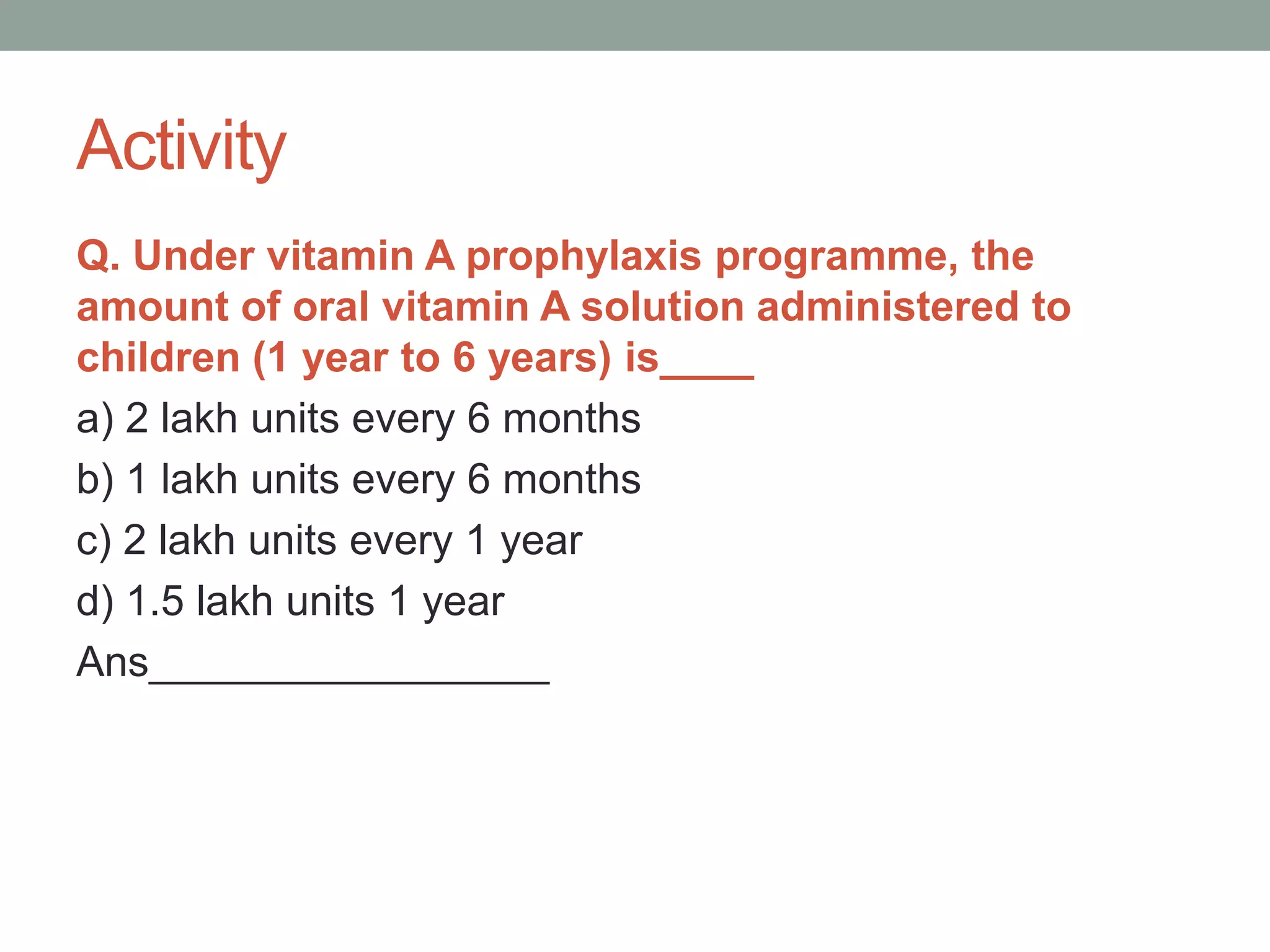
Q. Under vitamin A prophylaxis programme, the
amount of oral vitamin A solution administered to
children (1 year to 6 years) is____
a) 2 lakh units every 6 months
b) 1 lakh units every 6 months
c) 2 lakh units every 1 year
d) 1.5 lakh units 1 year
Ans_________________
References
• WHO. Vitamin A deficiency list of publications.
(http://www.who.int/nutrition/publications/micronutrients/vit
amin_a_deficiency/en/
• http://nhm.gov.in/images/pdf/programmes/child-
health/guidelines/goi_vit_a.pdf
• http://nutritionfoundationofindia.res.in/pdfpublication/Nutriti
on%20Transition%20in%20india1947-
2007/7.11.2%20Vitamin%20A%20Deficiency%20pr%20m
ap.pdf
Make sure to administer VitaminA to all your children and do
consume VitaminA rich foods in your diet and stay Healthy.
Thank You
For more videos please
Subscribe to my Channel.

Vitamin a prophylaxis

  • 1.
    VITAMIN A PROPHYLAXIS Mrs.Nagamani.T Dept ofCommunity Health Nursing Quality Health Care College of Nursing
  • 2.
    Introduction • Vitamin Ais a micronutrient belonging to group of fat soluble vitamins • Vitamin A is necessary for the regulation of various bodily functions such as growth, vision, reproduction, immunity etc. • The vitamin A deficiency may lead to various health issues such as susceptibility to various infections, stunting, eye health, and vision issues. • VAD also affects the systematic immunity and results in various infections with increased severity. • Vitamin A plays a major role in various biological phenomenon and it can't be produced naturally in human body, hence it must be consumed via diet resources. • Vitamin A deficiency is a major controllable nutritional problem in developing countries.
  • 3.
    Incidence • According toUNICEF, around one third of the children are not receiving the supplementation of Vitamin A they need. • According to WHO, an estimated 250 000–500 000 children who are vitamin A-deficient become blind every year, and half of them die within 12 months of losing their sight. • Vitamin A Deficiency in newborn, infants and children is responsible for – 6% of under-5 deaths - 5%of under-5 DALYs – 1.7% of total DALYs lost
  • 4.
    Incidence in India •It is estimated that 30-40,000 children in India, may lose their eye-sight because of vitamin A deficiency. • India has the highest prevalence of clinical and subclinical VAD among South Asian countries; 62% of preschool children were reported to be deficient in vitamin A. These dramatic results suggested high mortality rate, leading to an annual 330,000 child deaths. • Women of childbearing age excessively suffered from night blindness, with 5% pregnant women manifesting subclinical VAD. Among these 5%, about 12% were severely affected with night blindness during pregnancy
  • 5.
    Functions of VitaminA in Human Body System Function Vision Light and Dark adaptation Cellular differentiation morphogenesis Gene transcription Immune response Non-specific, cell metabolism (anti infection vitamin and is vital for survival ) Hemopoeisis Iron metabolism Growth Skeletal Thyroid metabolism Regulation of Thyroid Stimulating Hormone(TSH) secretion Anti-oxidant Scavenger of free radicals
  • 6.
    Effects of VitaminA Deficiency • Vitamin A deficiency results from a dietary intake of vitamin A that is inadequate to satisfy physiological needs.
  • 7.
    Night Blindness Oftenthe first symptom – indicative of retinal dysfunction • Leads to subjective impairment of vision in night Conjunctival Xerosis Range of dryness to keratinization of conjunctiva in form of thickening, wrinkling and pigmentation • Changes in the proteins proteins and secretory cells • Can lead to infections in the eye Bitot’s Spots Dryness and foamy/Cheesy accumulations on the inner eyelids Corneal Xerosis Dullness or cloudy cornea Texture of the cornea dry and rough Keratomalacia Softening, ulceration on the cornea • Perforation of the cornea • A medical emergency • Leads to blindness Corneal Scar Healed sequelae of prior corneal disease related to Vitamin A Deficiency – Opacities or scars of varying density (nebula, macula, leukoma) – Weakening and out pouching of the remaining corneal layers. Not specific for xerophthalmia, also caused by trauma and infection
  • 8.
    • Deficiency ofvitamin A is associated with significant morbidity and mortality from common childhood infections, and is the world’s leading preventable cause of childhood blindness. • Vitamin A deficiency also contributes to maternal mortality and other poor outcomes of pregnancy and lactation. • It also diminishes the ability to fight infections. Even mild, subclinical deficiency can be a problem, because it may increase children's risk for respiratory and diarrheal infections, decrease growth rates, slow bone development and decrease the likelihood of survival from serious illness. • Diet surveys have shown that the intake of Vitamin A is significantly lower than the recommended daily allowance in young children, adolescent girls and pregnant women.
  • 9.
    Its time torelax Walk around for a moment and stress out yourself……..
  • 10.
    Activity Q. Deficiency ofvitamin A in children causes: a) Goitre b) Poor cognitive development c) Poor bone growth d) Increased risk of mortality Answer_________
  • 11.
    Vitamin A ProphylaxisProgramme • The National Prophylaxis Programme against Nutritional Blindness due to vitamin A deficiency (NPPNB due to VAD) was started in 1970 with an aim of preventing nutritional blindness due to keratomalacia. • The Programme was started as a 100 per cent centrally sponsored programme. • To begin with, this Programme was initiated in 11 States of the country. • It utilises technology developed by National Institute of Nutrition, Hyderabad • It has helped to decrease the preventable blindness in the community
  • 12.
    Aim: to decrease theprevalence of Vitamin A deficiency Objective: Prevention of vitamin A deficiency Treatment of Vitamin A deficient children
  • 13.
    Prevention of vitaminA deficiency o Promoting consumption of Vitamin A rich food –promotion of regular dietary intake of Vitamin A rich foods by all pregnant and lactating women and by children under 5 years of age by increasing local production and consumption of green leafy vegetables and other plant foods those are rich sources of carotenoids. o Creating awareness about the importance of preventing Vitamin A deficiency– among the women’s attending Antenatal clinics, immunization session, as well as women and children registered under ICDS programme. o Prophylactic Vitamin A as per the following dosage schedule: • 100000 IU at 9 months with measles immunization • 200000 IU at 16-18 months, with DPT booster • 200000 IU every 6 months, up to the age of 5 years. Thus, a total of 9 mega doses are to be given from 9 months of age up to 5 years.
  • 14.
    Treatment of VitaminA deficient children • All children with xerophthalmia are to be treated at health facilities. • All children having measles, to be given 1 dose of Vitamin A if they have not received it in the previous month. • All cases of severe malnutrition to be given one additional dose of Vitamin A.
  • 15.
    Determinants of VADD •The odds of bitot’s spots higher among children • – With family size of more than four • – Illiterate mothers • – Households without a sanitary latrine • – Not received even one dose of Vitamin A supplementation • – Be • longing to backward communities Source: Laxamaiah A et al. Prevalence of ocular signs and subclinical vitamin A Deficiency and its determinants among rural pre-school children in India. Public health Nutrition 2011;15:568-577
  • 16.
    Vitamin A supplementation •Vitamin A supplementation is – Cost-effective – Safe – Sustainable – Easily implemented on a national scale • Over 6,00,000 lives can be saved each year • 20 million disability adjusted life years can be gained
  • 17.
    Availability of VitaminA for supplementation • Syrup • Capsules • Tablets • Injectables
  • 18.
    Vitamin A Syrup •Available in concentration of 1,00,000 or 2,00,000 IU • Should be administered using 2ml spoon/dispenser • Must be kept away from direct sunlight • Stored in cold dark room temperature and is stable for minimum one year • Bottle once opened must be utilized within 6-8 weeks
  • 19.
    Vitamin A Supplementation Schedulefor Indian Children Age Dose Frequency 6 months to 11 months 1,00,000 IU Once 12 months to 5 years 2,00,000 IU Every 6 months Source: Vitamin A and IFA Supplementation. Ministry of Health and Family Welfare, 2006.
  • 20.
    Why every 6months supplementation is required? Body cannot make Vitamin A on its own – Vitamin A is stored in the liver • Illness, if occurs, depletes stored Vitamin A • Vitamin A stores lasts for 4-6 months only
  • 21.
    Food fortification withVitamin A Fortification of staple foods such as – Wheat and rice and other grains – Vegetable oil – Dairy foods – Margarine – Sugar
  • 23.
    Activity Q. Under vitaminA prophylaxis programme, the amount of oral vitamin A solution administered to children (1 year to 6 years) is____ a) 2 lakh units every 6 months b) 1 lakh units every 6 months c) 2 lakh units every 1 year d) 1.5 lakh units 1 year Ans_________________
  • 24.
    References • WHO. VitaminA deficiency list of publications. (http://www.who.int/nutrition/publications/micronutrients/vit amin_a_deficiency/en/ • http://nhm.gov.in/images/pdf/programmes/child- health/guidelines/goi_vit_a.pdf • http://nutritionfoundationofindia.res.in/pdfpublication/Nutriti on%20Transition%20in%20india1947- 2007/7.11.2%20Vitamin%20A%20Deficiency%20pr%20m ap.pdf
  • 25.
    Make sure toadminister VitaminA to all your children and do consume VitaminA rich foods in your diet and stay Healthy. Thank You For more videos please Subscribe to my Channel.