Vitamin B12 
Dr. C. Taklikar 
Assistant Professor 
Dept. of B&N 
AIIH & PH
Contents 
• Introduction 
• Prevalence 
• Chemistry 
• Absorption 
• Storage Excretion 
• Functions of VitB12 
• Source 
• RDA 
• Deficiency 
• Diagnosis and treatment
Introduction 
• Last member of B vitamins discovered in 1948 
• Simultaneously in UK and US 
• US- Mary shrob 
• Lactobacillus lactis Dorner 
• UK-Lester Smith-purer extracts of liver for ant 
pernicious activity
• Produced by Fungi and Bacteria 
• Even millionth of a gram is active 
• Only Vitamin containing cobalt
Prevalence 
• Subclinical deficiency >50% women 
• Males >30% 
• School age children-45%
Chemistry 
• Contains cyanide group and cobalt. 
• Empirical formula is C63H90O14N14PCo 
• Red crystalline. 
• Slightly soluble in water.
Chemistry 
• Cobalamin 
• Vitamin B12a –aquacobalamin 
• Vitamin B12b-hydroxycobalamin
Chemistry 
• Adenosylcobalamin- RBC and tissues. 
• Methylcobalamin-70% in liver. 
• Streptomyces griseus 
• Streptomyces aurofaciens
Absorption 
• Intrinsic factor 
• Glycoprotein 
• 1 mg binds to 1 mcg of B12 
• Parietal cells 
• R protein 
• Active absorption: takes place in ileum 
• Passive absorption: throughout length of small intestine
Serum Vitamin B12 
• Transcobalamin I & II 
• Normal level: 200-1000Pcg/ml 
• High level seen in Liver necrosis and cirrhosis
Storage 
• Stored in the form of coenzyme. 
• Total body store-2mg 
• Liver stores 1 mg 
• Forms- methylcobalamin, adenosylcobalamin 
and hydroxycobalamin
Excretion 
• Urine: 30 pgm/day 
• Faces: 10 micrograms. 
• Milk: Conc. Same as blood
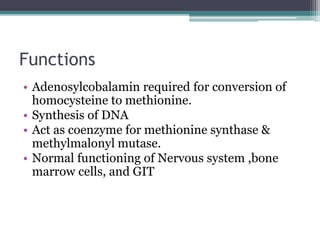
Functions 
• Adenosylcobalamin required for conversion of 
homocysteine to methionine. 
• Synthesis of DNA 
• Act as coenzyme for methionine synthase & 
methylmalonyl mutase. 
• Normal functioning of Nervous system ,bone 
marrow cells, and GIT
Sources 
• Synthesized by bacteria in soil, water in human 
and animal intestine.
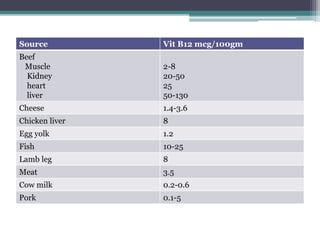
Source Vit B12 mcg/100gm 
Beef 
Muscle 
Kidney 
heart 
liver 
2-8 
20-50 
25 
50-130 
Cheese 1.4-3.6 
Chicken liver 8 
Egg yolk 1.2 
Fish 10-25 
Lamb leg 8 
Meat 3.5 
Cow milk 0.2-0.6 
Pork 0.1-5
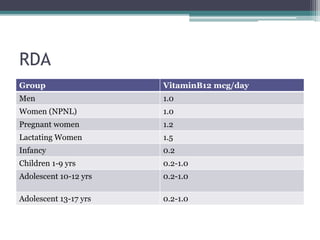
RDA 
Group VitaminB12 mcg/day 
Men 1.0 
Women (NPNL) 1.0 
Pregnant women 1.2 
Lactating Women 1.5 
Infancy 0.2 
Children 1-9 yrs 0.2-1.0 
Adolescent 10-12 yrs 0.2-1.0 
Adolescent 13-17 yrs 0.2-1.0
Deficiency 
• 1.Lack of intake 
• 2.Lack of intrinsic factor 
-pernicious anemia 
-Stomach resection 
- Congenital abnormality
Contd. 
• 3.Deficiency of Intestinal absorption 
-T.B, sprue, resection 
-Diphyllobothrium latum 
-Stagnant loop syndrome 
-Giardia Lamblia 
-Congenital deficiency of receptors 
-Transcobalamin II deficiency 
-Drugs: Neomycin, colchicine, 
PAS, OCP, alcohol
• 4. Excessive demand in pregnancy
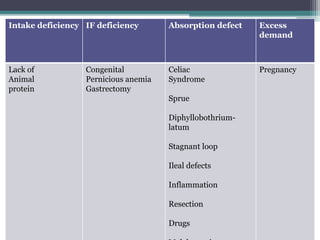
Intake deficiency IF deficiency Absorption defect Excess 
demand 
Lack of 
Animal 
protein 
Congenital 
Pernicious anemia 
Gastrectomy 
Celiac 
Syndrome 
Sprue 
Diphyllobothrium-latum 
Stagnant loop 
Ileal defects 
Inflammation 
Resection 
Drugs 
Malabsorption 
Pregnancy
Diagnosis 
• Hematological: 
• 1. Macroytic anemia 
• 2.Megaloblast in bone marrow 
• 3. Average survival time of RBC reduces
Diagnosis 
• Neurological 
1.Weakness, spasticity and extensor plantar 
response, loss of joint and vibration movement 
2.Bilateral symmetrical tingling, numbness, 
parasthesia diminished sensations in distal parts 
of limbs
Diagnosis 
• 3.Depression, paranoia and psychosis
• Laboratory 
Schilling test: 
1 mcg radioactive B12orally 
1mg of normal B12 S.C inj. 
Radioactive B12-10-20% excreted in urine in 24 
hrs
Contd. 
• The test is repeated after orally administering 
25-100ml gastric juice from normal person with 
oral B12. 
• If urinary excretion increases –IF deficiency 
• If No-defect in ileum absorption 
• Oral tetracycline.
Treatment 
• Pernicious anemia: 
-Injection 100mcg IM 3 times/wk foe 3 wks 
-Maintenance 100mcg monthly 
• Sub acute combined degeneration: 
- 100 mcg alternate day till 
improvement

Vit b12

  • 1.
    Vitamin B12 Dr.C. Taklikar Assistant Professor Dept. of B&N AIIH & PH
  • 2.
    Contents • Introduction • Prevalence • Chemistry • Absorption • Storage Excretion • Functions of VitB12 • Source • RDA • Deficiency • Diagnosis and treatment
  • 3.
    Introduction • Lastmember of B vitamins discovered in 1948 • Simultaneously in UK and US • US- Mary shrob • Lactobacillus lactis Dorner • UK-Lester Smith-purer extracts of liver for ant pernicious activity
  • 4.
    • Produced byFungi and Bacteria • Even millionth of a gram is active • Only Vitamin containing cobalt
  • 5.
    Prevalence • Subclinicaldeficiency >50% women • Males >30% • School age children-45%
  • 6.
    Chemistry • Containscyanide group and cobalt. • Empirical formula is C63H90O14N14PCo • Red crystalline. • Slightly soluble in water.
  • 7.
    Chemistry • Cobalamin • Vitamin B12a –aquacobalamin • Vitamin B12b-hydroxycobalamin
  • 8.
    Chemistry • Adenosylcobalamin-RBC and tissues. • Methylcobalamin-70% in liver. • Streptomyces griseus • Streptomyces aurofaciens
  • 9.
    Absorption • Intrinsicfactor • Glycoprotein • 1 mg binds to 1 mcg of B12 • Parietal cells • R protein • Active absorption: takes place in ileum • Passive absorption: throughout length of small intestine
  • 10.
    Serum Vitamin B12 • Transcobalamin I & II • Normal level: 200-1000Pcg/ml • High level seen in Liver necrosis and cirrhosis
  • 11.
    Storage • Storedin the form of coenzyme. • Total body store-2mg • Liver stores 1 mg • Forms- methylcobalamin, adenosylcobalamin and hydroxycobalamin
  • 12.
    Excretion • Urine:30 pgm/day • Faces: 10 micrograms. • Milk: Conc. Same as blood
  • 13.
    Functions • Adenosylcobalaminrequired for conversion of homocysteine to methionine. • Synthesis of DNA • Act as coenzyme for methionine synthase & methylmalonyl mutase. • Normal functioning of Nervous system ,bone marrow cells, and GIT
  • 14.
    Sources • Synthesizedby bacteria in soil, water in human and animal intestine.
  • 15.
    Source Vit B12mcg/100gm Beef Muscle Kidney heart liver 2-8 20-50 25 50-130 Cheese 1.4-3.6 Chicken liver 8 Egg yolk 1.2 Fish 10-25 Lamb leg 8 Meat 3.5 Cow milk 0.2-0.6 Pork 0.1-5
  • 16.
    RDA Group VitaminB12mcg/day Men 1.0 Women (NPNL) 1.0 Pregnant women 1.2 Lactating Women 1.5 Infancy 0.2 Children 1-9 yrs 0.2-1.0 Adolescent 10-12 yrs 0.2-1.0 Adolescent 13-17 yrs 0.2-1.0
  • 17.
    Deficiency • 1.Lackof intake • 2.Lack of intrinsic factor -pernicious anemia -Stomach resection - Congenital abnormality
  • 18.
    Contd. • 3.Deficiencyof Intestinal absorption -T.B, sprue, resection -Diphyllobothrium latum -Stagnant loop syndrome -Giardia Lamblia -Congenital deficiency of receptors -Transcobalamin II deficiency -Drugs: Neomycin, colchicine, PAS, OCP, alcohol
  • 19.
    • 4. Excessivedemand in pregnancy
  • 20.
    Intake deficiency IFdeficiency Absorption defect Excess demand Lack of Animal protein Congenital Pernicious anemia Gastrectomy Celiac Syndrome Sprue Diphyllobothrium-latum Stagnant loop Ileal defects Inflammation Resection Drugs Malabsorption Pregnancy
  • 21.
    Diagnosis • Hematological: • 1. Macroytic anemia • 2.Megaloblast in bone marrow • 3. Average survival time of RBC reduces
  • 22.
    Diagnosis • Neurological 1.Weakness, spasticity and extensor plantar response, loss of joint and vibration movement 2.Bilateral symmetrical tingling, numbness, parasthesia diminished sensations in distal parts of limbs
  • 23.
    Diagnosis • 3.Depression,paranoia and psychosis
  • 24.
    • Laboratory Schillingtest: 1 mcg radioactive B12orally 1mg of normal B12 S.C inj. Radioactive B12-10-20% excreted in urine in 24 hrs
  • 25.
    Contd. • Thetest is repeated after orally administering 25-100ml gastric juice from normal person with oral B12. • If urinary excretion increases –IF deficiency • If No-defect in ileum absorption • Oral tetracycline.
  • 26.
    Treatment • Perniciousanemia: -Injection 100mcg IM 3 times/wk foe 3 wks -Maintenance 100mcg monthly • Sub acute combined degeneration: - 100 mcg alternate day till improvement