Line

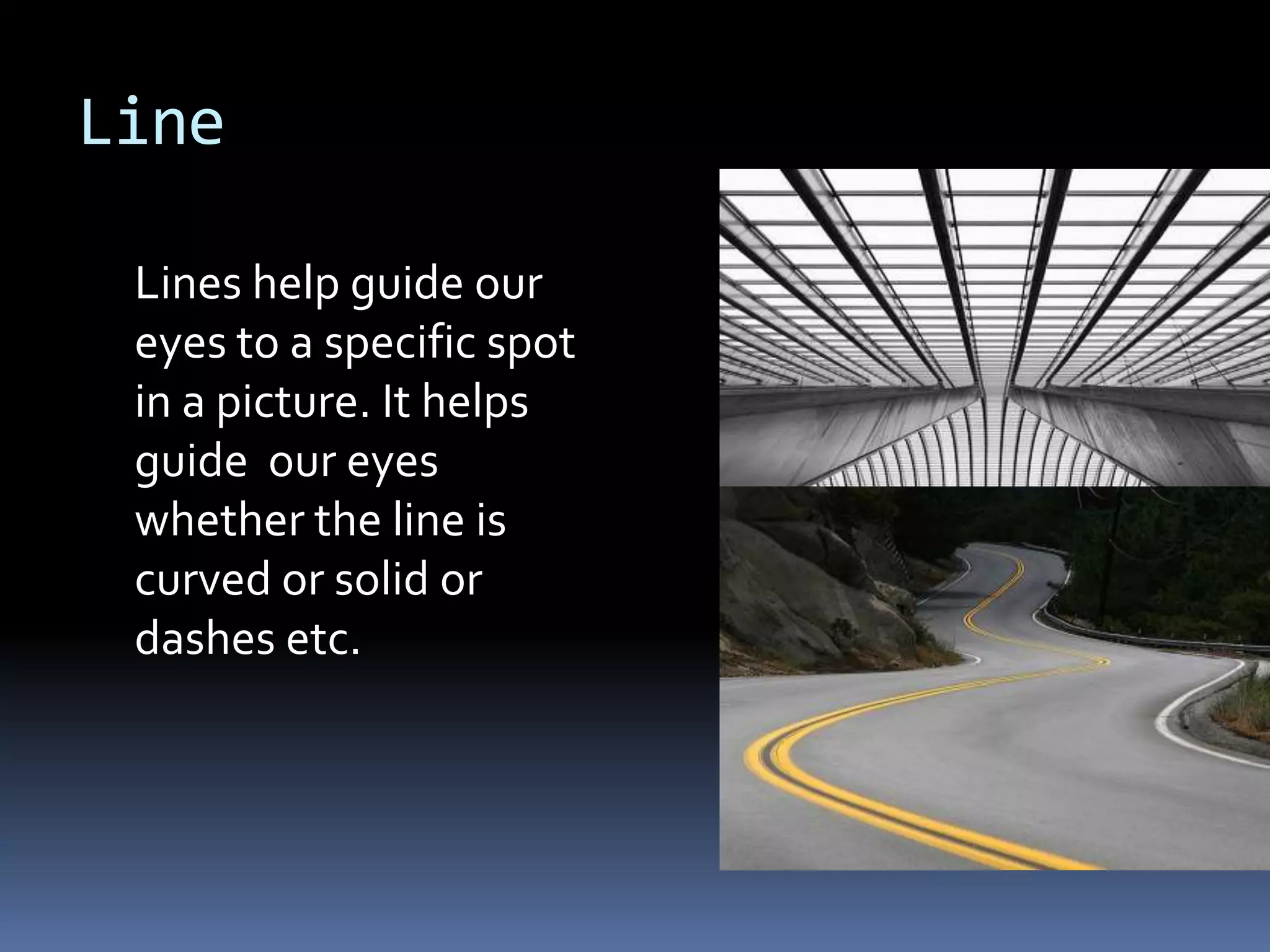
 Lines help guide our
 eyes to a specific spot
 in a picture. It helps
 guide our eyes
 whether the line is
 curved or solid or
 dashes etc.
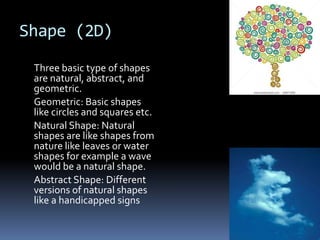
Shape (2D)
 Three basic type of shapes
 are natural, abstract, and
 geometric.
 Geometric: Basic shapes
 like circles and squares etc.
 Natural Shape: Natural
 shapes are like shapes from
 nature like leaves or water
 shapes for example a wave
 would be a natural shape.
 Abstract Shape: Different
 versions of natural shapes
 like a handicapped signs
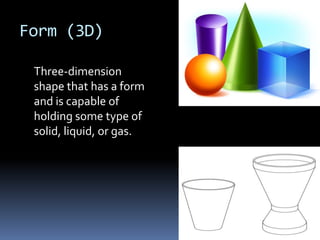
Form (3D)

 Three-dimension
 shape that has a form
 and is capable of
 holding some type of
 solid, liquid, or gas.
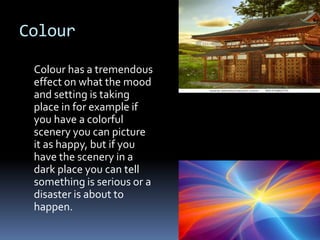
Colour

 Colour has a tremendous
 effect on what the mood
 and setting is taking
 place in for example if
 you have a colorful
 scenery you can picture
 it as happy, but if you
 have the scenery in a
 dark place you can tell
 something is serious or a
 disaster is about to
 happen.
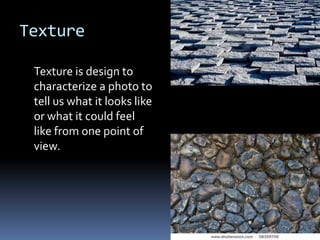
Texture

 Texture is design to
 characterize a photo to
 tell us what it looks like
 or what it could feel
 like from one point of
 view.
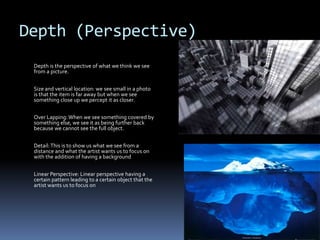
Depth (Perspective)
 Depth is the perspective of what we think we see
 from a picture.


 Size and vertical location: we see small in a photo
 is that the item is far away but when we see
 something close up we percept it as closer.


 Over Lapping: When we see something covered by
 something else, we see it as being further back
 because we cannot see the full object.


 Detail: This is to show us what we see from a
 distance and what the artist wants us to focus on
 with the addition of having a background


 Linear Perspective: Linear perspective having a
 certain pattern leading to a certain object that the
 artist wants us to focus on
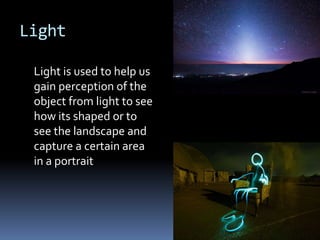
Light

 Light is used to help us
 gain perception of the
 object from light to see
 how its shaped or to
 see the landscape and
 capture a certain area
 in a portrait
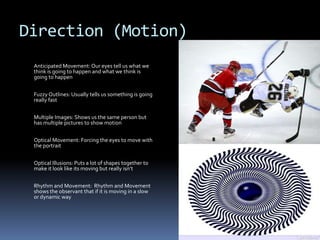
Direction (Motion)
 Anticipated Movement: Our eyes tell us what we
 think is going to happen and what we think is
 going to happen


 Fuzzy Outlines: Usually tells us something is going
 really fast


 Multiple Images: Shows us the same person but
 has multiple pictures to show motion


 Optical Movement: Forcing the eyes to move with
 the portrait


 Optical Illusions: Puts a lot of shapes together to
 make it look like its moving but really isn’t

 Rhythm and Movement: Rhythm and Movement
 shows the observant that if it is moving in a slow
 or dynamic way
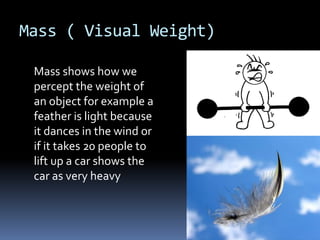
Mass ( Visual Weight)

 Mass shows how we
 percept the weight of
 an object for example a
 feather is light because
 it dances in the wind or
 if it takes 20 people to
 lift up a car shows the
 car as very heavy
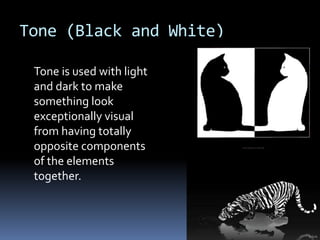
Tone (Black and White)

 Tone is used with light
 and dark to make
 something look
 exceptionally visual
 from having totally
 opposite components
 of the elements
 together.
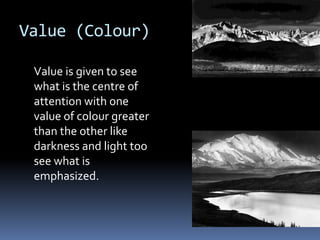
Value (Colour)

 Value is given to see
 what is the centre of
 attention with one
 value of colour greater
 than the other like
 darkness and light too
 see what is
 emphasized.
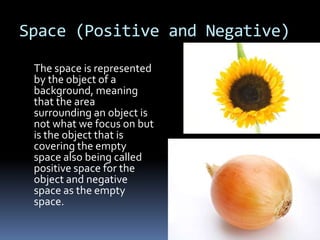
Space (Positive and Negative)

 The space is represented
 by the object of a
 background, meaning
 that the area
 surrounding an object is
 not what we focus on but
 is the object that is
 covering the empty
 space also being called
 positive space for the
 object and negative
 space as the empty
 space.
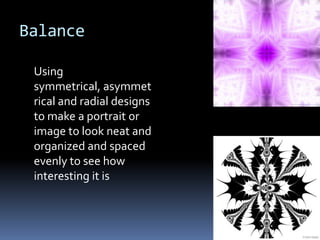
Balance

 Using
 symmetrical, asymmet
 rical and radial designs
 to make a portrait or
 image to look neat and
 organized and spaced
 evenly to see how
 interesting it is
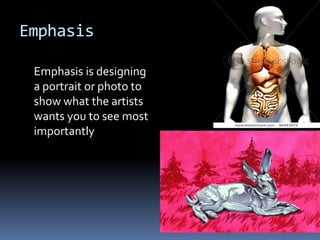
Emphasis

 Emphasis is designing
 a portrait or photo to
 show what the artists
 wants you to see most
 importantly
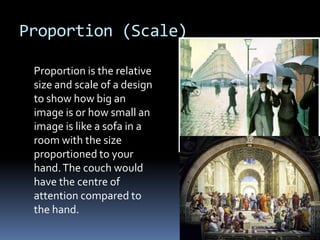
Proportion (Scale)

 Proportion is the relative
 size and scale of a design
 to show how big an
 image is or how small an
 image is like a sofa in a
 room with the size
 proportioned to your
 hand. The couch would
 have the centre of
 attention compared to
 the hand.
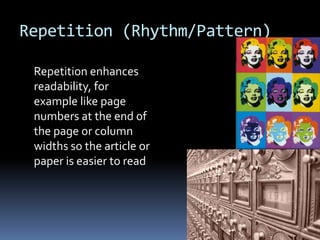
Repetition (Rhythm/Pattern)

 Repetition enhances
 readability, for
 example like page
 numbers at the end of
 the page or column
 widths so the article or
 paper is easier to read
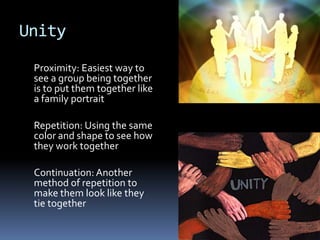
Unity
 Proximity: Easiest way to
 see a group being together
 is to put them together like
 a family portrait

 Repetition: Using the same
 color and shape to see how
 they work together

 Continuation: Another
 method of repetition to
 make them look like they
 tie together
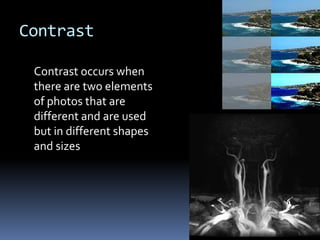
Contrast

 Contrast occurs when
 there are two elements
 of photos that are
 different and are used
 but in different shapes
 and sizes
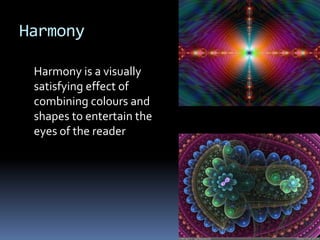
Harmony

 Harmony is a visually
 satisfying effect of
 combining colours and
 shapes to entertain the
 eyes of the reader
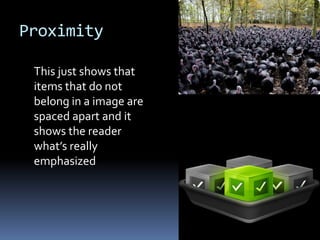
Proximity

 This just shows that
 items that do not
 belong in a image are
 spaced apart and it
 shows the reader
 what’s really
 emphasized
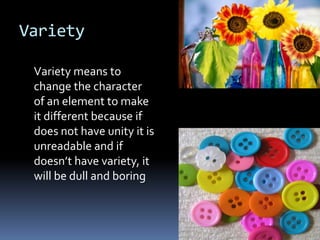
Variety

 Variety means to
 change the character
 of an element to make
 it different because if
 does not have unity it is
 unreadable and if
 doesn’t have variety, it
 will be dull and boring

Visual composition slideshow - Terence Liew

  • 1.
    Line Lines helpguide our eyes to a specific spot in a picture. It helps guide our eyes whether the line is curved or solid or dashes etc.
  • 2.
    Shape (2D) Threebasic type of shapes are natural, abstract, and geometric. Geometric: Basic shapes like circles and squares etc. Natural Shape: Natural shapes are like shapes from nature like leaves or water shapes for example a wave would be a natural shape. Abstract Shape: Different versions of natural shapes like a handicapped signs
  • 3.
    Form (3D) Three-dimension shape that has a form and is capable of holding some type of solid, liquid, or gas.
  • 4.
    Colour Colour hasa tremendous effect on what the mood and setting is taking place in for example if you have a colorful scenery you can picture it as happy, but if you have the scenery in a dark place you can tell something is serious or a disaster is about to happen.
  • 5.
    Texture Texture isdesign to characterize a photo to tell us what it looks like or what it could feel like from one point of view.
  • 6.
    Depth (Perspective) Depthis the perspective of what we think we see from a picture. Size and vertical location: we see small in a photo is that the item is far away but when we see something close up we percept it as closer. Over Lapping: When we see something covered by something else, we see it as being further back because we cannot see the full object. Detail: This is to show us what we see from a distance and what the artist wants us to focus on with the addition of having a background Linear Perspective: Linear perspective having a certain pattern leading to a certain object that the artist wants us to focus on
  • 7.
    Light Light isused to help us gain perception of the object from light to see how its shaped or to see the landscape and capture a certain area in a portrait
  • 8.
    Direction (Motion) AnticipatedMovement: Our eyes tell us what we think is going to happen and what we think is going to happen Fuzzy Outlines: Usually tells us something is going really fast Multiple Images: Shows us the same person but has multiple pictures to show motion Optical Movement: Forcing the eyes to move with the portrait Optical Illusions: Puts a lot of shapes together to make it look like its moving but really isn’t Rhythm and Movement: Rhythm and Movement shows the observant that if it is moving in a slow or dynamic way
  • 9.
    Mass ( VisualWeight) Mass shows how we percept the weight of an object for example a feather is light because it dances in the wind or if it takes 20 people to lift up a car shows the car as very heavy
  • 10.
    Tone (Black andWhite) Tone is used with light and dark to make something look exceptionally visual from having totally opposite components of the elements together.
  • 11.
    Value (Colour) Valueis given to see what is the centre of attention with one value of colour greater than the other like darkness and light too see what is emphasized.
  • 12.
    Space (Positive andNegative) The space is represented by the object of a background, meaning that the area surrounding an object is not what we focus on but is the object that is covering the empty space also being called positive space for the object and negative space as the empty space.
  • 13.
    Balance Using symmetrical,asymmet rical and radial designs to make a portrait or image to look neat and organized and spaced evenly to see how interesting it is
  • 14.
    Emphasis Emphasis isdesigning a portrait or photo to show what the artists wants you to see most importantly
  • 15.
    Proportion (Scale) Proportionis the relative size and scale of a design to show how big an image is or how small an image is like a sofa in a room with the size proportioned to your hand. The couch would have the centre of attention compared to the hand.
  • 16.
    Repetition (Rhythm/Pattern) Repetitionenhances readability, for example like page numbers at the end of the page or column widths so the article or paper is easier to read
  • 17.
    Unity Proximity: Easiestway to see a group being together is to put them together like a family portrait Repetition: Using the same color and shape to see how they work together Continuation: Another method of repetition to make them look like they tie together
  • 18.
    Contrast Contrast occurswhen there are two elements of photos that are different and are used but in different shapes and sizes
  • 19.
    Harmony Harmony isa visually satisfying effect of combining colours and shapes to entertain the eyes of the reader
  • 20.
    Proximity This justshows that items that do not belong in a image are spaced apart and it shows the reader what’s really emphasized
  • 21.
    Variety Variety meansto change the character of an element to make it different because if does not have unity it is unreadable and if doesn’t have variety, it will be dull and boring