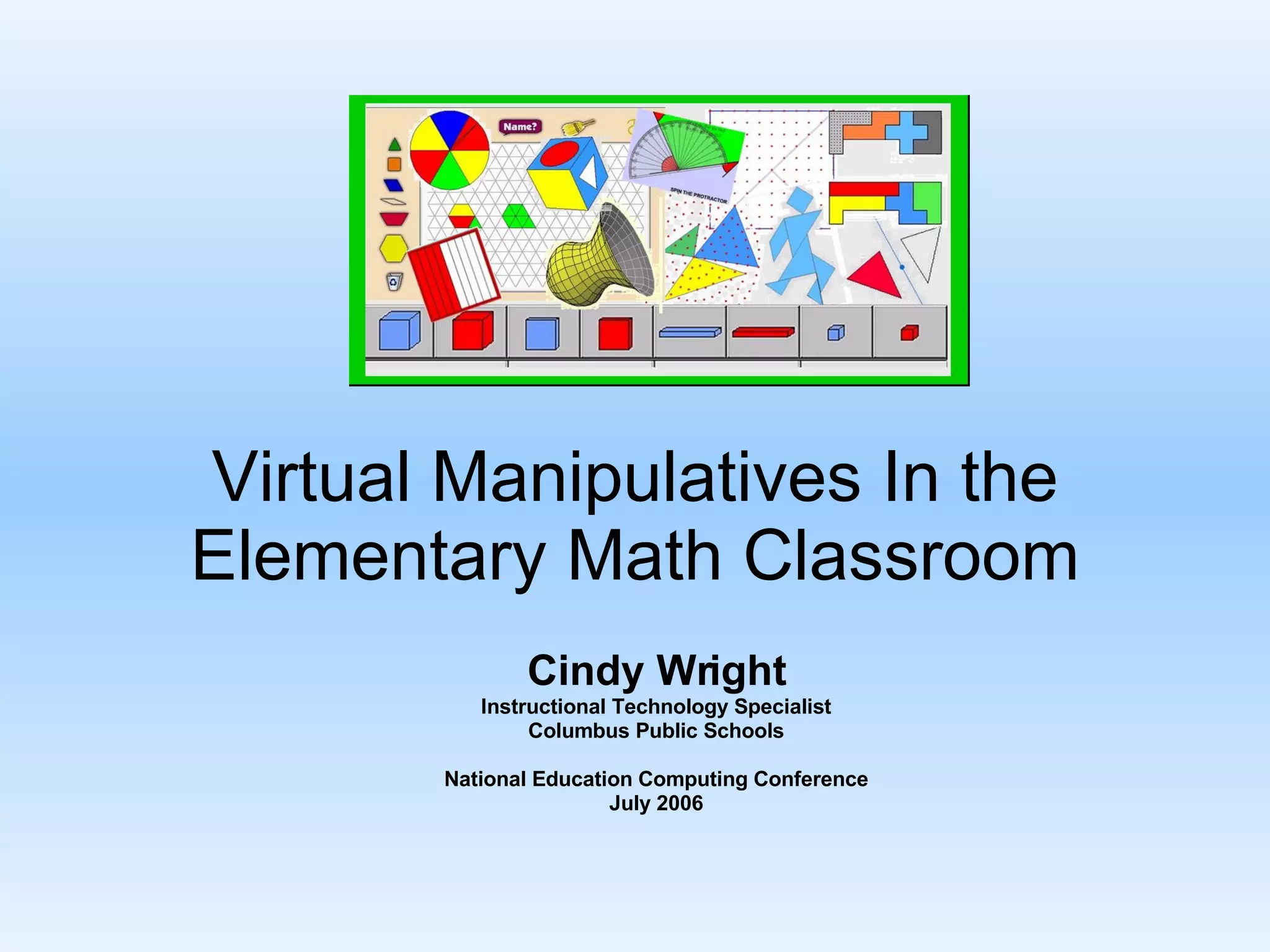
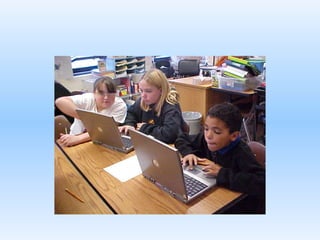
Virtual Manipulatives In the Elementary Math Classroom Cindy Wright Instructional Technology Specialist Columbus Public Schools National Education Computing Conference July 2006
National Council of Teachers of Mathematics The Technology Principle Technology is an essential tool for teaching and learning mathematics effectively; it extends the mathematics that can be taught and enhances students' learning Technologies are essential tools within a balanced mathematics program. Teachers must be prepared to serve as knowledgeable decision makers in determining when and how their students can use these tools most effectively.  http://standards.nctm.org/document/chapter2/techn.htm
NCTM Recommendations Every school mathematics program should provide students and teachers with access to tools of instructional technology, including appropriate calculators, computers with mathematical software, Internet connectivity, handheld data-collection devices, and sensing probes. Preservice and in-service teachers of mathematics at all levels should be provided with appropriate professional development in the use of instructional technology, the development of mathematics lessons that take advantage of technology-rich environments, and the integration of technology into day-to-day instruction. Curricula and courses of study at all levels should incorporate appropriate instructional technology in objectives, lessons, and assessment of learning outcomes. Programs of preservice teacher preparation and in-service professional development should strive to instill dispositions of openness to experimentation with ever-evolving technological tools and their pervasive impact on mathematics education.  Teachers should make informed decisions about the appropriate implementation of technologies in a coherent instructional program.  http://www.nctm.org/about/position_statements/position_statement_13.htm
Overview: Principles for School Mathematics   The six principles for school mathematics address overarching themes : Equity-  Excellence in mathematics education requires equity—high expectations and strong support for all students. Curriculum-  A curriculum is more than a collection of activities: it must be coherent, focused on important mathematics, and well articulated across the grades.  Teaching-  Effective mathematics teaching requires understanding what students know and need to learn and then challenging and supporting them to learn it well.  Learning-  Students must learn mathematics with understanding, actively building new knowledge from experience and prior knowledge.  Assessment-  Assessment should support the learning of important mathematics and furnish useful information to both teachers and students.  Technology-  Technology is essential in teaching and learning mathematics; it influences the mathematics that is taught and enhances students' learning. http://standards.nctm.org/document/chapter2/
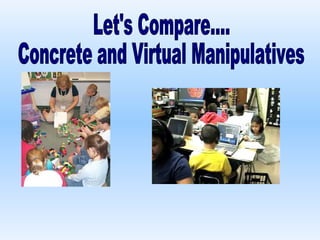
Let's Compare.... Concrete and Virtual Manipulatives
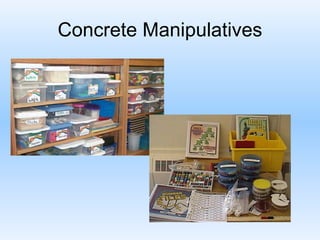
Concrete Manipulatives
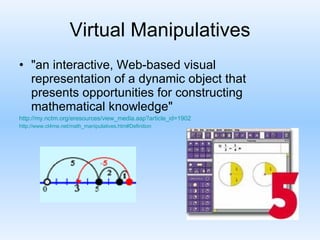
Virtual Manipulatives "an interactive, Web-based visual representation of a dynamic object that presents opportunities for constructing mathematical knowledge"  http://my.nctm.org/eresources/view_media.asp?article_id=1902 http://www.ct4me.net/math_manipulatives.htm#Definition
Two Types of Virtual Manipulatives according to Judy Spicer Static Essentially pictures Resemble concrete manipulatives, but cannot be manipulated http://www.visualfractions.com/ Images change on the screen, but the user cannot move or manipulate the image. Dynamic Essentially objects Can be manipulated just like concrete manipulatives Student can slide, flip, rotate, etc. Provides opportunity make meaning and see relationships as a result of one’s own actions http://www.frontiernet.net/~imaging/java-3d-engine.html
 
Benefits of using  Virtual Manipulatives Math and technology integration are powerful partners in meeting standards Free access for schools that are online Available anywhere, anytime, to anyone Easier to store, and clean up Older children may view using virtual manipulatives as more sophisticated Unlimited numbers available, can print out work Offers options for students with special needs; thus providing for differentiated instruction.  Students like the immediate feedback they receive from the applets, the virtual manipulatives are easier and faster to use than paper-and-pencil, and they provide enjoyment for learning mathematics. 
Challenges of using  Virtual Manipulatives Teachers need ongoing professional development Teachers need up to date tools and time to understand how they fit into the curriculum Locating and aligning Resources to meet curriculum standards Finding enough working computers for all students Following up usage with reflection to enhance the understanding of concepts Assessing learning using the tools
 
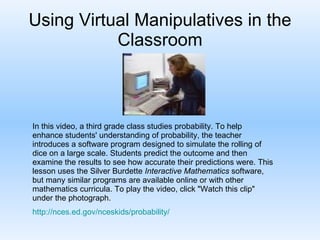
Using Virtual Manipulatives in the Classroom In this video, a third grade class studies probability. To help enhance students' understanding of probability, the teacher introduces a software program designed to simulate the rolling of dice on a large scale. Students predict the outcome and then examine the results to see how accurate their predictions were. This lesson uses the Silver Burdette  Interactive Mathematics  software, but many similar programs are available online or with other mathematics curricula. To play the video, click "Watch this clip" under the photograph.  http:// nces.ed.gov/nceskids/probability /
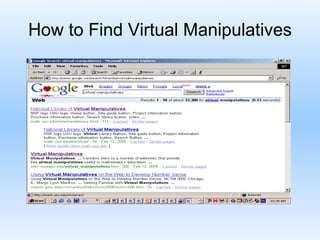
How to Find Virtual Manipulatives
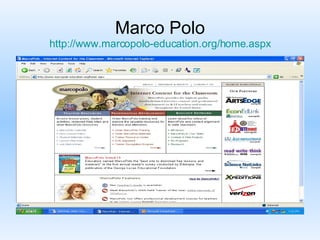
Marco Polo http://www.marcopolo-education.org/home.aspx
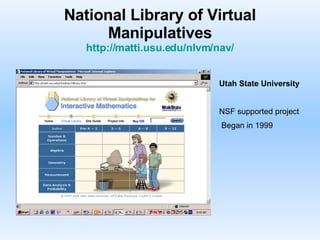
National Library of Virtual Manipulatives http:// matti.usu.edu/nlvm/nav / Utah State University NSF supported project Began in 1999
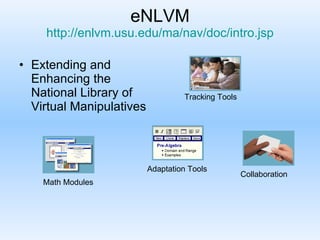
eNLVM http://enlvm.usu.edu/ma/nav/doc/intro.jsp Extending and Enhancing the National Library of Virtual Manipulatives Tracking Tools Math Modules Collaboration Adaptation Tools
HarcourtSchool &  Other Publisher Sites     http:// www.harcourtschool.com/elab/index.html Extensive collection of interactive applets for grades 3-8.  Activities to accompany each one are provided.  You can download an E-Lab activity and use it without being connected to the internet. 
http://www.glencoe.com/sites/ohio/teacher/mathematics/index.html Links to activities that are in the Teacher’s Guide
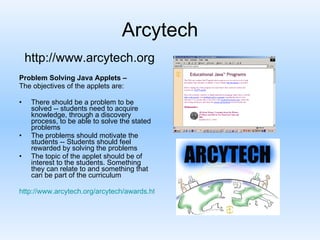
Arcytech Problem Solving Java Applets – The objectives of the applets are: There should be a problem to be solved -- students need to acquire knowledge, through a discovery process, to be able to solve the stated problems  The problems should motivate the students -- Students should feel rewarded by solving the problems  The topic of the applet should be of interest to the students. Something they can relate to and something that can be part of the curriculum http://www.arcytech.org/arcytech/awards.html#patterns_fbk http://www.arcytech.org
NCTM Illuminations Electronic Examples http://standards.nctm.org/document/eexamples/index.htm Web Resources http:// illuminations.nctm.org/swr/list.asp?Ref =2&Std=9
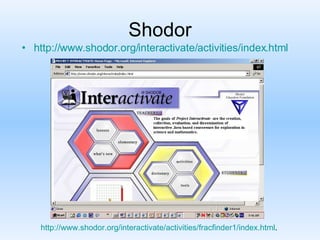
Shodor http://www.shodor.org/interactivate/activities/index.html http://www.shodor.org/interactivate/activities/fracfinder1/index.html .
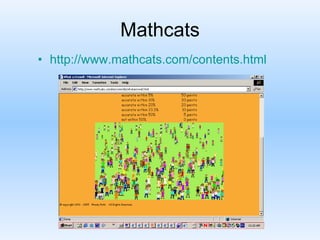
Mathcats http://www.mathcats.com/contents.html
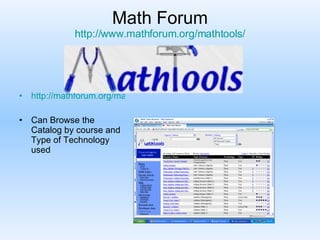
Math Forum http://www.mathforum.org/mathtools/ http://mathforum.org/mathtools/cell/ALL,ALL,ALL,hh/ Can Browse the Catalog by course and Type of Technology used
http:// www.ies.co.jp /math/products/ The material presented is for middle school students, high school students, college students, and all who are interested in mathematics. You will find interactive programs that you can manipulate and a lot of animation that helps you to grasp the meaning of mathematical ideas.
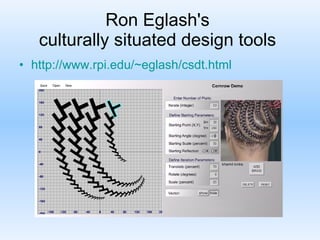
Ron Eglash's  culturally situated design tools  http://www.rpi.edu/~eglash/csdt.html
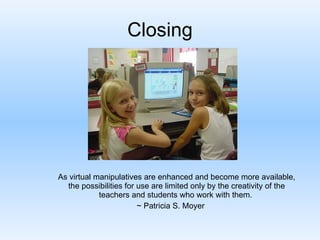
Closing As virtual manipulatives are enhanced and become more available, the possibilities for use are limited only by the creativity of the teachers and students who work with them.  ~ Patricia S. Moyer
Contact Information Cindy Wright  Instructional Technology Specialist Columbus Public Schools 737 E. Hudson St. Columbus, OH 43211 (614)365.5102 [email_address]

Virtual Manipulatives

  • 1.
    Virtual Manipulatives Inthe Elementary Math Classroom Cindy Wright Instructional Technology Specialist Columbus Public Schools National Education Computing Conference July 2006
  • 2.
    National Council ofTeachers of Mathematics The Technology Principle Technology is an essential tool for teaching and learning mathematics effectively; it extends the mathematics that can be taught and enhances students' learning Technologies are essential tools within a balanced mathematics program. Teachers must be prepared to serve as knowledgeable decision makers in determining when and how their students can use these tools most effectively. http://standards.nctm.org/document/chapter2/techn.htm
  • 3.
    NCTM Recommendations Everyschool mathematics program should provide students and teachers with access to tools of instructional technology, including appropriate calculators, computers with mathematical software, Internet connectivity, handheld data-collection devices, and sensing probes. Preservice and in-service teachers of mathematics at all levels should be provided with appropriate professional development in the use of instructional technology, the development of mathematics lessons that take advantage of technology-rich environments, and the integration of technology into day-to-day instruction. Curricula and courses of study at all levels should incorporate appropriate instructional technology in objectives, lessons, and assessment of learning outcomes. Programs of preservice teacher preparation and in-service professional development should strive to instill dispositions of openness to experimentation with ever-evolving technological tools and their pervasive impact on mathematics education. Teachers should make informed decisions about the appropriate implementation of technologies in a coherent instructional program. http://www.nctm.org/about/position_statements/position_statement_13.htm
  • 4.
    Overview: Principles forSchool Mathematics The six principles for school mathematics address overarching themes : Equity- Excellence in mathematics education requires equity—high expectations and strong support for all students. Curriculum- A curriculum is more than a collection of activities: it must be coherent, focused on important mathematics, and well articulated across the grades. Teaching- Effective mathematics teaching requires understanding what students know and need to learn and then challenging and supporting them to learn it well. Learning- Students must learn mathematics with understanding, actively building new knowledge from experience and prior knowledge. Assessment- Assessment should support the learning of important mathematics and furnish useful information to both teachers and students. Technology- Technology is essential in teaching and learning mathematics; it influences the mathematics that is taught and enhances students' learning. http://standards.nctm.org/document/chapter2/
  • 5.
    Let's Compare.... Concreteand Virtual Manipulatives
  • 6.
  • 7.
    Virtual Manipulatives "aninteractive, Web-based visual representation of a dynamic object that presents opportunities for constructing mathematical knowledge" http://my.nctm.org/eresources/view_media.asp?article_id=1902 http://www.ct4me.net/math_manipulatives.htm#Definition
  • 8.
    Two Types ofVirtual Manipulatives according to Judy Spicer Static Essentially pictures Resemble concrete manipulatives, but cannot be manipulated http://www.visualfractions.com/ Images change on the screen, but the user cannot move or manipulate the image. Dynamic Essentially objects Can be manipulated just like concrete manipulatives Student can slide, flip, rotate, etc. Provides opportunity make meaning and see relationships as a result of one’s own actions http://www.frontiernet.net/~imaging/java-3d-engine.html
  • 9.
  • 10.
    Benefits of using Virtual Manipulatives Math and technology integration are powerful partners in meeting standards Free access for schools that are online Available anywhere, anytime, to anyone Easier to store, and clean up Older children may view using virtual manipulatives as more sophisticated Unlimited numbers available, can print out work Offers options for students with special needs; thus providing for differentiated instruction. Students like the immediate feedback they receive from the applets, the virtual manipulatives are easier and faster to use than paper-and-pencil, and they provide enjoyment for learning mathematics. 
  • 11.
    Challenges of using Virtual Manipulatives Teachers need ongoing professional development Teachers need up to date tools and time to understand how they fit into the curriculum Locating and aligning Resources to meet curriculum standards Finding enough working computers for all students Following up usage with reflection to enhance the understanding of concepts Assessing learning using the tools
  • 12.
  • 13.
    Using Virtual Manipulativesin the Classroom In this video, a third grade class studies probability. To help enhance students' understanding of probability, the teacher introduces a software program designed to simulate the rolling of dice on a large scale. Students predict the outcome and then examine the results to see how accurate their predictions were. This lesson uses the Silver Burdette Interactive Mathematics software, but many similar programs are available online or with other mathematics curricula. To play the video, click "Watch this clip" under the photograph. http:// nces.ed.gov/nceskids/probability /
  • 14.
    How to FindVirtual Manipulatives
  • 15.
  • 16.
    National Library ofVirtual Manipulatives http:// matti.usu.edu/nlvm/nav / Utah State University NSF supported project Began in 1999
  • 17.
    eNLVM http://enlvm.usu.edu/ma/nav/doc/intro.jsp Extendingand Enhancing the National Library of Virtual Manipulatives Tracking Tools Math Modules Collaboration Adaptation Tools
  • 18.
    HarcourtSchool & Other Publisher Sites http:// www.harcourtschool.com/elab/index.html Extensive collection of interactive applets for grades 3-8.  Activities to accompany each one are provided.  You can download an E-Lab activity and use it without being connected to the internet. 
  • 19.
  • 20.
    Arcytech Problem SolvingJava Applets – The objectives of the applets are: There should be a problem to be solved -- students need to acquire knowledge, through a discovery process, to be able to solve the stated problems The problems should motivate the students -- Students should feel rewarded by solving the problems The topic of the applet should be of interest to the students. Something they can relate to and something that can be part of the curriculum http://www.arcytech.org/arcytech/awards.html#patterns_fbk http://www.arcytech.org
  • 21.
    NCTM Illuminations ElectronicExamples http://standards.nctm.org/document/eexamples/index.htm Web Resources http:// illuminations.nctm.org/swr/list.asp?Ref =2&Std=9
  • 22.
  • 23.
  • 24.
    Math Forum http://www.mathforum.org/mathtools/http://mathforum.org/mathtools/cell/ALL,ALL,ALL,hh/ Can Browse the Catalog by course and Type of Technology used
  • 25.
    http:// www.ies.co.jp /math/products/The material presented is for middle school students, high school students, college students, and all who are interested in mathematics. You will find interactive programs that you can manipulate and a lot of animation that helps you to grasp the meaning of mathematical ideas.
  • 26.
    Ron Eglash's culturally situated design tools http://www.rpi.edu/~eglash/csdt.html
  • 27.
    Closing As virtualmanipulatives are enhanced and become more available, the possibilities for use are limited only by the creativity of the teachers and students who work with them. ~ Patricia S. Moyer
  • 28.
    Contact Information CindyWright Instructional Technology Specialist Columbus Public Schools 737 E. Hudson St. Columbus, OH 43211 (614)365.5102 [email_address]