Course 5
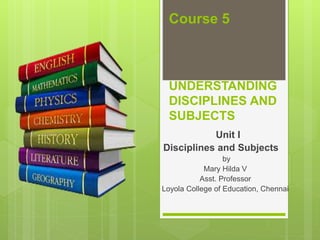
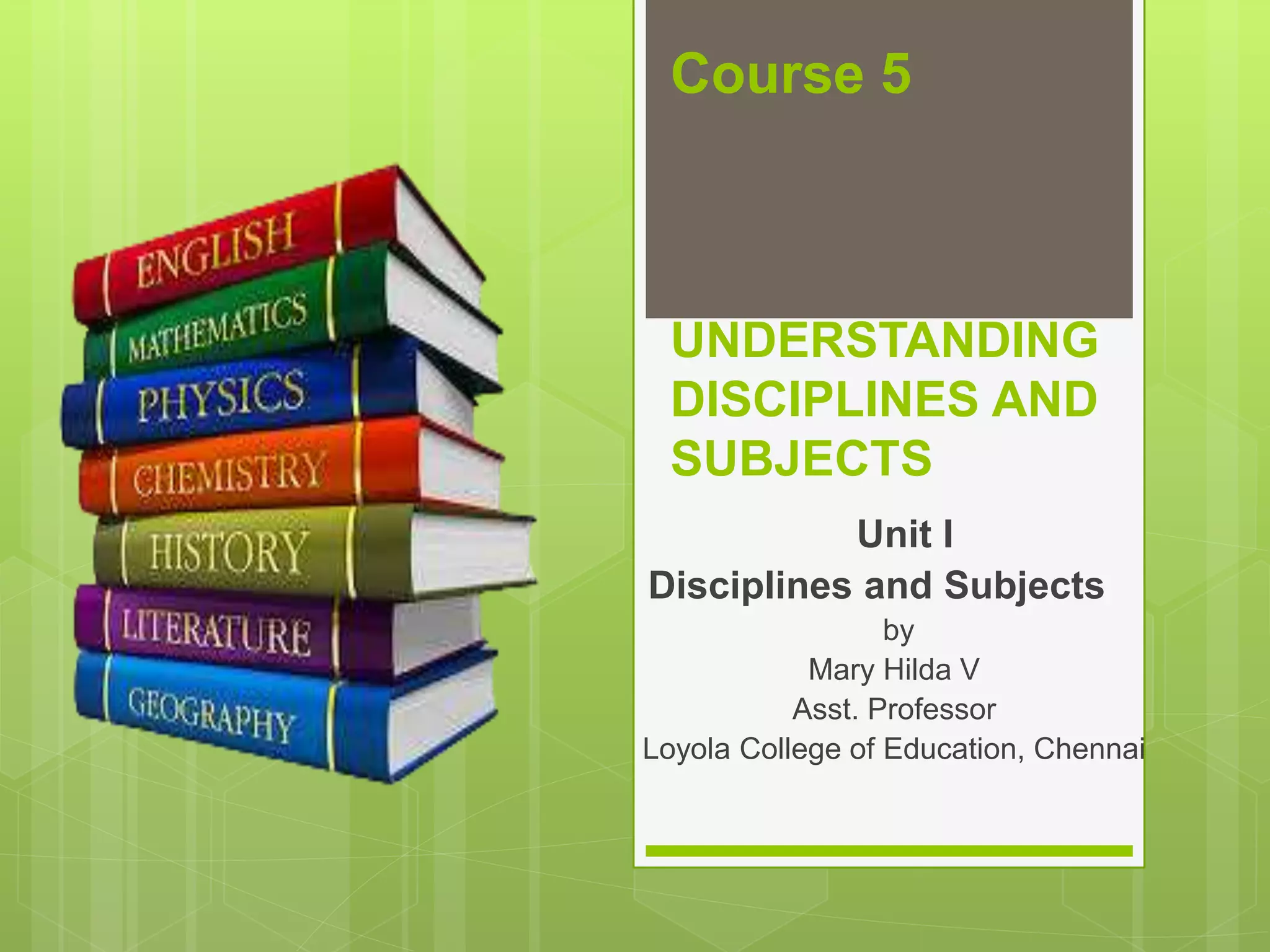
UNDERSTANDING
DISCIPLINES AND
SUBJECTS
Unit I
Disciplines and Subjects
by
Mary Hilda V
Asst. Professor
Loyola College of Education, Chennai
Content
 Curriculum content – meaning, definitions and
importance
 John Dewey’s ideas on disciplinary
knowledge and curriculum
Course 5: Unit- 1
Curriculum content – meaning
 Latin word - “Currer”
meaning “run”. Curriculum -
course of studies – followed
by teacher and students
 Key element and basic part
of educational process.
 utilized by the school to
attain goal.
Course 5: Unit- 1
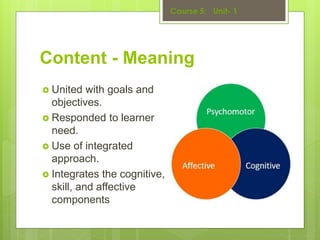
Content - Meaning
 United with goals and
objectives.
 Responded to learner
need.
 Use of integrated
approach.
 Integrates the cognitive,
skill, and affective
components
Curriculum definitions
 "It (curriculum) is a tool in the
hands of the artist(teacher) to
mould his material (pupil)
according to his ideal (objective)
in his studio (school)"
-Cunningam
 Curriculum is plan for action.
-Hilda Taba
 " Whatever the mode of
expression, the subject matter is
the sustantative hard core of the
curriculum"
–Beauchamp.
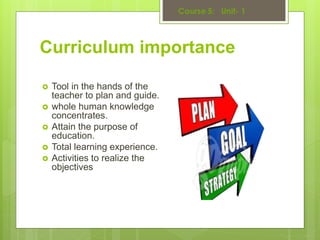
Curriculum importance
 Tool in the hands of the
teacher to plan and guide.
 whole human knowledge
concentrates.
 Attain the purpose of
education.
 Total learning experience.
 Activities to realize the
objectives
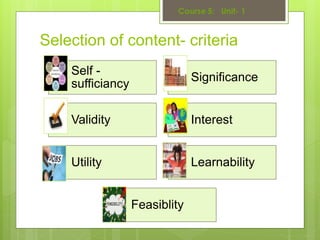
Selection of content- criteria
Self -
sufficiancy
Significance
Validity Interest
Utility Learnability
Feasiblity
Self-sufficiency
The content prescribed in the
curriculum should satisfy the present needs as
well as the future expectations of the students. It
should be limited but self-explanatory and be
helpful in learning with fewer and concise
topics.
Significance
 the content selected should help students
increase their knowledge, provide meaningful
experiences, and develop skills needed to
solve the problems faced in day to day life.
Validity
Validity of the curriculum refers to the
appropriateness of the contents selected for
pupils learning to achieve the stated objectives.
Curriculum contents should be factual, authentic
and conforming to the objectives.
Interest
Interests are always related to pupil’s
background knowledge, abilities and current
events. Subject matter of the curriculum should
connect the students’ interest with the new
learning experiences.
Utility
Presided content should be of practical use and
helpful to students for the present and also for
the future. It should pose a challenge to the
intellect of the student. Help in the development
of innate potentials and prepare him for facing
the problems of life.
Learnability
Students’ age and developments level should
be borne in mind while selecting the content. It
should neither be too easy nor too difficult for
that stage.
Feasibility
Curriculum content should not be ideal, but keep
in view the ground realities. Availability of
resources, time limit, expertise of the teaching
staff, prevailing social and political conditions and
the rules and regulations in force should be kept
in mind while carefully selecting the curriculum
content. If such care is not taken, the curriculum
will meet with failure.
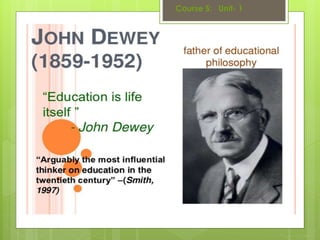
John Dewey’s idea
“Education is not preparation for life;
education is life itself. Education,
therefore, is a process of living and not
a preparation for future living.”
John Dewey’s ideas on
disciplinary knowledge and
curriculum
 No fixed goals on education he emphasis on
immediate or proximate aims.
 Rejected Curriculum centered view of education
 ‘reinstate into experience’
 ‘psychologize the curriculum by constructing an
environment.
Experiential education
Dewey focused his concept of “instrumentalism” in
education on “learning by doing or hands-on
learning”, which means to learn not only by the
theory, but also by the practice. “Instrumentalism”
is a theory of knowledge created by Dewey in
which ideas are seen to exist primarily as
instruments for the solution of problems
encountered in the environment.
The school’s role
Dewey stressed the importance of education in
school not only as a place to gain content
knowledge, but also as a place to learn how to live.
The purpose of education should be the realization
of everybody’s full potential and the ability to use
any skills for the greater good.
The educational process’ role
Dewey advocated for an educational structure that
makes a balance between the child and the
curriculum, that is to say, delivering knowledge
while also taking into account the interests and
experiences of the student.
The teacher’s role
The teacher’s role should be that of facilitator and
guide since the teacher becomes a partner in the
learning process who leads students to
independently discover meaning within the subject
area.
Teaching and learning process
 Learning begins with stimulus – coordinating
involving sensory and motor actions.
 Past experience taken into account.
 Past experience – present situation – furture
moments.
Aims of Education
 Realization of ones’ full potential and ability.
 Schools- teach how to think.
 Learn to live and do work co operatively.
Dewey’s Concept Of
Curriculum
 No fixed curriculum
 Child Centred activities.
 Integrated Curriculum
scheme of education
 Play period from 4 to 8 years of age.
 Period of spontaneous attention from 8 to 12.
 Period of reflective attention from 12 on
wards.
Conclusion
 Dewey considered schools and civil society as two
fundamental elements and major topics that need
attention and reconstruction to encourage
experimental intelligence and plurality in order to
improve our life and environment.
 Dewey strongly believed that students must be
active learning perceivers and critical thinkers
rather than passive believers and receivers of
information.

Unit I John Dewey- Curriculum

  • 1.
    Course 5 UNDERSTANDING DISCIPLINES AND SUBJECTS UnitI Disciplines and Subjects by Mary Hilda V Asst. Professor Loyola College of Education, Chennai
  • 2.
    Content  Curriculum content– meaning, definitions and importance  John Dewey’s ideas on disciplinary knowledge and curriculum Course 5: Unit- 1
  • 3.
    Curriculum content –meaning  Latin word - “Currer” meaning “run”. Curriculum - course of studies – followed by teacher and students  Key element and basic part of educational process.  utilized by the school to attain goal. Course 5: Unit- 1
  • 4.
    Content - Meaning United with goals and objectives.  Responded to learner need.  Use of integrated approach.  Integrates the cognitive, skill, and affective components
  • 5.
    Curriculum definitions  "It(curriculum) is a tool in the hands of the artist(teacher) to mould his material (pupil) according to his ideal (objective) in his studio (school)" -Cunningam  Curriculum is plan for action. -Hilda Taba  " Whatever the mode of expression, the subject matter is the sustantative hard core of the curriculum" –Beauchamp.
  • 6.
    Curriculum importance  Toolin the hands of the teacher to plan and guide.  whole human knowledge concentrates.  Attain the purpose of education.  Total learning experience.  Activities to realize the objectives
  • 7.
    Selection of content-criteria Self - sufficiancy Significance Validity Interest Utility Learnability Feasiblity
  • 8.
    Self-sufficiency The content prescribedin the curriculum should satisfy the present needs as well as the future expectations of the students. It should be limited but self-explanatory and be helpful in learning with fewer and concise topics.
  • 9.
    Significance  the contentselected should help students increase their knowledge, provide meaningful experiences, and develop skills needed to solve the problems faced in day to day life.
  • 10.
    Validity Validity of thecurriculum refers to the appropriateness of the contents selected for pupils learning to achieve the stated objectives. Curriculum contents should be factual, authentic and conforming to the objectives.
  • 11.
    Interest Interests are alwaysrelated to pupil’s background knowledge, abilities and current events. Subject matter of the curriculum should connect the students’ interest with the new learning experiences.
  • 12.
    Utility Presided content shouldbe of practical use and helpful to students for the present and also for the future. It should pose a challenge to the intellect of the student. Help in the development of innate potentials and prepare him for facing the problems of life.
  • 13.
    Learnability Students’ age anddevelopments level should be borne in mind while selecting the content. It should neither be too easy nor too difficult for that stage.
  • 14.
    Feasibility Curriculum content shouldnot be ideal, but keep in view the ground realities. Availability of resources, time limit, expertise of the teaching staff, prevailing social and political conditions and the rules and regulations in force should be kept in mind while carefully selecting the curriculum content. If such care is not taken, the curriculum will meet with failure.
  • 16.
    John Dewey’s idea “Educationis not preparation for life; education is life itself. Education, therefore, is a process of living and not a preparation for future living.”
  • 17.
    John Dewey’s ideason disciplinary knowledge and curriculum  No fixed goals on education he emphasis on immediate or proximate aims.  Rejected Curriculum centered view of education  ‘reinstate into experience’  ‘psychologize the curriculum by constructing an environment.
  • 18.
    Experiential education Dewey focusedhis concept of “instrumentalism” in education on “learning by doing or hands-on learning”, which means to learn not only by the theory, but also by the practice. “Instrumentalism” is a theory of knowledge created by Dewey in which ideas are seen to exist primarily as instruments for the solution of problems encountered in the environment.
  • 19.
    The school’s role Deweystressed the importance of education in school not only as a place to gain content knowledge, but also as a place to learn how to live. The purpose of education should be the realization of everybody’s full potential and the ability to use any skills for the greater good.
  • 20.
    The educational process’role Dewey advocated for an educational structure that makes a balance between the child and the curriculum, that is to say, delivering knowledge while also taking into account the interests and experiences of the student.
  • 21.
    The teacher’s role Theteacher’s role should be that of facilitator and guide since the teacher becomes a partner in the learning process who leads students to independently discover meaning within the subject area.
  • 22.
    Teaching and learningprocess  Learning begins with stimulus – coordinating involving sensory and motor actions.  Past experience taken into account.  Past experience – present situation – furture moments.
  • 23.
    Aims of Education Realization of ones’ full potential and ability.  Schools- teach how to think.  Learn to live and do work co operatively.
  • 24.
    Dewey’s Concept Of Curriculum No fixed curriculum  Child Centred activities.  Integrated Curriculum
  • 25.
    scheme of education Play period from 4 to 8 years of age.  Period of spontaneous attention from 8 to 12.  Period of reflective attention from 12 on wards.
  • 26.
    Conclusion  Dewey consideredschools and civil society as two fundamental elements and major topics that need attention and reconstruction to encourage experimental intelligence and plurality in order to improve our life and environment.  Dewey strongly believed that students must be active learning perceivers and critical thinkers rather than passive believers and receivers of information.