Download to read offline
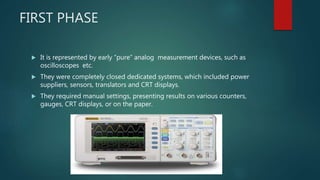


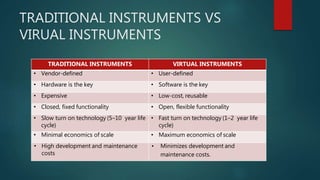
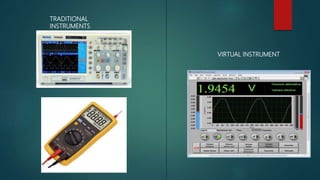

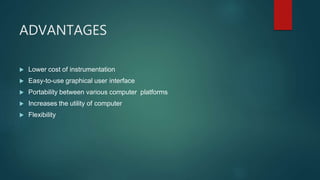
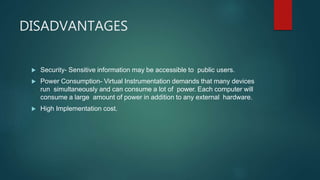

Virtual instrumentation uses customizable software and modular hardware to create user-defined measurement systems called virtual instruments. It emerged in the late 1970s with advances in microprocessor technology that enabled instrument functions to be changed via software instead of hardware. Virtual instrumentation progressed through three phases: early analog devices, digitization of signals in the 1950s, and computer-based instruments with interfaces in the 1960s, making instruments more affordable and flexible. Key advantages of virtual instruments over traditional hardware-focused instruments are lower cost, user-defined functionality, and faster technology updates.


