Viral OncOgenesis
Ifrah Ishaq
University Of The Punjab, Lahore.
Outline
Oncogene
Viral Oncogenesis
Types Of Oncogenesis Viruses
• DNA Viruses
• RNA Viruses
Retroviruses
Life Cycle Of RNA Virus
Conclusion
intrOductiOn
Oncogene
A region of the viral genome that can cause
a tumor.
Proto-oncogene
Genes that are found in all cells and its
homologous is carried by a virus ( viral-
oncogene).
• Viral Oncogene
Genes in the viral genome; change host cell
proliferation control
• Tumor-suppressor Genes
Genes whose products inhibit cell
multiplication
• Mutator Genes
Genes whose products ensure accurate
DNA replication and DNA repair
OncOgenic Viruses
Oncogenic viruses are significant pathogens for
humans, farm animals, and pets. These pathogens
are classified into different virus families such as
Hepadnaviridae, Flaviviridae, and Retroviridae.
Oncogenic viruses (tumor viruses) consist of both
DNA and RNA viruses
Types Of OncOgenesis Viruses
DNA Viruses
Virus can containing either single stranded or
double stranded DNA.
Examples of DNA viruses are:
Adenoviridae, Herpesviridae,
Papillomaviridae, Polyomaviridae, Poxviridae
etc.
RNA Viruses
RNA virus contains predominantly single
stranded RNA; although viruses do exist that
contain double stranded.
Examples of RNA viruses:
Alpharetrovirus,Deltaretrovirus,
Gammaretrovirus, Retroviridae, Flaviviridae
etc.
reTrOViruses
All oncogenic RNA viruses are retroviruses.
In 1961, Rous sarcoma virus.
Retroviruses have 3 basic genes

1. Gag
2. pol
3. env
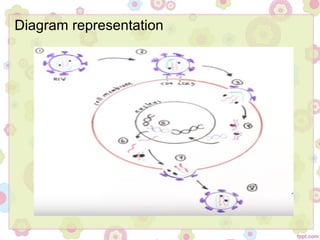
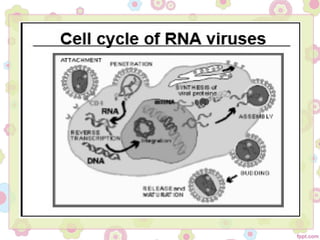
Life CyCLe of RNA ViRuses
Steps of life cycle explained below:
1.Approaches the cell membrane
2.Receptors on the lipid bilayer(binding)
3.Virus fuses with plasma membrane of the cell
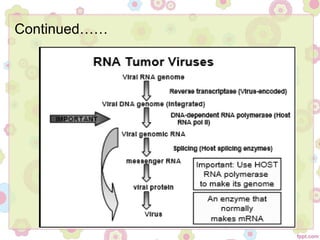
4.Role of reverse transcriptase
5.Role retroviral integrase
6.Transcription of the viral DNA
7.Viral RNA as well as the viral proteins; move
outward
8.Once outside, the virus matures
Diagram representation
Continued……
Plus-Strand RNA Viruses
serve directly as mRNA ; translated into
proteins.
Minus-Strand RNA Viruses
transcribed into the mRNA ; then translated.
ConClusion
Many retroviruses do not have viral
oncogenes. They integrate near some of the
proto-oncogenes, activate their expression by
pro-viral insertional mutagenesis, and
modulate growth and differentiation of the
host cells.
thank you!!!!!!

viral oncogenesis

  • 1.
  • 2.
    Outline Oncogene Viral Oncogenesis Types OfOncogenesis Viruses • DNA Viruses • RNA Viruses Retroviruses Life Cycle Of RNA Virus Conclusion
  • 3.
    intrOductiOn Oncogene A region ofthe viral genome that can cause a tumor. Proto-oncogene Genes that are found in all cells and its homologous is carried by a virus ( viral- oncogene).
  • 4.
    • Viral Oncogene Genesin the viral genome; change host cell proliferation control • Tumor-suppressor Genes Genes whose products inhibit cell multiplication • Mutator Genes Genes whose products ensure accurate DNA replication and DNA repair
  • 5.
    OncOgenic Viruses Oncogenic virusesare significant pathogens for humans, farm animals, and pets. These pathogens are classified into different virus families such as Hepadnaviridae, Flaviviridae, and Retroviridae. Oncogenic viruses (tumor viruses) consist of both DNA and RNA viruses
  • 6.
    Types Of OncOgenesisViruses DNA Viruses Virus can containing either single stranded or double stranded DNA. Examples of DNA viruses are: Adenoviridae, Herpesviridae, Papillomaviridae, Polyomaviridae, Poxviridae etc.
  • 7.
    RNA Viruses RNA viruscontains predominantly single stranded RNA; although viruses do exist that contain double stranded. Examples of RNA viruses: Alpharetrovirus,Deltaretrovirus, Gammaretrovirus, Retroviridae, Flaviviridae etc.
  • 8.
    reTrOViruses All oncogenic RNAviruses are retroviruses. In 1961, Rous sarcoma virus. Retroviruses have 3 basic genes  1. Gag 2. pol 3. env
  • 9.
    Life CyCLe ofRNA ViRuses Steps of life cycle explained below: 1.Approaches the cell membrane 2.Receptors on the lipid bilayer(binding) 3.Virus fuses with plasma membrane of the cell 4.Role of reverse transcriptase 5.Role retroviral integrase 6.Transcription of the viral DNA 7.Viral RNA as well as the viral proteins; move outward 8.Once outside, the virus matures
  • 10.
  • 11.
  • 13.
    Plus-Strand RNA Viruses servedirectly as mRNA ; translated into proteins. Minus-Strand RNA Viruses transcribed into the mRNA ; then translated.
  • 14.
    ConClusion Many retroviruses donot have viral oncogenes. They integrate near some of the proto-oncogenes, activate their expression by pro-viral insertional mutagenesis, and modulate growth and differentiation of the host cells.
  • 15.