ONCOGENIC VIRUSES
By-
Dr. Ravi Bhushan
 INTRODUCTION
 HISTORY
 EPIDEMIOLOGY
 MECHANISM OF ONCOGENECITY BY VIRUSES
 VIRUSES ASSOCIATED WITH HUMAN TUMORS
 DIAGNOSIS
 PREVENTION
A virus is a small infectious agent that can replicate only inside the
living cells of an organism. Viruses can infect all types of organisms,
from animals and plants to bacteria.
Viruses are found in almost every ecosystem on Earth and are the
most abundant type of biological entity.
Virus particles (known as virions) consist of two or three parts: i)
the genetic material made from either DNA or RNA, ii) a protein coat
that protects these genes; and in some cases iii)
an envelope of lipids that surrounds the protein coat when they are
outside a cell.
Definition: Any disorder of cell growth that results in invasion and
destruction of surrounding healthy tissue by abnormal cells.
Cancer cells arise from normal cells whose nature is permanently
changed.
They multiply more rapidly than healthy body cells and do not seem
subject to normal control by nerves and hormones.
They may spread via the bloodstream or lymphatic system to other
parts of the body, where they produce further tissue damage
(metastasis).
Regulation of Cell Division In Normal Cells
6
Changes in cell that are at the roots of
cancer
Genetic and epigenetic alterations:
• Mutations
• Deletions
• Recombinations
• Transpositions
• Epigenetic alterations (DNA methylation, imprinting)
• Acquisition of viral genetic material
• Various combinations of these lead to the development of cancers –
( some viruses contribute single hits while others contribute multiple hits.)
7
Inherited
Somatic
- Random
- Transposition
- Exposure to deleterious environmental agents
- Radiation
- carcinogenic chemicals
- Viruses
- Other persistent infections
Source of genetic alterations
Multistep Carcinogenesis
 Multistep genetic changes must occur to convert a normal
cell into a malignant one.
 Tumors usually develop slowly over a long period of time.
 3 – 8 mutations are thought to underlie this process;
resulting in activation of multiple cellular oncogenes and
inactivation of tumor suppressor genes.
 Tumor virus acts as a cofactor in the carcinogenesis process.
Viruses are necessary but not sufficient for development of
tumors with a viral etiology.
 ONCOGENIC VIRUSES
Viruses that produce tumours in their natural host /
experimental animals
or
which induce malignant transformation of cells on culture.
 Features of viral oncogenesis
- cause cancer in humans & animals
- long latency between viral infection and tumorigenesis
- modulate growth control pathways in cells
- viral markers are present in tumor cells
10
• Integrations that cause activation or inactivation of
oncogenes or tumor suppressors (e.g. RNA viruses)
• Expression of genes that alter key signal transduction
pathways.
• Chronic activation of inflammatory responses
How do Viruses contribute to
cancer?
Genes and Cancer
 Mutations that result in cancer typically occur
in 3 types of genes.
– Proto-oncogenes: (genes whose products stimulate cell
multiplication)
– Tumor-suppressor genes: (genes whose products inhibit
cell multiplication)
– Mutator genes: (genes whose products ensure accurate
DNA replication and DNA repair)
Oncogenes
A gene that is capable of transforming a normal cell into a
cancerous cell.
Oncogenes result from the mutation of normal genes (proto-
oncogenes).
Oncogenes are also seen in oncogenic viruses.
(Viral oncogenes are derived from normal host genes that have
become incorporated into the viral genome and subsequently
undergo mutation.)
2 types:
 C-onc
 V-onc
Tumor suppressor genes
 These are negative regulators of cell growth.
 They form complexes with oncoproteins of certain DNA tumor viruses-
causes inactivation or functional loss -leads to tumor formation.
 The prototype of these genes are retinoblastoma (Rb) gene and P53
gene.
 Function:
- p53 acts as transcription factor and blocks cell cycle
progression.
-p53 causes cells with DNA damage to undergo apoptosis.
 p53 gene is mutated in over half of all human cancers.
Research History
In 1908, Ellerman & Bang
first discovered virus,
producing leukemia in
chicken.
In 1911 Peyton Rous 1st
shows the presence of
filterable sarcoma material
that induce the CANCER.
YEAR SIGNIFICANCE
1908
Ellerman & Bang reported that cell free filtrates from chicken with leukemia
could transmit disease to healthy birds
1911 Rous - first described association of viruses with malignancy
- Fowl sarcoma caused by virus
- Nobel Prize in 1966
1932 Shope – demonstrated viruses causing tumors in animals
- isolated Rabbit Fibroma virus (1932) & Pappiloma virus (1933)
1957 Stewart & Eddy – discovered Polyoma virus
1962 Trentin – demonstrated sarcoma in newborn mice by human Adenovirus
Discovery of tumorigenic potential of Simian virus 40
1965 Burkitt – identified Epstein Barr virus as causative for Burkitt’s lymphoma.
First human tumor virus
1975 Blumberg et al – linked chronic hepatitis B infection to hepatocellular
carcinoma
1980 Second-generation recombinant HBV surface antigen subunit vaccine (against
HBV & HCC)
1974 Harald zur Hausen – proposed HPV as etiologic agent of cervical cancer
- Nobel Prize in 2008
1981 Gallo et al – proposed causal role of HTLV 1 in adult T cell Leukemia
1989 Houghton et al – proposed association between chronic HCV infn and HCC
1994 Chang et al – isolated kaposi’s sarcoma virus (HHV8)
EPIDEMIOLOGY
 Viruses are responsible for 20% of malignant
conditions in humans, including some of the
most common cancers worldwide, and are
especially common in immunosuppressed
patients.
Classification
Oncovirus
DNA oncogenic
viruses
RNA oncogenic
viruses
ONCOGENIC VIRUSES
TAXONOMIC
GROUPING
EXAMPLES PRIMARY TUMOR TYPES
RNA VIRUSES
1.Flaviviridae Hepatitis C virus Hepatocellular carcinoma
2.Retroviridae
• Alpha-retroviruses Rous sarcoma virus(RSV) Sarcoma
Rous associated virus(RAV) B-cell lymphoma, erythroleukemia
Avian myeloblastosis virus (AMV) Myeloid/erythroid leukemia
Avian erythroblastosis virus (AEV) Erythroid leukemia
Myelocytoma virus (MC29) Myeloid leukemia
•Beta-retroviruses Mouse mammary tumor virus(MMTV) Mammary carcinoma
Jaagsiekte sheep retrovirus Lung carcinoma
Gamma-retroviruses Murine leukemia virus(MuLV) Leukemia, lymphoma
Murine sarcoma virus(MuSV) Sarcoma
Feline leukemia virus Leukemia,lymphosarcoma
Feline sarcoma virus Sarcoma
Simian sarcoma virus Sarcoma
Koala retrovirus T cell leukemia
Delta-retroviruses Human T lymphotropic virus(HTLV) Adult T cell leukemia
Bovine Leukemia virus B cell leukemia
Epsilon-retroviruses Walleye dermal sarcoma virus Sarcoma
DNA VIRUSES
1.Adenoviridae Types 2,5,12 Various solid tumors
2. Hepadnavirus Hepatitis B virus (HBV) Hepatocellular carcinoma
3.Herpesviridae Epstein-Barr virus(EBV)
(HHV4)
Burkitt’s lymphoma,
nasopharyngeal carcinoma
Kaposi sarcoma Herpes
virus(KSHV) (HHV8)
Kaposi sarcoma
4.Polyomaviridae SV40,polyoma virus Various solid tumors
5.Papillomaviridae HPV 6,11,16,18
Bovine papilloma virus
Papilloma,carcinoma
6.Poxviridae Shope fibromavirus Myxoma,fibroma
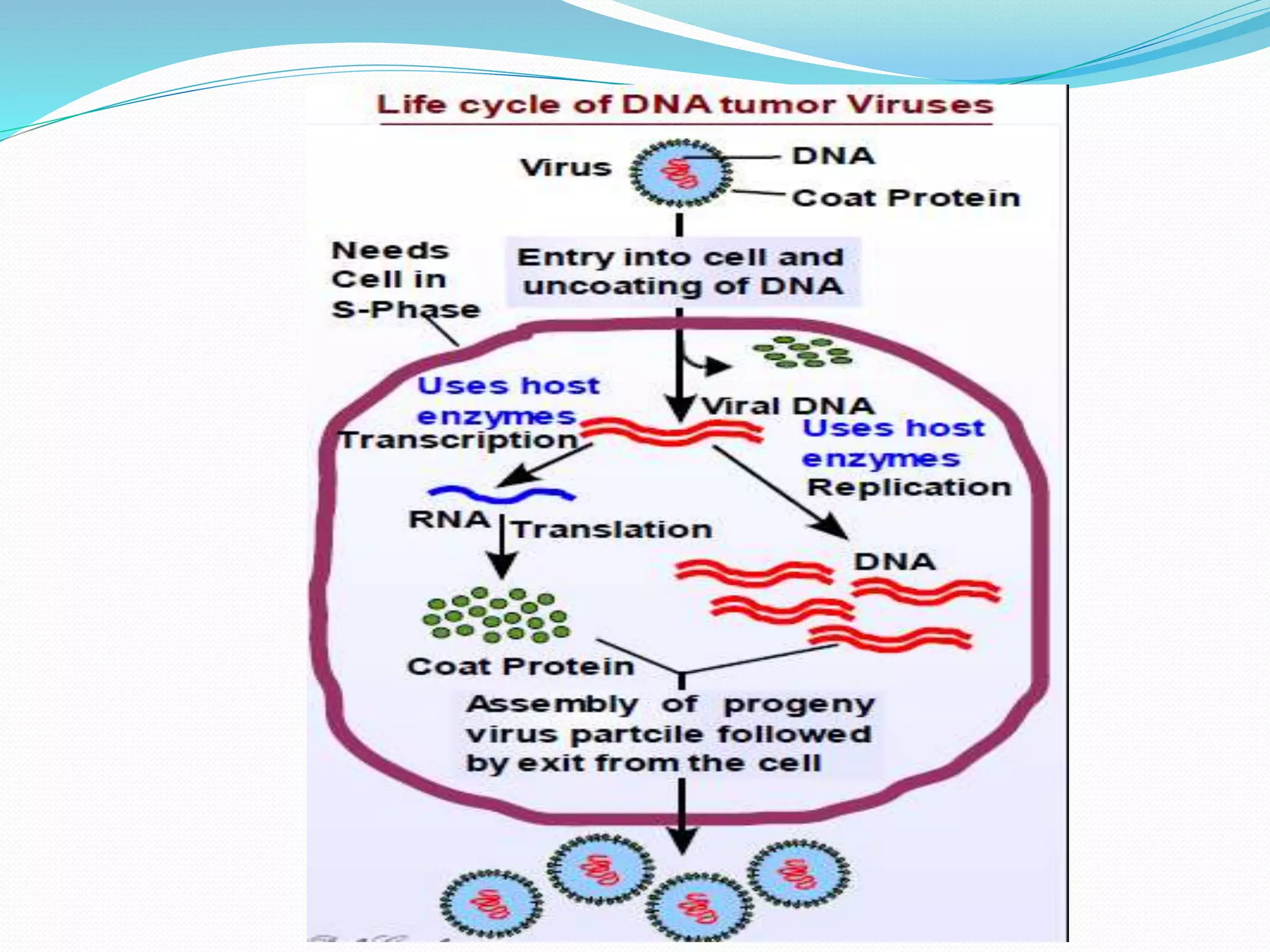
CELL CYCLE OF RETRO VIRUSES
Tumor Viruses
Genome all viral proteins
Replication Lysis Progeny virions
Lytic Life Cycle
For most viruses:
www.freelivedoctor.com
Tumor Viruses Virus
Cell
Integration (often)
Transformation
Latent Life Cycle
Some virus-specific proteins expressed (early functions) - No
mature virus
Viral structural proteins are not expressed
Changes in the properties of host cell - TRANSFORMATION
Sometimes latency may terminate – cell must be infected by
complete virus
MECHANISM OF ONCOGENECITY
Introduction of new Alteration of expression of
‘Transforming gene’ pre-existing cellular gene
into the cell
Loss of normal growth regulation processes
Affection of DNA repair mechanisms
Genetic instability
Mutagenic phenotype
DIRECT ACTING
INDIRECT
ACTING
Growth parameters and behavior of
transformed cells
 Immortal (can grow indefinitely)
 Reduced requirement for serum growth factors
 Loss of capacity for growth arrest upon nutrient deprivation
 Loss of contact inhibition (can grow over other cells)
 Increased ability to grow in suspension
 Anchorage independence (can grow in soft agar)
 Altered morphology (appear rounded and refractile)
 Tumorigenicity
 Induction of DNA synthesis
 Chromosomal changes
VIRAL TRANSFORMATION
The changes in the biological functions of a cell that result
from
REGULATION
of the cell’s metabolism by viral genes and that confer on the
infected cell certain properties characteristic of
NEOPLASIA
These changes often result from the integration of the viral
genome into the host cell DNA.
VIRUSES CAUSING HUMAN CANCERS
VIRUS FAMILY VIRUS HUMAN CANCER
Papillomaviridae Human Papilloma virus Genital tumors
Squamous cell carcinoma
Oropharyngeal carcinoma
Herpesviridae Epstein –Barr virus Nasopharyngeal carcinoma
Burkitt’s lymphoma
Hodgkin disease
B cell lymphoma
Human Herpes virus 8 Kaposi sarcoma
Hepadnaviridae Hepatitis B virus Hepatocellular carcinoma
Flaviviridae Hepatitis C virus Hepatocellular carcinoma
Retroviridae Human T cell lymphoma virus Adult T cell lymphoma
Human immunodeficiency virus AIDS related malignancies
RNA VIRUSES
RETROVIRUS
Properties
 Virion – spherical, helical
nucleoprotein within
icosahedral capsid
 Genome – 2 copies of single
stranded RNA
 Possess reverse
transcriptase(RNA
dependent DNA polymerase)
 Enveloped virus
 Not cytolytic (except
lentivirus)
 Retrovirus (alpha, gamma) – no viral oncogene
gag – encodes core proteins(group specific)
pro – encodes protease enzyme
pol – encodes reverse transcriptase
env – encodes envelope glycoproteins
 Influence proto-oncogene by insertional
mutagenesis
 Deltaretrovirus, Lentivirus
tax/tat – transactivating regulatory gene.
HUMAN T- CELL LEUKEMIA VIRUS
 Epidemiology
-First retrovirus implicated in human disease.
-20 million infected worldwide.
-High endemic areas – Latin America , Caribbean , Africa
,Japan
- IV drug users - U.S & Europe
 Adult T-cell leukemia/lymphoma
 Oncoproteins
Tax
- Enhanced proliferative potential of T – lymphocytes
- interference of cell regulation pathways & DNA repair
mechanisms.
 Accessory protein p12
- alters MHC 1 & T-cell receptor (TCR) cascade activation
 Accessory protein p13II
- targets mitochondria
- affects cell proliferation , apoptosis , ROS production
HIV Accessory protein Tat
- interferes with DNA repair mechanisms
- interfere with Rb gene mediated growth regulation pathway
HCV
 Flaviviridae.
 Single stranded RNA.
 Over 170 million chronic carriers
 Hepatocellular carcinoma
 Non Hodgkins B cell lymphoma
 Mechanism- inflammation cirrhosis
DNA VIRUSES
Hepatitis B virus HBV
Human Papillomavirus
DNA virus oncogenesis
 Inhibition of tumor suppressor genes
- Rb gene mutation
- inactivates p53 mediated growth regulation
 Oncoproteins interact with specific targets on the host cell
DNA virus Oncoproteins and their major targets
VIRUS TARGETS
Adenovirus E1A Rb family members
Adenovirus E1B19K Bak ,Bax
Adenovirus E1B55K p53
Adenovirus E4 orf 6 p53
Epstein Barr virus EBNA2 Glycogen synthetase kinase,RBP-J kappa/CBF 1
Epstein Barr virus Lmp 1 PI3K ,TNF signalling components
Epstein Barr virus LMP 2 Src family members
Hepatitis B virus X protein p53
Human Papilloma virus E5 EGF receptor
Human Papilloma virus E6 P53, PDZ proteins,
Human Papilloma virus E7 Rb family members, p21,p27,p600
KSHV ORF 50 ,KSHV K-bZIP p53
KSHV vCyclin Cyclin dependent kinase 6
HPV
 Small
 Non-enveloped
 Virion – Icosahedral
 Genome – double stranded ,circular DNA (8000bp )
 Closely related to Polyomaviruses
 16 genera (5 – human infections)
 Nearly 140 types are identified
 Classified using molecular criteria
 Epidemiology
- HPV induced cervical cancer is 2nd most common cancer
worldwide
- 16% of all female cancers are linked to HPV
- Papilloma virus is found in 90% of women with cervical cancers
HUMAN PAPILLOMA
VIRUS TYPE
CLINICAL LESION SUSPECTED
ONCOGENIC POTENTIAL
1 Plantar warts Benign
2,4,27,57 Common skin warts Benign
3,10,28,49,60,76,78 Cutaneous lesions Low
5,8,9,12,17,20,36,47 Epidermodysplasia
verruciformis
Benign - malignancy
6,11,40,42,43,44,54,61,70,72,8
1
Anogenital condylomas,
Laryngeal papillomas,
Mucaosal dysplasia &
intraepithelial neoplasia
Low
7 Hand warts in butchers Low
16,18,30,31,33,35,39,45,51-
53,56,58,59,66,68,73,82
High grade dysplasia,genital
carcinoma ,laryngeal &
esophageal carcinomas
High (espl with cervical
cancer)
HPV REPLICATION
 High tropism for epithelial cells of skin & mucous membranes
 Viral replication are dependent on sequential differentiation
states of epithelial cells .
 DNA synthesis is supported only in basal cells of the squamous
epithelium.
 Hence, difficult to propagate in vitro
 Opening Reading Frames(ORF) – encode viral proteins .
Located on only one of the 2 viral DNA strands
 No viral DNA polymerase--Dependent on host cell replication
machinery for viral genome replication.
ORF FUNCTION
L1 L1 protein-major capsid protein
(VLP vaccine)
L2 L2 protein- minor capsid protein
E1 Initiation of viral DNA
replication,helicase,ATPase
E2 Trancriptional regulatory
protein, genomic maintenance
E4 Late protein. Disrupts
cytokeratins
E5 Membrane transforming protein,
interacts with specific growth
factor receptors
E6 Transformation. Degradation of
p53, telomerase activation
E7 Transformation.
Inactivation of pRb .
HPV pathogenesis
 Sexually transmitted
 Peak incidence – adolescents & young adults
 Episomal HPV DNA – in skin carcinoma, premalignant lesions
 Integrated HPV DNA – in cervical cancer cells
 Oncogeneticity – transforming oncoproteins interacting with
tumor suppressors(p53, Rb )
HERPES VIRUS
 EPSTEIN BARR VIRUS (HHV 4)
 KAPOSI SARCOMA HERPES VIRUS (HHV 8 )
Properties
 Large viruses
 Genome – linear double stranded DNA
 Icosahedral capsid with lipid containing envelope
 Acute infection followed by latency
 Recurrence from latent infection
 Latency genes
EBV
 Infectious mononucleosis
 Burkitt’s lymphoma
 Nasopharyngeal carcinoma
 Non Hodgkin’s lymphoma
 Remain latent in lymphoblast cell lines.
 Epidemiology
- Ubiquitous
- Burkitt’s lymphoma – children in Central Africa
- Nasopharyngeal carcinoma – Cantonese China , Alaskan
Eskimos
Malaria - cofactor
Tumors contain integrated & episomal forms of viral DNA
 Oncoproteins
 LMP1(Latent Membrane Protein 1)
- membrane protein with 6 domains
- receptor -TNF alpha
TRAF TRADD
(TNF Recceptor ass. factor) (TNF receptor ass. death
RIP domain)
(Receptor interacting protein)
Stimulation of transcription factors for Anti-Apoptotic
proteins
LMP 1
 EPSTEIN BARR NUCLEAR ANTIGEN (EBNA)
 EBNA 1
 EBNA 2
 EBNA LP Conversion of EBV infected peripheral
 EBNA 3A blood cells to lympho-blastoid cell lines
 EBNA 3C
 P53 mutation
KAPOSI SARCOMA HERPES VIRUS
 HHV 8
 KAPOSI’S SARCOMA- affects multiple organs with
prominent vascular endothelial component
 PRIMARY EFFUSION LYMPHOMA
 MULTICENTRIC CASTLEMAN DISEASE
 Epidemiology
- Mediterranean & African countries
- Elderly men at high preponderance
 ONCOPROTEINS
- Seven latent genes
- Latency Associated Nuclear Antigen(LANA)
Impairs p53 & Rb up-regulates Beta – catenin pathway
V - FLIP(Flice inhibitory protein)
inhibits caspase activity
HBV
 Hepadnaviridae
 Genome – circular, ds DNA
 Epidemiology
- endemic in Africa ,China, South east Asia
- over 250 million persistently infected
 Primary infections in neonates & children- 90% chronic
Hepatocellular carcinoma
 Hepatitis B vaccination has lowered incidence of
infection & HCC
 Oncoprotein
1. X gene
- encoded by ORF X
- affects cellular gene expression
- interferes with p53 function
2. Mutated proto-oncogene N-myc2
. Aflatoxin
- co-factor
- Africa & China
. ROS
- generated by inflammatory cells of Chronic active hepatitis
- DNA damage & mutagenesis
POLYOMA VIRUS
 MERKEL CELL VIRUS
 Merkel cell carcinoma
- highly lethal skin cancer
- immuno-compromised
 Oncoproteins
- Large T antigen (LT)
- Small T antigen (ST)
- inactivate Rb tumor suppressor pathway
 SIMIAN VIRUS 40
 Osteosarcoma, lung carcinoma, brain tumors
 EPIDEMIOLOGY
- primary infection in Asian macaques
-H/O accidental exposure through contaminated poliovirus
vaccines b/w 1955 and 1963
DETECTION
 DETECTION OF TRANSFORMATION – studied in
established cell lines-- immortal
 GENETIC MAPPING - to identify specific viral genes with
transforming activity
 GENE SEQUENCING
 PCR
- HTLV 1
- HBV , HCV
- EBV (LMP 1,2)
 SOUTHERN BLOTTING
- HBV
- EBV--EBNA1
 ANIMAL INOCULATION
 MICROARRAY
 IN SITU HYBRIDISATION
- HPV (E6,E7)
- KSHV
VACCINES
HPV
 Non-infectious, recombinant vaccines
- Virus Like Particles(VLP) composed of L1 proteins(major
capsid protein)
- VLPs generate high titre type specific neutralizing antisera
 GARDASIL
- FDA approved (Merck)
- Quadrivalent vaccines (particles derived from HPV
6,11,16,18)
- also used in men to prevent genital warts (approved in
2009)
 CERVARIX
- FDA approved (GlaxoSmithKline)
- Bivalent vaccines ( HPV 16,18)
- immunity for 5 years
- contraindicated in pregnancy.
 Immune response is Type specific
 No cross protection against other HPV types
 Expensive
 Heat labile.
HBV
 Subunit, recombinant vaccine
 HBsAg
HCV
 Genome is highly variable
 No effective vaccine
HTLV
 No vaccine
 Interferons
EBV
 Chemotherapy
 Vaccine – in pipeline
KSHV
 Gancyclovir – inhibits viral DNA polymerase
 Incidence lowered in AIDS patients treated with HAART
 No vaccine
THANK YOU

oncogenic viruses ppt.

  • 1.
  • 2.
     INTRODUCTION  HISTORY EPIDEMIOLOGY  MECHANISM OF ONCOGENECITY BY VIRUSES  VIRUSES ASSOCIATED WITH HUMAN TUMORS  DIAGNOSIS  PREVENTION
  • 3.
    A virus isa small infectious agent that can replicate only inside the living cells of an organism. Viruses can infect all types of organisms, from animals and plants to bacteria. Viruses are found in almost every ecosystem on Earth and are the most abundant type of biological entity. Virus particles (known as virions) consist of two or three parts: i) the genetic material made from either DNA or RNA, ii) a protein coat that protects these genes; and in some cases iii) an envelope of lipids that surrounds the protein coat when they are outside a cell.
  • 4.
    Definition: Any disorderof cell growth that results in invasion and destruction of surrounding healthy tissue by abnormal cells. Cancer cells arise from normal cells whose nature is permanently changed. They multiply more rapidly than healthy body cells and do not seem subject to normal control by nerves and hormones. They may spread via the bloodstream or lymphatic system to other parts of the body, where they produce further tissue damage (metastasis).
  • 5.
    Regulation of CellDivision In Normal Cells
  • 6.
    6 Changes in cellthat are at the roots of cancer Genetic and epigenetic alterations: • Mutations • Deletions • Recombinations • Transpositions • Epigenetic alterations (DNA methylation, imprinting) • Acquisition of viral genetic material • Various combinations of these lead to the development of cancers – ( some viruses contribute single hits while others contribute multiple hits.)
  • 7.
    7 Inherited Somatic - Random - Transposition -Exposure to deleterious environmental agents - Radiation - carcinogenic chemicals - Viruses - Other persistent infections Source of genetic alterations
  • 8.
    Multistep Carcinogenesis  Multistepgenetic changes must occur to convert a normal cell into a malignant one.  Tumors usually develop slowly over a long period of time.  3 – 8 mutations are thought to underlie this process; resulting in activation of multiple cellular oncogenes and inactivation of tumor suppressor genes.  Tumor virus acts as a cofactor in the carcinogenesis process. Viruses are necessary but not sufficient for development of tumors with a viral etiology.
  • 9.
     ONCOGENIC VIRUSES Virusesthat produce tumours in their natural host / experimental animals or which induce malignant transformation of cells on culture.  Features of viral oncogenesis - cause cancer in humans & animals - long latency between viral infection and tumorigenesis - modulate growth control pathways in cells - viral markers are present in tumor cells
  • 10.
    10 • Integrations thatcause activation or inactivation of oncogenes or tumor suppressors (e.g. RNA viruses) • Expression of genes that alter key signal transduction pathways. • Chronic activation of inflammatory responses How do Viruses contribute to cancer?
  • 11.
    Genes and Cancer Mutations that result in cancer typically occur in 3 types of genes. – Proto-oncogenes: (genes whose products stimulate cell multiplication) – Tumor-suppressor genes: (genes whose products inhibit cell multiplication) – Mutator genes: (genes whose products ensure accurate DNA replication and DNA repair)
  • 12.
    Oncogenes A gene thatis capable of transforming a normal cell into a cancerous cell. Oncogenes result from the mutation of normal genes (proto- oncogenes). Oncogenes are also seen in oncogenic viruses. (Viral oncogenes are derived from normal host genes that have become incorporated into the viral genome and subsequently undergo mutation.) 2 types:  C-onc  V-onc
  • 13.
    Tumor suppressor genes These are negative regulators of cell growth.  They form complexes with oncoproteins of certain DNA tumor viruses- causes inactivation or functional loss -leads to tumor formation.  The prototype of these genes are retinoblastoma (Rb) gene and P53 gene.  Function: - p53 acts as transcription factor and blocks cell cycle progression. -p53 causes cells with DNA damage to undergo apoptosis.  p53 gene is mutated in over half of all human cancers.
  • 16.
    Research History In 1908,Ellerman & Bang first discovered virus, producing leukemia in chicken. In 1911 Peyton Rous 1st shows the presence of filterable sarcoma material that induce the CANCER.
  • 17.
    YEAR SIGNIFICANCE 1908 Ellerman &Bang reported that cell free filtrates from chicken with leukemia could transmit disease to healthy birds 1911 Rous - first described association of viruses with malignancy - Fowl sarcoma caused by virus - Nobel Prize in 1966 1932 Shope – demonstrated viruses causing tumors in animals - isolated Rabbit Fibroma virus (1932) & Pappiloma virus (1933) 1957 Stewart & Eddy – discovered Polyoma virus 1962 Trentin – demonstrated sarcoma in newborn mice by human Adenovirus Discovery of tumorigenic potential of Simian virus 40 1965 Burkitt – identified Epstein Barr virus as causative for Burkitt’s lymphoma. First human tumor virus 1975 Blumberg et al – linked chronic hepatitis B infection to hepatocellular carcinoma 1980 Second-generation recombinant HBV surface antigen subunit vaccine (against HBV & HCC) 1974 Harald zur Hausen – proposed HPV as etiologic agent of cervical cancer - Nobel Prize in 2008 1981 Gallo et al – proposed causal role of HTLV 1 in adult T cell Leukemia 1989 Houghton et al – proposed association between chronic HCV infn and HCC 1994 Chang et al – isolated kaposi’s sarcoma virus (HHV8)
  • 18.
    EPIDEMIOLOGY  Viruses areresponsible for 20% of malignant conditions in humans, including some of the most common cancers worldwide, and are especially common in immunosuppressed patients.
  • 19.
  • 20.
    ONCOGENIC VIRUSES TAXONOMIC GROUPING EXAMPLES PRIMARYTUMOR TYPES RNA VIRUSES 1.Flaviviridae Hepatitis C virus Hepatocellular carcinoma 2.Retroviridae • Alpha-retroviruses Rous sarcoma virus(RSV) Sarcoma Rous associated virus(RAV) B-cell lymphoma, erythroleukemia Avian myeloblastosis virus (AMV) Myeloid/erythroid leukemia Avian erythroblastosis virus (AEV) Erythroid leukemia Myelocytoma virus (MC29) Myeloid leukemia •Beta-retroviruses Mouse mammary tumor virus(MMTV) Mammary carcinoma Jaagsiekte sheep retrovirus Lung carcinoma
  • 21.
    Gamma-retroviruses Murine leukemiavirus(MuLV) Leukemia, lymphoma Murine sarcoma virus(MuSV) Sarcoma Feline leukemia virus Leukemia,lymphosarcoma Feline sarcoma virus Sarcoma Simian sarcoma virus Sarcoma Koala retrovirus T cell leukemia Delta-retroviruses Human T lymphotropic virus(HTLV) Adult T cell leukemia Bovine Leukemia virus B cell leukemia Epsilon-retroviruses Walleye dermal sarcoma virus Sarcoma
  • 22.
    DNA VIRUSES 1.Adenoviridae Types2,5,12 Various solid tumors 2. Hepadnavirus Hepatitis B virus (HBV) Hepatocellular carcinoma 3.Herpesviridae Epstein-Barr virus(EBV) (HHV4) Burkitt’s lymphoma, nasopharyngeal carcinoma Kaposi sarcoma Herpes virus(KSHV) (HHV8) Kaposi sarcoma 4.Polyomaviridae SV40,polyoma virus Various solid tumors 5.Papillomaviridae HPV 6,11,16,18 Bovine papilloma virus Papilloma,carcinoma 6.Poxviridae Shope fibromavirus Myxoma,fibroma
  • 23.
    CELL CYCLE OFRETRO VIRUSES
  • 25.
    Tumor Viruses Genome allviral proteins Replication Lysis Progeny virions Lytic Life Cycle For most viruses: www.freelivedoctor.com
  • 26.
    Tumor Viruses Virus Cell Integration(often) Transformation Latent Life Cycle Some virus-specific proteins expressed (early functions) - No mature virus Viral structural proteins are not expressed Changes in the properties of host cell - TRANSFORMATION Sometimes latency may terminate – cell must be infected by complete virus
  • 28.
    MECHANISM OF ONCOGENECITY Introductionof new Alteration of expression of ‘Transforming gene’ pre-existing cellular gene into the cell Loss of normal growth regulation processes Affection of DNA repair mechanisms Genetic instability Mutagenic phenotype DIRECT ACTING INDIRECT ACTING
  • 29.
    Growth parameters andbehavior of transformed cells  Immortal (can grow indefinitely)  Reduced requirement for serum growth factors  Loss of capacity for growth arrest upon nutrient deprivation  Loss of contact inhibition (can grow over other cells)  Increased ability to grow in suspension  Anchorage independence (can grow in soft agar)  Altered morphology (appear rounded and refractile)  Tumorigenicity  Induction of DNA synthesis  Chromosomal changes
  • 30.
    VIRAL TRANSFORMATION The changesin the biological functions of a cell that result from REGULATION of the cell’s metabolism by viral genes and that confer on the infected cell certain properties characteristic of NEOPLASIA These changes often result from the integration of the viral genome into the host cell DNA.
  • 31.
    VIRUSES CAUSING HUMANCANCERS VIRUS FAMILY VIRUS HUMAN CANCER Papillomaviridae Human Papilloma virus Genital tumors Squamous cell carcinoma Oropharyngeal carcinoma Herpesviridae Epstein –Barr virus Nasopharyngeal carcinoma Burkitt’s lymphoma Hodgkin disease B cell lymphoma Human Herpes virus 8 Kaposi sarcoma Hepadnaviridae Hepatitis B virus Hepatocellular carcinoma Flaviviridae Hepatitis C virus Hepatocellular carcinoma Retroviridae Human T cell lymphoma virus Adult T cell lymphoma Human immunodeficiency virus AIDS related malignancies
  • 32.
  • 33.
    RETROVIRUS Properties  Virion –spherical, helical nucleoprotein within icosahedral capsid  Genome – 2 copies of single stranded RNA  Possess reverse transcriptase(RNA dependent DNA polymerase)  Enveloped virus  Not cytolytic (except lentivirus)
  • 34.
     Retrovirus (alpha,gamma) – no viral oncogene gag – encodes core proteins(group specific) pro – encodes protease enzyme pol – encodes reverse transcriptase env – encodes envelope glycoproteins  Influence proto-oncogene by insertional mutagenesis  Deltaretrovirus, Lentivirus tax/tat – transactivating regulatory gene.
  • 35.
    HUMAN T- CELLLEUKEMIA VIRUS  Epidemiology -First retrovirus implicated in human disease. -20 million infected worldwide. -High endemic areas – Latin America , Caribbean , Africa ,Japan - IV drug users - U.S & Europe  Adult T-cell leukemia/lymphoma  Oncoproteins Tax - Enhanced proliferative potential of T – lymphocytes - interference of cell regulation pathways & DNA repair mechanisms.
  • 36.
     Accessory proteinp12 - alters MHC 1 & T-cell receptor (TCR) cascade activation  Accessory protein p13II - targets mitochondria - affects cell proliferation , apoptosis , ROS production
  • 37.
    HIV Accessory proteinTat - interferes with DNA repair mechanisms - interfere with Rb gene mediated growth regulation pathway HCV  Flaviviridae.  Single stranded RNA.  Over 170 million chronic carriers  Hepatocellular carcinoma  Non Hodgkins B cell lymphoma  Mechanism- inflammation cirrhosis
  • 38.
    DNA VIRUSES Hepatitis Bvirus HBV Human Papillomavirus
  • 39.
    DNA virus oncogenesis Inhibition of tumor suppressor genes - Rb gene mutation - inactivates p53 mediated growth regulation  Oncoproteins interact with specific targets on the host cell
  • 40.
    DNA virus Oncoproteinsand their major targets VIRUS TARGETS Adenovirus E1A Rb family members Adenovirus E1B19K Bak ,Bax Adenovirus E1B55K p53 Adenovirus E4 orf 6 p53 Epstein Barr virus EBNA2 Glycogen synthetase kinase,RBP-J kappa/CBF 1 Epstein Barr virus Lmp 1 PI3K ,TNF signalling components Epstein Barr virus LMP 2 Src family members Hepatitis B virus X protein p53 Human Papilloma virus E5 EGF receptor Human Papilloma virus E6 P53, PDZ proteins, Human Papilloma virus E7 Rb family members, p21,p27,p600 KSHV ORF 50 ,KSHV K-bZIP p53 KSHV vCyclin Cyclin dependent kinase 6
  • 41.
    HPV  Small  Non-enveloped Virion – Icosahedral  Genome – double stranded ,circular DNA (8000bp )  Closely related to Polyomaviruses  16 genera (5 – human infections)  Nearly 140 types are identified  Classified using molecular criteria  Epidemiology - HPV induced cervical cancer is 2nd most common cancer worldwide - 16% of all female cancers are linked to HPV - Papilloma virus is found in 90% of women with cervical cancers
  • 42.
    HUMAN PAPILLOMA VIRUS TYPE CLINICALLESION SUSPECTED ONCOGENIC POTENTIAL 1 Plantar warts Benign 2,4,27,57 Common skin warts Benign 3,10,28,49,60,76,78 Cutaneous lesions Low 5,8,9,12,17,20,36,47 Epidermodysplasia verruciformis Benign - malignancy 6,11,40,42,43,44,54,61,70,72,8 1 Anogenital condylomas, Laryngeal papillomas, Mucaosal dysplasia & intraepithelial neoplasia Low 7 Hand warts in butchers Low 16,18,30,31,33,35,39,45,51- 53,56,58,59,66,68,73,82 High grade dysplasia,genital carcinoma ,laryngeal & esophageal carcinomas High (espl with cervical cancer)
  • 43.
    HPV REPLICATION  Hightropism for epithelial cells of skin & mucous membranes  Viral replication are dependent on sequential differentiation states of epithelial cells .  DNA synthesis is supported only in basal cells of the squamous epithelium.  Hence, difficult to propagate in vitro  Opening Reading Frames(ORF) – encode viral proteins . Located on only one of the 2 viral DNA strands  No viral DNA polymerase--Dependent on host cell replication machinery for viral genome replication.
  • 44.
    ORF FUNCTION L1 L1protein-major capsid protein (VLP vaccine) L2 L2 protein- minor capsid protein E1 Initiation of viral DNA replication,helicase,ATPase E2 Trancriptional regulatory protein, genomic maintenance E4 Late protein. Disrupts cytokeratins E5 Membrane transforming protein, interacts with specific growth factor receptors E6 Transformation. Degradation of p53, telomerase activation E7 Transformation. Inactivation of pRb .
  • 45.
    HPV pathogenesis  Sexuallytransmitted  Peak incidence – adolescents & young adults  Episomal HPV DNA – in skin carcinoma, premalignant lesions  Integrated HPV DNA – in cervical cancer cells  Oncogeneticity – transforming oncoproteins interacting with tumor suppressors(p53, Rb )
  • 46.
    HERPES VIRUS  EPSTEINBARR VIRUS (HHV 4)  KAPOSI SARCOMA HERPES VIRUS (HHV 8 ) Properties  Large viruses  Genome – linear double stranded DNA  Icosahedral capsid with lipid containing envelope  Acute infection followed by latency  Recurrence from latent infection  Latency genes
  • 47.
    EBV  Infectious mononucleosis Burkitt’s lymphoma  Nasopharyngeal carcinoma  Non Hodgkin’s lymphoma  Remain latent in lymphoblast cell lines.  Epidemiology - Ubiquitous - Burkitt’s lymphoma – children in Central Africa - Nasopharyngeal carcinoma – Cantonese China , Alaskan Eskimos Malaria - cofactor Tumors contain integrated & episomal forms of viral DNA
  • 48.
     Oncoproteins  LMP1(LatentMembrane Protein 1) - membrane protein with 6 domains - receptor -TNF alpha TRAF TRADD (TNF Recceptor ass. factor) (TNF receptor ass. death RIP domain) (Receptor interacting protein) Stimulation of transcription factors for Anti-Apoptotic proteins LMP 1
  • 49.
     EPSTEIN BARRNUCLEAR ANTIGEN (EBNA)  EBNA 1  EBNA 2  EBNA LP Conversion of EBV infected peripheral  EBNA 3A blood cells to lympho-blastoid cell lines  EBNA 3C  P53 mutation
  • 50.
    KAPOSI SARCOMA HERPESVIRUS  HHV 8  KAPOSI’S SARCOMA- affects multiple organs with prominent vascular endothelial component  PRIMARY EFFUSION LYMPHOMA  MULTICENTRIC CASTLEMAN DISEASE  Epidemiology - Mediterranean & African countries - Elderly men at high preponderance
  • 51.
     ONCOPROTEINS - Sevenlatent genes - Latency Associated Nuclear Antigen(LANA) Impairs p53 & Rb up-regulates Beta – catenin pathway V - FLIP(Flice inhibitory protein) inhibits caspase activity
  • 52.
    HBV  Hepadnaviridae  Genome– circular, ds DNA  Epidemiology - endemic in Africa ,China, South east Asia - over 250 million persistently infected  Primary infections in neonates & children- 90% chronic Hepatocellular carcinoma  Hepatitis B vaccination has lowered incidence of infection & HCC
  • 53.
     Oncoprotein 1. Xgene - encoded by ORF X - affects cellular gene expression - interferes with p53 function 2. Mutated proto-oncogene N-myc2 . Aflatoxin - co-factor - Africa & China . ROS - generated by inflammatory cells of Chronic active hepatitis - DNA damage & mutagenesis
  • 54.
    POLYOMA VIRUS  MERKELCELL VIRUS  Merkel cell carcinoma - highly lethal skin cancer - immuno-compromised  Oncoproteins - Large T antigen (LT) - Small T antigen (ST) - inactivate Rb tumor suppressor pathway
  • 55.
     SIMIAN VIRUS40  Osteosarcoma, lung carcinoma, brain tumors  EPIDEMIOLOGY - primary infection in Asian macaques -H/O accidental exposure through contaminated poliovirus vaccines b/w 1955 and 1963
  • 56.
    DETECTION  DETECTION OFTRANSFORMATION – studied in established cell lines-- immortal  GENETIC MAPPING - to identify specific viral genes with transforming activity  GENE SEQUENCING  PCR - HTLV 1 - HBV , HCV - EBV (LMP 1,2)  SOUTHERN BLOTTING - HBV - EBV--EBNA1
  • 57.
     ANIMAL INOCULATION MICROARRAY  IN SITU HYBRIDISATION - HPV (E6,E7) - KSHV
  • 58.
    VACCINES HPV  Non-infectious, recombinantvaccines - Virus Like Particles(VLP) composed of L1 proteins(major capsid protein) - VLPs generate high titre type specific neutralizing antisera  GARDASIL - FDA approved (Merck) - Quadrivalent vaccines (particles derived from HPV 6,11,16,18) - also used in men to prevent genital warts (approved in 2009)
  • 59.
     CERVARIX - FDAapproved (GlaxoSmithKline) - Bivalent vaccines ( HPV 16,18) - immunity for 5 years - contraindicated in pregnancy.  Immune response is Type specific  No cross protection against other HPV types  Expensive  Heat labile.
  • 60.
    HBV  Subunit, recombinantvaccine  HBsAg HCV  Genome is highly variable  No effective vaccine HTLV  No vaccine  Interferons
  • 61.
    EBV  Chemotherapy  Vaccine– in pipeline KSHV  Gancyclovir – inhibits viral DNA polymerase  Incidence lowered in AIDS patients treated with HAART  No vaccine
  • 62.