HEPATITIS
Dr.Rinsa Vaheed
1ST
Year MPH
What is hepatitis?
• Inflamation of the liver
• Self limiting / Progress to
fibrosis(scarring),cirrhosis or liver cancer
Causative agent- Hepatitis viruses
• Infection
• Toxic substance(alcohol)
• Certain drugs
• Location of liver-
Right upper area of abdomen
Functions of Liver
Bile production….digestion
Filtering toxins
Excretion of
bilirubin,cholestrol,hormones and
drugs
Breakdown of
carbohydrates,fats,protein
Storage of glycogen,minerals,vitamins
5 types of viral hepatitis
• A,B,C,D and E
• A and E are acute short term dieases,
caused b ingestion of contaminated food
and water
• B,C and D are chronic, ongoing disease
caused by parenteral contact with infected
body fluids.
• Autoimmune hepatits
(body makes antibodies against live tissues)
HEPATITIS A
• Highly contagious liver infection caused by the
hepatitis A virus.
• Wate borne disease
• Self-limited disease that does not result in chronic
infection.
• Antibodies produced in response to hepatitis A
infection last for life and protect against reinfection.
The best way to prevent hepatitis A infection is to
get vaccinated.
Who is at high risk?
• People living at poor sanitation or homless people
• People who use recreational drugs
• Gay or bisexual men
HEPATITS B
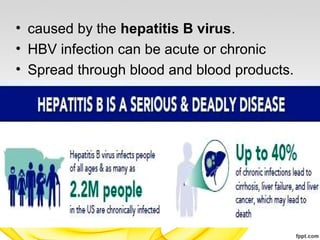
• caused by the hepatitis B virus.
• HBV infection can be acute or chronic
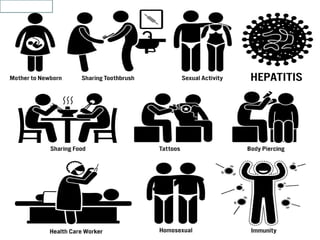
• Spread through blood and blood products.
Prevention
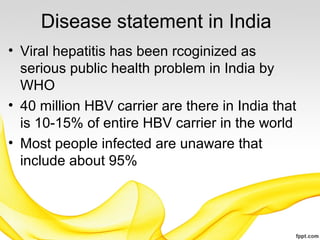
Disease statement in India
• Viral hepatitis has been rcoginized as
serious public health problem in India by
WHO
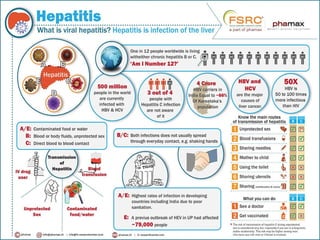
• 40 million HBV carrier are there in India that
is 10-15% of entire HBV carrier in the world
• Most people infected are unaware that
include about 95%
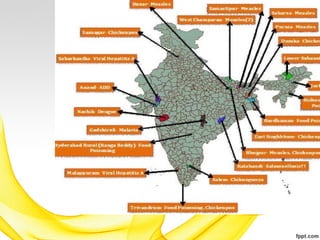
Number of hepatitis outbreak
India 2011-2013
• Integrated disease surveillance progam(IDSP)
• Hepatitis A is highly prevalent in India and
mainly presents as a sporadic disease.
Epidemiological Traid on Hepatitis control
SDG Goal on hepatitis
“By 2030, end the epidemics of AIDS,
tuberculosis, malaria and neglected tropical
diseases and combat hepatitis, water-borne
diseases and other communicable diseases.”
Health related Goal 3.3
• Viral hepatitis was included as a focus
area in the health related goal – Goal 3.3
– in response to this WHO drafted the
Global Viral Hepatitis Strategy in 2016
• This Strategy carries ambitious targets
which if reached will
reduce the number of deaths by 65%
and increase treatment rates from
1% to 80%.
Thank You

Hepatitis

  • 1.
  • 2.
    What is hepatitis? •Inflamation of the liver • Self limiting / Progress to fibrosis(scarring),cirrhosis or liver cancer Causative agent- Hepatitis viruses • Infection • Toxic substance(alcohol) • Certain drugs
  • 3.
    • Location ofliver- Right upper area of abdomen Functions of Liver Bile production….digestion Filtering toxins Excretion of bilirubin,cholestrol,hormones and drugs Breakdown of carbohydrates,fats,protein Storage of glycogen,minerals,vitamins
  • 4.
    5 types ofviral hepatitis • A,B,C,D and E • A and E are acute short term dieases, caused b ingestion of contaminated food and water • B,C and D are chronic, ongoing disease caused by parenteral contact with infected body fluids. • Autoimmune hepatits (body makes antibodies against live tissues)
  • 5.
  • 6.
    • Highly contagiousliver infection caused by the hepatitis A virus. • Wate borne disease • Self-limited disease that does not result in chronic infection. • Antibodies produced in response to hepatitis A infection last for life and protect against reinfection. The best way to prevent hepatitis A infection is to get vaccinated. Who is at high risk? • People living at poor sanitation or homless people • People who use recreational drugs • Gay or bisexual men
  • 10.
  • 11.
    • caused bythe hepatitis B virus. • HBV infection can be acute or chronic • Spread through blood and blood products.
  • 14.
  • 15.
    Disease statement inIndia • Viral hepatitis has been rcoginized as serious public health problem in India by WHO • 40 million HBV carrier are there in India that is 10-15% of entire HBV carrier in the world • Most people infected are unaware that include about 95%
  • 16.
    Number of hepatitisoutbreak India 2011-2013
  • 18.
    • Integrated diseasesurveillance progam(IDSP)
  • 19.
    • Hepatitis Ais highly prevalent in India and mainly presents as a sporadic disease. Epidemiological Traid on Hepatitis control
  • 20.
    SDG Goal onhepatitis “By 2030, end the epidemics of AIDS, tuberculosis, malaria and neglected tropical diseases and combat hepatitis, water-borne diseases and other communicable diseases.” Health related Goal 3.3
  • 21.
    • Viral hepatitiswas included as a focus area in the health related goal – Goal 3.3 – in response to this WHO drafted the Global Viral Hepatitis Strategy in 2016 • This Strategy carries ambitious targets which if reached will reduce the number of deaths by 65% and increase treatment rates from 1% to 80%.
  • 23.