Epigenetic Regulation in Higher Plants
Xiaofeng Cao
Institute of Genetics and Developmental Biology,
Chinese Academy of Sciences, Beijing, China
2010-12-10
Reference
• Liu, Lu, Cui and Cao (2010) Histone
methylation in higher plant
Annu Review of Plant Biology
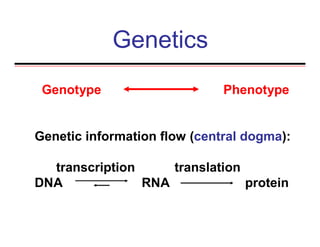
Genetics
Genotype Phenotype
Genetic information flow (central dogma):
transcription translation
DNA RNA protein
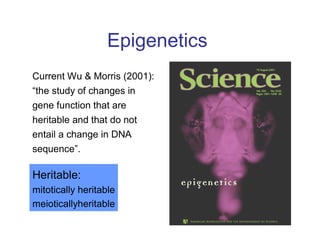
Epigenetics
Current Wu & Morris (2001):
“the study of changes in
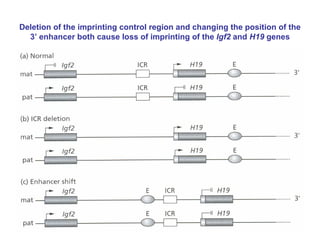
gene function that are
heritable and that do not
entail a change in DNA
sequence”.
Heritable:
mitotically heritable
meioticallyheritable
Epigenetics
• When a cell undergoes mitosis or meiosis, the
epigenetic information is stably transmitted to the
daughter cells or subsequent generation
• Epigenetic controls add an ‘extra layer’of transcriptional
control—transcriptional memory
Epiallele—same DNA sequence but different epigenetic state
Epigenome—the epigenetic state of all sequences in a genome
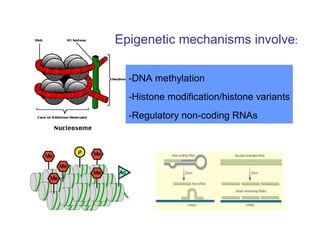
Epigenetic mechanisms involve:
-DNA methylation
-Histone modification/histone variants
-Regulatory non-coding RNAs
•Epigenetic phenomena
-Paramutation
-Parent-of-origin effects
•DNA methylation and DNA methyltransferases
•Genetic screening for components in
maintenance of RNA-directed transcriptional
gene silencing
•Identification of genes involved in RdDM
Outline
Paramutation
Described in maize by A. Brink and E. Coe (1950’s).
An interaction between alleles that leads to a mitotically and
meiotically heritable change in the expression of one allele.
Described for a few endogenous genes and transgenes in
multiple species including plants, animals and fungi.
Only observed with specific alleles. Most alleles do not
participate in paramutation (neutral alleles).
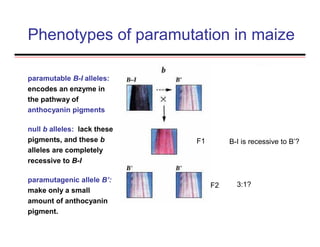
Phenotypes of paramutation in maize
paramutable B-I alleles:
encodes an enzyme in
the pathway of
anthocyanin pigments
null b alleles: lack these
pigments, and these b
alleles are completely
recessive to B-I
paramutagenic allele B’:
make only a small
amount of anthocyanin
pigment.
F1
F2
B-I is recessive to B’?
3:1?
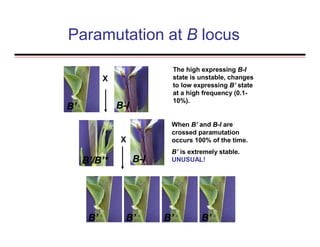
Paramutation at B locus
F1
The high expressing B-I
state is unstable, changes
to low expressing B’ state
at a high frequency (0.1-
10%).
When B’ and B-I are
crossed paramutation
occurs 100% of the time.
B’ is extremely stable.
UNUSUAL!
X
B’ B-I
B’/B’*
X
B-I
B’B’ B’ B’
Characteristic of paramutation
• Paramutation is the directed, heritable
alteration of the expression of one allele when
heterozygous with another allele.
– The newly silenced allele can further silence new targets.
– Allelism is not a strict requirement for paramutation.
– Paramutation is associated with DNA methylation changes
( both at the trigger and target sequence).
– Paramutation can be accounted by RdDM.
mediator of paramutation1 (mop1-1) mutation blocks
paramutation at the maize B, R, and Pl1 loci.
•Epigenetic phenomena
-Paramutation
-Parent-of-origin effects
•DNA methylation and DNA methyltransferases
•Genetic screening for components in
maintenance of RNA-directed transcriptional
gene silencing
•Identification of genes involved in RdDM
Outline
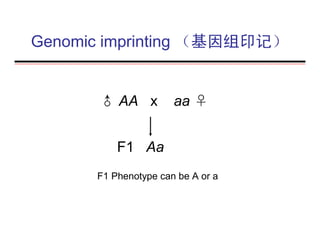
Genomic imprinting (基因组印记)
♂ AA x aa ♀
F1 Aa
F1 Phenotype can be A or a
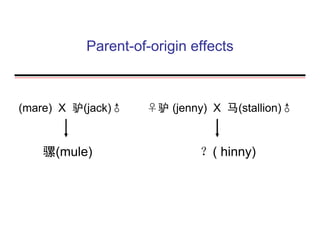
Parent-of-origin effects
(mare) X 驴(jack)♂ ♀驴 (jenny) X 马(stallion)♂
骡(mule) ?( hinny)
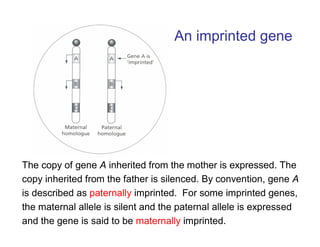
An imprinted gene
The copy of gene A inherited from the mother is expressed. The
copy inherited from the father is silenced. By convention, gene A
is described as paternally imprinted. For some imprinted genes,
the maternal allele is silent and the paternal allele is expressed
and the gene is said to be maternally imprinted.
Examples of imprinting genes in mouse
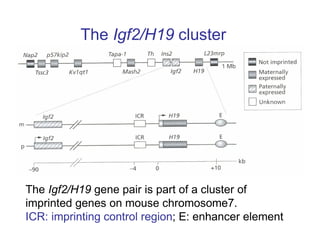
The Igf2/H19 cluster
The Igf2/H19 gene pair is part of a cluster of
imprinted genes on mouse chromosome7.
ICR: imprinting control region; E: enhancer element
Deletion of the imprinting control region and changing the position of the
3’ enhancer both cause loss of imprinting of the Igf2 and H19 genes
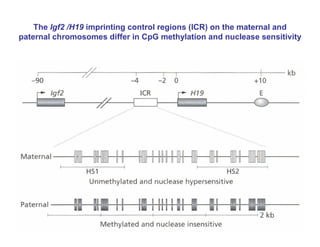
The Igf2 /H19 imprinting control regions (ICR) on the maternal and
paternal chromosomes differ in CpG methylation and nuclease sensitivity
Epigenetic regulation in higher plants

Epigenetic regulation in higher plants

  • 1.
    Epigenetic Regulation inHigher Plants Xiaofeng Cao Institute of Genetics and Developmental Biology, Chinese Academy of Sciences, Beijing, China 2010-12-10
  • 2.
    Reference • Liu, Lu,Cui and Cao (2010) Histone methylation in higher plant Annu Review of Plant Biology
  • 3.
    Genetics Genotype Phenotype Genetic informationflow (central dogma): transcription translation DNA RNA protein
  • 4.
    Epigenetics Current Wu &Morris (2001): “the study of changes in gene function that are heritable and that do not entail a change in DNA sequence”. Heritable: mitotically heritable meioticallyheritable
  • 5.
    Epigenetics • When acell undergoes mitosis or meiosis, the epigenetic information is stably transmitted to the daughter cells or subsequent generation • Epigenetic controls add an ‘extra layer’of transcriptional control—transcriptional memory Epiallele—same DNA sequence but different epigenetic state Epigenome—the epigenetic state of all sequences in a genome
  • 6.
    Epigenetic mechanisms involve: -DNAmethylation -Histone modification/histone variants -Regulatory non-coding RNAs
  • 7.
    •Epigenetic phenomena -Paramutation -Parent-of-origin effects •DNAmethylation and DNA methyltransferases •Genetic screening for components in maintenance of RNA-directed transcriptional gene silencing •Identification of genes involved in RdDM Outline
  • 8.
    Paramutation Described in maizeby A. Brink and E. Coe (1950’s). An interaction between alleles that leads to a mitotically and meiotically heritable change in the expression of one allele. Described for a few endogenous genes and transgenes in multiple species including plants, animals and fungi. Only observed with specific alleles. Most alleles do not participate in paramutation (neutral alleles).
  • 9.
    Phenotypes of paramutationin maize paramutable B-I alleles: encodes an enzyme in the pathway of anthocyanin pigments null b alleles: lack these pigments, and these b alleles are completely recessive to B-I paramutagenic allele B’: make only a small amount of anthocyanin pigment. F1 F2 B-I is recessive to B’? 3:1?
  • 10.
    Paramutation at Blocus F1 The high expressing B-I state is unstable, changes to low expressing B’ state at a high frequency (0.1- 10%). When B’ and B-I are crossed paramutation occurs 100% of the time. B’ is extremely stable. UNUSUAL! X B’ B-I B’/B’* X B-I B’B’ B’ B’
  • 11.
    Characteristic of paramutation •Paramutation is the directed, heritable alteration of the expression of one allele when heterozygous with another allele. – The newly silenced allele can further silence new targets. – Allelism is not a strict requirement for paramutation. – Paramutation is associated with DNA methylation changes ( both at the trigger and target sequence). – Paramutation can be accounted by RdDM. mediator of paramutation1 (mop1-1) mutation blocks paramutation at the maize B, R, and Pl1 loci.
  • 12.
    •Epigenetic phenomena -Paramutation -Parent-of-origin effects •DNAmethylation and DNA methyltransferases •Genetic screening for components in maintenance of RNA-directed transcriptional gene silencing •Identification of genes involved in RdDM Outline
  • 13.
    Genomic imprinting (基因组印记) ♂AA x aa ♀ F1 Aa F1 Phenotype can be A or a
  • 14.
    Parent-of-origin effects (mare) X驴(jack)♂ ♀驴 (jenny) X 马(stallion)♂ 骡(mule) ?( hinny)
  • 15.
    An imprinted gene Thecopy of gene A inherited from the mother is expressed. The copy inherited from the father is silenced. By convention, gene A is described as paternally imprinted. For some imprinted genes, the maternal allele is silent and the paternal allele is expressed and the gene is said to be maternally imprinted.
  • 16.
    Examples of imprintinggenes in mouse
  • 17.
    The Igf2/H19 cluster TheIgf2/H19 gene pair is part of a cluster of imprinted genes on mouse chromosome7. ICR: imprinting control region; E: enhancer element
  • 18.
    Deletion of theimprinting control region and changing the position of the 3’ enhancer both cause loss of imprinting of the Igf2 and H19 genes
  • 19.
    The Igf2 /H19imprinting control regions (ICR) on the maternal and paternal chromosomes differ in CpG methylation and nuclease sensitivity