PCC
FOOTING
COLUMNS
SSM
PLINTH BEAM
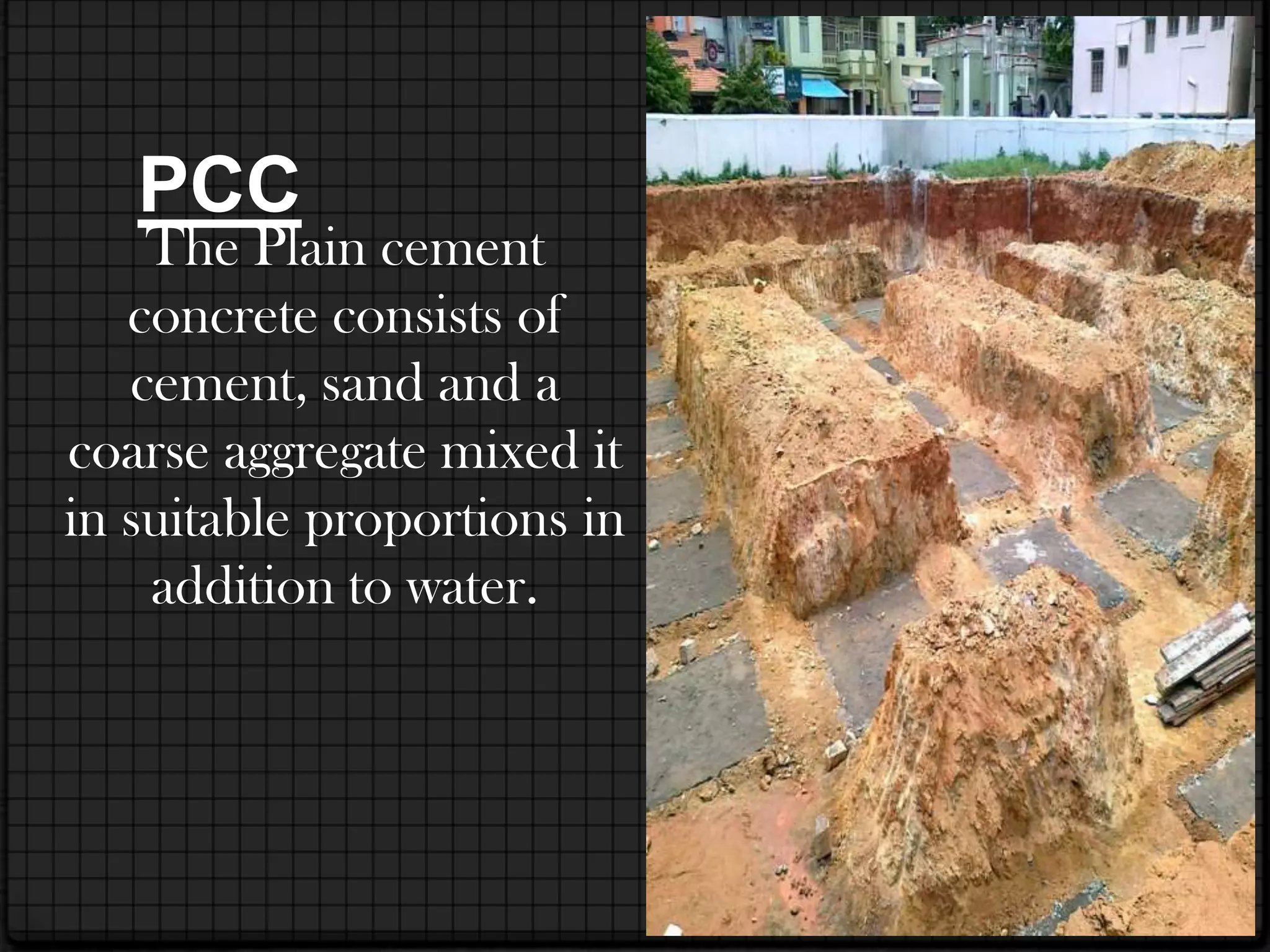
PCC
    The Plain cement
   concrete consists of
   cement, sand and a
coarse aggregate mixed it
in suitable proportions in
    addition to water.
PCC IS MAINLY USED FOR FOLLOWING
PURPOSES

It is used as a protective layer for the RCC above so that
 water from the RCC is not absorbed by the earth below.
Provides a base for the concrete and also helps workers to
 set out the structure above in a easier way
Act as a cover to reinforced cement concrete i.e. Resist
 corrosion of steel bars in footings
Moisture available in soil should not absorbed by R.C.C
 footings which causes corrosion of reinforcement
0 the aggregate size is 40mm down size
0 the concrete should be mixed in the top & placed
  it where we want it may be machine mixed or
  manual
0 The depth of PCC depends on SBC of soil
0 In our site they provided 150mm thick cement
  concrete bed
0 In the ratio of 1:4:8 i.e., 1 part of cement, 4 parts
  of fine aggregates and 8 parts of coarse aggregates
  by volume were used in it.
FOOTINGS
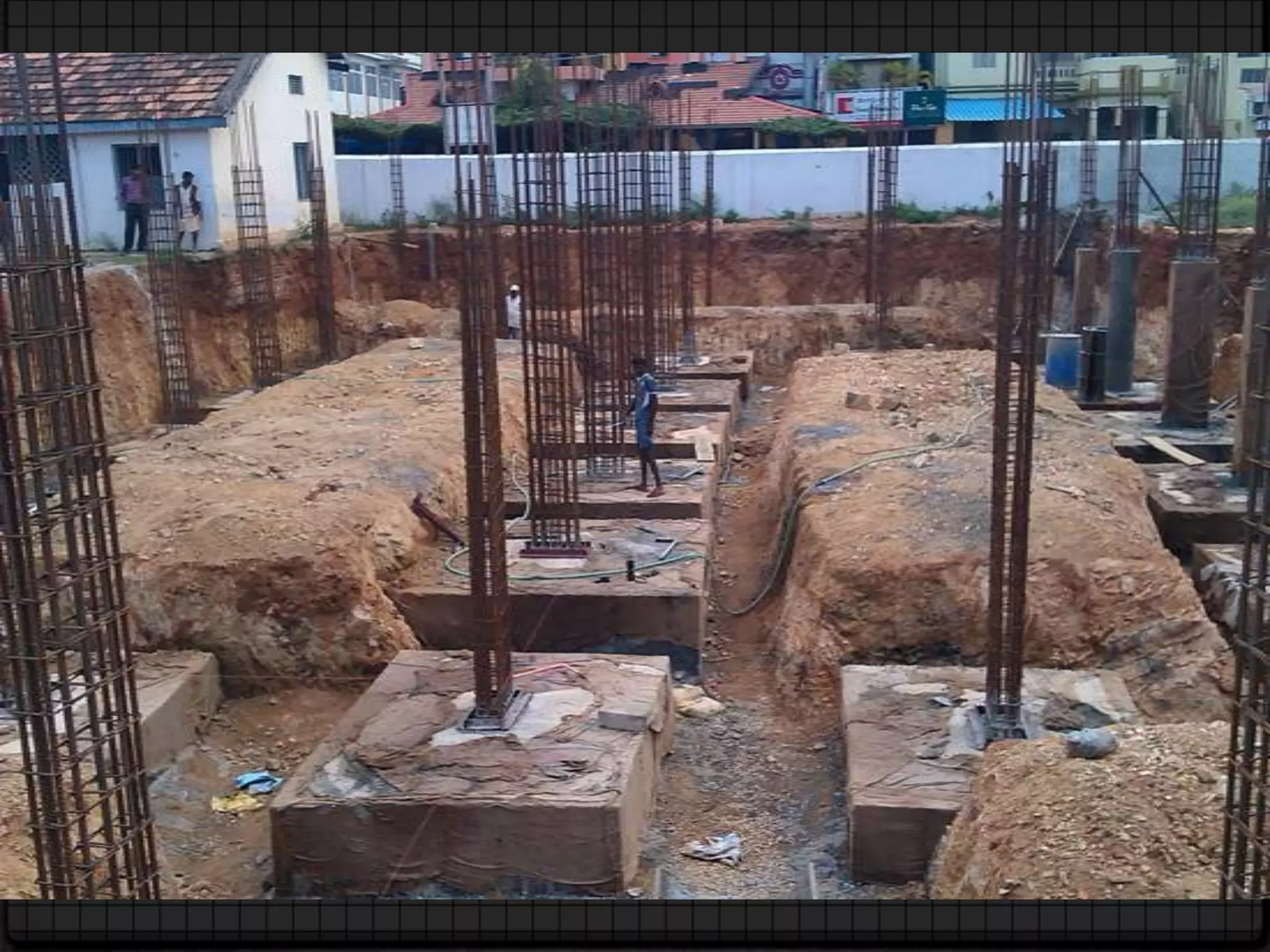
0 Footings are pads or strips that support columns
  and spread their load directly to the soil.
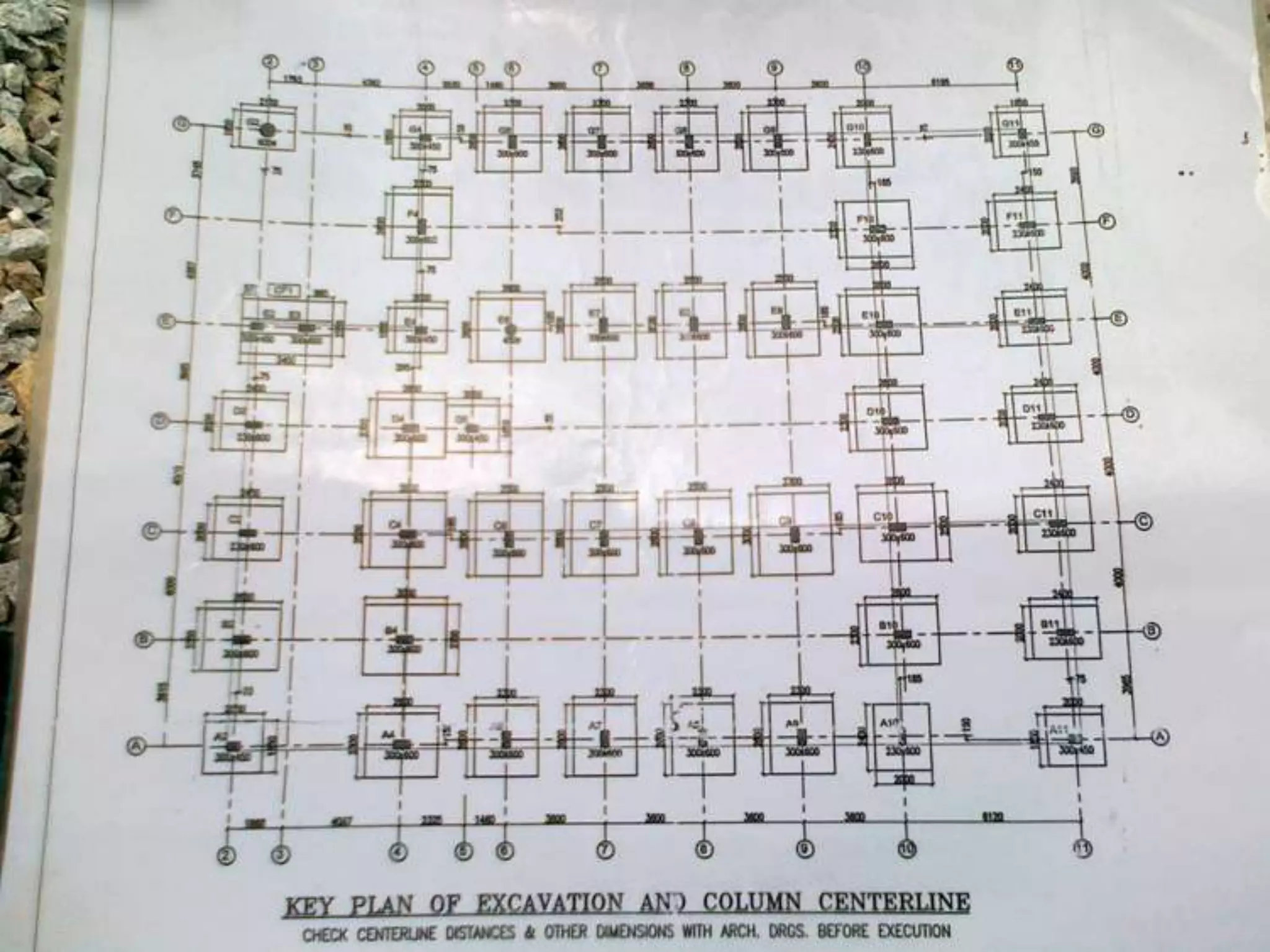
0 At our site, spread footing and one combined
  footing are provided
0 Spread footing are provided to support an
  individual column, it is called isolated footing
0 Depending on the size and configuration of the
  building, spread footers can be buried just below
  ground level or several feet below the surface
0 This type of footer design is highly beneficial to
  builders and homeowners
0 This design helps to minimize cracks and other
  signs of damage that occur as a building settles
  over time
0 There are 44 footings and dimension of
   2400 x 2000 x 600mm
0 At our site we learnt how the centering for footing
  been done. First applying oil and checking for all
  tight joints at the corners.
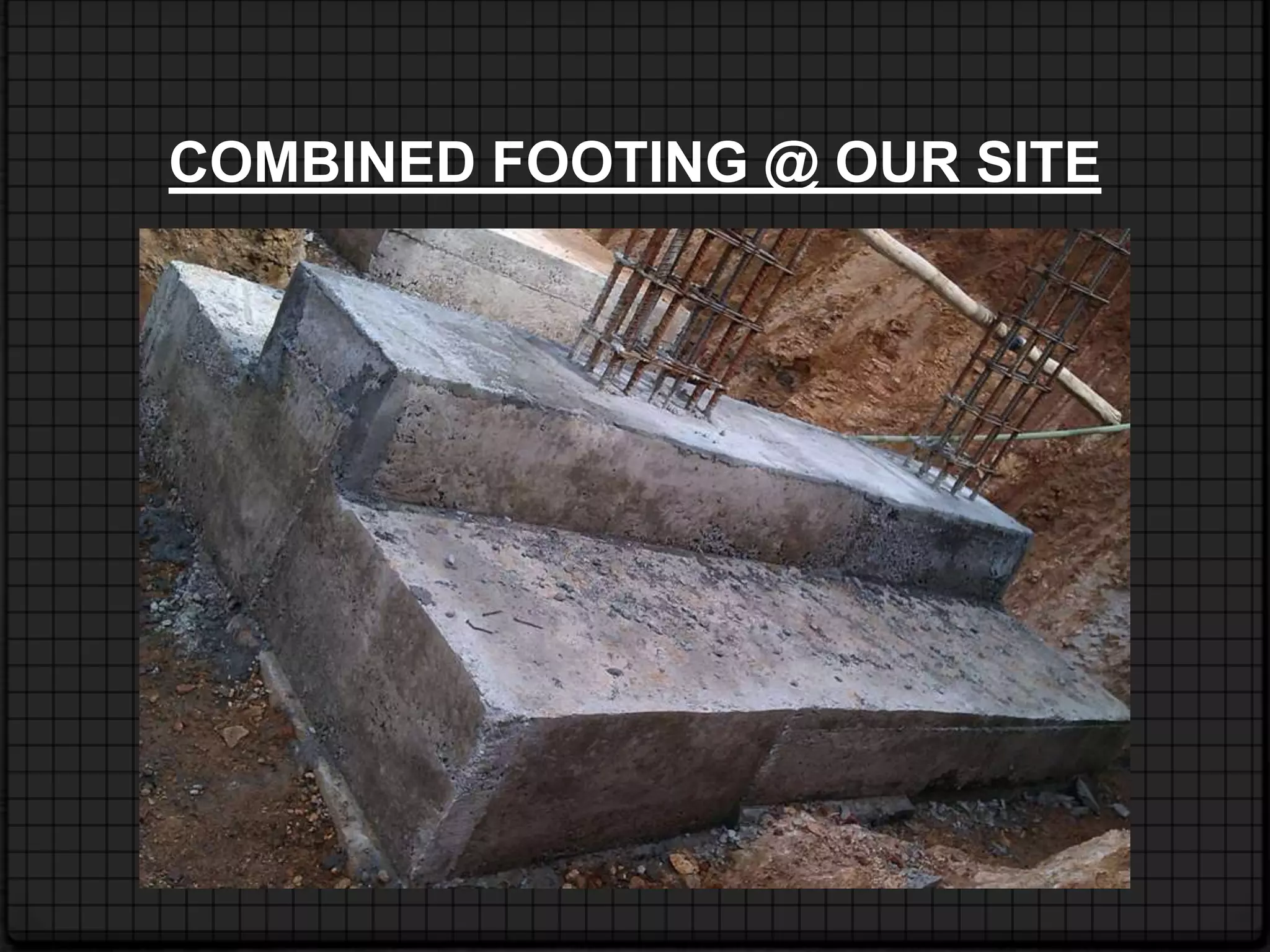
0 Combined footing are provided when the two
  columns are so close to each other that their
  individual footings would overlap.
0 A combined footing is also provided when the
 property line is so close to one column that a
  spread footing would be eccentrically loaded
  when kept entirely within the property line. By
  combining it with that of an interior column, the
  load is evenly distributed.
0 A combine footing may be rectangular or
  trapezoidal in plan.
0 Trapezoidal footing is provided when the load on
  one of the columns is larger than the other
  column.
0 The use of combined footings helps spread out
  the loads out to the adjacent footings in order to
 minimize stresses in the footings and reduce the
 differential settlement between them.
COMBINED FOOTING @ OUR SITE
COLUMN
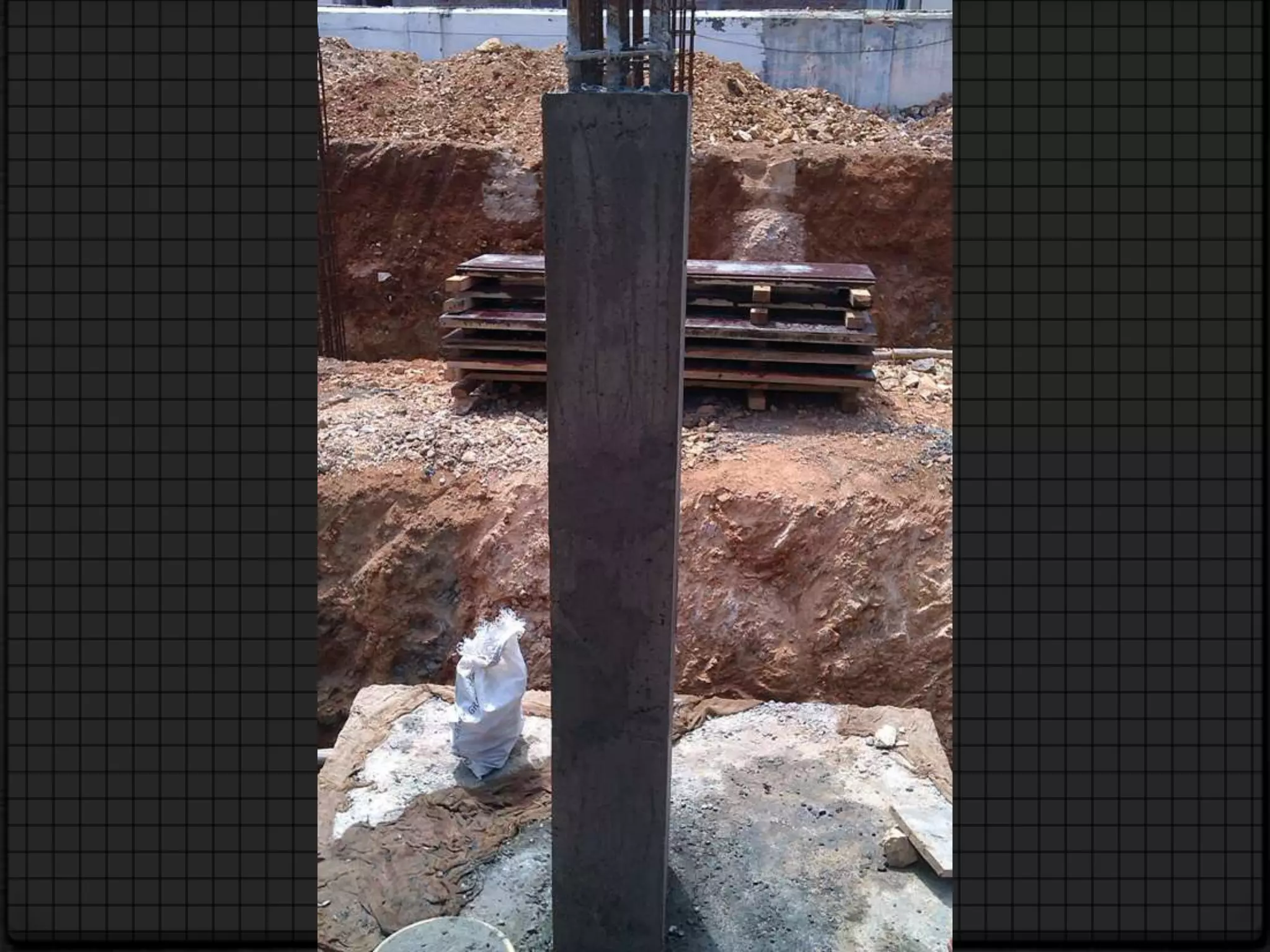
0 Columns are vertical members that support loads
  from the beam or slabs. They may be subjected to
  axial loads or moments
0 In our site they provided rectangular and circular
  columns
0 The sides of rectangular column varies from
    230mm to 600mm.
0 The diameter of circular column is 450mm.
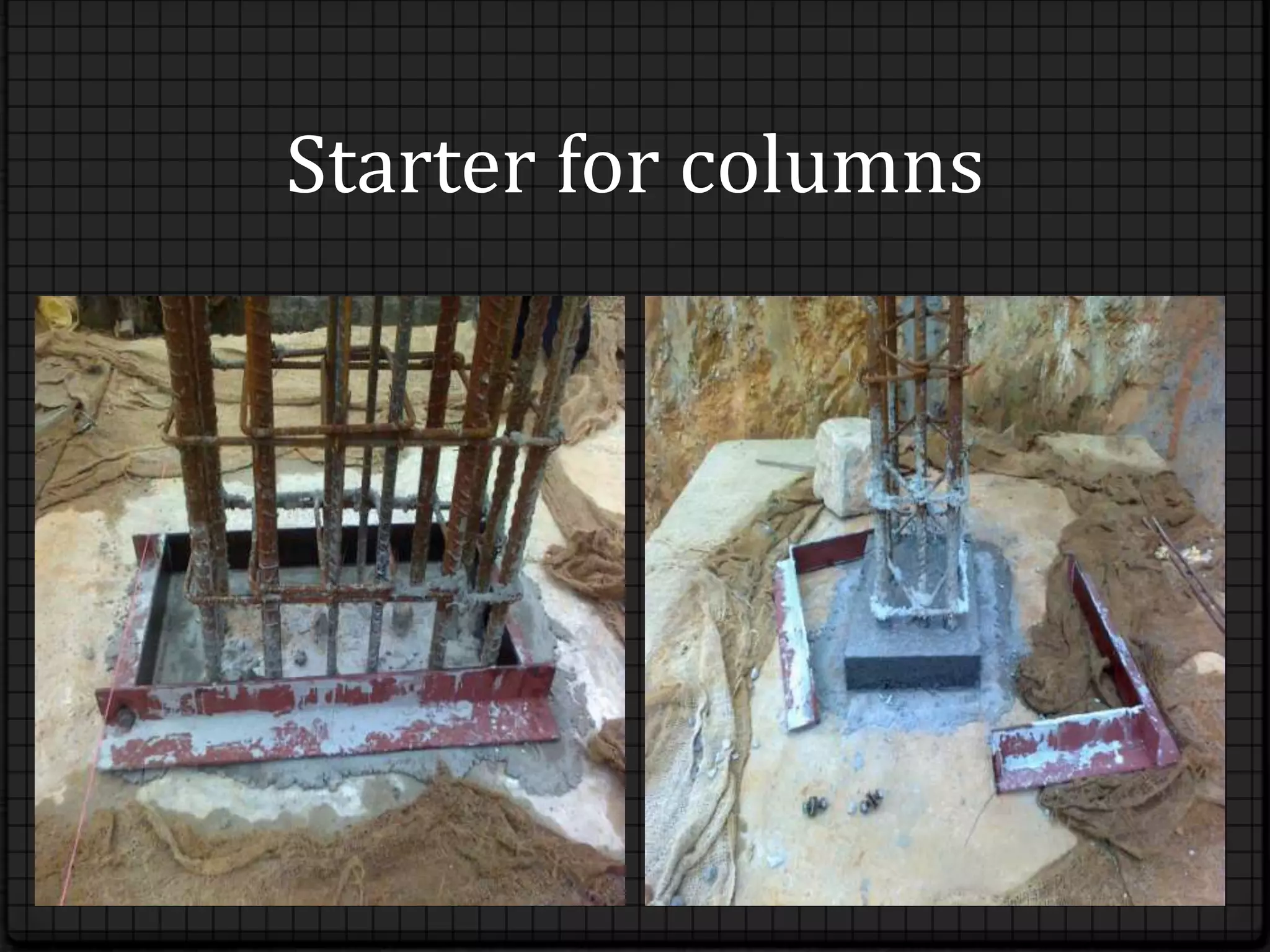
Starter for columns
SSM- SIZE STONE MASONARY
0 The SSM is a substructure is the lower portion of
  the building, which transmits the load of the
  superstructure to the subsoil
0 SSM distributes the loads of the super structure,
  to a larger area so that intensity of load at its base
  does not exceed the SBC of the subsoil
0 SSM provide levelled and hard surface over which super
  structure can be built
0 The stability of the building ,against sliding and
  overturning ,due to horizontal forces such as wind
  earthquake etc. Is increased due to SSM
0 The ratio of cement mortar is 1:6 i.e., 1 part of cement
  and 6 parts of fine aggregates(sand)
0 Stepped SSM are provided in our site.
0 In our site undressed stones are used.
0 The grade of concrete used in SSM is M10
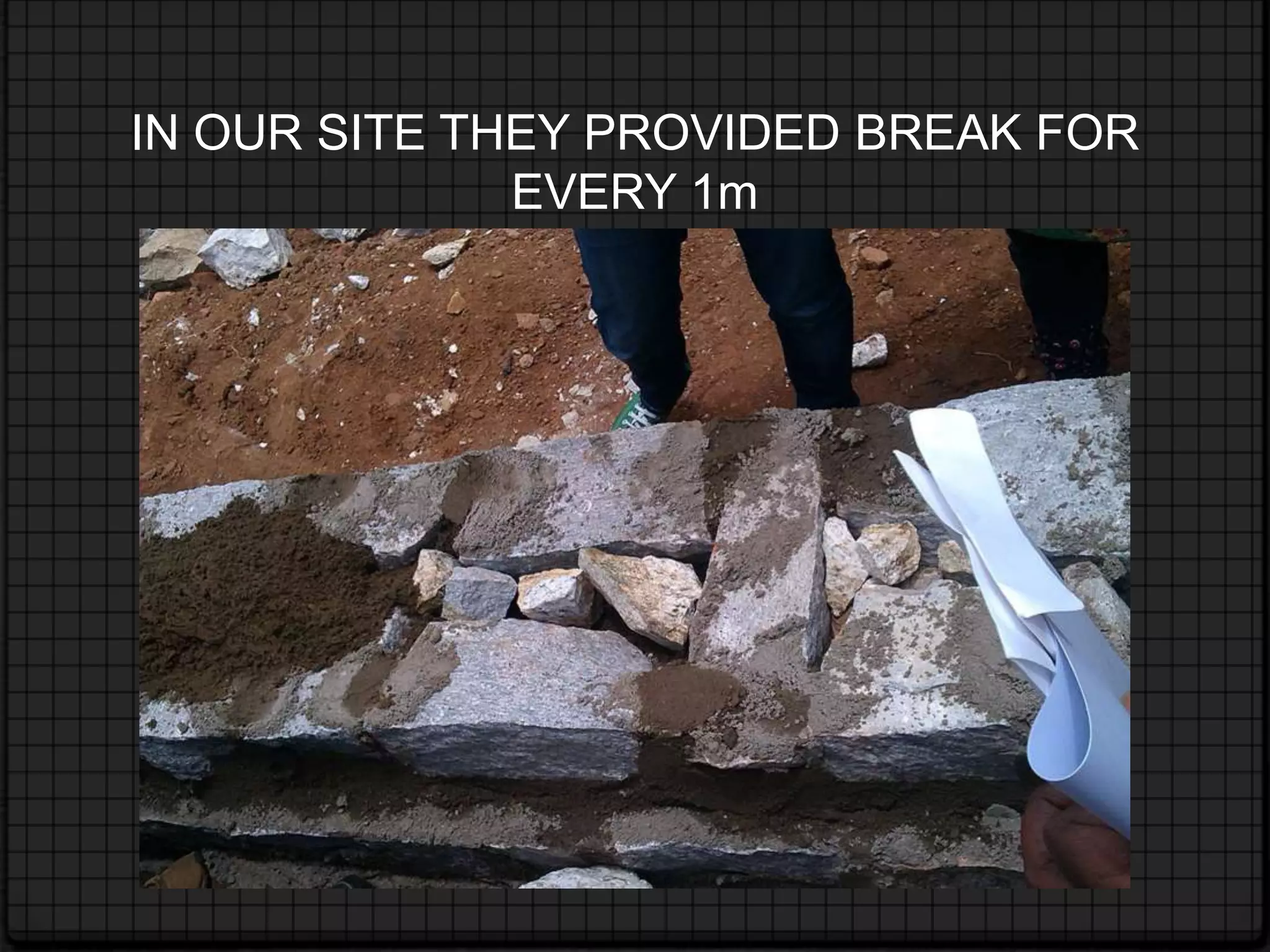
0 In SSM as per code(IS1597 PART 1:1992) we have to
  provide break @every 1m or 2m
IN OUR SITE THEY PROVIDED BREAK FOR
              EVERY 1m
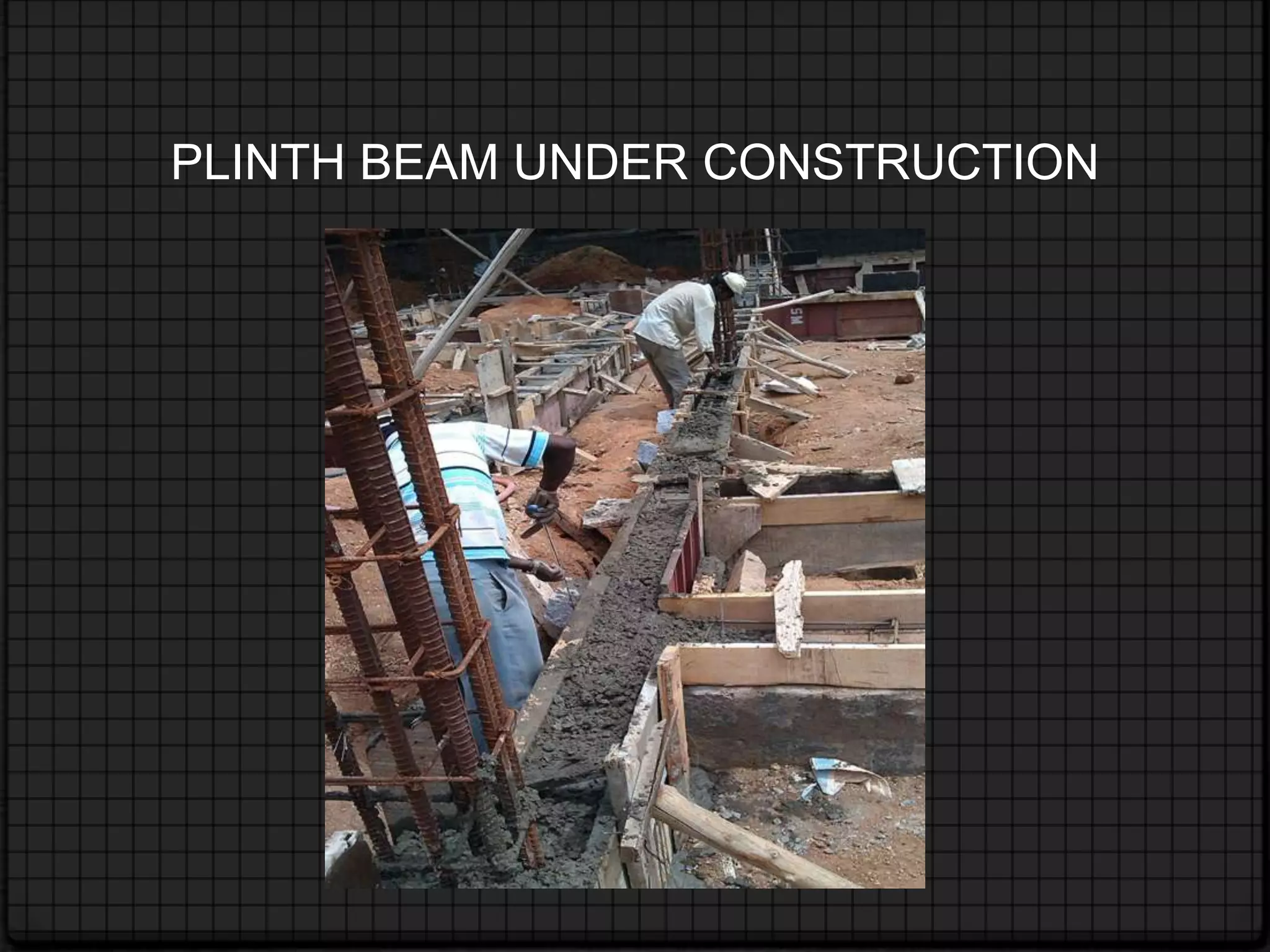
PLINTH BEAM
0 It's the sheer wall load that needs to be transferred to
  the foundation; as such, 4” thick plinth concrete is
  adequate
0 In RCC frame structure, plinth acts as a tie, as a beam
  at ground level itself. More recently, after few disasters
  we have faced, RCC plinth beams are being
  recommended for their earthquake-resistant
  properties.
0 In our site they used plinth beam of size 230 x 530mm
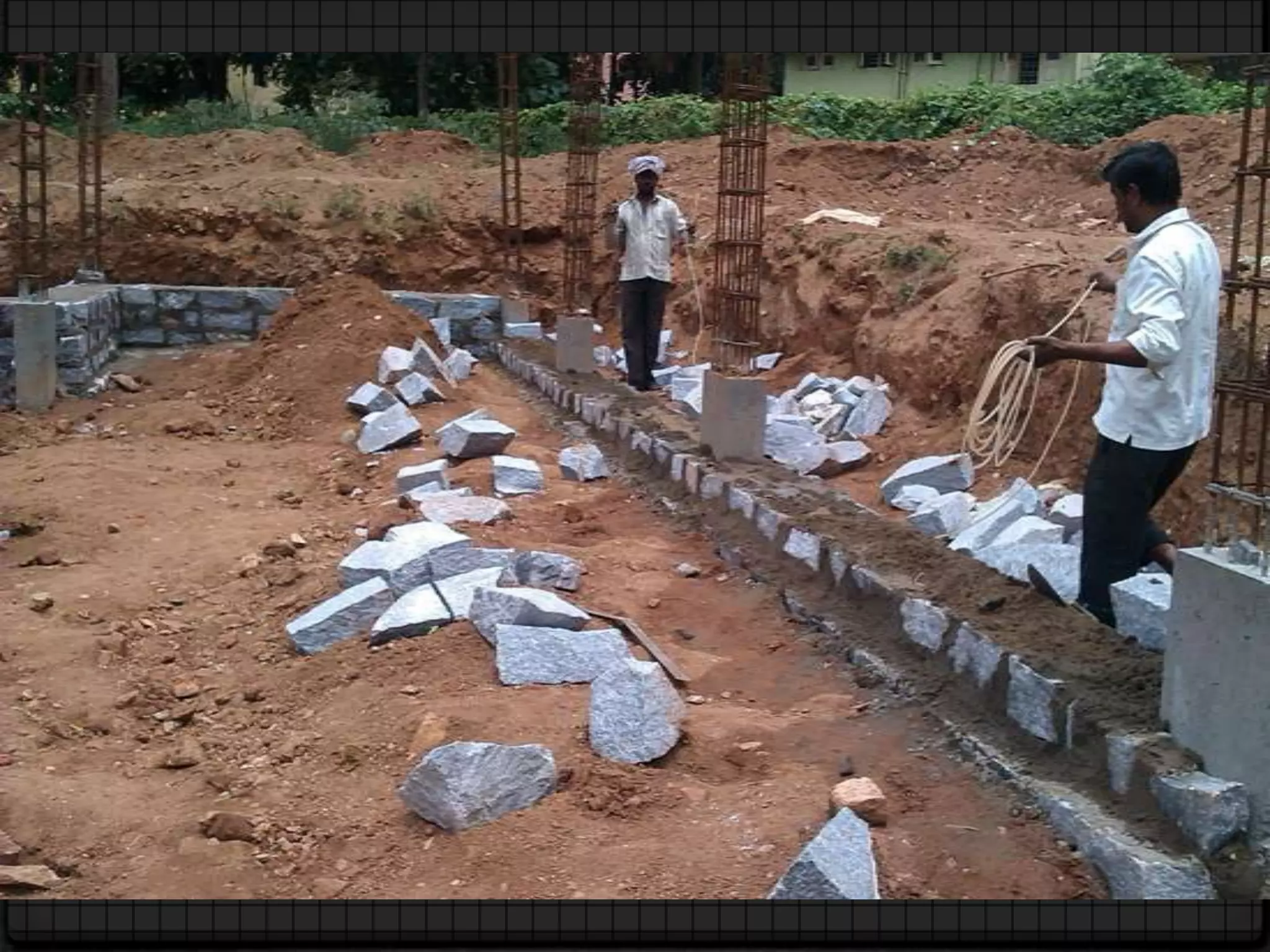
PLINTH BEAM UNDER CONSTRUCTION

Various elements of building

  • 2.
  • 3.
    PCC The Plain cement concrete consists of cement, sand and a coarse aggregate mixed it in suitable proportions in addition to water.
  • 4.
    PCC IS MAINLYUSED FOR FOLLOWING PURPOSES It is used as a protective layer for the RCC above so that water from the RCC is not absorbed by the earth below. Provides a base for the concrete and also helps workers to set out the structure above in a easier way Act as a cover to reinforced cement concrete i.e. Resist corrosion of steel bars in footings Moisture available in soil should not absorbed by R.C.C footings which causes corrosion of reinforcement
  • 5.
    0 the aggregatesize is 40mm down size 0 the concrete should be mixed in the top & placed it where we want it may be machine mixed or manual
  • 6.
    0 The depthof PCC depends on SBC of soil 0 In our site they provided 150mm thick cement concrete bed 0 In the ratio of 1:4:8 i.e., 1 part of cement, 4 parts of fine aggregates and 8 parts of coarse aggregates by volume were used in it.
  • 7.
    FOOTINGS 0 Footings arepads or strips that support columns and spread their load directly to the soil. 0 At our site, spread footing and one combined footing are provided 0 Spread footing are provided to support an individual column, it is called isolated footing 0 Depending on the size and configuration of the building, spread footers can be buried just below ground level or several feet below the surface
  • 8.
    0 This typeof footer design is highly beneficial to builders and homeowners 0 This design helps to minimize cracks and other signs of damage that occur as a building settles over time 0 There are 44 footings and dimension of 2400 x 2000 x 600mm 0 At our site we learnt how the centering for footing been done. First applying oil and checking for all tight joints at the corners.
  • 11.
    0 Combined footingare provided when the two columns are so close to each other that their individual footings would overlap. 0 A combined footing is also provided when the property line is so close to one column that a spread footing would be eccentrically loaded when kept entirely within the property line. By combining it with that of an interior column, the load is evenly distributed. 0 A combine footing may be rectangular or trapezoidal in plan. 0 Trapezoidal footing is provided when the load on one of the columns is larger than the other column.
  • 12.
    0 The useof combined footings helps spread out the loads out to the adjacent footings in order to minimize stresses in the footings and reduce the differential settlement between them.
  • 13.
  • 14.
    COLUMN 0 Columns arevertical members that support loads from the beam or slabs. They may be subjected to axial loads or moments 0 In our site they provided rectangular and circular columns 0 The sides of rectangular column varies from 230mm to 600mm. 0 The diameter of circular column is 450mm.
  • 15.
  • 17.
    SSM- SIZE STONEMASONARY 0 The SSM is a substructure is the lower portion of the building, which transmits the load of the superstructure to the subsoil 0 SSM distributes the loads of the super structure, to a larger area so that intensity of load at its base does not exceed the SBC of the subsoil
  • 18.
    0 SSM providelevelled and hard surface over which super structure can be built 0 The stability of the building ,against sliding and overturning ,due to horizontal forces such as wind earthquake etc. Is increased due to SSM 0 The ratio of cement mortar is 1:6 i.e., 1 part of cement and 6 parts of fine aggregates(sand) 0 Stepped SSM are provided in our site. 0 In our site undressed stones are used. 0 The grade of concrete used in SSM is M10 0 In SSM as per code(IS1597 PART 1:1992) we have to provide break @every 1m or 2m
  • 19.
    IN OUR SITETHEY PROVIDED BREAK FOR EVERY 1m
  • 21.
    PLINTH BEAM 0 It'sthe sheer wall load that needs to be transferred to the foundation; as such, 4” thick plinth concrete is adequate 0 In RCC frame structure, plinth acts as a tie, as a beam at ground level itself. More recently, after few disasters we have faced, RCC plinth beams are being recommended for their earthquake-resistant properties. 0 In our site they used plinth beam of size 230 x 530mm
  • 22.
    PLINTH BEAM UNDERCONSTRUCTION

Editor's Notes

  • #9 http://www.wisegeek.com/what-is-spread-footing.htm