What is a value?
 Qualities, characteristics, or ideas about which we feel
strongly.
 Our values affect our decisions, goals and behavior.
 A belief or feeling that someone or something is
worthwhile.
 Values define what is of worth, what is beneficial, and
what is harmful
 Values are standards to guide your action, judgments,
and attitudes.
 You have been given a check for $1000.00 to
do whatever you like with it. What would
you do with it?
 Share with the class what you would do with it.
Conclusion:
 What you spend the money on has
everything to do with what you value
What things did you do during the
past week.
 What you choose to do with your time also has
everything to do with what you values.
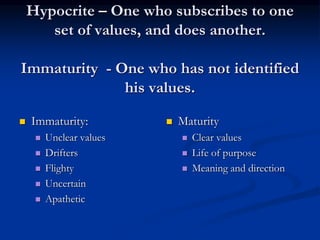
Hypocrite – One who subscribes to one
set of values, and does another.
Immaturity - One who has not identified
his values.
 Immaturity:
 Unclear values
 Drifters
 Flighty
 Uncertain
 Apathetic
 Maturity
 Clear values
 Life of purpose
 Meaning and direction
Direction:
Values – Goals – Behavior – Self-value
 Values give direction and consistency to
behavior.
 Values help you know what to and not to make
time for.
 Values establish a relationship between you and
the world.
 Values set the direction for one’s life.
Where do we get values?
 our homes,
 school,
 society,
 friends,
 TV,
 church,
 music,
 books,
 families,
 culture,
 employers,
 time-period in which
you were raised (70’s
anti-establishment,
peace, individuality.
80’s money, prestige,
don’t get caught, etc.
90’s earth, green peace,
health and fitness), etc.
Your age will greatly influence your values.
Different people and things influence you at
different ages:
 Ages 1-7 --- parents
 Ages 8-13 --- teachers, heroes (sports, rocks,
TV)
 Ages 14-20 --- peers (values because of peers or
peers because of values?)
 Ages 21+ your values are established, but you
may test your values from time to time.
Value versus Facts:
 Values are things we feel “should”,
“ought”, or “are supposed to”
influence our lives.
VALUE: All people should be active
in a specific religion.
VALUE: The best time to buy
clothing is when the price is
discounted.
 A value is a statement of one’s
personal beliefs.
 Facts simply state what actually are.
It is easy to confuse values with
facts.
FACT: Many people are active in a
specific religion.
FACT: The most economical time to
buy clothing is when the seasons
change and the price is reduced.
 A fact is established by observation
and measurement.
Values and Behaviors:
 Happiness comes from letting values decide
your behavior and goals.
 Values can change over a life-time as your
experiences change your view.
Types of Values:
Moral
Material
Aesthetic
Intrinsic
Extrinsic
Universal/American
Group specific values
“If you stand for
nothing.
You fall for
anything.”
“It’s not doing things
right,
but doing the right things. “
Assignment: list at least five values in
each of the following areas.
Social
Moral
Intellectual
Family
Career

Why values are important

  • 2.
    What is avalue?  Qualities, characteristics, or ideas about which we feel strongly.  Our values affect our decisions, goals and behavior.  A belief or feeling that someone or something is worthwhile.  Values define what is of worth, what is beneficial, and what is harmful  Values are standards to guide your action, judgments, and attitudes.
  • 3.
     You havebeen given a check for $1000.00 to do whatever you like with it. What would you do with it?  Share with the class what you would do with it. Conclusion:  What you spend the money on has everything to do with what you value
  • 4.
    What things didyou do during the past week.  What you choose to do with your time also has everything to do with what you values.
  • 5.
    Hypocrite – Onewho subscribes to one set of values, and does another. Immaturity - One who has not identified his values.  Immaturity:  Unclear values  Drifters  Flighty  Uncertain  Apathetic  Maturity  Clear values  Life of purpose  Meaning and direction
  • 6.
    Direction: Values – Goals– Behavior – Self-value  Values give direction and consistency to behavior.  Values help you know what to and not to make time for.  Values establish a relationship between you and the world.  Values set the direction for one’s life.
  • 7.
    Where do weget values?  our homes,  school,  society,  friends,  TV,  church,  music,  books,  families,  culture,  employers,  time-period in which you were raised (70’s anti-establishment, peace, individuality. 80’s money, prestige, don’t get caught, etc. 90’s earth, green peace, health and fitness), etc.
  • 8.
    Your age willgreatly influence your values. Different people and things influence you at different ages:  Ages 1-7 --- parents  Ages 8-13 --- teachers, heroes (sports, rocks, TV)  Ages 14-20 --- peers (values because of peers or peers because of values?)  Ages 21+ your values are established, but you may test your values from time to time.
  • 9.
    Value versus Facts: Values are things we feel “should”, “ought”, or “are supposed to” influence our lives. VALUE: All people should be active in a specific religion. VALUE: The best time to buy clothing is when the price is discounted.  A value is a statement of one’s personal beliefs.  Facts simply state what actually are. It is easy to confuse values with facts. FACT: Many people are active in a specific religion. FACT: The most economical time to buy clothing is when the seasons change and the price is reduced.  A fact is established by observation and measurement.
  • 10.
    Values and Behaviors: Happiness comes from letting values decide your behavior and goals.  Values can change over a life-time as your experiences change your view.
  • 11.
  • 12.
    “If you standfor nothing. You fall for anything.”
  • 13.
    “It’s not doingthings right, but doing the right things. “
  • 14.
    Assignment: list atleast five values in each of the following areas. Social Moral Intellectual Family Career