Prepared by:- Guided by:-
TANDEL CHITRANGKUMAR T.
(120070720013)
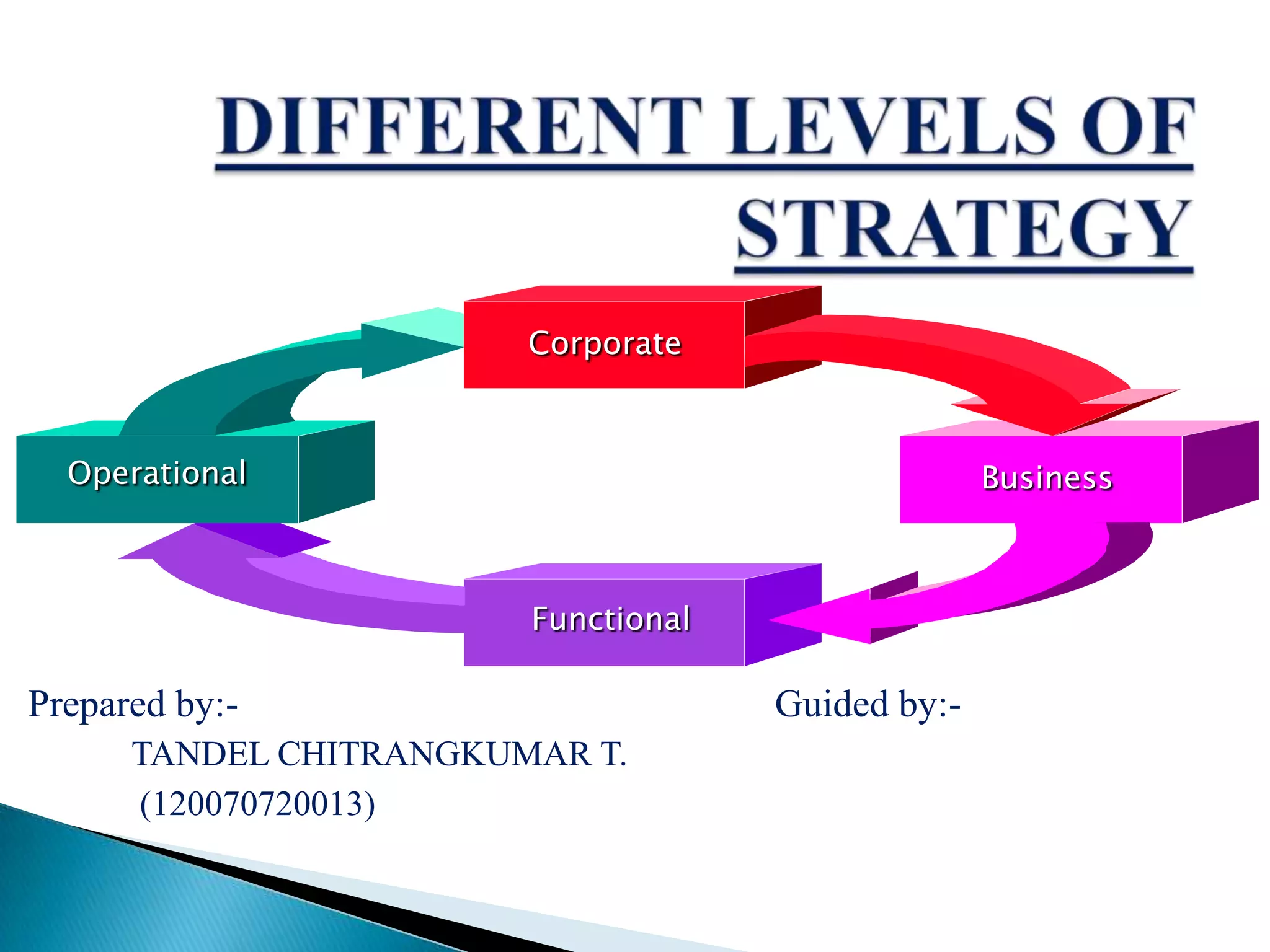
Corporate
Functional
BusinessOperational
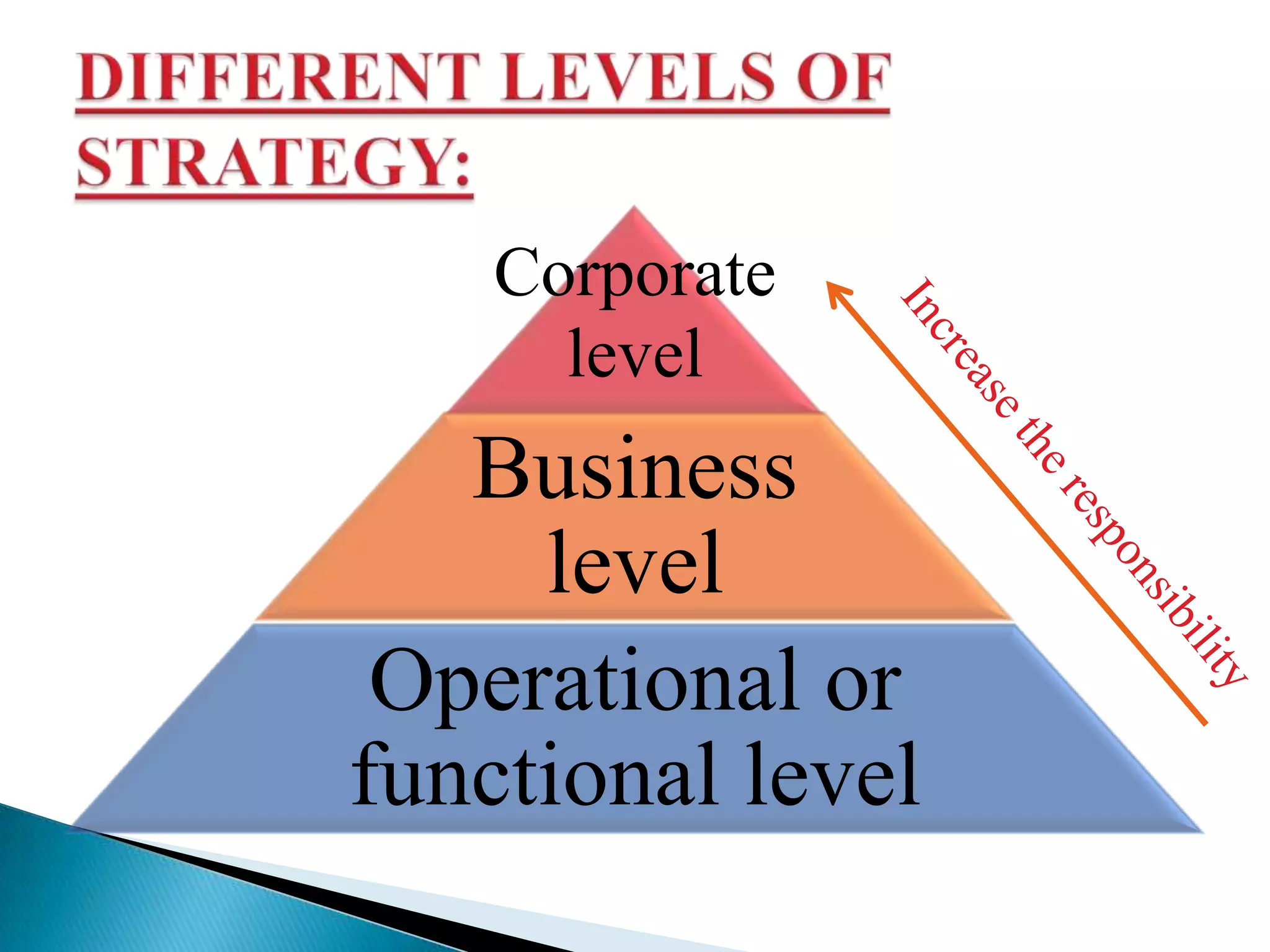
Corporate
level
Business
level
Operational or
functional level
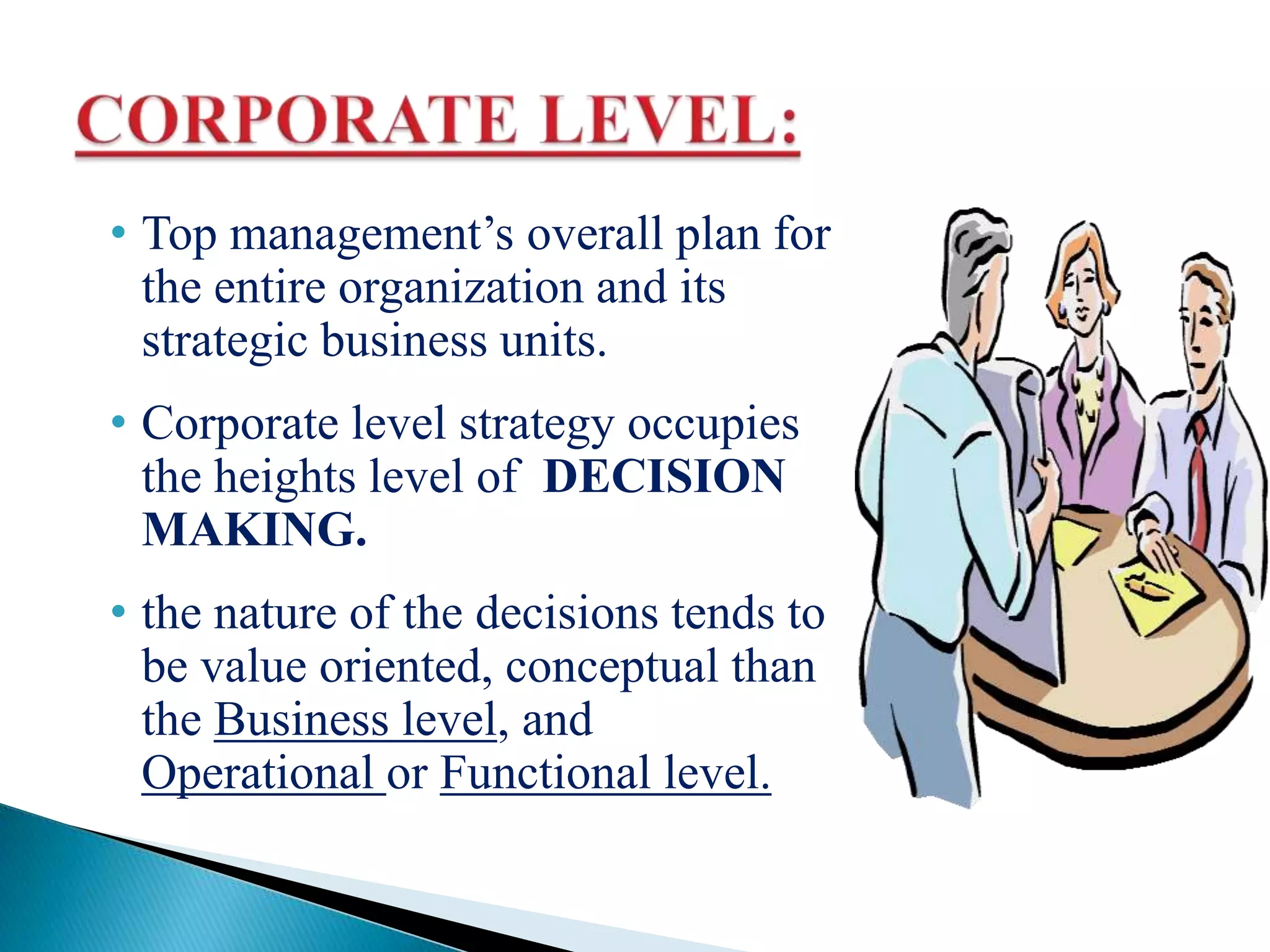
• Top management’s overall plan for
the entire organization and its
strategic business units.
• Corporate level strategy occupies
the heights level of DECISION
MAKING.
• the nature of the decisions tends to
be value oriented, conceptual than
the Business level, and
Operational or Functional level.
◦ Growth: expansion into new products and
markets.
◦ Stability: maintenance of the status of the
organization.
◦ Renewal: redirection of the firm into new
markets.
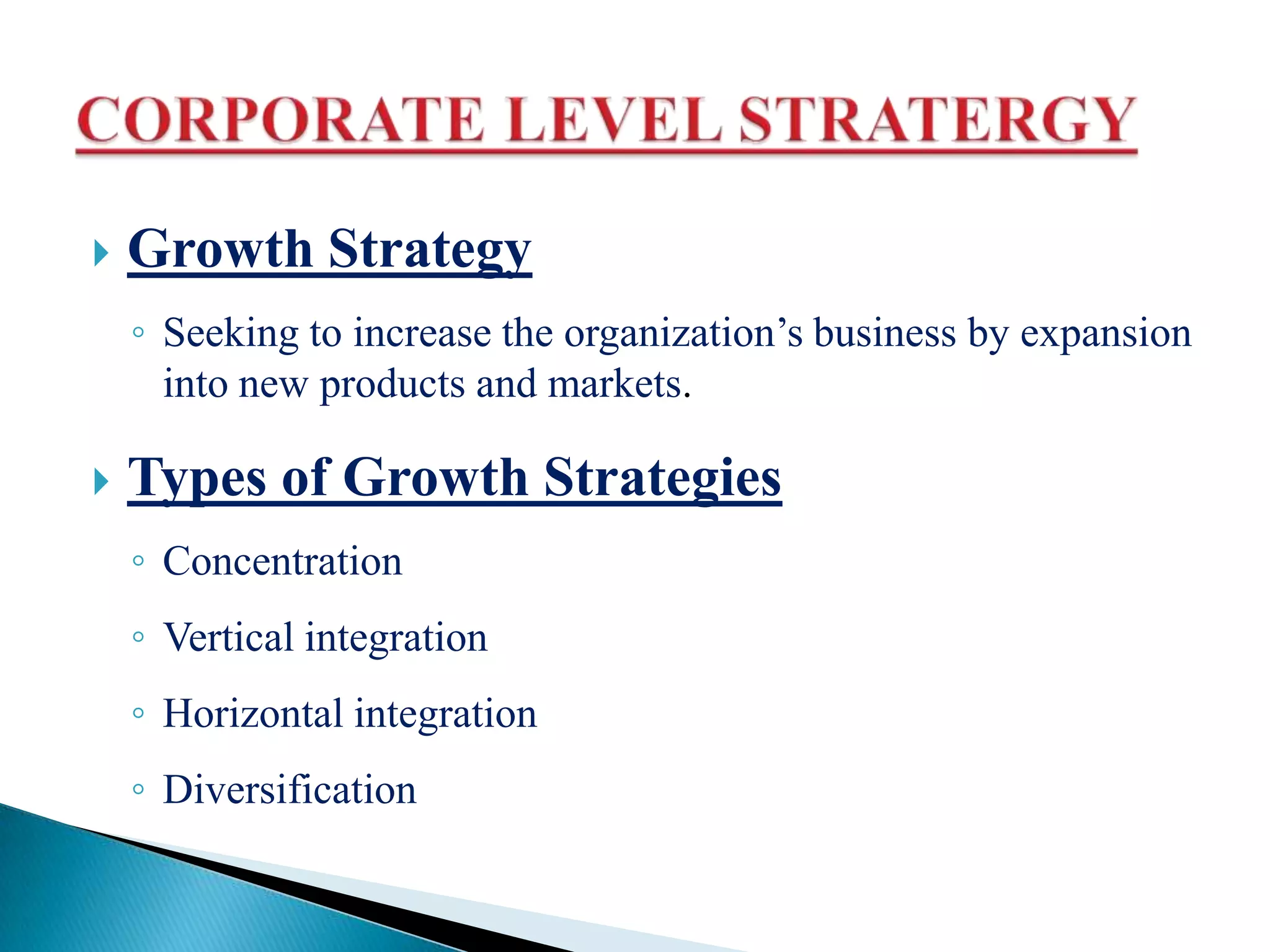
 Growth Strategy
◦ Seeking to increase the organization’s business by expansion
into new products and markets.
 Types of Growth Strategies
◦ Concentration
◦ Vertical integration
◦ Horizontal integration
◦ Diversification
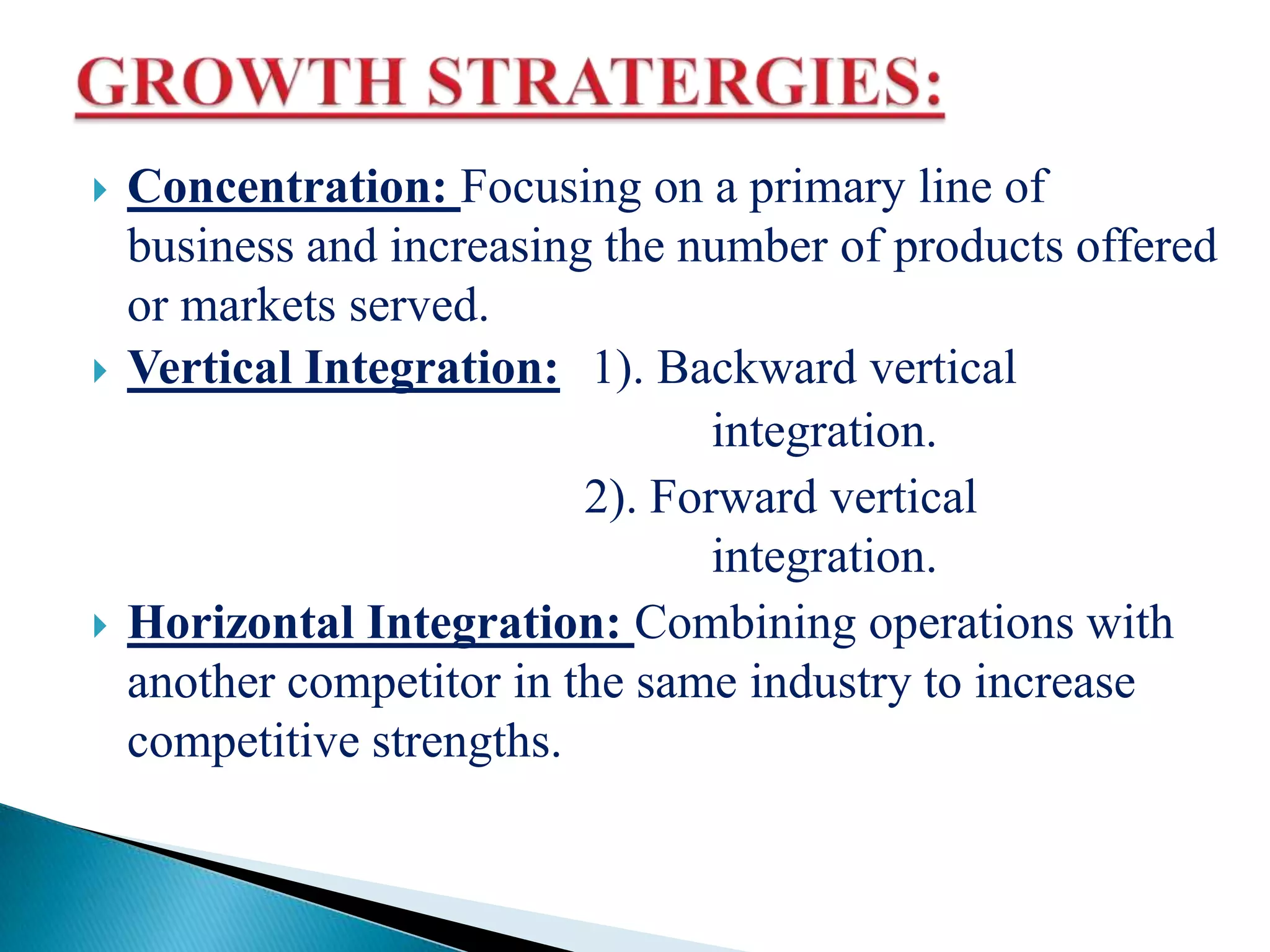
 Concentration: Focusing on a primary line of
business and increasing the number of products offered
or markets served.
 Vertical Integration: 1). Backward vertical
integration.
2). Forward vertical
integration.
 Horizontal Integration: Combining operations with
another competitor in the same industry to increase
competitive strengths.
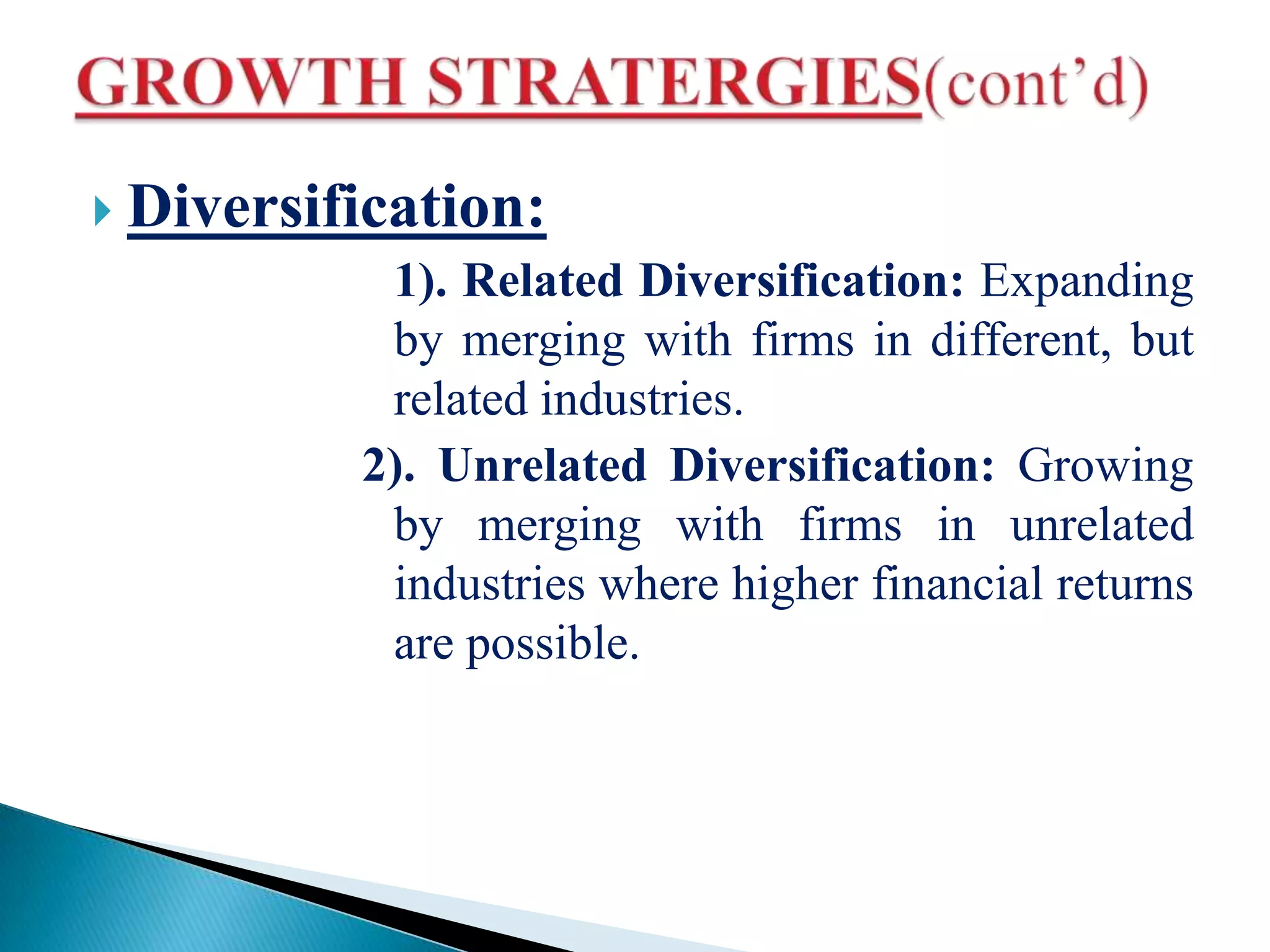
 Diversification:
1). Related Diversification: Expanding
by merging with firms in different, but
related industries.
2). Unrelated Diversification: Growing
by merging with firms in unrelated
industries where higher financial returns
are possible.
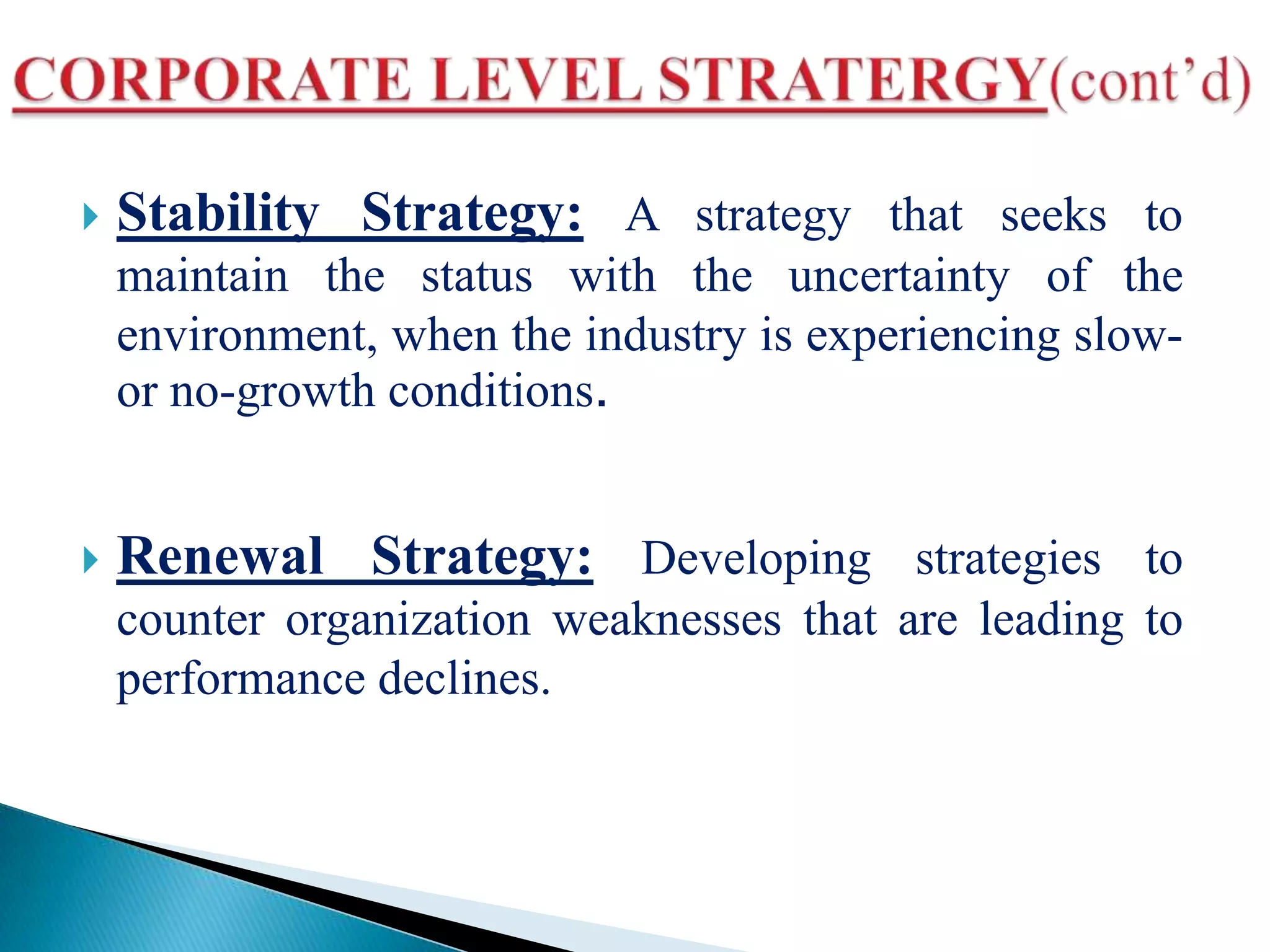
 Stability Strategy: A strategy that seeks to
maintain the status with the uncertainty of the
environment, when the industry is experiencing slow-
or no-growth conditions.
 Renewal Strategy: Developing strategies to
counter organization weaknesses that are leading to
performance declines.
 A strategy that seeks to determine how
an organization should compete in each
of its SBUs (strategic business units).
 At Business-level ALLOCATION of re-
sources among Functional-level an
COORDINATE with the Corporate
level to the ACHIEVEMENT of the
Corporate level OBJECTIVES.
 Cost leadership: Attaining, then using the lowest
total cost basis as a competitive advantage.
 Differentiation: Using product features or services to
distinguish the firm’s offerings from its competitors.
 Market focus: Concentrating competitively on
a specific market segment.
 Focus is on improving the
effectiveness of operations
within a company.
 Which is done by:
◦ Manufacturing
◦ Marketing
◦ Materials management
◦ Research and development
◦ Human resources
TO INCREASE THE PROFIT, CO-ORDINATION
AMONG LEVELS ARE IMPORTANT....

Different levels of strategy

  • 1.
    Prepared by:- Guidedby:- TANDEL CHITRANGKUMAR T. (120070720013) Corporate Functional BusinessOperational
  • 2.
  • 3.
    • Top management’soverall plan for the entire organization and its strategic business units. • Corporate level strategy occupies the heights level of DECISION MAKING. • the nature of the decisions tends to be value oriented, conceptual than the Business level, and Operational or Functional level.
  • 4.
    ◦ Growth: expansioninto new products and markets. ◦ Stability: maintenance of the status of the organization. ◦ Renewal: redirection of the firm into new markets.
  • 5.
     Growth Strategy ◦Seeking to increase the organization’s business by expansion into new products and markets.  Types of Growth Strategies ◦ Concentration ◦ Vertical integration ◦ Horizontal integration ◦ Diversification
  • 6.
     Concentration: Focusingon a primary line of business and increasing the number of products offered or markets served.  Vertical Integration: 1). Backward vertical integration. 2). Forward vertical integration.  Horizontal Integration: Combining operations with another competitor in the same industry to increase competitive strengths.
  • 7.
     Diversification: 1). RelatedDiversification: Expanding by merging with firms in different, but related industries. 2). Unrelated Diversification: Growing by merging with firms in unrelated industries where higher financial returns are possible.
  • 8.
     Stability Strategy:A strategy that seeks to maintain the status with the uncertainty of the environment, when the industry is experiencing slow- or no-growth conditions.  Renewal Strategy: Developing strategies to counter organization weaknesses that are leading to performance declines.
  • 9.
     A strategythat seeks to determine how an organization should compete in each of its SBUs (strategic business units).  At Business-level ALLOCATION of re- sources among Functional-level an COORDINATE with the Corporate level to the ACHIEVEMENT of the Corporate level OBJECTIVES.
  • 10.
     Cost leadership:Attaining, then using the lowest total cost basis as a competitive advantage.  Differentiation: Using product features or services to distinguish the firm’s offerings from its competitors.  Market focus: Concentrating competitively on a specific market segment.
  • 11.
     Focus ison improving the effectiveness of operations within a company.  Which is done by: ◦ Manufacturing ◦ Marketing ◦ Materials management ◦ Research and development ◦ Human resources
  • 12.
    TO INCREASE THEPROFIT, CO-ORDINATION AMONG LEVELS ARE IMPORTANT....