Effective incentives for
Food system transformation
Farewell address prof. dr. Ruerd Ruben
Solving puzzles & playing games to understand systems
2
0%
5%
10%
15%
20%
25%
30%
35%
40%
45%
50%
1990 1995 2000 2005 2010 2015
%
population
Poverty
(<USD 1.90 a day, 2011 PPP; % of
world population)
Undernourishment
(calories, % of population, world)
Stunting
(% of children under 5, world)
Overweight
(BMI>25, % of population
developing countries)
3
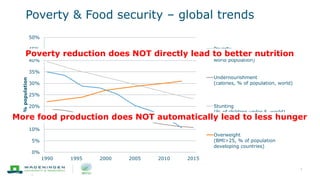
Poverty & Food security – global trends
More food production does NOT automatically lead to less hunger
Poverty reduction does NOT directly lead to better nutrition
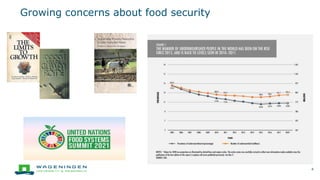
Growing concerns about food security
4
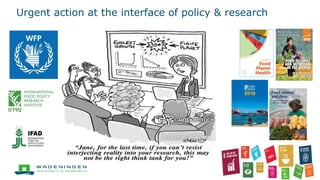
Urgent action at the interface of policy & research
5
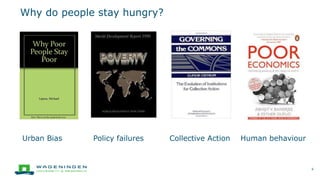
Why do people stay hungry?
6
Urban Bias Policy failures Collective Action Human behaviour
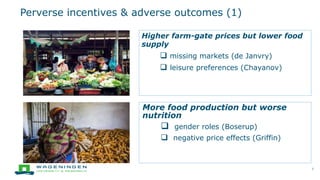
Perverse incentives & adverse outcomes (1)
7
Higher farm-gate prices but lower food
supply
 missing markets (de Janvry)
 leisure preferences (Chayanov)
More food production but worse
nutrition
 gender roles (Boserup)
 negative price effects (Griffin)
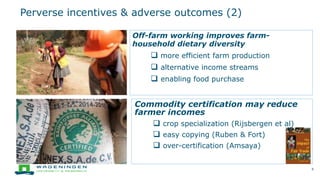
Perverse incentives & adverse outcomes (2)
8
Off-farm working improves farm-
household dietary diversity
 more efficient farm production
 alternative income streams
 enabling food purchase
Commodity certification may reduce
farmer incomes
 crop specialization (Rijsbergen et al)
 easy copying (Ruben & Fort)
 over-certification (Amsaya)
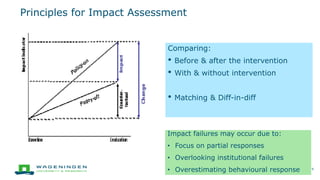
Principles for Impact Assessment
9
Comparing:
• Before & after the intervention
• With & without intervention
• Matching & Diff-in-diff
Impact failures may occur due to:
• Focus on partial responses
• Overlooking institutional failures
• Overestimating behavioural response
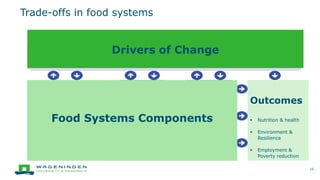
Trade-offs in food systems
10
Drivers of Change
Food Systems Components
Outcomes
 Nutrition & health
 Environment &
Resilience
 Employment &
Poverty reduction
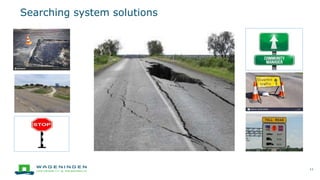
Searching system solutions
11
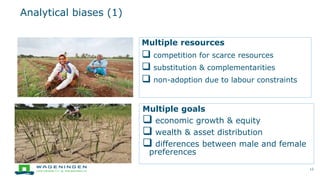
Multiple resources
 competition for scarce resources
 substitution & complementarities
 non-adoption due to labour constraints
Analytical biases (1)
12
Multiple goals
 economic growth & equity
 wealth & asset distribution
 differences between male and female
preferences
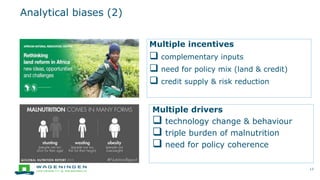
Analytical biases (2)
13
Multiple incentives
 complementary inputs
 need for policy mix (land & credit)
 credit supply & risk reduction
Multiple drivers
 technology change & behaviour
 triple burden of malnutrition
 need for policy coherence
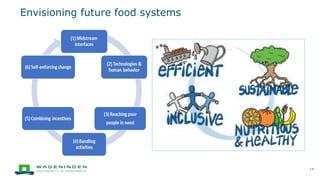
Envisioning future food systems
14
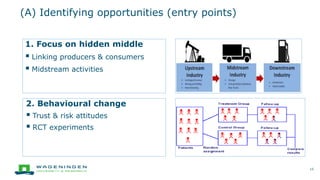
(A) Identifying opportunities (entry points)
15
1. Focus on hidden middle
 Linking producers & consumers
 Midstream activities
2. Behavioural change
 Trust & risk attitudes
 RCT experiments
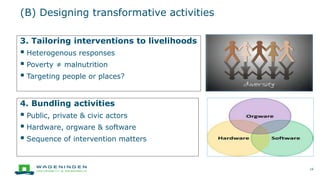
(B) Designing transformative activities
16
3. Tailoring interventions to livelihoods
 Heterogenous responses
 Poverty ≠ malnutrition
 Targeting people or places?
4. Bundling activities
 Public, private & civic actors
 Hardware, orgware & software
 Sequence of intervention matters
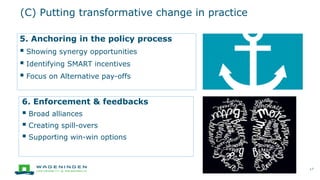
5. Anchoring in the policy process
 Showing synergy opportunities
 Identifying SMART incentives
 Focus on Alternative pay-offs
(C) Putting transformative change in practice
17
6. Enforcement & feedbacks
 Broad alliances
 Creating spill-overs
 Supporting win-win options
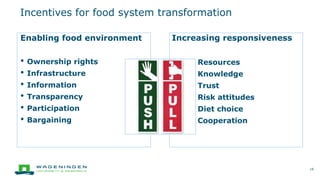
Incentives for food system transformation
18
Increasing responsiveness
● Resources
● Knowledge
● Trust
● Risk attitudes
● Diet choice
● Cooperation
Enabling food environment
• Ownership rights
• Infrastructure
• Information
• Transparency
• Participation
• Bargaining
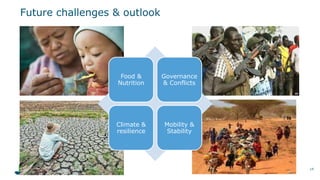
Future challenges & outlook
19
Food &
Nutrition
Governance
& Conflicts
Climate &
resilience
Mobility &
Stability
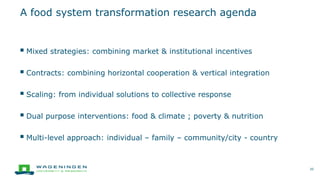
 Mixed strategies: combining market & institutional incentives
 Contracts: combining horizontal cooperation & vertical integration
 Scaling: from individual solutions to collective response
 Dual purpose interventions: food & climate ; poverty & nutrition
 Multi-level approach: individual – family – community/city - country
A food system transformation research agenda
20
A few words of thanks
21

Valedictory lecture Ruerd Ruben

  • 1.
    Effective incentives for Foodsystem transformation Farewell address prof. dr. Ruerd Ruben
  • 2.
    Solving puzzles &playing games to understand systems 2
  • 3.
    0% 5% 10% 15% 20% 25% 30% 35% 40% 45% 50% 1990 1995 20002005 2010 2015 % population Poverty (<USD 1.90 a day, 2011 PPP; % of world population) Undernourishment (calories, % of population, world) Stunting (% of children under 5, world) Overweight (BMI>25, % of population developing countries) 3 Poverty & Food security – global trends More food production does NOT automatically lead to less hunger Poverty reduction does NOT directly lead to better nutrition
  • 4.
    Growing concerns aboutfood security 4
  • 5.
    Urgent action atthe interface of policy & research 5
  • 6.
    Why do peoplestay hungry? 6 Urban Bias Policy failures Collective Action Human behaviour
  • 7.
    Perverse incentives &adverse outcomes (1) 7 Higher farm-gate prices but lower food supply  missing markets (de Janvry)  leisure preferences (Chayanov) More food production but worse nutrition  gender roles (Boserup)  negative price effects (Griffin)
  • 8.
    Perverse incentives &adverse outcomes (2) 8 Off-farm working improves farm- household dietary diversity  more efficient farm production  alternative income streams  enabling food purchase Commodity certification may reduce farmer incomes  crop specialization (Rijsbergen et al)  easy copying (Ruben & Fort)  over-certification (Amsaya)
  • 9.
    Principles for ImpactAssessment 9 Comparing: • Before & after the intervention • With & without intervention • Matching & Diff-in-diff Impact failures may occur due to: • Focus on partial responses • Overlooking institutional failures • Overestimating behavioural response
  • 10.
    Trade-offs in foodsystems 10 Drivers of Change Food Systems Components Outcomes  Nutrition & health  Environment & Resilience  Employment & Poverty reduction
  • 11.
  • 12.
    Multiple resources  competitionfor scarce resources  substitution & complementarities  non-adoption due to labour constraints Analytical biases (1) 12 Multiple goals  economic growth & equity  wealth & asset distribution  differences between male and female preferences
  • 13.
    Analytical biases (2) 13 Multipleincentives  complementary inputs  need for policy mix (land & credit)  credit supply & risk reduction Multiple drivers  technology change & behaviour  triple burden of malnutrition  need for policy coherence
  • 14.
  • 15.
    (A) Identifying opportunities(entry points) 15 1. Focus on hidden middle  Linking producers & consumers  Midstream activities 2. Behavioural change  Trust & risk attitudes  RCT experiments
  • 16.
    (B) Designing transformativeactivities 16 3. Tailoring interventions to livelihoods  Heterogenous responses  Poverty ≠ malnutrition  Targeting people or places? 4. Bundling activities  Public, private & civic actors  Hardware, orgware & software  Sequence of intervention matters
  • 17.
    5. Anchoring inthe policy process  Showing synergy opportunities  Identifying SMART incentives  Focus on Alternative pay-offs (C) Putting transformative change in practice 17 6. Enforcement & feedbacks  Broad alliances  Creating spill-overs  Supporting win-win options
  • 18.
    Incentives for foodsystem transformation 18 Increasing responsiveness ● Resources ● Knowledge ● Trust ● Risk attitudes ● Diet choice ● Cooperation Enabling food environment • Ownership rights • Infrastructure • Information • Transparency • Participation • Bargaining
  • 19.
    Future challenges &outlook 19 Food & Nutrition Governance & Conflicts Climate & resilience Mobility & Stability
  • 20.
     Mixed strategies:combining market & institutional incentives  Contracts: combining horizontal cooperation & vertical integration  Scaling: from individual solutions to collective response  Dual purpose interventions: food & climate ; poverty & nutrition  Multi-level approach: individual – family – community/city - country A food system transformation research agenda 20
  • 21.
    A few wordsof thanks 21