Economic development &
Agri-food system transitions
Drivers & Outcomes of Structural Change (& Shocks)
Ruerd Ruben & Krijn Poppe
2
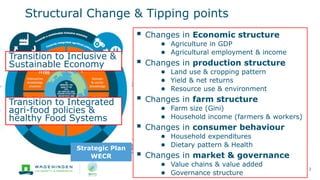
 Changes in Economic structure
● Agriculture in GDP
● Agricultural employment & income
 Changes in production structure
● Land use & cropping pattern
● Yield & net returns
● Resource use & environment
 Changes in farm structure
● Farm size (Gini)
● Household income (farmers & workers)
 Changes in consumer behaviour
● Household expenditures
● Dietary pattern & Health
 Changes in market & governance
● Value chains & value added
● Governance structure
Structural Change & Tipping points
Strategic Plan
WECR
Transition to Inclusive &
Sustainable Economy
Transition to Integrated
agri-food policies &
healthy Food Systems
3
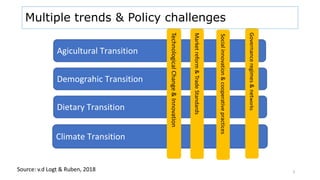
Dietary Transition
Agicultural Transition
Demograhic Transition
Climate Transition
Technological
Change
&
Innovation
Market
reform
&
Trade
Standards
Social
innovation
&
cooperative
practices
Governance
regimes
&
net
works
Multiple trends & Policy challenges
Source: v.d Logt & Ruben, 2018
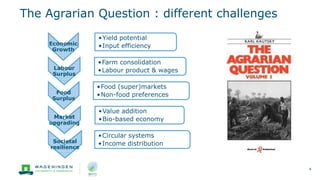
The Agrarian Question : different challenges
4
Economic
Growth
•Yield potential
•Input efficiency
Labour
Surplus
•Farm consolidation
•Labour product & wages
Food
Surplus
•Food (super)markets
•Non-food preferences
Market
upgrading
•Value addition
•Bio-based economy
Societal
resilience
•Circular systems
•Income distribution
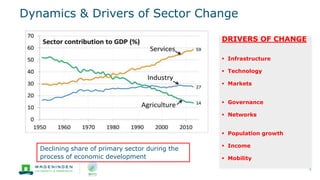
Dynamics & Drivers of Sector Change
5
DRIVERS OF CHANGE
 Infrastructure
 Technology
 Markets
 Governance
 Networks
 Population growth
 Income
 Mobility
Declining share of primary sector during the
process of economic development
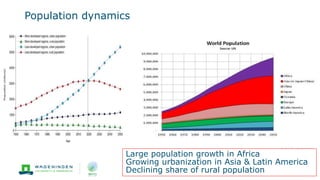
Population dynamics
Large population growth in Africa
Growing urbanization in Asia & Latin America
Declining share of rural population
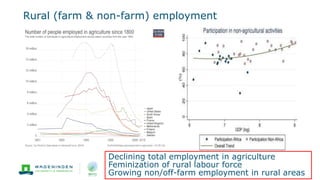
Rural (farm & non-farm) employment
Declining total employment in agriculture
Feminization of rural labour force
Growing non/off-farm employment in rural areas
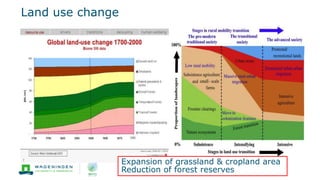
Land use change
Expansion of grassland & cropland area
Reduction of forest reserves
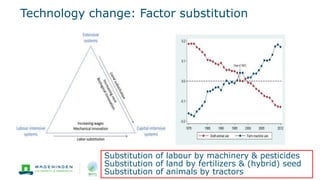
Technology change: Factor substitution
9
Substitution of labour by machinery & pesticides
Substitution of land by fertilizers & (hybrid) seed
Substitution of animals by tractors
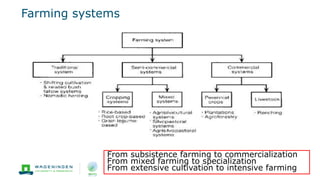
Farming systems
10
From subsistence farming to commercialization
From mixed farming to specialization
From extensive cultivation to intensive farming
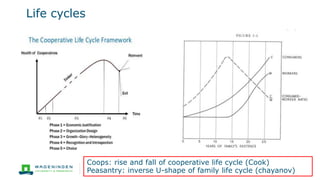
Life cycles
11
Coops: rise and fall of cooperative life cycle (Cook)
Peasantry: inverse U-shape of family life cycle (chayanov)
12
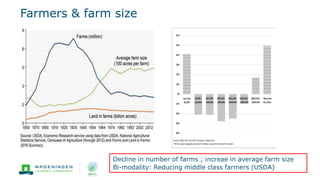
Decline in number of farms ; increae in average farm size
Bi-modality: Reducing middle class farmers (USDA)
Farmers & farm size
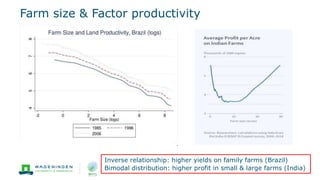
Farm size & Factor productivity
13
Inverse relationship: higher yields on family farms (Brazil)
Bimodal distribution: higher profit in small & large farms (India)
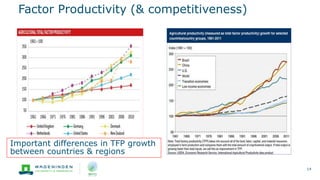
Factor Productivity (& competitiveness)
14
Important differences in TFP growth
between countries & regions
15
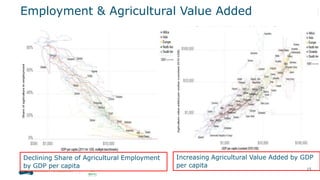
Increasing Agricultural Value Added by GDP
per capita
Declining Share of Agricultural Employment
by GDP per capita
Employment & Agricultural Value Added
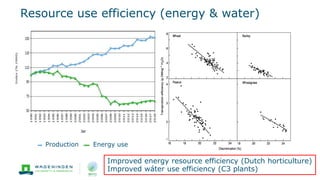
Resource use efficiency (energy & water)
16
Improved energy resource efficiency (Dutch horticulture)
Improved wáter use efficiency (C3 plants)
Production Energy use
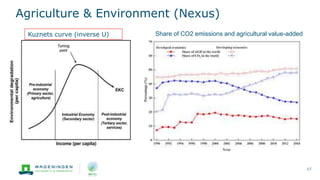
Agriculture & Environment (Nexus)
17
Share of CO2 emissions and agricultural value-added
Kuznets curve (inverse U)
18
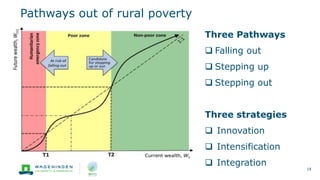
Three Pathways
 Falling out
 Stepping up
 Stepping out
Three strategies
 Innovation
 Intensification
 Integration
Pathways out of rural poverty
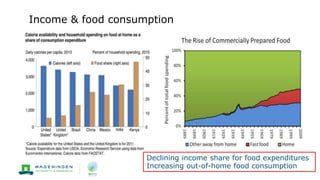
Income & food consumption
Declining income share for food expenditures
Increasing out-of-home food consumption
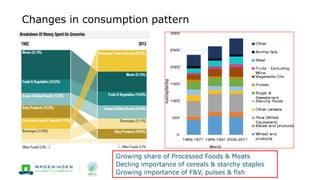
Changes in consumption pattern
Growing share of Processed Foods & Meats
Decling importance of cereals & starchy staples
Growing importance of F&V, pulses & fish
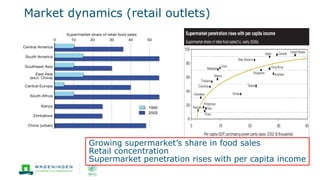
Market dynamics (retail outlets)
Growing supermarket’s share in food sales
Retail concentration
Supermarket penetration rises with per capita income
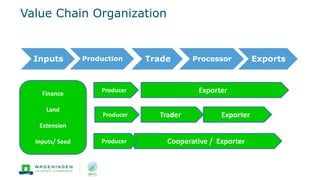
Value Chain Organization
Inputs Production Trade Processor Exports
Finance
Land
Extension
Inputs/ Seed
Exporter
Trader Exporter
Cooperative / Exporter
Producer
Producer
Producer
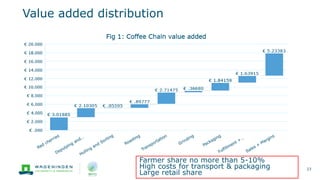
Value added distribution
23
Farmer share no more than 5-10%
High costs for transport & packaging
Large retail share
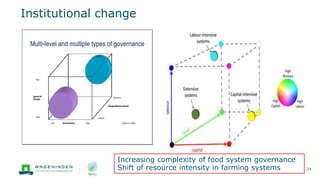
Institutional change
24
Increasing complexity of food system governance
Shift of resource intensity in farming systems
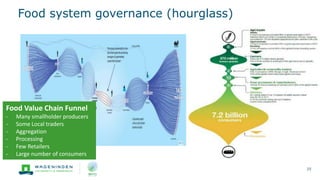
Food system governance (hourglass)
25
Food Value Chain Funnel
- Many smallholder producers
- Some Local traders
- Aggregation
- Processing
- Few Retailers
- Large number of consumers
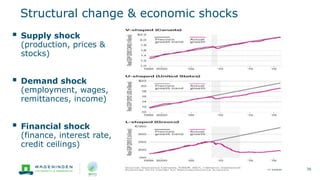
 Supply shock
(production, prices &
stocks)
 Demand shock
(employment, wages,
remittances, income)
 Financial shock
(finance, interest rate,
credit ceilings)
26
Structural change & economic shocks
Drivers for Agri-food system change
27
 Role of markets & (public) institutions
 Local sourcing & international trade
 Power differences (producers – traders – consumers)
 Dovetailing capital & labour markets
 Information exchange & connectiveness (ICT)
 Innovation & (long-term) competetiveness
Great sources of Data
28
 Our World in Data (Oxford University)
 World Bank
 IMF
 FAO
 IFPRI
 USDA
 Eurostat (FADN , Farm structure survey)
Tanks for your attention
29
RuerdR
Ruerd.ruben@wur.nl
Krijn.poppe@wur.nl
Krijn_J_Poppe

Wecr - agrarian transitions

  • 1.
    Economic development & Agri-foodsystem transitions Drivers & Outcomes of Structural Change (& Shocks) Ruerd Ruben & Krijn Poppe
  • 2.
    2  Changes inEconomic structure ● Agriculture in GDP ● Agricultural employment & income  Changes in production structure ● Land use & cropping pattern ● Yield & net returns ● Resource use & environment  Changes in farm structure ● Farm size (Gini) ● Household income (farmers & workers)  Changes in consumer behaviour ● Household expenditures ● Dietary pattern & Health  Changes in market & governance ● Value chains & value added ● Governance structure Structural Change & Tipping points Strategic Plan WECR Transition to Inclusive & Sustainable Economy Transition to Integrated agri-food policies & healthy Food Systems
  • 3.
    3 Dietary Transition Agicultural Transition DemograhicTransition Climate Transition Technological Change & Innovation Market reform & Trade Standards Social innovation & cooperative practices Governance regimes & net works Multiple trends & Policy challenges Source: v.d Logt & Ruben, 2018
  • 4.
    The Agrarian Question: different challenges 4 Economic Growth •Yield potential •Input efficiency Labour Surplus •Farm consolidation •Labour product & wages Food Surplus •Food (super)markets •Non-food preferences Market upgrading •Value addition •Bio-based economy Societal resilience •Circular systems •Income distribution
  • 5.
    Dynamics & Driversof Sector Change 5 DRIVERS OF CHANGE  Infrastructure  Technology  Markets  Governance  Networks  Population growth  Income  Mobility Declining share of primary sector during the process of economic development
  • 6.
    Population dynamics Large populationgrowth in Africa Growing urbanization in Asia & Latin America Declining share of rural population
  • 7.
    Rural (farm &non-farm) employment Declining total employment in agriculture Feminization of rural labour force Growing non/off-farm employment in rural areas
  • 8.
    Land use change Expansionof grassland & cropland area Reduction of forest reserves
  • 9.
    Technology change: Factorsubstitution 9 Substitution of labour by machinery & pesticides Substitution of land by fertilizers & (hybrid) seed Substitution of animals by tractors
  • 10.
    Farming systems 10 From subsistencefarming to commercialization From mixed farming to specialization From extensive cultivation to intensive farming
  • 11.
    Life cycles 11 Coops: riseand fall of cooperative life cycle (Cook) Peasantry: inverse U-shape of family life cycle (chayanov)
  • 12.
    12 Decline in numberof farms ; increae in average farm size Bi-modality: Reducing middle class farmers (USDA) Farmers & farm size
  • 13.
    Farm size &Factor productivity 13 Inverse relationship: higher yields on family farms (Brazil) Bimodal distribution: higher profit in small & large farms (India)
  • 14.
    Factor Productivity (&competitiveness) 14 Important differences in TFP growth between countries & regions
  • 15.
    15 Increasing Agricultural ValueAdded by GDP per capita Declining Share of Agricultural Employment by GDP per capita Employment & Agricultural Value Added
  • 16.
    Resource use efficiency(energy & water) 16 Improved energy resource efficiency (Dutch horticulture) Improved wáter use efficiency (C3 plants) Production Energy use
  • 17.
    Agriculture & Environment(Nexus) 17 Share of CO2 emissions and agricultural value-added Kuznets curve (inverse U)
  • 18.
    18 Three Pathways  Fallingout  Stepping up  Stepping out Three strategies  Innovation  Intensification  Integration Pathways out of rural poverty
  • 19.
    Income & foodconsumption Declining income share for food expenditures Increasing out-of-home food consumption
  • 20.
    Changes in consumptionpattern Growing share of Processed Foods & Meats Decling importance of cereals & starchy staples Growing importance of F&V, pulses & fish
  • 21.
    Market dynamics (retailoutlets) Growing supermarket’s share in food sales Retail concentration Supermarket penetration rises with per capita income
  • 22.
    Value Chain Organization InputsProduction Trade Processor Exports Finance Land Extension Inputs/ Seed Exporter Trader Exporter Cooperative / Exporter Producer Producer Producer
  • 23.
    Value added distribution 23 Farmershare no more than 5-10% High costs for transport & packaging Large retail share
  • 24.
    Institutional change 24 Increasing complexityof food system governance Shift of resource intensity in farming systems
  • 25.
    Food system governance(hourglass) 25 Food Value Chain Funnel - Many smallholder producers - Some Local traders - Aggregation - Processing - Few Retailers - Large number of consumers
  • 26.
     Supply shock (production,prices & stocks)  Demand shock (employment, wages, remittances, income)  Financial shock (finance, interest rate, credit ceilings) 26 Structural change & economic shocks
  • 27.
    Drivers for Agri-foodsystem change 27  Role of markets & (public) institutions  Local sourcing & international trade  Power differences (producers – traders – consumers)  Dovetailing capital & labour markets  Information exchange & connectiveness (ICT)  Innovation & (long-term) competetiveness
  • 28.
    Great sources ofData 28  Our World in Data (Oxford University)  World Bank  IMF  FAO  IFPRI  USDA  Eurostat (FADN , Farm structure survey)
  • 29.
    Tanks for yourattention 29 RuerdR Ruerd.ruben@wur.nl Krijn.poppe@wur.nl Krijn_J_Poppe