

Anticancer Drug
Discovery Using
Multicellular
Tumor Spheroid
Models
By Hasnat Tariq
and
Annum Zia
Outline
• Spheroids and types
• Abstract
• Types of models
• Types of 3D Scaffold-free models
• Techniques to generate 3D tumor spheroids
• Readout techniques
• Expert’s opinion
• Conclusion
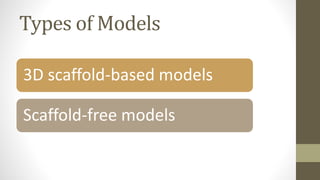
Types of Models
3D scaffold-based models
Scaffold-free models
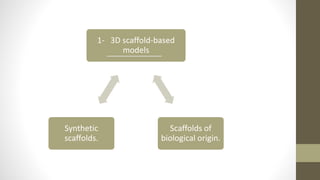
1- 3D scaffold-based
models
Scaffolds of
biological origin.
Synthetic
scaffolds.
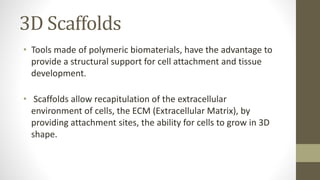
3D Scaffolds
• Tools made of polymeric biomaterials, have the advantage to
provide a structural support for cell attachment and tissue
development.
• Scaffolds allow recapitulation of the extracellular
environment of cells, the ECM (Extracellular Matrix), by
providing attachment sites, the ability for cells to grow in 3D
shape.
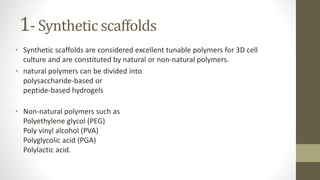
1- Synthetic scaffolds
• Synthetic scaffolds are considered excellent tunable polymers for 3D cell
culture and are constituted by natural or non-natural polymers.
• natural polymers can be divided into
polysaccharide-based or
peptide-based hydrogels
• Non-natural polymers such as
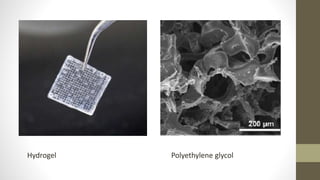
Polyethylene glycol (PEG)
Poly vinyl alcohol (PVA)
Polyglycolic acid (PGA)
Polylactic acid.
Hydrogel Polyethylene glycol
2- Scaffolds of biological origin
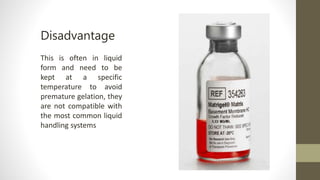
• Matrigel® is a commercially available ECM gel used widely
in 3D cell culture.
• It is an Engelbreth–Holm–Swarm mouse sarcoma cell-derived mixture of
proteins (collagen, fibronectin,laminin, filamin, actin, etc.), proteoglycans and
different growth factors (EGF, TGF-β, NGF, PDGF, IGF, FGF, etc.)
• Collagens are the most abundant constituents of the ECM.
• The structure of tumor-associated collagens is often linearized and crosslinked,
resulting in increased ECM stiffness and changes in gene expression, cell migration,
tumor progression and response to treatments.
This is often in liquid
form and need to be
kept at a specific
temperature to avoid
premature gelation, they
are not compatible with
the most common liquid
handling systems
Disadvantage
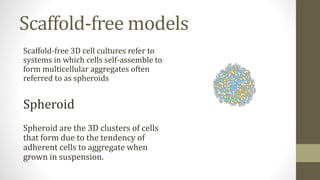
Scaffold-free 3D cell cultures refer to
systems in which cells self-assemble to
form multicellular aggregates often
referred to as spheroids
Spheroid
Spheroid are the 3D clusters of cells
that form due to the tendency of
adherent cells to aggregate when
grown in suspension.
Scaffold-free models
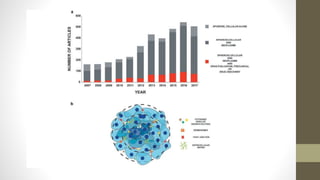
• Tumor cells within spheroids interact with each other through the formation of
desmosomes and dermal junctions and the secretion and deposition of ECM
proteins (collagen, fibronectin, tenascin, laminin, etc.) and proteoglycans.
• Such cell–cell and cell–ECM interactions enhance spheroid density and
compactness, increasing the interstitial fluid pressure and limiting the
penetration of drugs into the tumor mass.
• These interactions also alter the expression of drug targets as HER2 in breast
cancer increase tumor cell defense mechanisms against drug treatments by
activating diverse anti-apoptotic proteins such as BCL-2 family members (e.g. Bax,
Bcl-2, and Bid), NF-κB, p53, and survivin, and induce the expression of proteases
(e.g. MMPs) which remodel ECM and promote tumor progression
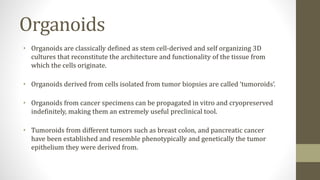
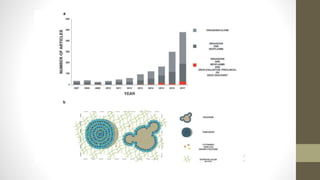
Organoids
• Organoids are classically defined as stem cell-derived and self organizing 3D
cultures that reconstitute the architecture and functionality of the tissue from
which the cells originate.
• Organoids derived from cells isolated from tumor biopsies are called ‘tumoroids’.
• Organoids from cancer specimens can be propagated in vitro and cryopreserved
indefinitely, making them an extremely useful preclinical tool.
• Tumoroids from different tumors such as breast colon, and pancreatic cancer
have been established and resemble phenotypically and genetically the tumor
epithelium they were derived from.
Techniquesto generate 3D tumor spheroids
Hanging drop
Low adhesion microplate
Magnetic levitation and bio printing
Pellet culture
Rotatory method
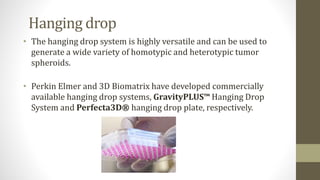
Hanging drop
• The hanging drop system is highly versatile and can be used to
generate a wide variety of homotypic and heterotypic tumor
spheroids.
• Perkin Elmer and 3D Biomatrix have developed commercially
available hanging drop systems, GravityPLUS™ Hanging Drop
System and Perfecta3D® hanging drop plate, respectively.
Low adhesion microplate
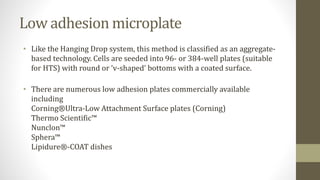
• Like the Hanging Drop system, this method is classified as an aggregate-
based technology. Cells are seeded into 96- or 384-well plates (suitable
for HTS) with round or ‘v-shaped’ bottoms with a coated surface.
• There are numerous low adhesion plates commercially available
including
Corning®Ultra-Low Attachment Surface plates (Corning)
Thermo Scientific™
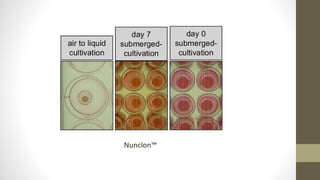
Nunclon™
Sphera™
Lipidure®-COAT dishes
Nunclon™
Magnetic levitation and bio-printing
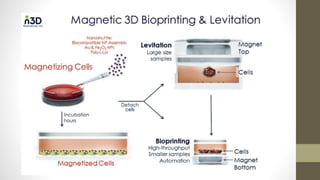
• The magnetic levitation technique and magnetic bio printing are new
intriguing systems to generate scaffold-free 3D spheroids.
• Cells in 2D are pre-loaded with magnetic nanoparticles in the wells and
spheroids are obtained as a result of forced aggregation at the air-liquid
interface induced by the application of a magnetic field located above the
plate.
• The bio printing technology differs from standard magnetic levitation in
its use of biocompatible magnetic nanoparticles (i.e. gold or magnetic
nanoparticles coated with bovine serum albumin (BSA)
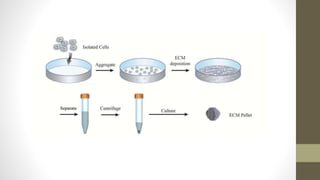
Pellet culture
• The pellet culture system was initially used to obtain 3D aggregates from
rabbit bone marrow mesenchymal cells for chondrogenic differentiation
and then adopted to obtain tumor spheroids.
Working:
• The method is simple and inexpensive:
• Cells are pelleted in a tube at the desired density by low-speed
centrifugation and forced to aggregate and interact with each other. The
cellular aggregate created at the bottom of the tube is incubated for at
least 24 h at 37°C to permit spheroid formation
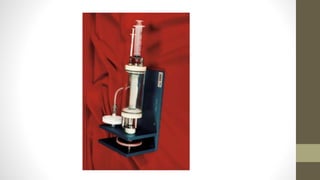
Rotatory method
• The Rotatory Cell Culture System is a bioreactor technology in which
suspended cells are seeded in volume-defined rotating chambers to
which a continuous rotation is applied, avoiding wall chamber collisions
and mimicking microgravity.
• Cells are then maintained in suspension by the resolution of
gravitational, centrifugal and Coriolis forces, which promotes
aggregation.
• The gradual increase in the size of cell aggregates is balanced by the
increasing rotational speed
Analysis and characterization
of spheroids
OR
Readout techniques
Drug screening assays
Flow cytometry
Western blot and qRT-PCR
Optical microscopy
Electron microscopy
Drug screening assays
• Many of the assays such as MTT, AlamarBlue®, Trypan Blue and lactate
dehydrogenase have been used to evaluate treatments in tumor
spheroids.
• New assays specifically designed for 3D spheroids and capable of
providing rigorous data. For example, Cell TiterGlo 3D and Perfecta 3D
cell viability assay (WST-1 assay) have been specifically developed for
3D culture and permit a better penetration of the reagents into the
compact mass of the spheroids, guaranteeing sensitive and robust
results.
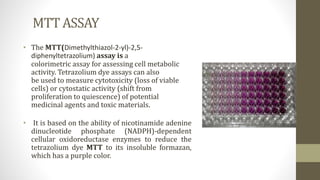
MTT ASSAY
• The MTT(Dimethylthiazol-2-yl)-2,5-
diphenyltetrazolium) assay is a
colorimetric assay for assessing cell metabolic
activity. Tetrazolium dye assays can also
be used to measure cytotoxicity (loss of viable
cells) or cytostatic activity (shift from
proliferation to quiescence) of potential
medicinal agents and toxic materials.
• It is based on the ability of nicotinamide adenine
dinucleotide phosphate (NADPH)-dependent
cellular oxidoreductase enzymes to reduce the
tetrazolium dye MTT to its insoluble formazan,
which has a purple color.
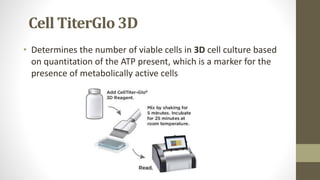
Cell TiterGlo 3D
• Determines the number of viable cells in 3D cell culture based
on quantitation of the ATP present, which is a marker for the
presence of metabolically active cells
Flow cytometry
• Flow cytometry is generally used to evaluate the cytostatic and/or
cytotoxic effects of anticancer drugs in spheroids.
• Numerous standard fluorescent dyes can be used to evaluate the
percentage of live and dead cells.
• Fluorescent antibodies or probes against specific proteins or cellular
compartments of interest can be used to evaluate and quantify some
other spheroid parameters such as the metabolic status of cells
composing the spheroid or the percentage of cells expressing specific
proteins
Western blot and qRT-PCR
qRT-PCR can also be used to quantify the expression of specific genes in
spheroids, but as for WB, an appropriate lysis procedure is needed to
ensure that RNA is extracted from all of the cells composing the spheroid.
Researchers have used these two methodologies together to identify
different genes and proteins in spheroids involved in tumor progression.
qRT-PCR technique is mainly used for absolute and relative quantification
of gene expression.
Western blot is a laboratory method used to detect specific protein
molecules from among a mixture of proteins.
Optical microscopy
• Different fluorescence- based techniques have been developed to image
the inner parts of tissue and (live or fixed) spheroids, e.g.
Lightsheet fluorescence microscopy (LSFM)
Single or selective plane illumination microscopy (SPIM) and Multi-
photon microscopy (MPM)
• LSFM is a faster and more gentle technology than conventional confocal
microscopy.
• The fluorescence signal can be obtained from either fluorescence probes,
e.g. DAPI(diamidino-2-phenylindole) and transfected fluorescence
proteins (phalloidin)
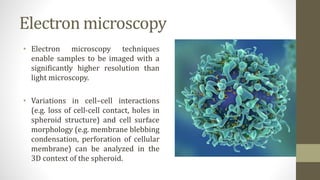
Electron microscopy
• Electron microscopy techniques
enable samples to be imaged with a
significantly higher resolution than
light microscopy.
• Variations in cell–cell interactions
(e.g. loss of cell-cell contact, holes in
spheroid structure) and cell surface
morphology (e.g. membrane blebbing
condensation, perforation of cellular
membrane) can be analyzed in the
3D context of the spheroid.
Expert opinion
• Cell–cell signaling and cell–ECM interactions are also well represented in
tumor spheroids and are both considered to play a pivotal role in the
development of drug resistance mechanisms by tumor cells.
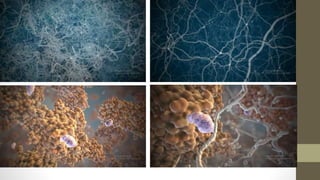
• Advent of a new method called expansion microscopy (ExM) has
enabled researchers to identify small structures of interest (proteins and
RNAs) by increasing their size using a polymer system.
Conclusion
• The relative simplicity of spheroid models compared to clinical tumors, even
when they include tumor microenvironment elements, must alert
researchers to the risk of overestimating their accuracy in predicting
response to drugs. In particular, the value of their clinical response is
hampered by the unsatisfactory reproducibility of data produced and by the
lack of standardized protocols for the different cellular lineages.
Reference
• Zanoni, M., Pignatta, S., Arienti, C., Bonafè, M., & Tesei, A.
(2019). Anticancer drug discovery using multicellular tumor
spheroid models. Expert opinion on drug discovery, 14(3), 289-
301.
THANK YOU!

Anticancer drug discovery using multicellular tumor spheroid models

  • 1.
    Anticancer Drug Discovery Using Multicellular TumorSpheroid Models By Hasnat Tariq and Annum Zia
  • 2.
    Outline • Spheroids andtypes • Abstract • Types of models • Types of 3D Scaffold-free models • Techniques to generate 3D tumor spheroids • Readout techniques • Expert’s opinion • Conclusion
  • 3.
    Types of Models 3Dscaffold-based models Scaffold-free models
  • 4.
    1- 3D scaffold-based models Scaffoldsof biological origin. Synthetic scaffolds.
  • 5.
    3D Scaffolds • Toolsmade of polymeric biomaterials, have the advantage to provide a structural support for cell attachment and tissue development. • Scaffolds allow recapitulation of the extracellular environment of cells, the ECM (Extracellular Matrix), by providing attachment sites, the ability for cells to grow in 3D shape.
  • 6.
    1- Synthetic scaffolds •Synthetic scaffolds are considered excellent tunable polymers for 3D cell culture and are constituted by natural or non-natural polymers. • natural polymers can be divided into polysaccharide-based or peptide-based hydrogels • Non-natural polymers such as Polyethylene glycol (PEG) Poly vinyl alcohol (PVA) Polyglycolic acid (PGA) Polylactic acid.
  • 7.
  • 9.
    2- Scaffolds ofbiological origin • Matrigel® is a commercially available ECM gel used widely in 3D cell culture. • It is an Engelbreth–Holm–Swarm mouse sarcoma cell-derived mixture of proteins (collagen, fibronectin,laminin, filamin, actin, etc.), proteoglycans and different growth factors (EGF, TGF-β, NGF, PDGF, IGF, FGF, etc.) • Collagens are the most abundant constituents of the ECM. • The structure of tumor-associated collagens is often linearized and crosslinked, resulting in increased ECM stiffness and changes in gene expression, cell migration, tumor progression and response to treatments.
  • 10.
    This is oftenin liquid form and need to be kept at a specific temperature to avoid premature gelation, they are not compatible with the most common liquid handling systems Disadvantage
  • 11.
    Scaffold-free 3D cellcultures refer to systems in which cells self-assemble to form multicellular aggregates often referred to as spheroids Spheroid Spheroid are the 3D clusters of cells that form due to the tendency of adherent cells to aggregate when grown in suspension. Scaffold-free models
  • 12.
    • Tumor cellswithin spheroids interact with each other through the formation of desmosomes and dermal junctions and the secretion and deposition of ECM proteins (collagen, fibronectin, tenascin, laminin, etc.) and proteoglycans. • Such cell–cell and cell–ECM interactions enhance spheroid density and compactness, increasing the interstitial fluid pressure and limiting the penetration of drugs into the tumor mass. • These interactions also alter the expression of drug targets as HER2 in breast cancer increase tumor cell defense mechanisms against drug treatments by activating diverse anti-apoptotic proteins such as BCL-2 family members (e.g. Bax, Bcl-2, and Bid), NF-κB, p53, and survivin, and induce the expression of proteases (e.g. MMPs) which remodel ECM and promote tumor progression
  • 14.
    Organoids • Organoids areclassically defined as stem cell-derived and self organizing 3D cultures that reconstitute the architecture and functionality of the tissue from which the cells originate. • Organoids derived from cells isolated from tumor biopsies are called ‘tumoroids’. • Organoids from cancer specimens can be propagated in vitro and cryopreserved indefinitely, making them an extremely useful preclinical tool. • Tumoroids from different tumors such as breast colon, and pancreatic cancer have been established and resemble phenotypically and genetically the tumor epithelium they were derived from.
  • 16.
    Techniquesto generate 3Dtumor spheroids Hanging drop Low adhesion microplate Magnetic levitation and bio printing Pellet culture Rotatory method
  • 17.
    Hanging drop • Thehanging drop system is highly versatile and can be used to generate a wide variety of homotypic and heterotypic tumor spheroids. • Perkin Elmer and 3D Biomatrix have developed commercially available hanging drop systems, GravityPLUS™ Hanging Drop System and Perfecta3D® hanging drop plate, respectively.
  • 18.
    Low adhesion microplate •Like the Hanging Drop system, this method is classified as an aggregate- based technology. Cells are seeded into 96- or 384-well plates (suitable for HTS) with round or ‘v-shaped’ bottoms with a coated surface. • There are numerous low adhesion plates commercially available including Corning®Ultra-Low Attachment Surface plates (Corning) Thermo Scientific™ Nunclon™ Sphera™ Lipidure®-COAT dishes
  • 19.
  • 20.
    Magnetic levitation andbio-printing • The magnetic levitation technique and magnetic bio printing are new intriguing systems to generate scaffold-free 3D spheroids. • Cells in 2D are pre-loaded with magnetic nanoparticles in the wells and spheroids are obtained as a result of forced aggregation at the air-liquid interface induced by the application of a magnetic field located above the plate. • The bio printing technology differs from standard magnetic levitation in its use of biocompatible magnetic nanoparticles (i.e. gold or magnetic nanoparticles coated with bovine serum albumin (BSA)
  • 22.
    Pellet culture • Thepellet culture system was initially used to obtain 3D aggregates from rabbit bone marrow mesenchymal cells for chondrogenic differentiation and then adopted to obtain tumor spheroids. Working: • The method is simple and inexpensive: • Cells are pelleted in a tube at the desired density by low-speed centrifugation and forced to aggregate and interact with each other. The cellular aggregate created at the bottom of the tube is incubated for at least 24 h at 37°C to permit spheroid formation
  • 24.
    Rotatory method • TheRotatory Cell Culture System is a bioreactor technology in which suspended cells are seeded in volume-defined rotating chambers to which a continuous rotation is applied, avoiding wall chamber collisions and mimicking microgravity. • Cells are then maintained in suspension by the resolution of gravitational, centrifugal and Coriolis forces, which promotes aggregation. • The gradual increase in the size of cell aggregates is balanced by the increasing rotational speed
  • 26.
    Analysis and characterization ofspheroids OR Readout techniques
  • 27.
    Drug screening assays Flowcytometry Western blot and qRT-PCR Optical microscopy Electron microscopy
  • 28.
    Drug screening assays •Many of the assays such as MTT, AlamarBlue®, Trypan Blue and lactate dehydrogenase have been used to evaluate treatments in tumor spheroids. • New assays specifically designed for 3D spheroids and capable of providing rigorous data. For example, Cell TiterGlo 3D and Perfecta 3D cell viability assay (WST-1 assay) have been specifically developed for 3D culture and permit a better penetration of the reagents into the compact mass of the spheroids, guaranteeing sensitive and robust results.
  • 29.
    MTT ASSAY • TheMTT(Dimethylthiazol-2-yl)-2,5- diphenyltetrazolium) assay is a colorimetric assay for assessing cell metabolic activity. Tetrazolium dye assays can also be used to measure cytotoxicity (loss of viable cells) or cytostatic activity (shift from proliferation to quiescence) of potential medicinal agents and toxic materials. • It is based on the ability of nicotinamide adenine dinucleotide phosphate (NADPH)-dependent cellular oxidoreductase enzymes to reduce the tetrazolium dye MTT to its insoluble formazan, which has a purple color.
  • 30.
    Cell TiterGlo 3D •Determines the number of viable cells in 3D cell culture based on quantitation of the ATP present, which is a marker for the presence of metabolically active cells
  • 31.
    Flow cytometry • Flowcytometry is generally used to evaluate the cytostatic and/or cytotoxic effects of anticancer drugs in spheroids. • Numerous standard fluorescent dyes can be used to evaluate the percentage of live and dead cells. • Fluorescent antibodies or probes against specific proteins or cellular compartments of interest can be used to evaluate and quantify some other spheroid parameters such as the metabolic status of cells composing the spheroid or the percentage of cells expressing specific proteins
  • 32.
    Western blot andqRT-PCR qRT-PCR can also be used to quantify the expression of specific genes in spheroids, but as for WB, an appropriate lysis procedure is needed to ensure that RNA is extracted from all of the cells composing the spheroid. Researchers have used these two methodologies together to identify different genes and proteins in spheroids involved in tumor progression. qRT-PCR technique is mainly used for absolute and relative quantification of gene expression. Western blot is a laboratory method used to detect specific protein molecules from among a mixture of proteins.
  • 33.
    Optical microscopy • Differentfluorescence- based techniques have been developed to image the inner parts of tissue and (live or fixed) spheroids, e.g. Lightsheet fluorescence microscopy (LSFM) Single or selective plane illumination microscopy (SPIM) and Multi- photon microscopy (MPM) • LSFM is a faster and more gentle technology than conventional confocal microscopy. • The fluorescence signal can be obtained from either fluorescence probes, e.g. DAPI(diamidino-2-phenylindole) and transfected fluorescence proteins (phalloidin)
  • 34.
    Electron microscopy • Electronmicroscopy techniques enable samples to be imaged with a significantly higher resolution than light microscopy. • Variations in cell–cell interactions (e.g. loss of cell-cell contact, holes in spheroid structure) and cell surface morphology (e.g. membrane blebbing condensation, perforation of cellular membrane) can be analyzed in the 3D context of the spheroid.
  • 35.
    Expert opinion • Cell–cellsignaling and cell–ECM interactions are also well represented in tumor spheroids and are both considered to play a pivotal role in the development of drug resistance mechanisms by tumor cells. • Advent of a new method called expansion microscopy (ExM) has enabled researchers to identify small structures of interest (proteins and RNAs) by increasing their size using a polymer system.
  • 37.
    Conclusion • The relativesimplicity of spheroid models compared to clinical tumors, even when they include tumor microenvironment elements, must alert researchers to the risk of overestimating their accuracy in predicting response to drugs. In particular, the value of their clinical response is hampered by the unsatisfactory reproducibility of data produced and by the lack of standardized protocols for the different cellular lineages.
  • 38.
    Reference • Zanoni, M.,Pignatta, S., Arienti, C., Bonafè, M., & Tesei, A. (2019). Anticancer drug discovery using multicellular tumor spheroid models. Expert opinion on drug discovery, 14(3), 289- 301.
  • 39.