


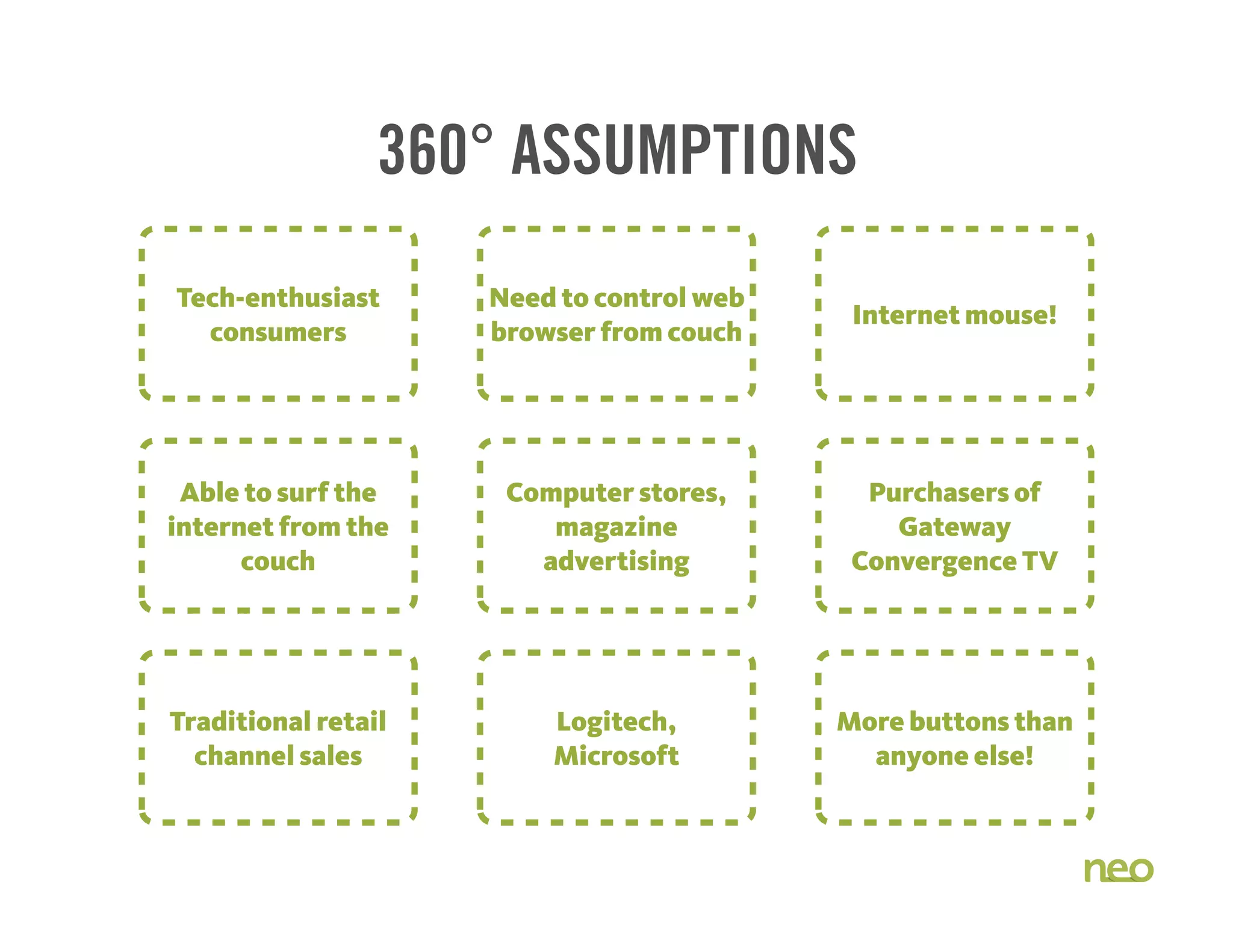
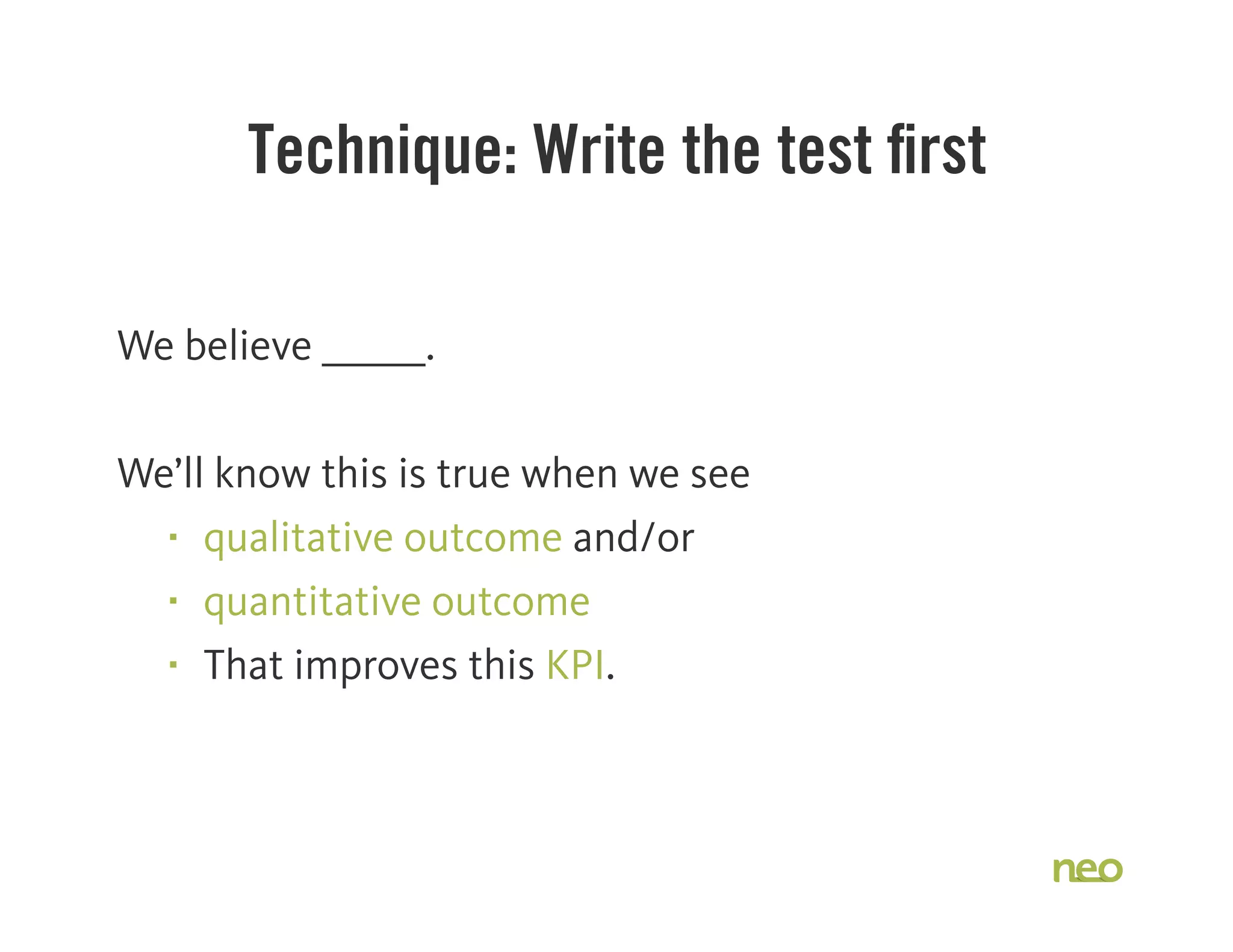
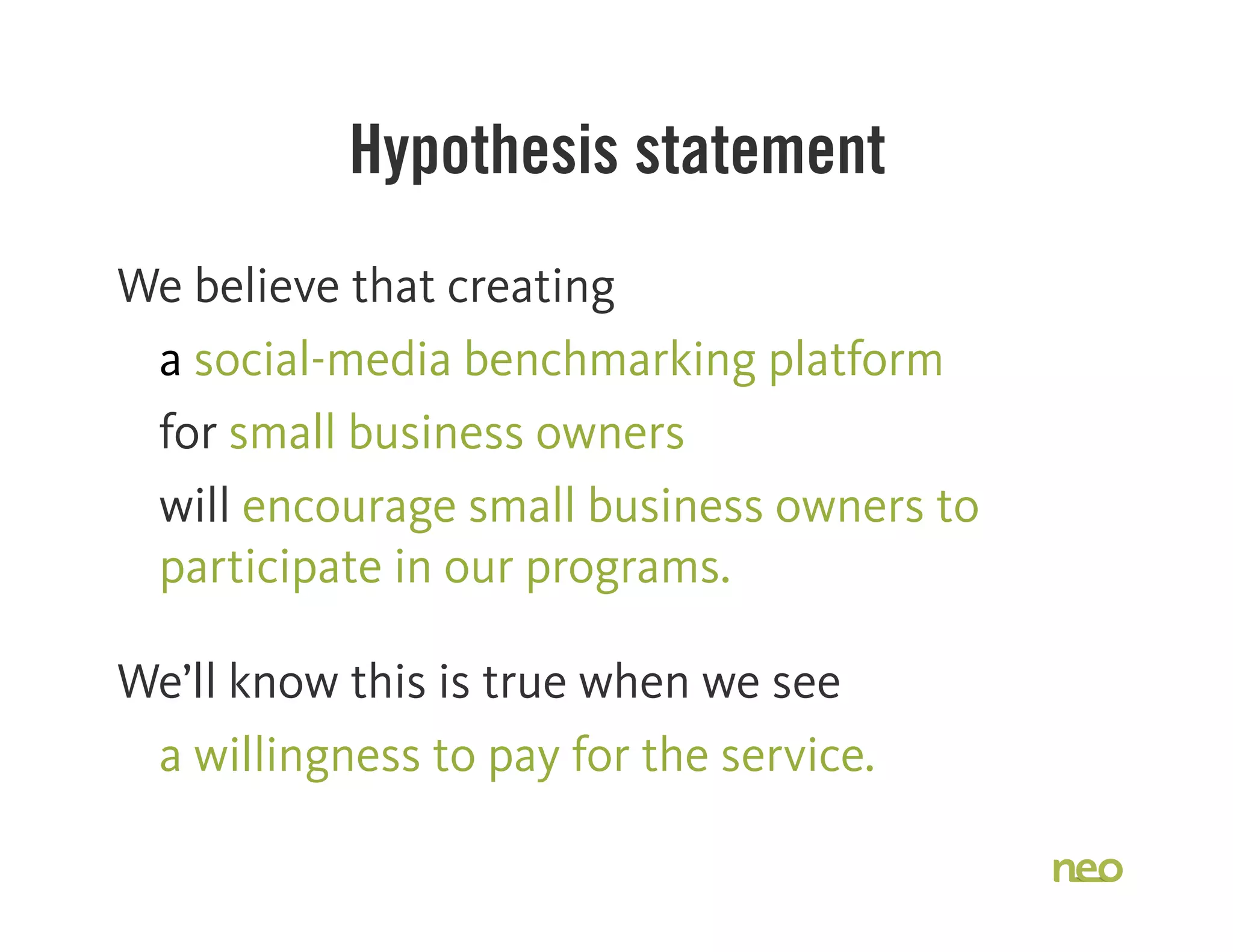
![Hypothesis statement
We believe that
[doing this]
for [these people]
will achieve [this outcome].
We’ll know this is true when we see
[this market feedback].](https://image.slidesharecdn.com/seidenuxstrat2013-130915133254-phpapp02/75/UX-STRAT-2013-Josh-Seiden-Lean-UX-UX-STRAT-58-2048.jpg)
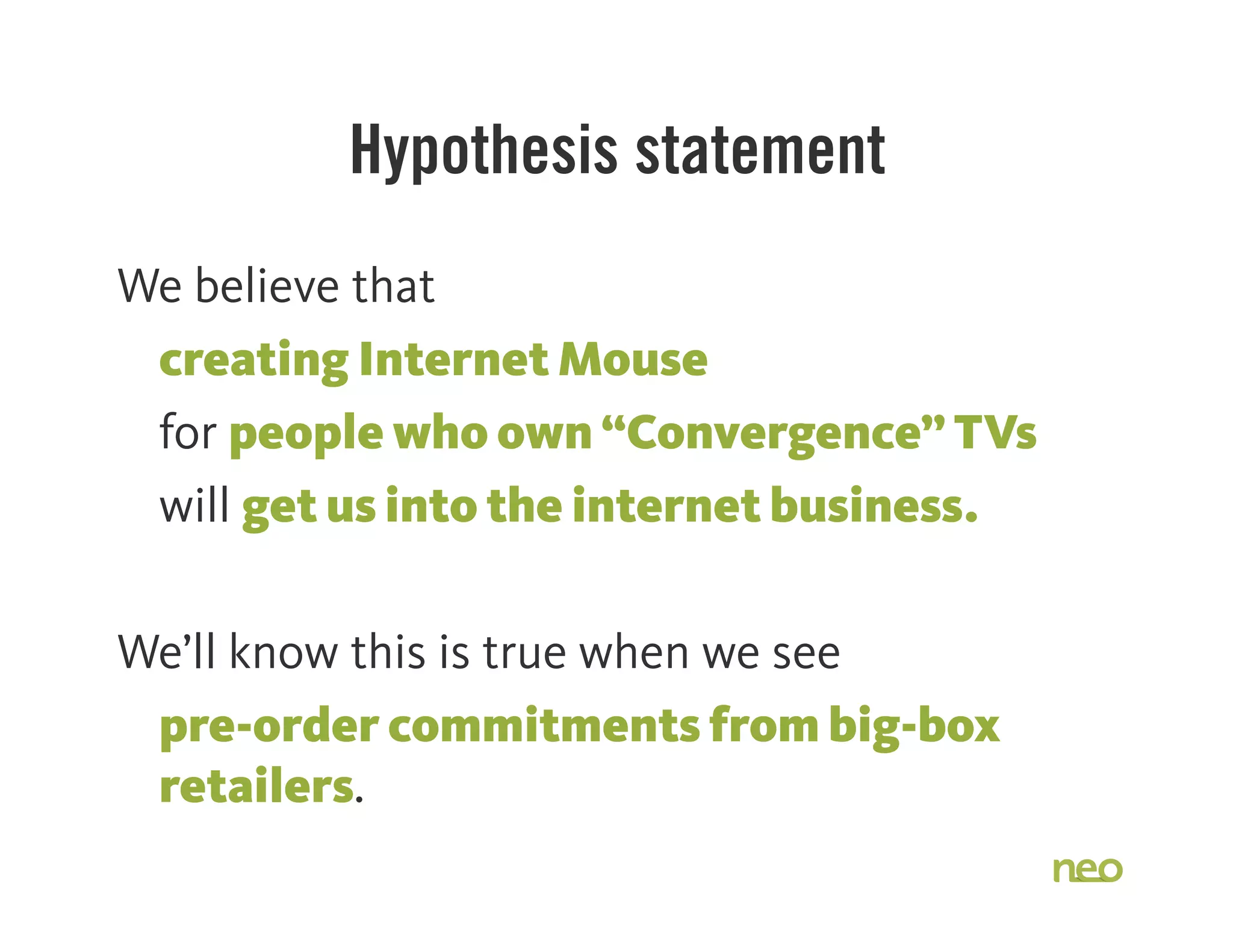
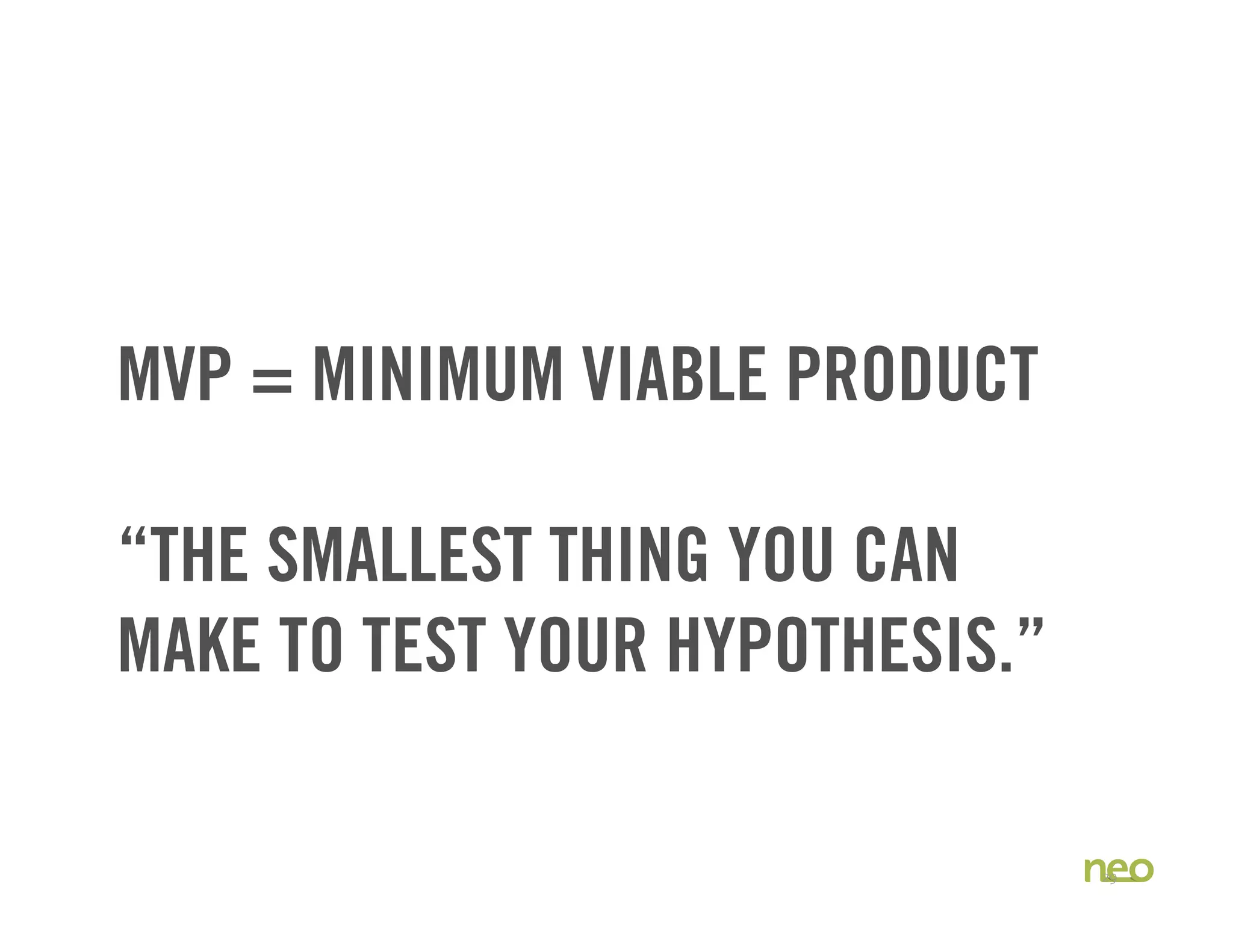
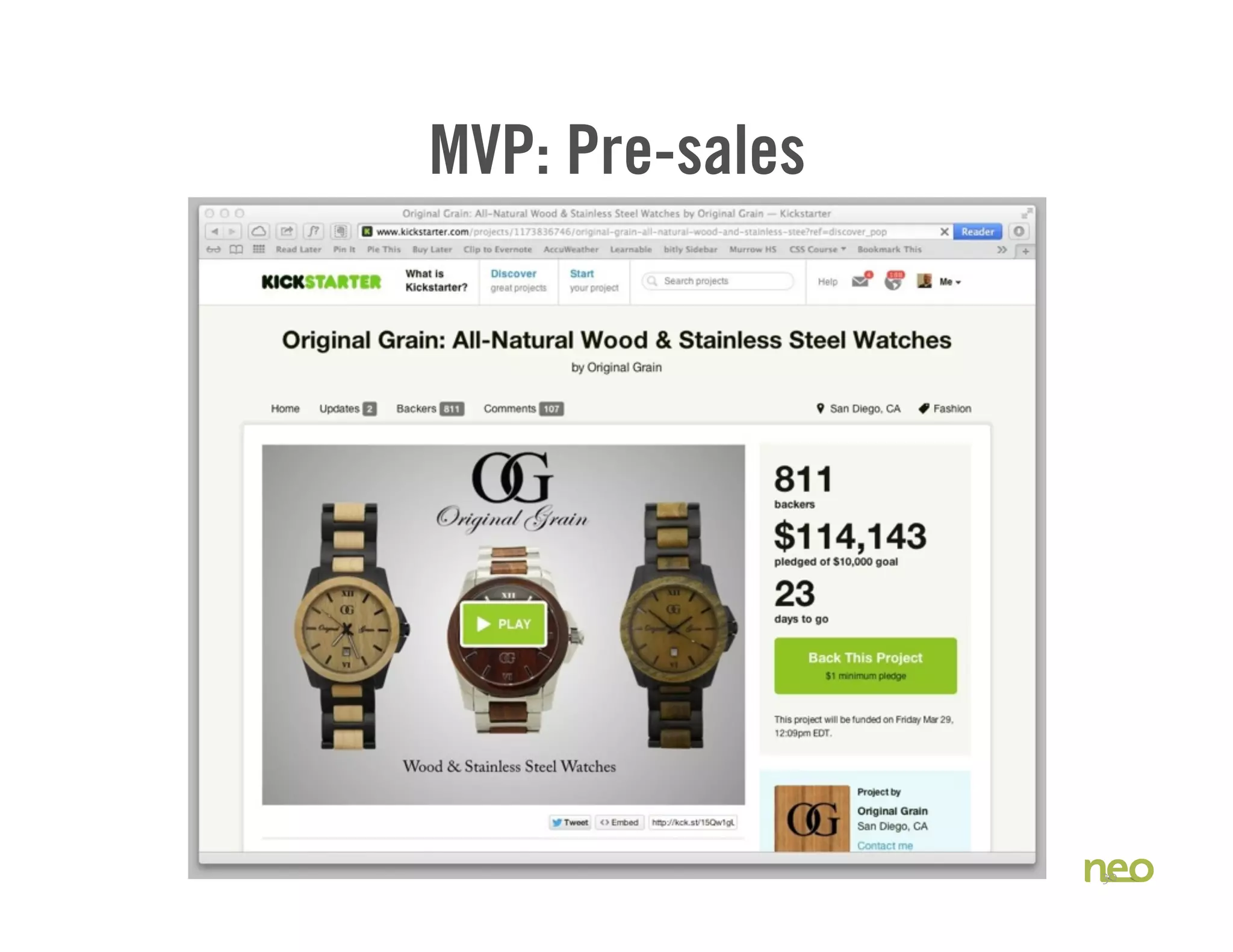
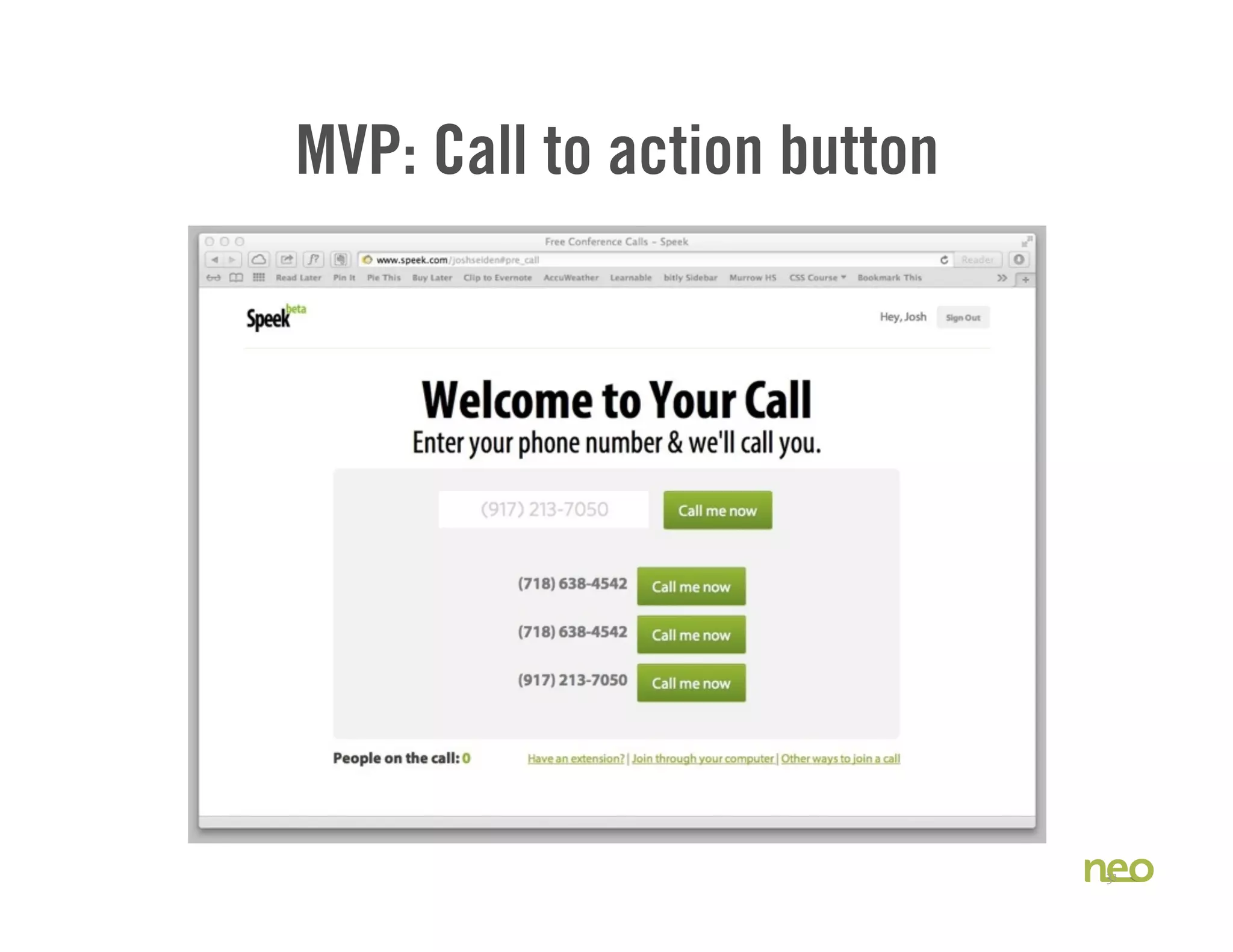

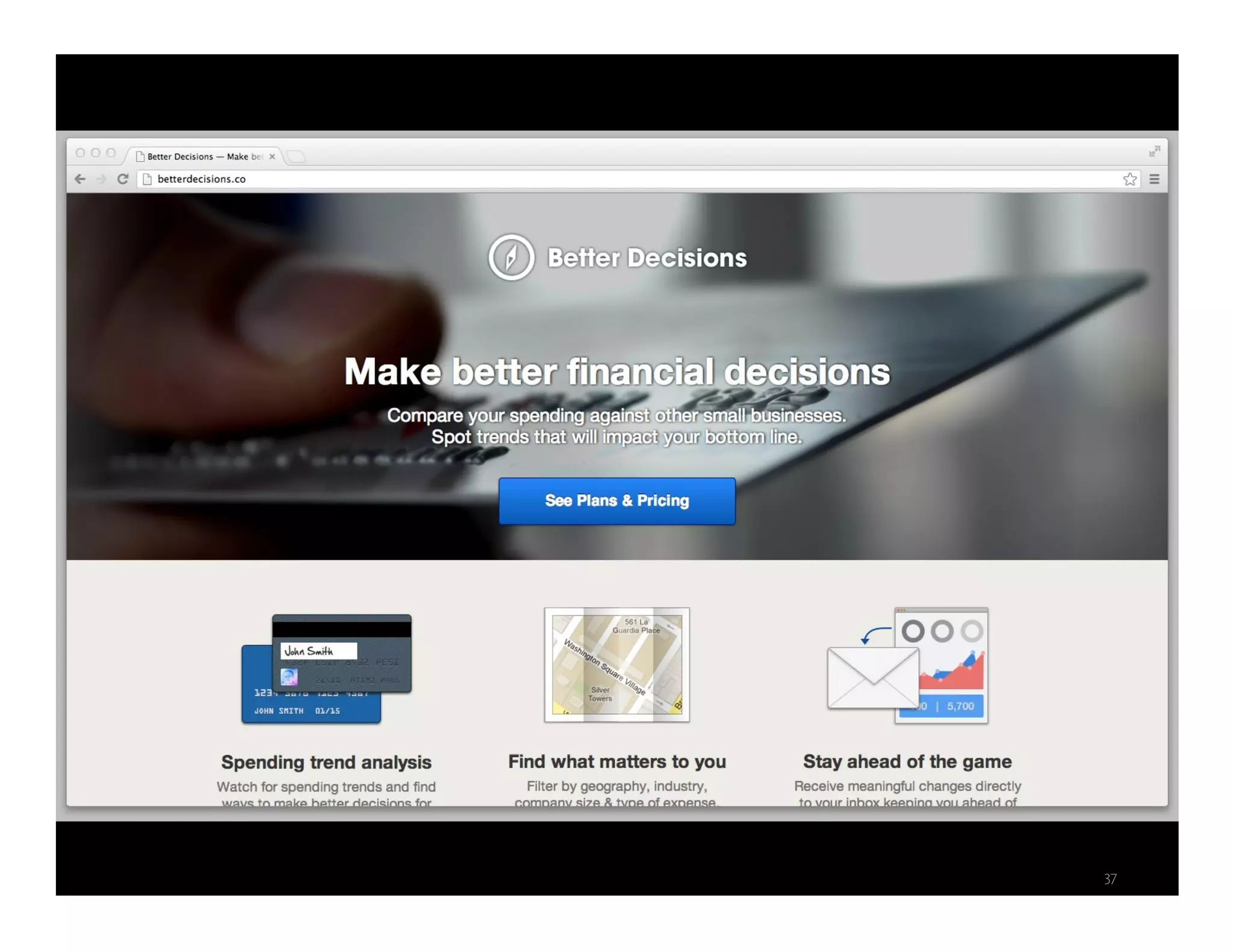
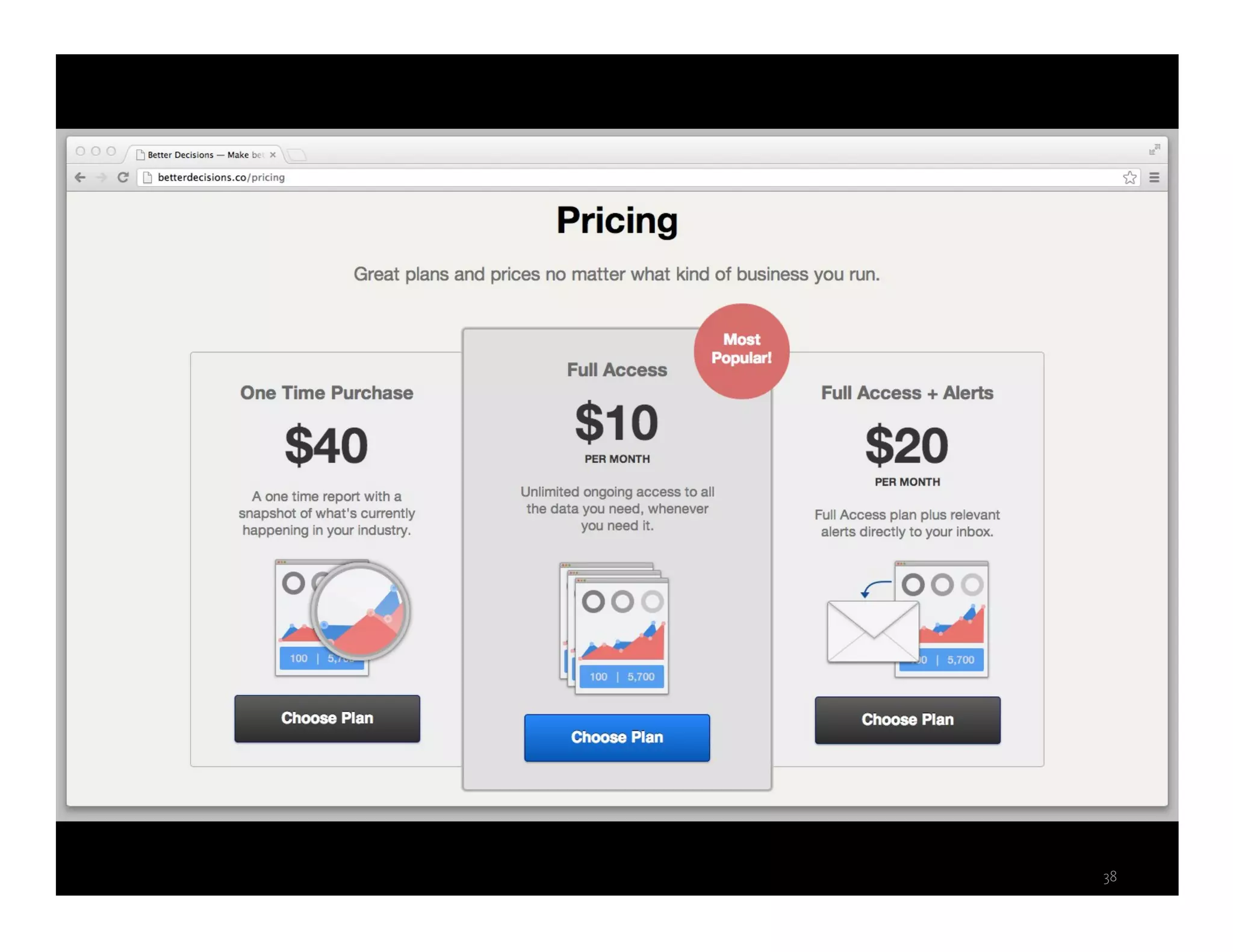
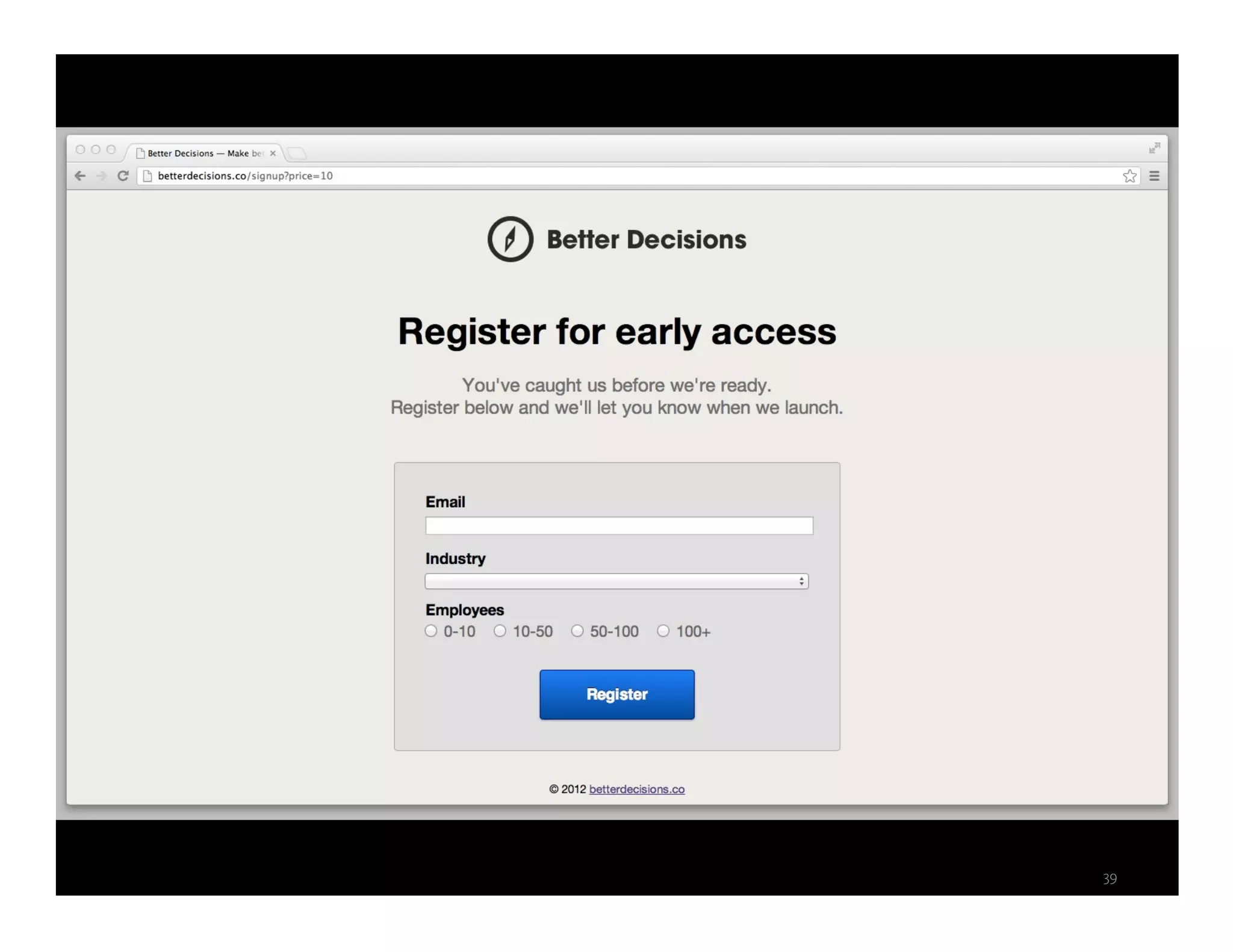
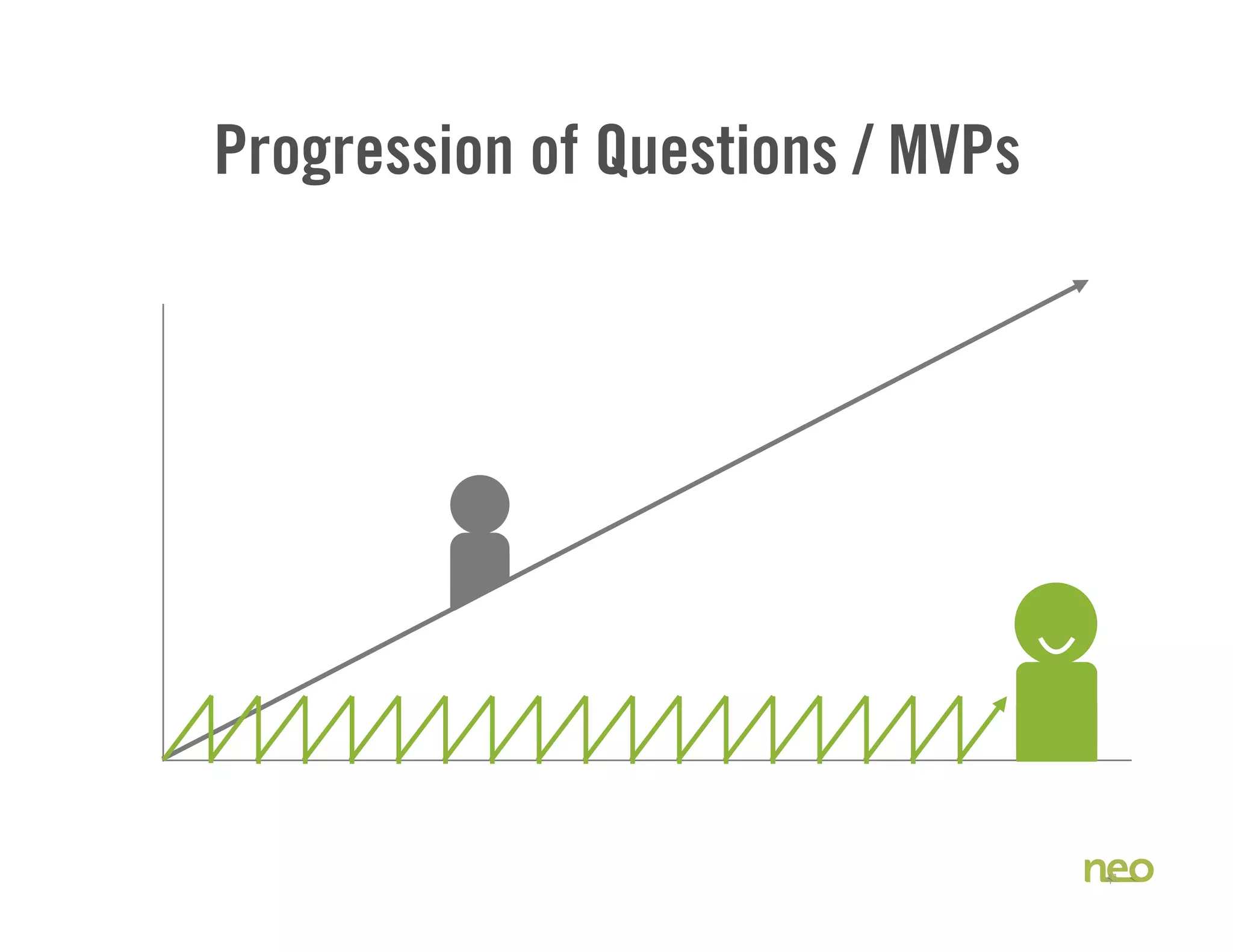
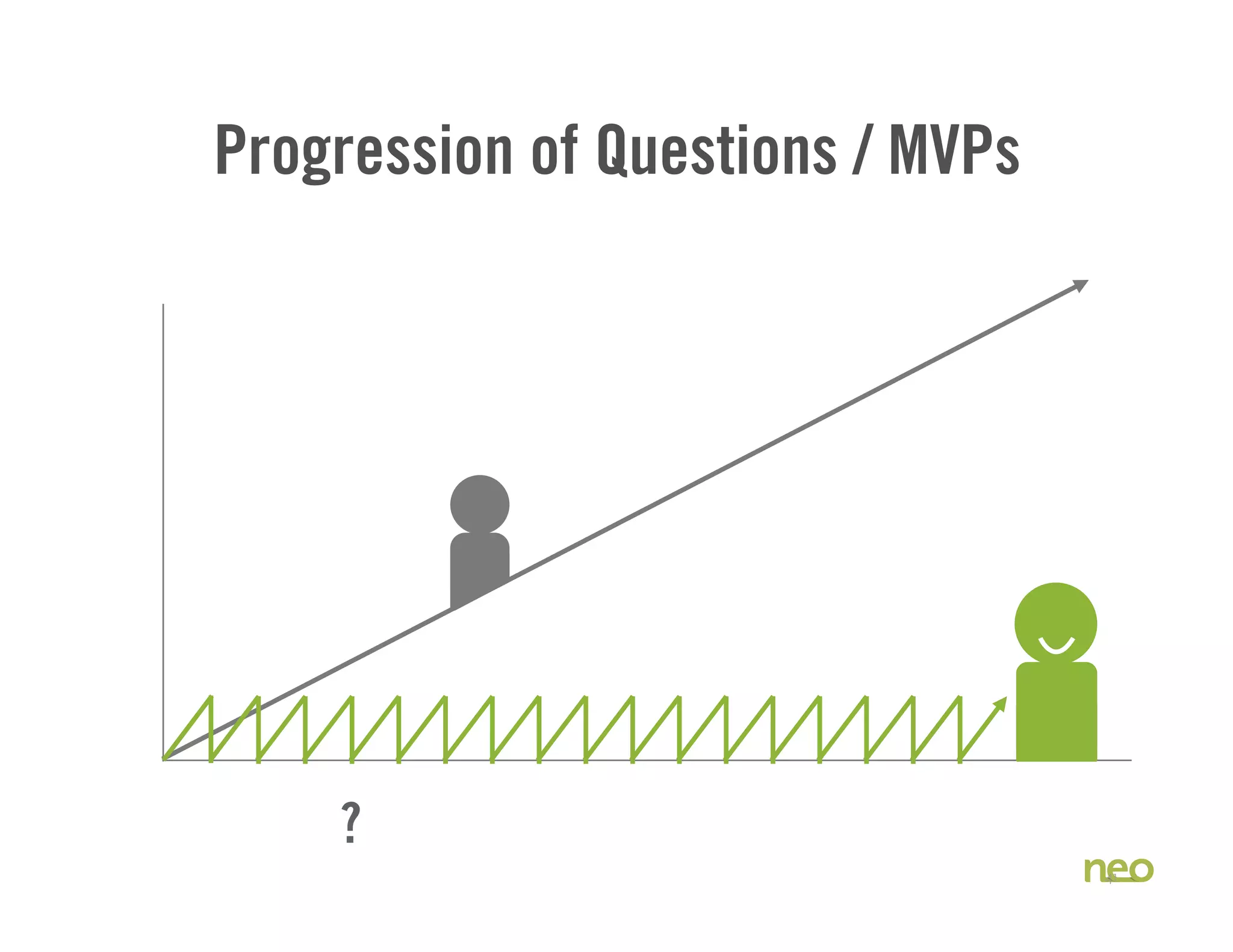
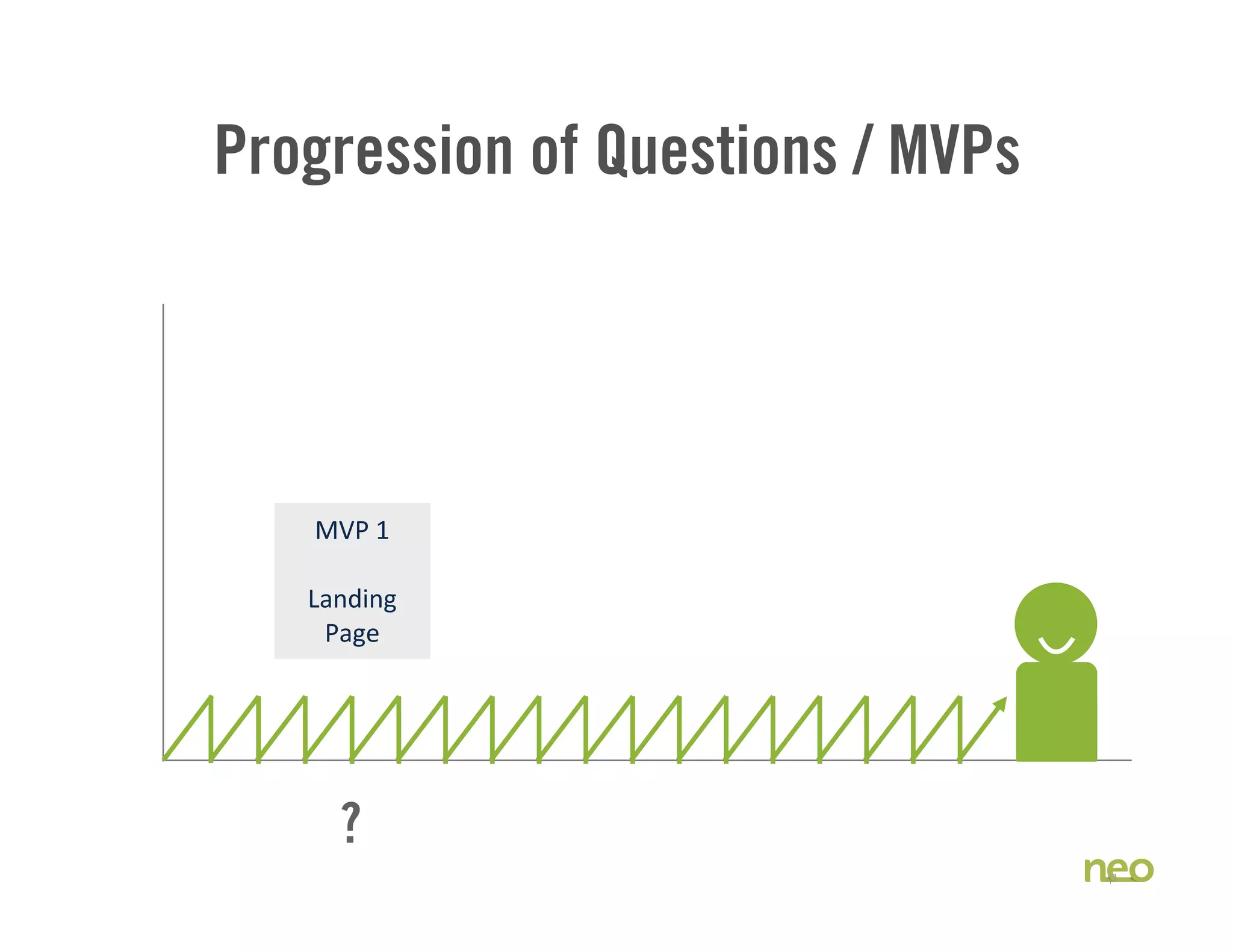
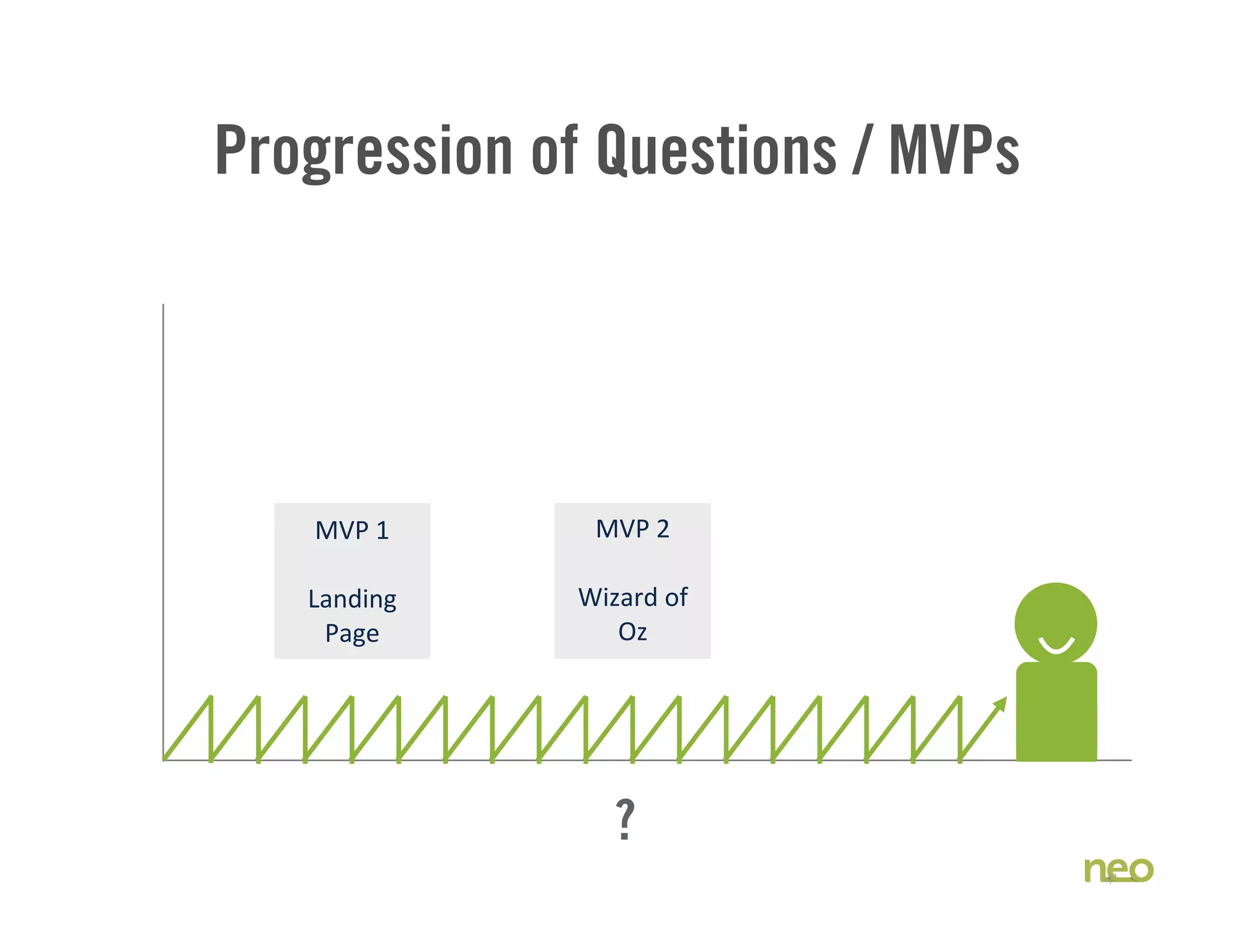
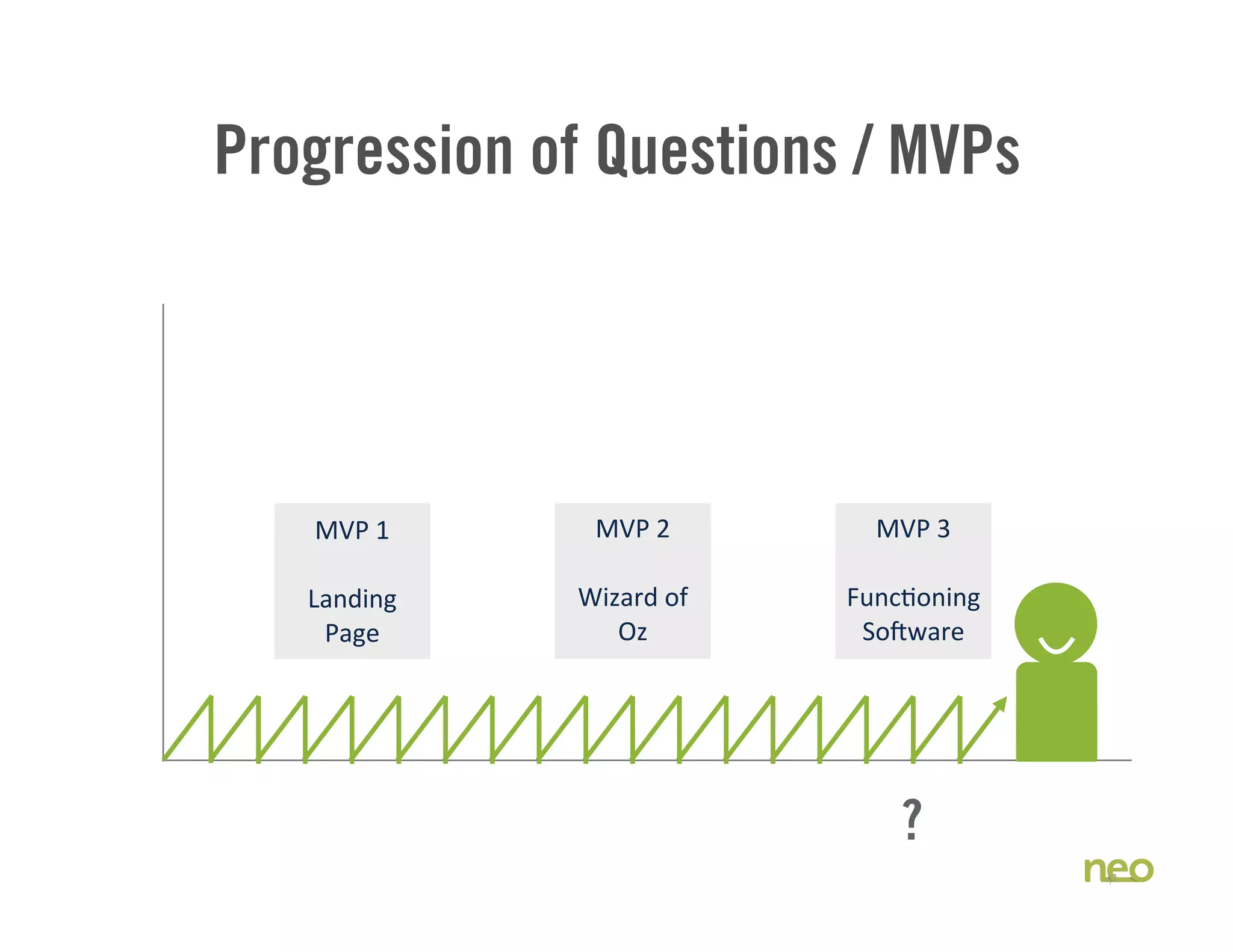
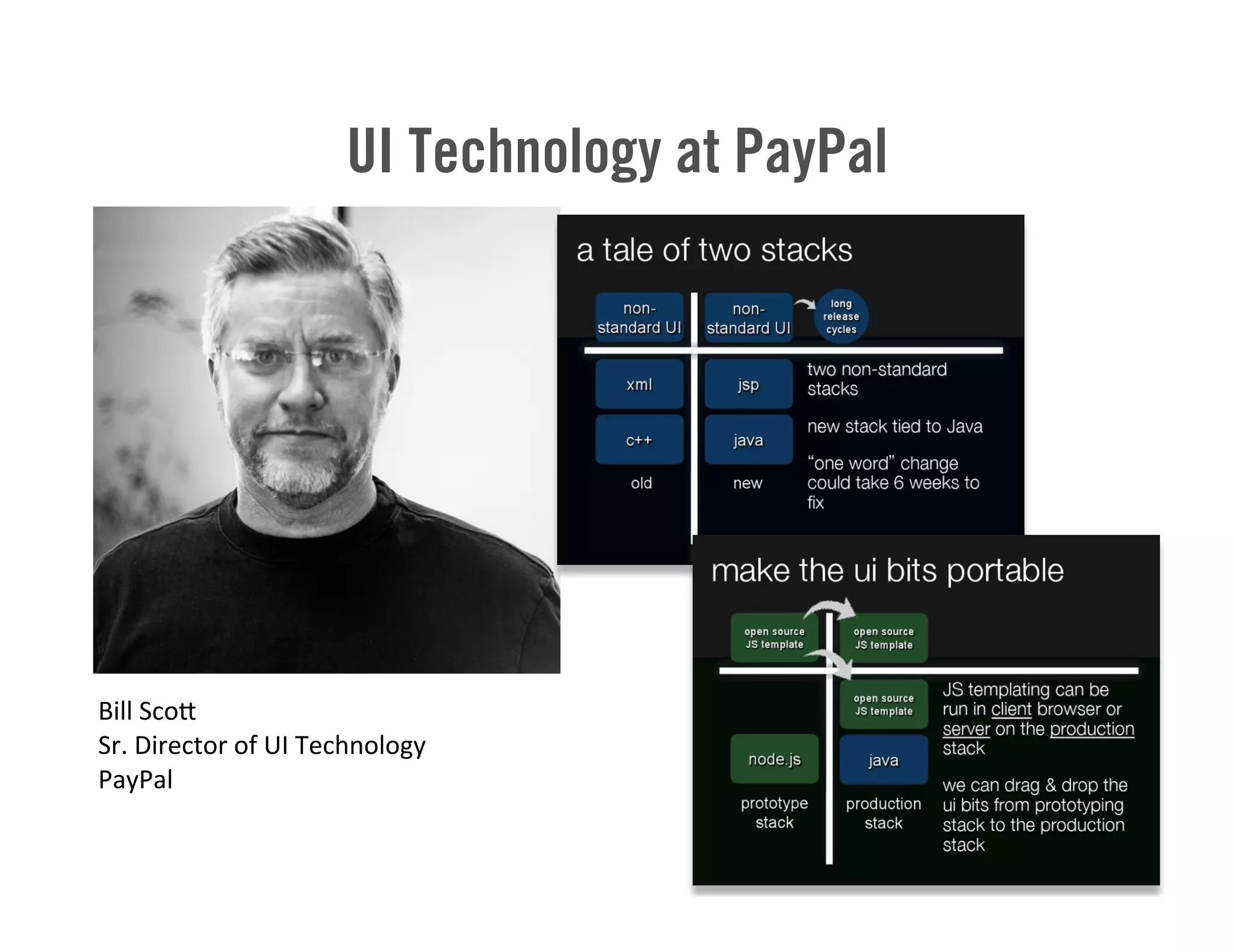
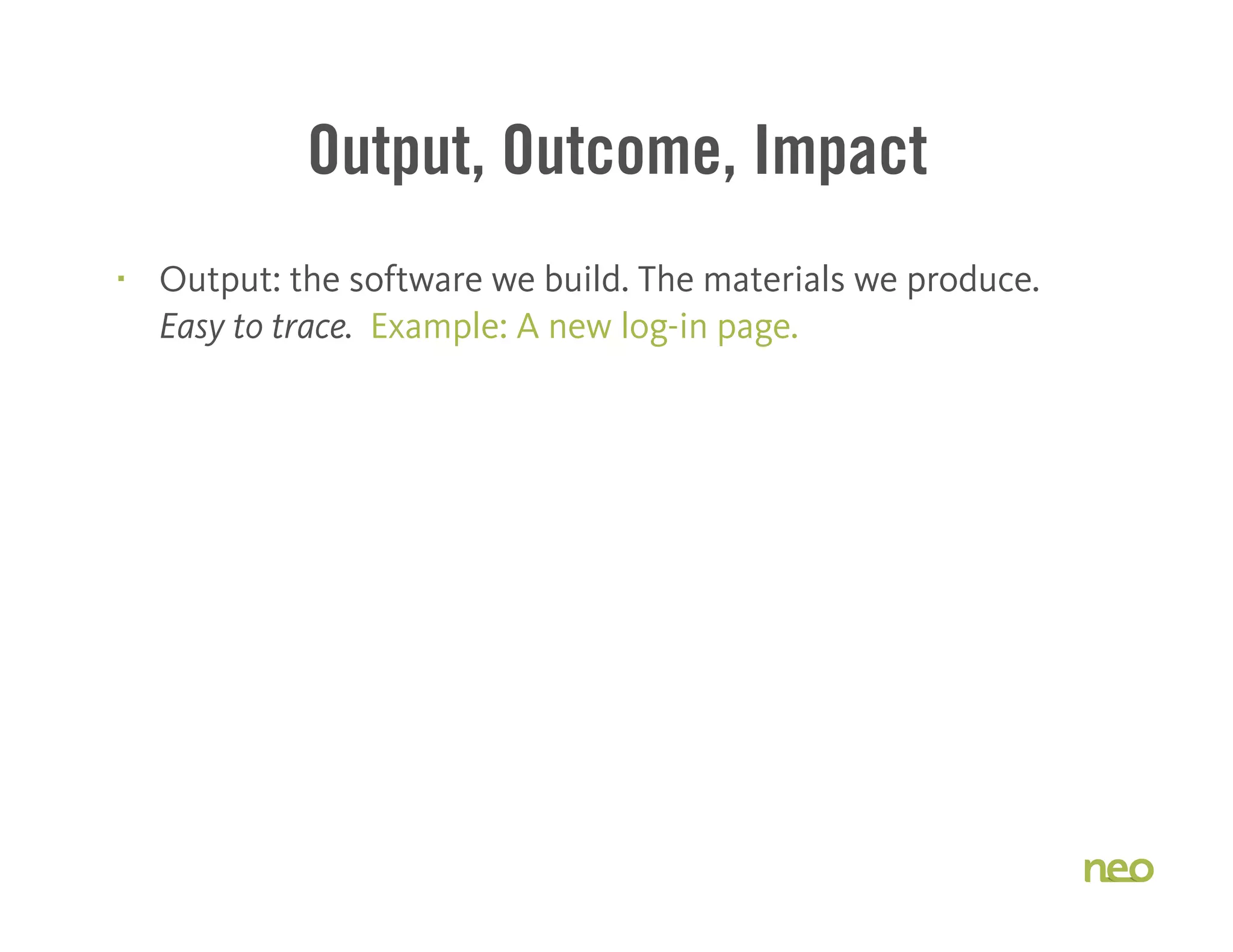
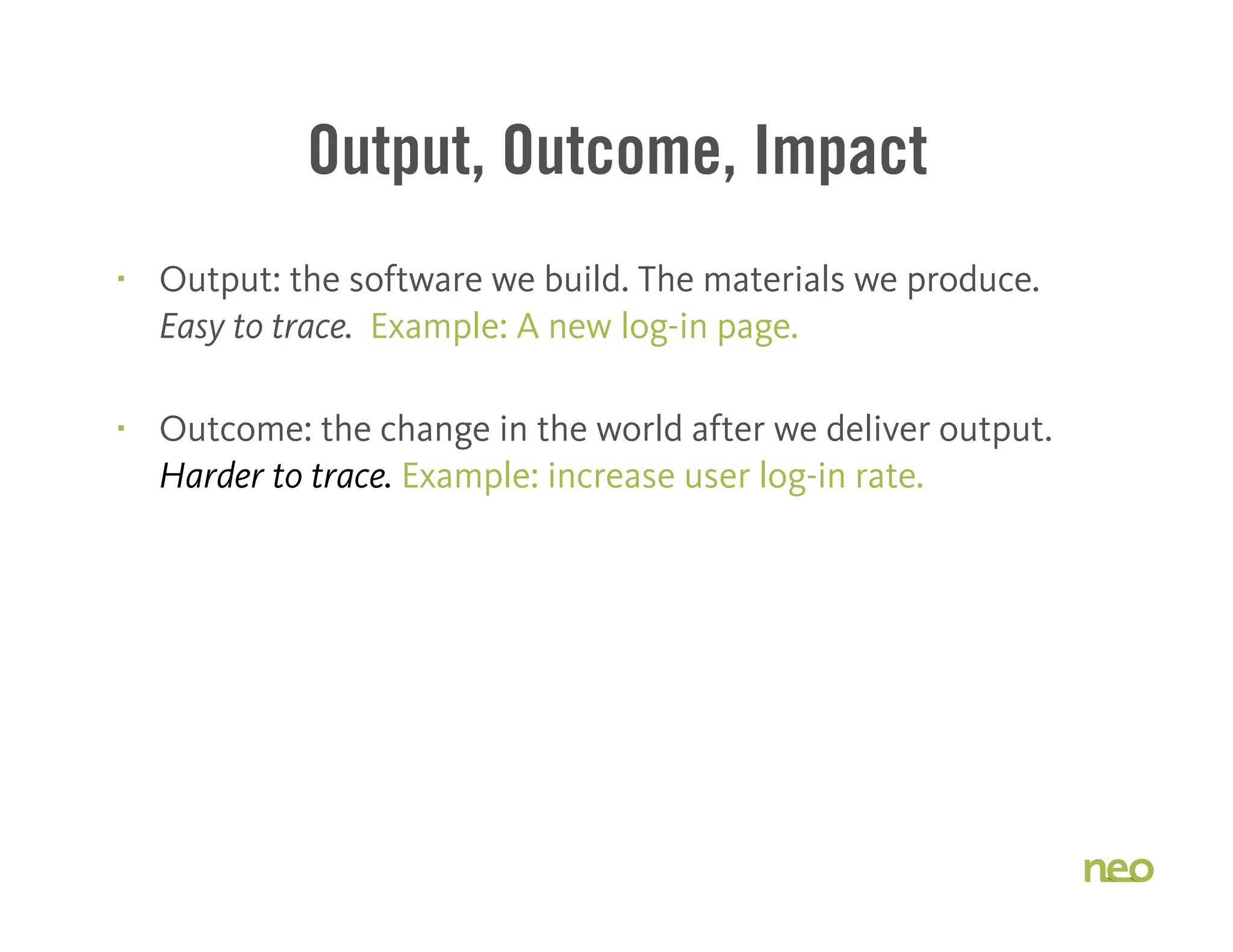
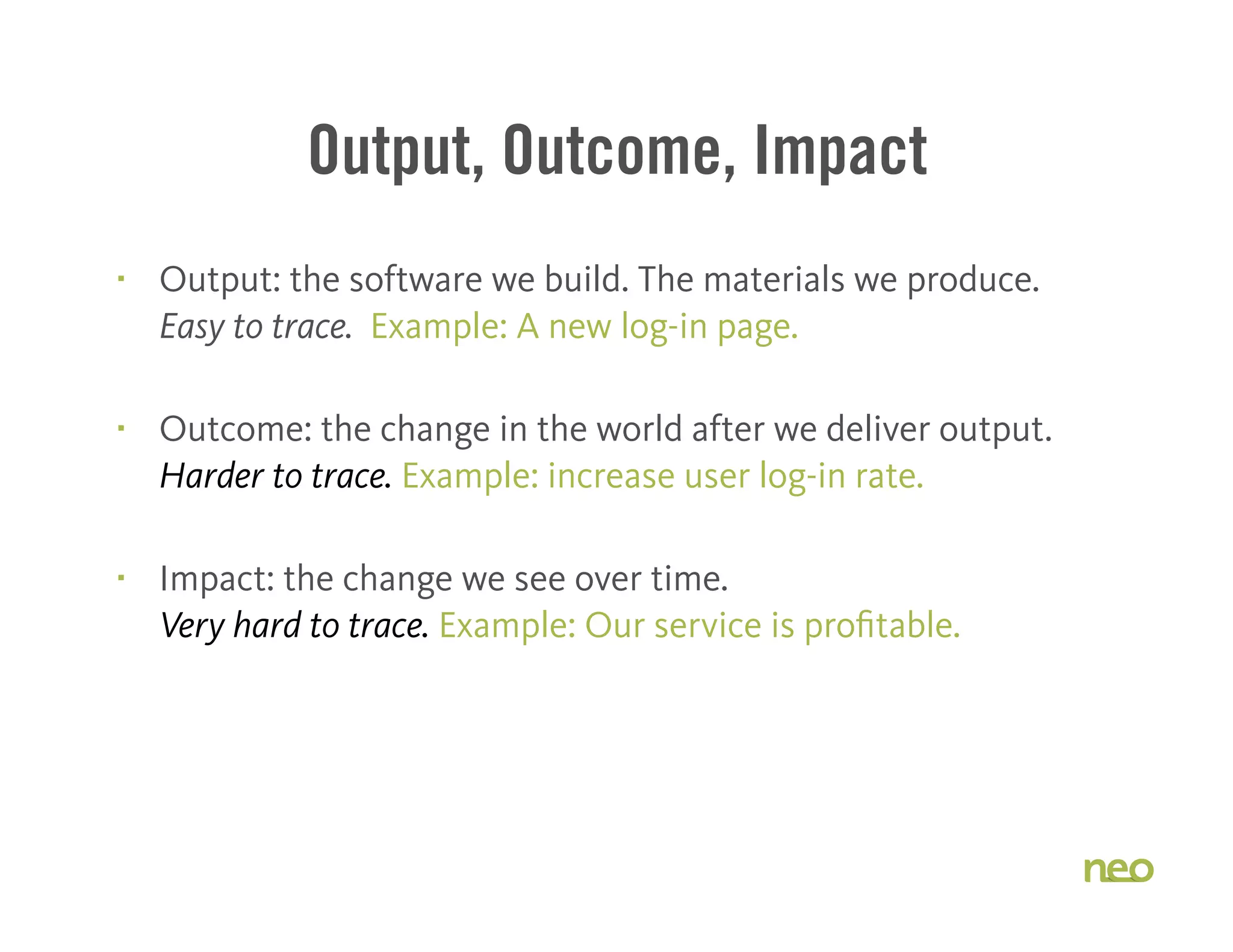


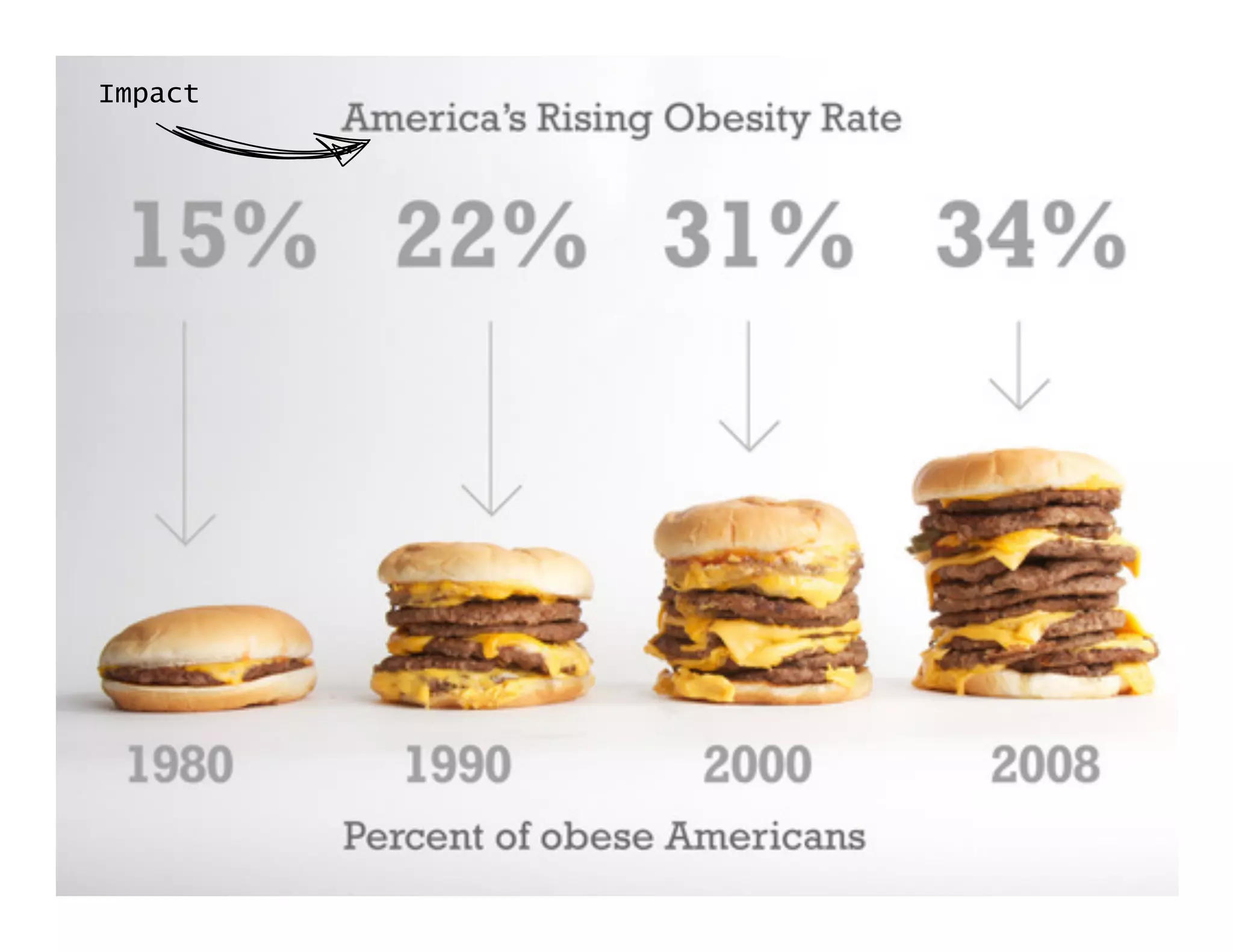
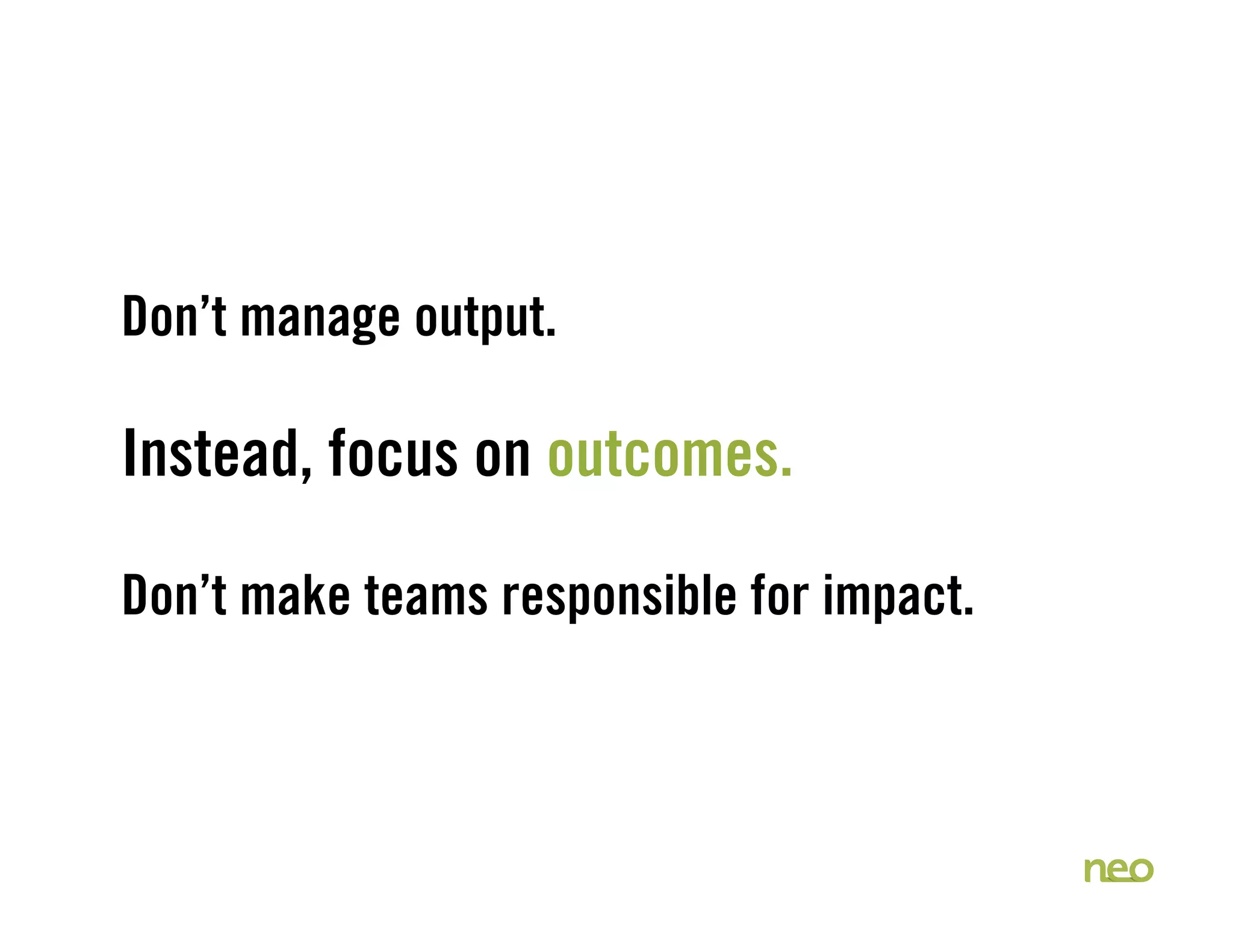
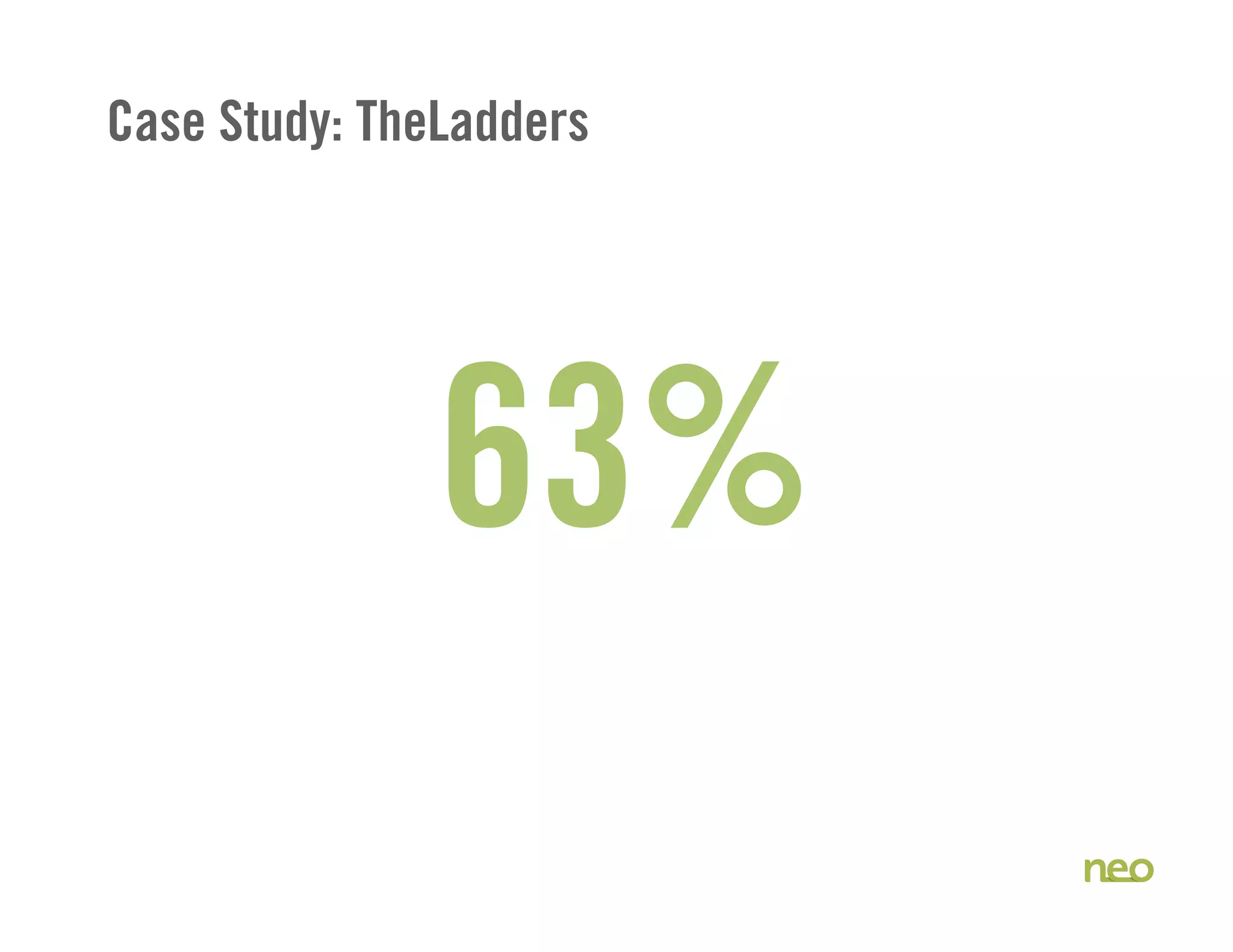
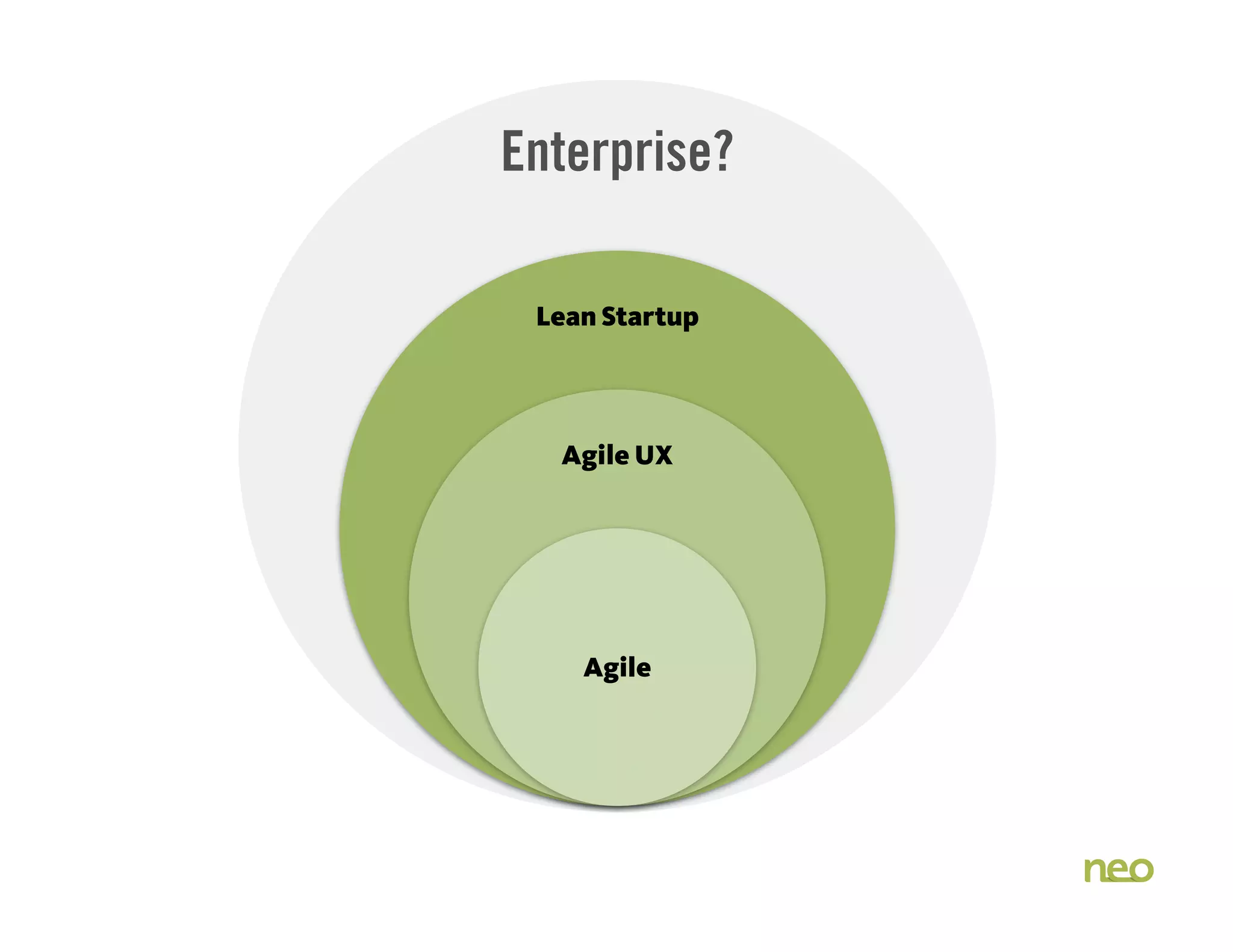
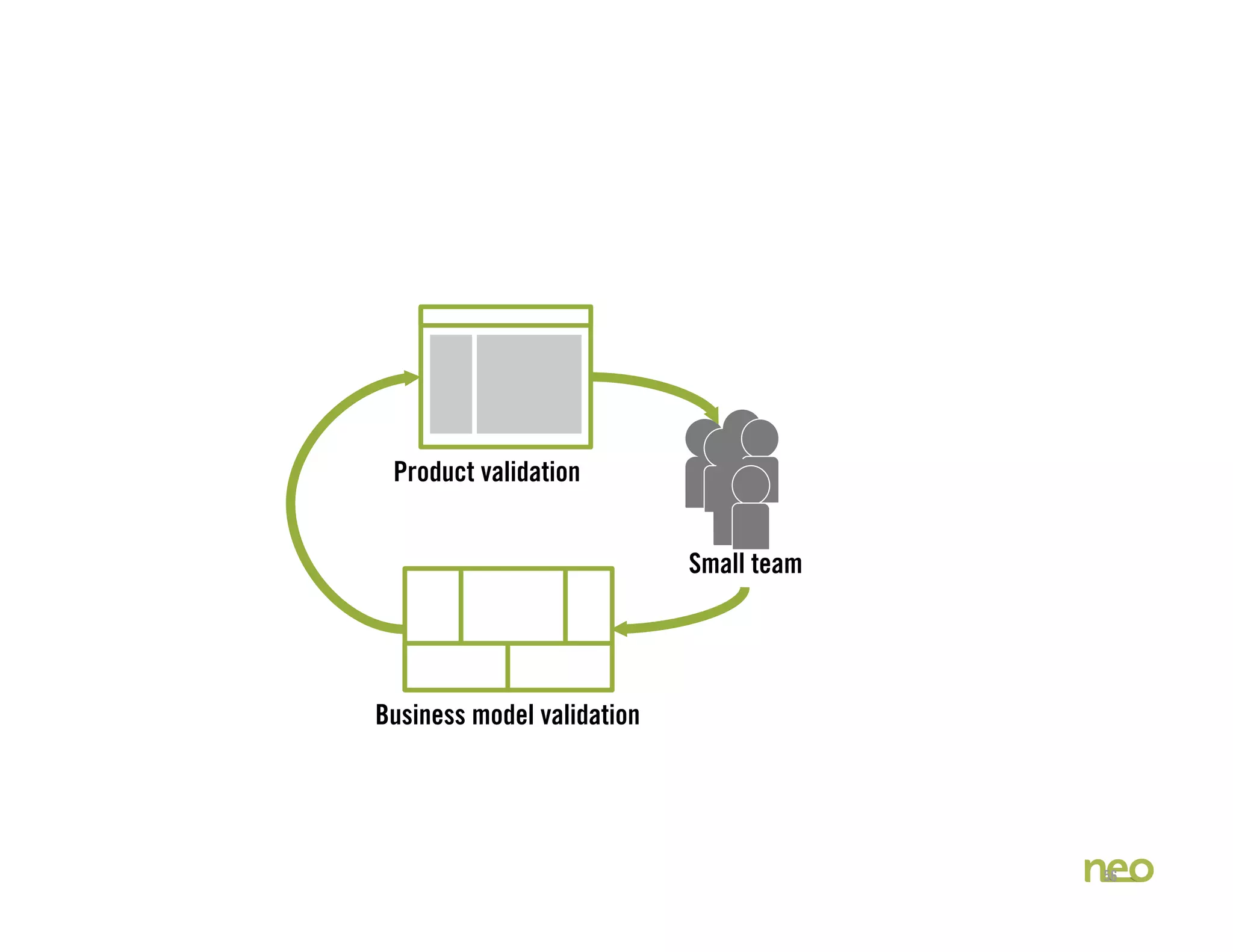
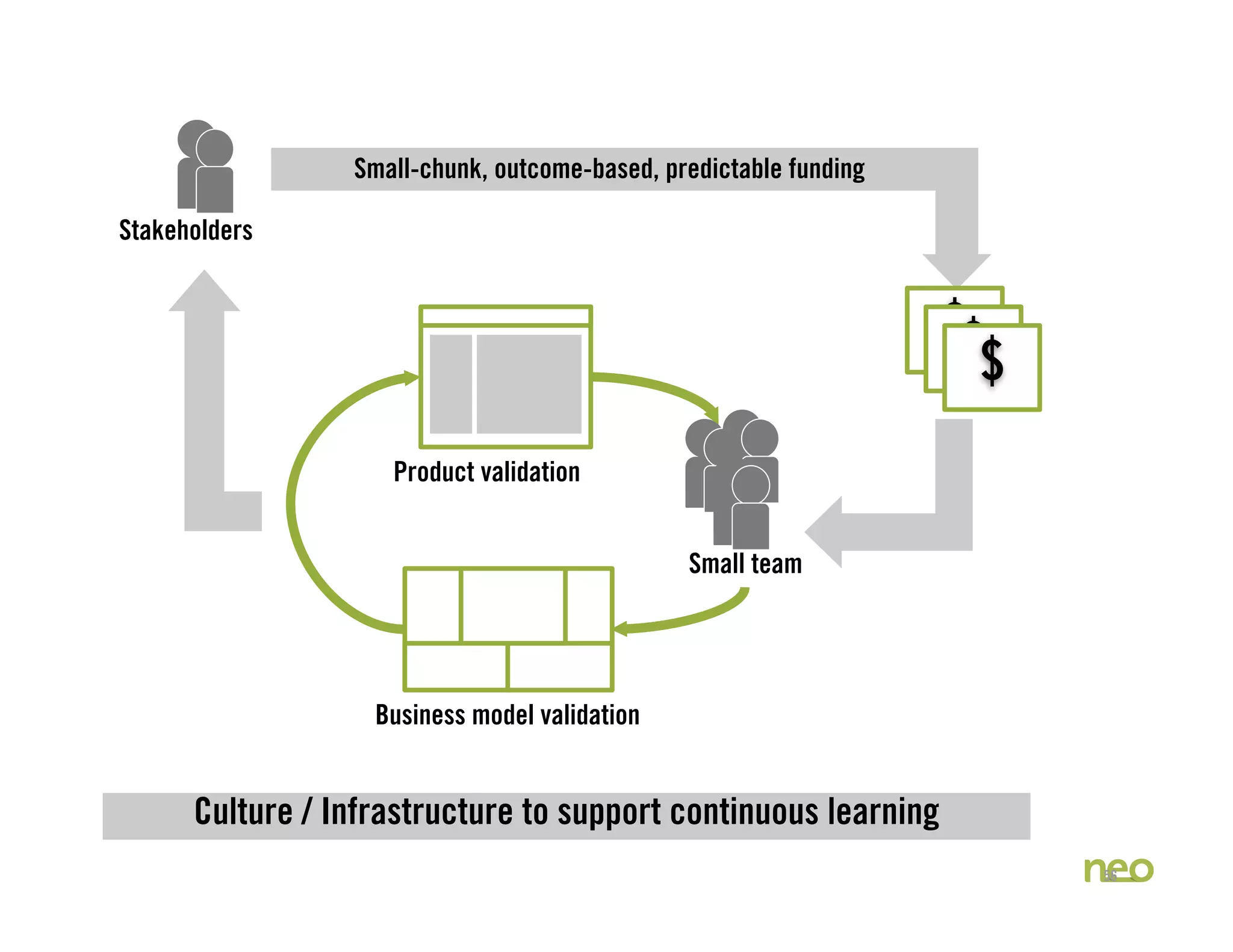
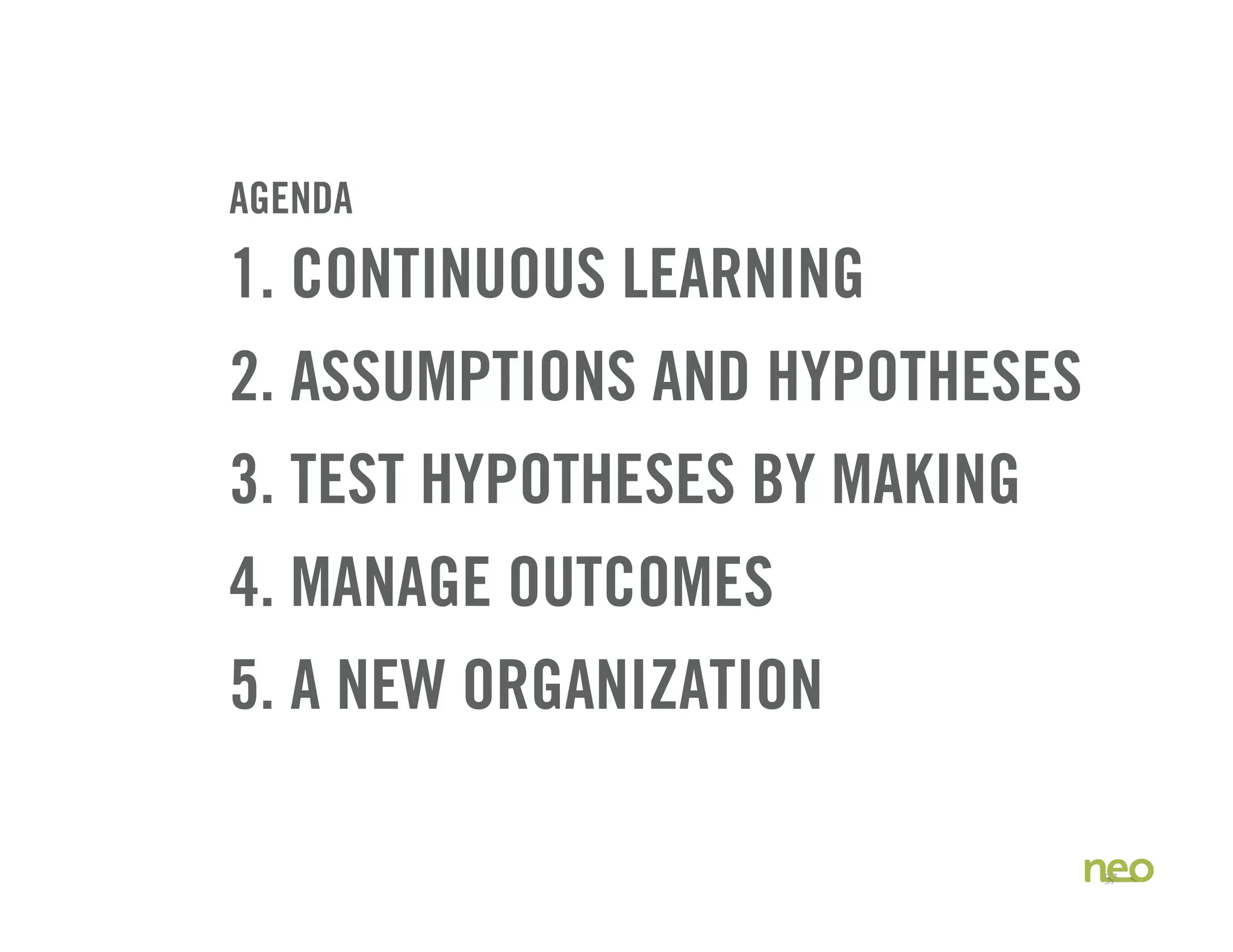


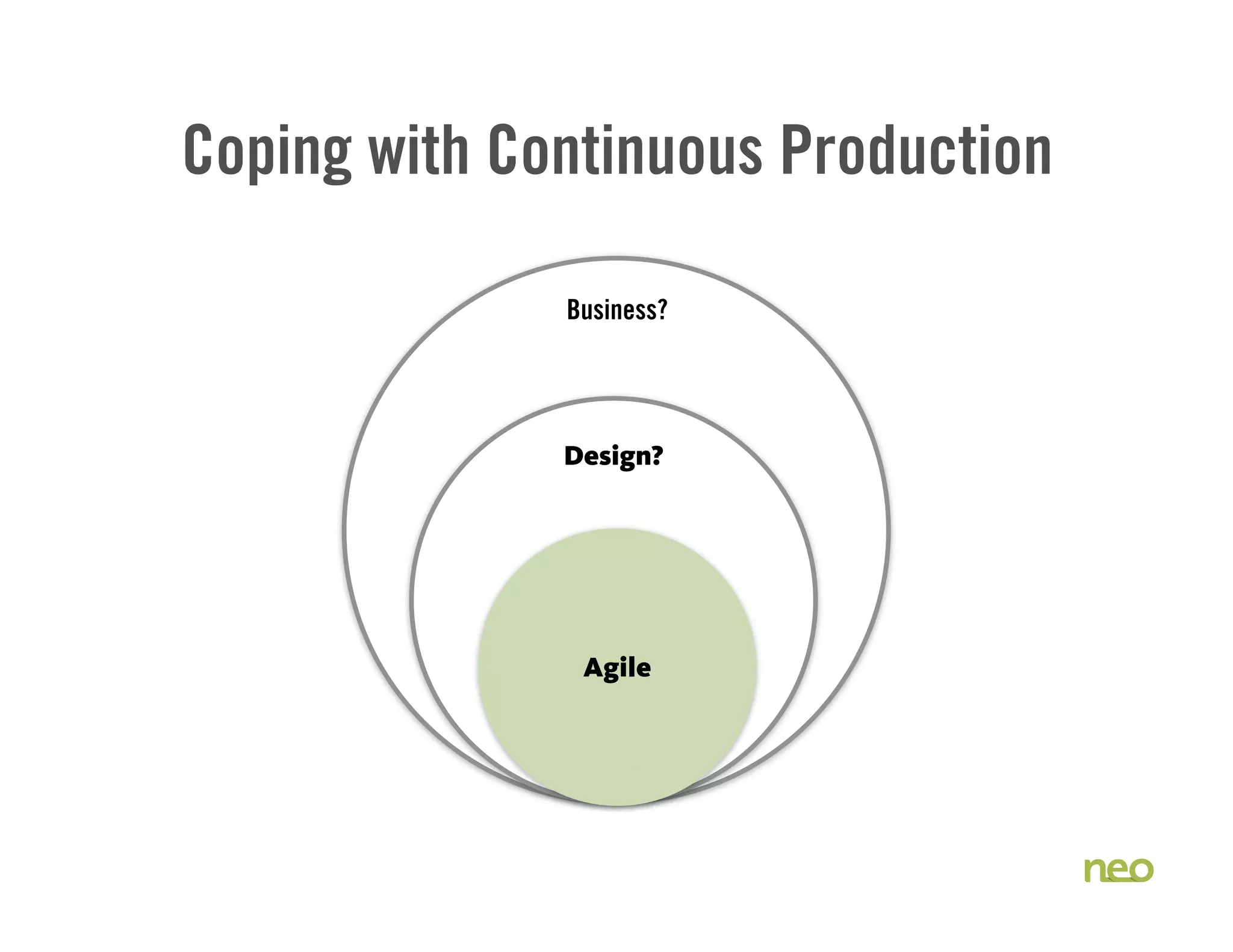
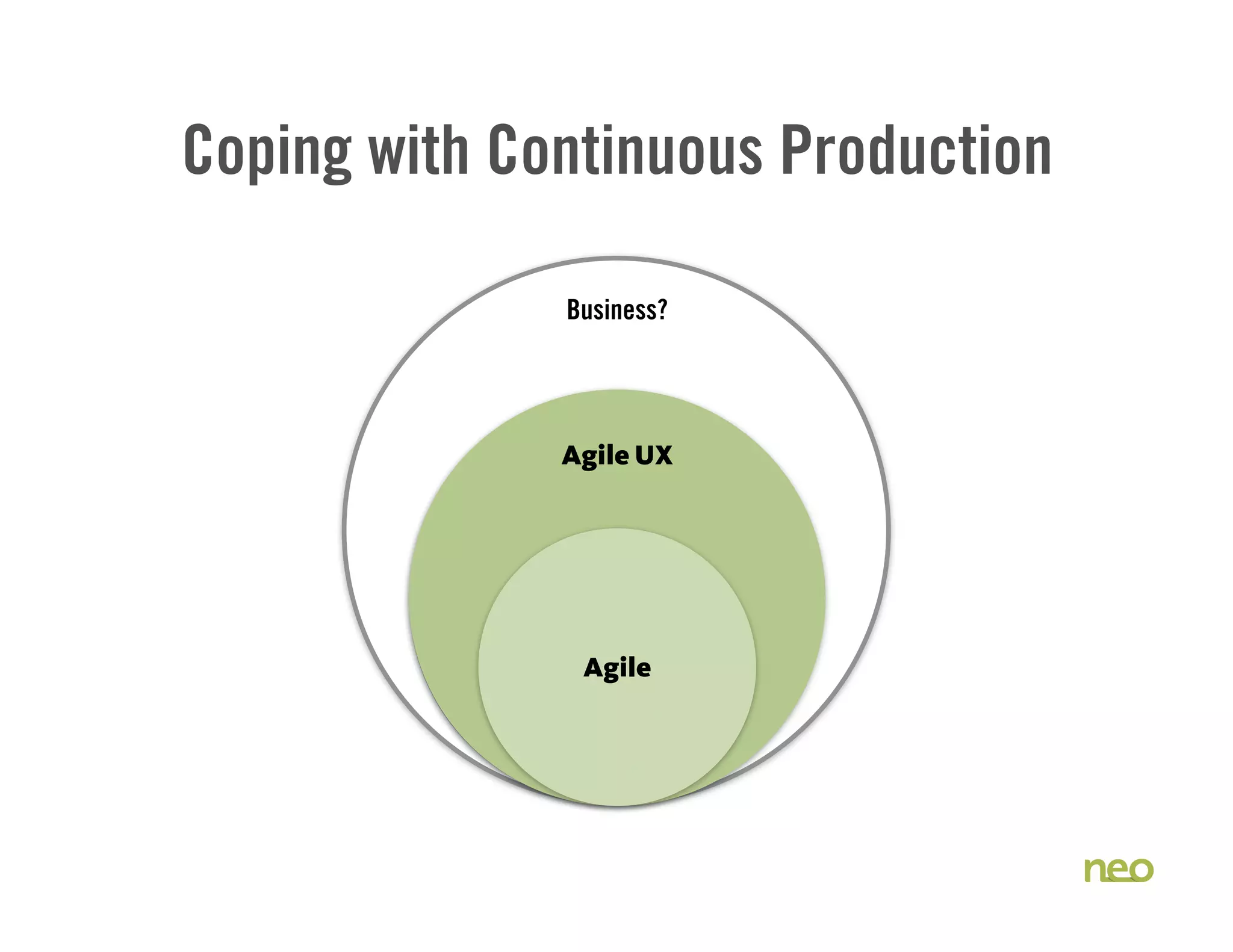
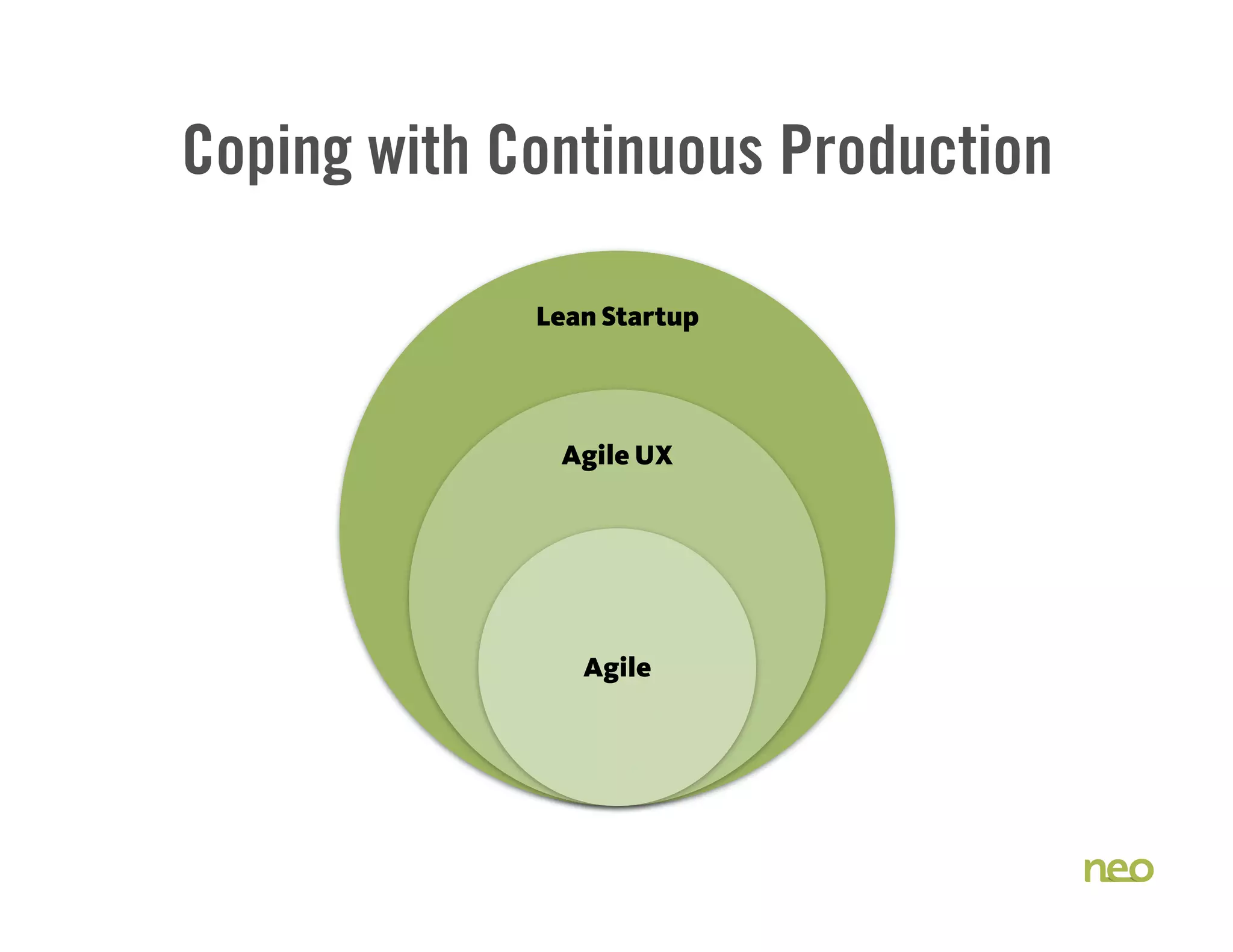
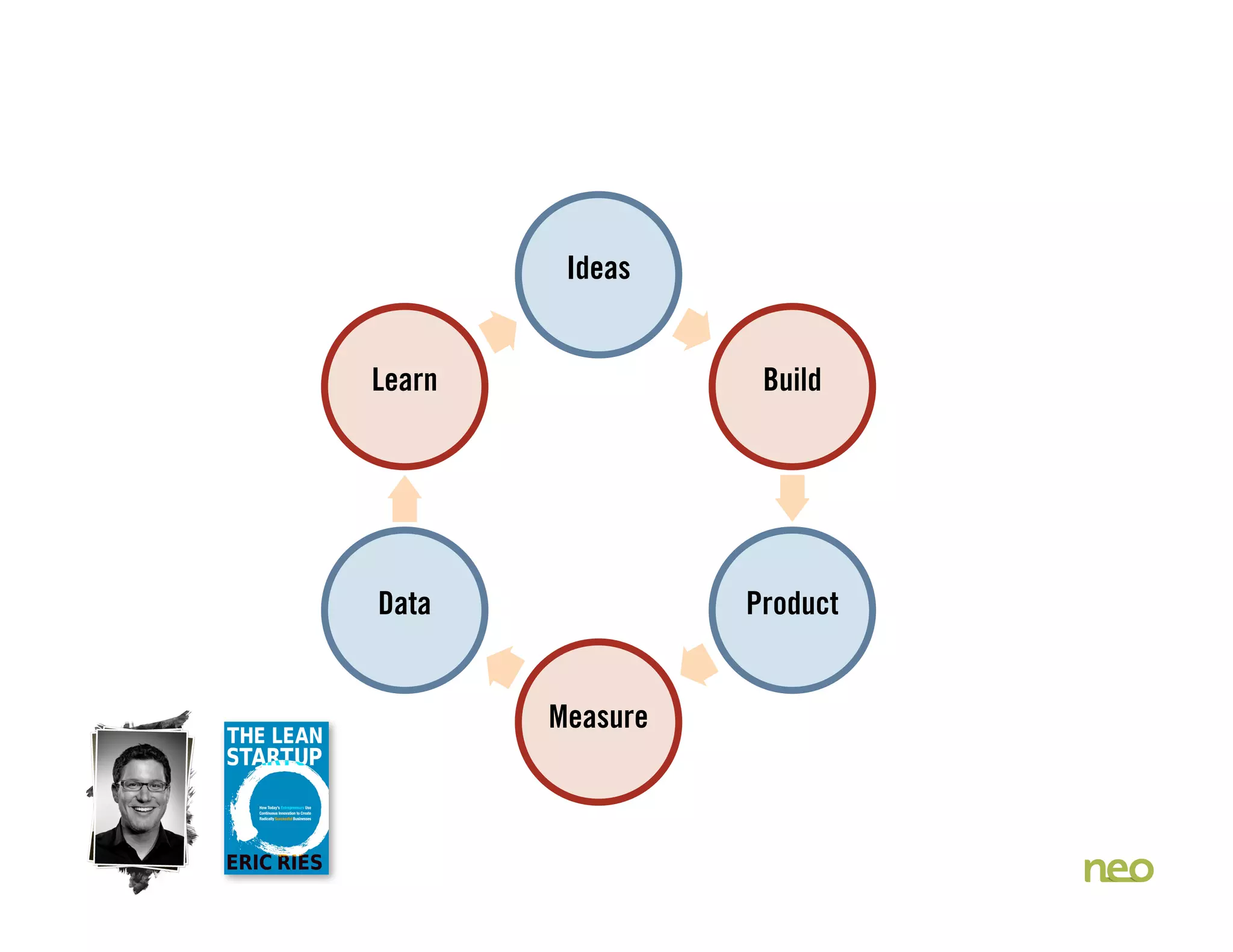
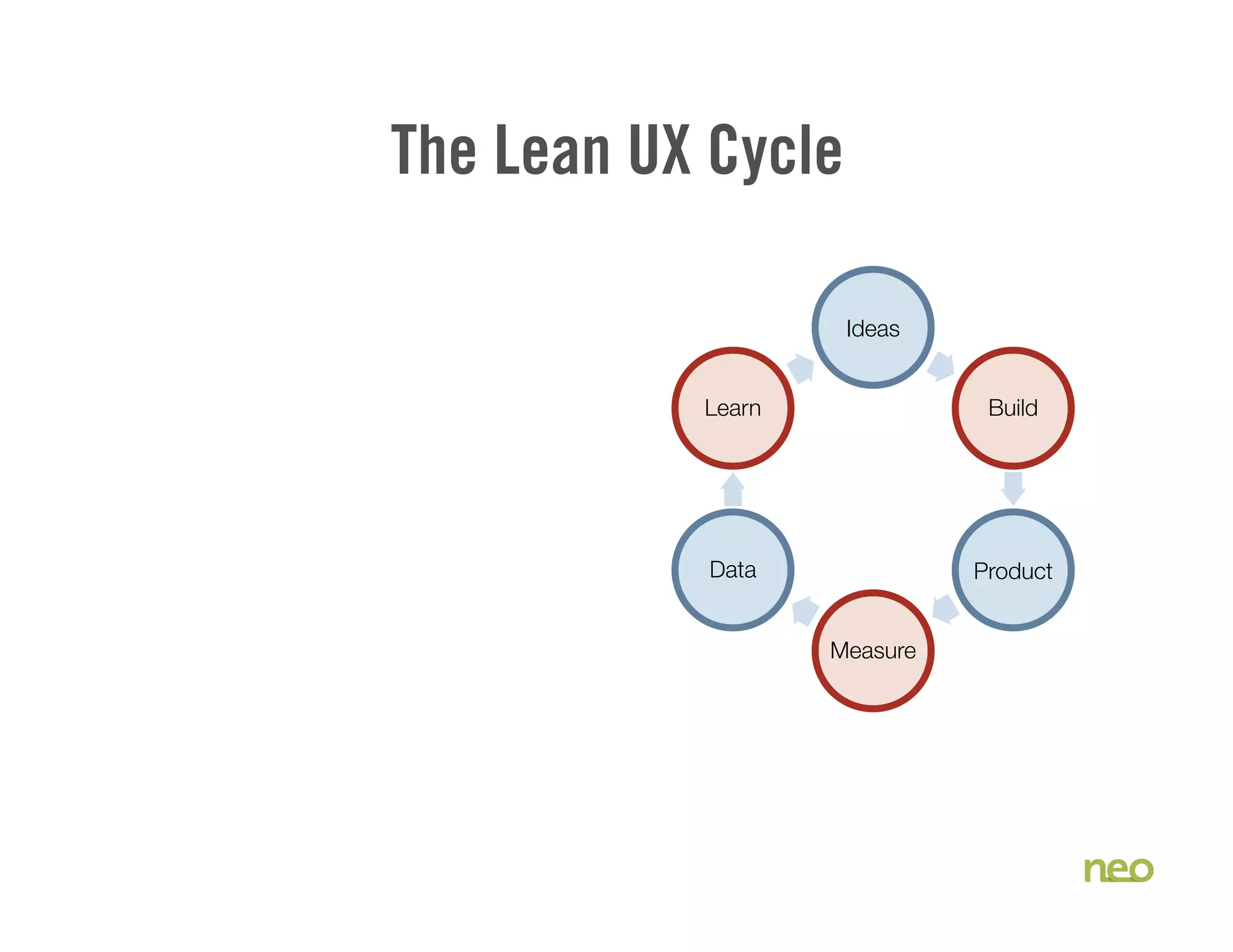
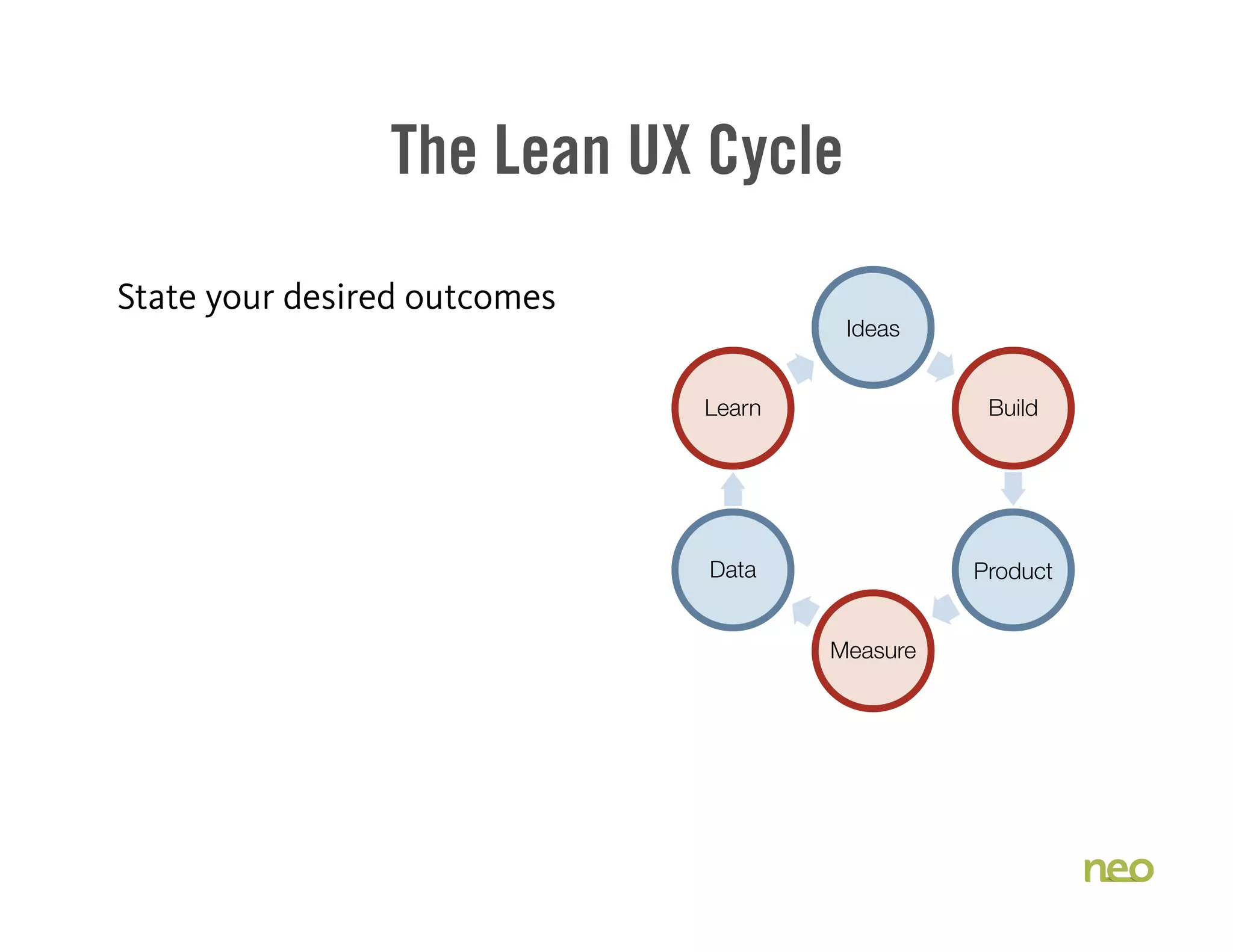
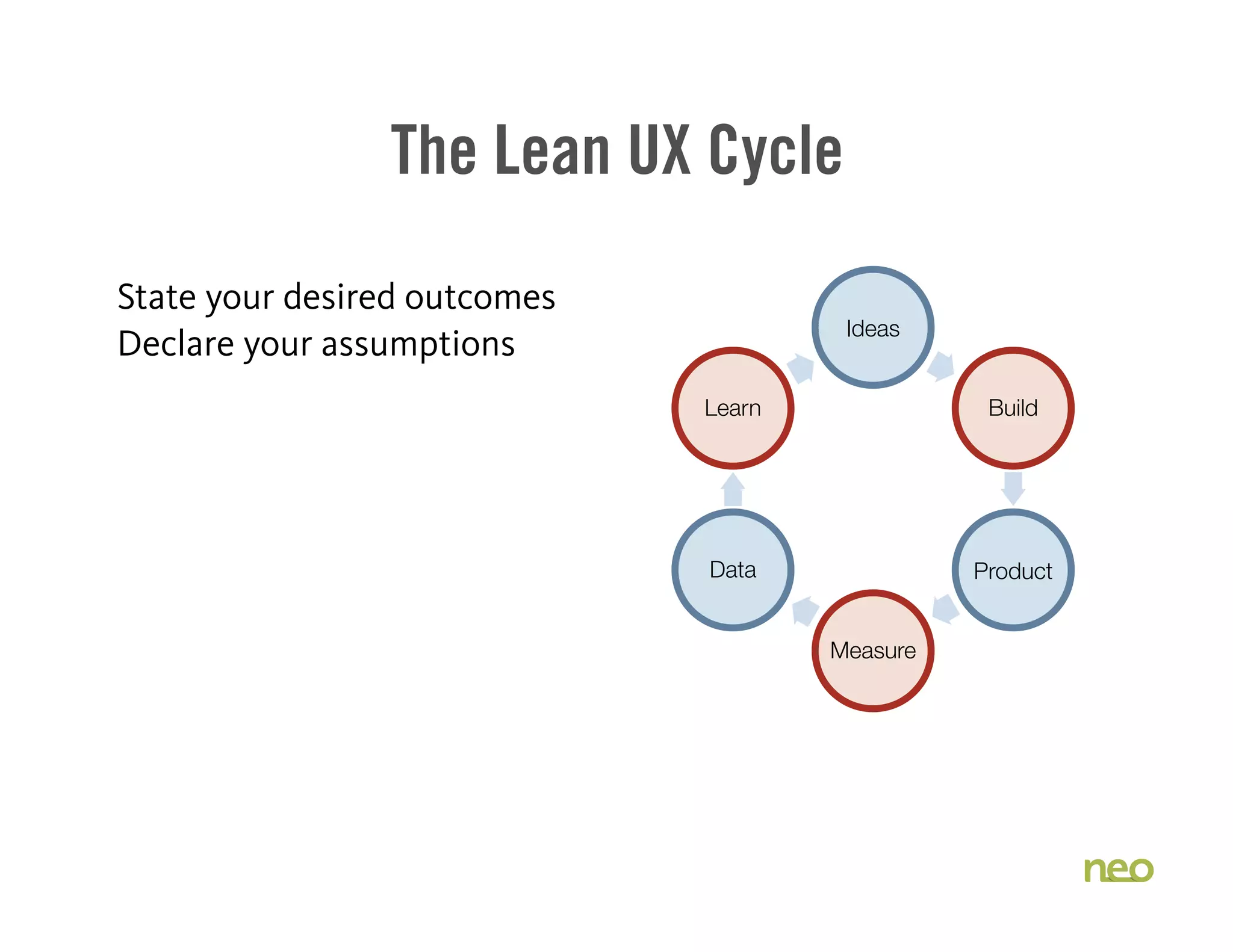
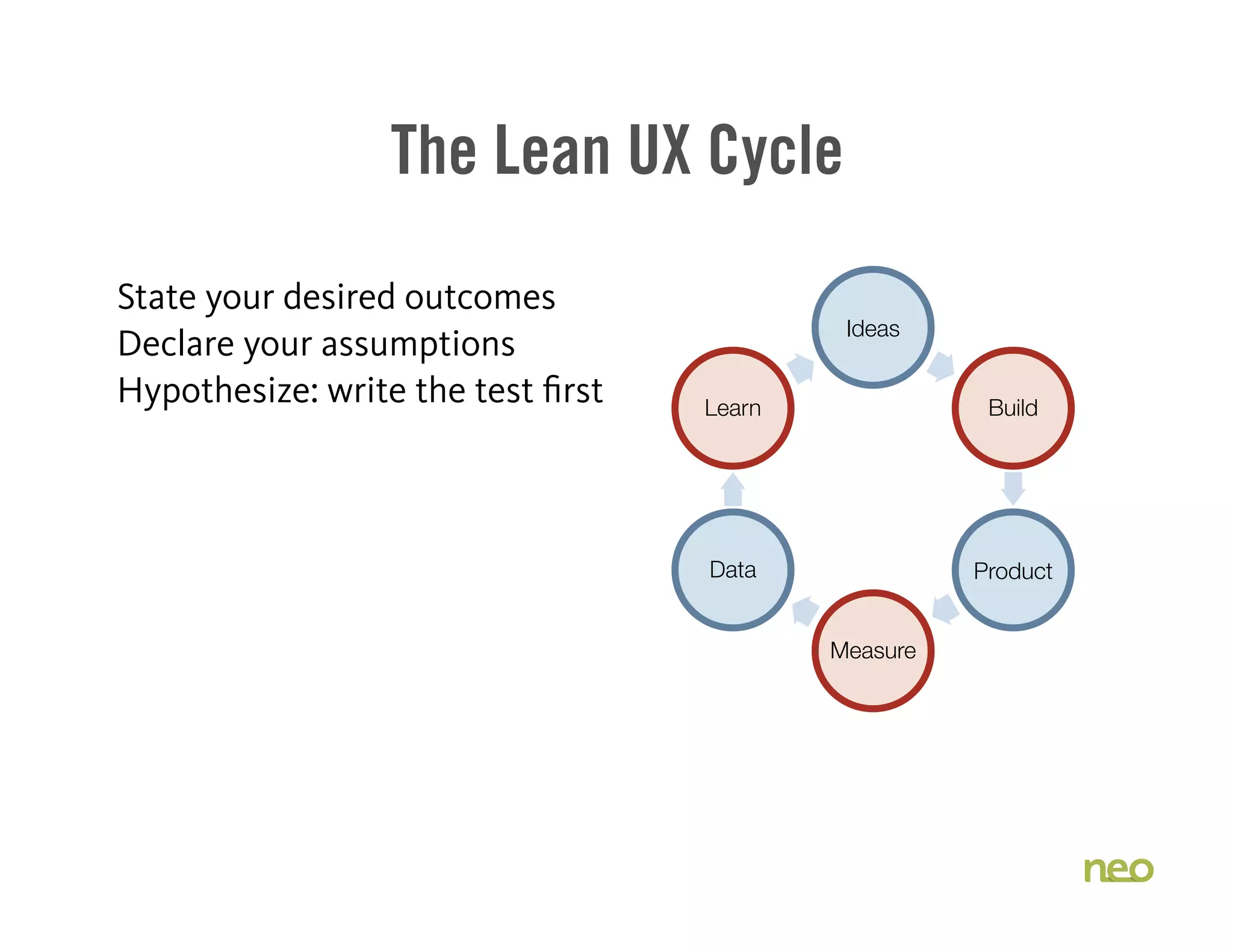
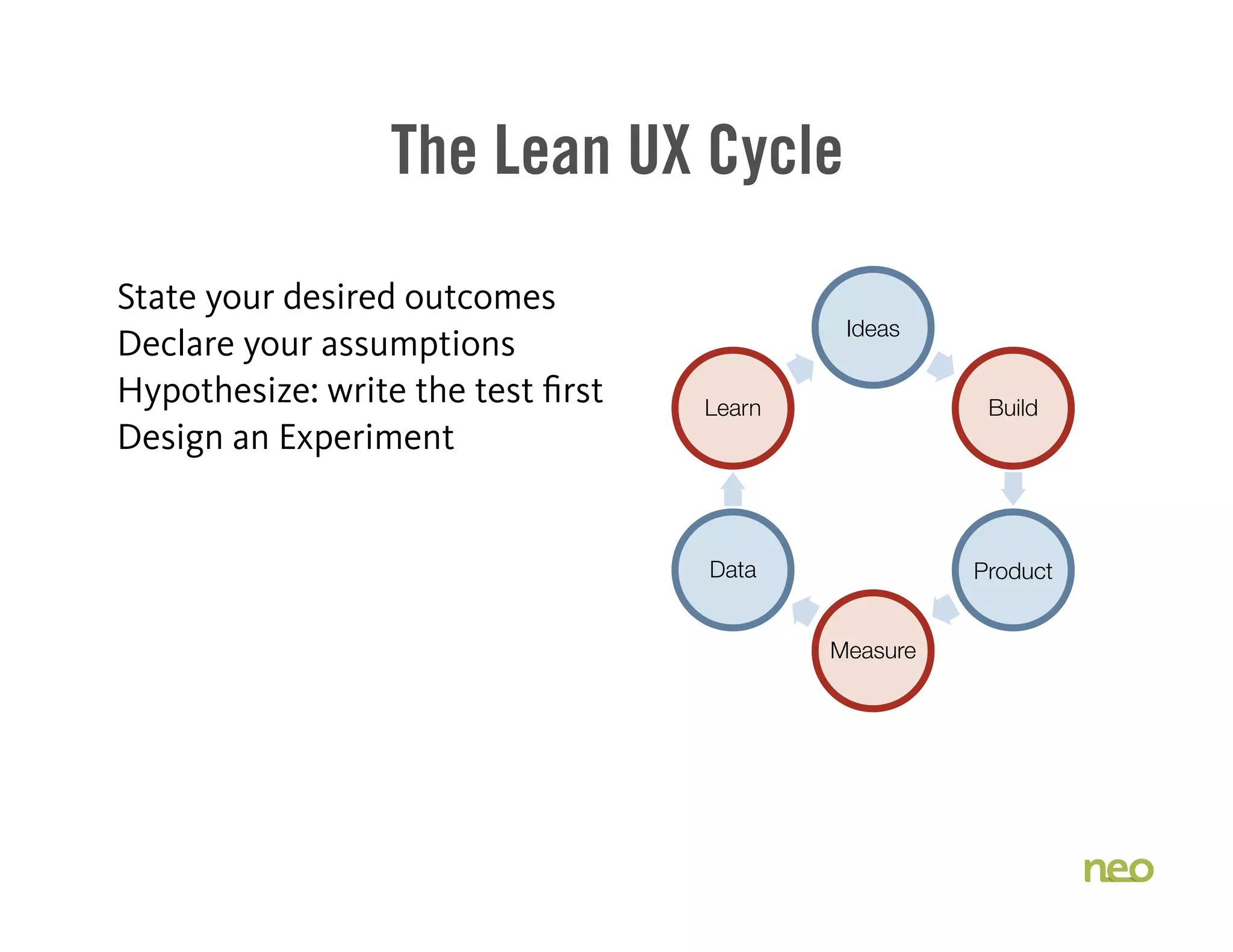
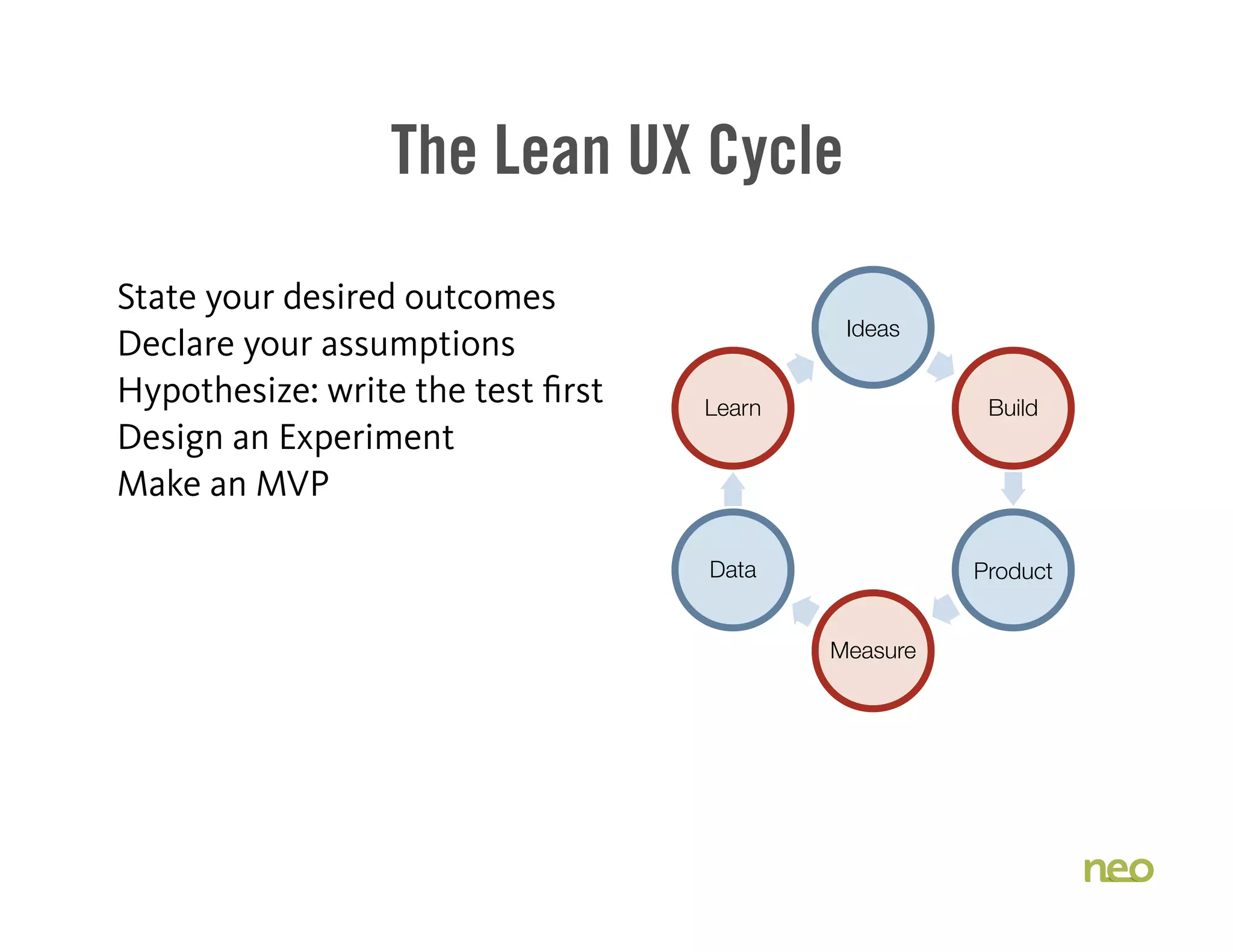
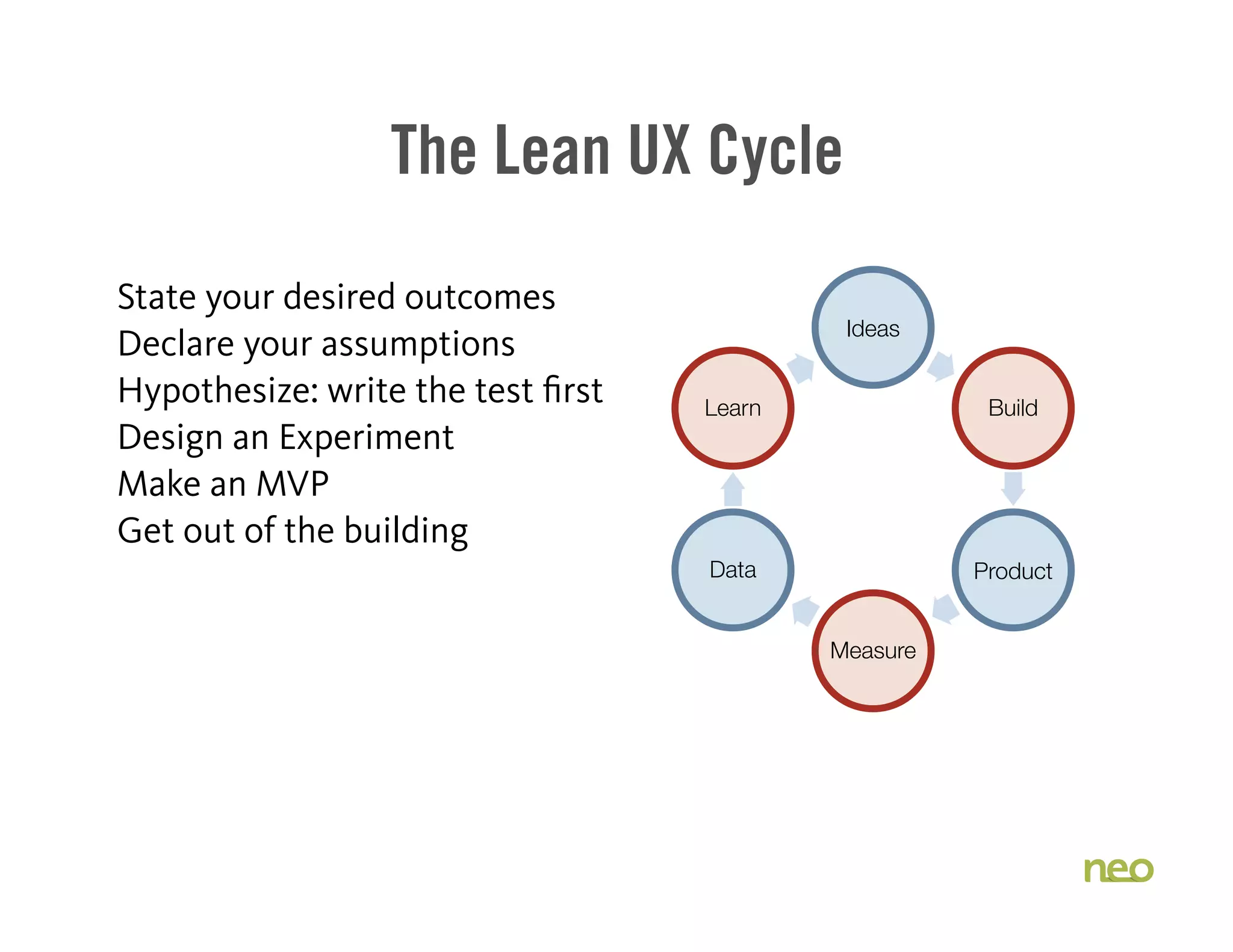
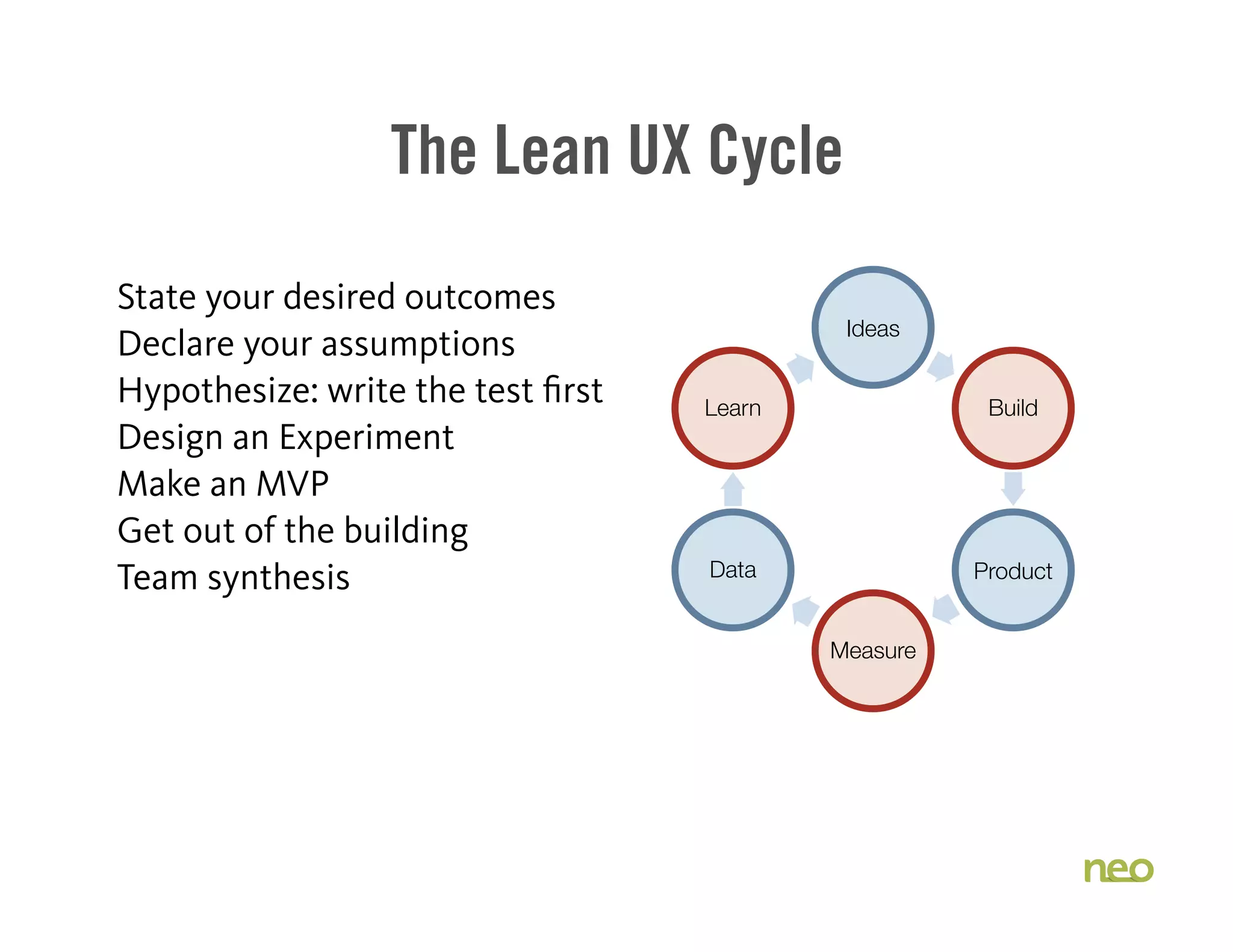
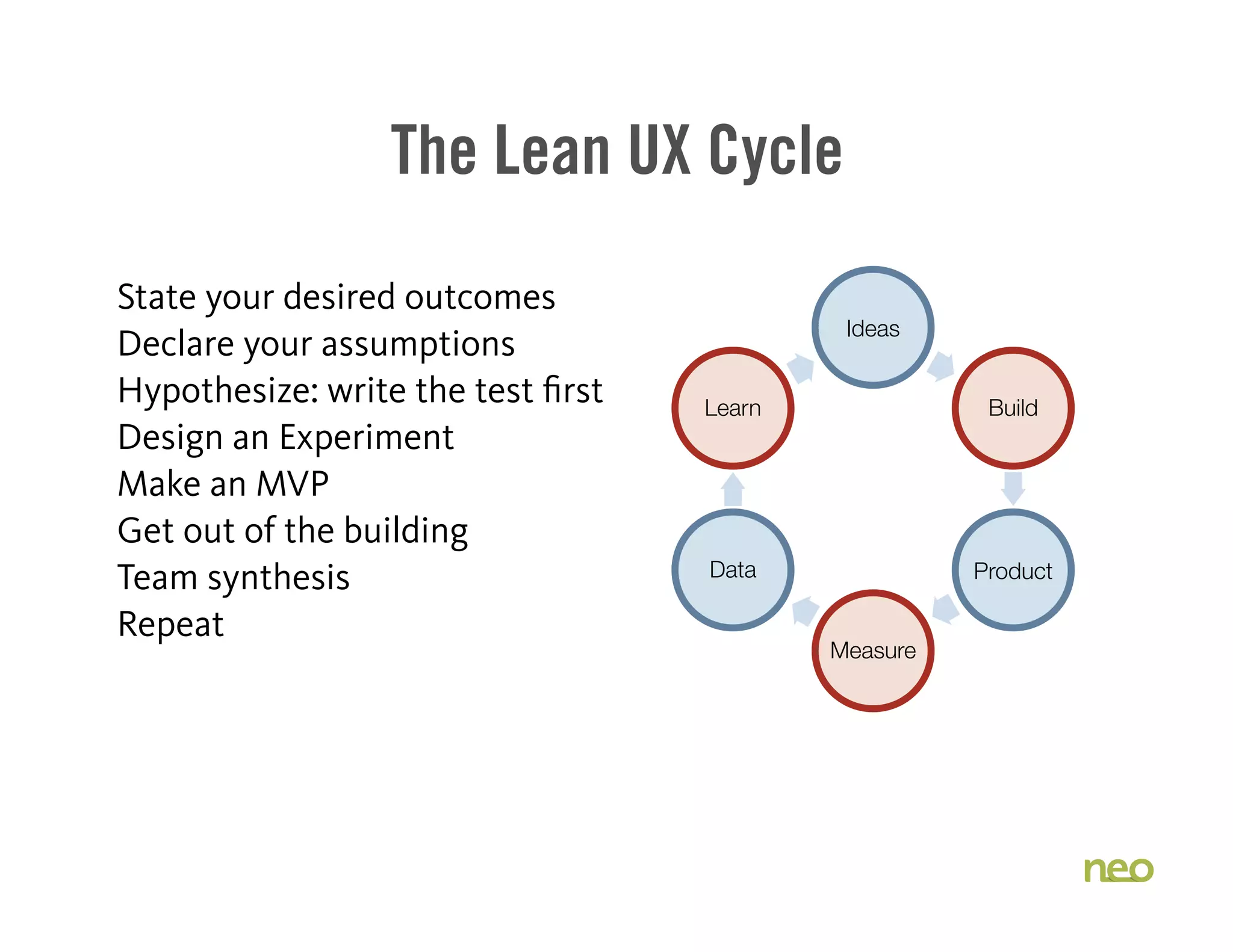
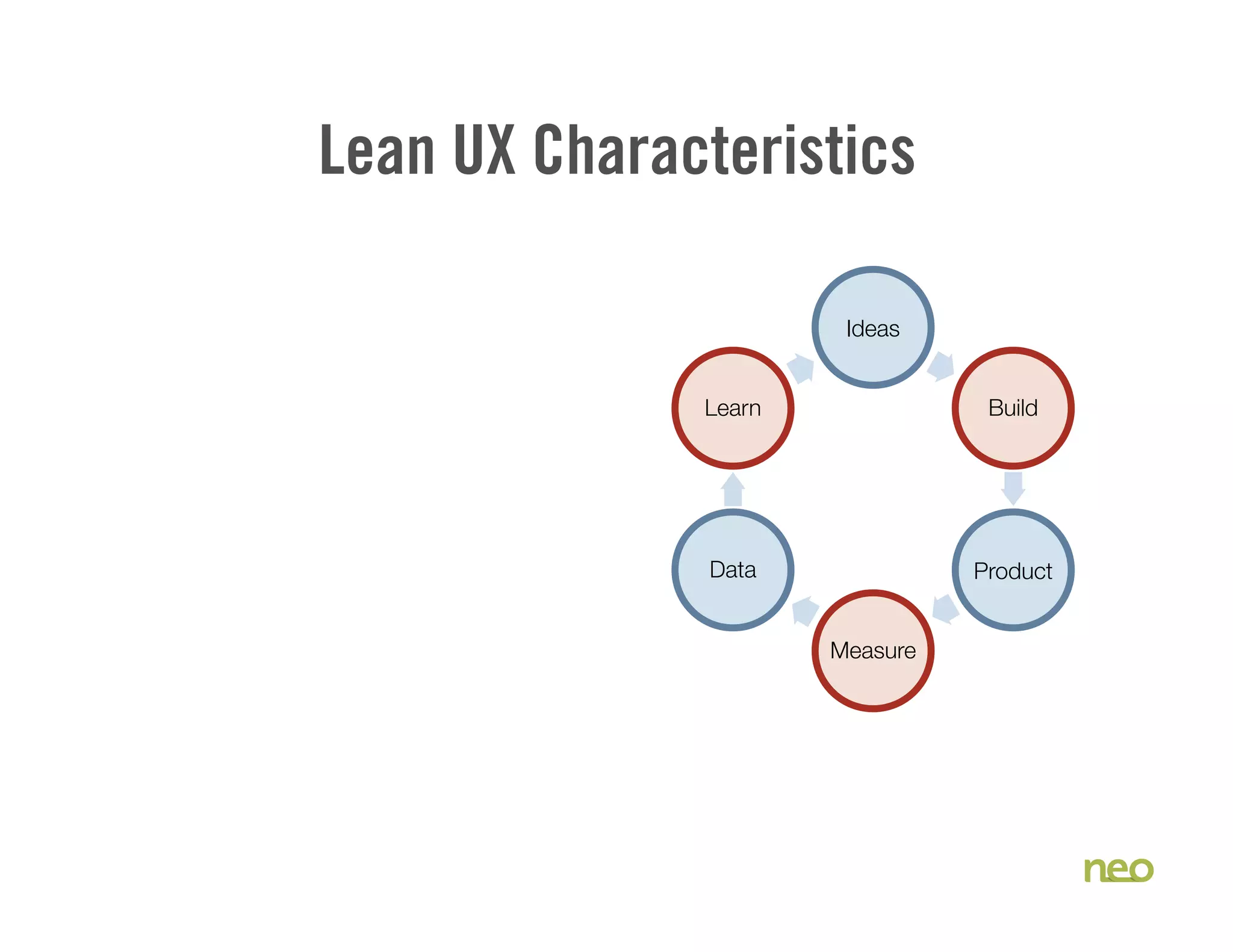
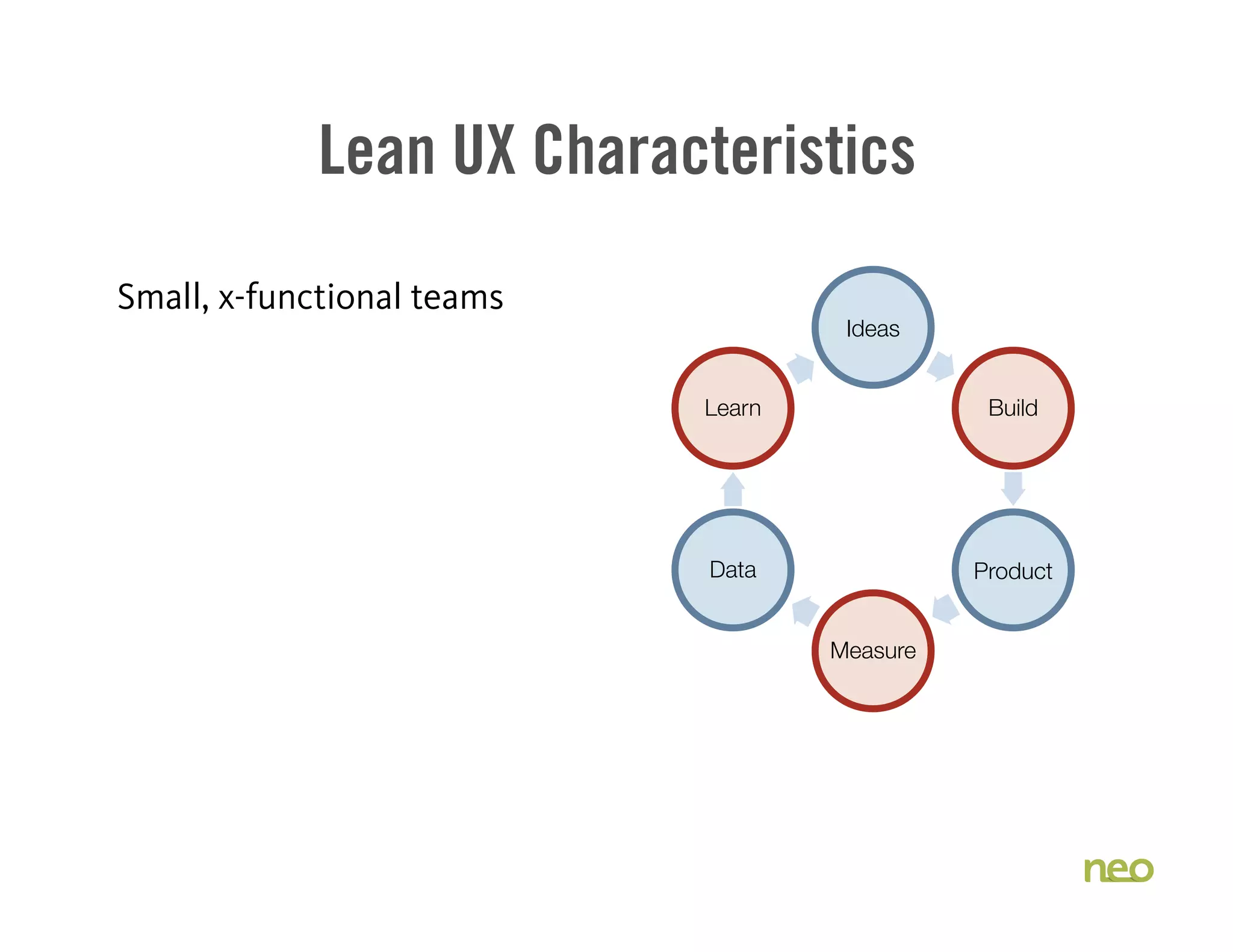
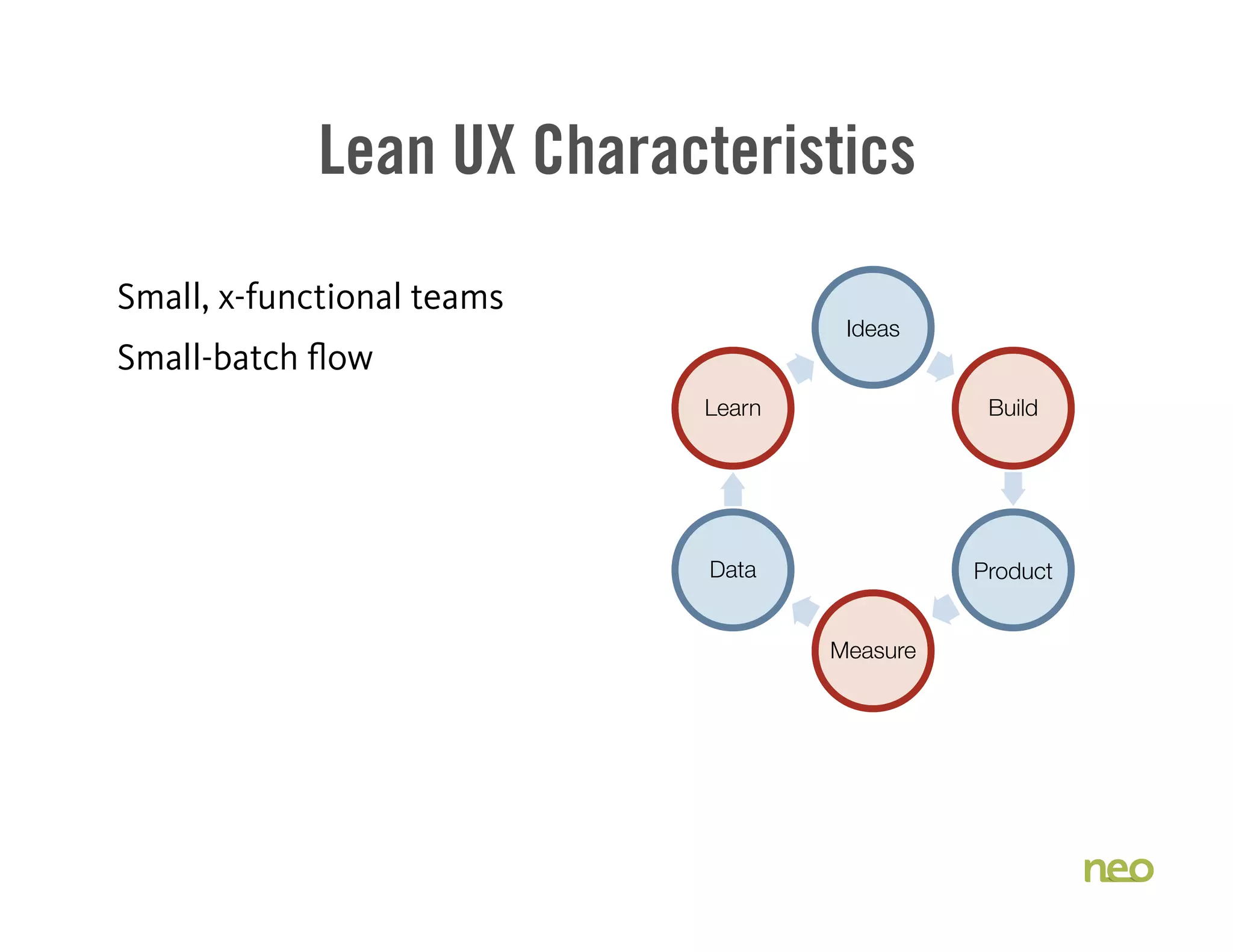
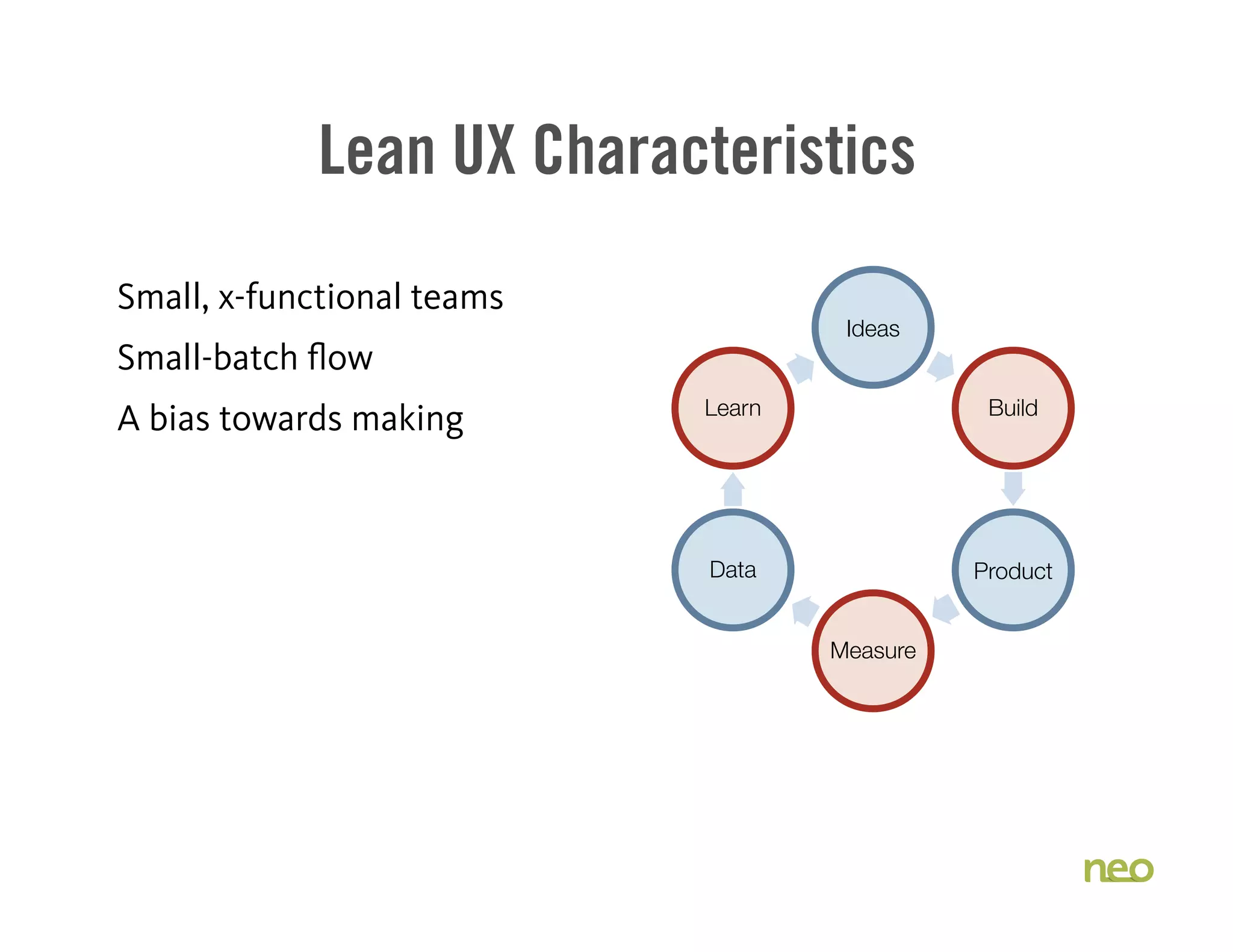
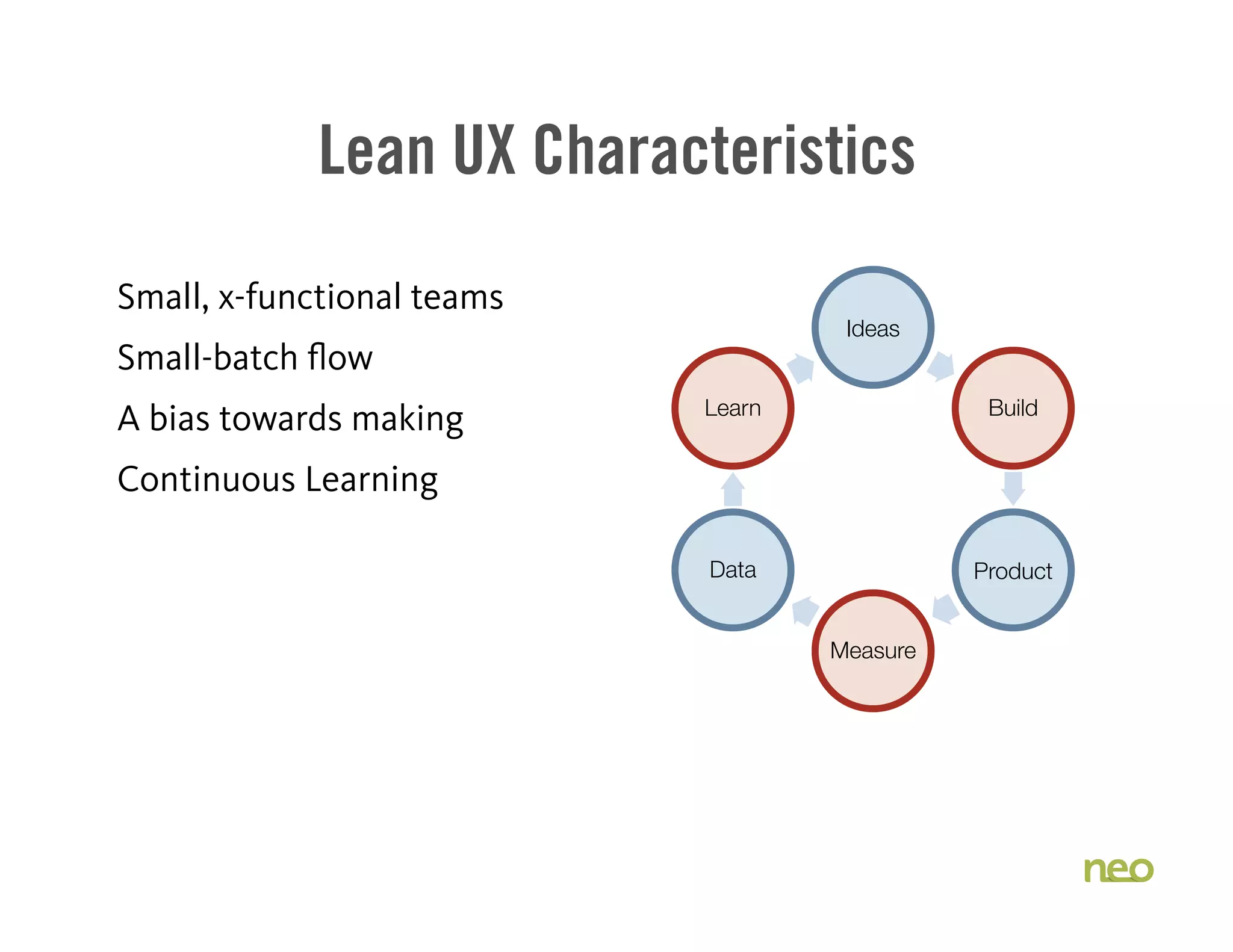
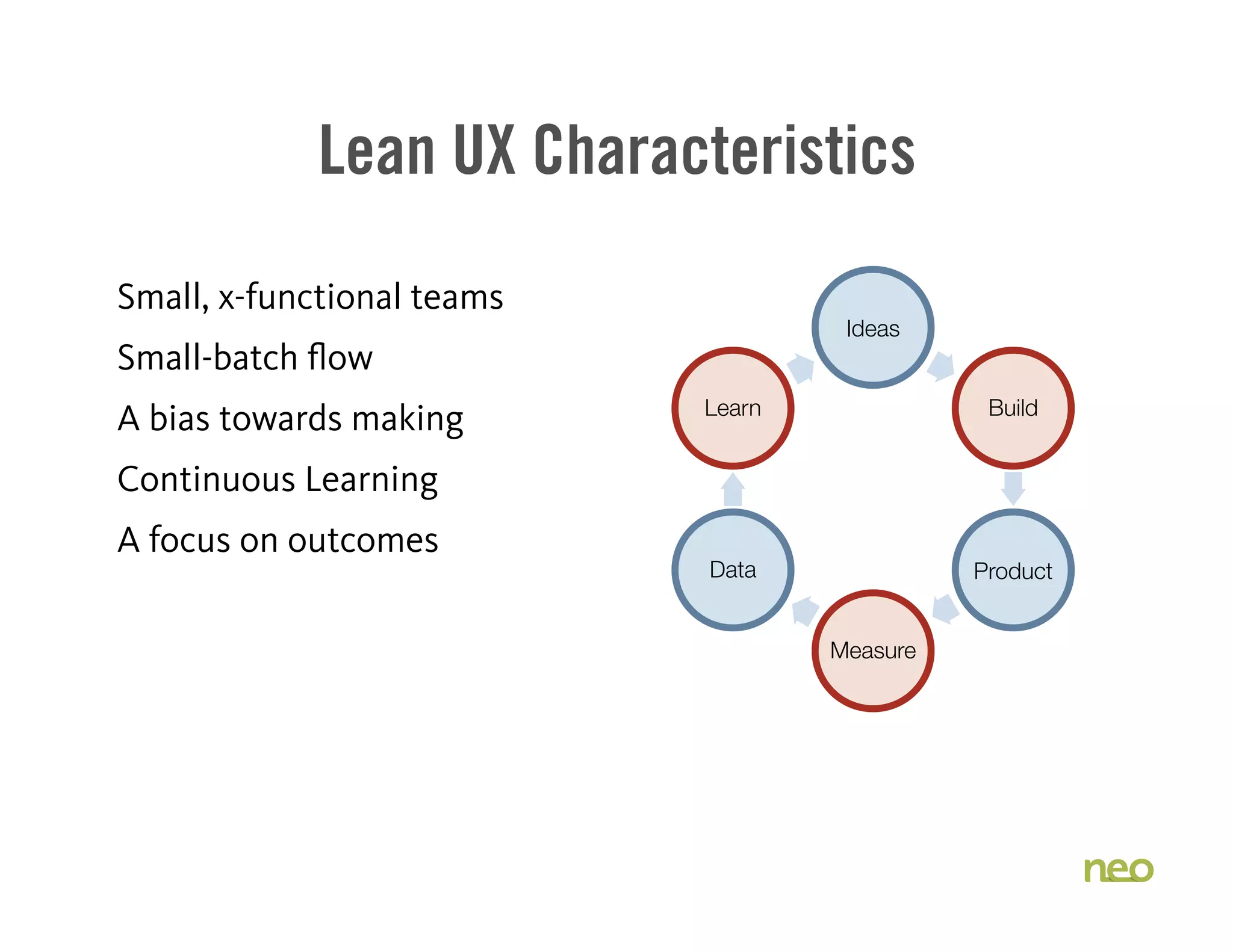
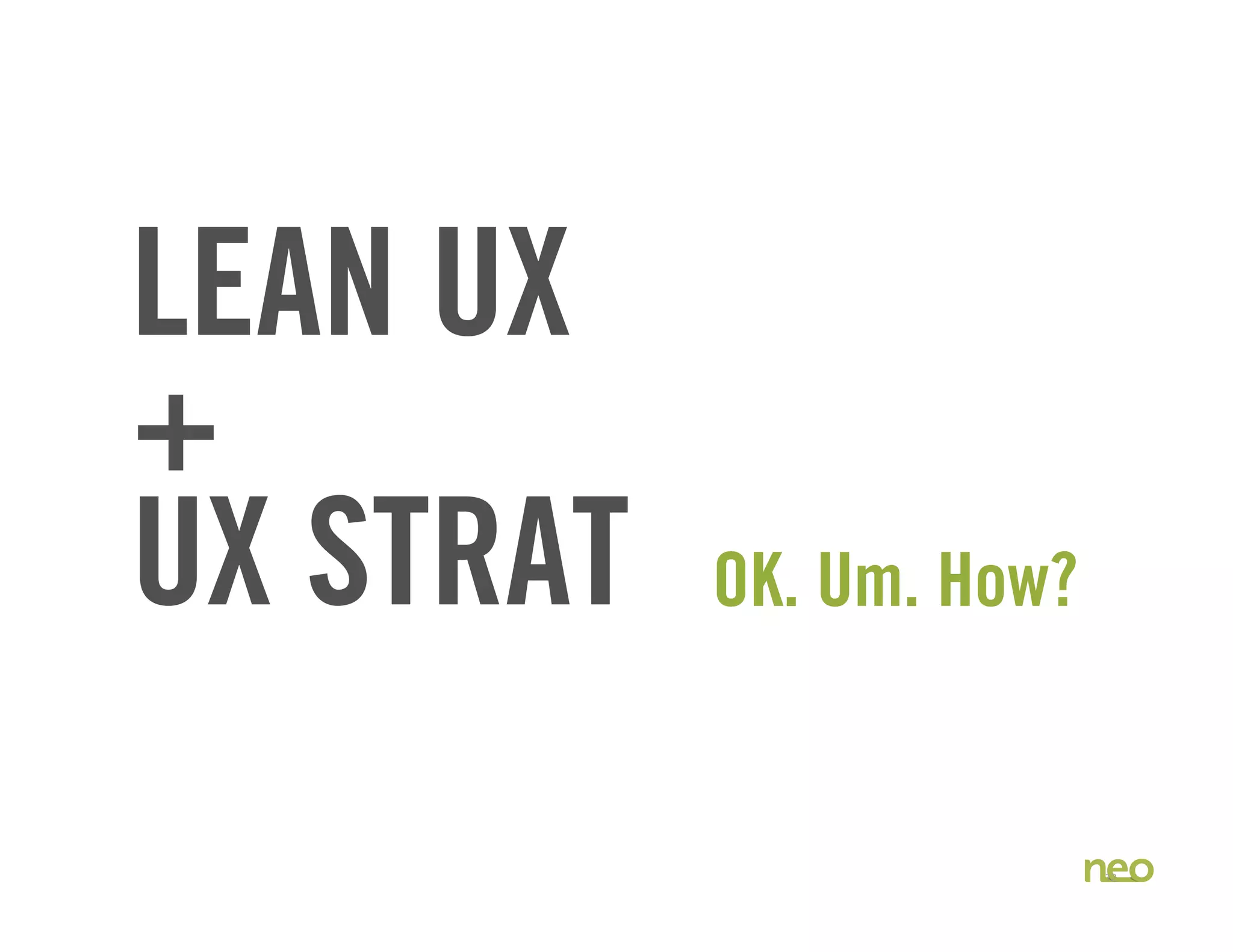
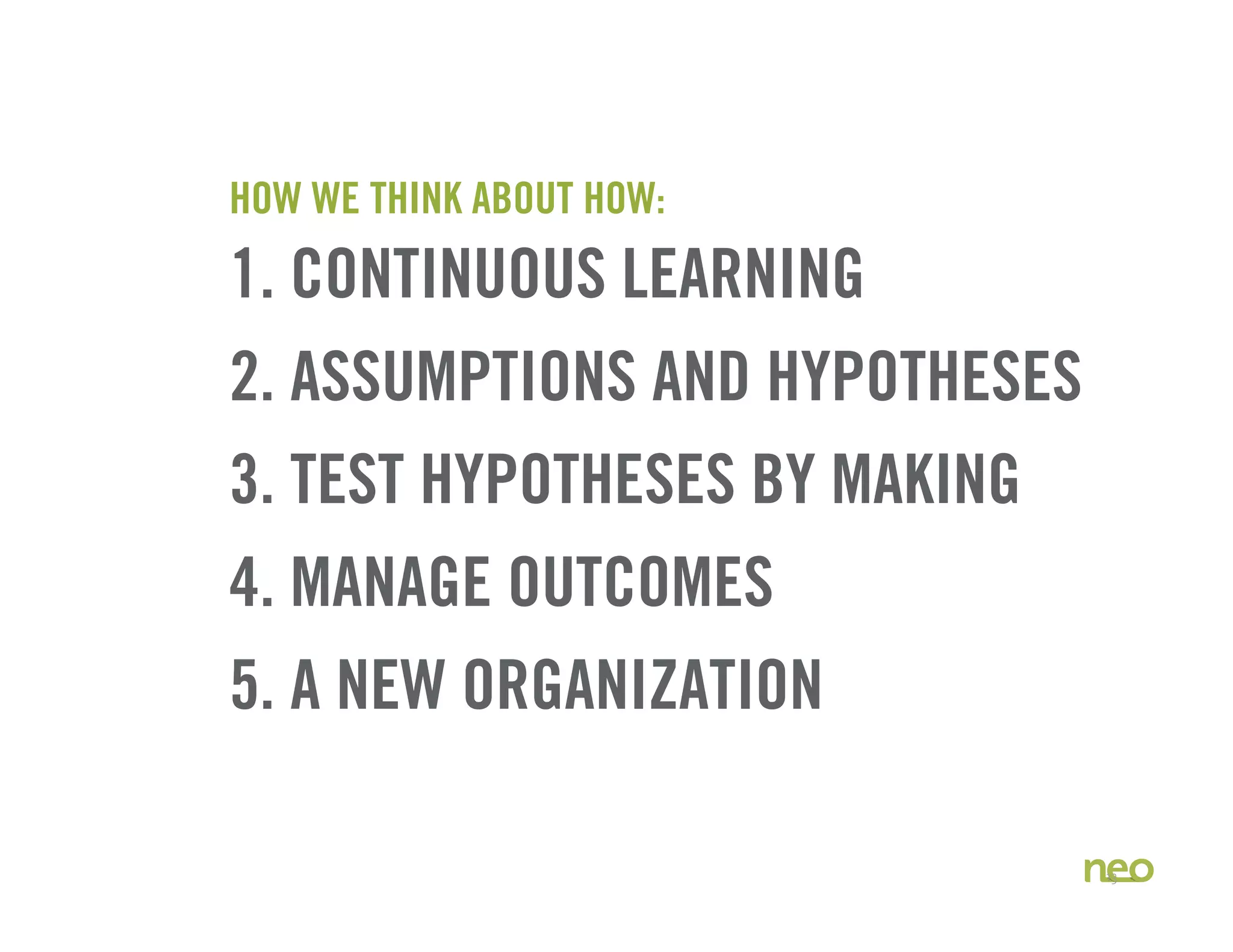
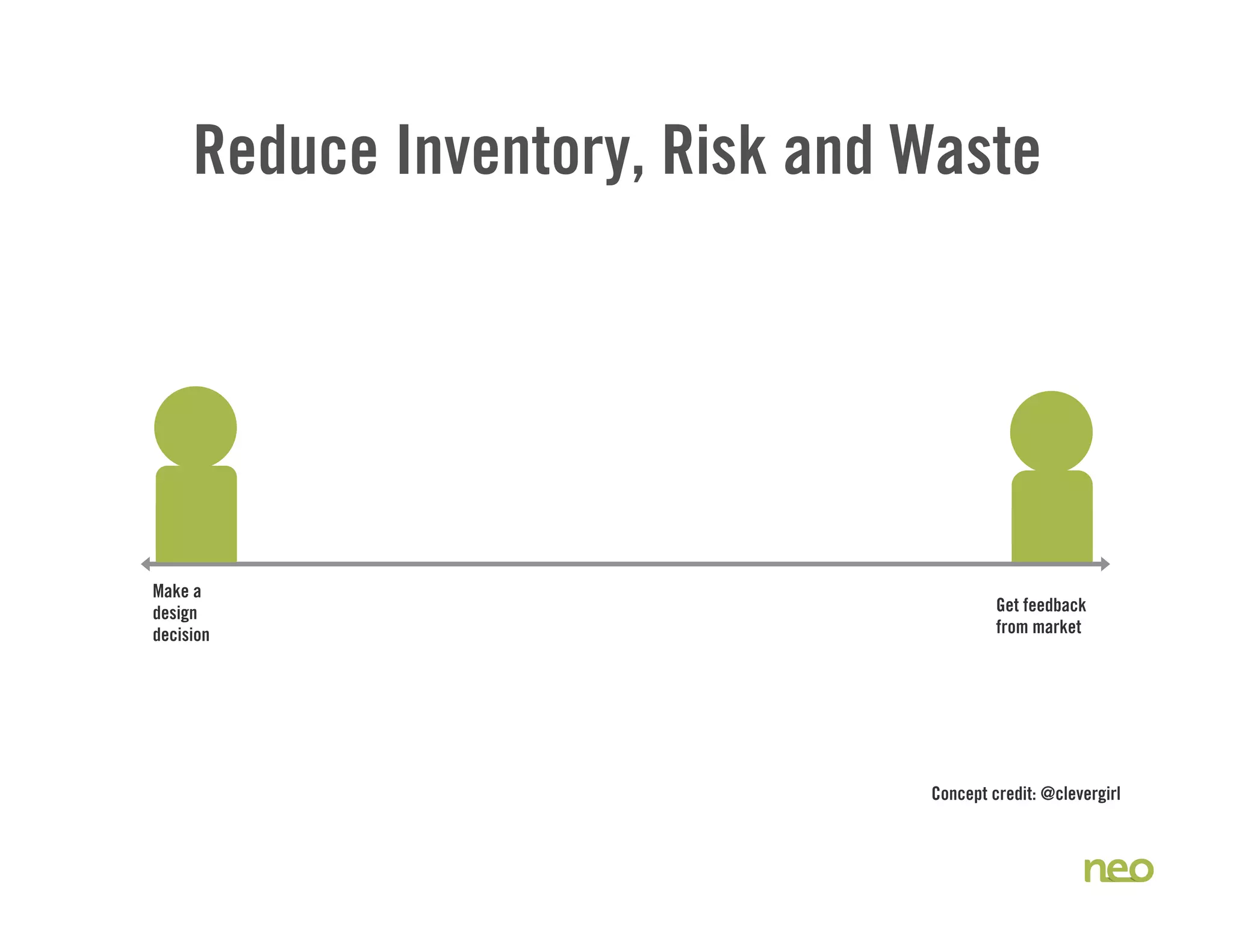
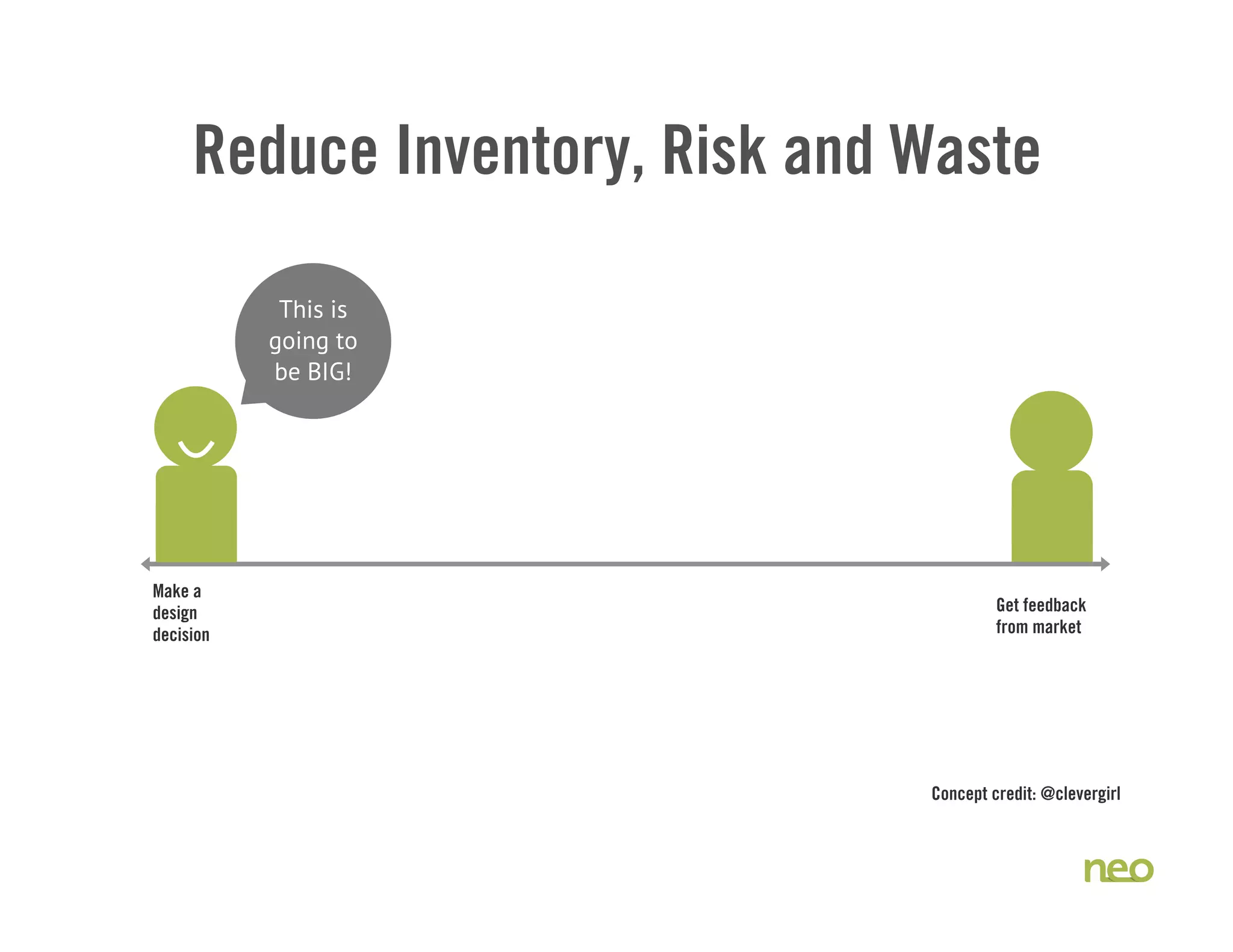
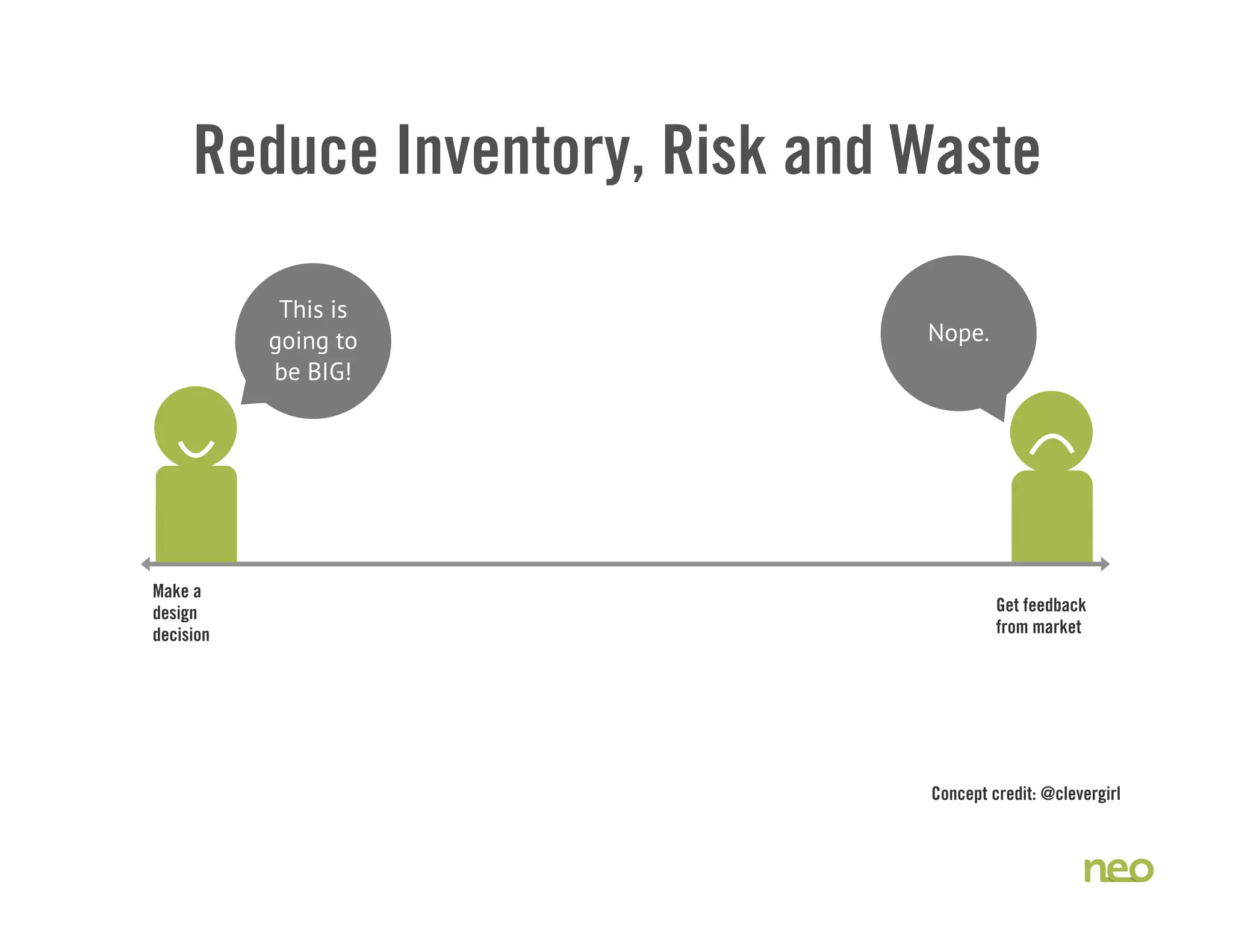
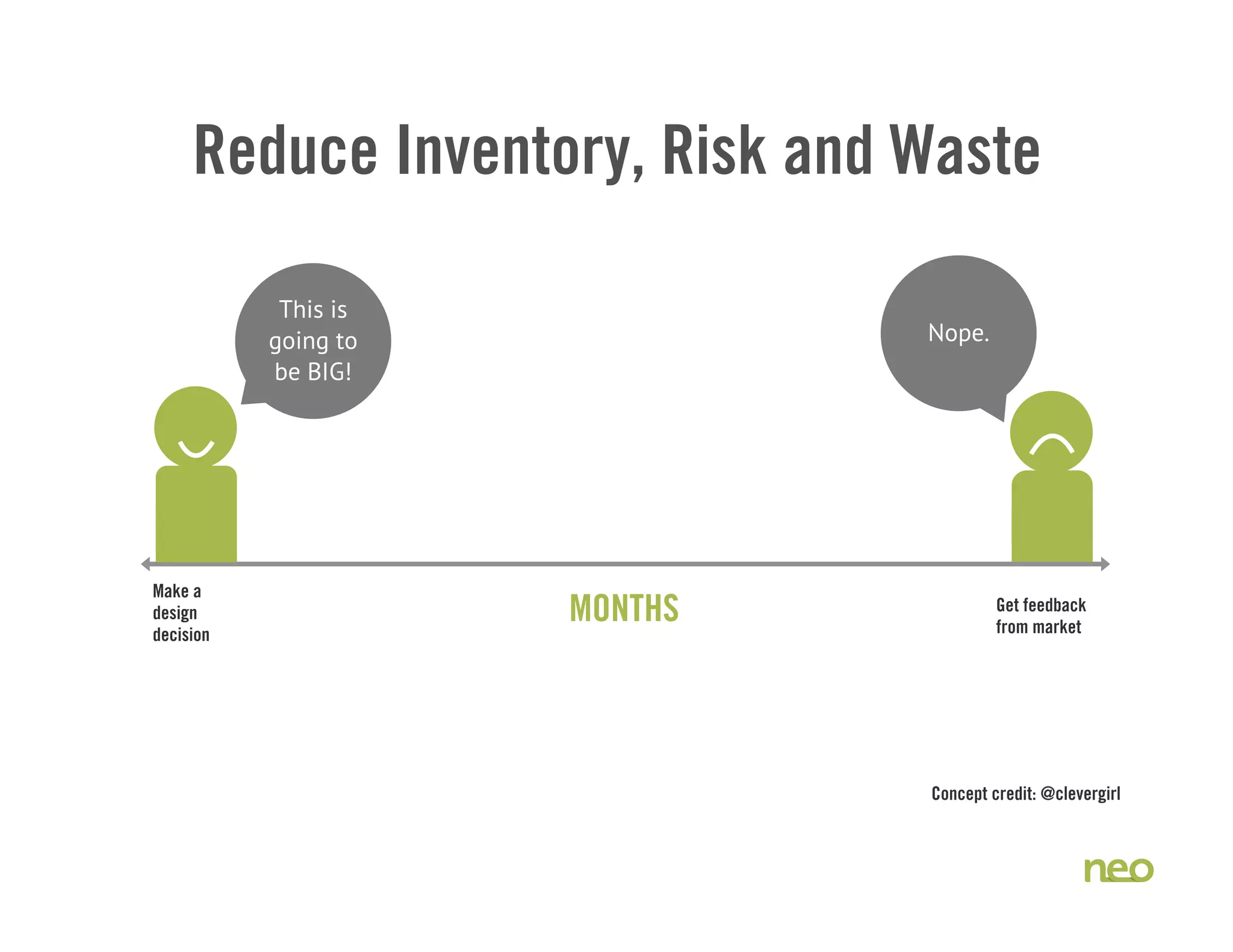
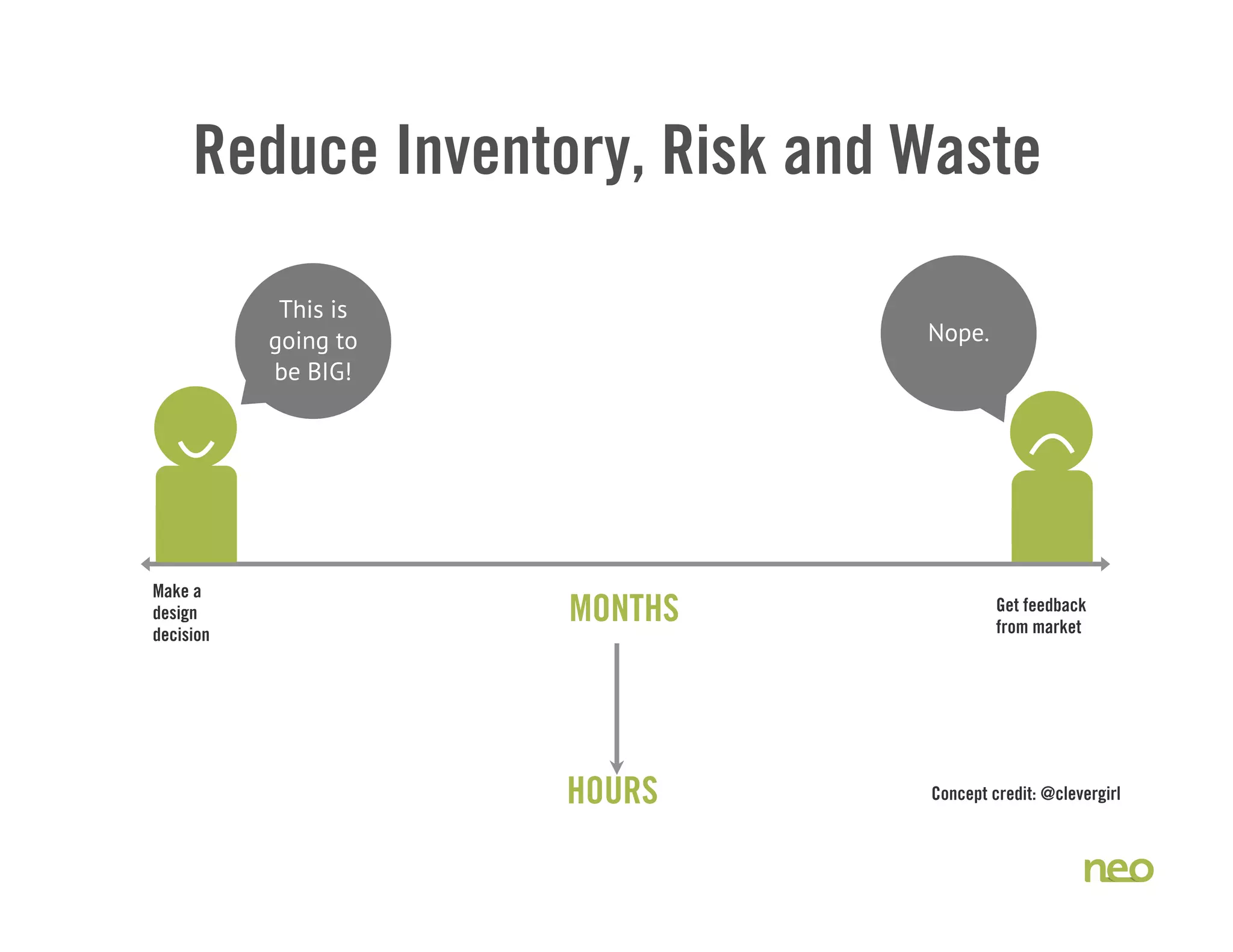
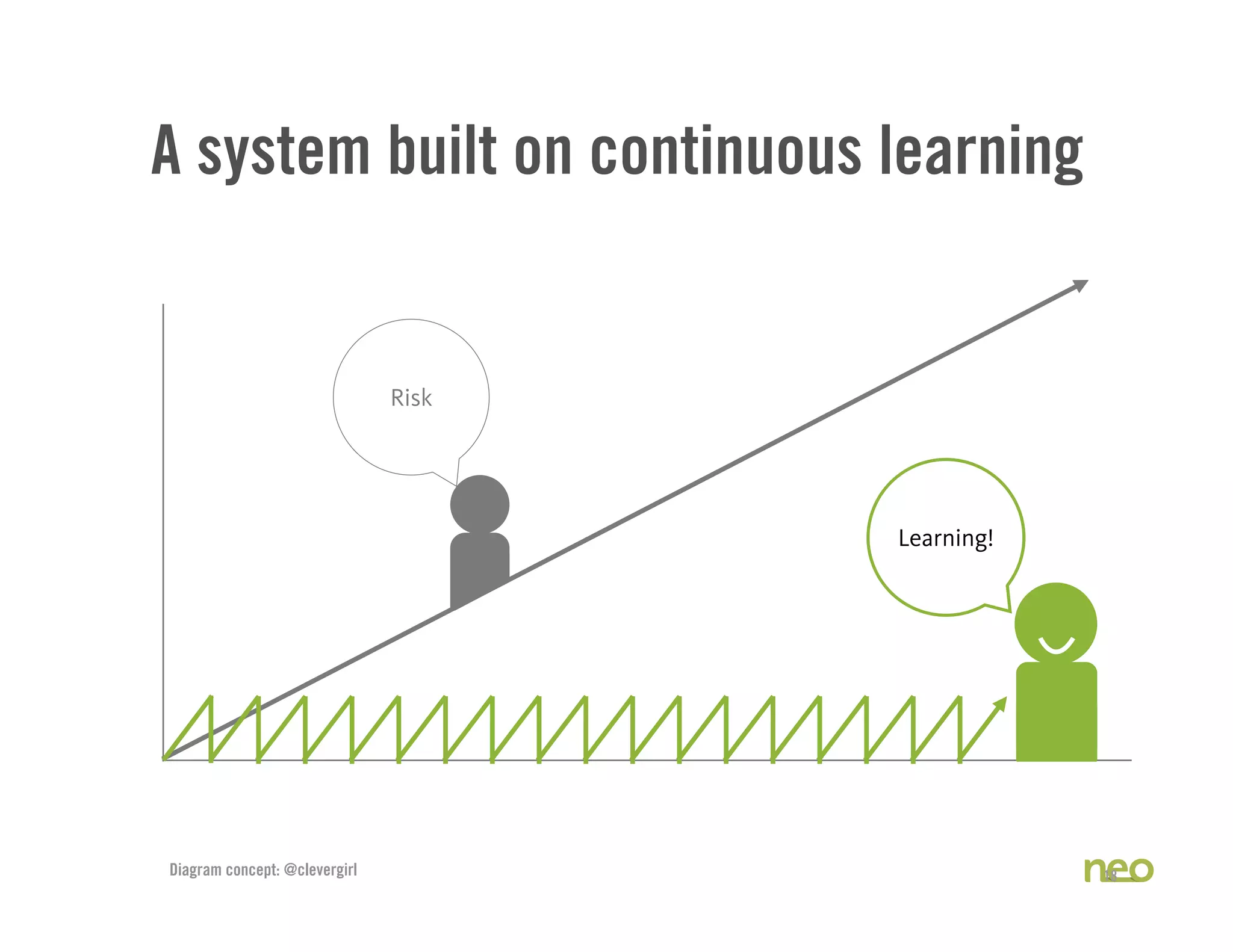
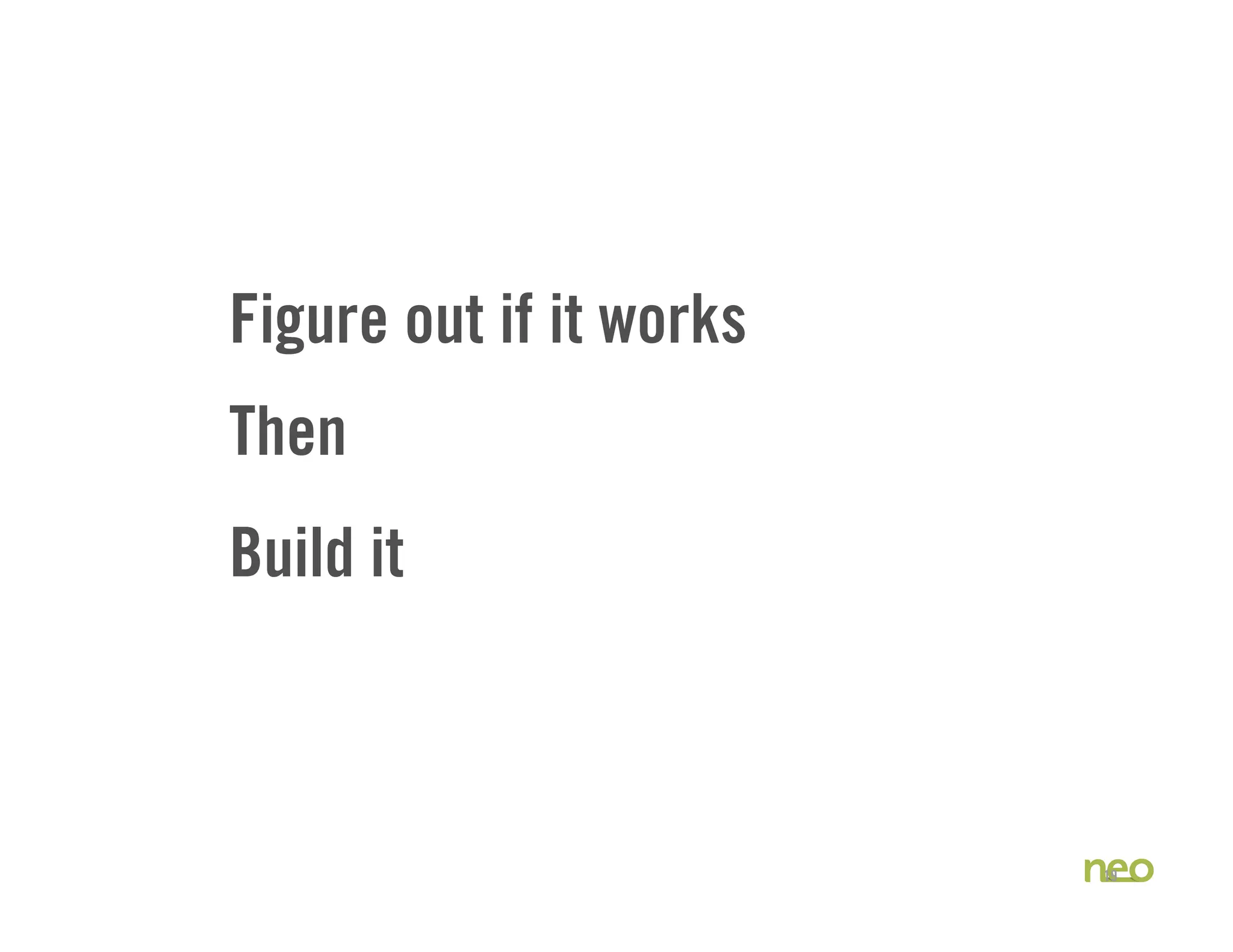
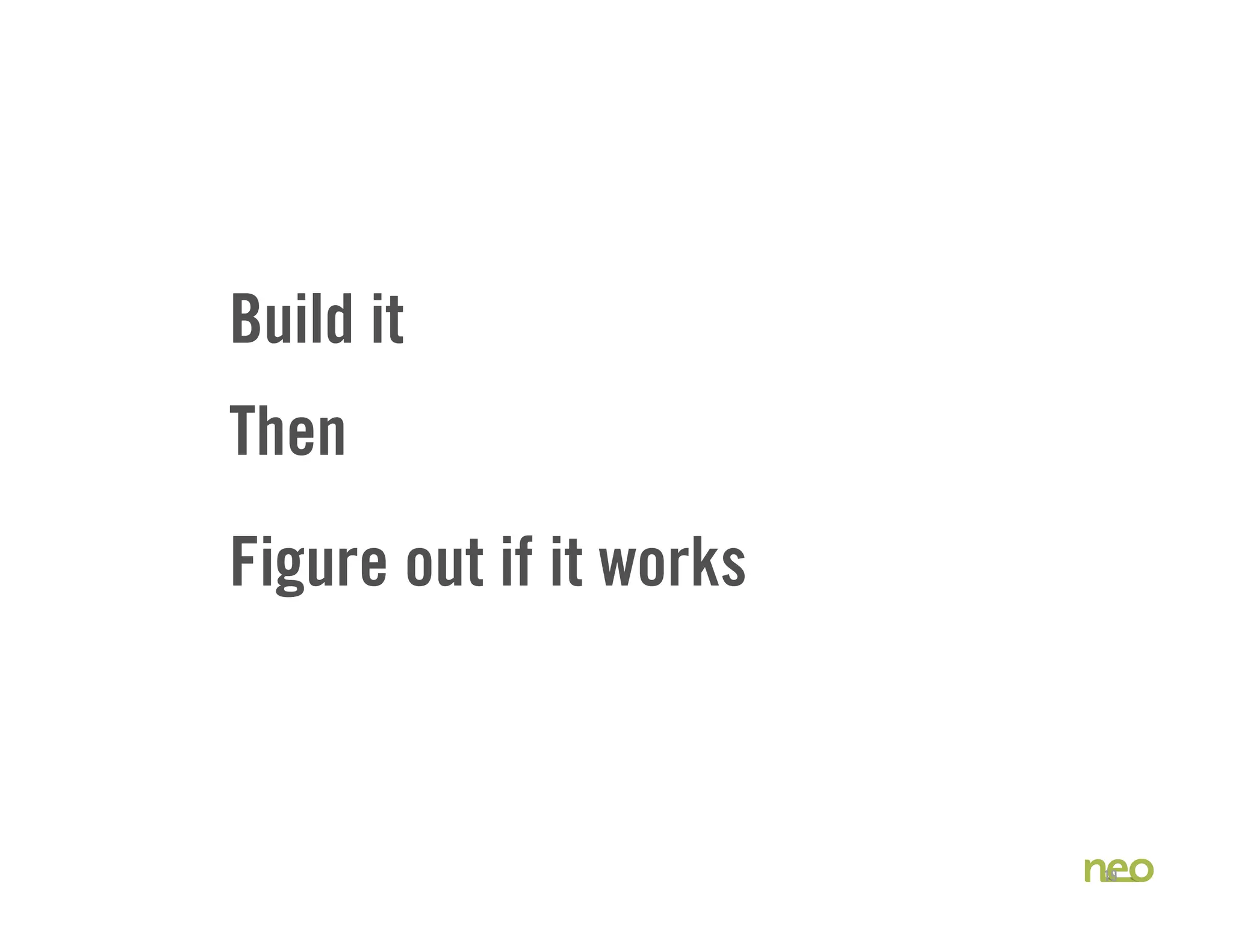
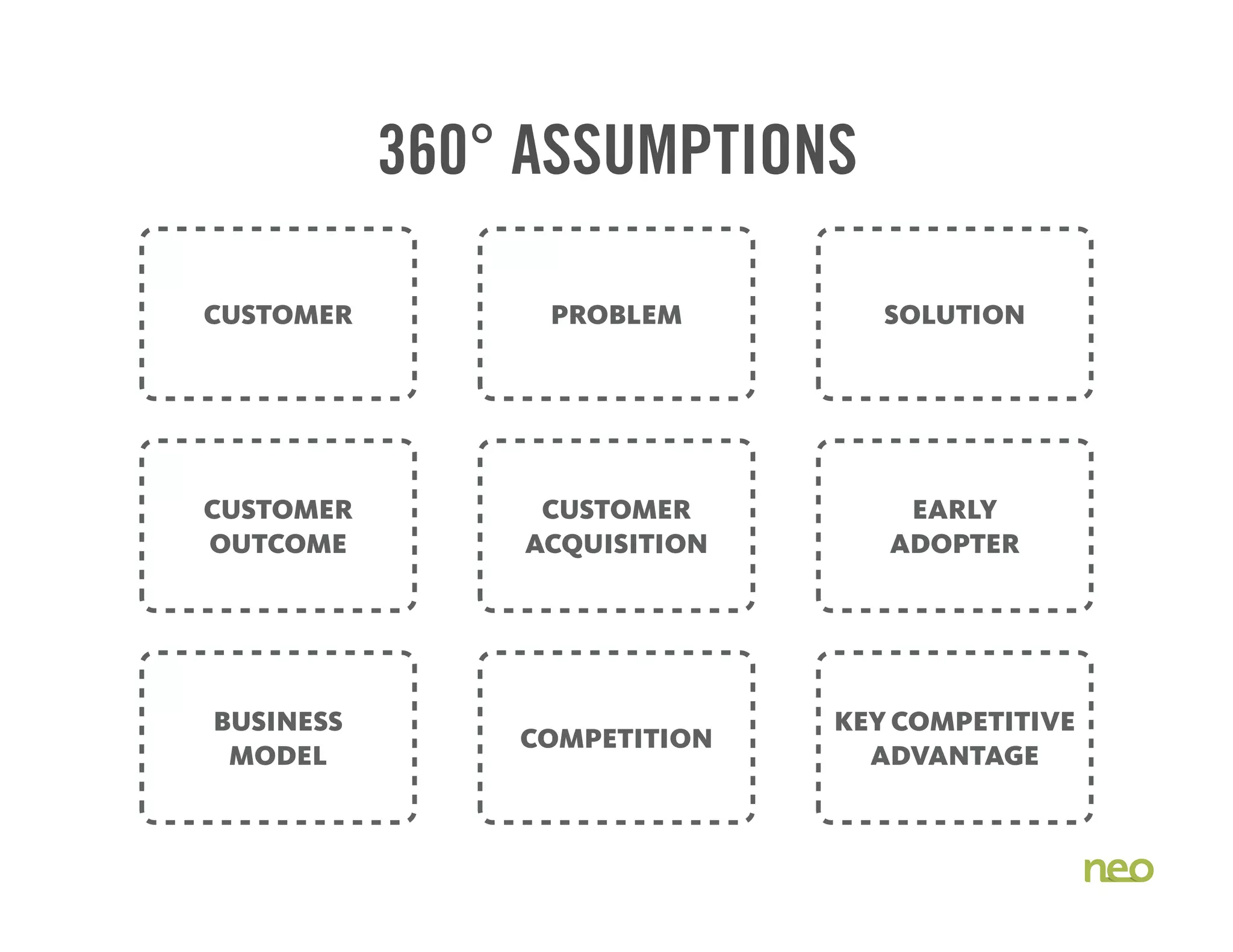
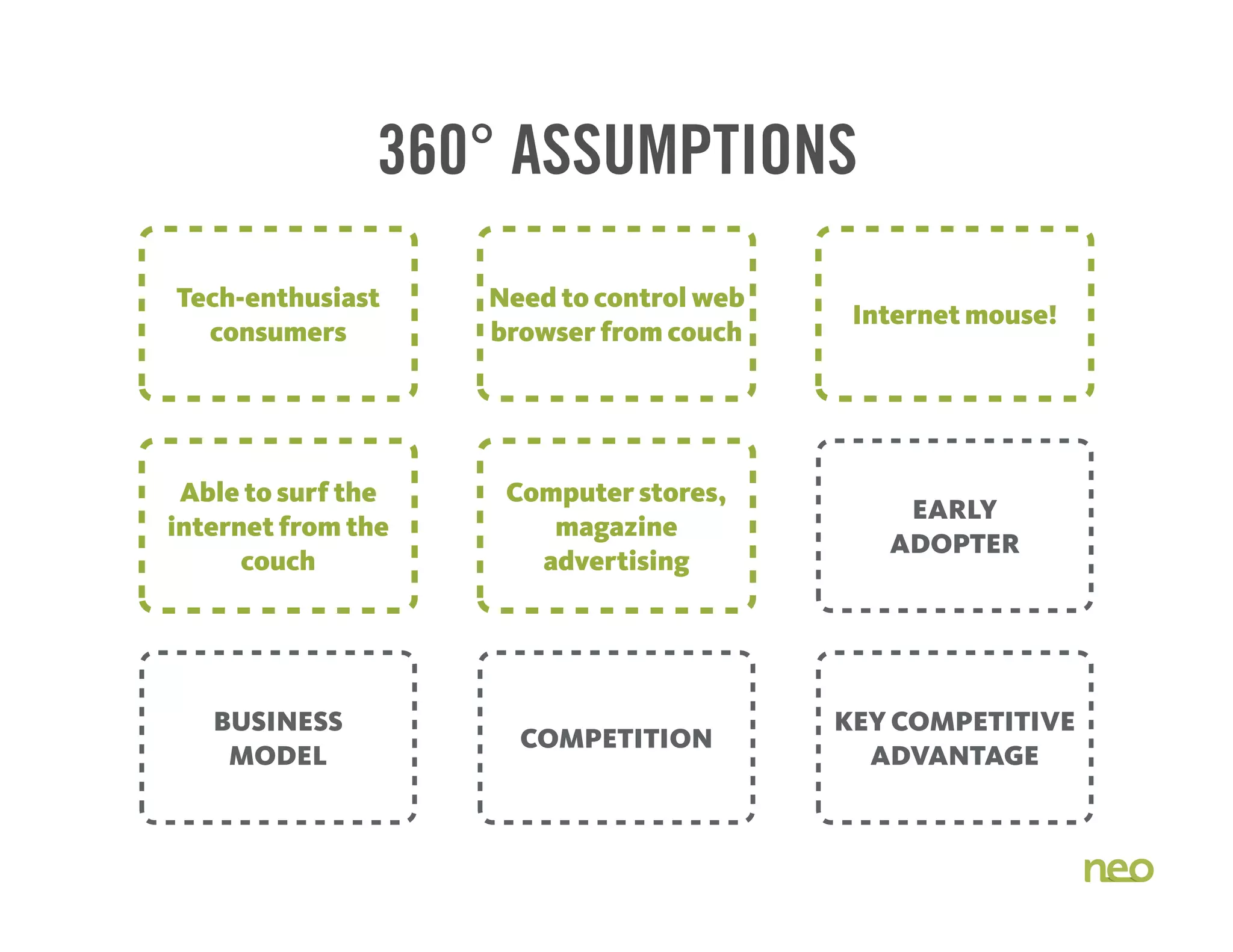
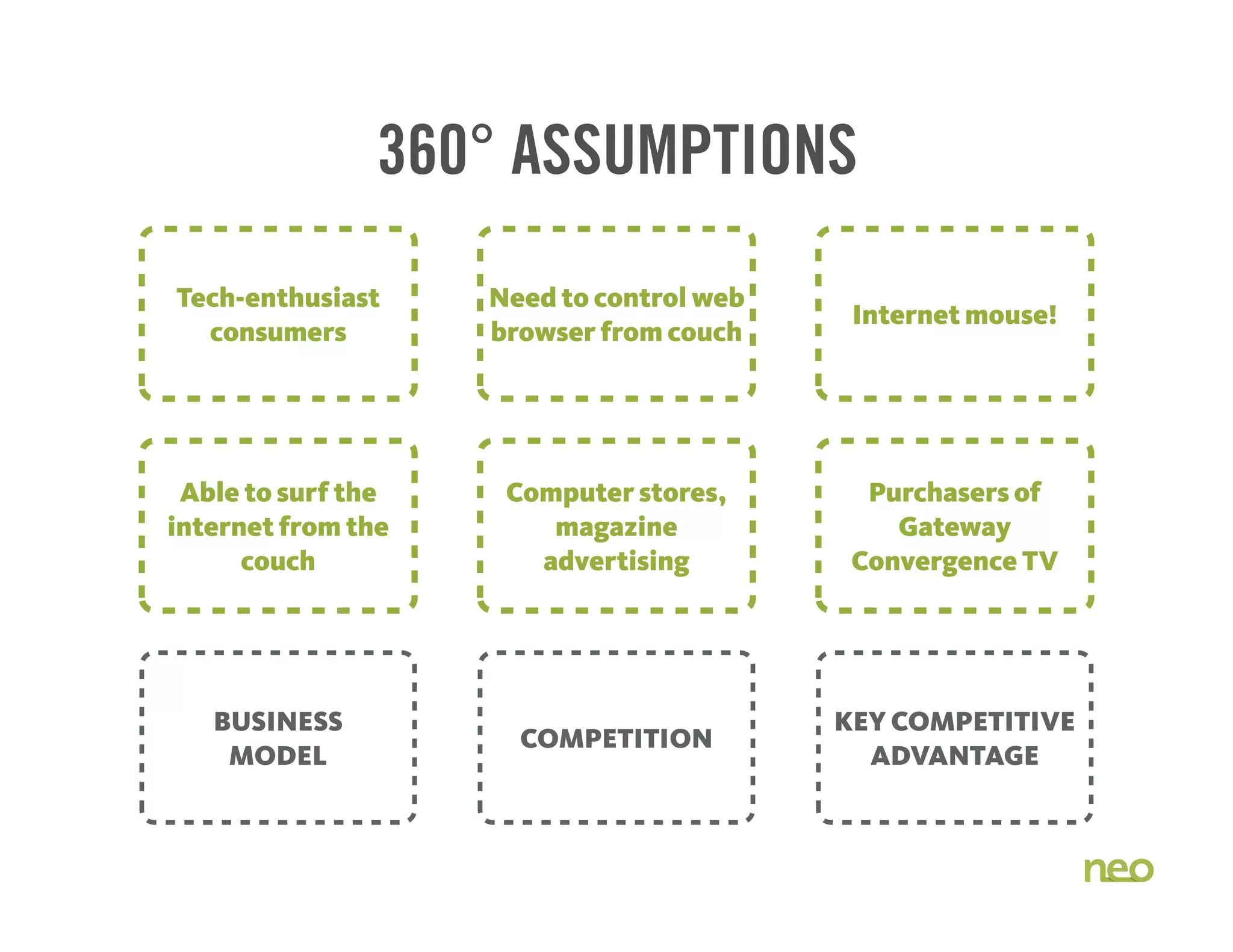
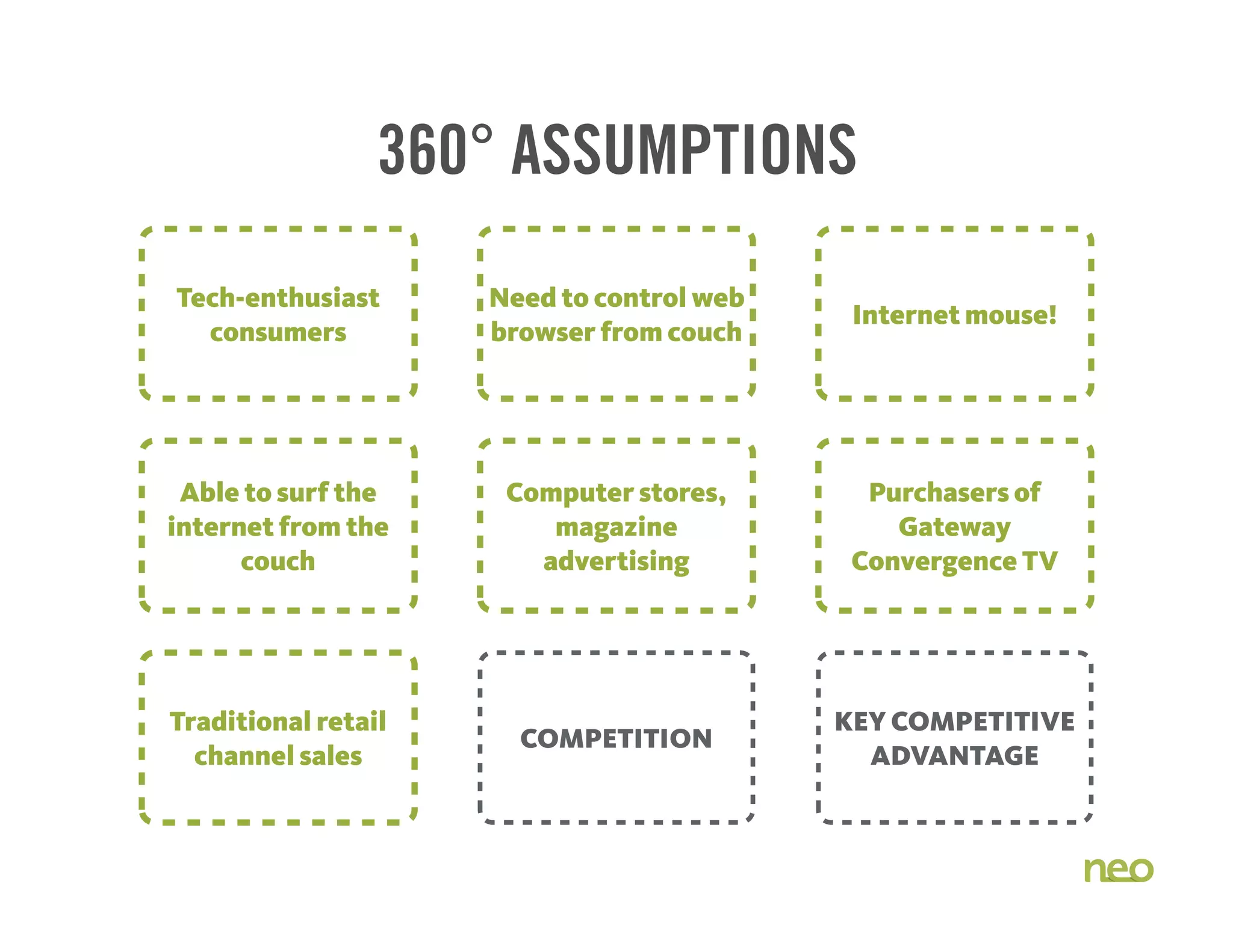
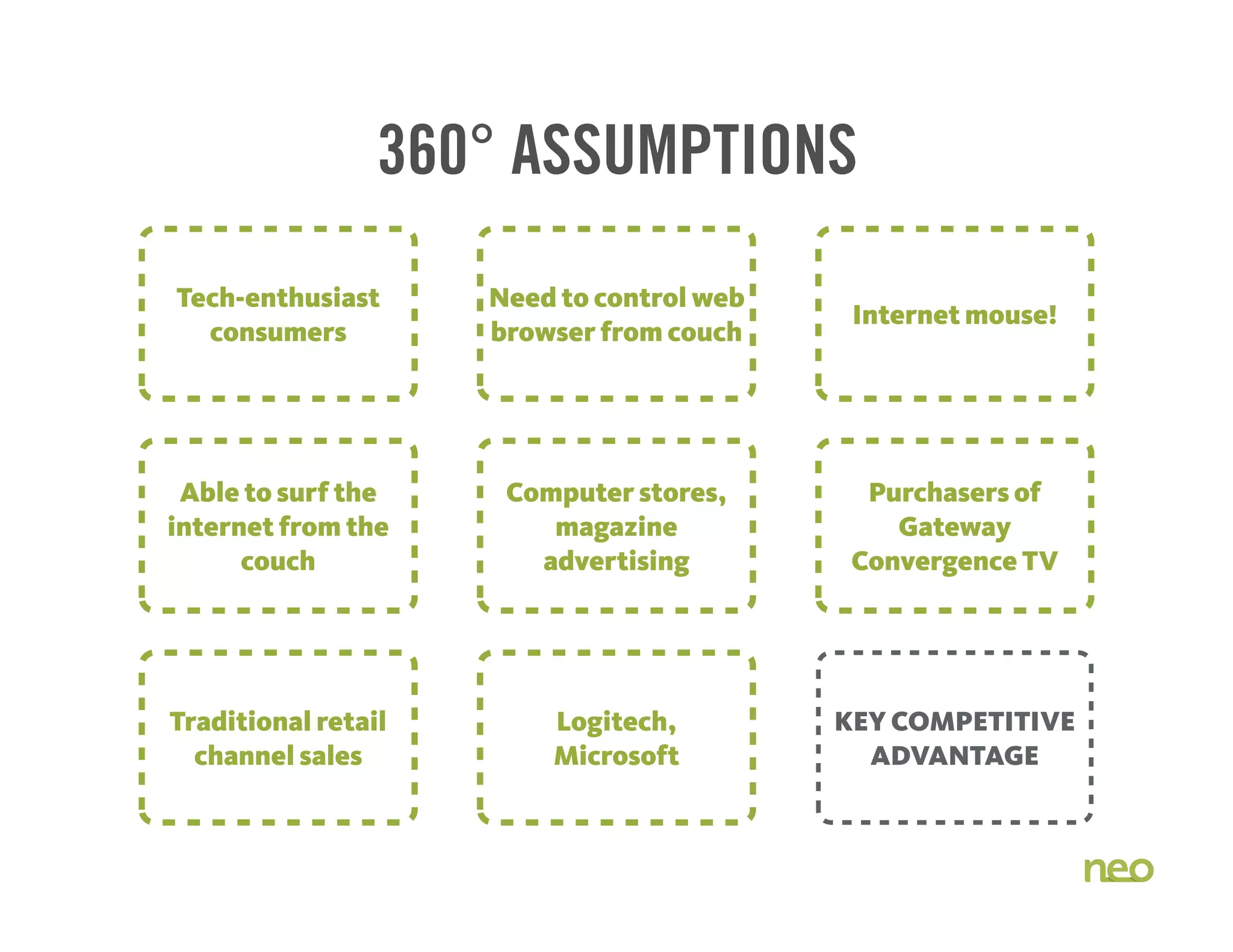
This document discusses the principles of Lean UX. It begins with an introduction to where Lean UX comes from and its relationship to agile development. The core Lean UX process is then described as a cycle of stating desired outcomes, declaring assumptions, hypothesizing tests, designing experiments, making MVPs, getting feedback, and repeating. Key characteristics of Lean UX like small cross-functional teams and a bias towards making things to learn are also outlined. The document then dives deeper into how to approach continuous learning, writing assumptions and hypotheses, enabling making through MVPs, managing outcomes rather than outputs, and creating an organizational structure to support Lean UX.


![[DevDay2019] Lean UX - By Bryant Castro, Bryant Castro at Wizeline](https://cdn.slidesharecdn.com/ss_thumbnails/bryantcastro-43ddopresoleanux-190416065313-thumbnail.jpg?width=640&height=640&fit=bounds)


![Intro to Lean UX: How to do it quick & dirty - Workshop [6h]](https://cdn.slidesharecdn.com/ss_thumbnails/leanuxworkshopjun27slideshare-150627135940-lva1-app6892-thumbnail.jpg?width=640&height=640&fit=bounds)


![[BROCHURE] Italy Tour Project | @SlideON](https://cdn.slidesharecdn.com/ss_thumbnails/brochure8-251215152319-2805af68-thumbnail.jpg?width=640&height=640&fit=bounds)


