Lean UX
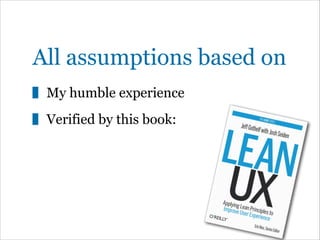
All assumptions based on
My humble experience
Verified by this book:
WHAT IS UX?
The ISO definition
“a person's perceptions and responses that
result from the use or anticipated use of a
product, system or service (...) user experience
includes all the users' emotions, beliefs,
preferences, perceptions, physical and
psychological responses, behaviors and
accomplishments that occur before, during and
after use “
From ISO 9241-210

!5
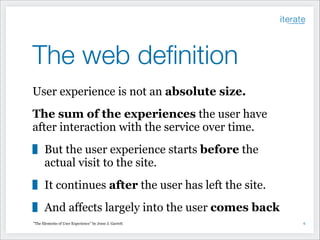
The web definition
User experience is not an absolute size.
The sum of the experiences the user have
after interaction with the service over time.
But the user experience starts before the
actual visit to the site.
It continues after the user has left the site.
And affects largely into the user comes back
"The Elements of User Experience” by Jesse J. Garrett

!6
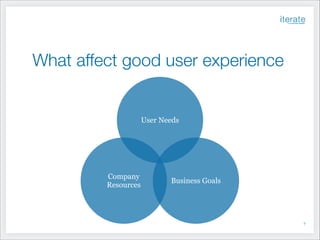
What affect good user experience

User Needs

Company
Resources

Business Goals

!7
WHAT MAKES IT LEAN?
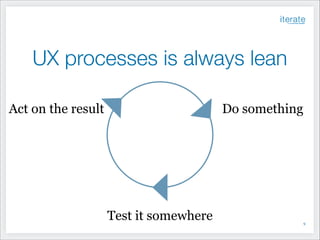
UX processes is always lean
Act on the result

Do something

Test it somewhere

!9
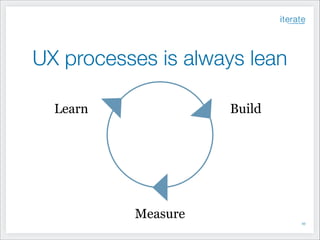
UX processes is always lean
Learn

Build

Measure
!10
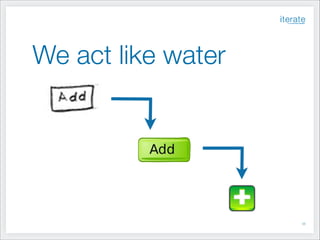
We act like water

!11
We act like water

!12
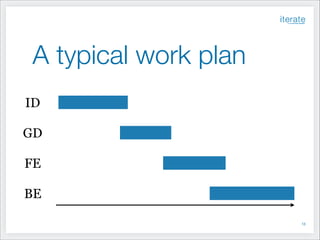
A typical work plan
ID
GD
FE
BE
!13
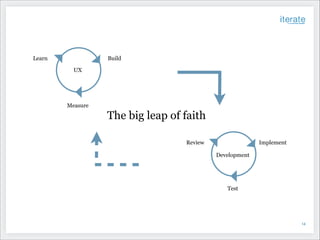
Learn

Build
UX

Measure

The big leap of faith
Review

Implement
Development

Test

!14
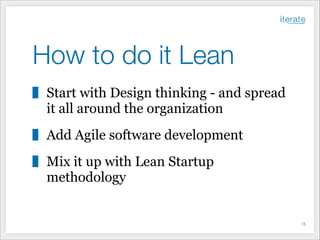
How to do it Lean
Start with Design thinking - and spread
it all around the organization
Add Agile software development
Mix it up with Lean Startup
methodology

!15
Design thinking
“innovation powered by...direct observation of what
people want and need in their lives and what they like
or dislike about the way particular products are made,
packaged, marketed, sold, and sup- ported...[It’s] a
discipline that uses the designer’s sensibility and
methods to match people’s needs with what is
technologically feasible and what a viable business
strategy can convert into customer value and market
opportunity.”
Tim Brown, CEO and president of IDEO

!16
Agile principles for UX
Individuals and interactions over processes
and tools.
Working software over comprehensive
documentation
Customer collaboration over contract
negotiation
Responding to change over following a plan
!17
Principles from Lean Startup
Remove waste from the UX process so we
only create the design artifacts the project
actually needs
Harmonize the system and bring nondesigners into the process so we get
transparent cross-functional collaboration
Remove the need for a hero designer by
iterating through experimentation
!18
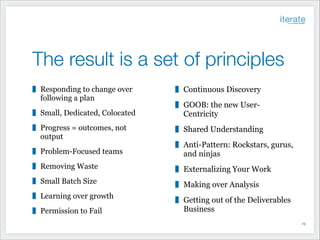
The result is a set of principles
Responding to change over
following a plan

Continuous Discovery

Small, Dedicated, Colocated

GOOB: the new UserCentricity

Progress = outcomes, not
output

Shared Understanding

Problem-Focused teams

Anti-Pattern: Rockstars, gurus,
and ninjas

Removing Waste

Externalizing Your Work

Small Batch Size

Making over Analysis

Learning over growth

Getting out of the Deliverables
Business

Permission to Fail

!19
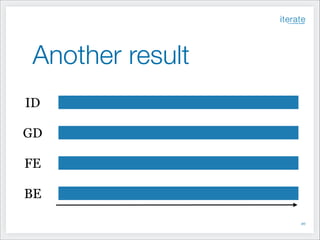
Another result
ID
GD
FE
BE
!20
HOW IT IS DONE
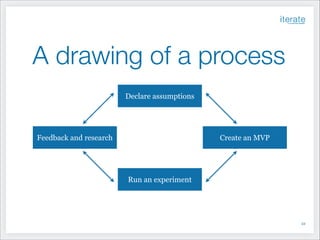
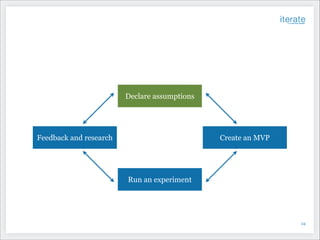
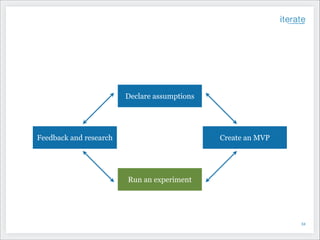
A drawing of a process
Declare assumptions

Feedback and research

Create an MVP

Run an experiment

!22
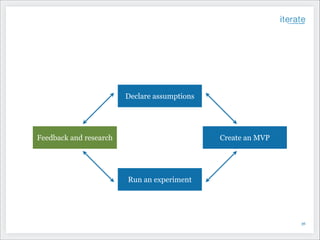
Declare assumptions

Feedback and research

Create an MVP

Run an experiment

!24
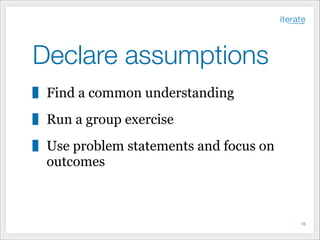
Declare assumptions
Find a common understanding
Run a group exercise
Use problem statements and focus on
outcomes

!25
[Our service/product] was designed to achieve
[these goals]. We have observed that the product/
service isn’t meeting [these goals], which is causing
[this adverse effect] to our business. How might we
improve [service/product] so that our customers are
more successful based on [these measurable
criteria]?

!26
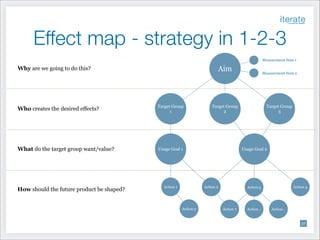
Effect map - strategy in 1-2-3
Measurement Item 1

Aim

Why are we going to do this?

Who creates the desired effects?

Target Group
1

What do the target group want/value?

Usage Goal 1

How should the future product be shaped?

Action 1

Target Group
2

Target Group
3

Usage Goal 2

Action 2

Action 3

Measurement Item 2

Action 4

Action 5

Action 7

Action ..

Action ..

!27
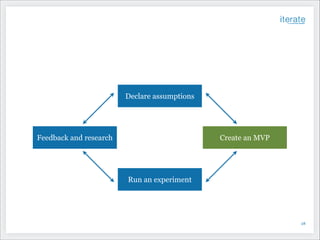
Declare assumptions

Feedback and research

Create an MVP

Run an experiment

!28
Collaborative design
Workshops for designing elements
All team members must attend
Everyone should sketch
Preferably on paper, but do what suits
you best
!29
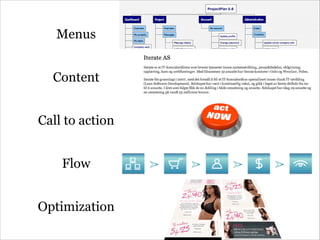
Menus
Content
Call to action
Flow
Optimization
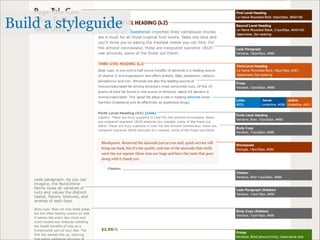
Build a styleguide
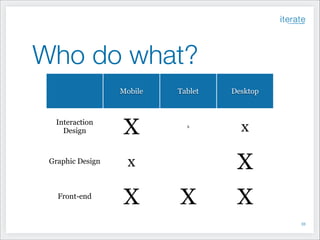
Who do what?
ID sketches on mobile and partially on
desktop
GD design desktop and create the style
guide
FE makes it responsive

!32
Who do what?
Mobile

Tablet

Desktop

Interaction
Design

X

x

x

Graphic Design

x

Front-end

X

X
X

X
!33
Declare assumptions

Feedback and research

Create an MVP

Run an experiment

!34
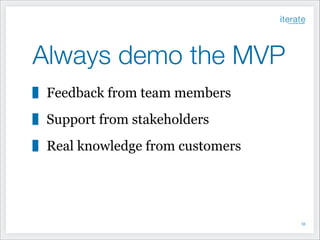
Always demo the MVP
Feedback from team members
Support from stakeholders
Real knowledge from customers

!35
Declare assumptions

Feedback and research

Create an MVP

Run an experiment

!36
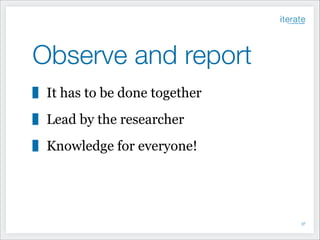
Observe and report
It has to be done together
Lead by the researcher
Knowledge for everyone!

!37
!38
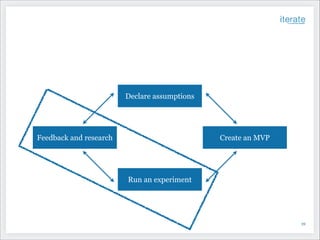
Declare assumptions

Feedback and research

Create an MVP

Run an experiment

!39
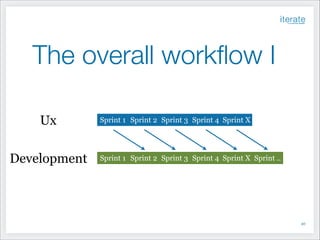
The overall workflow I
Ux
Development

Sprint 1 Sprint 2 Sprint 3 Sprint 4 Sprint X

Sprint 1 Sprint 2 Sprint 3 Sprint 4 Sprint X Sprint ..

!40
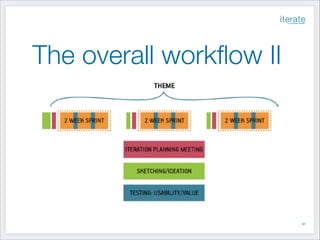
The overall workflow II

!41
WHY IT WON’T WORK
The big picture

!43
Slide fra Gmail

!44
Highest Paid Person's Opinion
The anticipation for perfection
?

Lean UX - a suggestion

  • 1.
  • 3.
    All assumptions basedon My humble experience Verified by this book:
  • 4.
  • 5.
    The ISO definition “aperson's perceptions and responses that result from the use or anticipated use of a product, system or service (...) user experience includes all the users' emotions, beliefs, preferences, perceptions, physical and psychological responses, behaviors and accomplishments that occur before, during and after use “ From ISO 9241-210 !5
  • 6.
    The web definition Userexperience is not an absolute size. The sum of the experiences the user have after interaction with the service over time. But the user experience starts before the actual visit to the site. It continues after the user has left the site. And affects largely into the user comes back "The Elements of User Experience” by Jesse J. Garrett !6
  • 7.
    What affect gooduser experience User Needs Company Resources Business Goals !7
  • 8.
  • 9.
    UX processes isalways lean Act on the result Do something Test it somewhere !9
  • 10.
    UX processes isalways lean Learn Build Measure !10
  • 11.
    We act likewater !11
  • 12.
    We act likewater !12
  • 13.
    A typical workplan ID GD FE BE !13
  • 14.
    Learn Build UX Measure The big leapof faith Review Implement Development Test !14
  • 15.
    How to doit Lean Start with Design thinking - and spread it all around the organization Add Agile software development Mix it up with Lean Startup methodology !15
  • 16.
    Design thinking “innovation poweredby...direct observation of what people want and need in their lives and what they like or dislike about the way particular products are made, packaged, marketed, sold, and sup- ported...[It’s] a discipline that uses the designer’s sensibility and methods to match people’s needs with what is technologically feasible and what a viable business strategy can convert into customer value and market opportunity.” Tim Brown, CEO and president of IDEO !16
  • 17.
    Agile principles forUX Individuals and interactions over processes and tools. Working software over comprehensive documentation Customer collaboration over contract negotiation Responding to change over following a plan !17
  • 18.
    Principles from LeanStartup Remove waste from the UX process so we only create the design artifacts the project actually needs Harmonize the system and bring nondesigners into the process so we get transparent cross-functional collaboration Remove the need for a hero designer by iterating through experimentation !18
  • 19.
    The result isa set of principles Responding to change over following a plan Continuous Discovery Small, Dedicated, Colocated GOOB: the new UserCentricity Progress = outcomes, not output Shared Understanding Problem-Focused teams Anti-Pattern: Rockstars, gurus, and ninjas Removing Waste Externalizing Your Work Small Batch Size Making over Analysis Learning over growth Getting out of the Deliverables Business Permission to Fail !19
  • 20.
  • 21.
  • 22.
    A drawing ofa process Declare assumptions Feedback and research Create an MVP Run an experiment !22
  • 24.
    Declare assumptions Feedback andresearch Create an MVP Run an experiment !24
  • 25.
    Declare assumptions Find acommon understanding Run a group exercise Use problem statements and focus on outcomes !25
  • 26.
    [Our service/product] wasdesigned to achieve [these goals]. We have observed that the product/ service isn’t meeting [these goals], which is causing [this adverse effect] to our business. How might we improve [service/product] so that our customers are more successful based on [these measurable criteria]? !26
  • 27.
    Effect map -strategy in 1-2-3 Measurement Item 1 Aim Why are we going to do this? Who creates the desired effects? Target Group 1 What do the target group want/value? Usage Goal 1 How should the future product be shaped? Action 1 Target Group 2 Target Group 3 Usage Goal 2 Action 2 Action 3 Measurement Item 2 Action 4 Action 5 Action 7 Action .. Action .. !27
  • 28.
    Declare assumptions Feedback andresearch Create an MVP Run an experiment !28
  • 29.
    Collaborative design Workshops fordesigning elements All team members must attend Everyone should sketch Preferably on paper, but do what suits you best !29
  • 30.
  • 31.
  • 32.
    Who do what? IDsketches on mobile and partially on desktop GD design desktop and create the style guide FE makes it responsive !32
  • 33.
  • 34.
    Declare assumptions Feedback andresearch Create an MVP Run an experiment !34
  • 35.
    Always demo theMVP Feedback from team members Support from stakeholders Real knowledge from customers !35
  • 36.
    Declare assumptions Feedback andresearch Create an MVP Run an experiment !36
  • 37.
    Observe and report Ithas to be done together Lead by the researcher Knowledge for everyone! !37
  • 38.
  • 39.
    Declare assumptions Feedback andresearch Create an MVP Run an experiment !39
  • 40.
    The overall workflowI Ux Development Sprint 1 Sprint 2 Sprint 3 Sprint 4 Sprint X Sprint 1 Sprint 2 Sprint 3 Sprint 4 Sprint X Sprint .. !40
  • 41.
  • 42.
  • 43.
  • 44.
  • 45.
  • 46.
  • 47.