Downloaded 204 times


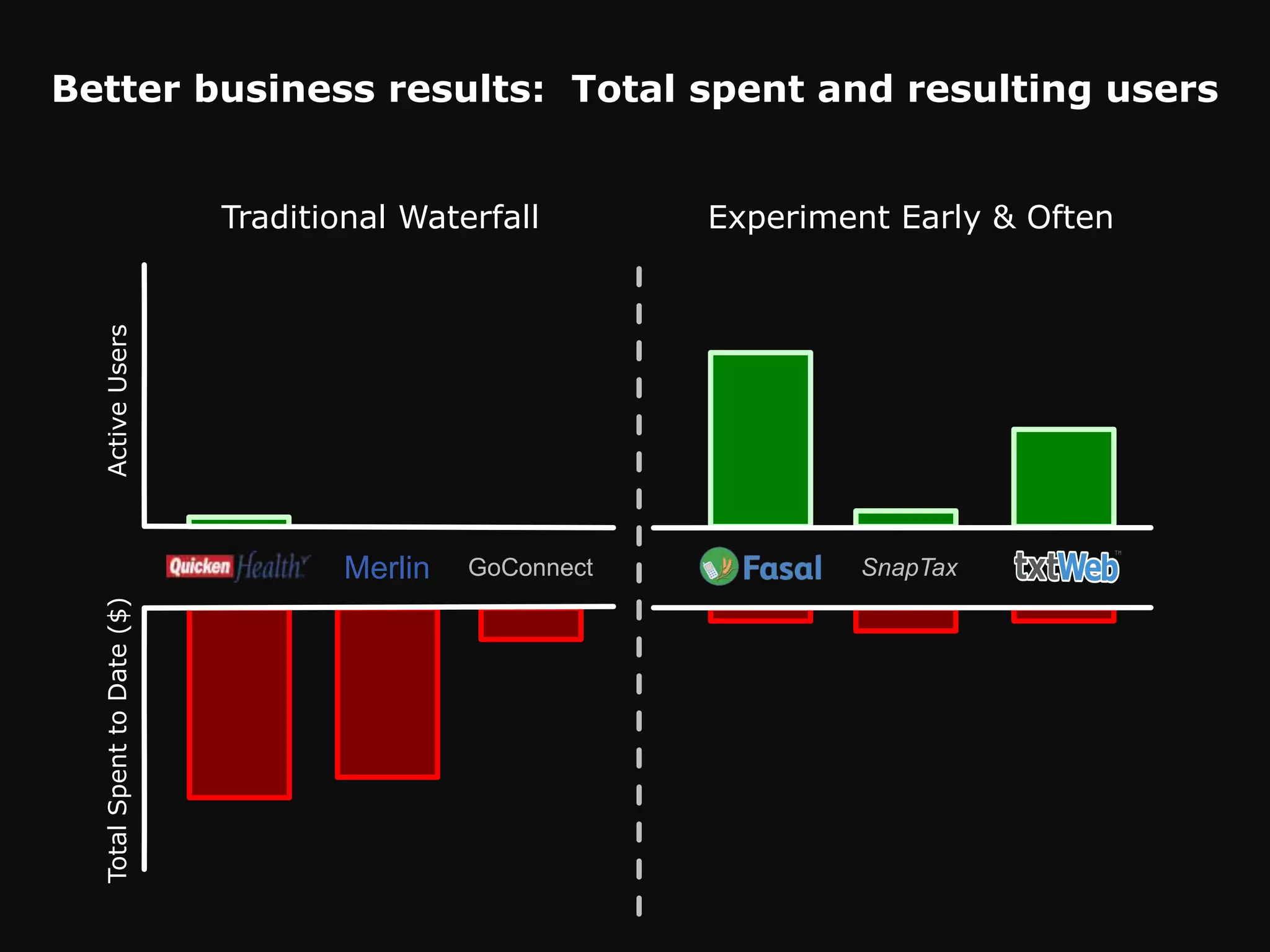




The document discusses moving from a traditional thinking model to a culture of experimentation. It provides examples of how experimenting and rapidly iterating ideas through customer experiments can lead to better business results like increased active users and lower operational costs compared to traditional waterfall approaches. The document advocates that a culture of experimentation can engage employees more, make customers happier, and yield better business outcomes. It cites Intuit's experience of growing from a handful of experiments in 2008 to over 1300 experiments across various areas of the business by 2012. The document shares three lessons learned: fall in love with the problem not the solution, scrappy does not mean crappy, and the only right answer is to get started.
The goal is improving the lives of 60 million people through innovative solutions.
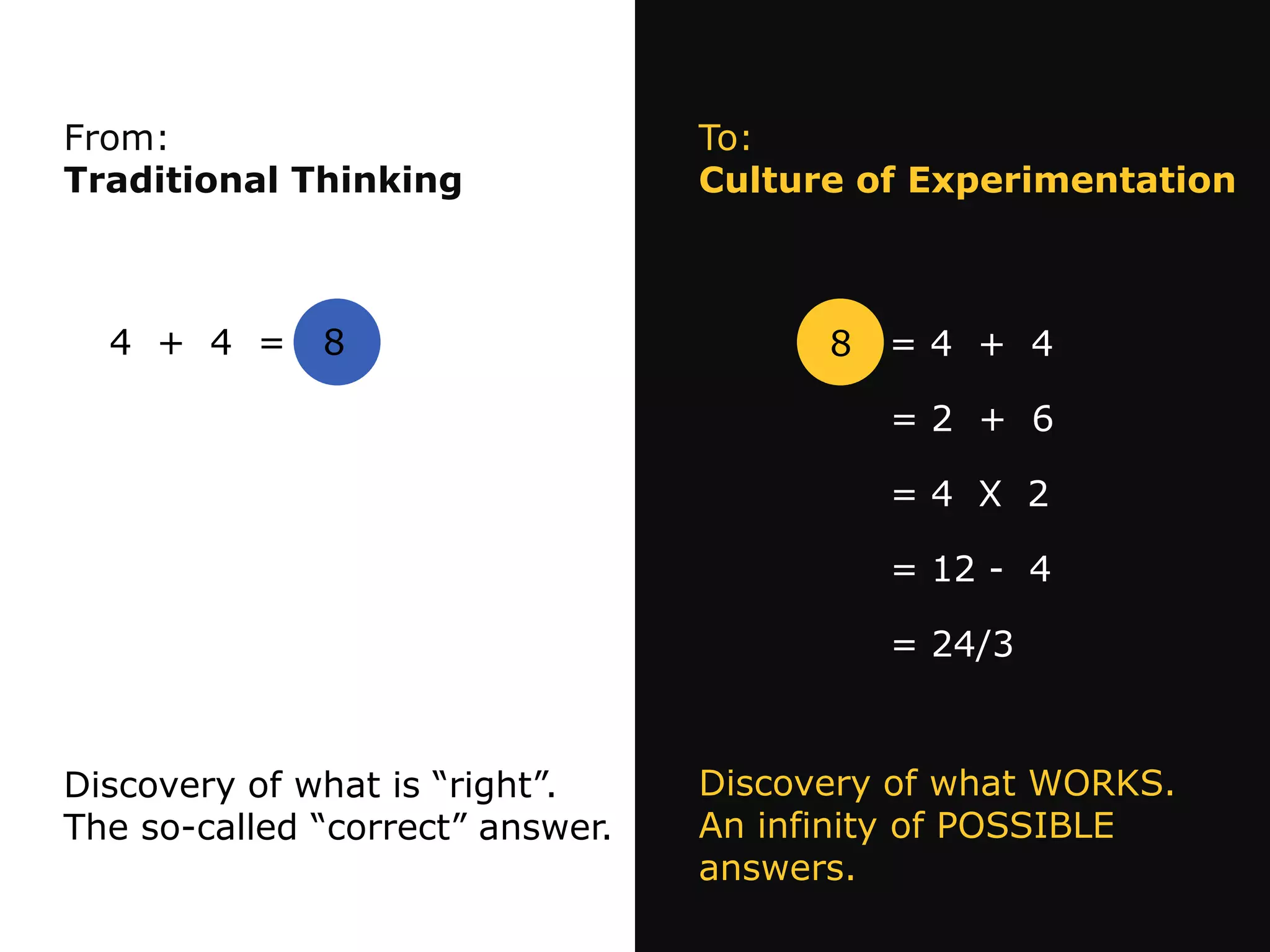
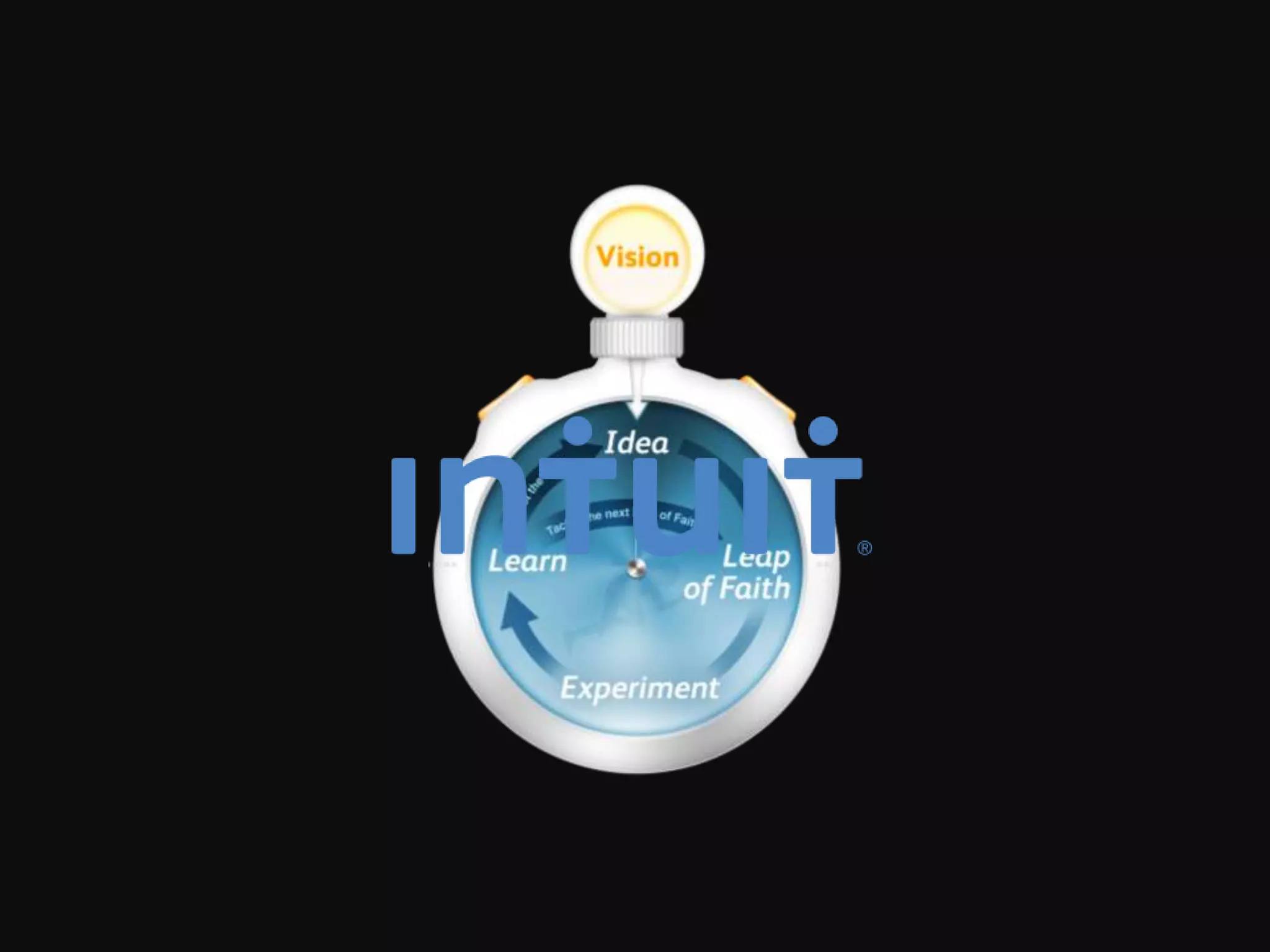
Transition from traditional thinking to a culture of experimentation to discover effective solutions.
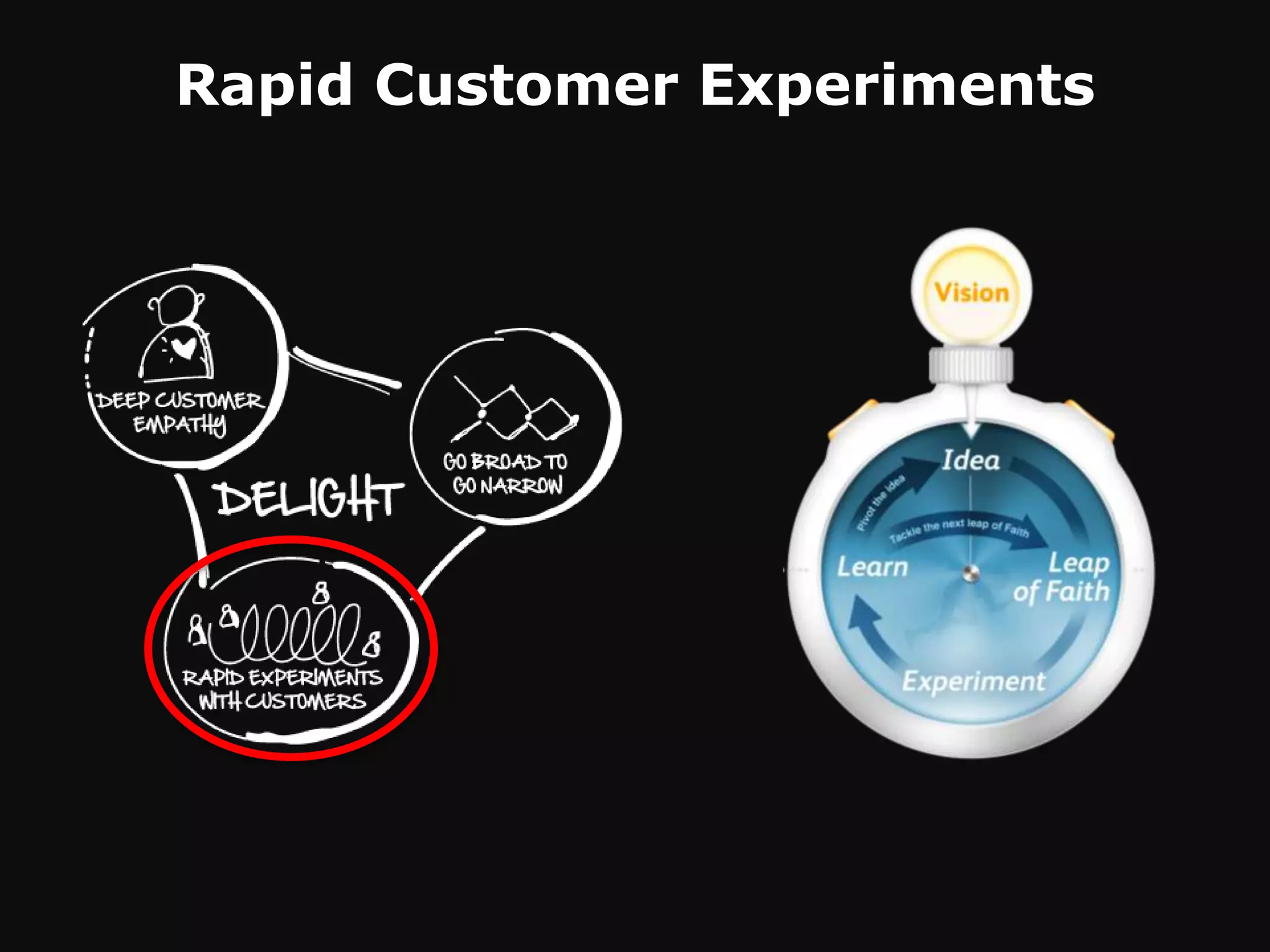
Emphasis on conducting rapid experiments focused on customer needs and feedback.
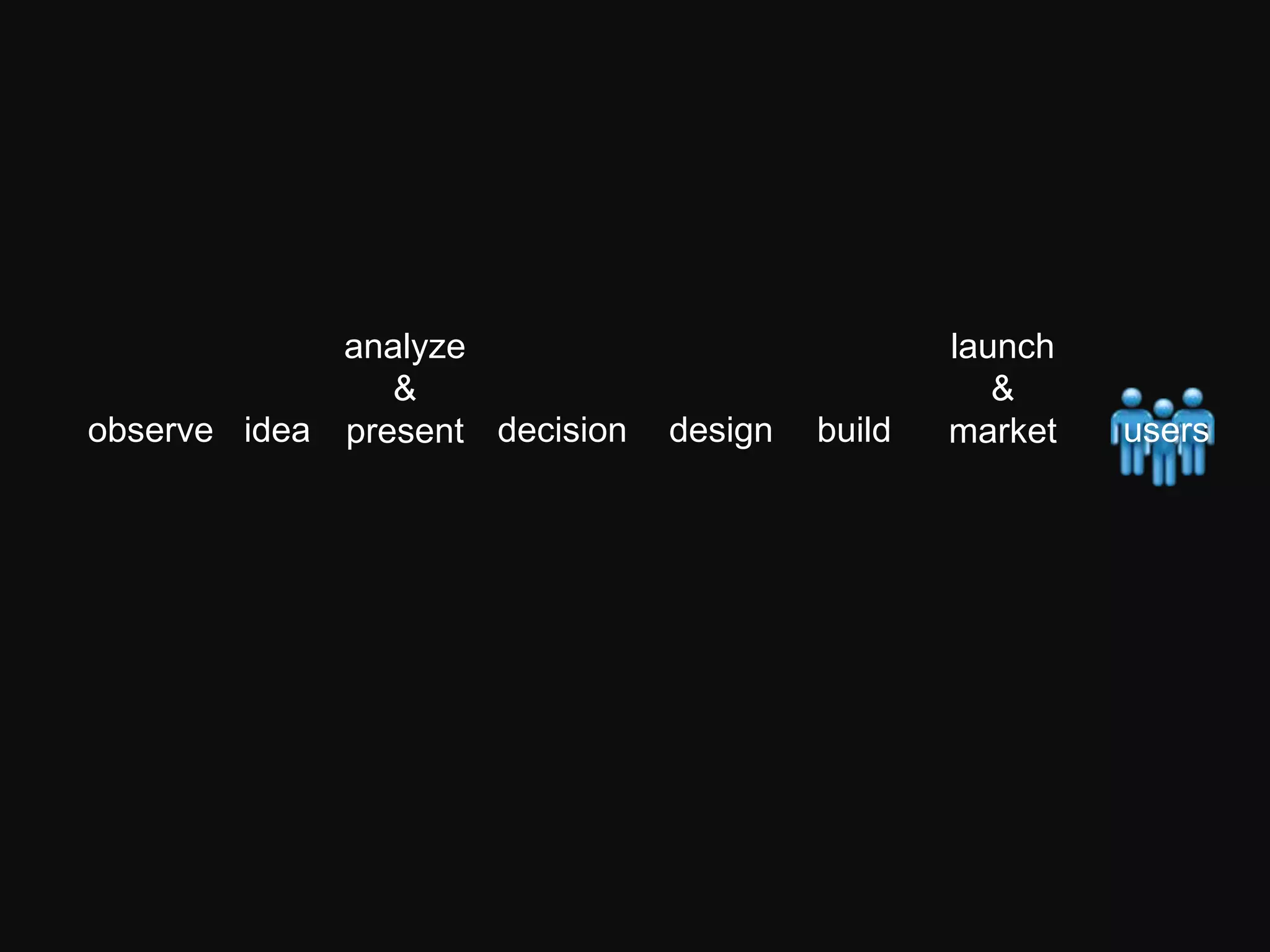
Detailed process from analysis, observation, idea presentation to launching and marketing products.
Continued process of experimentation through observation and iterative launches.
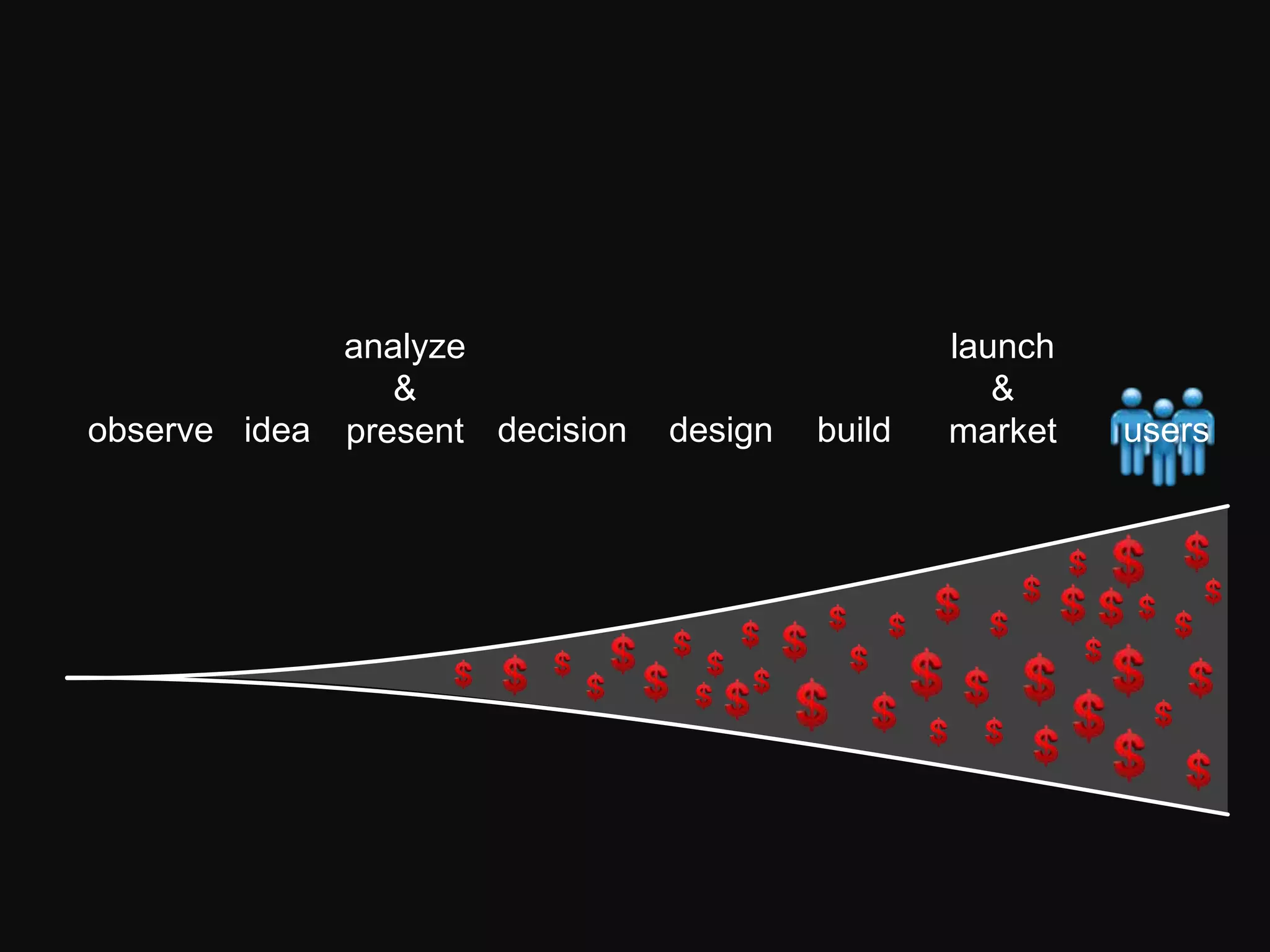
Further iteration of analysis, design, building to testing in the experimentation lifecycle.
Comparison of traditional waterfall and experimental approaches in driving active user engagement.
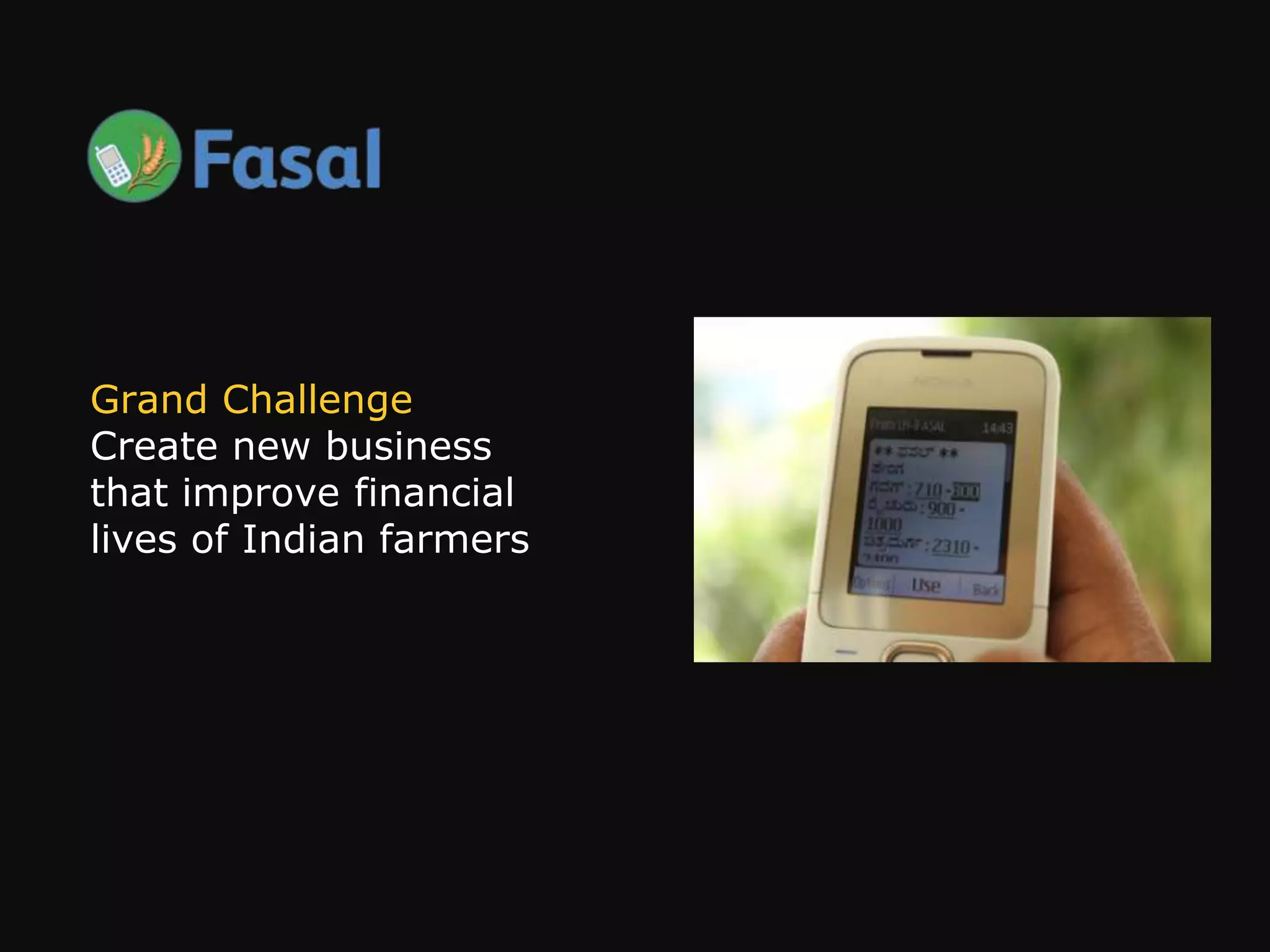
Aim to create business solutions that enhance the financial lives of Indian farmers.
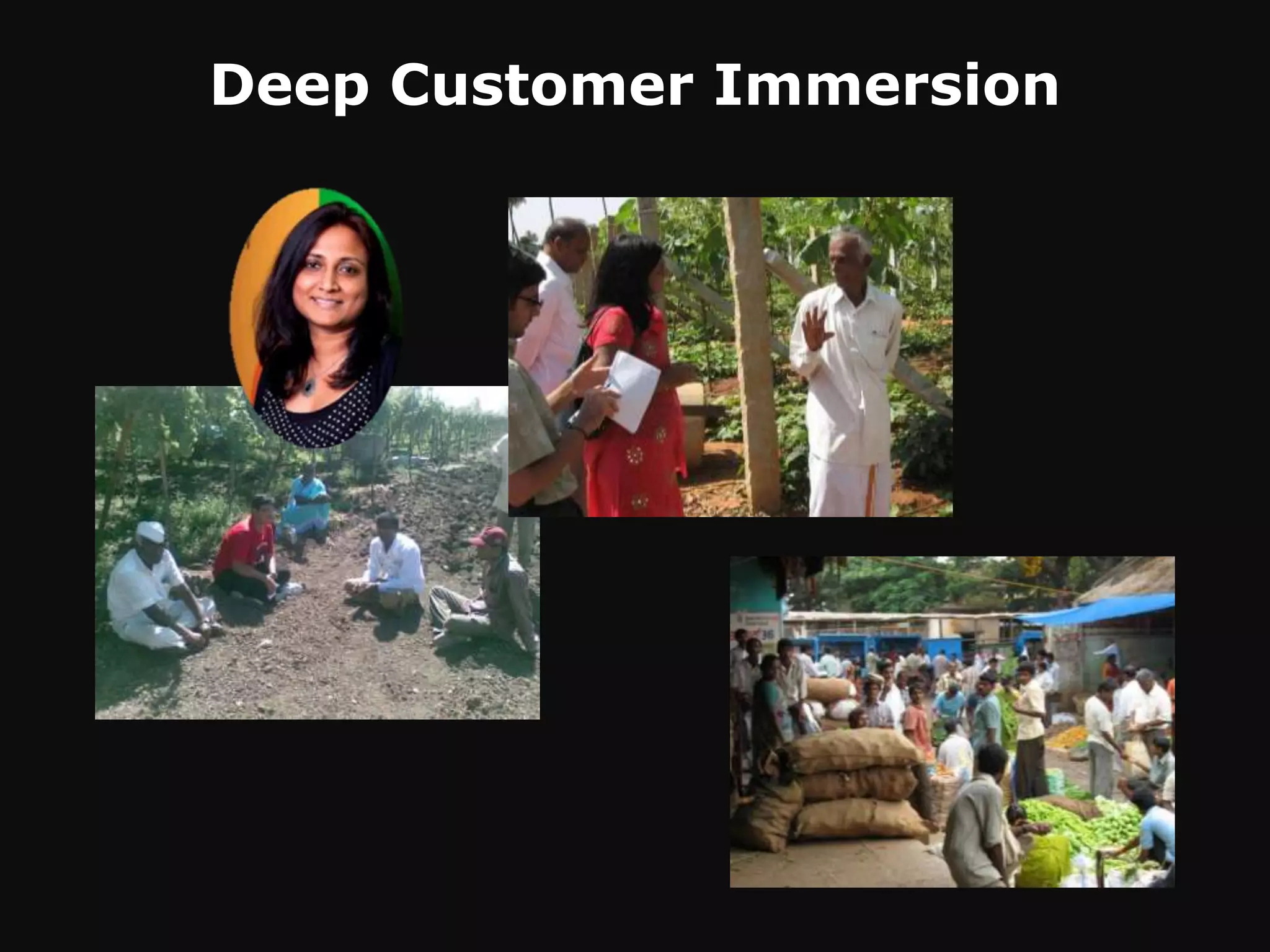
Focus on deep customer immersion to better understand and serve user needs.
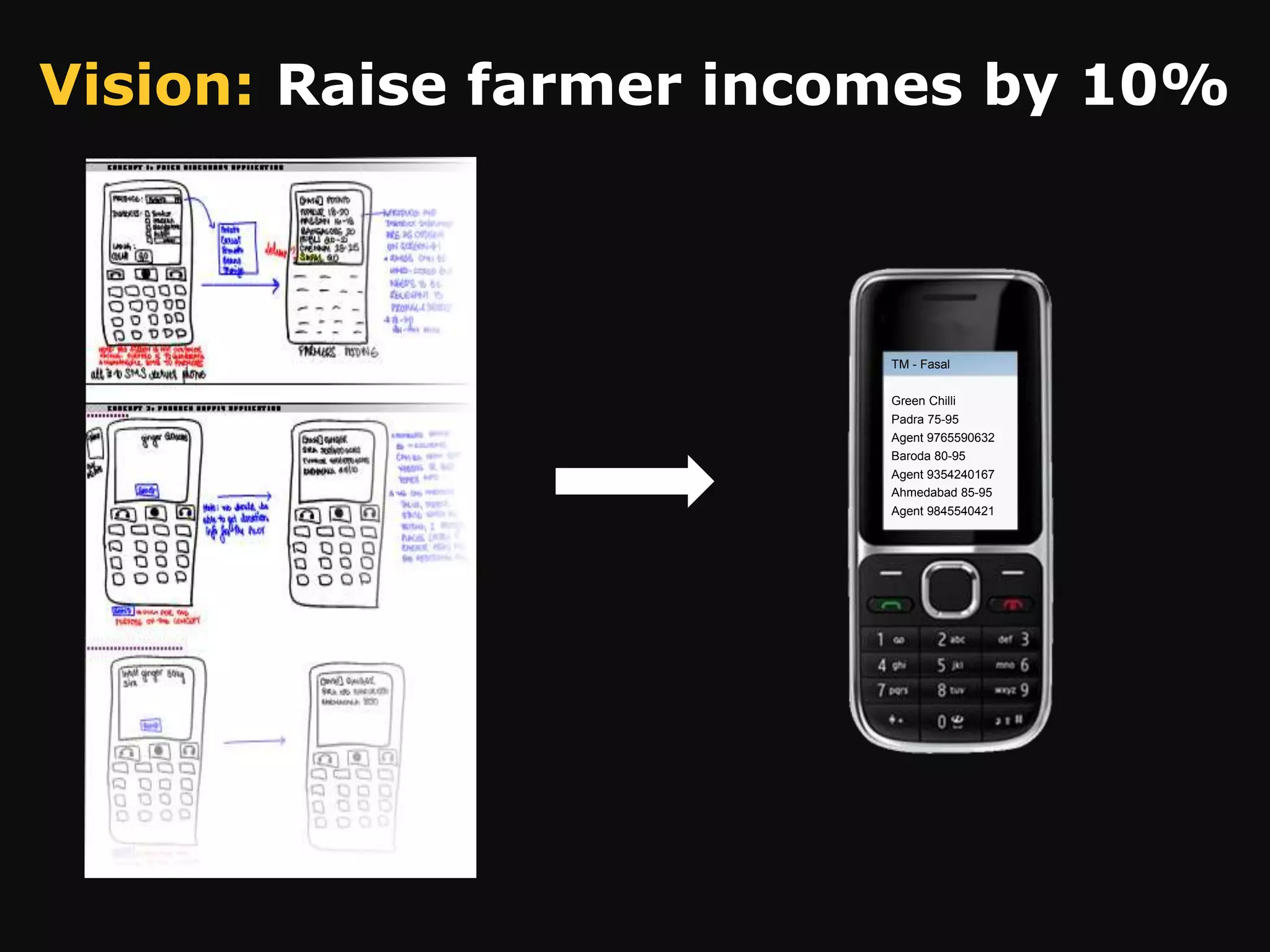
Vision to increase farmer incomes by 10%, with specific contact details for agents.
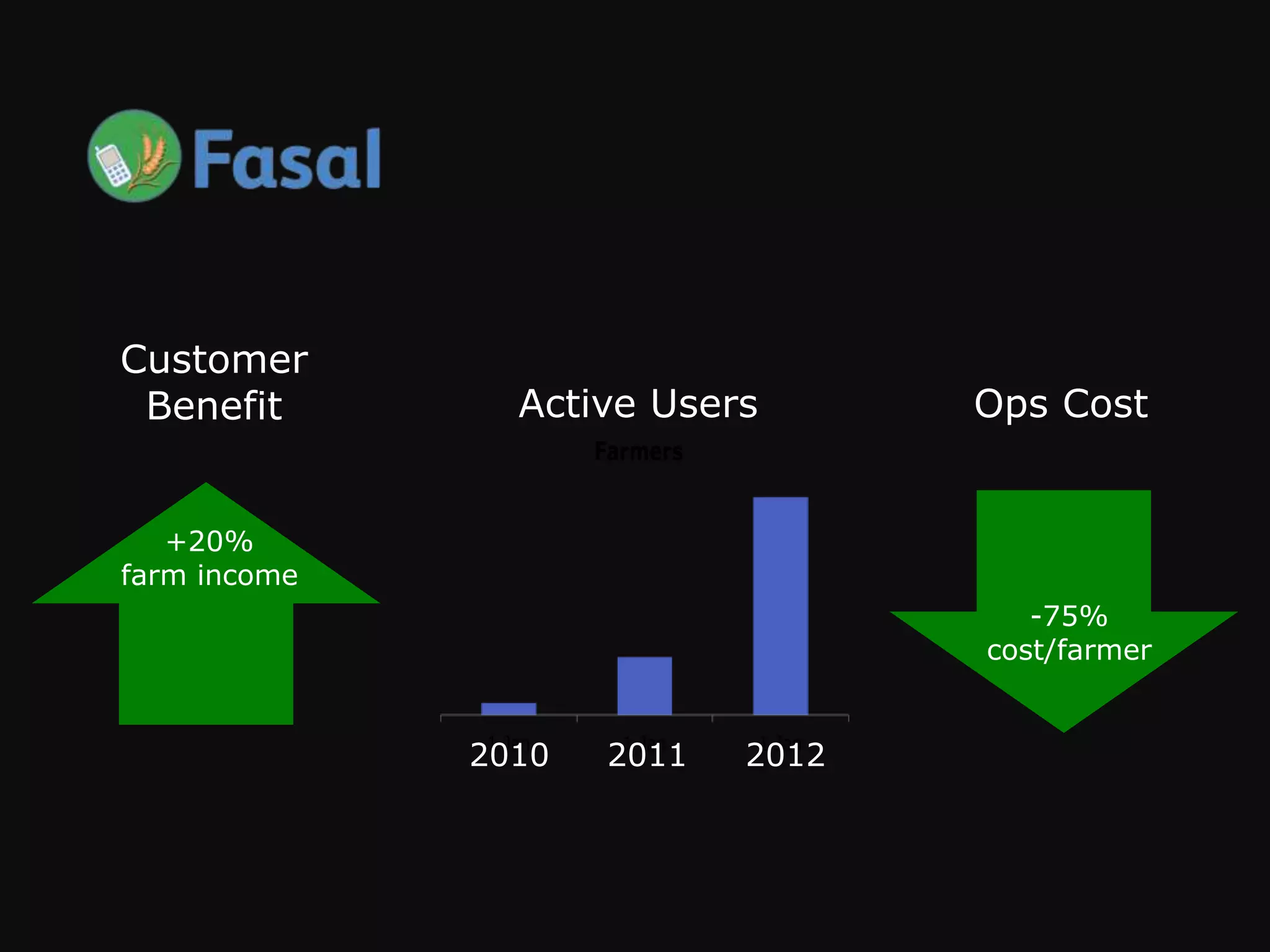
Demonstrated increase in farm income and reduction in operation costs over the years.
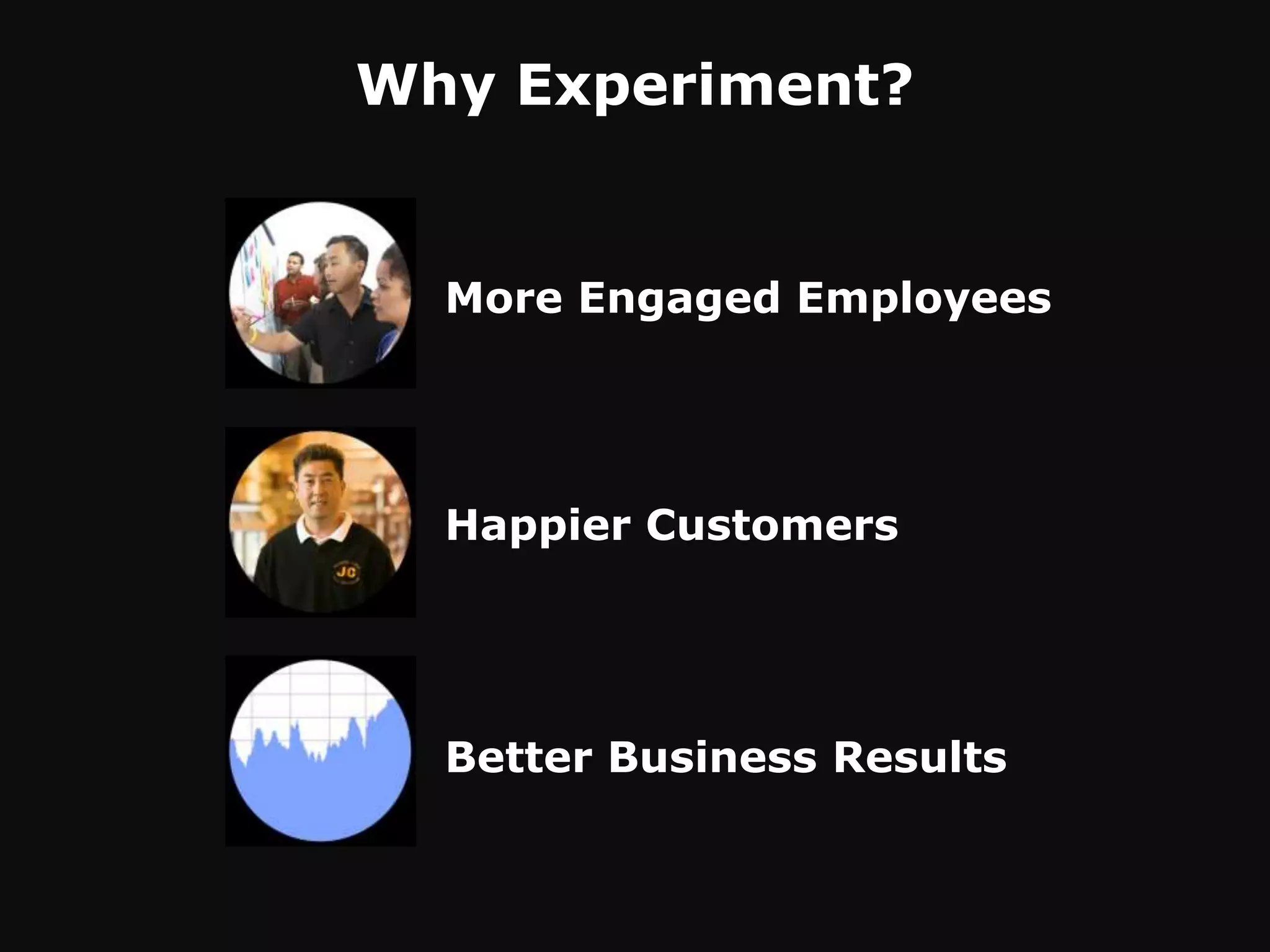
Stress on experimentation leading to more engaged employees, happier customers, and better results.
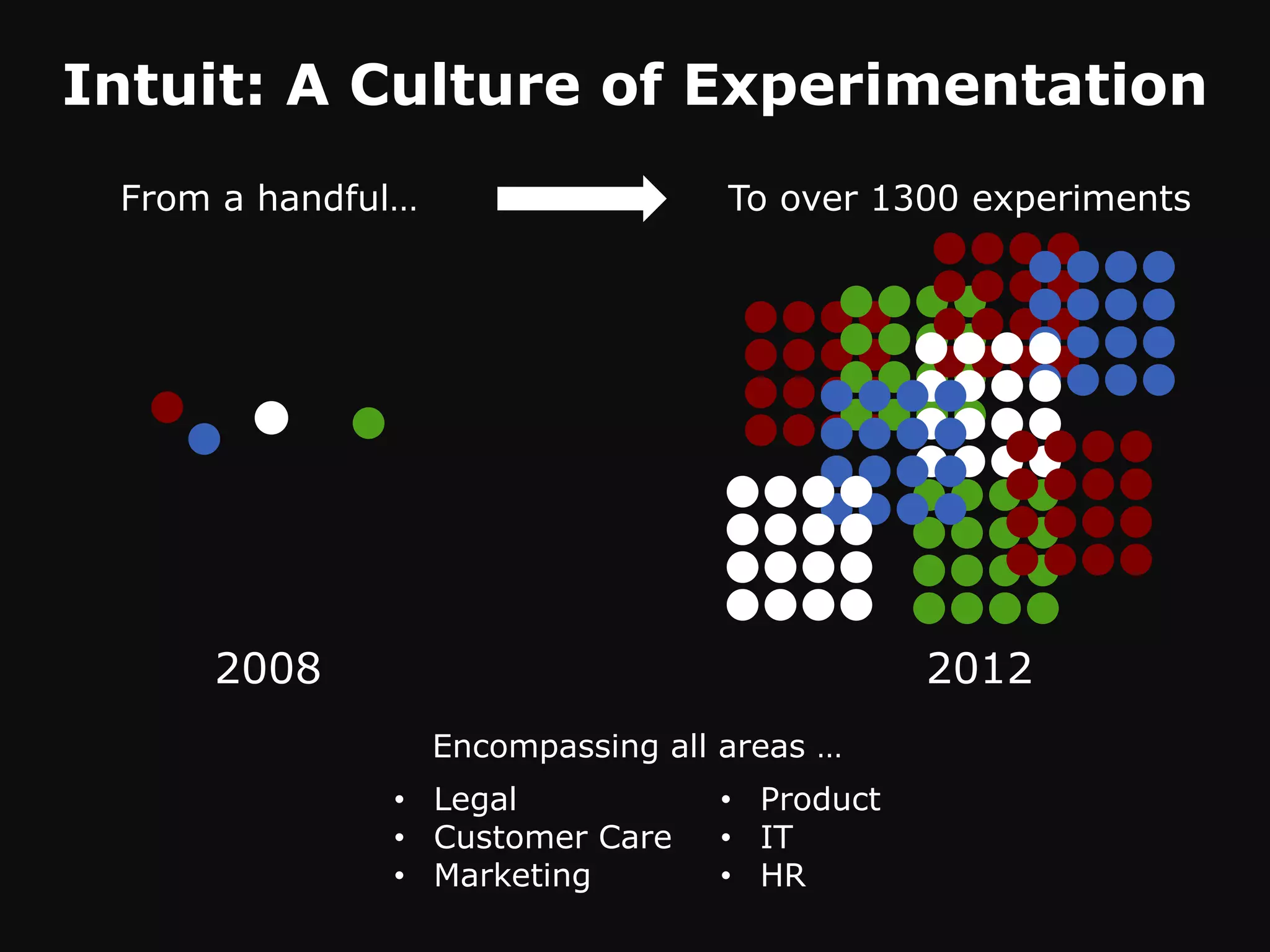
Intuit's evolution of experimentation with a significant increase in initiatives from 2008 to 2012.
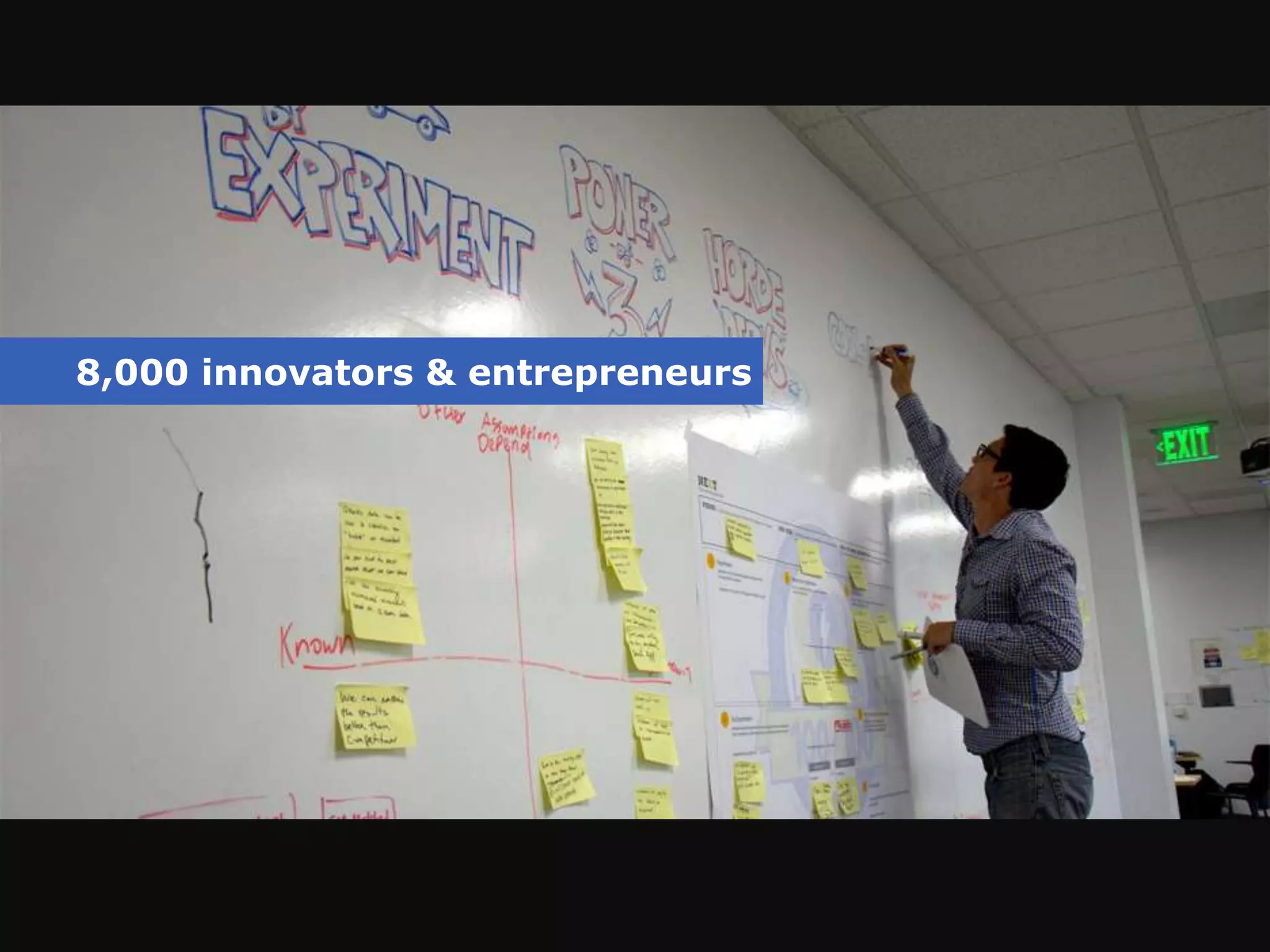
Highlighting a community of 8,000 innovators and entrepreneurs contributing to change.
Sharing three vital lessons learned from the experimentation process.
Advice to prioritize understanding the problem rather than clinging to solutions.
Emphasizing that being scrappy does not equate to producing low-quality outcomes.
Encouragement to start taking action, as there are no absolute right answers in experimentation.


