U X & D E S I G N M Y T H S
A Q U I C K R U N T H R O U G H
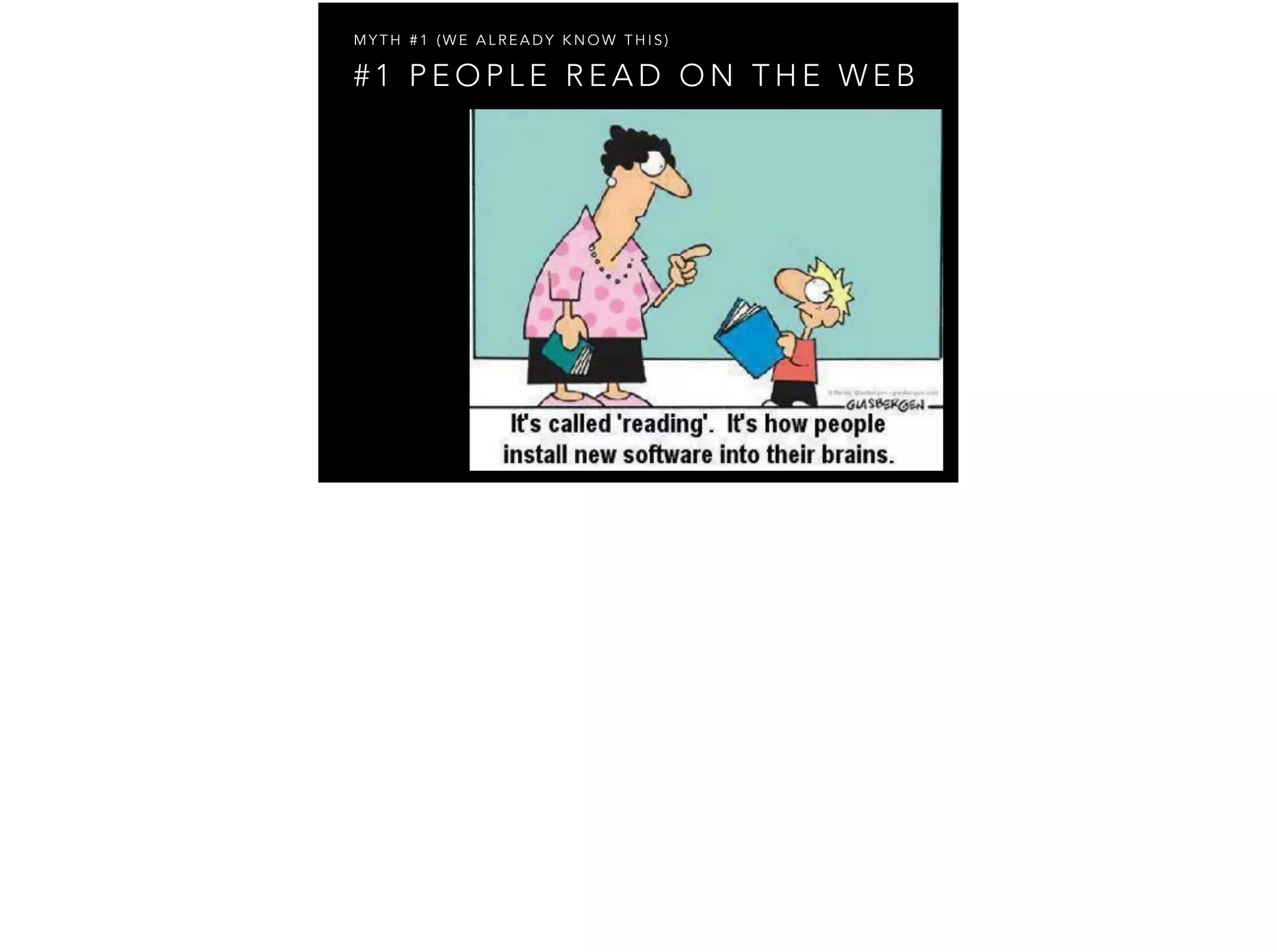
# 1 P E O P L E R E A D O N T H E W E B
M Y T H # 1 ( W E A L R E A D Y K N O W T H I S )
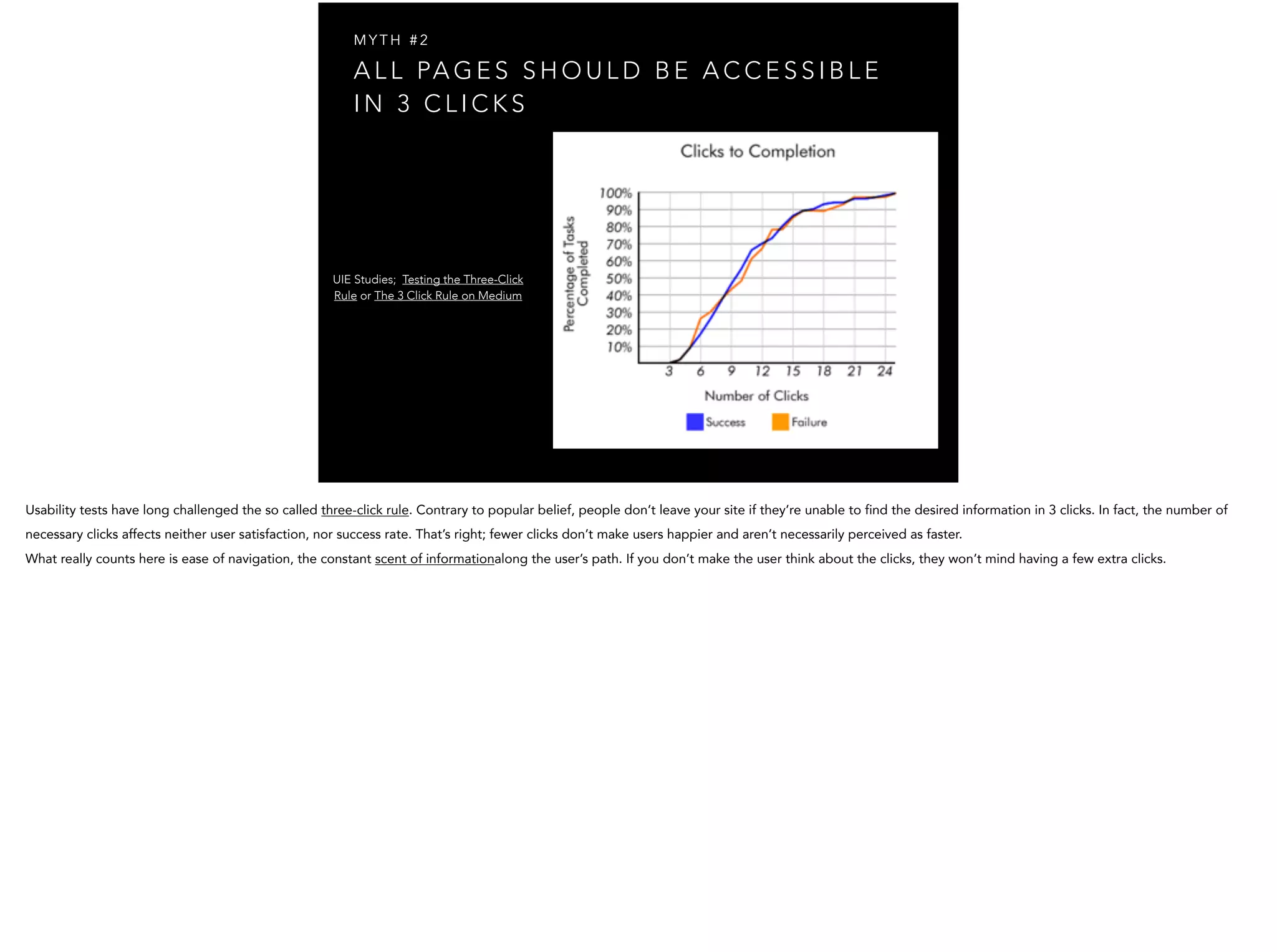
A L L PA G E S S H O U L D B E A C C E S S I B L E
I N 3 C L I C K S
M Y T H # 2
UIE Studies; Testing the Three-Click
Rule or The 3 Click Rule on Medium
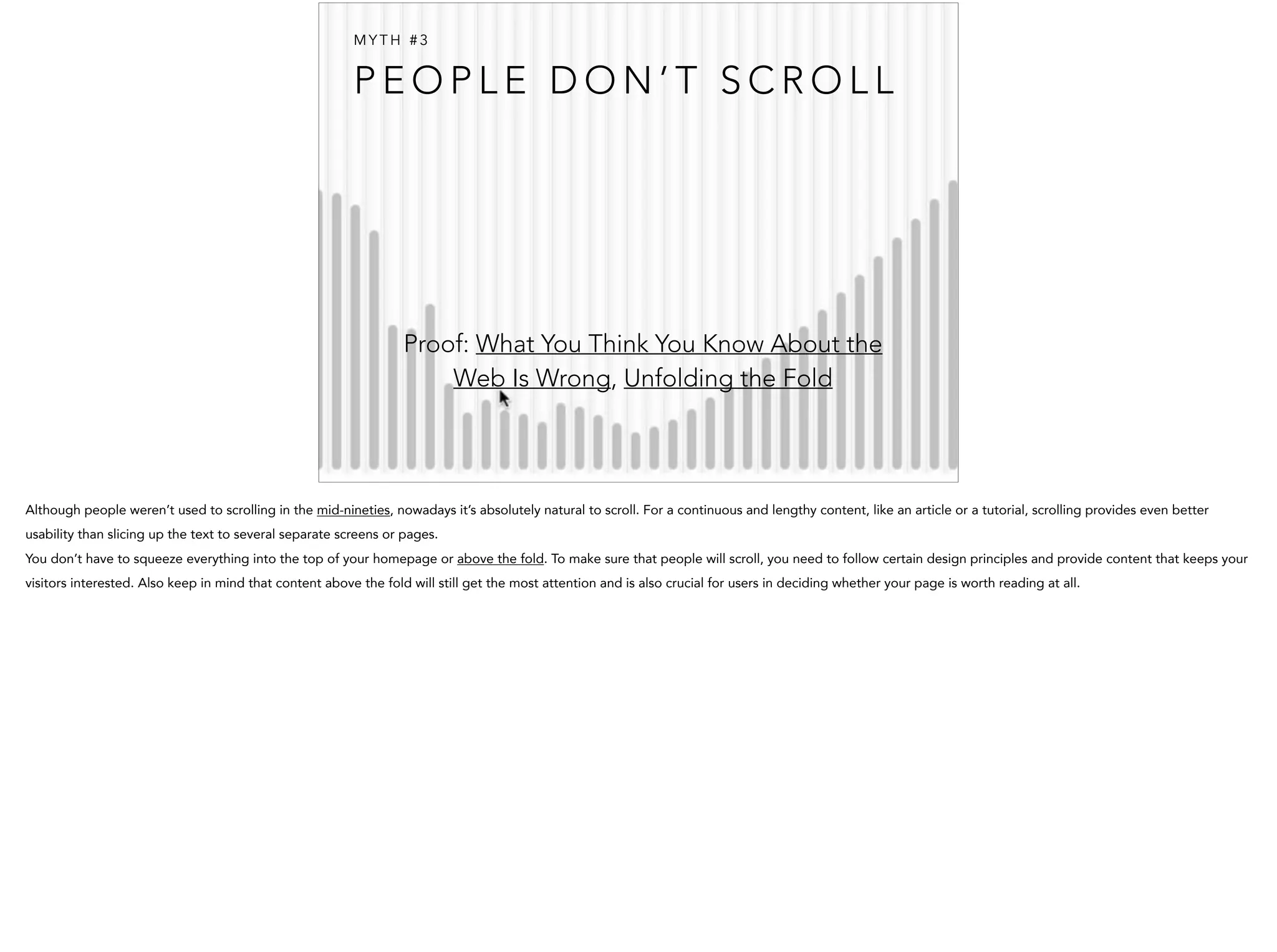
P E O P L E D O N ’ T S C R O L L
M Y T H # 3
Proof: What You Think You Know About the
Web Is Wrong, Unfolding the Fold
D E S I G N H A S T O B E O R I G I N A L
M Y T H # 5
I F Y O U R D E S I G N I S G O O D , T H E S M A L L
D E TA I L S D O N ’ T M AT T E R
M Y T H # 6
M O R E C H O I C E S A N D F E AT U R E S
R E S U LT I N H I G H E R S AT I S FA C T I O N
M Y T H # 7
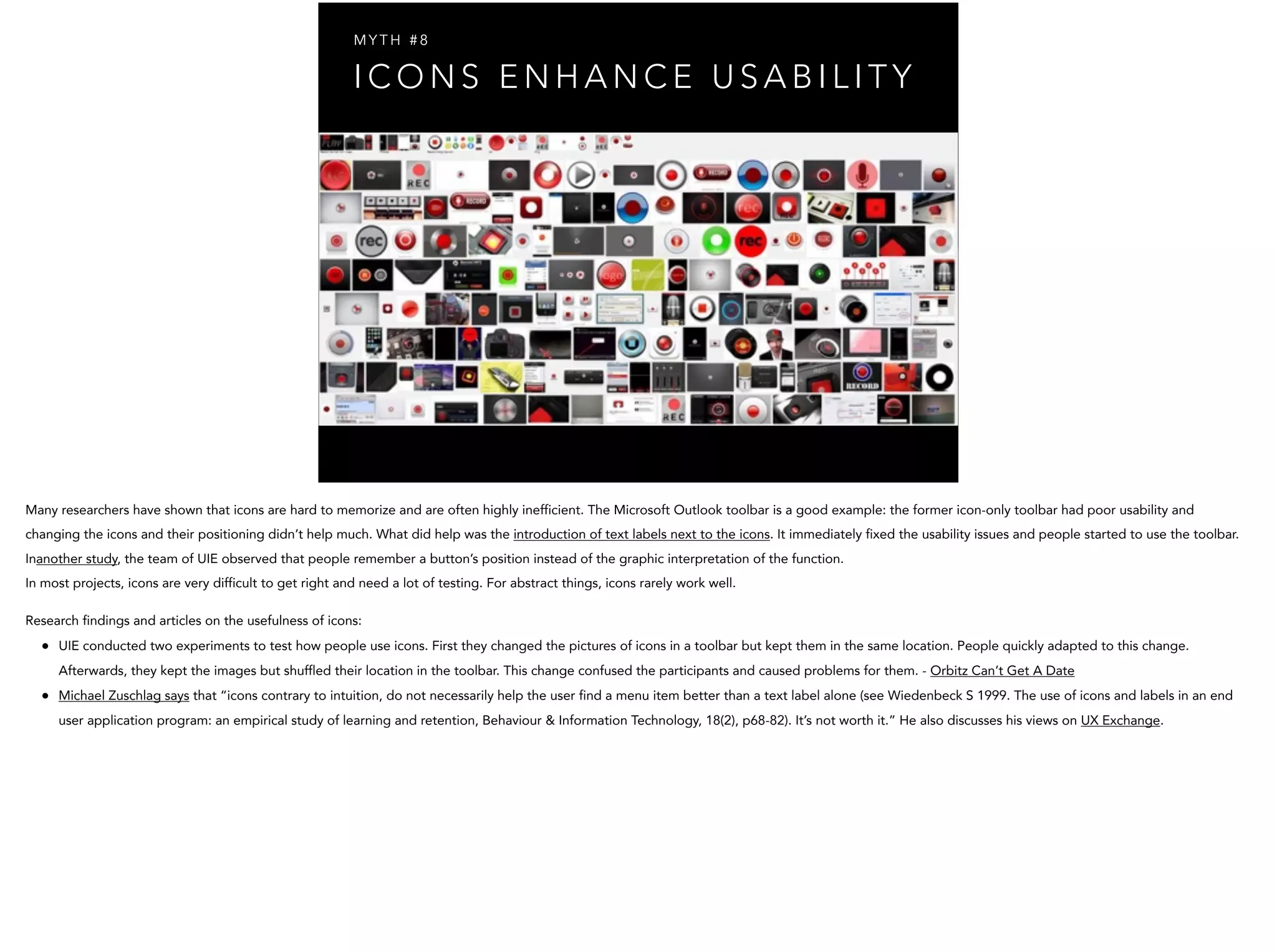
I C O N S E N H A N C E U S A B I L I T Y
M Y T H # 8
Y O U A R E L I K E Y O U R U S E R S
M Y T H # 9
U S E R S M A K E O P T I M A L C H O I C E S
M Y T H # 1 0
T H E H O M E PA G E / D A S H B O A R D I S T H E
M O S T I M P O R TA N T PA G E
M Y T H # 1 1
Y O U D O N ’ T N E E D T H E
C O N T E N T T O D E S I G N
M Y T H # 1 2
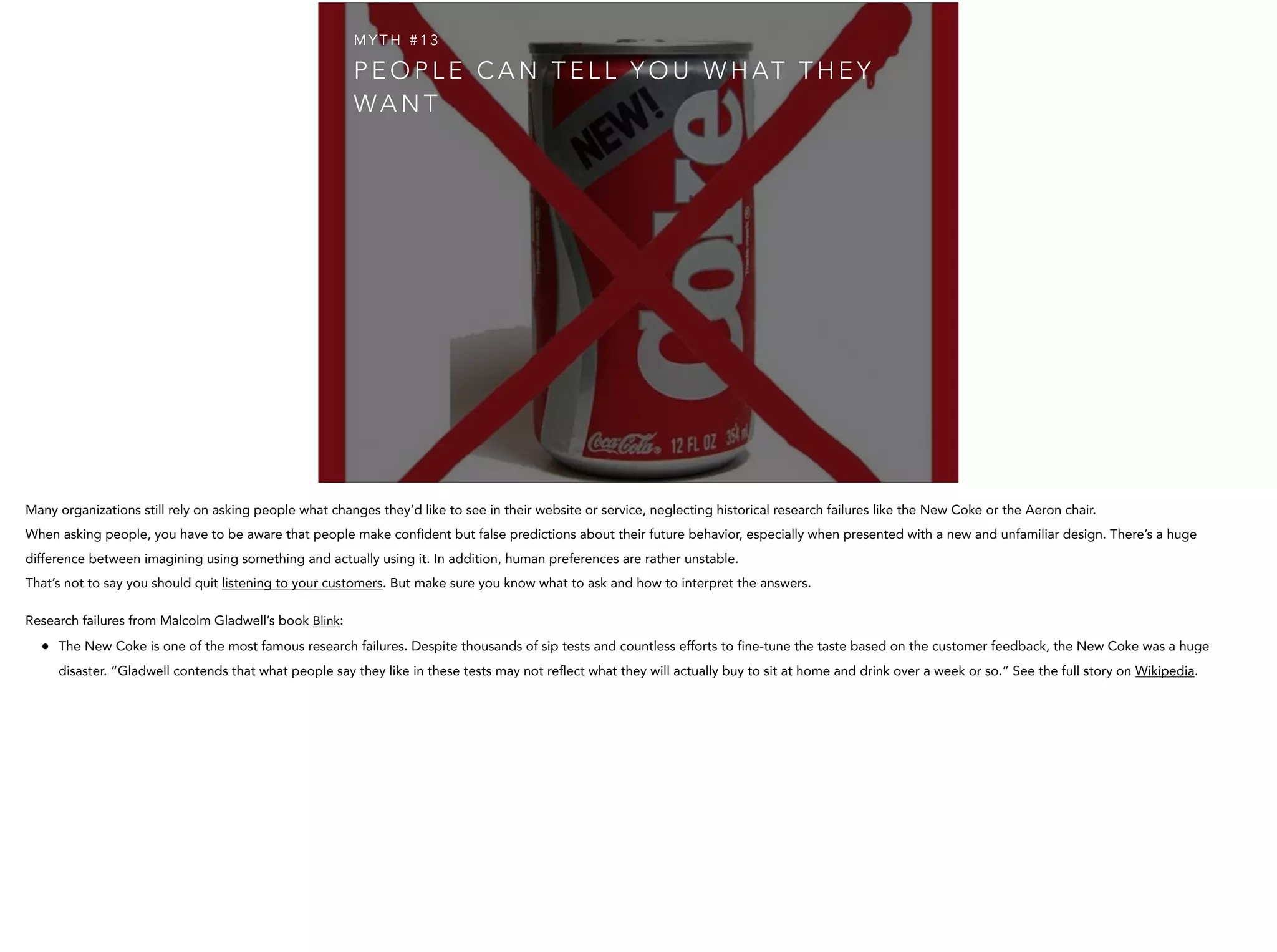
P E O P L E C A N T E L L Y O U W H AT T H E Y
WA N T
M Y T H # 1 3
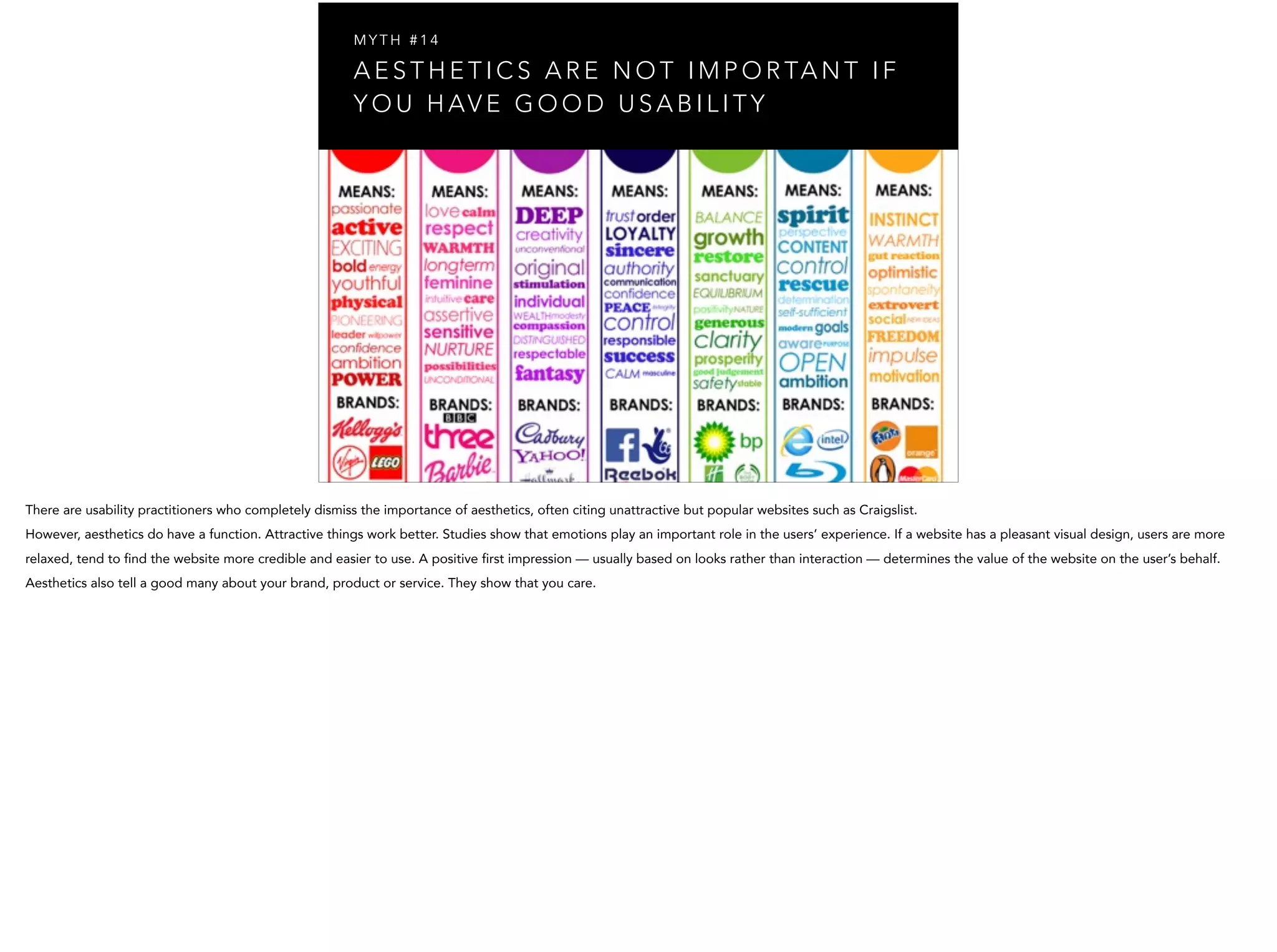
A E S T H E T I C S A R E N O T I M P O R TA N T I F
Y O U H AV E G O O D U S A B I L I T Y
M Y T H # 1 4
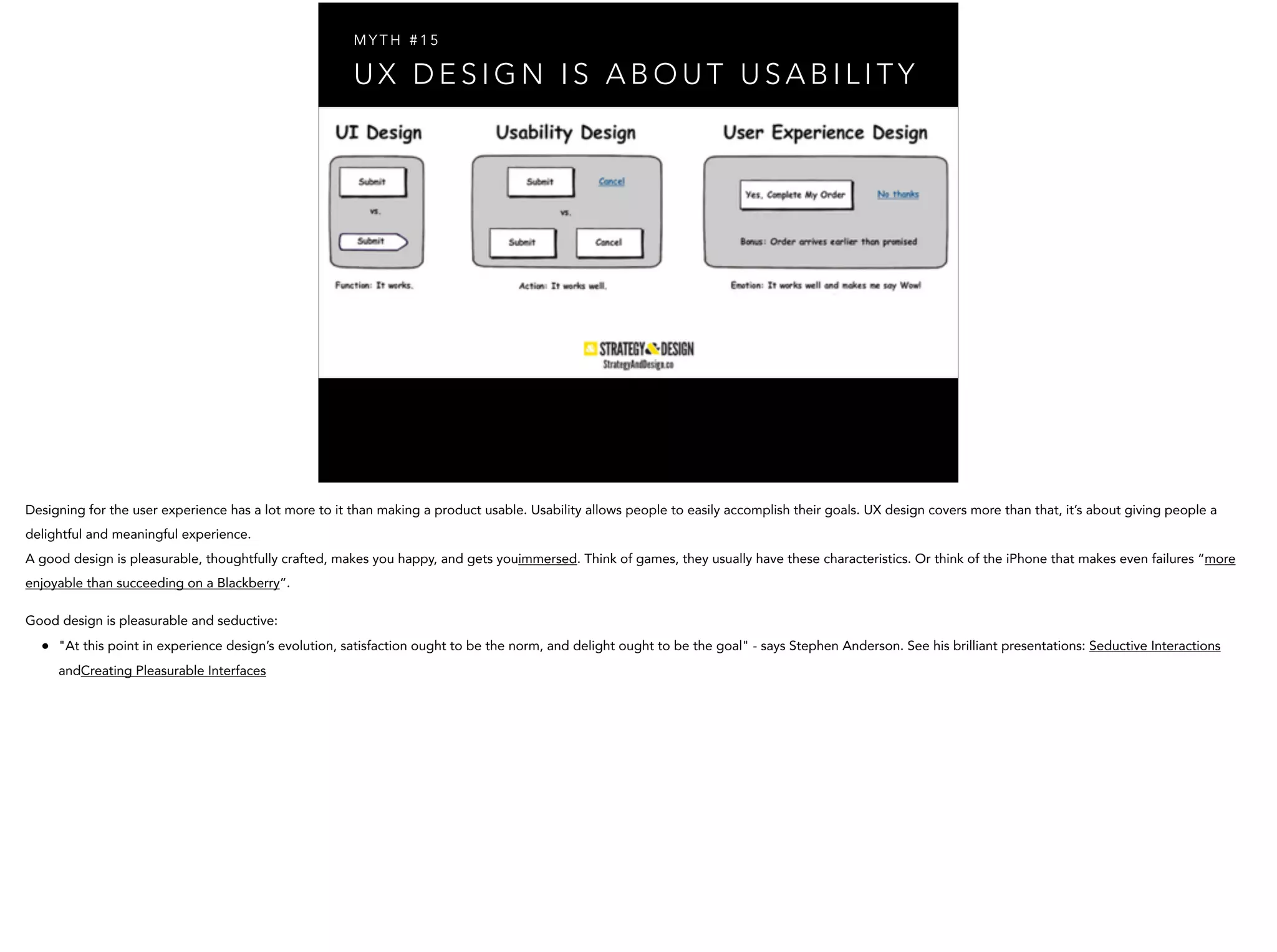
U X D E S I G N I S A B O U T U S A B I L I T Y
M Y T H # 1 5
P E O P L E A R E R AT I O N A L
M Y T H # 1 6
but the development of increasingly sophisticated front- and back-end technologies has
fostered its use as a remote software interface. This dual nature has led to much confusion,
as user experience practitioners have attempted to adapt their terminology to cases beyond
the scope of its original application. The goal of this document is to define some of these
terms within their appropriate contexts, and to clarify the underlying relationships among
these various elements.
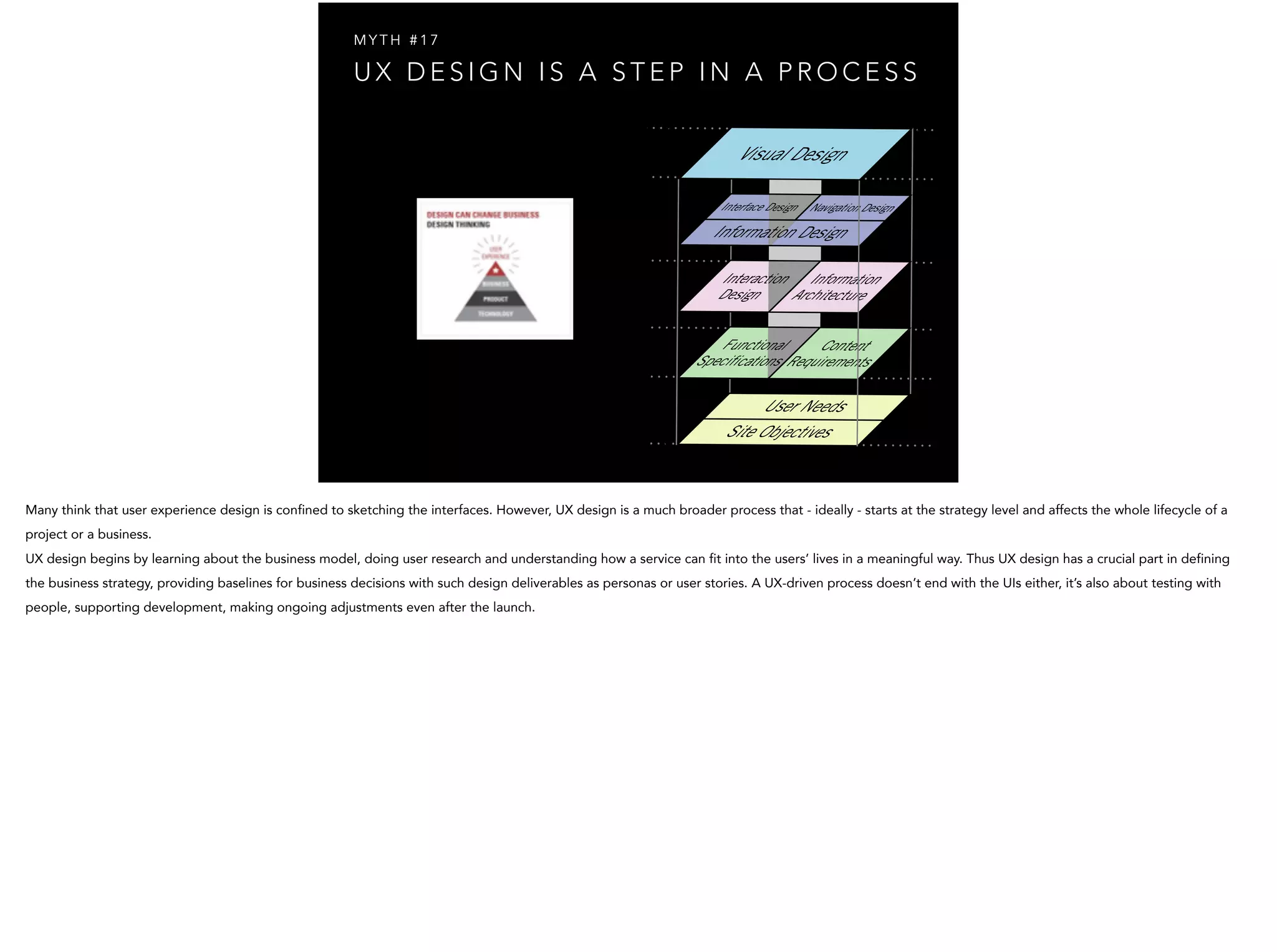
Visual Design: graphic treatment of interface
elements (the "look" in "look-and-feel")
Interaction Design: development of
application flows to facilitate user tasks,
defining how the user interacts with
site functionality
Functional Specifications: "feature set":
detailed descriptions of functionality the site
must include in order to meet user needs
User Needs: externally derived goals
for the site; identified through user research,
ethno/techno/psychographics, etc.
Site Objectives: business, creative, or other
internally derived goals for the site
Interface Design: as in traditional HCI:
design of interface elements to facilitate
user interaction with functionality
Information Design: in the Tuftean sense:
designing the presentation of information
to facilitate understanding
Web as software interface Concrete
Abstract
time
Conception
Completion
Functional
Specifications
Content
Requirements
Interaction
Design
Information
Architecture
Visual Design
Information Design
Interface Design Navigation Design
Site Objectives
User Needs
task-oriented
U X D E S I G N I S A S T E P I N A P R O C E S S
M Y T H # 1 7
U X I S C O M M O N S E N S E
M Y T H # 1 8
U X I S J U S T I N T E R A C T I O N D E S I G N
M Y T H # 1 9
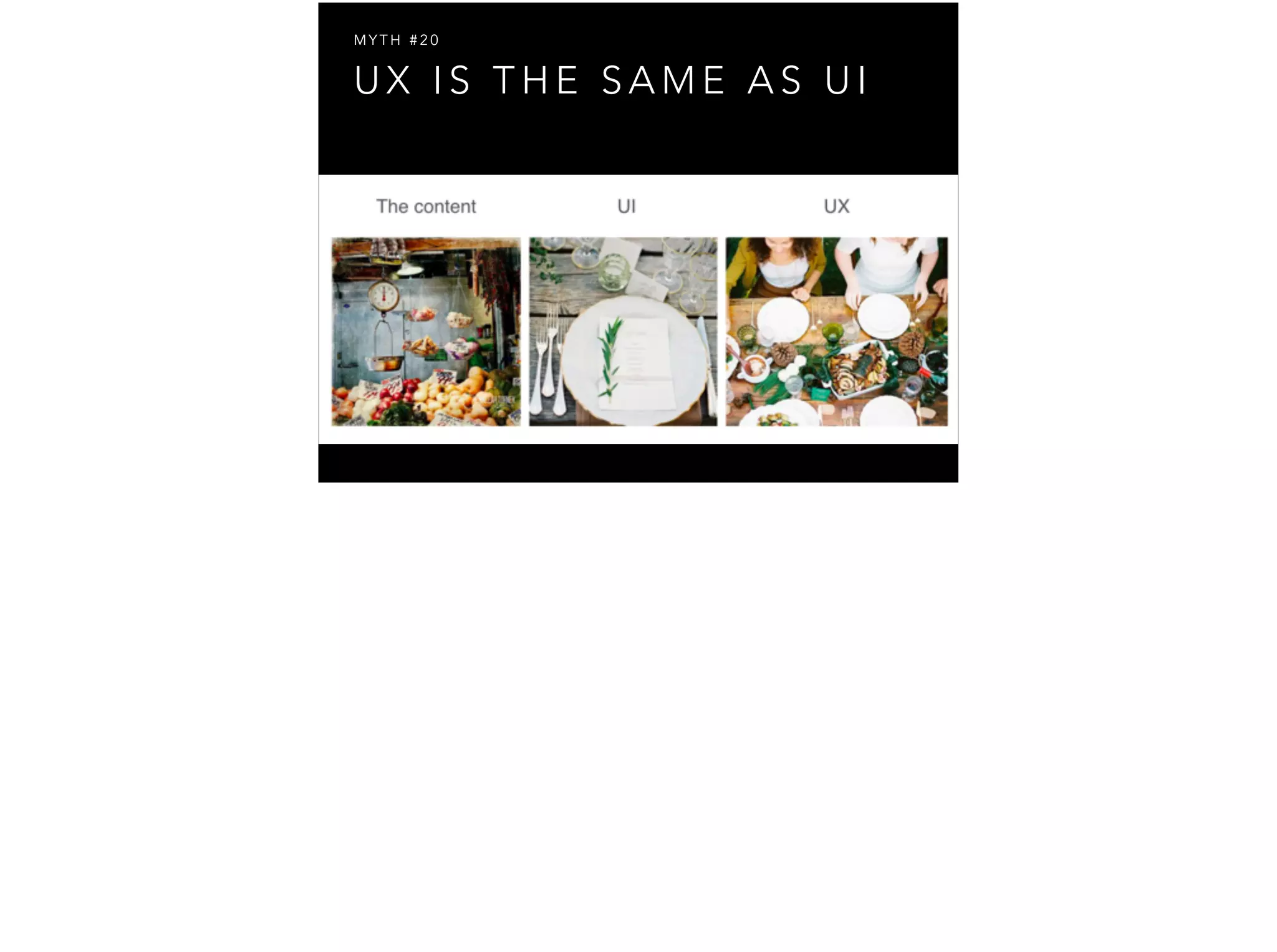
U X I S T H E S A M E A S U I
M Y T H # 2 0
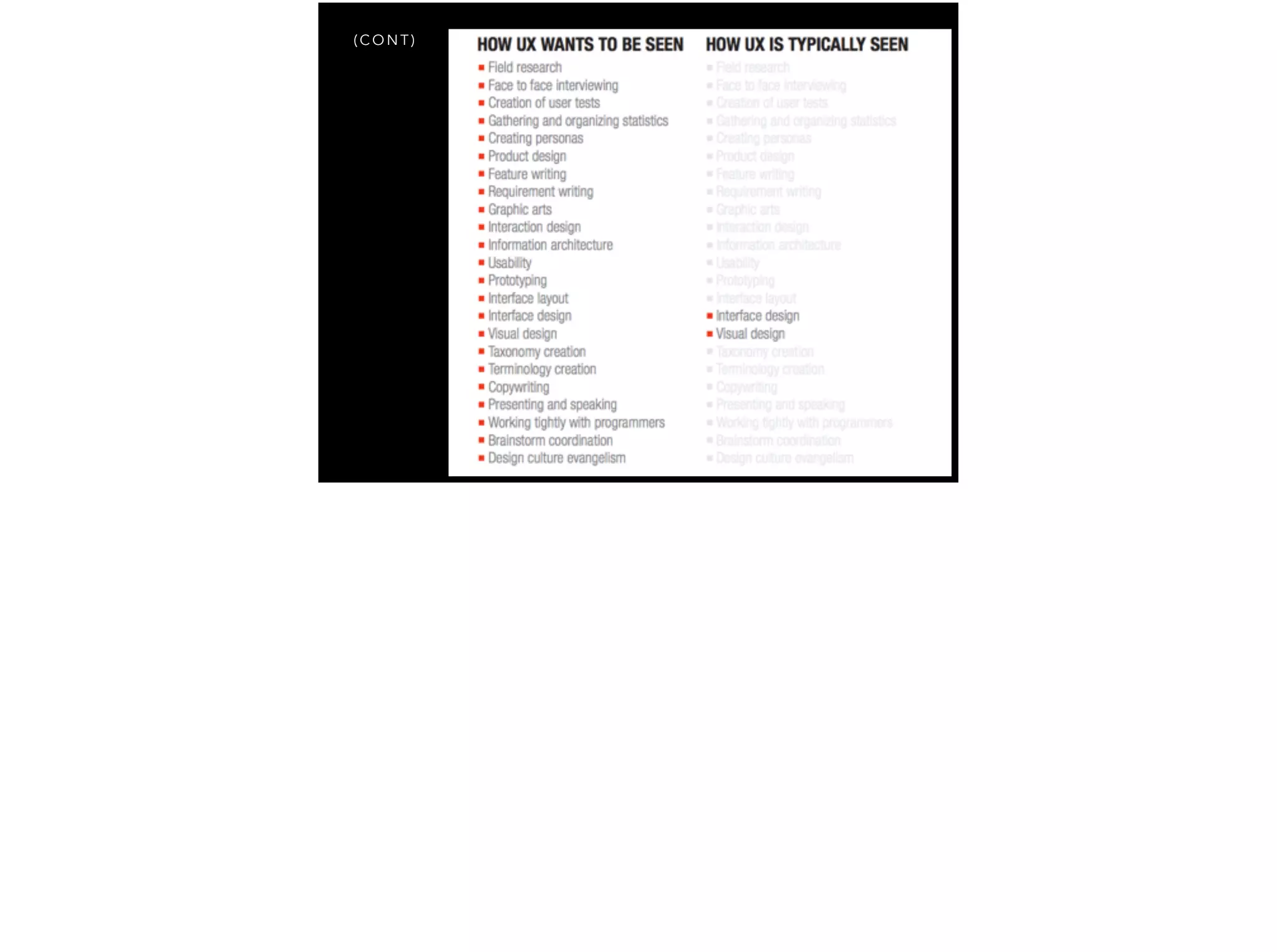
( C O N T )
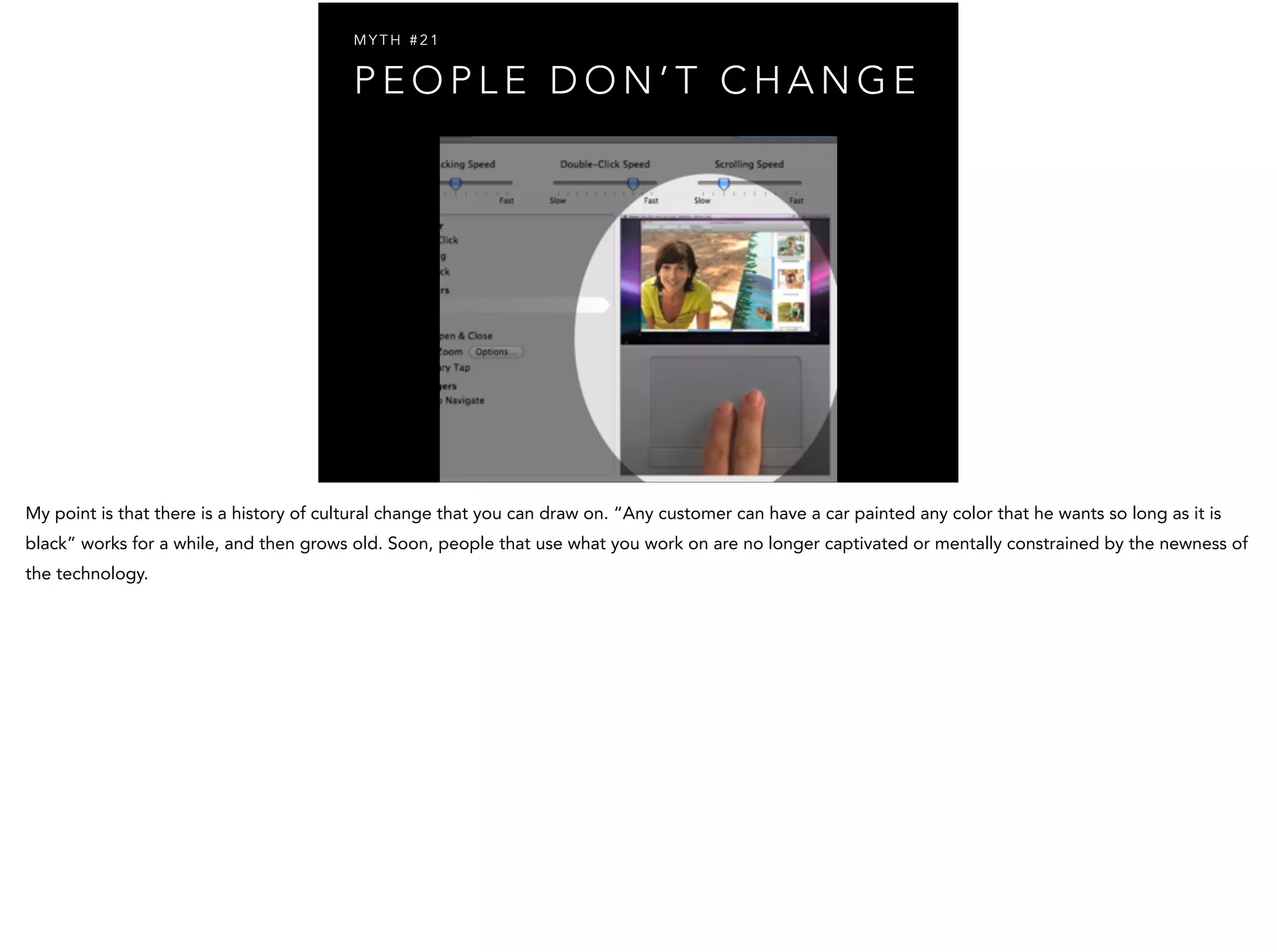
P E O P L E D O N ’ T C H A N G E
M Y T H # 2 1
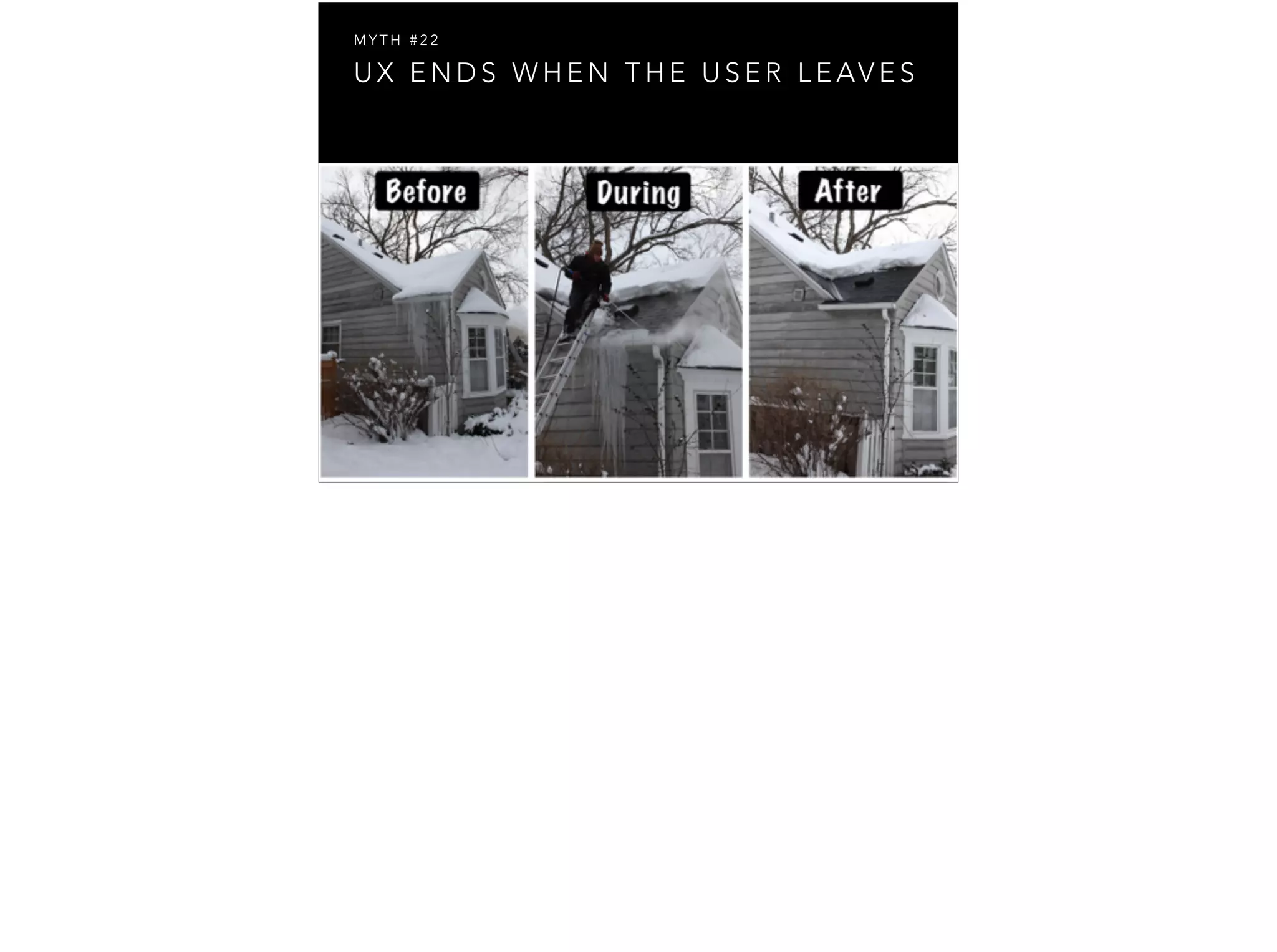
U X E N D S W H E N T H E U S E R L E AV E S
M Y T H # 2 2
T H A N K S .
Fin

UX Design Myths

  • 1.
    U X &D E S I G N M Y T H S A Q U I C K R U N T H R O U G H
  • 2.
    # 1 PE O P L E R E A D O N T H E W E B M Y T H # 1 ( W E A L R E A D Y K N O W T H I S )
  • 3.
    A L LPA G E S S H O U L D B E A C C E S S I B L E I N 3 C L I C K S M Y T H # 2 UIE Studies; Testing the Three-Click Rule or The 3 Click Rule on Medium
  • 4.
    P E OP L E D O N ’ T S C R O L L M Y T H # 3 Proof: What You Think You Know About the Web Is Wrong, Unfolding the Fold
  • 5.
    D E SI G N H A S T O B E O R I G I N A L M Y T H # 5
  • 6.
    I F YO U R D E S I G N I S G O O D , T H E S M A L L D E TA I L S D O N ’ T M AT T E R M Y T H # 6
  • 7.
    M O RE C H O I C E S A N D F E AT U R E S R E S U LT I N H I G H E R S AT I S FA C T I O N M Y T H # 7
  • 8.
    I C ON S E N H A N C E U S A B I L I T Y M Y T H # 8
  • 9.
    Y O UA R E L I K E Y O U R U S E R S M Y T H # 9
  • 10.
    U S ER S M A K E O P T I M A L C H O I C E S M Y T H # 1 0
  • 11.
    T H EH O M E PA G E / D A S H B O A R D I S T H E M O S T I M P O R TA N T PA G E M Y T H # 1 1
  • 12.
    Y O UD O N ’ T N E E D T H E C O N T E N T T O D E S I G N M Y T H # 1 2
  • 13.
    P E OP L E C A N T E L L Y O U W H AT T H E Y WA N T M Y T H # 1 3
  • 14.
    A E ST H E T I C S A R E N O T I M P O R TA N T I F Y O U H AV E G O O D U S A B I L I T Y M Y T H # 1 4
  • 16.
    U X DE S I G N I S A B O U T U S A B I L I T Y M Y T H # 1 5
  • 17.
    P E OP L E A R E R AT I O N A L M Y T H # 1 6
  • 18.
    but the developmentof increasingly sophisticated front- and back-end technologies has fostered its use as a remote software interface. This dual nature has led to much confusion, as user experience practitioners have attempted to adapt their terminology to cases beyond the scope of its original application. The goal of this document is to define some of these terms within their appropriate contexts, and to clarify the underlying relationships among these various elements. Visual Design: graphic treatment of interface elements (the "look" in "look-and-feel") Interaction Design: development of application flows to facilitate user tasks, defining how the user interacts with site functionality Functional Specifications: "feature set": detailed descriptions of functionality the site must include in order to meet user needs User Needs: externally derived goals for the site; identified through user research, ethno/techno/psychographics, etc. Site Objectives: business, creative, or other internally derived goals for the site Interface Design: as in traditional HCI: design of interface elements to facilitate user interaction with functionality Information Design: in the Tuftean sense: designing the presentation of information to facilitate understanding Web as software interface Concrete Abstract time Conception Completion Functional Specifications Content Requirements Interaction Design Information Architecture Visual Design Information Design Interface Design Navigation Design Site Objectives User Needs task-oriented U X D E S I G N I S A S T E P I N A P R O C E S S M Y T H # 1 7
  • 19.
    U X IS C O M M O N S E N S E M Y T H # 1 8
  • 20.
    U X IS J U S T I N T E R A C T I O N D E S I G N M Y T H # 1 9
  • 21.
    U X IS T H E S A M E A S U I M Y T H # 2 0
  • 22.
    ( C ON T )
  • 23.
    P E OP L E D O N ’ T C H A N G E M Y T H # 2 1
  • 24.
    U X EN D S W H E N T H E U S E R L E AV E S M Y T H # 2 2
  • 25.
    T H AN K S . Fin