Shared Services and Information Sharing in Local GovernmentIt all comes down to StandardsTim WilloughbyAssistant DirectorLGCSB/ LGMA
Feedback – be very careful
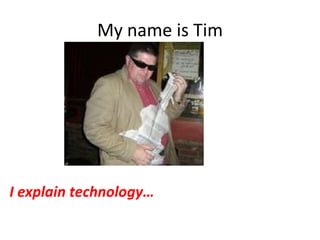
My name is TimI explain technology…
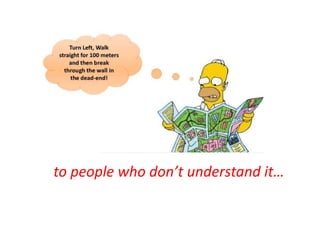
to people who don’t understand it…
people who think they do understand it…
people who despise it…
and people who worship it.
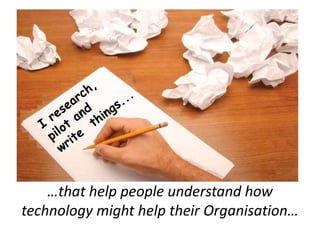
I research, pilot and write  things...…that help people understand how technology might help their Organisation…
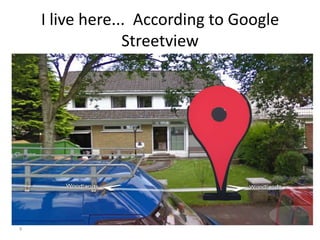
I live here...  According to Google Streetview9
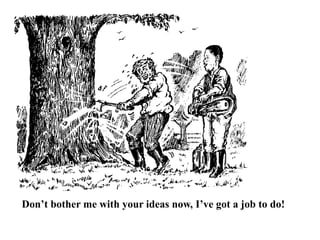
In Technical TermsI’m a Webservice –Sitting between the Technical Teams and the Business Teams, translating and relating between them..With Plenty of SOAP and REST....Don’t bother me with your ideas now, I’ve got a job to do!
Local Government
Effective Collaborationmy references!If only..
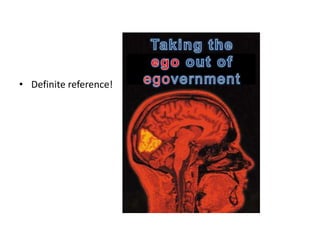
Definite reference!Taking theego out ofegovernment
Standardisation and SharingLeadershipChange ManagementBusiness as Usual, Cultural Shift, Continuous Improvement, Responsibility and Service MappingMeasurement – Measuring the Right ThingsSelection, Cost Savings, Growth, DeliveryGovernanceManaging expectations, Innovations and Supplier Push
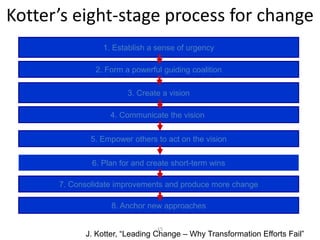
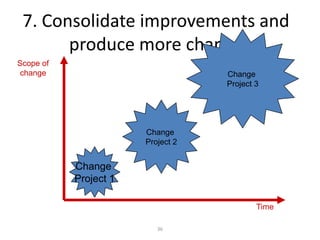
15Kotter’s eight-stage process for change1. Establish a sense of urgency2. Form a powerful guiding coalition3. Create a vision4. Communicate the vision 5. Empower others to act on the vision6. Plan for and create short-term wins7. Consolidate improvements and produce more change8. Anchor new approachesJ. Kotter, “Leading Change – Why Transformation Efforts Fail”
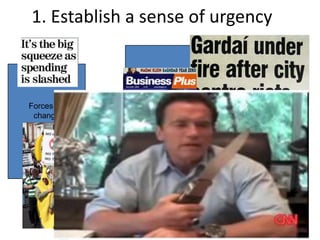
171. Establish a sense of urgencyThe status quoForces for changeForces for stabilityBurnes 2004
18But I’m so comfortable…
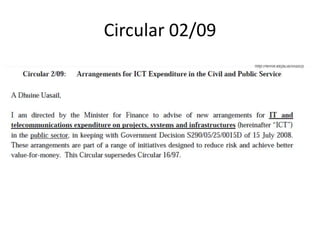
Circular 02/09
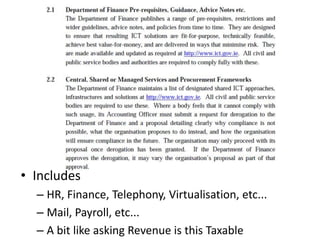
IncludesHR, Finance, Telephony, Virtualisation, etc...Mail, Payroll, etc...A bit like asking Revenue is this Taxable
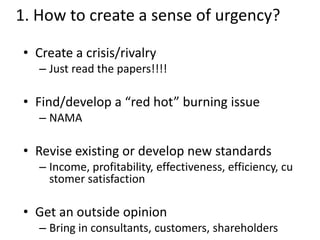
211. How to create a sense of urgency?Create a crisis/rivalryJust read the papers!!!!Find/develop a “red hot” burning issue NAMARevise existing or develop new standardsIncome, profitability, effectiveness, efficiency, customer satisfactionGet an outside opinion Bring in consultants, customers, shareholders
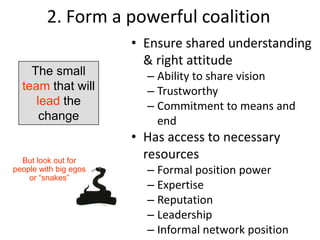
222. Form a powerful coalitionEnsure shared understanding & right attitudeAbility to share visionTrustworthyCommitment to means and endHas access to necessary resourcesFormal position power Expertise Reputation Leadership Informal network positionThe small team that will lead the changeBut look out for people with big egos or “snakes”
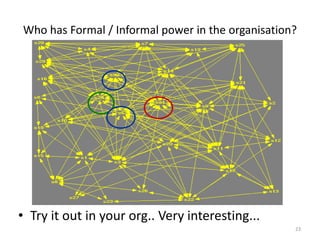
Who has Formal / Informal power in the organisation?23Try it out in your org.. Very interesting...Teigland 2003
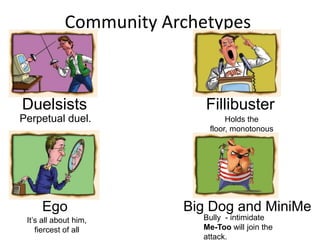
Community ArchetypesDuelsistsFillibusterPerpetual duel. Holds the floor, monotonous hectoringEgoBig Dog and MiniMeBully  - intimidateMe-Too will join the attack. It’s all about him,fiercest of all
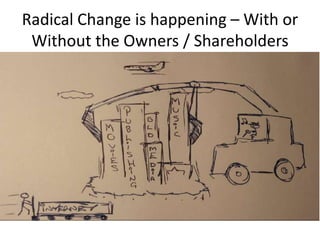
Radical Change is happening – With or Without the Owners / Shareholders
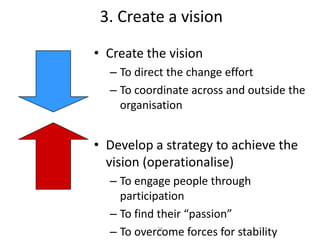
283. Create a visionCreate the visionTo direct the change effortTo coordinate across and outside the organisationDevelop a strategy to achieve the vision (operationalise)To engage people through participationTo find their “passion”To overcome forces for stability
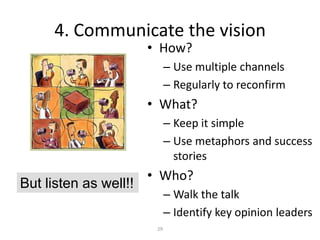
294. Communicate the visionHow?Use multiple channelsRegularly to reconfirmWhat?Keep it simpleUse metaphors and success storiesWho?Walk the talkIdentify key opinion leadersBut listen as well!!
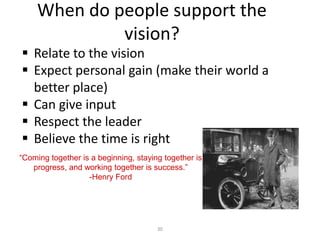
30When do people support the vision?Relate to the vision
Expect personal gain (make their world a better place)
Can give input
Respect the leader
Believe the time is right“Coming together is a beginning, staying together is progress, and working together is success.”-Henry Ford
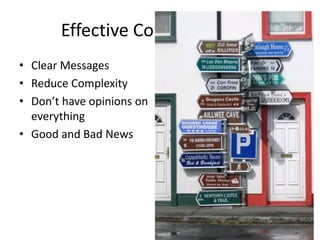
Effective CommunicationClear MessagesReduce ComplexityDon’t have opinions on everythingGood and Bad News
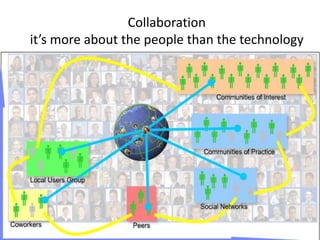
Collaboration it’s more about the people than the technology
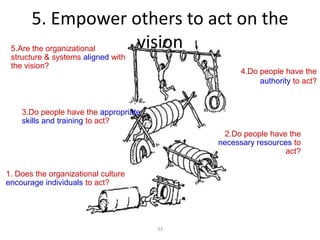
335. Empower others to act on the vision5.Are the organizational structure & systems aligned with the vision?4.Do people have the authority to act?3.Do people have the appropriate skills and training to act?2.Do people have the necessary resources to act?1. Does the organizational culture encourage individuals to act?
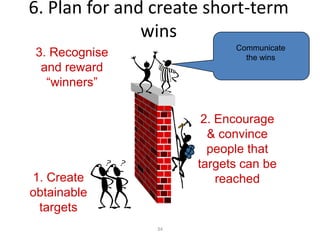
346. Plan for and create short-term winsCommunicatethe wins3. Recogniseand reward “winners”2. Encourage & convince people that targets can be reached1. Create obtainable targets
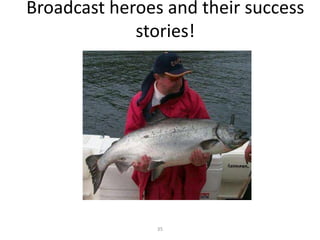
35Broadcast heroes and their success stories!
367. Consolidate improvements and produce more changeChange Project 3Scope of changeChange Project 2Change Project 1Time
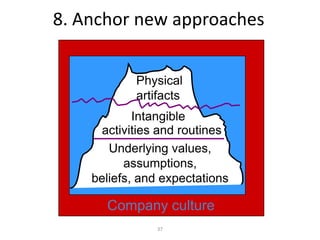
378. Anchor new approachesPhysical artifactsIntangible activities and routinesUnderlying values,assumptions,beliefs, and expectationsCompany culture
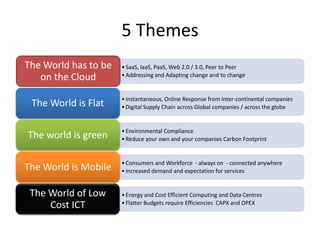
5 Themes
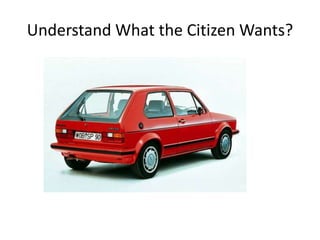
Understand What the Citizen Wants?
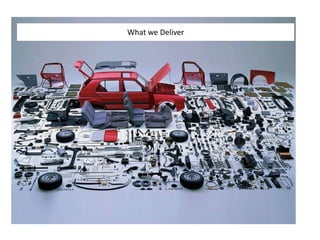
What we Deliver
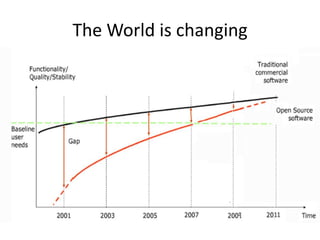
The World is changing
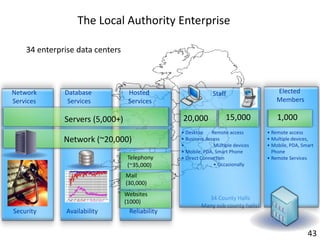
The Local Authority Enterprise 34 enterprise data centersElected MembersDatabase ServicesNetworkServicesHosted ServicesStaff1,00015,00020,000Servers (5,000+)Desktop       Remote access
Business Access
                       Multiple devices
Mobile, PDA, Smart Phone
Direct Connection
Occasionally
Remote access
Multiple devices,
Mobile, PDA, Smart Phone
Remote ServicesNetwork (~20,000)Telephony (~35,000)Mail(30,000)Websites(1000)34 County HallsMany sub county halls!AvailabilitySecurityReliability43
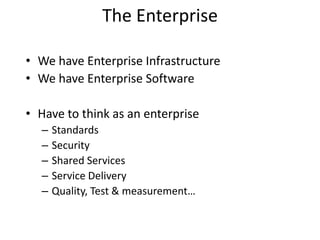
The EnterpriseWe have Enterprise InfrastructureWe have Enterprise SoftwareHave to think as an enterpriseStandardsSecurityShared ServicesService DeliveryQuality, Test & measurement…
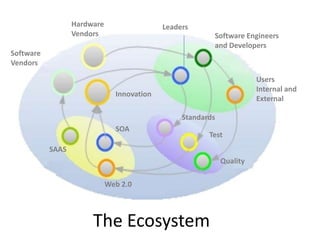
Hardware VendorsLeadersSoftware Engineers and DevelopersSoftware VendorsUsers Internal and ExternalInnovationStandardsSOATestSAASQualityWeb 2.0The Ecosystem
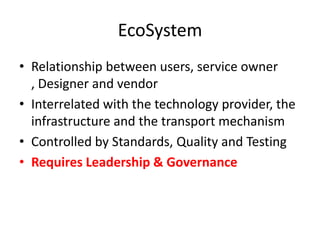
EcoSystemRelationship between users, service owner , Designer and vendorInterrelated with the technology provider, the infrastructure and the transport mechanismControlled by Standards, Quality and TestingRequires Leadership & Governance
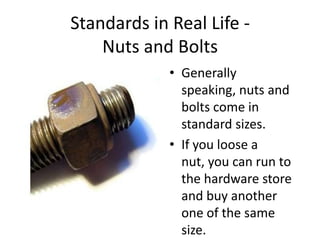
Standards in Real Life -Nuts and BoltsGenerally speaking, nuts and bolts come in standard sizes.If you loose a nut, you can run to the hardware store and buy another one of the same size.
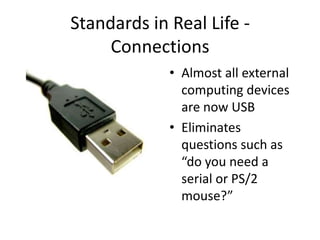
Standards in Real Life -ConnectionsAlmost all external computing devices are now USBEliminates questions such as “do you need a serial or PS/2 mouse?”
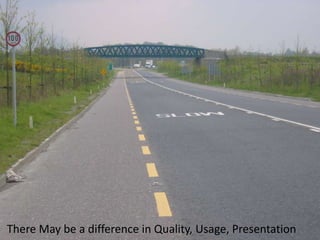
StandardsThere May be a difference in Quality, Usage, Presentation
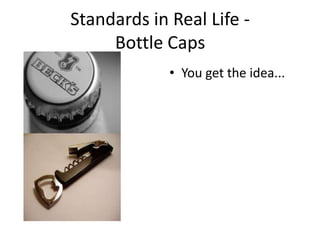
Standards in Real Life -Bottle CapsYou get the idea...
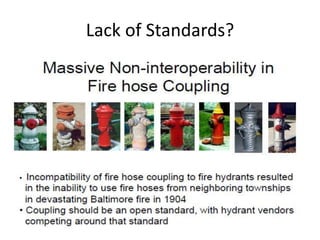
Lack of Standards?
live in a society obsessed with risk!
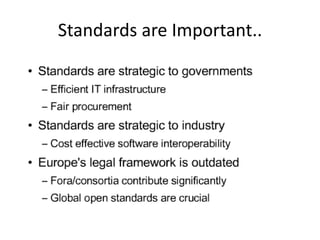
Standards are Important..
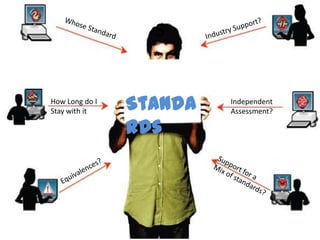
SIndustry Support?Whose StandardStandardsHow Long do I Stay with itIndependentAssessment?Equivalences?Support for a Mix of standards?
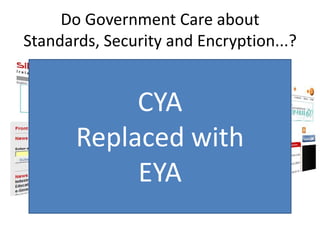
Do Government Care about Standards, Security and Encryption...?CYAReplaced with EYA
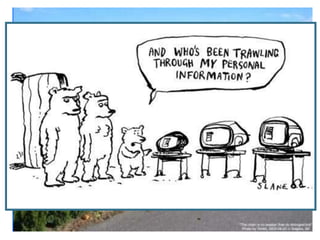
Data PrivacyAudit functionality to capture access is not in place in many instances;
Significant amount of data transfers taking place using unencrypted mail, file transfers, etc.;
Secure disposal of media at end-of-life not addressed by most responses;
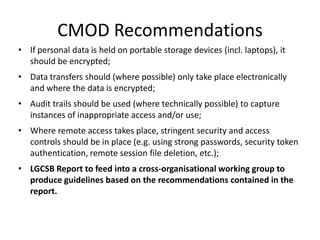
Procedures for personal data held on paper not addressed by many responses. CMOD RecommendationsIf personal data is held on portable storage devices (incl. laptops), it should be encrypted;Data transfers should (where possible) only take place electronically and where the data is encrypted;Audit trails should be used (where technically possible) to capture instances of inappropriate access and/or use;Where remote access takes place, stringent security and access controls should be in place (e.g. using strong passwords, security token authentication, remote session file deletion, etc.);LGCSB Report to feed into a cross-organisational working group to produce guidelines based on the recommendations contained in the report.
Berlin Wall
Even Security is changingUsed to defend the edge of the network...Now looking at defending the middle and trusting the edges if they are trust-worthy... (Standards, Testing, Quality, Measurement)
Data SharingBarriers to SharingNot Technical PeopleLeadershipPerceived rather than actual IssuesDon’t see the need or Relevance to others in using or having their dataLoss of Control / Power
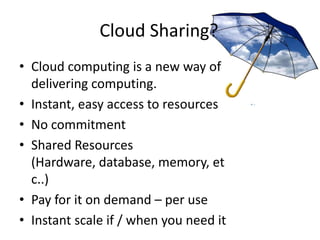
Cloud Sharing?Cloud computing is a new way of delivering computing.Instant, easy access to resourcesNo commitmentShared Resources (Hardware, database, memory, etc..)Pay for it on demand – per useInstant scale if / when you need it
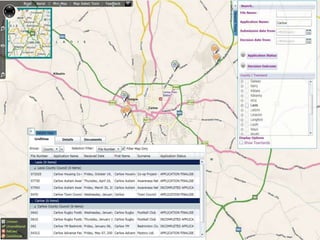
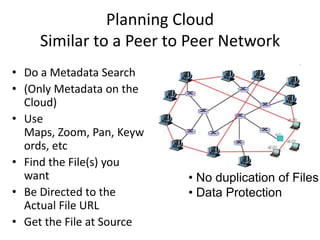
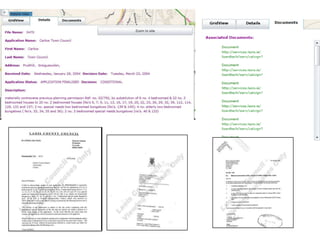
Planning Cloud Similar to a Peer to Peer NetworkDo a Metadata Search(Only Metadata on the Cloud)Use Maps, Zoom, Pan, Keywords, etcFind the File(s) you wantBe Directed to the Actual File URLGet the File at Source No duplication of Files
 Data Protection
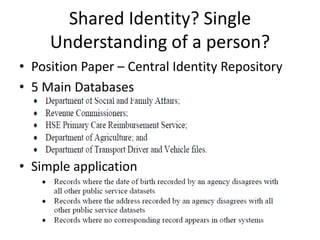
Shared Identity? Single Understanding of a person?Position Paper – Central Identity Repository5 Main DatabasesSimple application
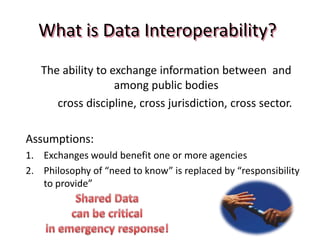
What is Data Interoperability?The ability to exchange information between  and among public bodies	cross discipline, cross jurisdiction, cross sector. Assumptions:Exchanges would benefit one or more agenciesPhilosophy of “need to know” is replaced by “responsibility to provide” Shared Datacan be critical in emergency response!
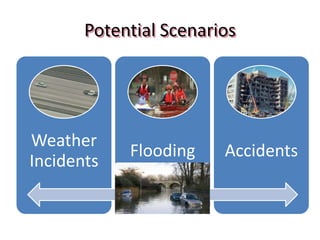
Potential Scenarios
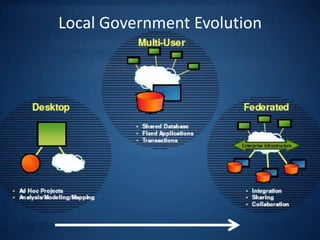
Local Government Evolution
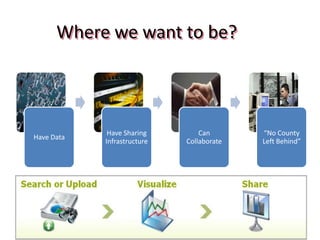
Where we want to be?
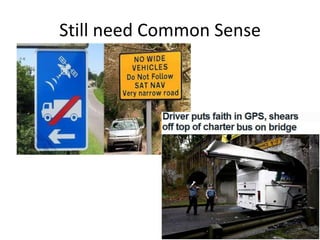
Still need Common Sense
Key disruptive forcesDigitization of everything……  and exponential growthEverything/one is getting connected…… and mobileDevices are getting smaller, smarter……  and cheaperCustomer demand…  and an explosion of broadband
Work is also changing RapidlyCollaborationSpecialisation, optimisation, Just In TimeNature of WorkAnytime, Anywhere, Faster?, smarter, better?Human Capital is replacing Physical Capital as the Unit of MeasurementMore User Input, More Spontaneous, Collaboration with (Unknown) Partners
…We have come a long way...
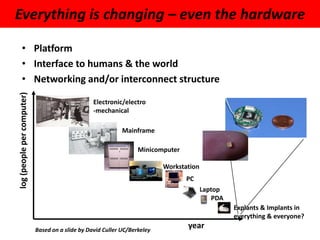
Everything is changing – even the hardwareMainframeMinicomputerElectronic/electro-mechanicalWorkstationPCLaptopPDAExplants & Implants ineverything & everyone?PlatformInterface to humans & the worldNetworking and/or interconnect structurelog (people per computer)yearBased on a slide by David Culler UC/Berkeley
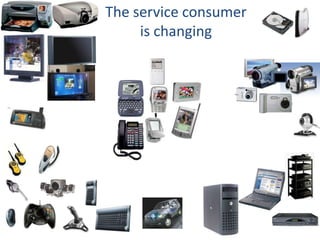
The service consumer is changingwatch
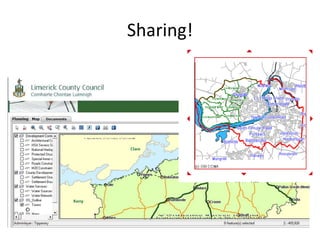
Sharing!
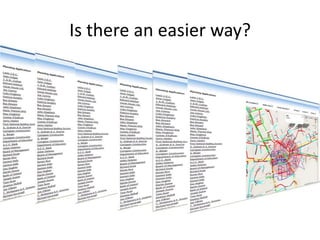
Is there an easier way?
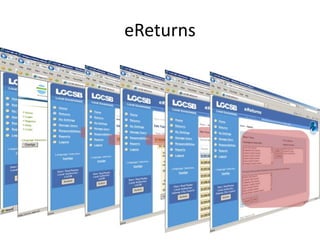
eReturns
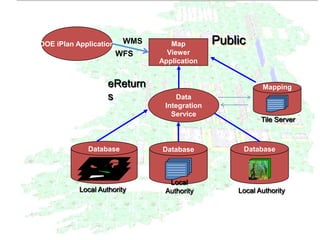
PublicMapViewerApplicationeReturnsDataIntegrationServiceDatabaseDatabaseMappingDatabaseLocal AuthorityLocal AuthorityLocal AuthorityTile ServerDOE iPlan ApplicationWMSWFS
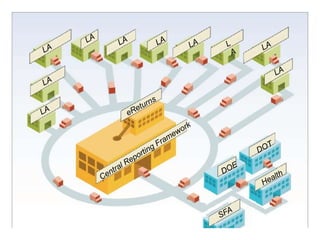
LALALALALALALALALAeReturnsLADOTCentral Reporting FrameworkDOEHealthSFA
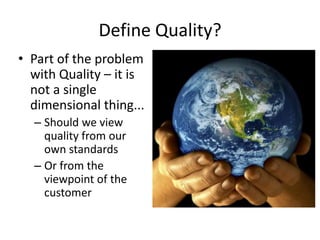
Define Quality?Part of the problem with Quality – it is not a single dimensional thing...Should we view quality from our own standardsOr from the viewpoint of the customer
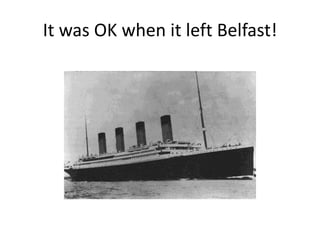
It was OK when it left Belfast!
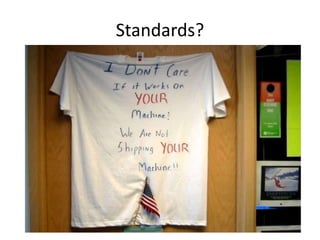
Standards?
Black Box TheoryGovernment continually Hit with an Open Standards v’s Black Box decisionThe Black Box worksIt solves the immediate ProblemThe cost is predictableWe may be tied in to a proprietary standard, but the next version will be more open!The more open standards – Loosely Coupled Solution will definitely work, with some adaptation.Who will support my decision?Who can support the adaptation if the loose couples become detached?Who will share the risk of the Open solution in the same way the Black Box provider will?
IndependenceAdherence to Standards facilitates Independence from Suppliers?Can we get truly independent advice?Should Government employ independent thinkers within the Civil Service or contract with Independent Suppliers?
ModernisationSimple and user-oriented Participative and inclusive Transparent and accountable Joined-up and networked Efficient and innovative ICT  a strategic instrument to achieve this?
Challenges for Public ServantsVertical institutional structuresPerverse incentives Misuse of capital/labour substitutionOutsourcing v. integration/reform Customer service strategies
Logic?Democracy, equality Security/privacy System feasibility, interoperability, adaptability, standardisation Administrative and political feasibility Agency autonomy and flexibility Economics (resources, budgeting)
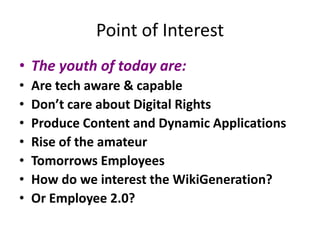
Point of InterestThe youth of today are:Are tech aware & capableDon’t care about Digital RightsProduce Content and Dynamic ApplicationsRise of the amateurTomorrows EmployeesHow do we interest the WikiGeneration?Or Employee 2.0?
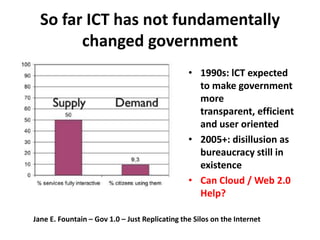
So far ICT has not fundamentally changed government1990s: lCT expectedto make government more transparent, efficient and user oriented 2005+: disillusion as bureaucracy still in existenceCan Cloud / Web 2.0 Help?Jane E. Fountain – Gov 1.0 – Just Replicating the Silos on the Internet
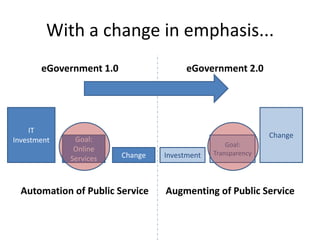
With a change in emphasis...eGovernment 1.0eGovernment 2.0IT InvestmentChange Goal:Online ServicesGoal: TransparencyChangeInvestmentAutomation of Public ServiceAugmenting of Public Service
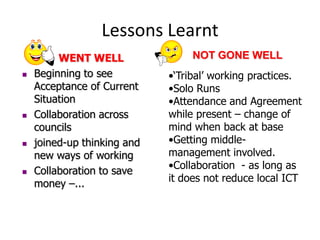
Lessons LearntNOT GONE WELLWENT WELLBeginning to see Acceptance of Current Situation
Collaboration across councils
joined-up thinking and new ways of working
Collaboration to save money –...
‘Tribal’ working practices.
Solo Runs

UU innovation masters november 2010

  • 1.
    Shared Services andInformation Sharing in Local GovernmentIt all comes down to StandardsTim WilloughbyAssistant DirectorLGCSB/ LGMA
  • 2.
    Feedback – bevery careful
  • 3.
    My name isTimI explain technology…
  • 4.
    to people whodon’t understand it…
  • 5.
    people who thinkthey do understand it…
  • 6.
  • 7.
    and people whoworship it.
  • 8.
    I research, pilotand write things...…that help people understand how technology might help their Organisation…
  • 9.
    I live here... According to Google Streetview9
  • 10.
    In Technical TermsI’ma Webservice –Sitting between the Technical Teams and the Business Teams, translating and relating between them..With Plenty of SOAP and REST....Don’t bother me with your ideas now, I’ve got a job to do!
  • 11.
  • 12.
  • 13.
  • 14.
    Standardisation and SharingLeadershipChangeManagementBusiness as Usual, Cultural Shift, Continuous Improvement, Responsibility and Service MappingMeasurement – Measuring the Right ThingsSelection, Cost Savings, Growth, DeliveryGovernanceManaging expectations, Innovations and Supplier Push
  • 15.
    15Kotter’s eight-stage processfor change1. Establish a sense of urgency2. Form a powerful guiding coalition3. Create a vision4. Communicate the vision 5. Empower others to act on the vision6. Plan for and create short-term wins7. Consolidate improvements and produce more change8. Anchor new approachesJ. Kotter, “Leading Change – Why Transformation Efforts Fail”
  • 17.
    171. Establish asense of urgencyThe status quoForces for changeForces for stabilityBurnes 2004
  • 18.
    18But I’m socomfortable…
  • 19.
  • 20.
    IncludesHR, Finance, Telephony,Virtualisation, etc...Mail, Payroll, etc...A bit like asking Revenue is this Taxable
  • 21.
    211. How tocreate a sense of urgency?Create a crisis/rivalryJust read the papers!!!!Find/develop a “red hot” burning issue NAMARevise existing or develop new standardsIncome, profitability, effectiveness, efficiency, customer satisfactionGet an outside opinion Bring in consultants, customers, shareholders
  • 22.
    222. Form apowerful coalitionEnsure shared understanding & right attitudeAbility to share visionTrustworthyCommitment to means and endHas access to necessary resourcesFormal position power Expertise Reputation Leadership Informal network positionThe small team that will lead the changeBut look out for people with big egos or “snakes”
  • 23.
    Who has Formal/ Informal power in the organisation?23Try it out in your org.. Very interesting...Teigland 2003
  • 24.
    Community ArchetypesDuelsistsFillibusterPerpetual duel.Holds the floor, monotonous hectoringEgoBig Dog and MiniMeBully - intimidateMe-Too will join the attack. It’s all about him,fiercest of all
  • 27.
    Radical Change ishappening – With or Without the Owners / Shareholders
  • 28.
    283. Create avisionCreate the visionTo direct the change effortTo coordinate across and outside the organisationDevelop a strategy to achieve the vision (operationalise)To engage people through participationTo find their “passion”To overcome forces for stability
  • 29.
    294. Communicate thevisionHow?Use multiple channelsRegularly to reconfirmWhat?Keep it simpleUse metaphors and success storiesWho?Walk the talkIdentify key opinion leadersBut listen as well!!
  • 30.
    30When do peoplesupport the vision?Relate to the vision
  • 31.
    Expect personal gain(make their world a better place)
  • 32.
  • 33.
  • 34.
    Believe the timeis right“Coming together is a beginning, staying together is progress, and working together is success.”-Henry Ford
  • 35.
    Effective CommunicationClear MessagesReduceComplexityDon’t have opinions on everythingGood and Bad News
  • 36.
    Collaboration it’s moreabout the people than the technology
  • 37.
    335. Empower othersto act on the vision5.Are the organizational structure & systems aligned with the vision?4.Do people have the authority to act?3.Do people have the appropriate skills and training to act?2.Do people have the necessary resources to act?1. Does the organizational culture encourage individuals to act?
  • 38.
    346. Plan forand create short-term winsCommunicatethe wins3. Recogniseand reward “winners”2. Encourage & convince people that targets can be reached1. Create obtainable targets
  • 39.
    35Broadcast heroes andtheir success stories!
  • 40.
    367. Consolidate improvementsand produce more changeChange Project 3Scope of changeChange Project 2Change Project 1Time
  • 41.
    378. Anchor newapproachesPhysical artifactsIntangible activities and routinesUnderlying values,assumptions,beliefs, and expectationsCompany culture
  • 42.
  • 44.
    Understand What theCitizen Wants?
  • 45.
  • 46.
    The World ischanging
  • 47.
    The Local AuthorityEnterprise 34 enterprise data centersElected MembersDatabase ServicesNetworkServicesHosted ServicesStaff1,00015,00020,000Servers (5,000+)Desktop Remote access
  • 48.
  • 49.
    Multiple devices
  • 50.
  • 51.
  • 52.
  • 53.
  • 54.
  • 55.
  • 56.
    Remote ServicesNetwork (~20,000)Telephony(~35,000)Mail(30,000)Websites(1000)34 County HallsMany sub county halls!AvailabilitySecurityReliability43
  • 57.
    The EnterpriseWe haveEnterprise InfrastructureWe have Enterprise SoftwareHave to think as an enterpriseStandardsSecurityShared ServicesService DeliveryQuality, Test & measurement…
  • 58.
    Hardware VendorsLeadersSoftware Engineersand DevelopersSoftware VendorsUsers Internal and ExternalInnovationStandardsSOATestSAASQualityWeb 2.0The Ecosystem
  • 59.
    EcoSystemRelationship between users,service owner , Designer and vendorInterrelated with the technology provider, the infrastructure and the transport mechanismControlled by Standards, Quality and TestingRequires Leadership & Governance
  • 60.
    Standards in RealLife -Nuts and BoltsGenerally speaking, nuts and bolts come in standard sizes.If you loose a nut, you can run to the hardware store and buy another one of the same size.
  • 61.
    Standards in RealLife -ConnectionsAlmost all external computing devices are now USBEliminates questions such as “do you need a serial or PS/2 mouse?”
  • 62.
    StandardsThere May bea difference in Quality, Usage, Presentation
  • 63.
    Standards in RealLife -Bottle CapsYou get the idea...
  • 64.
  • 65.
    live in asociety obsessed with risk!
  • 66.
  • 68.
    SIndustry Support?Whose StandardStandardsHowLong do I Stay with itIndependentAssessment?Equivalences?Support for a Mix of standards?
  • 69.
    Do Government Careabout Standards, Security and Encryption...?CYAReplaced with EYA
  • 71.
    Data PrivacyAudit functionalityto capture access is not in place in many instances;
  • 72.
    Significant amount ofdata transfers taking place using unencrypted mail, file transfers, etc.;
  • 73.
    Secure disposal ofmedia at end-of-life not addressed by most responses;
  • 74.
    Procedures for personaldata held on paper not addressed by many responses. CMOD RecommendationsIf personal data is held on portable storage devices (incl. laptops), it should be encrypted;Data transfers should (where possible) only take place electronically and where the data is encrypted;Audit trails should be used (where technically possible) to capture instances of inappropriate access and/or use;Where remote access takes place, stringent security and access controls should be in place (e.g. using strong passwords, security token authentication, remote session file deletion, etc.);LGCSB Report to feed into a cross-organisational working group to produce guidelines based on the recommendations contained in the report.
  • 75.
  • 76.
    Even Security ischangingUsed to defend the edge of the network...Now looking at defending the middle and trusting the edges if they are trust-worthy... (Standards, Testing, Quality, Measurement)
  • 77.
    Data SharingBarriers toSharingNot Technical PeopleLeadershipPerceived rather than actual IssuesDon’t see the need or Relevance to others in using or having their dataLoss of Control / Power
  • 78.
    Cloud Sharing?Cloud computingis a new way of delivering computing.Instant, easy access to resourcesNo commitmentShared Resources (Hardware, database, memory, etc..)Pay for it on demand – per useInstant scale if / when you need it
  • 80.
    Planning Cloud Similarto a Peer to Peer NetworkDo a Metadata Search(Only Metadata on the Cloud)Use Maps, Zoom, Pan, Keywords, etcFind the File(s) you wantBe Directed to the Actual File URLGet the File at Source No duplication of Files
  • 81.
  • 82.
    Shared Identity? SingleUnderstanding of a person?Position Paper – Central Identity Repository5 Main DatabasesSimple application
  • 83.
    What is DataInteroperability?The ability to exchange information between and among public bodies cross discipline, cross jurisdiction, cross sector. Assumptions:Exchanges would benefit one or more agenciesPhilosophy of “need to know” is replaced by “responsibility to provide” Shared Datacan be critical in emergency response!
  • 84.
  • 85.
  • 86.
  • 87.
  • 88.
    Key disruptive forcesDigitizationof everything…… and exponential growthEverything/one is getting connected…… and mobileDevices are getting smaller, smarter…… and cheaperCustomer demand… and an explosion of broadband
  • 89.
    Work is alsochanging RapidlyCollaborationSpecialisation, optimisation, Just In TimeNature of WorkAnytime, Anywhere, Faster?, smarter, better?Human Capital is replacing Physical Capital as the Unit of MeasurementMore User Input, More Spontaneous, Collaboration with (Unknown) Partners
  • 90.
    …We have comea long way...
  • 91.
    Everything is changing– even the hardwareMainframeMinicomputerElectronic/electro-mechanicalWorkstationPCLaptopPDAExplants & Implants ineverything & everyone?PlatformInterface to humans & the worldNetworking and/or interconnect structurelog (people per computer)yearBased on a slide by David Culler UC/Berkeley
  • 92.
    The service consumeris changingwatch
  • 93.
  • 94.
    Is there aneasier way?
  • 95.
  • 96.
  • 97.
  • 99.
    Define Quality?Part ofthe problem with Quality – it is not a single dimensional thing...Should we view quality from our own standardsOr from the viewpoint of the customer
  • 100.
    It was OKwhen it left Belfast!
  • 101.
  • 102.
    Black Box TheoryGovernmentcontinually Hit with an Open Standards v’s Black Box decisionThe Black Box worksIt solves the immediate ProblemThe cost is predictableWe may be tied in to a proprietary standard, but the next version will be more open!The more open standards – Loosely Coupled Solution will definitely work, with some adaptation.Who will support my decision?Who can support the adaptation if the loose couples become detached?Who will share the risk of the Open solution in the same way the Black Box provider will?
  • 103.
    IndependenceAdherence to Standardsfacilitates Independence from Suppliers?Can we get truly independent advice?Should Government employ independent thinkers within the Civil Service or contract with Independent Suppliers?
  • 104.
    ModernisationSimple and user-orientedParticipative and inclusive Transparent and accountable Joined-up and networked Efficient and innovative ICT a strategic instrument to achieve this?
  • 105.
    Challenges for PublicServantsVertical institutional structuresPerverse incentives Misuse of capital/labour substitutionOutsourcing v. integration/reform Customer service strategies
  • 106.
    Logic?Democracy, equality Security/privacySystem feasibility, interoperability, adaptability, standardisation Administrative and political feasibility Agency autonomy and flexibility Economics (resources, budgeting)
  • 107.
    Point of InterestTheyouth of today are:Are tech aware & capableDon’t care about Digital RightsProduce Content and Dynamic ApplicationsRise of the amateurTomorrows EmployeesHow do we interest the WikiGeneration?Or Employee 2.0?
  • 108.
    So far ICThas not fundamentally changed government1990s: lCT expectedto make government more transparent, efficient and user oriented 2005+: disillusion as bureaucracy still in existenceCan Cloud / Web 2.0 Help?Jane E. Fountain – Gov 1.0 – Just Replicating the Silos on the Internet
  • 109.
    With a changein emphasis...eGovernment 1.0eGovernment 2.0IT InvestmentChange Goal:Online ServicesGoal: TransparencyChangeInvestmentAutomation of Public ServiceAugmenting of Public Service
  • 110.
    Lessons LearntNOT GONEWELLWENT WELLBeginning to see Acceptance of Current Situation
  • 111.
  • 112.
    joined-up thinking andnew ways of working
  • 113.
    Collaboration to savemoney –...
  • 114.
  • 115.