GALILEO home page
http://www.galileo.usg.edu.
USING GALILEO
GALILEO stands for Georgia LIbrary LEarning Online.
GALILEO is a World Wide Web-based virtual library
that provides access to multiple information sources.
Students at Georgia Technical Colleges can access over
100 databases with thousands of periodicals and
scholarly journals. Over 2000 journal and magazine
titles are provided in full-text.
If you are on Campus, you don’t need the password.
For off-campus access , contact
the library staff to get the password.
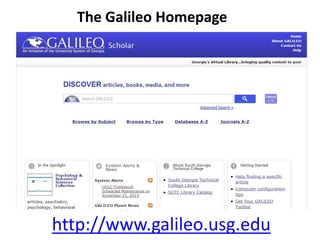
http://www.galileo.usg.edu
The Galileo Homepage
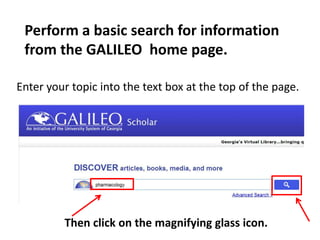
Perform a basic search for information
from the GALILEO home page.
Then click on the magnifying glass icon.
Enter your topic into the text box at the top of the page.
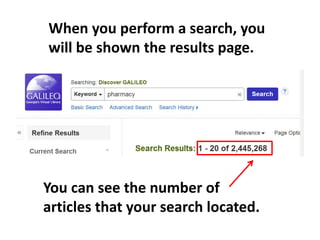
When you perform a search, you
will be shown the results page.
You can see the number of
articles that your search located.
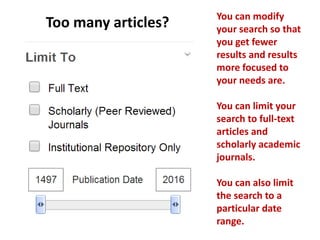
You can modify
your search so that
you get fewer
results and results
more focused to
your needs are.
You can limit your
search to full-text
articles and
scholarly academic
journals.
You can also limit
the search to a
particular date
range.
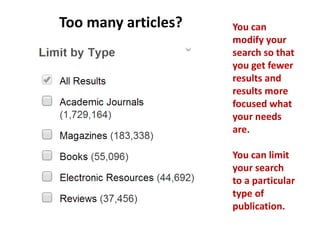
Too many articles?
You can
modify your
search so that
you get fewer
results and
results more
focused what
your needs
are.
You can limit
your search
to a particular
type of
publication.
Too many articles?
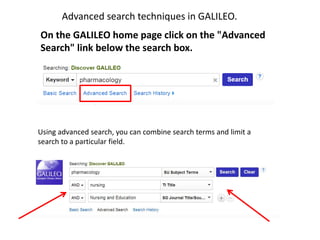
On the GALILEO home page click on the "Advanced
Search" link below the search box.
Using advanced search, you can combine search terms and limit a
search to a particular field.
Advanced search techniques in GALILEO.
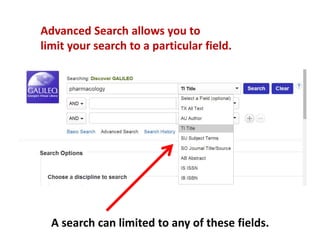
Advanced Search allows you to
limit your search to a particular field.
A search can limited to any of these fields.
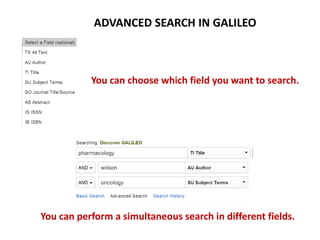
You can choose which field you want to search.
ADVANCED SEARCH IN GALILEO
You can perform a simultaneous search in different fields.
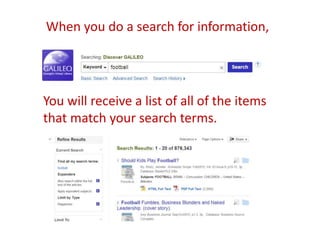
When you do a search for information,
You will receive a list of all of the items
that match your search terms.
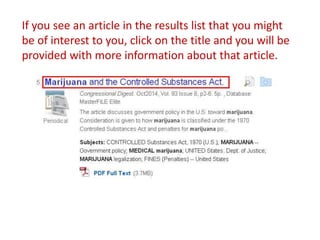
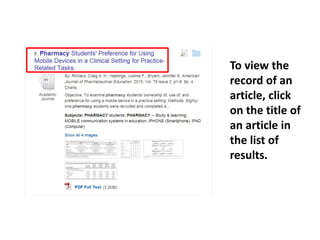
If you see an article in the results list that you might
be of interest to you, click on the title and you will be
provided with more information about that article.
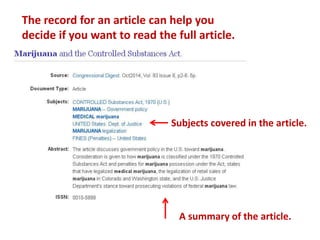
The record for an article can help you
decide if you want to read the full article.
Subjects covered in the article.
A summary of the article.
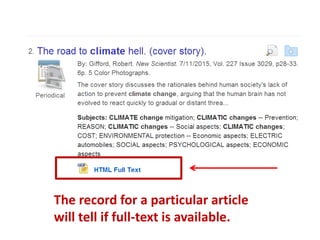
The record for a particular article
will tell if full-text is available.
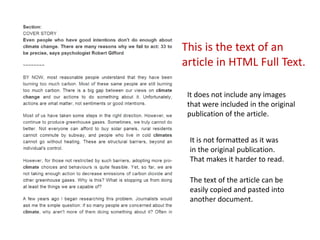
This is the text of an
article in HTML Full Text.
It does not include any images
that were included in the original
publication of the article.
It is not formatted as it was
in the original publication.
That makes it harder to read.
The text of the article can be
easily copied and pasted into
another document.
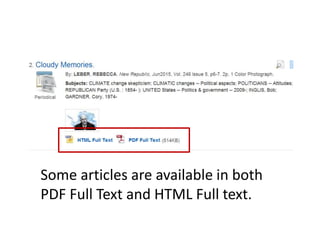
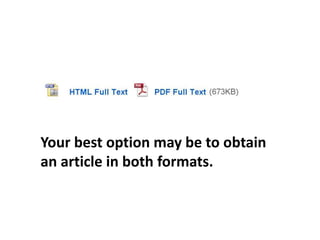
Some articles are available in both
PDF Full Text and HTML Full text.
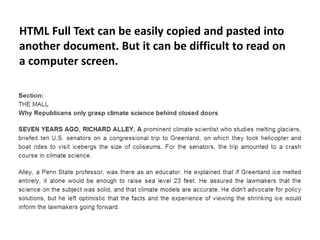
HTML Full Text can be easily copied and pasted into
another document. But it can be difficult to read on
a computer screen.
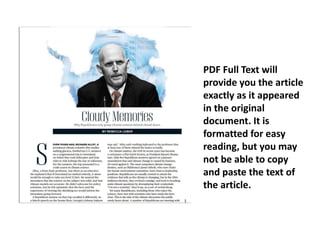
PDF Full Text will
provide you the article
exactly as it appeared
in the original
document. It is
formatted for easy
reading, but you may
not be able to copy
and paste the text of
the article.
Your best option may be to obtain
an article in both formats.
To view the
record of an
article, click
on the title of
an article in
the list of
results.
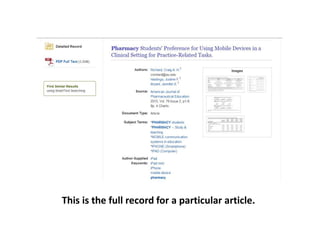
This is the full record for a particular article.
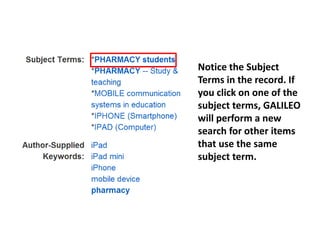
Notice the Subject
Terms in the record. If
you click on one of the
subject terms, GALILEO
will perform a new
search for other items
that use the same
subject term.
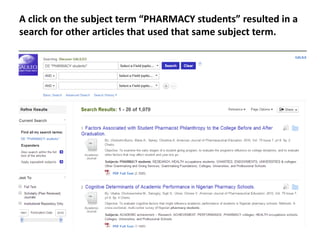
A click on the subject term “PHARMACY students” resulted in a
search for other articles that used that same subject term.
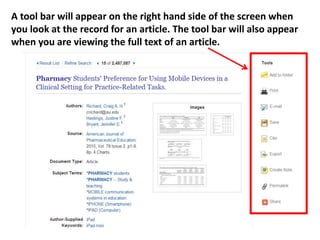
A tool bar will appear on the right hand side of the screen when
you look at the record for an article. The tool bar will also appear
when you are viewing the full text of an article.
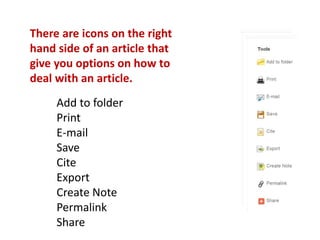
There are icons on the right
hand side of an article that
give you options on how to
deal with an article.
Add to folder
Print
E-mail
Save
Cite
Export
Create Note
Permalink
Share
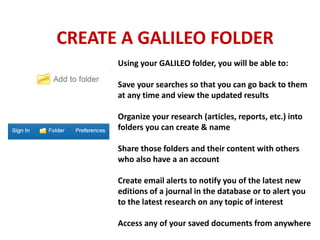
Using your GALILEO folder, you will be able to:
Save your searches so that you can go back to them
at any time and view the updated results
Organize your research (articles, reports, etc.) into
folders you can create & name
Share those folders and their content with others
who also have a an account
Create email alerts to notify you of the latest new
editions of a journal in the database or to alert you
to the latest research on any topic of interest
Access any of your saved documents from anywhere
CREATE A GALILEO FOLDER
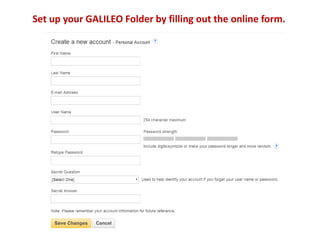
Set up your GALILEO Folder by filling out the online form.
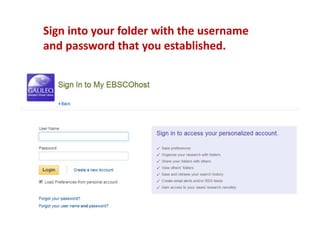
Sign into your folder with the username
and password that you established.
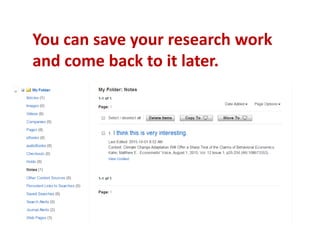
You can save your research work
and come back to it later.
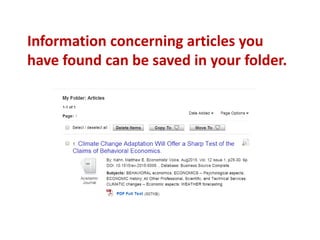
Information concerning articles you
have found can be saved in your folder.
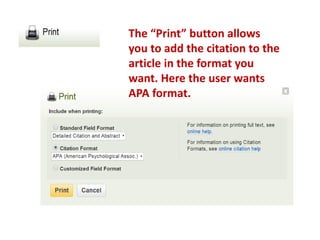
The “Print” button allows
you to add the citation to the
article in the format you
want. Here the user wants
APA format.
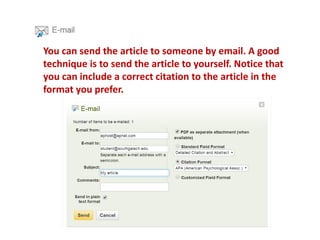
You can send the article to someone by email. A good
technique is to send the article to yourself. Notice that
you can include a correct citation to the article in the
format you prefer.
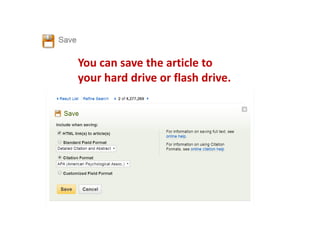
You can save the article to
your hard drive or flash drive.
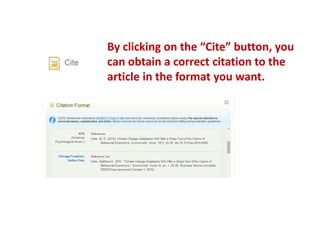
By clicking on the “Cite” button, you
can obtain a correct citation to the
article in the format you want.
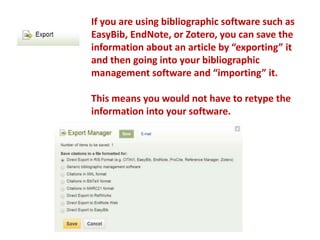
If you are using bibliographic software such as
EasyBib, EndNote, or Zotero, you can save the
information about an article by “exporting” it
and then going into your bibliographic
management software and “importing” it.
This means you would not have to retype the
information into your software.
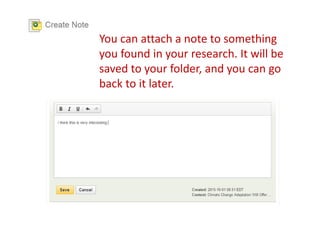
You can attach a note to something
you found in your research. It will be
saved to your folder, and you can go
back to it later.
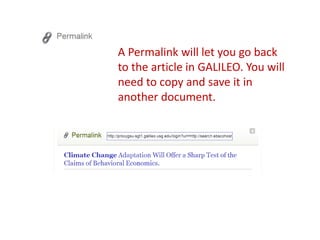
A Permalink will let you go back
to the article in GALILEO. You will
need to copy and save it in
another document.
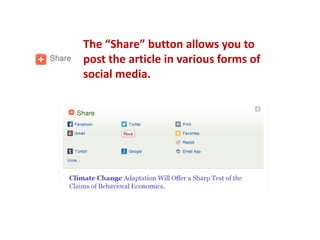
The “Share” button allows you to
post the article in various forms of
social media.
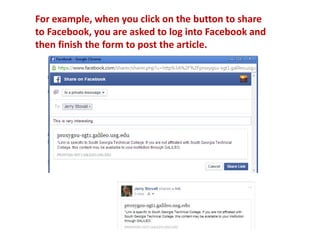
For example, when you click on the button to share
to Facebook, you are asked to log into Facebook and
then finish the form to post the article.

Using GALILEO

  • 1.
  • 2.
    GALILEO stands forGeorgia LIbrary LEarning Online. GALILEO is a World Wide Web-based virtual library that provides access to multiple information sources. Students at Georgia Technical Colleges can access over 100 databases with thousands of periodicals and scholarly journals. Over 2000 journal and magazine titles are provided in full-text.
  • 3.
    If you areon Campus, you don’t need the password. For off-campus access , contact the library staff to get the password.
  • 4.
  • 5.
    Perform a basicsearch for information from the GALILEO home page. Then click on the magnifying glass icon. Enter your topic into the text box at the top of the page.
  • 6.
    When you performa search, you will be shown the results page. You can see the number of articles that your search located.
  • 7.
    You can modify yoursearch so that you get fewer results and results more focused to your needs are. You can limit your search to full-text articles and scholarly academic journals. You can also limit the search to a particular date range. Too many articles?
  • 8.
    You can modify your searchso that you get fewer results and results more focused what your needs are. You can limit your search to a particular type of publication. Too many articles?
  • 9.
    On the GALILEOhome page click on the "Advanced Search" link below the search box. Using advanced search, you can combine search terms and limit a search to a particular field. Advanced search techniques in GALILEO.
  • 10.
    Advanced Search allowsyou to limit your search to a particular field. A search can limited to any of these fields.
  • 11.
    You can choosewhich field you want to search. ADVANCED SEARCH IN GALILEO You can perform a simultaneous search in different fields.
  • 12.
    When you doa search for information, You will receive a list of all of the items that match your search terms.
  • 13.
    If you seean article in the results list that you might be of interest to you, click on the title and you will be provided with more information about that article.
  • 14.
    The record foran article can help you decide if you want to read the full article. Subjects covered in the article. A summary of the article.
  • 15.
    The record fora particular article will tell if full-text is available.
  • 16.
    This is thetext of an article in HTML Full Text. It does not include any images that were included in the original publication of the article. It is not formatted as it was in the original publication. That makes it harder to read. The text of the article can be easily copied and pasted into another document.
  • 17.
    Some articles areavailable in both PDF Full Text and HTML Full text.
  • 18.
    HTML Full Textcan be easily copied and pasted into another document. But it can be difficult to read on a computer screen.
  • 19.
    PDF Full Textwill provide you the article exactly as it appeared in the original document. It is formatted for easy reading, but you may not be able to copy and paste the text of the article.
  • 20.
    Your best optionmay be to obtain an article in both formats.
  • 21.
    To view the recordof an article, click on the title of an article in the list of results.
  • 22.
    This is thefull record for a particular article.
  • 23.
    Notice the Subject Termsin the record. If you click on one of the subject terms, GALILEO will perform a new search for other items that use the same subject term.
  • 24.
    A click onthe subject term “PHARMACY students” resulted in a search for other articles that used that same subject term.
  • 25.
    A tool barwill appear on the right hand side of the screen when you look at the record for an article. The tool bar will also appear when you are viewing the full text of an article.
  • 26.
    There are iconson the right hand side of an article that give you options on how to deal with an article. Add to folder Print E-mail Save Cite Export Create Note Permalink Share
  • 27.
    Using your GALILEOfolder, you will be able to: Save your searches so that you can go back to them at any time and view the updated results Organize your research (articles, reports, etc.) into folders you can create & name Share those folders and their content with others who also have a an account Create email alerts to notify you of the latest new editions of a journal in the database or to alert you to the latest research on any topic of interest Access any of your saved documents from anywhere CREATE A GALILEO FOLDER
  • 28.
    Set up yourGALILEO Folder by filling out the online form.
  • 29.
    Sign into yourfolder with the username and password that you established.
  • 30.
    You can saveyour research work and come back to it later.
  • 31.
    Information concerning articlesyou have found can be saved in your folder.
  • 32.
    The “Print” buttonallows you to add the citation to the article in the format you want. Here the user wants APA format.
  • 33.
    You can sendthe article to someone by email. A good technique is to send the article to yourself. Notice that you can include a correct citation to the article in the format you prefer.
  • 34.
    You can savethe article to your hard drive or flash drive.
  • 35.
    By clicking onthe “Cite” button, you can obtain a correct citation to the article in the format you want.
  • 36.
    If you areusing bibliographic software such as EasyBib, EndNote, or Zotero, you can save the information about an article by “exporting” it and then going into your bibliographic management software and “importing” it. This means you would not have to retype the information into your software.
  • 37.
    You can attacha note to something you found in your research. It will be saved to your folder, and you can go back to it later.
  • 38.
    A Permalink willlet you go back to the article in GALILEO. You will need to copy and save it in another document.
  • 39.
    The “Share” buttonallows you to post the article in various forms of social media.
  • 40.
    For example, whenyou click on the button to share to Facebook, you are asked to log into Facebook and then finish the form to post the article.