ACTION RESEARCH: 
GUIDED READING 
T E S S O ’ R O U R K E 
S E P T E MB E R 2 0 1 4
RESEARCH QUESTION 
Will daily, 20 minute guided reading 
lessons increase student’s performance, 
confidence and interest in reading?
BACKGROUND 
• What I have noticed in my 5th grade classroom: 
• Many students are two or more grade levels behind in 
reading fluency, accuracy and/or comprehension. 
• Many students do not enjoy reading when they enter my 
classroom because they find it difficult or boring. 
• What I know about Guided Reading 
• Daily, 20 minute guided reading lessons have been proven 
to improve student performance on reading fluency, 
accuracy and comprehension. 
• When students enjoy what they read, they enjoy reading.
MY GOALS 
• Through this action research, I hope to learn about the 
effectiveness of guided reading on my student’s 
performance and reading levels. 
• Performance will be assessed through F&P reading 
assessments. 
• This action research will also help me determine if 
guided reading improves student’s oral reading fluency 
and accuracy. 
• Confidence will be measured through a survey given at the 
beginning and the end of the research period. 
• It will also be measured through student engagement during 
lessons. 
• I also hope to see if reading engaging and exciting 
reading books at their level will change student’s 
attitudes towards reading 
• Interest will be assessed through a survey given at the 
beginning and the end of the research period.
LIT REVIEW 
• Several great resources to check out if you are 
interested in guided reading: 
• What is Guided Reading- Fountas & Pinnell 
• What is Guided Reading- Scholastic Article 
• Using Guided Reading to Develop Student 
Independence- ReadWriteThink
GUIDED READING OVERVIEW 
• Guided reading is “planned, intentional, focused 
instruction where the teacher helps the students, 
usually in small group settings, learn more about the 
reading process” (Ford, M.P., Optiz, M.F., pp. 229) 
• Guided reading is considered a “best practice” 
because of all of the gains it can offer to student’s 
independent reading skills and performance. 
• Guided reading should only be one part of a 
comprehensive literacy program in order to yield 
successful results (Fountas & Pinnell, 2012).
GUIDED READING GROUPS 
• Groups are 6-8 students 
• Groups last for 20 minutes 
• Groups are homogeneous (include students who 
are all at the same independent reading level) 
• Groups are flexible and temporary 
• Students can move in and out of a group at any time 
based on their rising or falling reading level. 
• Students should be grouped within their Zone of 
Proximal Development (Burkins, J., Croft, M., 2013). 
• Assessments should be ongoing so that students 
can move in and out of groups as necessary.
GUIDED READING TEXTS 
• Texts must be high quality and engaging. 
• Teachers need a wide variety of different texts to 
choose from for each group throughout the year 
(all at the right level for the group). 
• Texts should be within the groups Zone of Proximal 
Development. 
• Text difficulty should be assessed by the Fountas 
and Pinnell assessment. 
• Texts should include extensions that students can 
read after the lesson.
GUIDED READING LESSON PLANS 
• Part One: Before Reading 
• Introduction to the text 
• Make predictions 
• Teach reading strategies 
• Part Two: During Reading 
• Use strategies taught before reading 
• Whisper read 
• Teacher conferences/running records with some students 
• Part Three: After Reading 
• Answering questions: within the text, about the text, beyond 
the text.
METHODOLOGY 
• Research was conducted during the first few months of 
the 2014-2015 school year 
• Veritas Prep Charter School in Springfield, MA 
• A group of thirty 5th grade students 
• Guided reading exposure during 2 classes per day– 
reading workshop (2 groups) and morning tutoring (1 
group) 
• Each guided reading group met for 20 minutes and 
focused on reading habits such as: predicting, 
monitoring comprehension and inferencing. 
• Students were assessed through F&P tests and surveys.
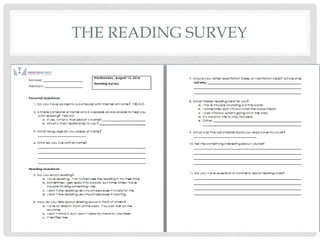
THE READING SURVEY
RESULTS AND ANALYSIS 
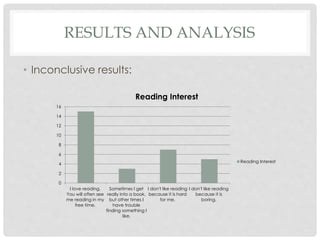
• Inconclusive results: 
16 
14 
12 
10 
8 
6 
4 
2 
0 
I love reading. 
You will often see 
me reading in my 
free time. 
Sometimes I get 
really into a book, 
but other times I 
have trouble 
finding something I 
like. 
I don't like reading 
because it is hard 
for me. 
I don't like reading 
because it is 
boring. 
Reading Interest 
Reading Interest
RESULTS AND ANALYSIS 
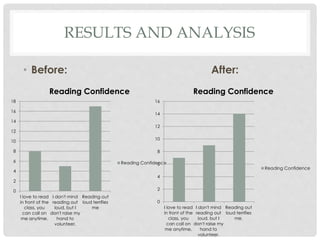
• Before: After: 
18 
16 
14 
12 
10 
8 
6 
4 
2 
0 
I love to read 
in front of the 
class, you 
can call on 
me anytime. 
Reading Confidence 
I don't mind 
reading out 
loud, but I 
don't raise my 
hand to 
volunteer. 
Reading out 
loud terrifies 
me 
16 
14 
12 
10 
8 
Reading Confidence 
6 
4 
2 
0 
I love to read 
in front of the 
class, you 
can call on 
me anytime. 
Reading Confidence 
I don't mind 
reading out 
loud, but I 
don't raise my 
hand to 
volunteer. 
Reading out 
loud terrifies 
me. 
Reading Confidence
ANALYSIS 
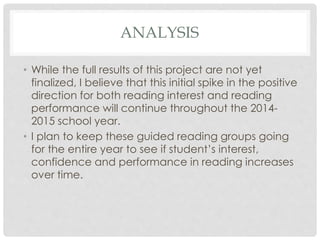
• While the full results of this project are not yet 
finalized, I believe that this initial spike in the positive 
direction for both reading interest and reading 
performance will continue throughout the 2014- 
2015 school year. 
• I plan to keep these guided reading groups going 
for the entire year to see if student’s interest, 
confidence and performance in reading increases 
over time.
REFLECTIONS 
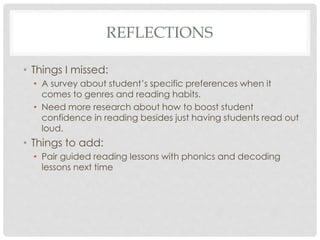
• Things I missed: 
• A survey about student’s specific preferences when it 
comes to genres and reading habits. 
• Need more research about how to boost student 
confidence in reading besides just having students read out 
loud. 
• Things to add: 
• Pair guided reading lessons with phonics and decoding 
lessons next time

Guided Reading

  • 1.
    ACTION RESEARCH: GUIDEDREADING T E S S O ’ R O U R K E S E P T E MB E R 2 0 1 4
  • 2.
    RESEARCH QUESTION Willdaily, 20 minute guided reading lessons increase student’s performance, confidence and interest in reading?
  • 3.
    BACKGROUND • WhatI have noticed in my 5th grade classroom: • Many students are two or more grade levels behind in reading fluency, accuracy and/or comprehension. • Many students do not enjoy reading when they enter my classroom because they find it difficult or boring. • What I know about Guided Reading • Daily, 20 minute guided reading lessons have been proven to improve student performance on reading fluency, accuracy and comprehension. • When students enjoy what they read, they enjoy reading.
  • 4.
    MY GOALS •Through this action research, I hope to learn about the effectiveness of guided reading on my student’s performance and reading levels. • Performance will be assessed through F&P reading assessments. • This action research will also help me determine if guided reading improves student’s oral reading fluency and accuracy. • Confidence will be measured through a survey given at the beginning and the end of the research period. • It will also be measured through student engagement during lessons. • I also hope to see if reading engaging and exciting reading books at their level will change student’s attitudes towards reading • Interest will be assessed through a survey given at the beginning and the end of the research period.
  • 5.
    LIT REVIEW •Several great resources to check out if you are interested in guided reading: • What is Guided Reading- Fountas & Pinnell • What is Guided Reading- Scholastic Article • Using Guided Reading to Develop Student Independence- ReadWriteThink
  • 6.
    GUIDED READING OVERVIEW • Guided reading is “planned, intentional, focused instruction where the teacher helps the students, usually in small group settings, learn more about the reading process” (Ford, M.P., Optiz, M.F., pp. 229) • Guided reading is considered a “best practice” because of all of the gains it can offer to student’s independent reading skills and performance. • Guided reading should only be one part of a comprehensive literacy program in order to yield successful results (Fountas & Pinnell, 2012).
  • 7.
    GUIDED READING GROUPS • Groups are 6-8 students • Groups last for 20 minutes • Groups are homogeneous (include students who are all at the same independent reading level) • Groups are flexible and temporary • Students can move in and out of a group at any time based on their rising or falling reading level. • Students should be grouped within their Zone of Proximal Development (Burkins, J., Croft, M., 2013). • Assessments should be ongoing so that students can move in and out of groups as necessary.
  • 8.
    GUIDED READING TEXTS • Texts must be high quality and engaging. • Teachers need a wide variety of different texts to choose from for each group throughout the year (all at the right level for the group). • Texts should be within the groups Zone of Proximal Development. • Text difficulty should be assessed by the Fountas and Pinnell assessment. • Texts should include extensions that students can read after the lesson.
  • 9.
    GUIDED READING LESSONPLANS • Part One: Before Reading • Introduction to the text • Make predictions • Teach reading strategies • Part Two: During Reading • Use strategies taught before reading • Whisper read • Teacher conferences/running records with some students • Part Three: After Reading • Answering questions: within the text, about the text, beyond the text.
  • 10.
    METHODOLOGY • Researchwas conducted during the first few months of the 2014-2015 school year • Veritas Prep Charter School in Springfield, MA • A group of thirty 5th grade students • Guided reading exposure during 2 classes per day– reading workshop (2 groups) and morning tutoring (1 group) • Each guided reading group met for 20 minutes and focused on reading habits such as: predicting, monitoring comprehension and inferencing. • Students were assessed through F&P tests and surveys.
  • 11.
  • 12.
    RESULTS AND ANALYSIS • Inconclusive results: 16 14 12 10 8 6 4 2 0 I love reading. You will often see me reading in my free time. Sometimes I get really into a book, but other times I have trouble finding something I like. I don't like reading because it is hard for me. I don't like reading because it is boring. Reading Interest Reading Interest
  • 13.
    RESULTS AND ANALYSIS • Before: After: 18 16 14 12 10 8 6 4 2 0 I love to read in front of the class, you can call on me anytime. Reading Confidence I don't mind reading out loud, but I don't raise my hand to volunteer. Reading out loud terrifies me 16 14 12 10 8 Reading Confidence 6 4 2 0 I love to read in front of the class, you can call on me anytime. Reading Confidence I don't mind reading out loud, but I don't raise my hand to volunteer. Reading out loud terrifies me. Reading Confidence
  • 14.
    ANALYSIS • Whilethe full results of this project are not yet finalized, I believe that this initial spike in the positive direction for both reading interest and reading performance will continue throughout the 2014- 2015 school year. • I plan to keep these guided reading groups going for the entire year to see if student’s interest, confidence and performance in reading increases over time.
  • 15.
    REFLECTIONS • ThingsI missed: • A survey about student’s specific preferences when it comes to genres and reading habits. • Need more research about how to boost student confidence in reading besides just having students read out loud. • Things to add: • Pair guided reading lessons with phonics and decoding lessons next time