Urinary Tract Infection
Presented by:
Imran Ahammad Chowdhury
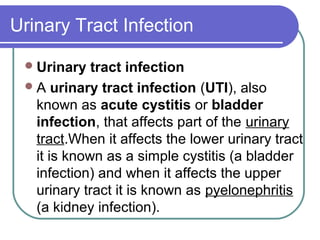
Urinary tract infection
A urinary tract infection (UTI), also
known as acute cystitis or bladder
infection, that affects part of the urinary
tract.When it affects the lower urinary tract
it is known as a simple cystitis (a bladder
infection) and when it affects the upper
urinary tract it is known as pyelonephritis
(a kidney infection).
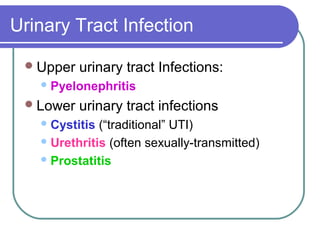
Urinary Tract Infection
Upper urinary tract Infections:
Pyelonephritis
Lower urinary tract infections
Cystitis (“traditional” UTI)
Urethritis (often sexually-transmitted)
Prostatitis
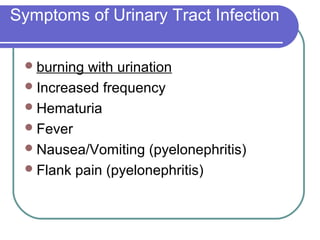
Symptoms of Urinary Tract Infection
burning with urination
Increased frequency
Hematuria
Fever
Nausea/Vomiting (pyelonephritis)
Flank pain (pyelonephritis)
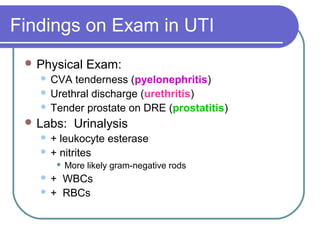
Findings on Exam in UTI
 Physical Exam:
 CVA tenderness (pyelonephritis)
 Urethral discharge (urethritis)
 Tender prostate on DRE (prostatitis)
 Labs: Urinalysis
 + leukocyte esterase
 + nitrites
 More likely gram-negative rods
 + WBCs
 + RBCs
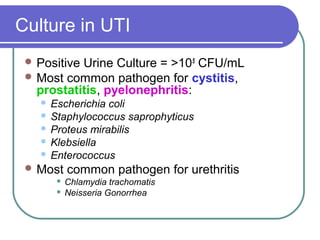
Culture in UTI
 Positive Urine Culture = >105
CFU/mL
 Most common pathogen for cystitis,
prostatitis, pyelonephritis:
 Escherichia coli
 Staphylococcus saprophyticus
 Proteus mirabilis
 Klebsiella
 Enterococcus
 Most common pathogen for urethritis
 Chlamydia trachomatis
 Neisseria Gonorrhea
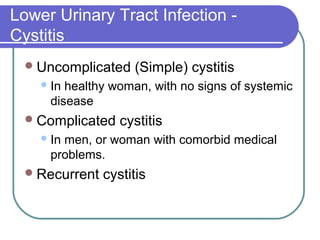
Lower Urinary Tract Infection -
Cystitis
Uncomplicated (Simple) cystitis
In healthy woman, with no signs of systemic
disease
Complicated cystitis
In men, or woman with comorbid medical
problems.
Recurrent cystitis
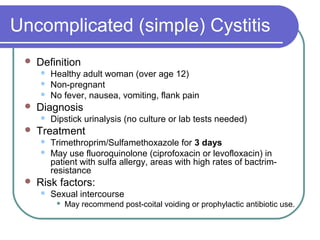
Uncomplicated (simple) Cystitis
 Definition
 Healthy adult woman (over age 12)
 Non-pregnant
 No fever, nausea, vomiting, flank pain
 Diagnosis
 Dipstick urinalysis (no culture or lab tests needed)
 Treatment
 Trimethroprim/Sulfamethoxazole for 3 days
 May use fluoroquinolone (ciprofoxacin or levofloxacin) in
patient with sulfa allergy, areas with high rates of bactrim-
resistance
 Risk factors:
 Sexual intercourse
 May recommend post-coital voiding or prophylactic antibiotic use.
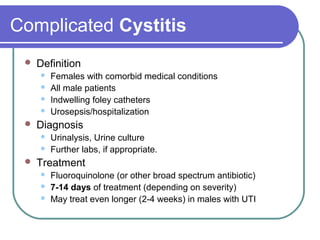
Complicated Cystitis
 Definition
 Females with comorbid medical conditions
 All male patients
 Indwelling foley catheters
 Urosepsis/hospitalization
 Diagnosis
 Urinalysis, Urine culture
 Further labs, if appropriate.
 Treatment
 Fluoroquinolone (or other broad spectrum antibiotic)
 7-14 days of treatment (depending on severity)
 May treat even longer (2-4 weeks) in males with UTI
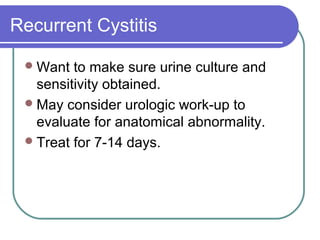
Recurrent Cystitis
Want to make sure urine culture and
sensitivity obtained.
May consider urologic work-up to
evaluate for anatomical abnormality.
Treat for 7-14 days.
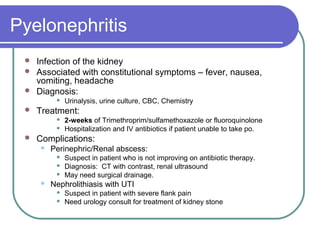
Pyelonephritis
 Infection of the kidney
 Associated with constitutional symptoms – fever, nausea,
vomiting, headache
 Diagnosis:
 Urinalysis, urine culture, CBC, Chemistry
 Treatment:
 2-weeks of Trimethroprim/sulfamethoxazole or fluoroquinolone
 Hospitalization and IV antibiotics if patient unable to take po.
 Complications:
 Perinephric/Renal abscess:
 Suspect in patient who is not improving on antibiotic therapy.
 Diagnosis: CT with contrast, renal ultrasound
 May need surgical drainage.
 Nephrolithiasis with UTI
 Suspect in patient with severe flank pain
 Need urology consult for treatment of kidney stone
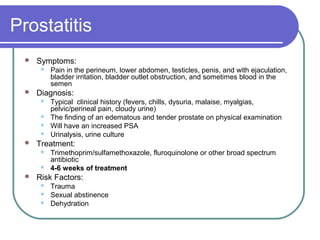
Prostatitis
 Symptoms:
 Pain in the perineum, lower abdomen, testicles, penis, and with ejaculation,
bladder irritation, bladder outlet obstruction, and sometimes blood in the
semen
 Diagnosis:
 Typical clinical history (fevers, chills, dysuria, malaise, myalgias,
pelvic/perineal pain, cloudy urine)
 The finding of an edematous and tender prostate on physical examination
 Will have an increased PSA
 Urinalysis, urine culture
 Treatment:
 Trimethoprim/sulfamethoxazole, fluroquinolone or other broad spectrum
antibiotic
 4-6 weeks of treatment
 Risk Factors:
 Trauma
 Sexual abstinence
 Dehydration

Urinary Tract Infection

  • 1.
    Urinary Tract Infection Presentedby: Imran Ahammad Chowdhury
  • 2.
    Urinary tract infection Aurinary tract infection (UTI), also known as acute cystitis or bladder infection, that affects part of the urinary tract.When it affects the lower urinary tract it is known as a simple cystitis (a bladder infection) and when it affects the upper urinary tract it is known as pyelonephritis (a kidney infection). Urinary Tract Infection
  • 3.
    Urinary Tract Infection Upperurinary tract Infections: Pyelonephritis Lower urinary tract infections Cystitis (“traditional” UTI) Urethritis (often sexually-transmitted) Prostatitis
  • 4.
    Symptoms of UrinaryTract Infection burning with urination Increased frequency Hematuria Fever Nausea/Vomiting (pyelonephritis) Flank pain (pyelonephritis)
  • 5.
    Findings on Examin UTI  Physical Exam:  CVA tenderness (pyelonephritis)  Urethral discharge (urethritis)  Tender prostate on DRE (prostatitis)  Labs: Urinalysis  + leukocyte esterase  + nitrites  More likely gram-negative rods  + WBCs  + RBCs
  • 6.
    Culture in UTI Positive Urine Culture = >105 CFU/mL  Most common pathogen for cystitis, prostatitis, pyelonephritis:  Escherichia coli  Staphylococcus saprophyticus  Proteus mirabilis  Klebsiella  Enterococcus  Most common pathogen for urethritis  Chlamydia trachomatis  Neisseria Gonorrhea
  • 7.
    Lower Urinary TractInfection - Cystitis Uncomplicated (Simple) cystitis In healthy woman, with no signs of systemic disease Complicated cystitis In men, or woman with comorbid medical problems. Recurrent cystitis
  • 8.
    Uncomplicated (simple) Cystitis Definition  Healthy adult woman (over age 12)  Non-pregnant  No fever, nausea, vomiting, flank pain  Diagnosis  Dipstick urinalysis (no culture or lab tests needed)  Treatment  Trimethroprim/Sulfamethoxazole for 3 days  May use fluoroquinolone (ciprofoxacin or levofloxacin) in patient with sulfa allergy, areas with high rates of bactrim- resistance  Risk factors:  Sexual intercourse  May recommend post-coital voiding or prophylactic antibiotic use.
  • 9.
    Complicated Cystitis  Definition Females with comorbid medical conditions  All male patients  Indwelling foley catheters  Urosepsis/hospitalization  Diagnosis  Urinalysis, Urine culture  Further labs, if appropriate.  Treatment  Fluoroquinolone (or other broad spectrum antibiotic)  7-14 days of treatment (depending on severity)  May treat even longer (2-4 weeks) in males with UTI
  • 10.
    Recurrent Cystitis Want tomake sure urine culture and sensitivity obtained. May consider urologic work-up to evaluate for anatomical abnormality. Treat for 7-14 days.
  • 11.
    Pyelonephritis  Infection ofthe kidney  Associated with constitutional symptoms – fever, nausea, vomiting, headache  Diagnosis:  Urinalysis, urine culture, CBC, Chemistry  Treatment:  2-weeks of Trimethroprim/sulfamethoxazole or fluoroquinolone  Hospitalization and IV antibiotics if patient unable to take po.  Complications:  Perinephric/Renal abscess:  Suspect in patient who is not improving on antibiotic therapy.  Diagnosis: CT with contrast, renal ultrasound  May need surgical drainage.  Nephrolithiasis with UTI  Suspect in patient with severe flank pain  Need urology consult for treatment of kidney stone
  • 12.
    Prostatitis  Symptoms:  Painin the perineum, lower abdomen, testicles, penis, and with ejaculation, bladder irritation, bladder outlet obstruction, and sometimes blood in the semen  Diagnosis:  Typical clinical history (fevers, chills, dysuria, malaise, myalgias, pelvic/perineal pain, cloudy urine)  The finding of an edematous and tender prostate on physical examination  Will have an increased PSA  Urinalysis, urine culture  Treatment:  Trimethoprim/sulfamethoxazole, fluroquinolone or other broad spectrum antibiotic  4-6 weeks of treatment  Risk Factors:  Trauma  Sexual abstinence  Dehydration