Pre by lect. ZAHID REHMAN
IPMS(KMU)
Urinary tract infection
Lecture objective
At the end of this lecture the student will be able to know
Definition of urinary tract infection
Pathophysiology
Risk factors
Pyelonephritis
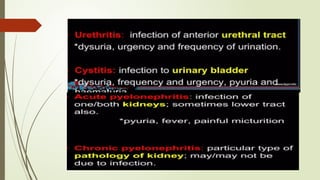
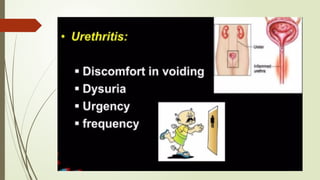
Urethritis
Cystitis
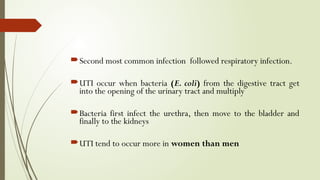
Second most common infection followed respiratory infection.
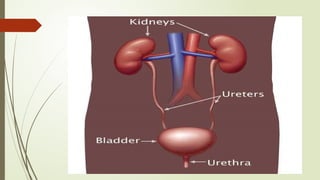
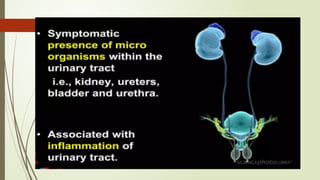
UTI occur when bacteria (E. coli) from the digestive tract get
into the opening of the urinary tract and multiply
Bacteria first infect the urethra, then move to the bladder and
finally to the kidneys
UTI tend to occur more in women than men
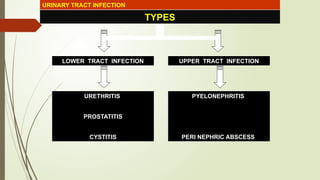
URINARY TRACT INFECTION
TYPES
LOWER TRACT INFECTION UPPER TRACT INFECTION
URETHRITIS
PROSTATITIS
CYSTITIS
PYELONEPHRITIS
PERI NEPHRIC ABSCESS
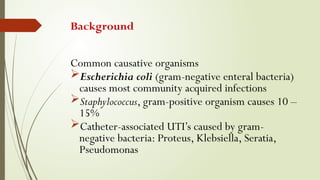
Background
Common causative organisms
Escherichia coli (gram-negative enteral bacteria)
causes most community acquired infections
Staphylococcus, gram-positive organism causes 10 –
15%
Catheter-associated UTI’s caused by gram-
negative bacteria: Proteus, Klebsiella, Seratia,
Pseudomonas
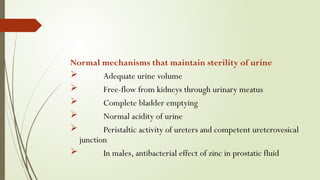
Normal mechanisms that maintain sterility of urine
 Adequate urine volume
 Free-flow from kidneys through urinary meatus
 Complete bladder emptying
 Normal acidity of urine
 Peristaltic activity of ureters and competent ureterovesical
junction
 In males, antibacterial effect of zinc in prostatic fluid
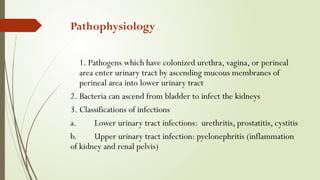
Pathophysiology
1. Pathogens which have colonized urethra, vagina, or perineal
area enter urinary tract by ascending mucous membranes of
perineal area into lower urinary tract
2. Bacteria can ascend from bladder to infect the kidneys
3. Classifications of infections
a. Lower urinary tract infections: urethritis, prostatitis, cystitis
b. Upper urinary tract infection: pyelonephritis (inflammation
of kidney and renal pelvis)
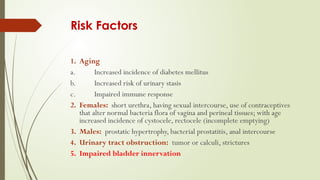
Risk Factors
1. Aging
a. Increased incidence of diabetes mellitus
b. Increased risk of urinary stasis
c. Impaired immune response
2. Females: short urethra, having sexual intercourse, use of contraceptives
that alter normal bacteria flora of vagina and perineal tissues; with age
increased incidence of cystocele, rectocele (incomplete emptying)
3. Males: prostatic hypertrophy, bacterial prostatitis, anal intercourse
4. Urinary tract obstruction: tumor or calculi, strictures
5. Impaired bladder innervation
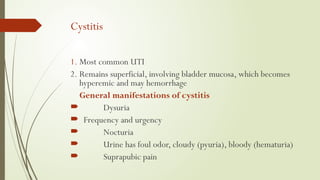
Cystitis
1. Most common UTI
2. Remains superficial, involving bladder mucosa, which becomes
hyperemic and may hemorrhage
General manifestations of cystitis
 Dysuria
 Frequency and urgency
 Nocturia
 Urine has foul odor, cloudy (pyuria), bloody (hematuria)
 Suprapubic pain
Diagnosis
Urinalysis, Urine culture
Further labs, if appropriate.
Treatment
Fluoroquinolone (or other broad spectrum antibiotic)
7-14 days of treatment (depending on severity)
May treat even longer (2-4 weeks) in males with UTI
Pyelonephritis
1. Inflammation of renal pelvis and parenchyma (functional kidney tissue)
2. Acute pyelonephritis
Results from an infection that ascends to kidney from lower urinary tract
Risk factors
 Pregnancy
 Urinary tract obstruction and congenital malformation
 Urinary tract trauma, scarring
 Renal calculi
 Polycystic or hypertensive renal disease
 Chronic diseases, i.e. diabetes mellitus
 Vesicourethral reflux
Pathophysiology
 Infection spreads from renal pelvis to renal cortex
 Kidney grossly edematous; localized abscesses in cortex surface
 E. Coli responsible organism for 85% of acute pyelonephritis; also Proteus,
Klebisella
Manifestations
 Rapid onset with chills and fever
 Malaise
 Vomiting
 Flank pain
 Urinary frequency, dysuria
Chronic pyelonephritis
Involves chronic inflammation and scarring of tubules
and interstitial tissues of kidney
Common cause of chronic renal failure
May develop from chronic hypertension, severe
vesicourteteral reflux, obstruction of urinary tract
Asymptomatic
Mild behaviors: urinary frequency, dysuria, flank pain
Prostatitis
 Symptoms:
 Pain in the perineum, lower abdomen, testicles, penis, and with
ejaculation, bladder irritation, bladder outlet obstruction, and
sometimes blood in the semen
 Diagnosis:
 Typical clinical history (fevers, chills, dysuria, malaise,
pelvic/perineal pain, cloudy urine)
 The finding of an edematous and tender prostate on physical
examination
 Will have an increased PSA
 Urinalysis, urine culture
Treatment:
Trimethoprim/sulfamethoxazole, fluroquinolone or
other broad spectrum antibiotic
4-6 weeks of treatment
Risk Factors:
Trauma
Dehydration
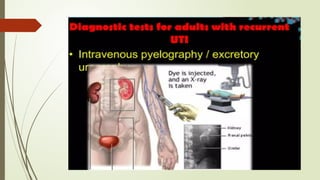
 Cystoscopy
Direct visualization of urethra and bladder through
cystoscope
Used for diagnostic, tissue biopsy, interventions
Client receives local or general anesthesia
Manual pelvic or prostate examinations to assess
structural changes of genitourinary tract, such as
prostatic enlargement, cystocele, rectocele
THANK
YOU
SO
MUCH
FOR YOUR CONCENTRATION

Urinary tract infection explanation pptx

  • 1.
    Pre by lect.ZAHID REHMAN IPMS(KMU) Urinary tract infection
  • 2.
    Lecture objective At theend of this lecture the student will be able to know Definition of urinary tract infection Pathophysiology Risk factors Pyelonephritis Urethritis Cystitis
  • 5.
    Second most commoninfection followed respiratory infection. UTI occur when bacteria (E. coli) from the digestive tract get into the opening of the urinary tract and multiply Bacteria first infect the urethra, then move to the bladder and finally to the kidneys UTI tend to occur more in women than men
  • 6.
    URINARY TRACT INFECTION TYPES LOWERTRACT INFECTION UPPER TRACT INFECTION URETHRITIS PROSTATITIS CYSTITIS PYELONEPHRITIS PERI NEPHRIC ABSCESS
  • 8.
    Background Common causative organisms Escherichiacoli (gram-negative enteral bacteria) causes most community acquired infections Staphylococcus, gram-positive organism causes 10 – 15% Catheter-associated UTI’s caused by gram- negative bacteria: Proteus, Klebsiella, Seratia, Pseudomonas
  • 9.
    Normal mechanisms thatmaintain sterility of urine  Adequate urine volume  Free-flow from kidneys through urinary meatus  Complete bladder emptying  Normal acidity of urine  Peristaltic activity of ureters and competent ureterovesical junction  In males, antibacterial effect of zinc in prostatic fluid
  • 10.
    Pathophysiology 1. Pathogens whichhave colonized urethra, vagina, or perineal area enter urinary tract by ascending mucous membranes of perineal area into lower urinary tract 2. Bacteria can ascend from bladder to infect the kidneys 3. Classifications of infections a. Lower urinary tract infections: urethritis, prostatitis, cystitis b. Upper urinary tract infection: pyelonephritis (inflammation of kidney and renal pelvis)
  • 11.
    Risk Factors 1. Aging a.Increased incidence of diabetes mellitus b. Increased risk of urinary stasis c. Impaired immune response 2. Females: short urethra, having sexual intercourse, use of contraceptives that alter normal bacteria flora of vagina and perineal tissues; with age increased incidence of cystocele, rectocele (incomplete emptying) 3. Males: prostatic hypertrophy, bacterial prostatitis, anal intercourse 4. Urinary tract obstruction: tumor or calculi, strictures 5. Impaired bladder innervation
  • 12.
    Cystitis 1. Most commonUTI 2. Remains superficial, involving bladder mucosa, which becomes hyperemic and may hemorrhage General manifestations of cystitis  Dysuria  Frequency and urgency  Nocturia  Urine has foul odor, cloudy (pyuria), bloody (hematuria)  Suprapubic pain
  • 13.
    Diagnosis Urinalysis, Urine culture Furtherlabs, if appropriate. Treatment Fluoroquinolone (or other broad spectrum antibiotic) 7-14 days of treatment (depending on severity) May treat even longer (2-4 weeks) in males with UTI
  • 14.
    Pyelonephritis 1. Inflammation ofrenal pelvis and parenchyma (functional kidney tissue) 2. Acute pyelonephritis Results from an infection that ascends to kidney from lower urinary tract Risk factors  Pregnancy  Urinary tract obstruction and congenital malformation  Urinary tract trauma, scarring  Renal calculi  Polycystic or hypertensive renal disease  Chronic diseases, i.e. diabetes mellitus  Vesicourethral reflux
  • 15.
    Pathophysiology  Infection spreadsfrom renal pelvis to renal cortex  Kidney grossly edematous; localized abscesses in cortex surface  E. Coli responsible organism for 85% of acute pyelonephritis; also Proteus, Klebisella Manifestations  Rapid onset with chills and fever  Malaise  Vomiting  Flank pain  Urinary frequency, dysuria
  • 16.
    Chronic pyelonephritis Involves chronicinflammation and scarring of tubules and interstitial tissues of kidney Common cause of chronic renal failure May develop from chronic hypertension, severe vesicourteteral reflux, obstruction of urinary tract Asymptomatic Mild behaviors: urinary frequency, dysuria, flank pain
  • 17.
    Prostatitis  Symptoms:  Painin the perineum, lower abdomen, testicles, penis, and with ejaculation, bladder irritation, bladder outlet obstruction, and sometimes blood in the semen  Diagnosis:  Typical clinical history (fevers, chills, dysuria, malaise, pelvic/perineal pain, cloudy urine)  The finding of an edematous and tender prostate on physical examination  Will have an increased PSA  Urinalysis, urine culture
  • 18.
    Treatment: Trimethoprim/sulfamethoxazole, fluroquinolone or otherbroad spectrum antibiotic 4-6 weeks of treatment Risk Factors: Trauma Dehydration
  • 21.
     Cystoscopy Direct visualizationof urethra and bladder through cystoscope Used for diagnostic, tissue biopsy, interventions Client receives local or general anesthesia Manual pelvic or prostate examinations to assess structural changes of genitourinary tract, such as prostatic enlargement, cystocele, rectocele
  • 22.