Adverse Drug Reaction
ADVERSE DRUG REACTIONS (ADRs)
 WHO: Any response to a drug which is noxious,
unintended and occurs at doses used for prophylaxis,
diagnosis or therapy of disease, or for the modification
physiological function.
 FDA : Serious drug event (events relating to drugs and
devices) as one in which, the patient outcome is death, life
threatening, hospitalization, disability, or congenital
anomaly, or required intervention to prevent permanent
impairment or damage.
Classification of ADRs
 WHO/ FDA Classification
1. Type-A Reaction
2.. Type-B Reactions
1. Type-A Reaction
 It is qualitatively normal but augmented type of ADR, so it
is the result of an augmented pharmacological action of a
drug when given in usual therapeutic doses.
 It is unrelated to the primary therapeutic effects which is
predictable from pharmacology of drug
 It is dose dependent type and do not usually cause
serious illness.
 This type of ADR identified before a drug is marketed
 It is preventable and reversible
Example
 Anticancer drug (Cytotoxics) & ADR -
Myelosuppression.
 Aspirin (Suppress prostaglandin formation) & ADR -
Gastric ulcer
2. Type-B Reaction
 This is the type of reaction which usually occurs due to
hypersensitivity and idiosyncratic mechanism.
 The effects are bizarre effects that are unpredictable on
the basis of drug's known pharmacology. It is unrelated to
the dose.
 This type of ADR, although rare, cause serious illness
and death.
 More serious and requires drug withdraw
 Eg. Penicillin-induced anaphylaxis
 Primaquine-induced haemolysis in patients with G6PD
deficiency
 Isoniazid-induced peripheral neuropathy
Additional categories
 Type C: Chronic
 Type D: Delayed
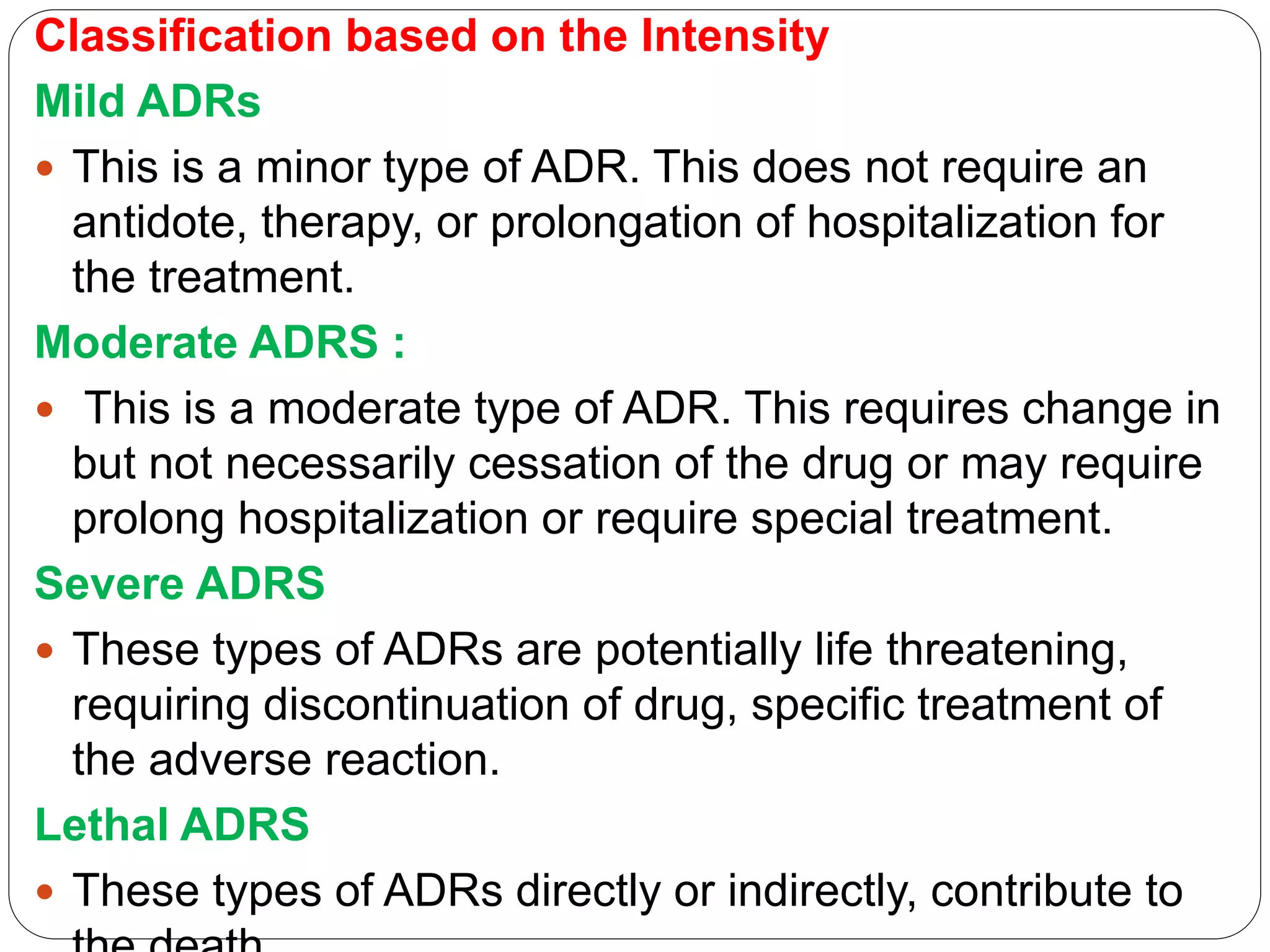
Classification based on the Intensity
Mild ADRs
 This is a minor type of ADR. This does not require an
antidote, therapy, or prolongation of hospitalization for
the treatment.
Moderate ADRS :
 This is a moderate type of ADR. This requires change in
but not necessarily cessation of the drug or may require
prolong hospitalization or require special treatment.
Severe ADRS
 These types of ADRs are potentially life threatening,
requiring discontinuation of drug, specific treatment of
the adverse reaction.
Lethal ADRS
 These types of ADRs directly or indirectly, contribute to
Classification based on 'Etiology'
Excessive pharmacological effects
 Generally this appear after the excessive intake of the
medicines (over dosages), additive and synergistic effects
of the combination therapy and intentional and
unintentional poisoning.
 This is particularly problematic with CNS-drugs, CVS-
drugs, and hypoglycemic agents and so on.
 ADRS may also appear at the therapeutic dosages at
specific conditions. Eg. patients having impaired kidney
functions, or liver diseases, elderly and infants
 These ADRs can be reduced to a safe level by adjusting
the dose and dosage regimen according to the
pharmacokinetic behavior of the drug
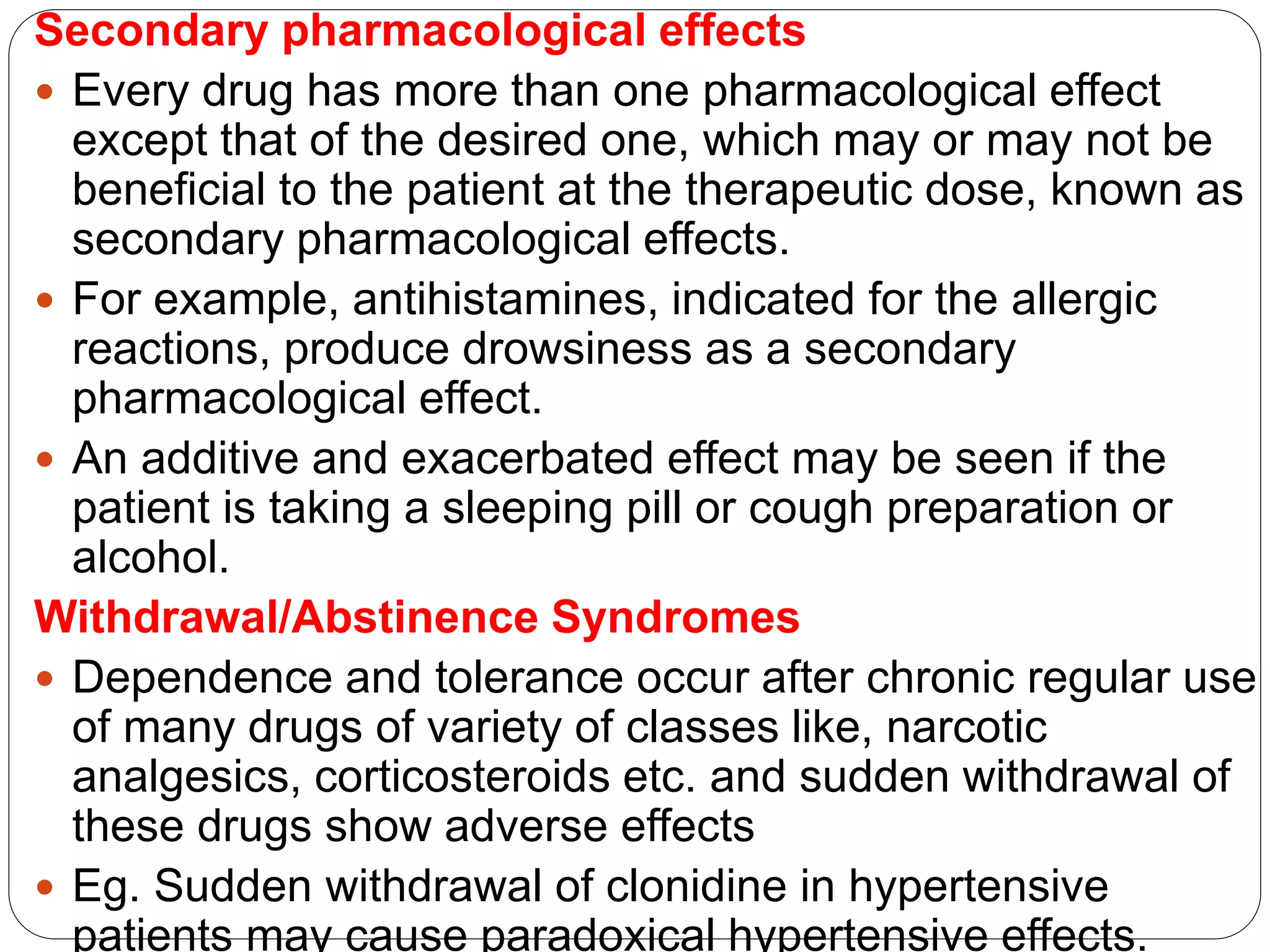
Secondary pharmacological effects
 Every drug has more than one pharmacological effect
except that of the desired one, which may or may not be
beneficial to the patient at the therapeutic dose, known as
secondary pharmacological effects.
 For example, antihistamines, indicated for the allergic
reactions, produce drowsiness as a secondary
pharmacological effect.
 An additive and exacerbated effect may be seen if the
patient is taking a sleeping pill or cough preparation or
alcohol.
Withdrawal/Abstinence Syndromes
 Dependence and tolerance occur after chronic regular use
of many drugs of variety of classes like, narcotic
analgesics, corticosteroids etc. and sudden withdrawal of
these drugs show adverse effects
 Eg. Sudden withdrawal of clonidine in hypertensive
patients may cause paradoxical hypertensive effects.
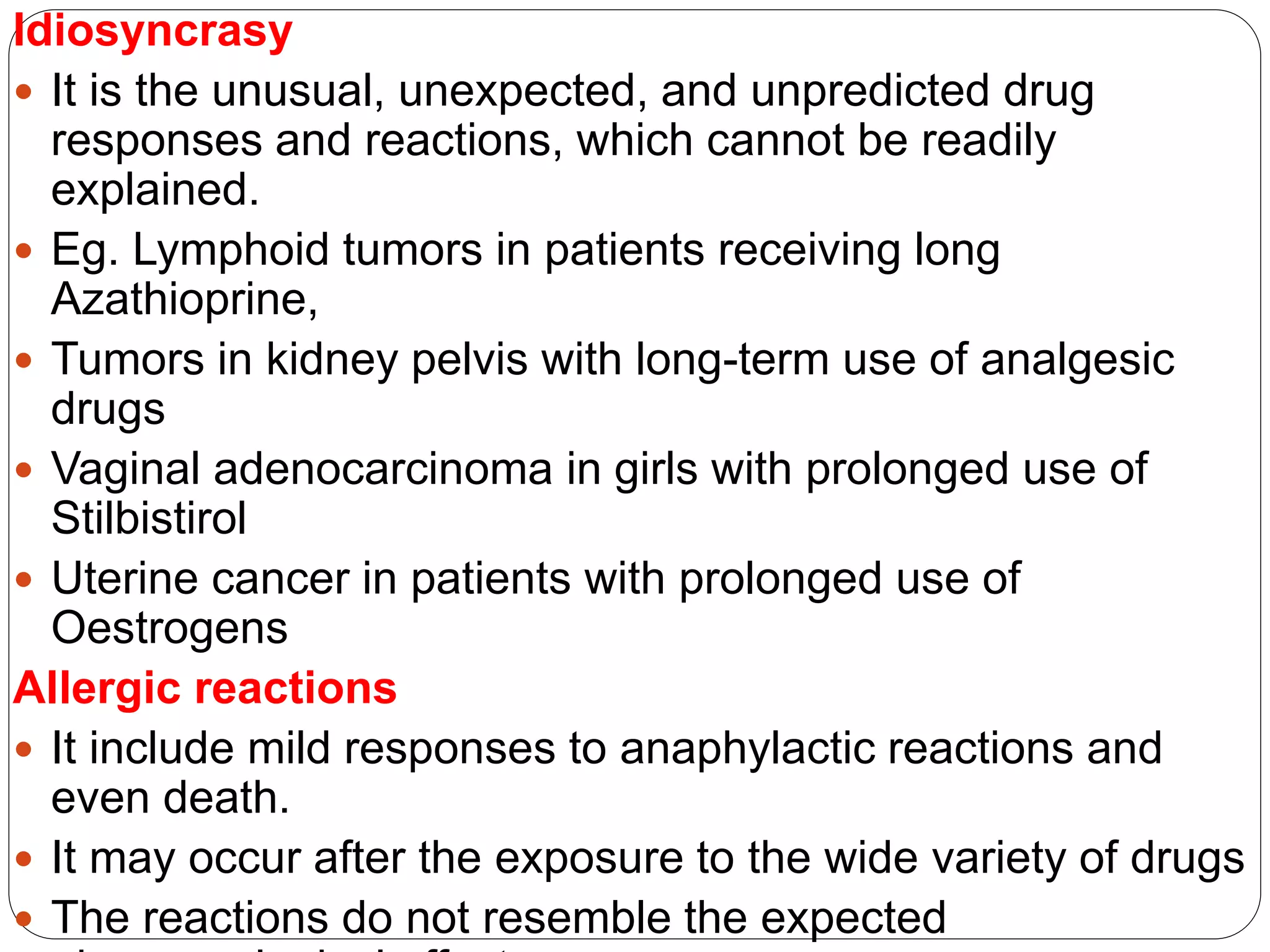
Idiosyncrasy
 It is the unusual, unexpected, and unpredicted drug
responses and reactions, which cannot be readily
explained.
 Eg. Lymphoid tumors in patients receiving long
Azathioprine,
 Tumors in kidney pelvis with long-term use of analgesic
drugs
 Vaginal adenocarcinoma in girls with prolonged use of
Stilbistirol
 Uterine cancer in patients with prolonged use of
Oestrogens
Allergic reactions
 It include mild responses to anaphylactic reactions and
even death.
 It may occur after the exposure to the wide variety of drugs
 The reactions do not resemble the expected
Anaphylaxis
 When a specific allergen is injected directly into the
circulation, the allergen can react with basophils of the
blood and mast cells in the tissues located immediately
outside the small blood vessels if the basophils and mast
cells have been sensitized by attachment of IgE reagins.
 Therefore, a widespread allergic reaction occurs
throughout the vascular system and closely associated
tissues. This is called anaphylaxis.
 Histamine is released into the circulation and causes
body-wide vasodilation as well as increased permeability
of the capillaries with resultant marked loss of plasma
from the circulation.
Factors affecting ADR incidence and severity
1. Patient variable
 Age
 Underlying disease
 Genetics
 Gender
1. Age:
Elderly
 Elderly people often have chronic and multiple diseases;
hence more likely to be practised polypharmacy
 They are vulnerable to the adverse effects of drugs
because of the physiological changes
 The cytochrome P450 enzymes decrease in old people
 Drugs that commonly cause problems in elderly patients
include:
 Hypnotics, Diuretic,s NSAIDS, Antihypertensive,
Psychotropics, Digoxin
Children
 All children, and most particularly neonates, differ from
adults in the way they handle and respond to drugs.
 Some medicines cause problems in neonates but are
generally well tolerated in older children. E.g. Morphine,
 Some are associated with an increased risk of problems
in children of any age, e.g. Sodium valproate.
 Eg. hepatotoxicity with sodium valproate, Reye's
syndrome with aspirin, Gray baby syndrome with
Chloramphencol
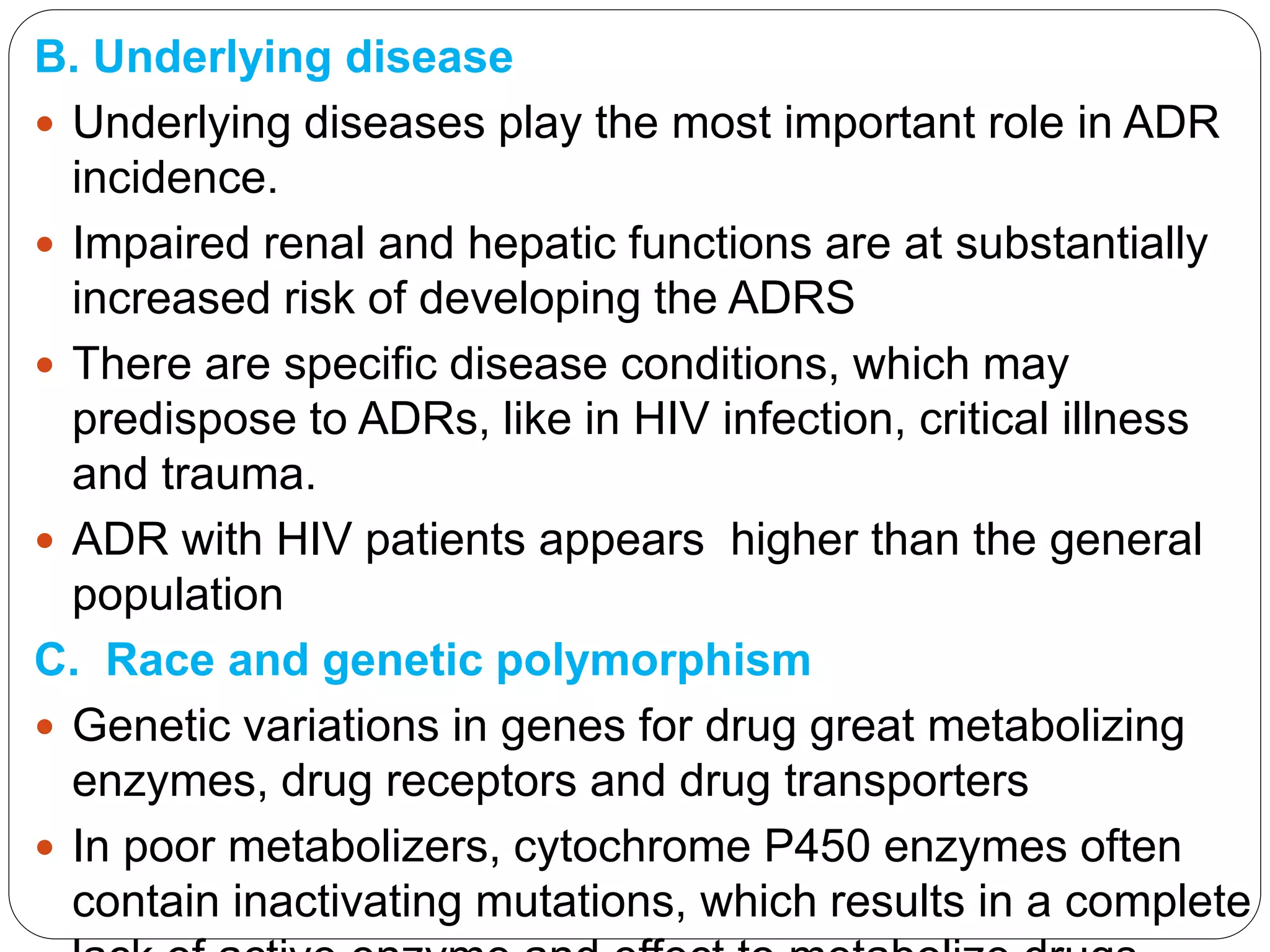
B. Underlying disease
 Underlying diseases play the most important role in ADR
incidence.
 Impaired renal and hepatic functions are at substantially
increased risk of developing the ADRS
 There are specific disease conditions, which may
predispose to ADRs, like in HIV infection, critical illness
and trauma.
 ADR with HIV patients appears higher than the general
population
C. Race and genetic polymorphism
 Genetic variations in genes for drug great metabolizing
enzymes, drug receptors and drug transporters
 In poor metabolizers, cytochrome P450 enzymes often
contain inactivating mutations, which results in a complete
d. Gender
 Women are at greater risk of developing ADRs than men.
 Females have a 1.5- to 1.7 fold greater risk of developing
an ADR.
 The reasons may include gender-related differences in
pharmacokinetic, immunological and hormonal factors.
2. Drug variable
A. Route of administration
 IV administration may be associated with more serious
side
 Digoxin has greater risk of causing Cardiac arrhythmia.
Oral may be associated with somewhat milder adverse
events.
B. Product formulation
C. Duration of therapy
 In-patients greater than sixty years of age, an increased
duration of therapy with NSAIDs was associated with
increased risk of GI toxicity.
D. Multiple drug therapy
 The probability of adverse drug reactions and drug
interactions has been shown to increase sharply with the
practice of polypharmacy.
 Multiple drugs used are not always additive, there may
be a synergistic effect, an antagonistic effect, and so on.
3. External factors
1. Concurrent therapies
2. Alcohol consumption
3. Smoking
4. Environmental pollution etc.
Detection and monitoring of ADRs
 In this regard, pre-marketing studies and post marketing
surveillance are to be considered.
 In premarketing studies, the safety and toxicology of new
medicines is tested in animal models.
 Methods most commonly adopted in post marketing
surveillance are:
i. Case reports
ii. Cohort studies
iii. Case-control studies
iv. Spontaneous reporting schemes
Case Reports
 This is done for the detection of new and serious reactions,
particularly Type-B reactions.
 This involves publication of single case reports, or case
series of ADRs in medical literature.
Cohort studies
 This involves study of the large group of patients taking a
particular drug. This compares adverse event rates in
group of patients taking drug of intent, with a comparative
group.
 Cohort studies include:
 Ad hoc investigations to investigate specific problems.
 Sponsorship by pharmaceutical companies.
 Prescription event monitoring
 Variety of record linkage schemes.
 In this study, a group of individuals that is exposed to a
risk factor (study group) is compared with the group of
individuals not exposed to risk factor (control group).
Case control studies
 In this case, comparison of drug usage between a group
of patients with a disease and control group who are
similar in confounding factors but do not have the
disease is done, which confirms whether a drug causes
a given reaction once suspicion has been raised.
 Particular In this study, the investigators compare one
group among whom a problem is present with another
group, called controlled group, where the problem is
absent to find out what factors have contributed to the
problems.
Cross-sectional studies
 It focuses on comparing as well as describing groups.
 It involve data collected at a defined time.
 They are often used to assess the prevalence of acute or
chronic conditions, or to answer questions about the
causes of disease or the results of medical intervention.
 It may involve special data collection, including questions
about the past, but they often rely on data originally
collected for other purposes.
 They are moderately expensive, and are not suitable for
the study of rare diseases. Difficulty in recalling past events
may also contribute bias.
Spontaneous reporting schemes
 Many countries have established a scheme for adverse
drug reaction reporting called as, "Committee on Safety of
Medicines (CSM)".
 The physicians are asked to report all the suspected
serious reactions to newer products. CSM reporting
scheme provides valuable early warnings and enables the
study of factors associated with them.
 CSM has introduced a "Yellow Card Scheme". Yellow card
scheme is capable of detecting both rare and common
reactions.
 It should be available to all the physicians in every health
care facility.
 Yellow cards are the forms used for reporting ADRs of new
products which are found in BNF or MIMS. Information
required in yellow card:
 Patient details
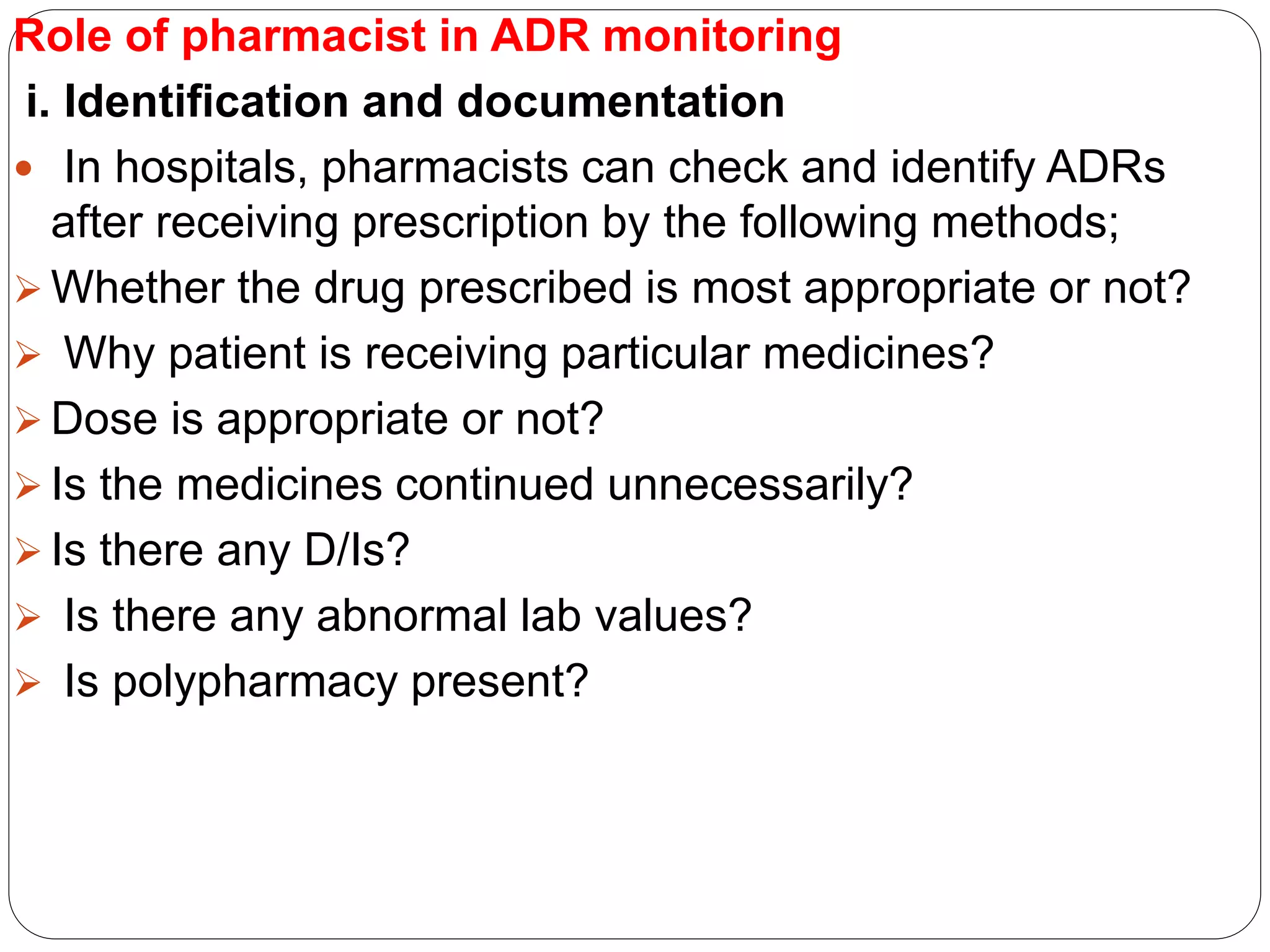
Role of pharmacist in ADR monitoring
i. Identification and documentation
 In hospitals, pharmacists can check and identify ADRs
after receiving prescription by the following methods;
 Whether the drug prescribed is most appropriate or not?
 Why patient is receiving particular medicines?
 Dose is appropriate or not?
 Is the medicines continued unnecessarily?
 Is there any D/Is?
 Is there any abnormal lab values?
 Is polypharmacy present?
ii. Monitoring and reporting
 Pharmacist is often involved in setting of and reporting
ADRS scheme in hospital encouraging physicians to fill the
yellow cards regarding ADRs. They are involved in:
 Preparation of information on most common ADR problems
 Analysis of each reported ADRs
 Development of policies and procedures for ADR
monitoring
 Monitoring safety of drug use in high risk patients
iii. Prevention
 This includes:
 Identifying potential S/Es of the drug
 Avoiding unnecessary polypharmacy by review of
prescription
 Choosing most effective and least toxic drugs whenever
 Educating the patients regarding their drug regimen
 Encouraging the patients to complete the course of
medications
 Encouraging the patients to report any new ADRs
 Taking drug histories and identifying previous allergies or
ADRs –
 Preparing formularies, protocols to ensure appropriate
selection of drugs
 Advising on best regimens to improve patient compliance
.
 By publication of reports, interaction between other
healthcare professionals
Pharmacovigilance
 WHO= 'the science and activities relating to the
detection, assessment, understanding and prevention of
adverse effects or any other drug related problems'.
 It is a science relating to the detection, assessment,
understanding and prevention of risks involved with
medicines.
 In earlier days, It was considered as ADR monitoring or
drug surveillance.
 It concerns all kinds of drug related problems like drug
interactions, drug resistance, counterfeiting, quality
problems, drug abuse, poisoning, medication errors, etc.
Necessity of pharmacovigilance
 Factors necessary for establishing pharmacovigilance
are as follows:
i. Use of alternative medicines is very common in Nepal.
ii. There are different races of population in Nepal having
different genetic makeup.
iii. Self medication is one of the common cause of ADRs
in Nepal.
iv. There are no mandatory requirements for clinical trial
data to be submitted to the drug regulatory authority
prior to drug registration in Nepal. Thus the exact risk
of occurrence of ADRs is unknown.
v. There is very less safety data on the drugs.
National pharmacovigilance program in Nepal
 In the year 2006, Nepal was given full member status by
the Uppsala Monitoring Center (Sweden), (WHO
collaborating Center for International Drug Monitoring )
 The Ministry of Health and Population has designated DDA
as the national center for ADR monitoring.
 The DDA has established regional centers that report the
ADRS to DDA.
 The organization of pharmacovigilance program in Nepal is
as shown below:
Role of pharmacists in pharmacovigilance
 Pharmacists play an important role in minimizing ADRs
because the patients rely upon them for their
medications.
1. Educating the patients
 Major ADRs can be prevented, if the patients are
informed adequately regarding the detection of early
symptoms. E.g. the patients develop mild nausea,
vomiting, abdominal pain etc before developing
hepatotoxicity.
2. Patient counseling
3. Correct dose and duration
4. Refilling of prescriptions
5. Reporting of ADR

Adverse Drug Reaction.pptx

  • 1.
  • 2.
    ADVERSE DRUG REACTIONS(ADRs)  WHO: Any response to a drug which is noxious, unintended and occurs at doses used for prophylaxis, diagnosis or therapy of disease, or for the modification physiological function.  FDA : Serious drug event (events relating to drugs and devices) as one in which, the patient outcome is death, life threatening, hospitalization, disability, or congenital anomaly, or required intervention to prevent permanent impairment or damage. Classification of ADRs  WHO/ FDA Classification 1. Type-A Reaction 2.. Type-B Reactions
  • 3.
    1. Type-A Reaction It is qualitatively normal but augmented type of ADR, so it is the result of an augmented pharmacological action of a drug when given in usual therapeutic doses.  It is unrelated to the primary therapeutic effects which is predictable from pharmacology of drug  It is dose dependent type and do not usually cause serious illness.  This type of ADR identified before a drug is marketed  It is preventable and reversible Example  Anticancer drug (Cytotoxics) & ADR - Myelosuppression.  Aspirin (Suppress prostaglandin formation) & ADR - Gastric ulcer
  • 4.
    2. Type-B Reaction This is the type of reaction which usually occurs due to hypersensitivity and idiosyncratic mechanism.  The effects are bizarre effects that are unpredictable on the basis of drug's known pharmacology. It is unrelated to the dose.  This type of ADR, although rare, cause serious illness and death.  More serious and requires drug withdraw  Eg. Penicillin-induced anaphylaxis  Primaquine-induced haemolysis in patients with G6PD deficiency  Isoniazid-induced peripheral neuropathy Additional categories  Type C: Chronic  Type D: Delayed
  • 5.
    Classification based onthe Intensity Mild ADRs  This is a minor type of ADR. This does not require an antidote, therapy, or prolongation of hospitalization for the treatment. Moderate ADRS :  This is a moderate type of ADR. This requires change in but not necessarily cessation of the drug or may require prolong hospitalization or require special treatment. Severe ADRS  These types of ADRs are potentially life threatening, requiring discontinuation of drug, specific treatment of the adverse reaction. Lethal ADRS  These types of ADRs directly or indirectly, contribute to
  • 6.
    Classification based on'Etiology' Excessive pharmacological effects  Generally this appear after the excessive intake of the medicines (over dosages), additive and synergistic effects of the combination therapy and intentional and unintentional poisoning.  This is particularly problematic with CNS-drugs, CVS- drugs, and hypoglycemic agents and so on.  ADRS may also appear at the therapeutic dosages at specific conditions. Eg. patients having impaired kidney functions, or liver diseases, elderly and infants  These ADRs can be reduced to a safe level by adjusting the dose and dosage regimen according to the pharmacokinetic behavior of the drug
  • 7.
    Secondary pharmacological effects Every drug has more than one pharmacological effect except that of the desired one, which may or may not be beneficial to the patient at the therapeutic dose, known as secondary pharmacological effects.  For example, antihistamines, indicated for the allergic reactions, produce drowsiness as a secondary pharmacological effect.  An additive and exacerbated effect may be seen if the patient is taking a sleeping pill or cough preparation or alcohol. Withdrawal/Abstinence Syndromes  Dependence and tolerance occur after chronic regular use of many drugs of variety of classes like, narcotic analgesics, corticosteroids etc. and sudden withdrawal of these drugs show adverse effects  Eg. Sudden withdrawal of clonidine in hypertensive patients may cause paradoxical hypertensive effects.
  • 8.
    Idiosyncrasy  It isthe unusual, unexpected, and unpredicted drug responses and reactions, which cannot be readily explained.  Eg. Lymphoid tumors in patients receiving long Azathioprine,  Tumors in kidney pelvis with long-term use of analgesic drugs  Vaginal adenocarcinoma in girls with prolonged use of Stilbistirol  Uterine cancer in patients with prolonged use of Oestrogens Allergic reactions  It include mild responses to anaphylactic reactions and even death.  It may occur after the exposure to the wide variety of drugs  The reactions do not resemble the expected
  • 9.
    Anaphylaxis  When aspecific allergen is injected directly into the circulation, the allergen can react with basophils of the blood and mast cells in the tissues located immediately outside the small blood vessels if the basophils and mast cells have been sensitized by attachment of IgE reagins.  Therefore, a widespread allergic reaction occurs throughout the vascular system and closely associated tissues. This is called anaphylaxis.  Histamine is released into the circulation and causes body-wide vasodilation as well as increased permeability of the capillaries with resultant marked loss of plasma from the circulation.
  • 10.
    Factors affecting ADRincidence and severity 1. Patient variable  Age  Underlying disease  Genetics  Gender 1. Age: Elderly  Elderly people often have chronic and multiple diseases; hence more likely to be practised polypharmacy  They are vulnerable to the adverse effects of drugs because of the physiological changes  The cytochrome P450 enzymes decrease in old people
  • 11.
     Drugs thatcommonly cause problems in elderly patients include:  Hypnotics, Diuretic,s NSAIDS, Antihypertensive, Psychotropics, Digoxin Children  All children, and most particularly neonates, differ from adults in the way they handle and respond to drugs.  Some medicines cause problems in neonates but are generally well tolerated in older children. E.g. Morphine,  Some are associated with an increased risk of problems in children of any age, e.g. Sodium valproate.  Eg. hepatotoxicity with sodium valproate, Reye's syndrome with aspirin, Gray baby syndrome with Chloramphencol
  • 12.
    B. Underlying disease Underlying diseases play the most important role in ADR incidence.  Impaired renal and hepatic functions are at substantially increased risk of developing the ADRS  There are specific disease conditions, which may predispose to ADRs, like in HIV infection, critical illness and trauma.  ADR with HIV patients appears higher than the general population C. Race and genetic polymorphism  Genetic variations in genes for drug great metabolizing enzymes, drug receptors and drug transporters  In poor metabolizers, cytochrome P450 enzymes often contain inactivating mutations, which results in a complete
  • 13.
    d. Gender  Womenare at greater risk of developing ADRs than men.  Females have a 1.5- to 1.7 fold greater risk of developing an ADR.  The reasons may include gender-related differences in pharmacokinetic, immunological and hormonal factors. 2. Drug variable A. Route of administration  IV administration may be associated with more serious side  Digoxin has greater risk of causing Cardiac arrhythmia. Oral may be associated with somewhat milder adverse events. B. Product formulation
  • 14.
    C. Duration oftherapy  In-patients greater than sixty years of age, an increased duration of therapy with NSAIDs was associated with increased risk of GI toxicity. D. Multiple drug therapy  The probability of adverse drug reactions and drug interactions has been shown to increase sharply with the practice of polypharmacy.  Multiple drugs used are not always additive, there may be a synergistic effect, an antagonistic effect, and so on. 3. External factors 1. Concurrent therapies 2. Alcohol consumption 3. Smoking 4. Environmental pollution etc.
  • 15.
    Detection and monitoringof ADRs  In this regard, pre-marketing studies and post marketing surveillance are to be considered.  In premarketing studies, the safety and toxicology of new medicines is tested in animal models.  Methods most commonly adopted in post marketing surveillance are: i. Case reports ii. Cohort studies iii. Case-control studies iv. Spontaneous reporting schemes
  • 16.
    Case Reports  Thisis done for the detection of new and serious reactions, particularly Type-B reactions.  This involves publication of single case reports, or case series of ADRs in medical literature. Cohort studies  This involves study of the large group of patients taking a particular drug. This compares adverse event rates in group of patients taking drug of intent, with a comparative group.  Cohort studies include:  Ad hoc investigations to investigate specific problems.  Sponsorship by pharmaceutical companies.  Prescription event monitoring  Variety of record linkage schemes.
  • 17.
     In thisstudy, a group of individuals that is exposed to a risk factor (study group) is compared with the group of individuals not exposed to risk factor (control group). Case control studies  In this case, comparison of drug usage between a group of patients with a disease and control group who are similar in confounding factors but do not have the disease is done, which confirms whether a drug causes a given reaction once suspicion has been raised.  Particular In this study, the investigators compare one group among whom a problem is present with another group, called controlled group, where the problem is absent to find out what factors have contributed to the problems.
  • 18.
    Cross-sectional studies  Itfocuses on comparing as well as describing groups.  It involve data collected at a defined time.  They are often used to assess the prevalence of acute or chronic conditions, or to answer questions about the causes of disease or the results of medical intervention.  It may involve special data collection, including questions about the past, but they often rely on data originally collected for other purposes.  They are moderately expensive, and are not suitable for the study of rare diseases. Difficulty in recalling past events may also contribute bias.
  • 19.
    Spontaneous reporting schemes Many countries have established a scheme for adverse drug reaction reporting called as, "Committee on Safety of Medicines (CSM)".  The physicians are asked to report all the suspected serious reactions to newer products. CSM reporting scheme provides valuable early warnings and enables the study of factors associated with them.  CSM has introduced a "Yellow Card Scheme". Yellow card scheme is capable of detecting both rare and common reactions.  It should be available to all the physicians in every health care facility.  Yellow cards are the forms used for reporting ADRs of new products which are found in BNF or MIMS. Information required in yellow card:  Patient details
  • 20.
    Role of pharmacistin ADR monitoring i. Identification and documentation  In hospitals, pharmacists can check and identify ADRs after receiving prescription by the following methods;  Whether the drug prescribed is most appropriate or not?  Why patient is receiving particular medicines?  Dose is appropriate or not?  Is the medicines continued unnecessarily?  Is there any D/Is?  Is there any abnormal lab values?  Is polypharmacy present?
  • 21.
    ii. Monitoring andreporting  Pharmacist is often involved in setting of and reporting ADRS scheme in hospital encouraging physicians to fill the yellow cards regarding ADRs. They are involved in:  Preparation of information on most common ADR problems  Analysis of each reported ADRs  Development of policies and procedures for ADR monitoring  Monitoring safety of drug use in high risk patients iii. Prevention  This includes:  Identifying potential S/Es of the drug  Avoiding unnecessary polypharmacy by review of prescription  Choosing most effective and least toxic drugs whenever
  • 22.
     Educating thepatients regarding their drug regimen  Encouraging the patients to complete the course of medications  Encouraging the patients to report any new ADRs  Taking drug histories and identifying previous allergies or ADRs –  Preparing formularies, protocols to ensure appropriate selection of drugs  Advising on best regimens to improve patient compliance .  By publication of reports, interaction between other healthcare professionals
  • 23.
    Pharmacovigilance  WHO= 'thescience and activities relating to the detection, assessment, understanding and prevention of adverse effects or any other drug related problems'.  It is a science relating to the detection, assessment, understanding and prevention of risks involved with medicines.  In earlier days, It was considered as ADR monitoring or drug surveillance.  It concerns all kinds of drug related problems like drug interactions, drug resistance, counterfeiting, quality problems, drug abuse, poisoning, medication errors, etc.
  • 24.
    Necessity of pharmacovigilance Factors necessary for establishing pharmacovigilance are as follows: i. Use of alternative medicines is very common in Nepal. ii. There are different races of population in Nepal having different genetic makeup. iii. Self medication is one of the common cause of ADRs in Nepal. iv. There are no mandatory requirements for clinical trial data to be submitted to the drug regulatory authority prior to drug registration in Nepal. Thus the exact risk of occurrence of ADRs is unknown. v. There is very less safety data on the drugs.
  • 25.
    National pharmacovigilance programin Nepal  In the year 2006, Nepal was given full member status by the Uppsala Monitoring Center (Sweden), (WHO collaborating Center for International Drug Monitoring )  The Ministry of Health and Population has designated DDA as the national center for ADR monitoring.  The DDA has established regional centers that report the ADRS to DDA.  The organization of pharmacovigilance program in Nepal is as shown below:
  • 26.
    Role of pharmacistsin pharmacovigilance  Pharmacists play an important role in minimizing ADRs because the patients rely upon them for their medications. 1. Educating the patients  Major ADRs can be prevented, if the patients are informed adequately regarding the detection of early symptoms. E.g. the patients develop mild nausea, vomiting, abdominal pain etc before developing hepatotoxicity. 2. Patient counseling 3. Correct dose and duration 4. Refilling of prescriptions 5. Reporting of ADR