Employability and work-based learning . Dr Jo SmedleyAssociate Dean (Learning & Teaching), Newport Business School1
Employability and Work-based LearningThis chapter raises awareness of the benefits of linking learning and teaching to real-life employment situations with associated case studies and perspectives from employers and graduates to provide guidance for future developments.Core knowledge:Appropriate methods for teaching and learning in the                                                    subject area and at the level of the academic programmeHow students learn, both generally and in the subjectActivity areas:Teaching and/or supporting student learningDeveloping effective environments and student support                                  and guidanceProfessional values:Commitment to development of learning communitiesCommitment to encouraging participation in higher education, acknowledging diversity and promoting equality of opportunity"
About employabilityEmployability: a person's capability of:- gaining initial employmentmaintaining employmentobtaining new employment if required             (Hillage and Pollard, 1998)Employability depends on:- the knowledge, skills and abilities they possessthe way they use those assets and present them to employersthe context (e.g. personal circumstances and labour market environment) within which they seek work.
Where is the Drive Coming From?Page 4Where is the need for leadership and management training and development is coming from, what/who is the chief driver for this?Leadership and management development is important to almost all companies and very important to 77%. This is even higher in Corporates (more than 1000 employees)A belief in leadership and management development at the senior level is most likely to have an influence on practice.This indicates that helping senior management see the benefits of leadership and management development in their staff will have a positive impact% RespondentsBase: 100
Deliverables: Employers and Workplace SkillsPage 5When it comes to deliverables for your staff from a leadership and management programme, what are you most looking for your staff to have developed… RANK IN ORDER OF IMPORTANCE  Proportion ranked 1st% RespondentsBase: 99
Page 6Course PreferencesI am going to read some pairs of issues associated with courses for leadership and management development. Thinking of what you are looking for, which of these do you lean towards?  SCALE: Strongly lean towards, Generally lean towards, or lean towards neitherPreference for in house delivery of trainingPreference for external providersCourses are delivered by a reputable University or Institute of Higher EducationCourses are delivered by a reputable private training companyCourses are certificated and carry a formal recognised qualificationCourse are not certificated with a formal qualificationCourses are specifically designed for our organisationCourse are generally available to all companies and individualsCourses offer a flexible learning approaches Courses are delivered using traditional modes of attendanceCourses meet the needs of employeesCourses meets the needs of the  employerCourses are strongly theory basedCourses are strongly practically basedThe employer is heavily involved in the programme of learningThe training provider determines most aspects and the employer is not involved in the learning programme Content delivery uses multi modal teaching methods e.g. interactive electronic teaching materialsContent delivery utilises traditional teaching methods i.e. lectures, tutorials, practicalsStand alone accredited modules which could build to a formal qualificationComplete formal qualificationStrongly lean towardsLean towards neitherStrongly lean towardsBase: 100
Preferred Teaching MethodsFlexible Delivery and Engagement Page 7Which of these teaching methods are you looking for from education and skills development courses in leadership and management% RespondentsBase: 99
Work Based Projects Are Most EffectivePage 8Which do you feel is most effective in developing the leadership and management skills you need? ALL ISSUES IDENTIFIED IN PREVIOUS QUESTION, RANK IN ORDER OF EFFECTIVENESSFirstRankLastMean Score (Ranking from 1st to 7th )Base: 99
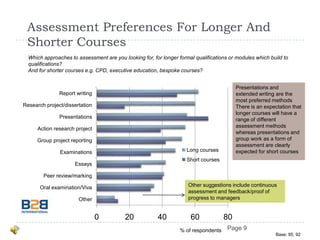
Assessment Preferences For Longer And Shorter CoursesPage 9Which approaches to assessment are you looking for, for longer formal qualifications or modules which build to qualifications? And for shorter courses e.g. CPD, executive education, bespoke courses?Presentations and extended writing are the most preferred methodsThere is an expectation that longer courses will have a range of different assessment methods whereas presentations and group work as a form of assessment are clearly expected for short coursesOther suggestions include continuous assessment and feedback/proof of progress to managers% of respondentsBase: 95; 92
Employer Led, Employee Gain...Page 1090% of large companies have a programme in place or a preferred/restricted list. Only 10% of the L&M training market is available without working with employers in some wayThere is the potential for partnerships with private providers and learning organisations to increase visibility and credibility
Developing effective environments and student support and guidanceWork-related learning
Liaison

Employability and work-based learning

  • 1.
    Employability and work-basedlearning . Dr Jo SmedleyAssociate Dean (Learning & Teaching), Newport Business School1
  • 2.
    Employability and Work-basedLearningThis chapter raises awareness of the benefits of linking learning and teaching to real-life employment situations with associated case studies and perspectives from employers and graduates to provide guidance for future developments.Core knowledge:Appropriate methods for teaching and learning in the subject area and at the level of the academic programmeHow students learn, both generally and in the subjectActivity areas:Teaching and/or supporting student learningDeveloping effective environments and student support and guidanceProfessional values:Commitment to development of learning communitiesCommitment to encouraging participation in higher education, acknowledging diversity and promoting equality of opportunity"
  • 3.
    About employabilityEmployability: aperson's capability of:- gaining initial employmentmaintaining employmentobtaining new employment if required (Hillage and Pollard, 1998)Employability depends on:- the knowledge, skills and abilities they possessthe way they use those assets and present them to employersthe context (e.g. personal circumstances and labour market environment) within which they seek work.
  • 4.
    Where is theDrive Coming From?Page 4Where is the need for leadership and management training and development is coming from, what/who is the chief driver for this?Leadership and management development is important to almost all companies and very important to 77%. This is even higher in Corporates (more than 1000 employees)A belief in leadership and management development at the senior level is most likely to have an influence on practice.This indicates that helping senior management see the benefits of leadership and management development in their staff will have a positive impact% RespondentsBase: 100
  • 5.
    Deliverables: Employers andWorkplace SkillsPage 5When it comes to deliverables for your staff from a leadership and management programme, what are you most looking for your staff to have developed… RANK IN ORDER OF IMPORTANCE Proportion ranked 1st% RespondentsBase: 99
  • 6.
    Page 6Course PreferencesIam going to read some pairs of issues associated with courses for leadership and management development. Thinking of what you are looking for, which of these do you lean towards? SCALE: Strongly lean towards, Generally lean towards, or lean towards neitherPreference for in house delivery of trainingPreference for external providersCourses are delivered by a reputable University or Institute of Higher EducationCourses are delivered by a reputable private training companyCourses are certificated and carry a formal recognised qualificationCourse are not certificated with a formal qualificationCourses are specifically designed for our organisationCourse are generally available to all companies and individualsCourses offer a flexible learning approaches Courses are delivered using traditional modes of attendanceCourses meet the needs of employeesCourses meets the needs of the employerCourses are strongly theory basedCourses are strongly practically basedThe employer is heavily involved in the programme of learningThe training provider determines most aspects and the employer is not involved in the learning programme Content delivery uses multi modal teaching methods e.g. interactive electronic teaching materialsContent delivery utilises traditional teaching methods i.e. lectures, tutorials, practicalsStand alone accredited modules which could build to a formal qualificationComplete formal qualificationStrongly lean towardsLean towards neitherStrongly lean towardsBase: 100
  • 7.
    Preferred Teaching MethodsFlexibleDelivery and Engagement Page 7Which of these teaching methods are you looking for from education and skills development courses in leadership and management% RespondentsBase: 99
  • 8.
    Work Based ProjectsAre Most EffectivePage 8Which do you feel is most effective in developing the leadership and management skills you need? ALL ISSUES IDENTIFIED IN PREVIOUS QUESTION, RANK IN ORDER OF EFFECTIVENESSFirstRankLastMean Score (Ranking from 1st to 7th )Base: 99
  • 9.
    Assessment Preferences ForLonger And Shorter CoursesPage 9Which approaches to assessment are you looking for, for longer formal qualifications or modules which build to qualifications? And for shorter courses e.g. CPD, executive education, bespoke courses?Presentations and extended writing are the most preferred methodsThere is an expectation that longer courses will have a range of different assessment methods whereas presentations and group work as a form of assessment are clearly expected for short coursesOther suggestions include continuous assessment and feedback/proof of progress to managers% of respondentsBase: 95; 92
  • 10.
    Employer Led, EmployeeGain...Page 1090% of large companies have a programme in place or a preferred/restricted list. Only 10% of the L&M training market is available without working with employers in some wayThere is the potential for partnerships with private providers and learning organisations to increase visibility and credibility
  • 11.
    Developing effective environmentsand student support and guidanceWork-related learning
  • 12.