© University of South Wales
Enhancing retention through
learning analytics
Dr Jo Smedley
University of South Wales
September 2013
© University of South Wales
“University learners sometimes encounter challenges with their
learning which can lead them to quit. To enhance retention and
success of all students, information technology has enabled the
analytical review of considerable quantitative and qualitative
learning data. This has informed the identification of several key
factors with differential applications, for example, between
subjects, between student age groups, which has led to the
enhanced targeting of continuing initiatives to maximise overall
achievement.”
Abstract
© University of South Wales
3
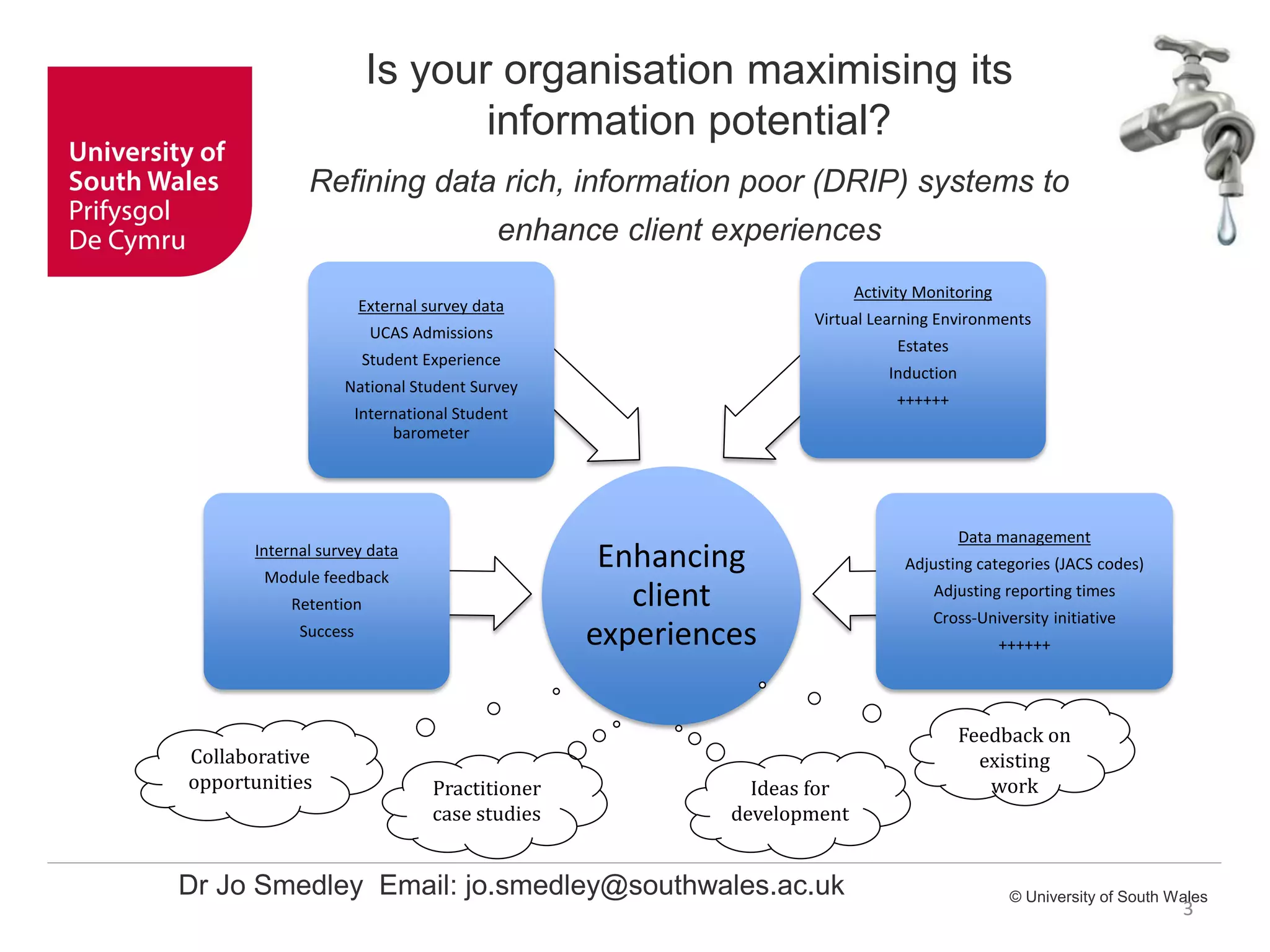
Is your organisation maximising its
information potential?
Refining data rich, information poor (DRIP) systems to
enhance client experiences
Enhancing
client
experiences
Data management
Adjusting categories (JACS codes)
Adjusting reporting times
Cross-University initiative
++++++
External survey data
UCAS Admissions
Student Experience
National Student Survey
International Student
barometer
Internal survey data
Module feedback
Retention
Success
Activity Monitoring
Virtual Learning Environments
Estates
Induction
++++++
Dr Jo Smedley Email: jo.smedley@southwales.ac.uk
Collaborative
opportunities Practitioner
case studies
Ideas for
development
Feedback on
existing
work
© University of South Wales
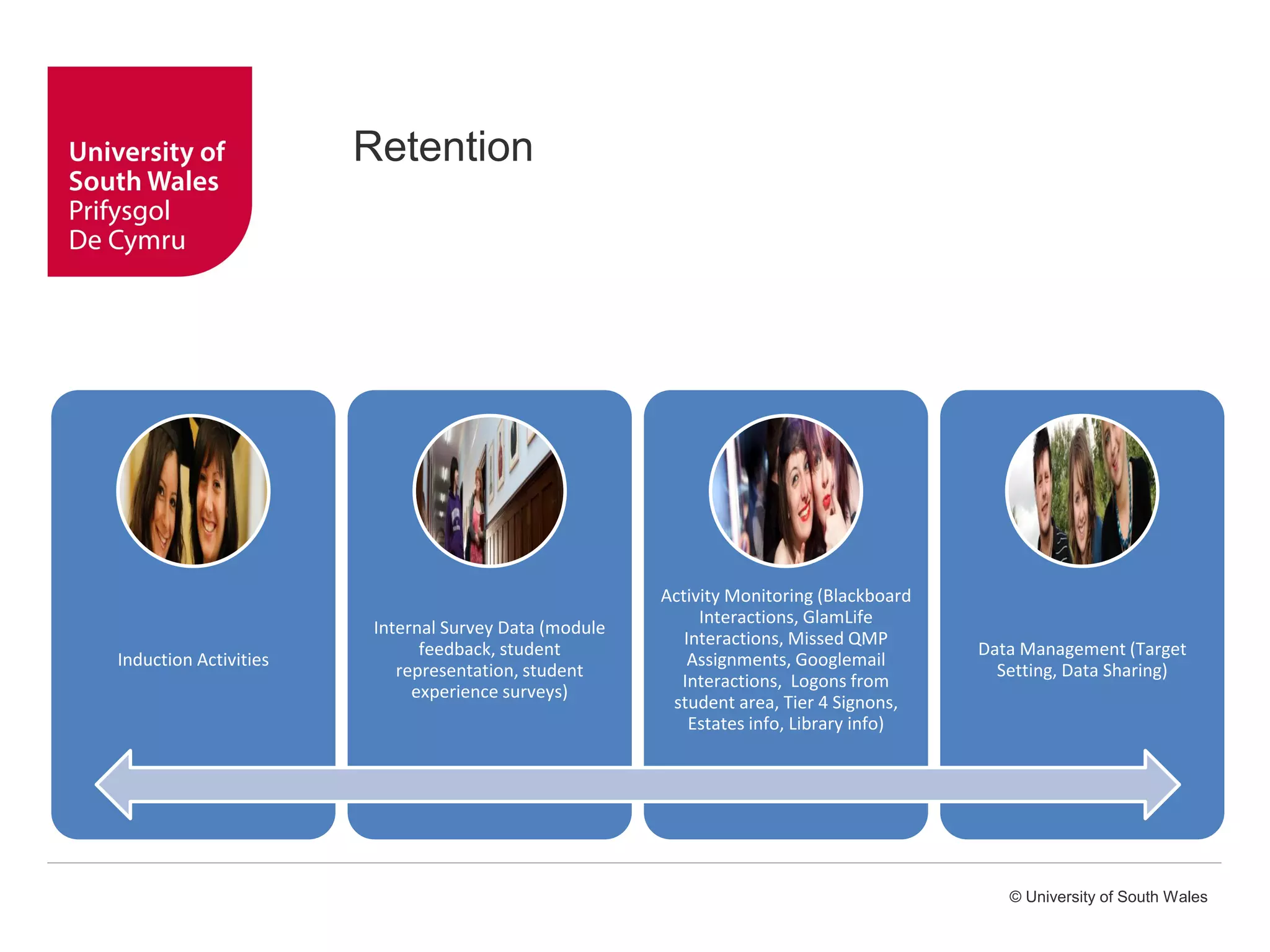
Retention
Induction Activities
Internal Survey Data (module
feedback, student
representation, student
experience surveys)
Activity Monitoring (Blackboard
Interactions, GlamLife
Interactions, Missed QMP
Assignments, Googlemail
Interactions, Logons from
student area, Tier 4 Signons,
Estates info, Library info)
Data Management (Target
Setting, Data Sharing)
© University of South Wales
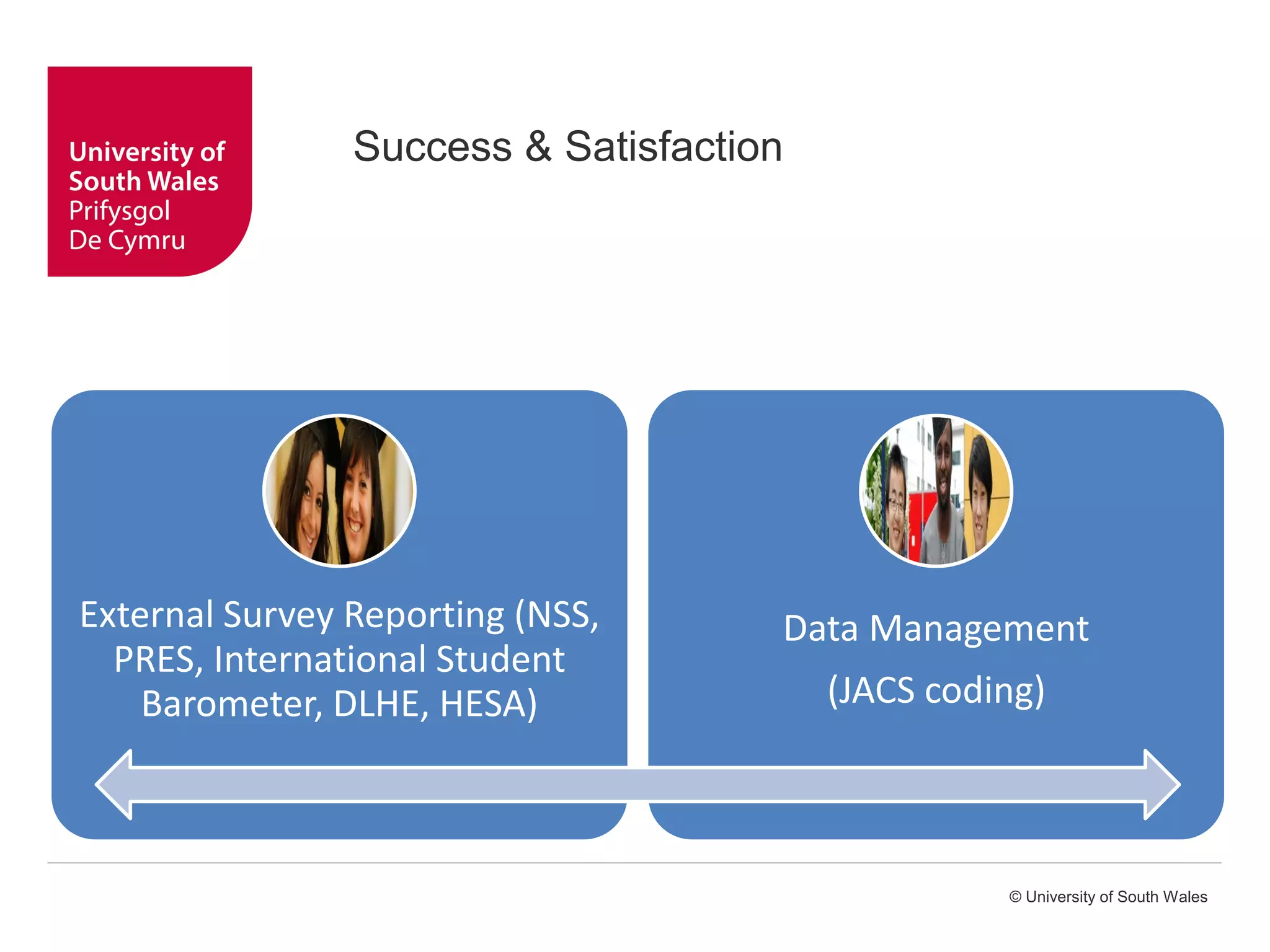
Success & Satisfaction
External Survey Reporting (NSS,
PRES, International Student
Barometer, DLHE, HESA)
Data Management
(JACS coding)
© University of South Wales
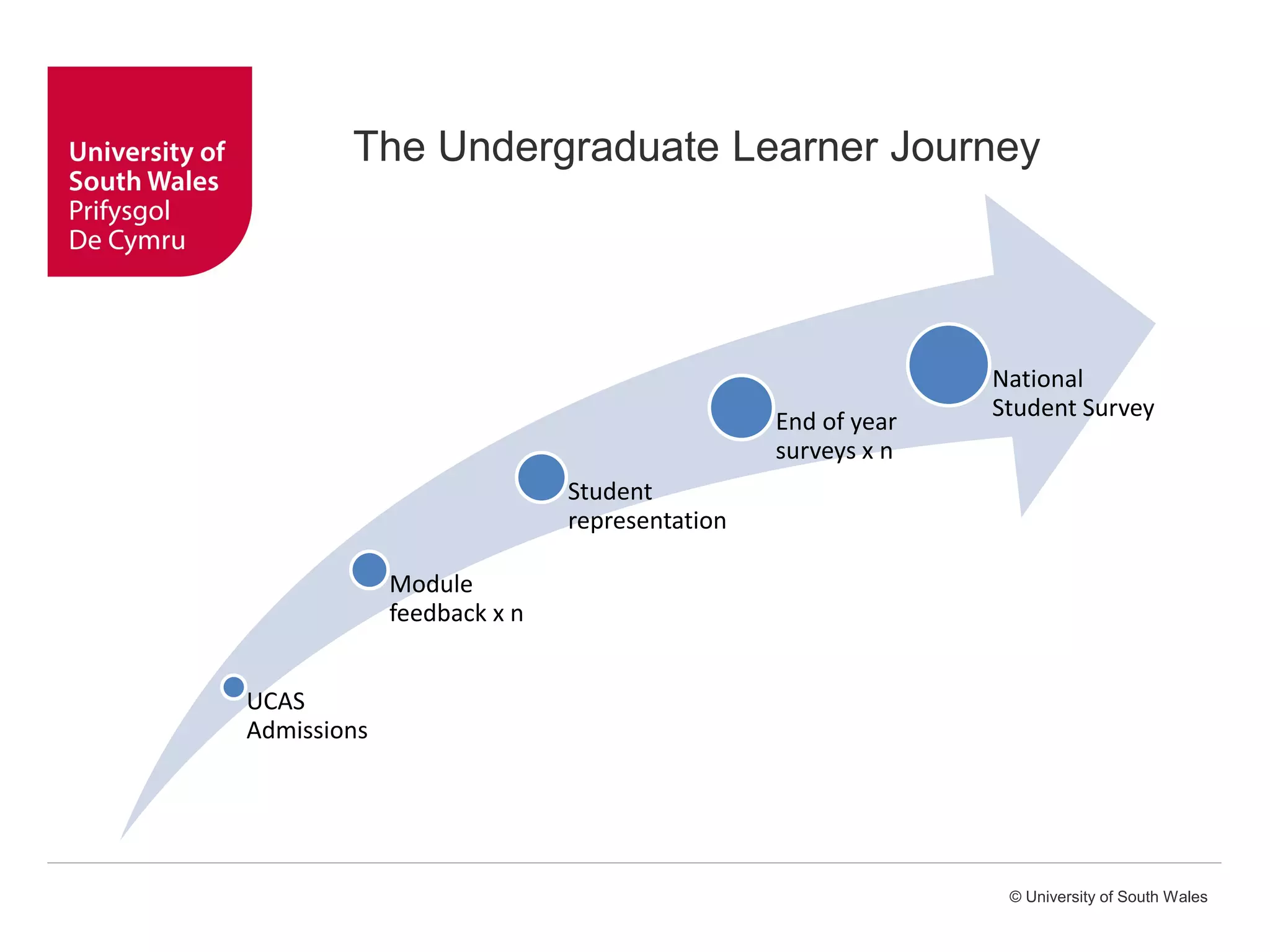
The Undergraduate Learner Journey
UCAS
Admissions
Module
feedback x n
Student
representation
End of year
surveys x n
National
Student Survey
© University of South Wales
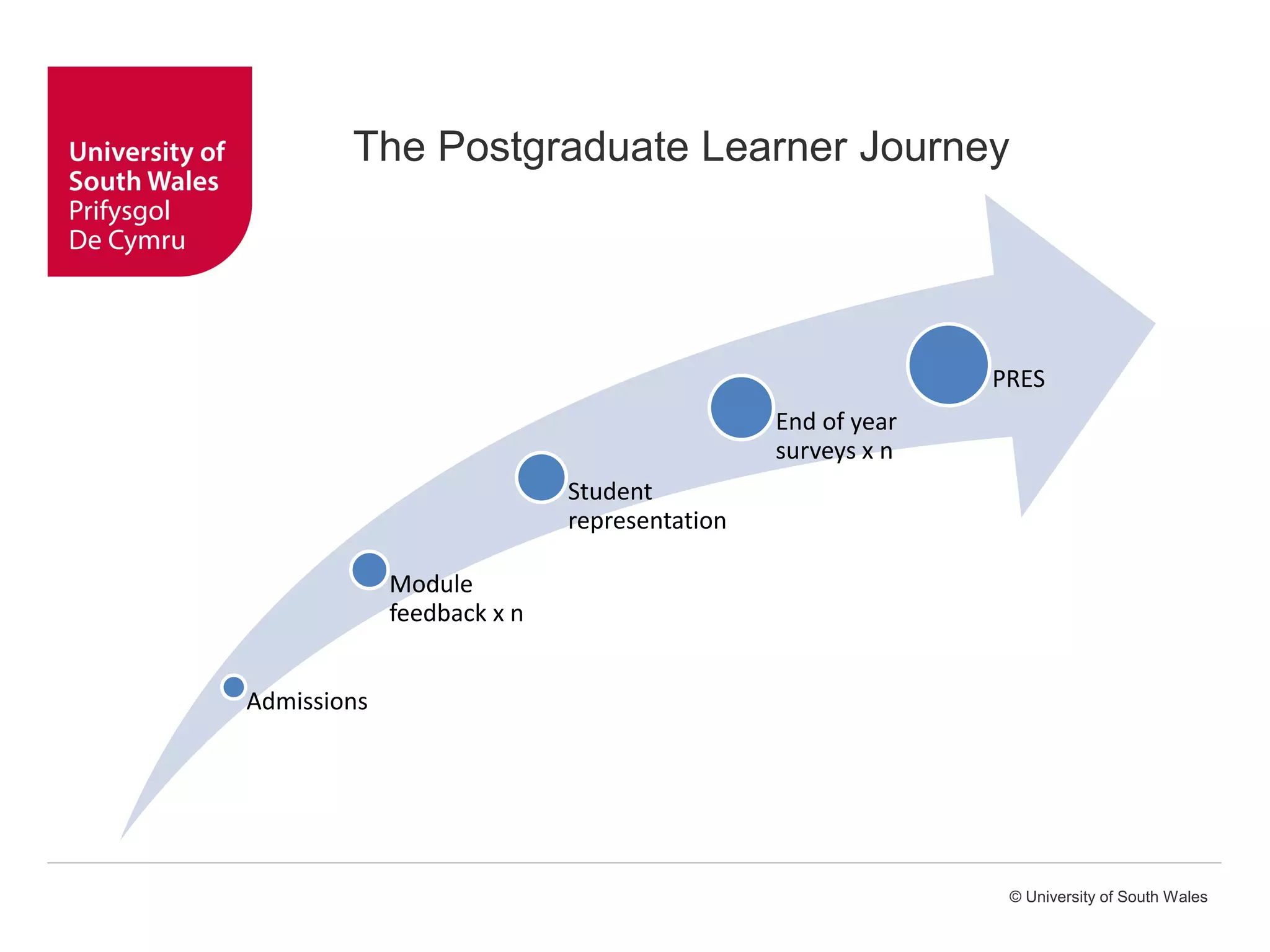
The Postgraduate Learner Journey
Admissions
Module
feedback x n
Student
representation
End of year
surveys x n
PRES
© University of South Wales
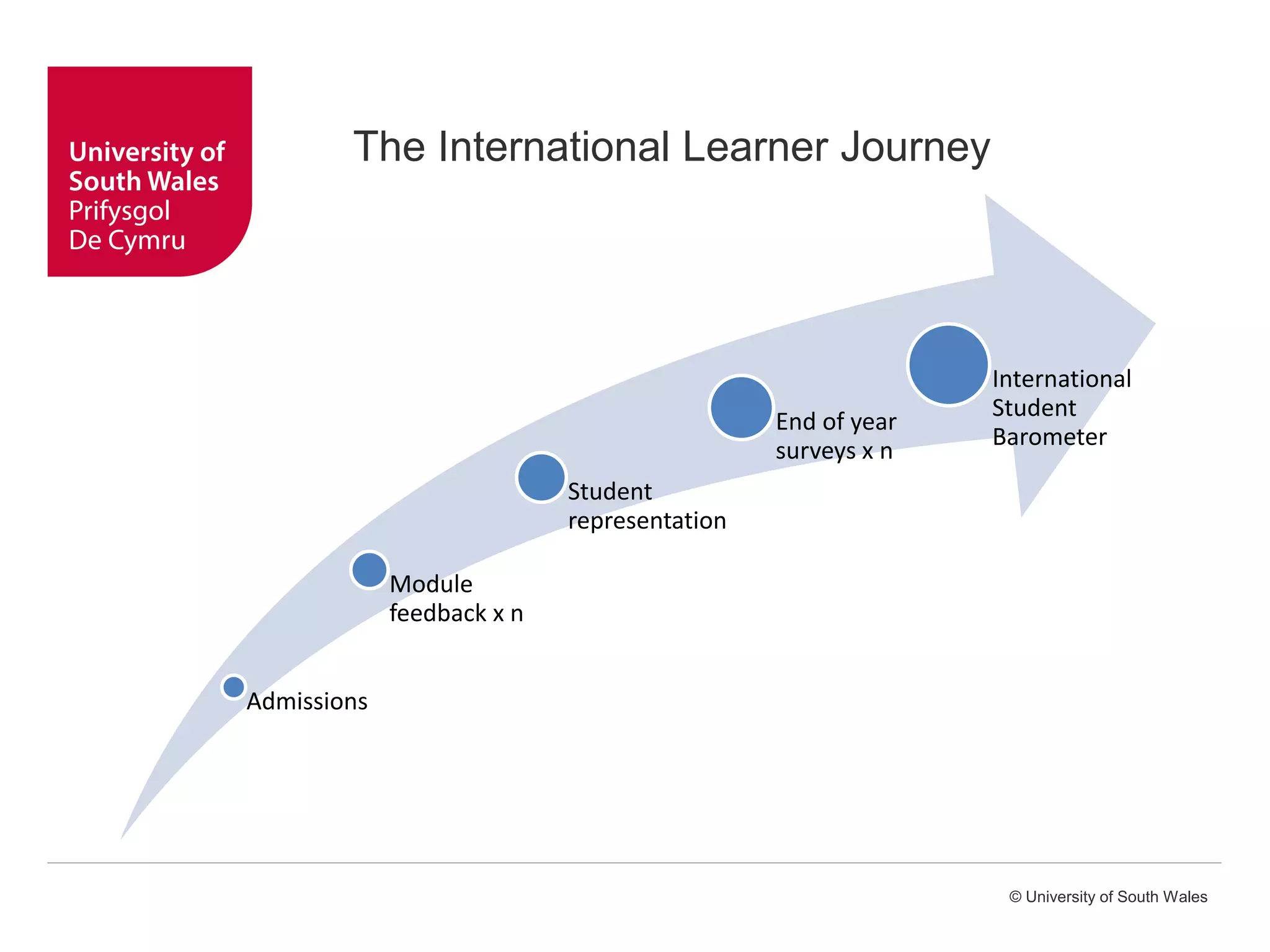
The International Learner Journey
Admissions
Module
feedback x n
Student
representation
End of year
surveys x n
International
Student
Barometer
© University of South Wales
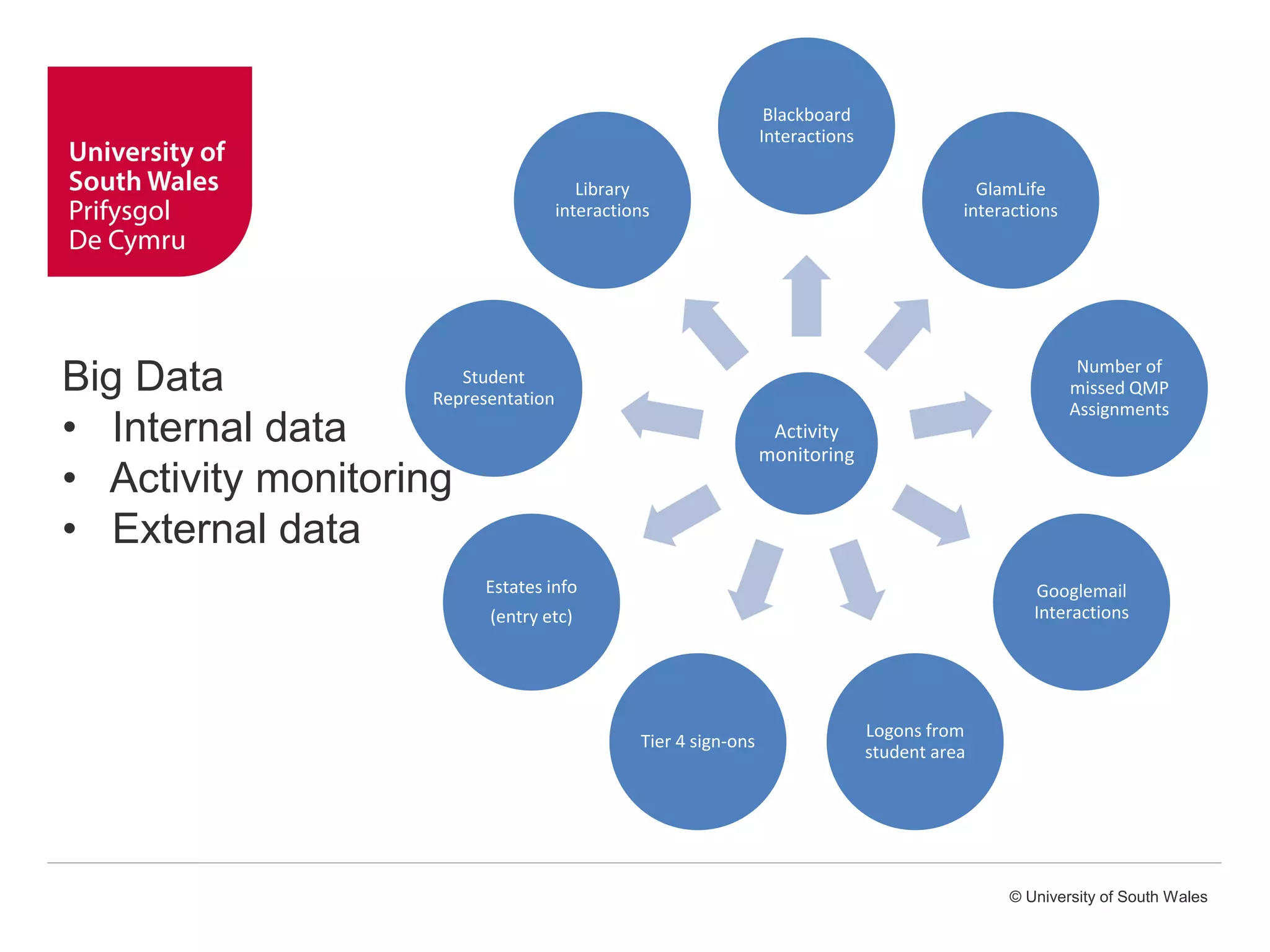
Big Data
• Internal data
• Activity monitoring
• External data
Activity
monitoring
Blackboard
Interactions
GlamLife
interactions
Number of
missed QMP
Assignments
Googlemail
Interactions
Logons from
student area
Tier 4 sign-ons
Estates info
(entry etc)
Student
Representation
Library
interactions
© University of South Wales
10
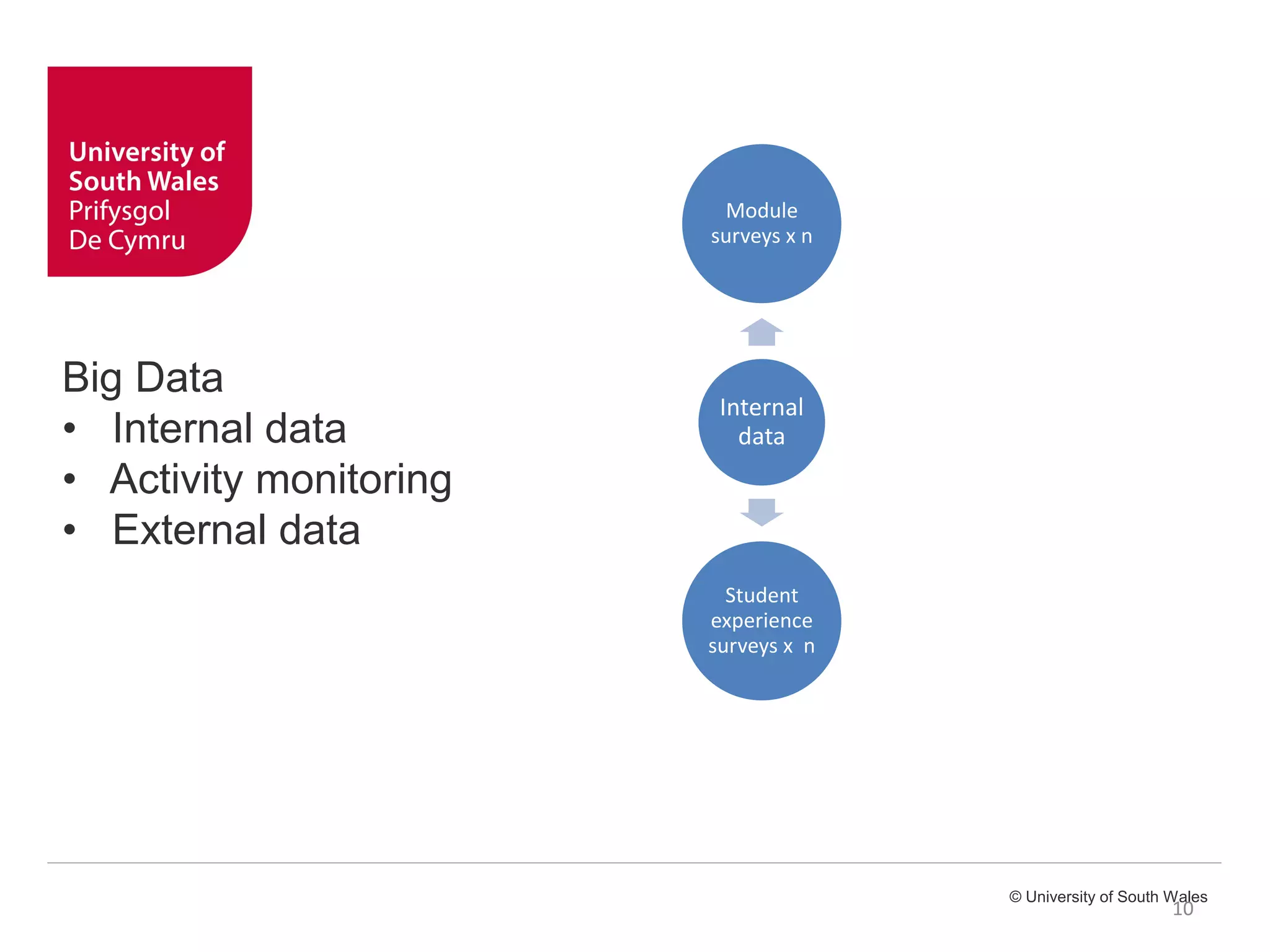
Internal
data
Module
surveys x n
Student
experience
surveys x n
Big Data
• Internal data
• Activity monitoring
• External data
© University of South Wales
11
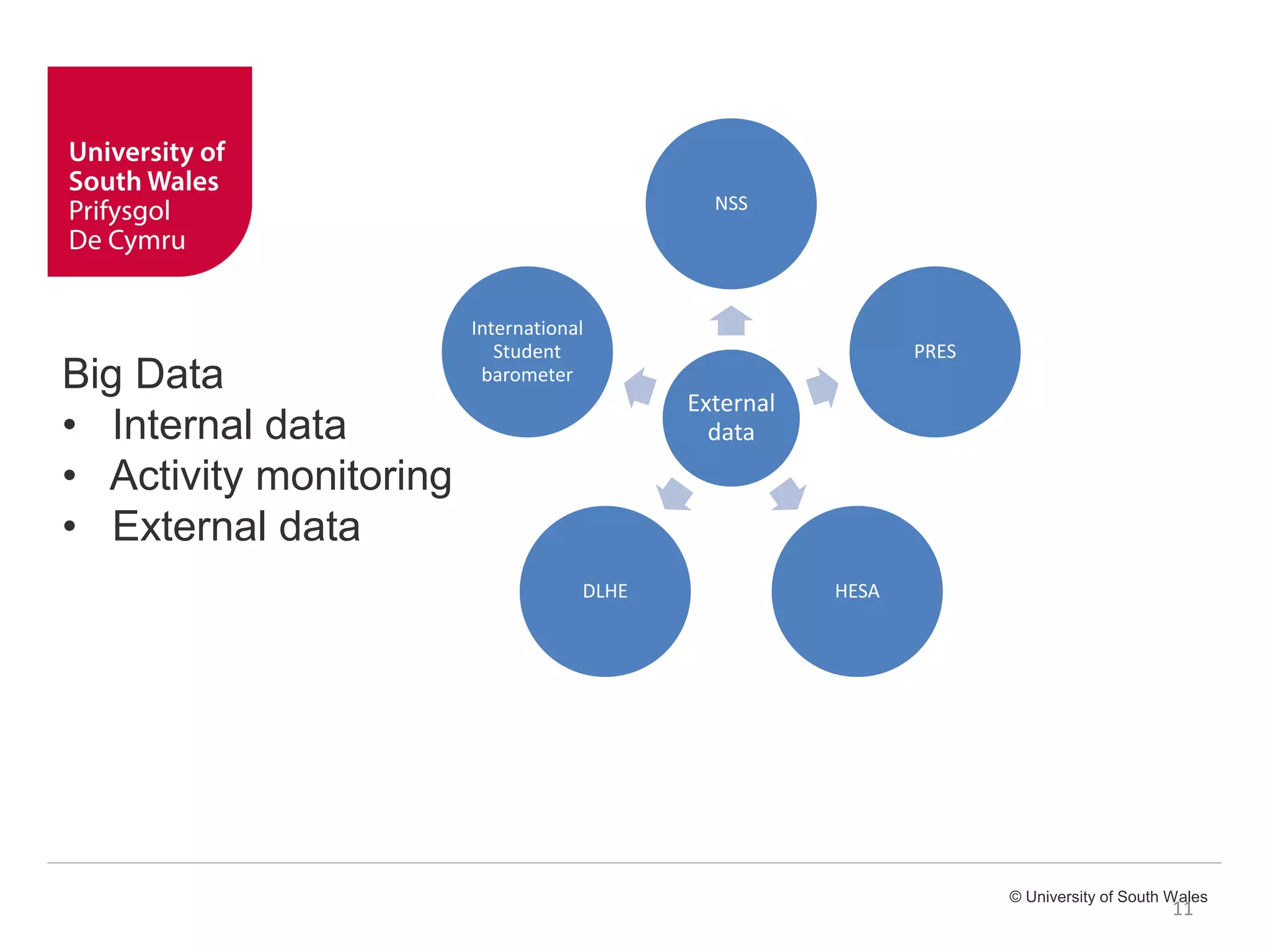
External
data
NSS
PRES
HESADLHE
International
Student
barometerBig Data
• Internal data
• Activity monitoring
• External data
© University of South Wales
12
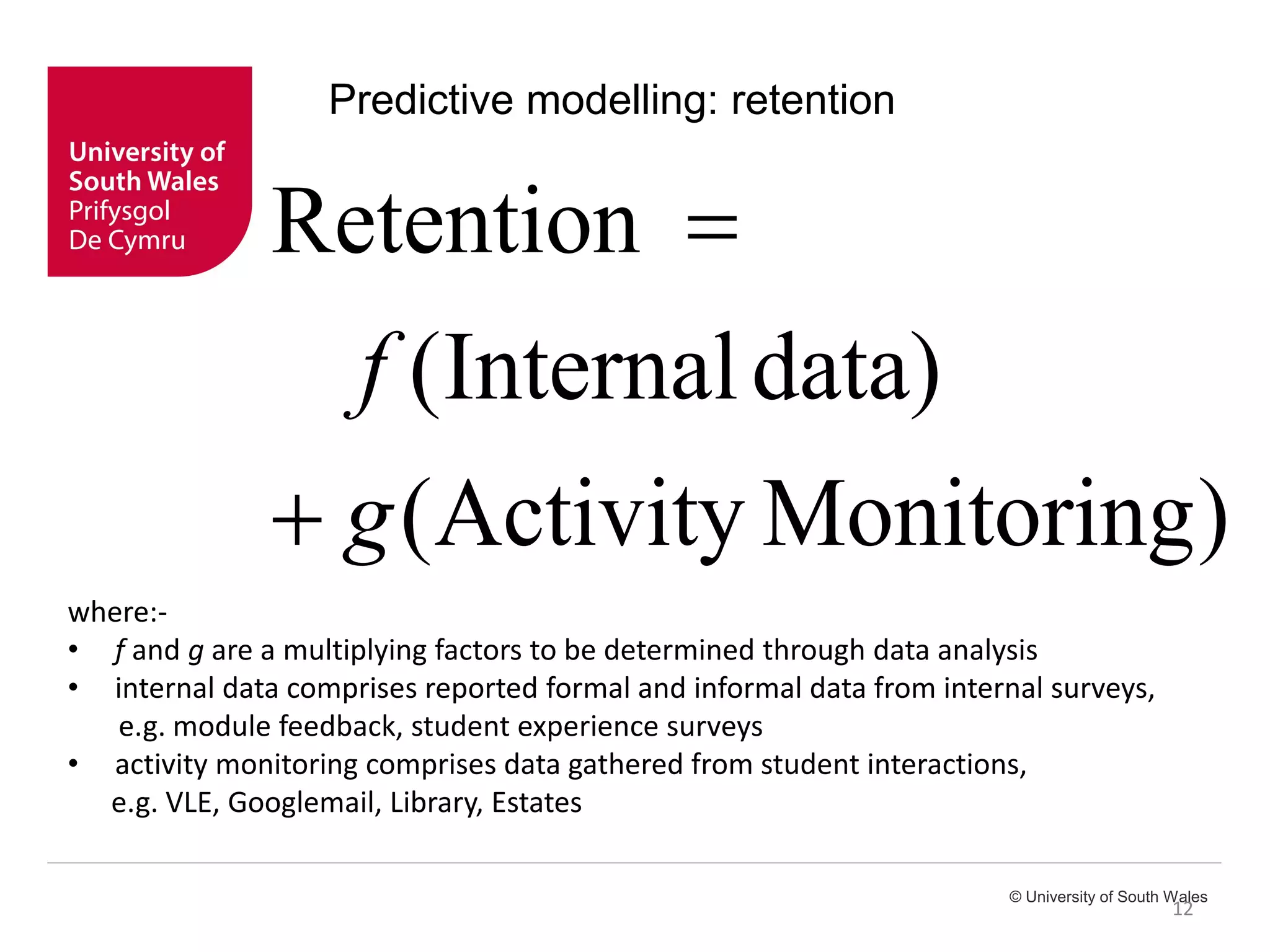
Predictive modelling: retention
)MonitoringActivity(
data)Internal(
Retention
g
f


where:-
• f and g are a multiplying factors to be determined through data analysis
• internal data comprises reported formal and informal data from internal surveys,
e.g. module feedback, student experience surveys
• activity monitoring comprises data gathered from student interactions,
e.g. VLE, Googlemail, Library, Estates
© University of South Wales
13
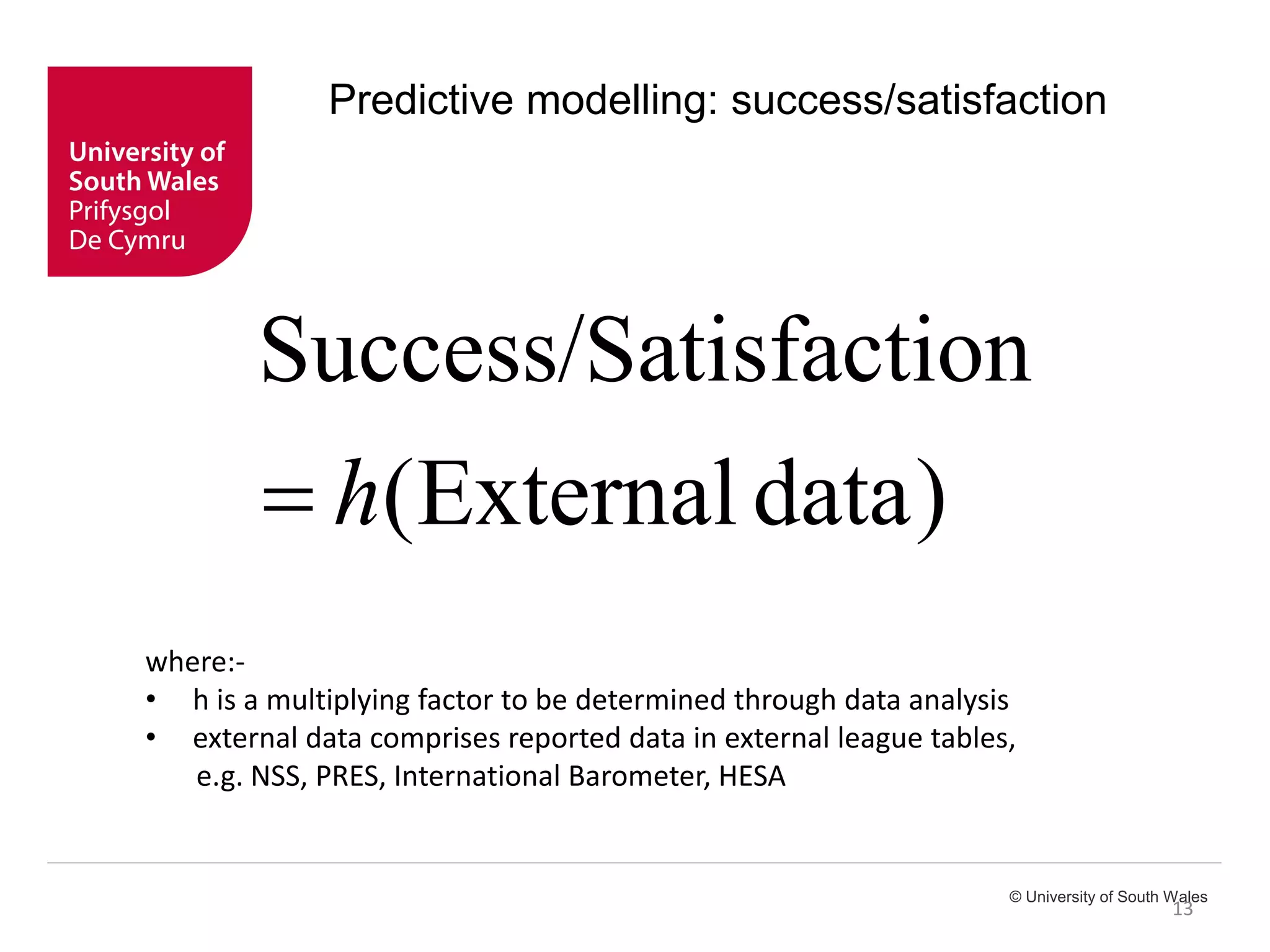
Predictive modelling: success/satisfaction
)dataExternal(
tisfactionSuccess/Sa
h
where:-
• h is a multiplying factor to be determined through data analysis
• external data comprises reported data in external league tables,
e.g. NSS, PRES, International Barometer, HESA
© University of South Wales
Continuing Work
• Analyse categories of existing data
to determine model factors
• Collaboration
– “What works” initiative
• Impact
• Further dissemination
14Email: jo.smedley@southwales.ac.uk

Enhancing retention through learning analytics

  • 1.
    © University ofSouth Wales Enhancing retention through learning analytics Dr Jo Smedley University of South Wales September 2013
  • 2.
    © University ofSouth Wales “University learners sometimes encounter challenges with their learning which can lead them to quit. To enhance retention and success of all students, information technology has enabled the analytical review of considerable quantitative and qualitative learning data. This has informed the identification of several key factors with differential applications, for example, between subjects, between student age groups, which has led to the enhanced targeting of continuing initiatives to maximise overall achievement.” Abstract
  • 3.
    © University ofSouth Wales 3 Is your organisation maximising its information potential? Refining data rich, information poor (DRIP) systems to enhance client experiences Enhancing client experiences Data management Adjusting categories (JACS codes) Adjusting reporting times Cross-University initiative ++++++ External survey data UCAS Admissions Student Experience National Student Survey International Student barometer Internal survey data Module feedback Retention Success Activity Monitoring Virtual Learning Environments Estates Induction ++++++ Dr Jo Smedley Email: jo.smedley@southwales.ac.uk Collaborative opportunities Practitioner case studies Ideas for development Feedback on existing work
  • 4.
    © University ofSouth Wales Retention Induction Activities Internal Survey Data (module feedback, student representation, student experience surveys) Activity Monitoring (Blackboard Interactions, GlamLife Interactions, Missed QMP Assignments, Googlemail Interactions, Logons from student area, Tier 4 Signons, Estates info, Library info) Data Management (Target Setting, Data Sharing)
  • 5.
    © University ofSouth Wales Success & Satisfaction External Survey Reporting (NSS, PRES, International Student Barometer, DLHE, HESA) Data Management (JACS coding)
  • 6.
    © University ofSouth Wales The Undergraduate Learner Journey UCAS Admissions Module feedback x n Student representation End of year surveys x n National Student Survey
  • 7.
    © University ofSouth Wales The Postgraduate Learner Journey Admissions Module feedback x n Student representation End of year surveys x n PRES
  • 8.
    © University ofSouth Wales The International Learner Journey Admissions Module feedback x n Student representation End of year surveys x n International Student Barometer
  • 9.
    © University ofSouth Wales Big Data • Internal data • Activity monitoring • External data Activity monitoring Blackboard Interactions GlamLife interactions Number of missed QMP Assignments Googlemail Interactions Logons from student area Tier 4 sign-ons Estates info (entry etc) Student Representation Library interactions
  • 10.
    © University ofSouth Wales 10 Internal data Module surveys x n Student experience surveys x n Big Data • Internal data • Activity monitoring • External data
  • 11.
    © University ofSouth Wales 11 External data NSS PRES HESADLHE International Student barometerBig Data • Internal data • Activity monitoring • External data
  • 12.
    © University ofSouth Wales 12 Predictive modelling: retention )MonitoringActivity( data)Internal( Retention g f   where:- • f and g are a multiplying factors to be determined through data analysis • internal data comprises reported formal and informal data from internal surveys, e.g. module feedback, student experience surveys • activity monitoring comprises data gathered from student interactions, e.g. VLE, Googlemail, Library, Estates
  • 13.
    © University ofSouth Wales 13 Predictive modelling: success/satisfaction )dataExternal( tisfactionSuccess/Sa h where:- • h is a multiplying factor to be determined through data analysis • external data comprises reported data in external league tables, e.g. NSS, PRES, International Barometer, HESA
  • 14.
    © University ofSouth Wales Continuing Work • Analyse categories of existing data to determine model factors • Collaboration – “What works” initiative • Impact • Further dissemination 14Email: jo.smedley@southwales.ac.uk