 Progress or general course of action of a person in some profession
 Specific jobs that a person performs, the kinds of responsibilities and
activities that comprise those jobs, movements and transitions between
jobs
 Formal approach taken by an organization to help employees in
achieving their career objectives
 For example: Training provided to employees to perform better in their
jobs
 It is oriented towards long term effectiveness
 It benefits both employees as well as organizations
 Organization needs to have career development program and integrate
the function with HR activities
FOR INDIVIDUAL
 Enhanced career and job
satisfaction
 Development of
competencies and personal
skills
 Improved performance
 Development of potential
 Enhancement of status
 Increase in salary
 Achievement of personal
career aspirations
FOR ORGANIZATION
 Improved productivity
 Reduced employee turnover
 Increased retention of high
talent employees
 Creating a positive
recruitment stage
 Ensuring availability of
promotable employees within
the firm
 More effective utilization of
employee skills
 It is evolving of self image, including self perceptions of motives, skills
and values
 Certain attitudinal syndromes that guide people throughout their careers
 Formed early in life
 It is your professional concept:
 Who you want to be?
 What you can do best
 What you think is possible to achieve
 Autonomy
 Security/Stability
 Entrepreneurial creativity
 Pure challenge
 Technical competence
 General managerial competence
 Service or dedication
 Lifestyle
 Autonomy:
 Such type of people need and want control over work and want to be
recognized for achievements
 Independent consulting and contract work would be a good fit for these
people
 Type of work selected: Free lancing, independent small business,
contract or project work
 Security/stability:
 Such people need long range stability and security after that they need
to relax
 For these people safe, secure are buzz words
 They are not risk takers
 Such people focus on context of job rather than content or work
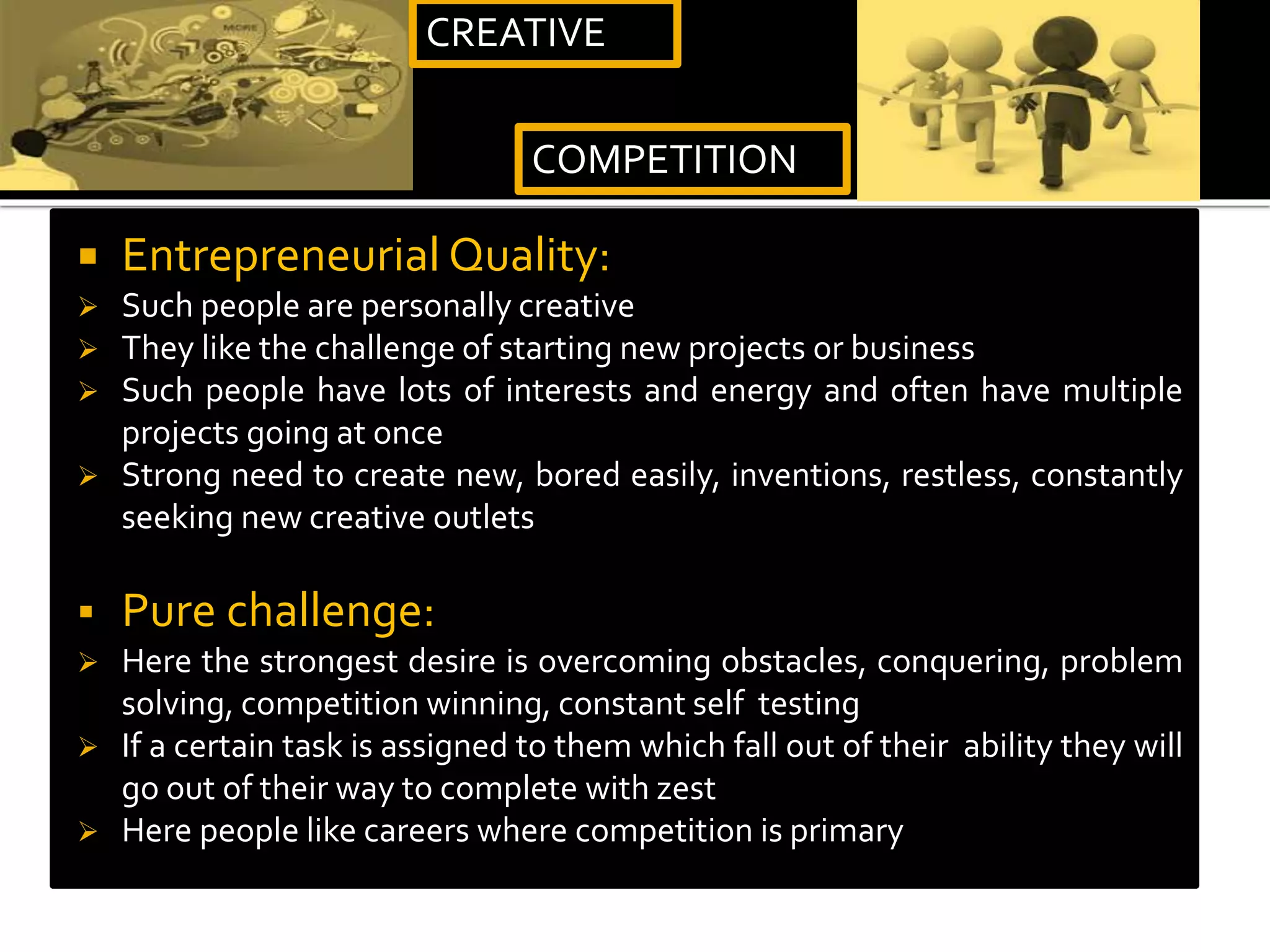
 Entrepreneurial Quality:
 Such people are personally creative
 They like the challenge of starting new projects or business
 Such people have lots of interests and energy and often have multiple
projects going at once
 Strong need to create new, bored easily, inventions, restless, constantly
seeking new creative outlets
 Pure challenge:
 Here the strongest desire is overcoming obstacles, conquering, problem
solving, competition winning, constant self testing
 If a certain task is assigned to them which fall out of their ability they will
go out of their way to complete with zest
 Here people like careers where competition is primary
CREATIVE
COMPETITION
 Technical Competence
 Here people define themselves by competence
 They are the best engineers, mechanics, salespersons when they are
pulled into managerial jobs
 They enjoy using core skills
 Under this content of actual work more important than the context of
work
 General Managerial Competence
 People possessing this anchor have an attachment with people
 They like to integrate functions and be responsible for an entire unit or
organization
 They have high levels of responsibility, varied & leadership
Core skills
Leadership
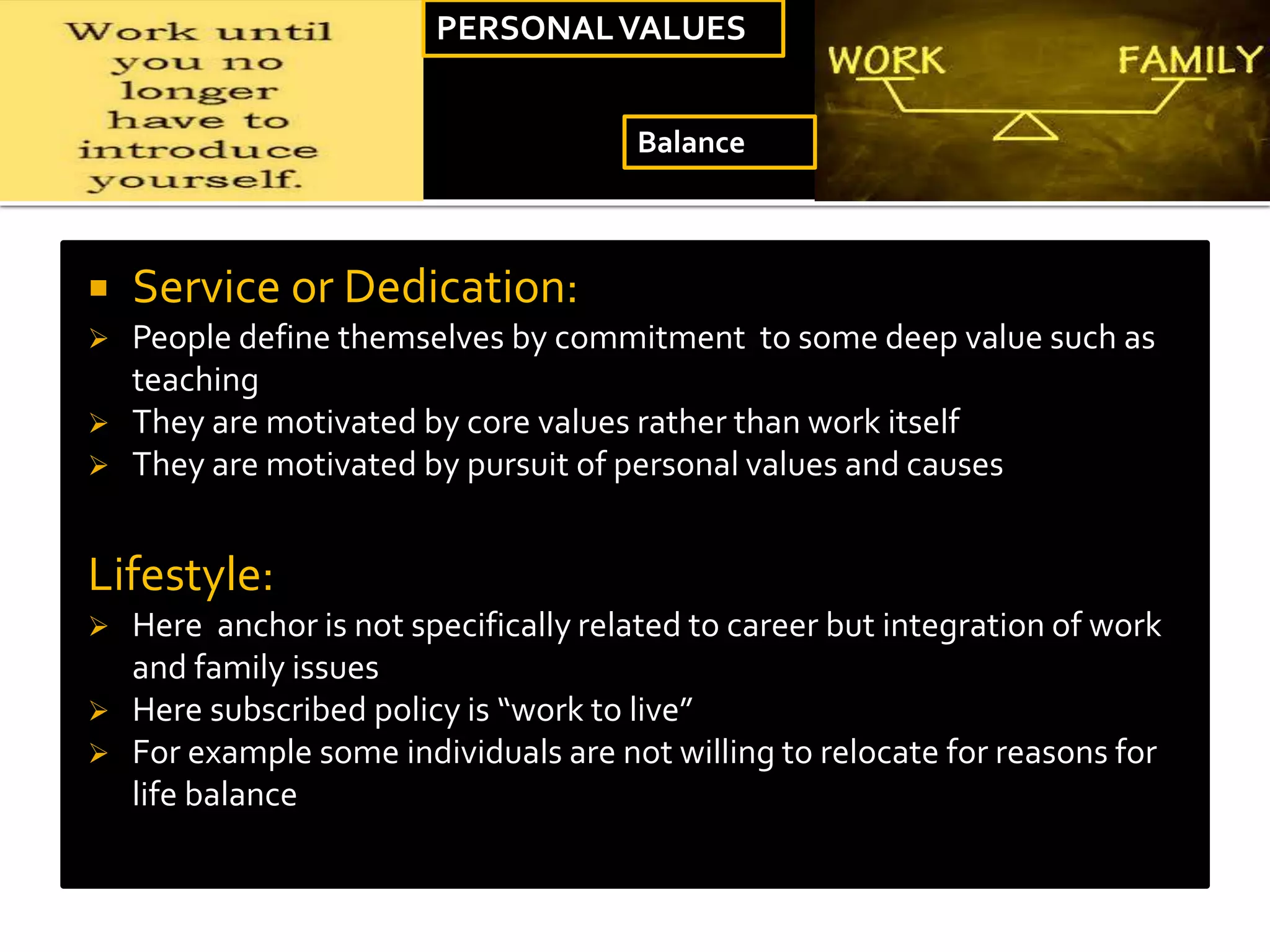
 Service or Dedication:
 People define themselves by commitment to some deep value such as
teaching
 They are motivated by core values rather than work itself
 They are motivated by pursuit of personal values and causes
Lifestyle:
 Here anchor is not specifically related to career but integration of work
and family issues
 Here subscribed policy is “work to live”
 For example some individuals are not willing to relocate for reasons for
life balance
PERSONALVALUES
Balance
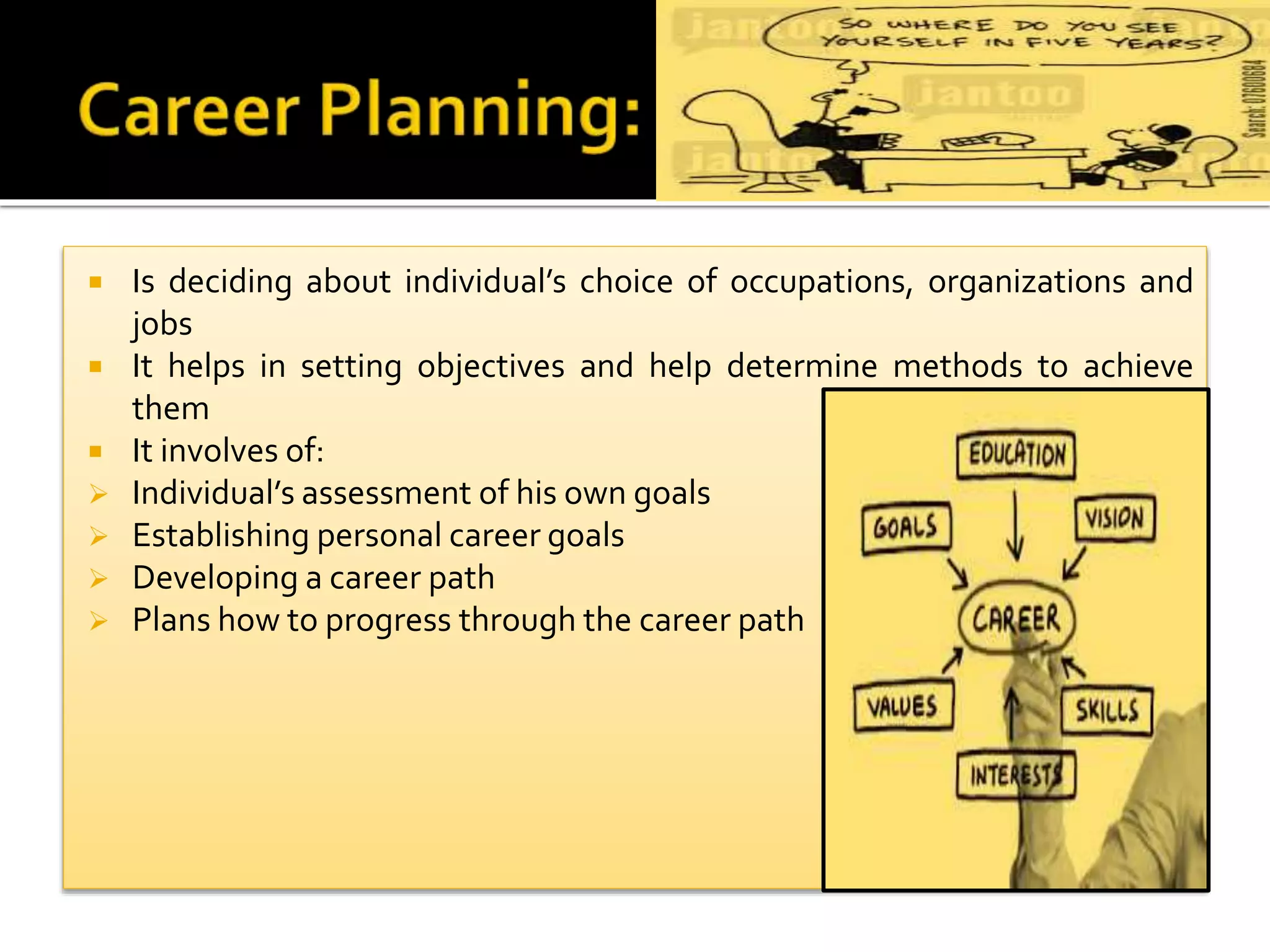
 Is deciding about individual’s choice of occupations, organizations and
jobs
 It helps in setting objectives and help determine methods to achieve
them
 It involves of:
 Individual’s assessment of his own goals
 Establishing personal career goals
 Developing a career path
 Plans how to progress through the career path
 Training and development
 Communication
 Counseling
 Career planning workshops
 Self development materials
 To provide and maintain appropriate manpower resources in the
organization by offering careers not jobs
 To increase the utilization of managerial reserves within organization
 To cater to the immediate and future human resources need of the
organization on a timely basis
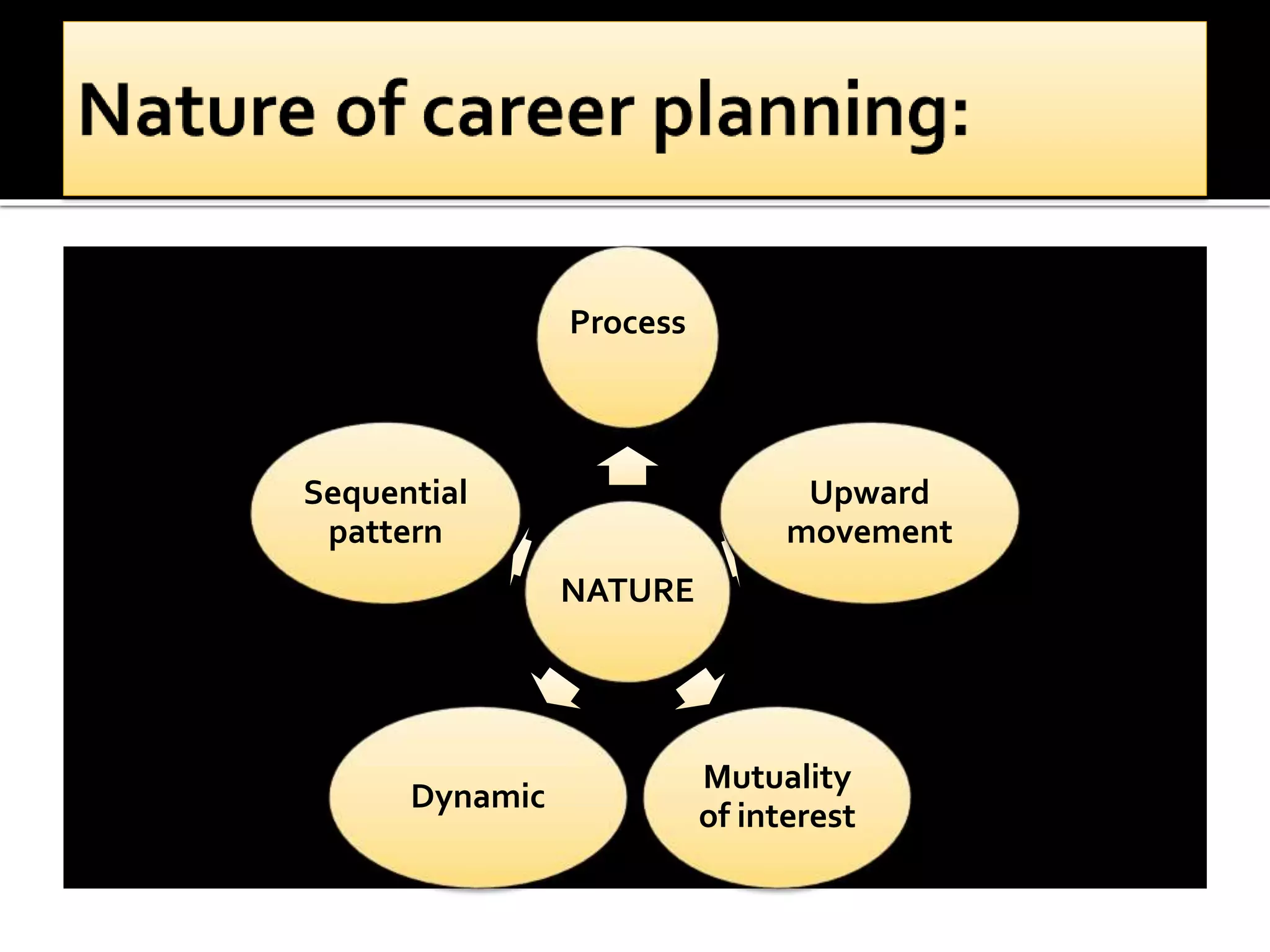
NATURE
Process
Upward
movement
Mutuality
of interest
Dynamic
Sequential
pattern
 Exploration
 Guidance from parents and well wishers
 Mid career stage
 Late career stage
 Decline stage
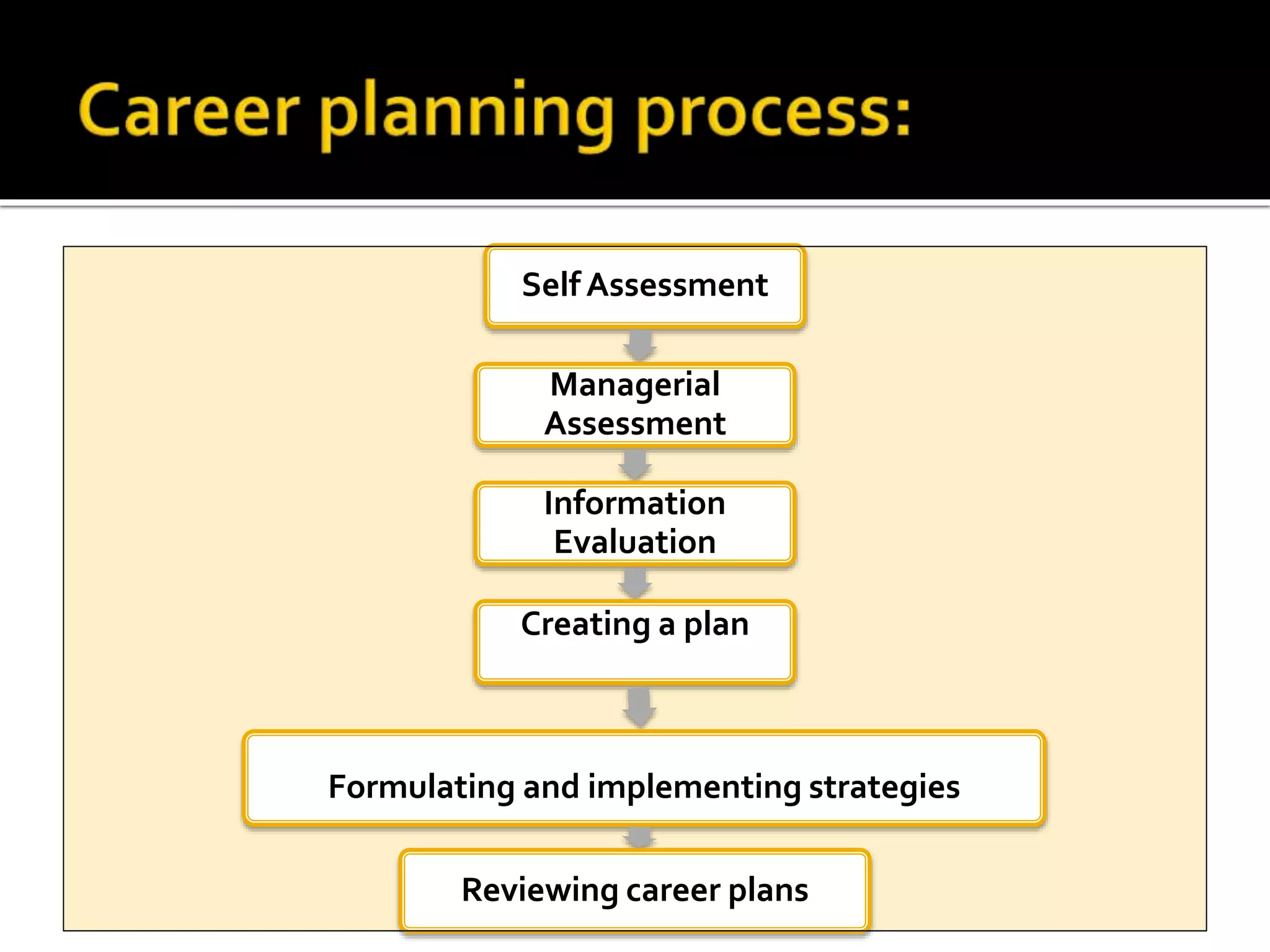
Self Assessment
Managerial
Assessment
Information
Evaluation
Creating a plan
Formulating and implementing strategies
Reviewing career plans
EMPLOYEES ROLE
 Identify the stage of career
development and career
needs
 Use a process of
elimination
 Choose an appropriate
potential mentor
 Should make an agenda
EMPLOYERS ROLE
 Communicate mission,
policies and procedures
 Provide training and
development opportunities
including workshops
 Provide information and
career programs
 Provide career oriented
performance feedback
 Provide employees with
individual development plans
 Provide academic learning
assistance programs
 Dual career families
 Low ceiling careers
 Declining career opportunities
 Others
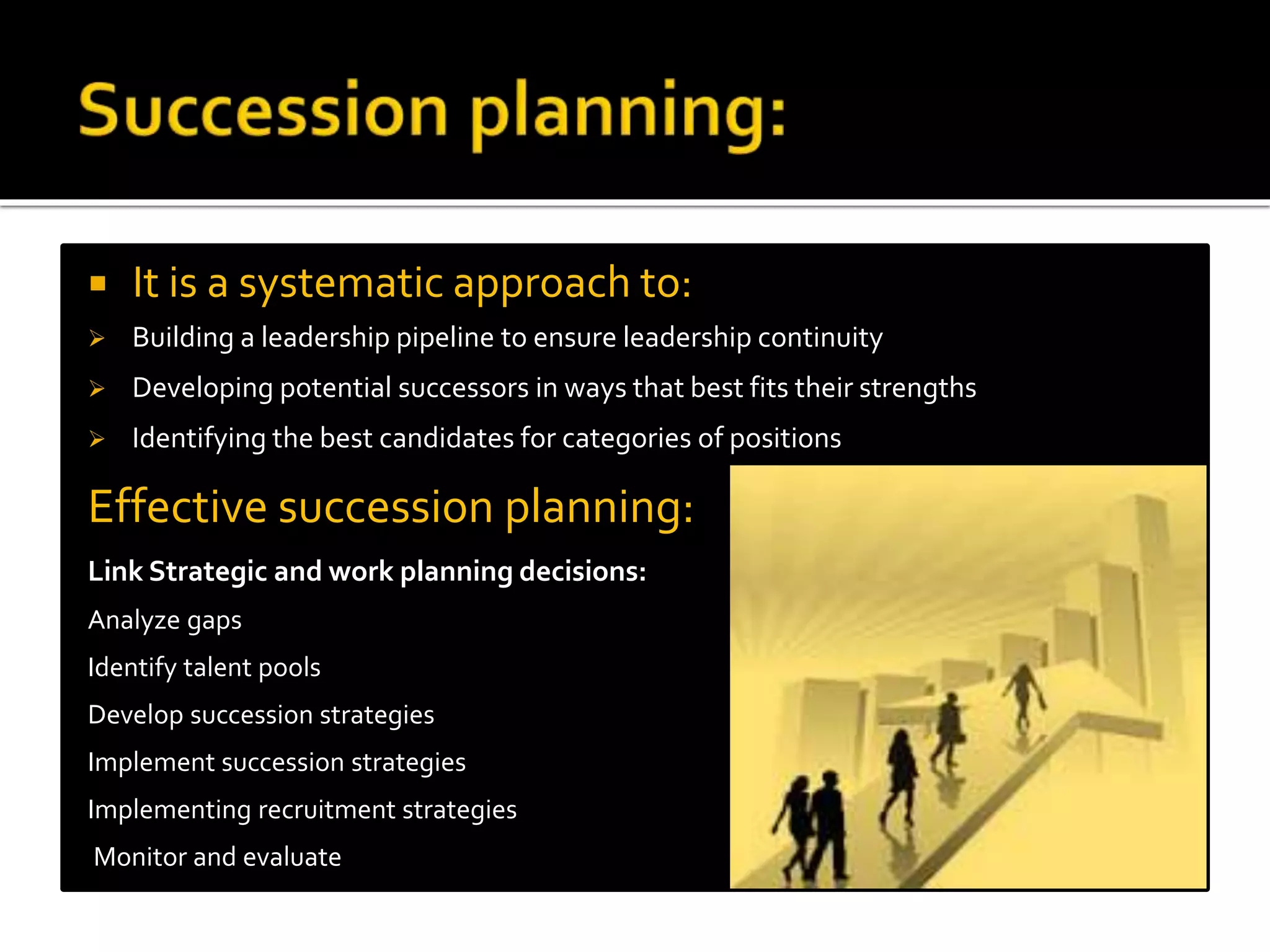
 It is a systematic approach to:
 Building a leadership pipeline to ensure leadership continuity
 Developing potential successors in ways that best fits their strengths
 Identifying the best candidates for categories of positions
Effective succession planning:
Link Strategic and work planning decisions:
Analyze gaps
Identify talent pools
Develop succession strategies
Implement succession strategies
Implementing recruitment strategies
Monitor and evaluate
 Career mapping is charting an employees’ path to success
 It helps to guide leaders and employees in their decision making and help
ensure everyone understands and meets objectives
 With this process, you collaborate with individuals on your team to set
long-term objectives and detail the steps required to accomplish them
 It helps in improving job satisfaction and ultimately result in increased
productivity
 Helps in improving job satisfaction
 Helps to chart an employees success path
 Helps in decision making
 Helps achieving objectives of organization
 Career development
 Improves Retention
 Improves Recruitment
 Increases employee engagement
 Assist in succession planning

Unit iv career management

  • 2.
     Progress orgeneral course of action of a person in some profession  Specific jobs that a person performs, the kinds of responsibilities and activities that comprise those jobs, movements and transitions between jobs
  • 3.
     Formal approachtaken by an organization to help employees in achieving their career objectives  For example: Training provided to employees to perform better in their jobs  It is oriented towards long term effectiveness  It benefits both employees as well as organizations  Organization needs to have career development program and integrate the function with HR activities
  • 4.
    FOR INDIVIDUAL  Enhancedcareer and job satisfaction  Development of competencies and personal skills  Improved performance  Development of potential  Enhancement of status  Increase in salary  Achievement of personal career aspirations FOR ORGANIZATION  Improved productivity  Reduced employee turnover  Increased retention of high talent employees  Creating a positive recruitment stage  Ensuring availability of promotable employees within the firm  More effective utilization of employee skills
  • 5.
     It isevolving of self image, including self perceptions of motives, skills and values  Certain attitudinal syndromes that guide people throughout their careers  Formed early in life  It is your professional concept:  Who you want to be?  What you can do best  What you think is possible to achieve
  • 6.
     Autonomy  Security/Stability Entrepreneurial creativity  Pure challenge  Technical competence  General managerial competence  Service or dedication  Lifestyle
  • 7.
     Autonomy:  Suchtype of people need and want control over work and want to be recognized for achievements  Independent consulting and contract work would be a good fit for these people  Type of work selected: Free lancing, independent small business, contract or project work  Security/stability:  Such people need long range stability and security after that they need to relax  For these people safe, secure are buzz words  They are not risk takers  Such people focus on context of job rather than content or work
  • 8.
     Entrepreneurial Quality: Such people are personally creative  They like the challenge of starting new projects or business  Such people have lots of interests and energy and often have multiple projects going at once  Strong need to create new, bored easily, inventions, restless, constantly seeking new creative outlets  Pure challenge:  Here the strongest desire is overcoming obstacles, conquering, problem solving, competition winning, constant self testing  If a certain task is assigned to them which fall out of their ability they will go out of their way to complete with zest  Here people like careers where competition is primary CREATIVE COMPETITION
  • 9.
     Technical Competence Here people define themselves by competence  They are the best engineers, mechanics, salespersons when they are pulled into managerial jobs  They enjoy using core skills  Under this content of actual work more important than the context of work  General Managerial Competence  People possessing this anchor have an attachment with people  They like to integrate functions and be responsible for an entire unit or organization  They have high levels of responsibility, varied & leadership Core skills Leadership
  • 10.
     Service orDedication:  People define themselves by commitment to some deep value such as teaching  They are motivated by core values rather than work itself  They are motivated by pursuit of personal values and causes Lifestyle:  Here anchor is not specifically related to career but integration of work and family issues  Here subscribed policy is “work to live”  For example some individuals are not willing to relocate for reasons for life balance PERSONALVALUES Balance
  • 11.
     Is decidingabout individual’s choice of occupations, organizations and jobs  It helps in setting objectives and help determine methods to achieve them  It involves of:  Individual’s assessment of his own goals  Establishing personal career goals  Developing a career path  Plans how to progress through the career path
  • 12.
     Training anddevelopment  Communication  Counseling  Career planning workshops  Self development materials  To provide and maintain appropriate manpower resources in the organization by offering careers not jobs  To increase the utilization of managerial reserves within organization  To cater to the immediate and future human resources need of the organization on a timely basis
  • 13.
  • 14.
     Exploration  Guidancefrom parents and well wishers  Mid career stage  Late career stage  Decline stage
  • 15.
    Self Assessment Managerial Assessment Information Evaluation Creating aplan Formulating and implementing strategies Reviewing career plans
  • 16.
    EMPLOYEES ROLE  Identifythe stage of career development and career needs  Use a process of elimination  Choose an appropriate potential mentor  Should make an agenda EMPLOYERS ROLE  Communicate mission, policies and procedures  Provide training and development opportunities including workshops  Provide information and career programs  Provide career oriented performance feedback  Provide employees with individual development plans  Provide academic learning assistance programs
  • 17.
     Dual careerfamilies  Low ceiling careers  Declining career opportunities  Others
  • 18.
     It isa systematic approach to:  Building a leadership pipeline to ensure leadership continuity  Developing potential successors in ways that best fits their strengths  Identifying the best candidates for categories of positions Effective succession planning: Link Strategic and work planning decisions: Analyze gaps Identify talent pools Develop succession strategies Implement succession strategies Implementing recruitment strategies Monitor and evaluate
  • 19.
     Career mappingis charting an employees’ path to success  It helps to guide leaders and employees in their decision making and help ensure everyone understands and meets objectives  With this process, you collaborate with individuals on your team to set long-term objectives and detail the steps required to accomplish them  It helps in improving job satisfaction and ultimately result in increased productivity
  • 20.
     Helps inimproving job satisfaction  Helps to chart an employees success path  Helps in decision making  Helps achieving objectives of organization  Career development
  • 21.
     Improves Retention Improves Recruitment  Increases employee engagement  Assist in succession planning