DRUGS ACTING ON THE
GASTRO-INTESTINAL TRACT
MR SIMUSAMBA
OVERVIEW OF THE TOPIC
Various drugs posses a broad therapeutic
actions on the Gastrointestinal Tract.
Their effects range from slowing the gastric
motility while others inhibit the production of
gastric secretion
Knowledge on the therapeutic actions of such
drugs will ensure a good treatment outcomes
GENERAL OBJECTIVE
At the end of the session, student nurses
should be able to broaden their knowledge on
various drugs acting on the Gastrointestinal
tract.
SPECIFIC OBJECTIVES
At the end of the session, student
nurses/midwives should be able to;
Describe the mode of actions of various drugs
acting on the Gastrointestinal tract
o Antiacids
o Emetics
o Anti-emetics
SPECIFIC OBJECTIVES
o Anticholinergic agents
o Laxatives and Purgatives
o Anti-diarrheals
o Suppositories
o Rectal infusions
o Antihelminthics
o Drugs used in the treatment of Schistosomiasis
Antiacids
Antacids
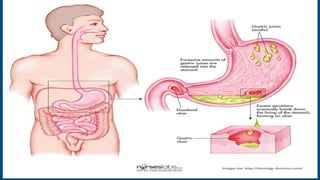
These are drugs which work by Neutralizing gastric
acid to relieve pain caused by hyperacidity in cases of
peptic ulcer, gastritis and esophagitis.
Absorbable antacids such as sodium bicarbonate raise
the alkalinity of the blood when taken frequently and
may cause renal damage with an excessive milk intake.
Non-absorbable antacids are preferable.
These include aluminium and magnesium hydroxide
and magnesium trisilicate.
Therapeutic action of Antiacids
Antiacids work by neutralising gastric acid to
relieve pain caused by hyperacidity in cases of
peptic ulcer, gastritis and oesophagitis and by
increasing the gastric pH, they diminish the
activity of pepsin in the gastric secretion
thereby inhibiting further erosion of the
mucosa membrane on the ulcer.
PROPERTIES OF ANTIACIDS
They are neutral in aqueous solution.
They act rapidly, effective and maintain their
effectiveness and their effects for several
hours.
They disturb the acid-base balance of the
blood and cause alkalosis or make the urine
alkaline
PROPERTIES OF ANTIACIDS
With prolonged use, Antiacids may cause renal
calculi (renal stone) in the urinary tract.
They are non-irritant to the Gastrointestinal
tract and does not cause diarrhoea and
constipation.
ANTIACIDS
ALUMINIUM HYDROXIDE
Presentation: Tablet chewable of 500mg
Indication: Hyperacidity, gastritis and peptic
ulcers
Dose: Chew 1-2 tablets half an hour before
and after meals and repeated as required.
Side effects: Renal dysfunction
ANTIACIDS
MAGNESIUM HYDROXIDE
Presentation: Tablet containing
Indication: Hyperacidity, peptic ulcer and
constipation in infants
Dose: Chew 1-2 tablets half an hour before
and after meals and repeated as required
ANTIACIDS
Side-Effects: Diarrhoea (rare)
Caution: Renal impaired
Nursing implications
Assess intake and output and check for
decrease in urine output.
Assess toxicity and confusion
ANTIACIDS
MAGNESIUM TRISILICATE (MMT)
Presentation: Compound tablets and mixture;
MMT 250mg, aluminium hydroxide 120mg.
Action: Reduces total acid load in the
stomach, reduces pepsin activity and Strengths
gastric mucosa barrier
ANTIACIDS
Indications: Hyperacidity, gastritis and peptic
ulcer
Dose:1-2 tablets chewable as required
Side effects: Diarrhoea and renal impairment
Nursing implications
Monitor for renal impairment, like reduction of
urine output
H2-Receptor Antagonists
They inhibit histamine H2 receptors of the
gastric parietal cells, resulting in reduced
gastric acid secretion (reduce acid secretion
by about 60%) and hydrogen ion
concentrations leading to increased pH.
H2-RECEPTOR ANTAGONISTS
CIMETIDINE (TAGAMET)
Presentation
Tablet s containing 200mg, 400mg, 800mg.
Syrup/suspension containing 200mg/5mls.
Injection containing 100mg/ml.
Action: Selective inhibitor of histamine
induced gastric acid secretion.
H2-RECEPTOR ANTAGONISTS
Indication: Gastritis, gastric and duodenal
ulcerations, and Zollinger-Ellison Syndrome
and Crohn’s disease
Dose: 400mg mg 12 hourly
Side Effects: Diarrhoea, dizziness and rash.
Contraindications: hypersensitivity
H2-RECEPTOR ANTAGONISTS
RANITIDINE (ZANTAC)
Presentation
Tablet containing 150mg, 300mg.
Oral solution containing 75mg/ml
Injection containing 25mg/ml
H2-RECEPTOR ANTAGONISTS
Action: It inhibits histamine H2 receptors of
gastric parietal cells, resulting in reduced
gastric acid secretion, gastric volume, and
reduced hydrogen concentrations.
Dose; 150 mg 12 hourly
Side effects: Vertigo, malaise, blurred vision,
jaundice and leukopenia
Proton Pump Inhibitors
Proton pump is the final pathway for acid
secretion in the gastric parietal cells,
inhibition of the pump can completely
block acid secretion hence relieving
symptoms of active gastric and duodenal
ulcers.
PROTON PUMP INHIBITORS
OMEPRAZOLE
Presentation
Capsule containing 10mg, 20mg, 40mg enteric
coated granules.
Intravenous infusion of 40mg
Intramuscular injection of 40mg.
PROTON PUMP INHIBITORS
Indications: Gastric and duodenal ulcers
Dose: Oral 20mg for both gastric and duodenal
ulcers 24 hourly for 4 weeks in duodenal and 8
weeks in gastric ulcerations.
Side effects: Diarrhoea, headache,
hypersensitivity, pruritus and dizziness
Caution: liver disease, pregnancy and
breastfeeding
PROTON PUMP INHIBITORS
ESOMEPRAZOLE
Presentation: Tablet containing 20mg, 40mg
Indications: Gastric and duodenal ulceration
associated with helicobacter pylori and gastro-
oesophageal reflux disease.
Dose: duodenal ulcers associated with
helicobacter pylori 20mg 12 hourly for 4 weeks
PROTON PUMP INHIBITORS
Side effects: Diarrhoea, headache,
hypersensitivity, pruritus and dizziness
Caution: liver disease, pregnancy, and
breastfeeding
Other drugs in the class include Lansoprazole,
Pantoprazole and Rabeprazole
Emetics
Emetics
They are drugs that induce vomiting by
increasing gastrointestinal motility.
EMETICS
Emetics are divided into two (2) groups;
Reflex emetics: these induce vomiting by
irritating the stomach, like a mixture of warm
salt water, mustard powder and warm milk.
Central emetics: these induce vomiting by
irritating the vomiting centre (Chemoreceptor
trigger zone) direct in the brain, like apple
morphine which has no analgesic effect.
EMETICS
Indications
In poisoning when gastric lavage is not
possible (except in corrosive chemicals)
Acute indigestion due to excessive
constipation of food.
Emetics are rarely used for fear of
aspirations
Antiemetics
Antiemetics
These are drugs (agents) that prevent or
relieve nausea and vomiting that can result
from various factors
ANTIEMETICS
These are drugs (agents) are used in;
Surgery
Poisoning
Antiemetics should be prescribed only when
the cause of vomiting is known
Otherwise the symptomatic relief may delay or
mask diagnosis.
ANTIEMETICS
METOCLOPROMIDE (PLASIL)
Is an effective antiemetic and has positive
effect on increased gastrointestinal motility
and gastric peristalsis.
ANTIEMETICS
Mechanism of action
Blockade of dopamine receptors centrally on
the chemoreceptor trigger zone causing
stimulation of neurotransmitter dopamine
Indications
Nausea and vomiting associated with
Gastrointestinal disorders or treatment with
cytotoxic drugs
ANTIEMETICS
Presentation
Tablets 5mg and 10mg,
Mixture 5mg/ml
Injection 5mg/ml
Dose
Adult 10mg 8 hourly before meals or 10mg
Intramuscular or Intravenous
ANTIEMETICS
Side effects
Tardive dyskinesia, tongue protrusion, tremors
of limbs and drowsiness
Contraindications
Normal vomiting in pregnancy, undiagnosed
nausea and vomiting.
ANTIEMETICS
PHENOTHIAZINES
These drugs are used for symptomatic relief of
nausea from underlined disease, these are;
Chlopromazine (lagactil)
Prochlorperazine
Trifluoperazine
Perphenazine
ANTIEMETICS
Mechanism of action
They are dopamine antagonists and act
centrally by blocking the chemoreceptor
trigger zone.
They are of value for prophylaxis and
treatment of nausea and vomiting associated
with cancer diseases, motion sickness,
cytotoxic and general anaesthetics.
ANTIEMETICS
Nursing implication for Phenothiazine
Assess respiratory status; rate and rhythm,
increase in bronchial secretions, wheezing,
chest tightness.
ANTIEMETICS
PROMETHAZINE (PHENERGAN)
Presentation
Tablet containing 10mg, 25mg
Injectable containing 5mg/5mls
Action
It acts as an antihistamine, antiemetic and
sedative
ANTIEMETICS
Indication
Various allergic conditions, nausea and
vomiting
Dose: 75 mg 6 hourly
Side Effects: Dry mouth, blurred vision and
drowsy
Contraindications: Liver Disease
Anticholinergic Agents
These drugs also known as Anti-spasmodic
reduce gastric secretions and motility by
blocking the action of sympathetic
nervous system and largely dependent on
the stimulation of parasympathetic nerve
which controls the motility of the
gastrointestinal tract.
ANTICHOLINERGIC AGENTS
Side effects of anticholinergics includes;
Dry mouth
Dilatation of pupils
Blurred vision
Palpitation
Dry skin
ANTICHOLINERGIC AGENTS
Dizziness
Confusion
Constipation
Urinary retention
ANTICHOLINERGIC AGENTS
Nursing implications for anticholinergics are;
Atropine should never be given to patients
with intraocular disorders.
Monitor intake of fluids and output of urine to
rule out urine retention.
Monitor ECG.
Monitor bowel sound and note for constipation
ANTICHOLINERGIC AGENTS
Some of the examples of Anticholinergic drugs
are;
Atropine
Buscopan (Hyosine bromide)
Probantine bromide
Methoscoplolamine bromide
ANTICHOLINERGIC AGENTS
Atropine
Presentation: Injection containing 0.05, 0.1,
0.3, 0.4, 0.5, 0.8 and 1mg/ml.
Indication: used for patient with irritable
bowel syndrome and odynophagia.
Dose: IM 0.4 – 0.6mg, 6 hourly in adults,
0.01mg/kg in children, 4 – 6 times/day.
ANTICHOLINERGIC AGENTS
Side effect: Headache, hypotension,
constipation, anorexia, vomiting, diarrhoea,
low urine output, dry mucous membranes.
Caution: Renal disease and hyperthyroidism.
Contraindications: Hypersensitivity to the
drug, gastrointestinal obstruction and asthma.
ANTICHOLINERGIC AGENTS
Buscopan (hyosine bromide)
Presentation: Tablet containing 10mg or
injection containing 20mg/ml
Indication: Gastrointestinal spasms
Side effects: Drowsiness, dry mucous
membranes, dizziness, blurred vision and urine
retention.
ANTICHOLINERGIC AGENTS
Caution: In elderly, urinary retention,
cardiovascular disease, gastrointestinal
obstruction and renal impairment
Contraindications: Glaucoma, renal diseases
and hypersensitivity to the drug
Laxatives and Purgatives
They act by retaining water in the colon
thus increasing stool bulk and stimulating
bowel movements to produce soft stool and
are used to treat constipation.
LAXATIVES AND PURGATIVES
Drugs in this group are classified into three (3)
classes;
1. Bulky forming laxatives
2. Stimulant laxatives
3. Saline Purgatives
LAXATIVES AND PURGATIVES
Indications
Chronic constipation
Contraindication
Generally these drugs are not to be
administered in anal fissure, ulcerative colitis
and haemorrhoids
LAXATIVES AND PURGATIVES
Nursing implications
Advise the patient to take with plenty of water
to prevent dehydration due to osmotic
diarrhoea
Look for signs for severe diarrhoea and
dehydration
Avoid overdose
LAXATIVES AND PURGATIVES
Bulky forming laxatives
These drugs loosen the bowels (stool) thereby
promoting evacuation.
They act by retaining water in the colon and
stimulates bowel movements to produce soft
stool.
They should be taken with plenty of fluids.
They take about 6-12 hours to act.
LAXATIVES AND PURGATIVES
Some examples of Bulky forming laxatives is
Liquid paraffin
LAXATIVES AND PURGATIVES
Stimulant laxatives
These act by stimulating the nerve endings of
the nerve plexus in the gut wall, causing
irritation and increased peristalsis in small and
large bowels.
These drugs include;
Senna glycosides
Bisacodyl (Dulcolax)
LAXATIVES AND PURGATIVES
Saline Purgatives
These lubricate the gastrointestinal tract by
retaining fluids within bowels lumen resulting
in soft stool and stimulating peristalsis.
Example of saline purgativesis Magnesium
sulphate (Epsom salt)
Anti-diarrheals
Anti-diarrheals
Anti-Diarrheals reduce the effects of
acetylcholine on gut receptors on the
circular and longitudinal muscles of the
intestinal wall and this reduces peristaltic
activity thereby shortening the frequency
and duration of diarrhea.
ANTI-DIARRHEALS
Diarrhoea is an increase in the frequency and
volume of stool with an alteration in its
consistency.
Diarrhoea can either be acute or chronic.
Acute is sudden onset, short lived, self-
limiting and mostly caused by indigestion or
infection.
ANTI-DIARRHEALS
Chronic diarrhoea refers to diarrhoea that
persists for more than two weeks and stool
must be taken for investigations.
Though diarrhoea can be management by fluid
infusion, some drugs can be used to reduce the
frequency and episodes.
ANTI-DIARRHEALS
LOPERAMIDE (IMODIUM)
Presentation: 2mg capsule
Mechanism of action: reduces the effects of
acetylcholine on gut receptors on the circular
and longitudinal muscles of the intestinal wall
and this reduces peristaltic activity.
ANTI-DIARRHEALS
SUPPOSITORIES
They are solid preparations which are usually
administered for single dose
The shape, volume and consistence of
suppositories are such that the preparation is
suitable for rectal administration.
The medicament is dispensed in a suitable base
which may melt at suitable body temperature
ANTI-DIARRHEALS
Some of the suppositories are;
Anusol (Bismuth Subgallate)
Proctosedyl
Anti-helminthics
Anti-helminthics
These are drugs used in treating worms
(worm infestation) by preventing the
worms from uptake of nutrients and are
active against the adults worms, larvae and
eggs.
ANTI-HELMINTHICS
Mebendazole (Vermox)
Dose: Oral dosage is 100 mg 12 hourly for 3
days or 500mg as a start dose.
contraindications: Not to be given to children
below 1 year and in first trimester of
pregnancy
ANTI-HELMINTHICS
Albendazole 200mg/400mg
Dose: 400 mg given as single oral dose
Contraindication: Contraindicated during
pregnancy and children under 2 years.
ANTI-HELMINTHICS
Piperazine
Dose: 75 mg/kg as a single oral dose.
Pyrantel Pamoate (Combatrin)
Dose: 11 mg/kg not to exceed 1 g as a single
dose.
Contraindication: Not to be given with
Piperazine and in pregnancy.
Drugs Used in the Treatment of
Schistosomiasis
ANTI-HELMINTHICS
These are drugs used in the treatment of
schistosomiasis commonly known as bilharzia.
Schistocides increases cell membrane
permeability and paralysis of worm
musculature leading to detachment of suckers
from the blood vessel walls
ANTI-HELMINTHICS
Praziquantel
Indication: Effective against all the 3 species.
Dose: 40mg/kg stat or 20mg/kg 6 hourly for 2
doses.
Side effects: Abdominal colic, drowsiness
Nursing implications: Avoid operating
machines and rest
ANTI-HELMINTHICS
Niridazole
Indication: S. mansoni and S. haematobium
Dose: 25mg/kg orally 24 hourly for 7 days
Side effects: convulsions, psychosis, lassitude,
nausea, vomiting
Nursing implications: Rest and avoiding
heavy work, operating machines
ANTI-HELMINTHICS
Oxaminquine
Indication: S. mansoni
Dose: 15-30mg/kg or 60mg in 2-3 doses.
Side effects: Drowsiness, dizziness, nausea,
vomiting
Nursing Implications: Advise rest and avoid
heavy duty works and operating machines
ANTI-HELMINTHICS
Hycanthone
Indication: S.haematobium and S. mansoni
Dose: 3mg/kg IM stat.
Side effects: Hepatic necrosis, vomiting and
nausea
Nursing implications: Regular monitoring of
liver functions
ANTI-HELMINTHICS
Metrifonate
Indication: for treatment of S. haematobium
Dose: 7.5mg/kg body weight once every 2-3
weeks, total of 3 doses.
Side effects: Drowsiness, naesea and vomiting
Nursing implications: Advise rest and avoid
heavy duty works, operating machines
ANY QUESTIONS!!!
THANK YOU FOR YOUR
ATTENTION!!!

UNIT 5 Drugs acting on the GITract1.pptx

  • 1.
    DRUGS ACTING ONTHE GASTRO-INTESTINAL TRACT MR SIMUSAMBA
  • 2.
    OVERVIEW OF THETOPIC Various drugs posses a broad therapeutic actions on the Gastrointestinal Tract. Their effects range from slowing the gastric motility while others inhibit the production of gastric secretion Knowledge on the therapeutic actions of such drugs will ensure a good treatment outcomes
  • 3.
    GENERAL OBJECTIVE At theend of the session, student nurses should be able to broaden their knowledge on various drugs acting on the Gastrointestinal tract.
  • 4.
    SPECIFIC OBJECTIVES At theend of the session, student nurses/midwives should be able to; Describe the mode of actions of various drugs acting on the Gastrointestinal tract o Antiacids o Emetics o Anti-emetics
  • 5.
    SPECIFIC OBJECTIVES o Anticholinergicagents o Laxatives and Purgatives o Anti-diarrheals o Suppositories o Rectal infusions o Antihelminthics o Drugs used in the treatment of Schistosomiasis
  • 6.
  • 7.
    Antacids These are drugswhich work by Neutralizing gastric acid to relieve pain caused by hyperacidity in cases of peptic ulcer, gastritis and esophagitis. Absorbable antacids such as sodium bicarbonate raise the alkalinity of the blood when taken frequently and may cause renal damage with an excessive milk intake. Non-absorbable antacids are preferable. These include aluminium and magnesium hydroxide and magnesium trisilicate.
  • 9.
    Therapeutic action ofAntiacids Antiacids work by neutralising gastric acid to relieve pain caused by hyperacidity in cases of peptic ulcer, gastritis and oesophagitis and by increasing the gastric pH, they diminish the activity of pepsin in the gastric secretion thereby inhibiting further erosion of the mucosa membrane on the ulcer.
  • 10.
    PROPERTIES OF ANTIACIDS Theyare neutral in aqueous solution. They act rapidly, effective and maintain their effectiveness and their effects for several hours. They disturb the acid-base balance of the blood and cause alkalosis or make the urine alkaline
  • 11.
    PROPERTIES OF ANTIACIDS Withprolonged use, Antiacids may cause renal calculi (renal stone) in the urinary tract. They are non-irritant to the Gastrointestinal tract and does not cause diarrhoea and constipation.
  • 12.
    ANTIACIDS ALUMINIUM HYDROXIDE Presentation: Tabletchewable of 500mg Indication: Hyperacidity, gastritis and peptic ulcers Dose: Chew 1-2 tablets half an hour before and after meals and repeated as required. Side effects: Renal dysfunction
  • 13.
    ANTIACIDS MAGNESIUM HYDROXIDE Presentation: Tabletcontaining Indication: Hyperacidity, peptic ulcer and constipation in infants Dose: Chew 1-2 tablets half an hour before and after meals and repeated as required
  • 14.
    ANTIACIDS Side-Effects: Diarrhoea (rare) Caution:Renal impaired Nursing implications Assess intake and output and check for decrease in urine output. Assess toxicity and confusion
  • 15.
    ANTIACIDS MAGNESIUM TRISILICATE (MMT) Presentation:Compound tablets and mixture; MMT 250mg, aluminium hydroxide 120mg. Action: Reduces total acid load in the stomach, reduces pepsin activity and Strengths gastric mucosa barrier
  • 16.
    ANTIACIDS Indications: Hyperacidity, gastritisand peptic ulcer Dose:1-2 tablets chewable as required Side effects: Diarrhoea and renal impairment Nursing implications Monitor for renal impairment, like reduction of urine output
  • 17.
  • 18.
    H2-Receptor Antagonists They inhibithistamine H2 receptors of the gastric parietal cells, resulting in reduced gastric acid secretion (reduce acid secretion by about 60%) and hydrogen ion concentrations leading to increased pH.
  • 19.
    H2-RECEPTOR ANTAGONISTS CIMETIDINE (TAGAMET) Presentation Tablets containing 200mg, 400mg, 800mg. Syrup/suspension containing 200mg/5mls. Injection containing 100mg/ml. Action: Selective inhibitor of histamine induced gastric acid secretion.
  • 20.
    H2-RECEPTOR ANTAGONISTS Indication: Gastritis,gastric and duodenal ulcerations, and Zollinger-Ellison Syndrome and Crohn’s disease Dose: 400mg mg 12 hourly Side Effects: Diarrhoea, dizziness and rash. Contraindications: hypersensitivity
  • 21.
    H2-RECEPTOR ANTAGONISTS RANITIDINE (ZANTAC) Presentation Tabletcontaining 150mg, 300mg. Oral solution containing 75mg/ml Injection containing 25mg/ml
  • 22.
    H2-RECEPTOR ANTAGONISTS Action: Itinhibits histamine H2 receptors of gastric parietal cells, resulting in reduced gastric acid secretion, gastric volume, and reduced hydrogen concentrations. Dose; 150 mg 12 hourly Side effects: Vertigo, malaise, blurred vision, jaundice and leukopenia
  • 23.
  • 24.
    Proton Pump Inhibitors Protonpump is the final pathway for acid secretion in the gastric parietal cells, inhibition of the pump can completely block acid secretion hence relieving symptoms of active gastric and duodenal ulcers.
  • 25.
    PROTON PUMP INHIBITORS OMEPRAZOLE Presentation Capsulecontaining 10mg, 20mg, 40mg enteric coated granules. Intravenous infusion of 40mg Intramuscular injection of 40mg.
  • 26.
    PROTON PUMP INHIBITORS Indications:Gastric and duodenal ulcers Dose: Oral 20mg for both gastric and duodenal ulcers 24 hourly for 4 weeks in duodenal and 8 weeks in gastric ulcerations. Side effects: Diarrhoea, headache, hypersensitivity, pruritus and dizziness Caution: liver disease, pregnancy and breastfeeding
  • 27.
    PROTON PUMP INHIBITORS ESOMEPRAZOLE Presentation:Tablet containing 20mg, 40mg Indications: Gastric and duodenal ulceration associated with helicobacter pylori and gastro- oesophageal reflux disease. Dose: duodenal ulcers associated with helicobacter pylori 20mg 12 hourly for 4 weeks
  • 28.
    PROTON PUMP INHIBITORS Sideeffects: Diarrhoea, headache, hypersensitivity, pruritus and dizziness Caution: liver disease, pregnancy, and breastfeeding Other drugs in the class include Lansoprazole, Pantoprazole and Rabeprazole
  • 29.
  • 30.
    Emetics They are drugsthat induce vomiting by increasing gastrointestinal motility.
  • 31.
    EMETICS Emetics are dividedinto two (2) groups; Reflex emetics: these induce vomiting by irritating the stomach, like a mixture of warm salt water, mustard powder and warm milk. Central emetics: these induce vomiting by irritating the vomiting centre (Chemoreceptor trigger zone) direct in the brain, like apple morphine which has no analgesic effect.
  • 32.
    EMETICS Indications In poisoning whengastric lavage is not possible (except in corrosive chemicals) Acute indigestion due to excessive constipation of food. Emetics are rarely used for fear of aspirations
  • 33.
  • 34.
    Antiemetics These are drugs(agents) that prevent or relieve nausea and vomiting that can result from various factors
  • 35.
    ANTIEMETICS These are drugs(agents) are used in; Surgery Poisoning Antiemetics should be prescribed only when the cause of vomiting is known Otherwise the symptomatic relief may delay or mask diagnosis.
  • 36.
    ANTIEMETICS METOCLOPROMIDE (PLASIL) Is aneffective antiemetic and has positive effect on increased gastrointestinal motility and gastric peristalsis.
  • 37.
    ANTIEMETICS Mechanism of action Blockadeof dopamine receptors centrally on the chemoreceptor trigger zone causing stimulation of neurotransmitter dopamine Indications Nausea and vomiting associated with Gastrointestinal disorders or treatment with cytotoxic drugs
  • 38.
    ANTIEMETICS Presentation Tablets 5mg and10mg, Mixture 5mg/ml Injection 5mg/ml Dose Adult 10mg 8 hourly before meals or 10mg Intramuscular or Intravenous
  • 39.
    ANTIEMETICS Side effects Tardive dyskinesia,tongue protrusion, tremors of limbs and drowsiness Contraindications Normal vomiting in pregnancy, undiagnosed nausea and vomiting.
  • 40.
    ANTIEMETICS PHENOTHIAZINES These drugs areused for symptomatic relief of nausea from underlined disease, these are; Chlopromazine (lagactil) Prochlorperazine Trifluoperazine Perphenazine
  • 41.
    ANTIEMETICS Mechanism of action Theyare dopamine antagonists and act centrally by blocking the chemoreceptor trigger zone. They are of value for prophylaxis and treatment of nausea and vomiting associated with cancer diseases, motion sickness, cytotoxic and general anaesthetics.
  • 42.
    ANTIEMETICS Nursing implication forPhenothiazine Assess respiratory status; rate and rhythm, increase in bronchial secretions, wheezing, chest tightness.
  • 43.
    ANTIEMETICS PROMETHAZINE (PHENERGAN) Presentation Tablet containing10mg, 25mg Injectable containing 5mg/5mls Action It acts as an antihistamine, antiemetic and sedative
  • 44.
    ANTIEMETICS Indication Various allergic conditions,nausea and vomiting Dose: 75 mg 6 hourly Side Effects: Dry mouth, blurred vision and drowsy Contraindications: Liver Disease
  • 45.
  • 46.
    Anticholinergic Agents These drugsalso known as Anti-spasmodic reduce gastric secretions and motility by blocking the action of sympathetic nervous system and largely dependent on the stimulation of parasympathetic nerve which controls the motility of the gastrointestinal tract.
  • 47.
    ANTICHOLINERGIC AGENTS Side effectsof anticholinergics includes; Dry mouth Dilatation of pupils Blurred vision Palpitation Dry skin
  • 48.
  • 49.
    ANTICHOLINERGIC AGENTS Nursing implicationsfor anticholinergics are; Atropine should never be given to patients with intraocular disorders. Monitor intake of fluids and output of urine to rule out urine retention. Monitor ECG. Monitor bowel sound and note for constipation
  • 50.
    ANTICHOLINERGIC AGENTS Some ofthe examples of Anticholinergic drugs are; Atropine Buscopan (Hyosine bromide) Probantine bromide Methoscoplolamine bromide
  • 51.
    ANTICHOLINERGIC AGENTS Atropine Presentation: Injectioncontaining 0.05, 0.1, 0.3, 0.4, 0.5, 0.8 and 1mg/ml. Indication: used for patient with irritable bowel syndrome and odynophagia. Dose: IM 0.4 – 0.6mg, 6 hourly in adults, 0.01mg/kg in children, 4 – 6 times/day.
  • 52.
    ANTICHOLINERGIC AGENTS Side effect:Headache, hypotension, constipation, anorexia, vomiting, diarrhoea, low urine output, dry mucous membranes. Caution: Renal disease and hyperthyroidism. Contraindications: Hypersensitivity to the drug, gastrointestinal obstruction and asthma.
  • 53.
    ANTICHOLINERGIC AGENTS Buscopan (hyosinebromide) Presentation: Tablet containing 10mg or injection containing 20mg/ml Indication: Gastrointestinal spasms Side effects: Drowsiness, dry mucous membranes, dizziness, blurred vision and urine retention.
  • 54.
    ANTICHOLINERGIC AGENTS Caution: Inelderly, urinary retention, cardiovascular disease, gastrointestinal obstruction and renal impairment Contraindications: Glaucoma, renal diseases and hypersensitivity to the drug
  • 55.
  • 56.
    Laxatives and Purgatives Theyact by retaining water in the colon thus increasing stool bulk and stimulating bowel movements to produce soft stool and are used to treat constipation.
  • 57.
    LAXATIVES AND PURGATIVES Drugsin this group are classified into three (3) classes; 1. Bulky forming laxatives 2. Stimulant laxatives 3. Saline Purgatives
  • 58.
    LAXATIVES AND PURGATIVES Indications Chronicconstipation Contraindication Generally these drugs are not to be administered in anal fissure, ulcerative colitis and haemorrhoids
  • 59.
    LAXATIVES AND PURGATIVES Nursingimplications Advise the patient to take with plenty of water to prevent dehydration due to osmotic diarrhoea Look for signs for severe diarrhoea and dehydration Avoid overdose
  • 60.
    LAXATIVES AND PURGATIVES Bulkyforming laxatives These drugs loosen the bowels (stool) thereby promoting evacuation. They act by retaining water in the colon and stimulates bowel movements to produce soft stool. They should be taken with plenty of fluids. They take about 6-12 hours to act.
  • 61.
    LAXATIVES AND PURGATIVES Someexamples of Bulky forming laxatives is Liquid paraffin
  • 62.
    LAXATIVES AND PURGATIVES Stimulantlaxatives These act by stimulating the nerve endings of the nerve plexus in the gut wall, causing irritation and increased peristalsis in small and large bowels. These drugs include; Senna glycosides Bisacodyl (Dulcolax)
  • 63.
    LAXATIVES AND PURGATIVES SalinePurgatives These lubricate the gastrointestinal tract by retaining fluids within bowels lumen resulting in soft stool and stimulating peristalsis. Example of saline purgativesis Magnesium sulphate (Epsom salt)
  • 64.
  • 65.
    Anti-diarrheals Anti-Diarrheals reduce theeffects of acetylcholine on gut receptors on the circular and longitudinal muscles of the intestinal wall and this reduces peristaltic activity thereby shortening the frequency and duration of diarrhea.
  • 66.
    ANTI-DIARRHEALS Diarrhoea is anincrease in the frequency and volume of stool with an alteration in its consistency. Diarrhoea can either be acute or chronic. Acute is sudden onset, short lived, self- limiting and mostly caused by indigestion or infection.
  • 67.
    ANTI-DIARRHEALS Chronic diarrhoea refersto diarrhoea that persists for more than two weeks and stool must be taken for investigations. Though diarrhoea can be management by fluid infusion, some drugs can be used to reduce the frequency and episodes.
  • 68.
    ANTI-DIARRHEALS LOPERAMIDE (IMODIUM) Presentation: 2mgcapsule Mechanism of action: reduces the effects of acetylcholine on gut receptors on the circular and longitudinal muscles of the intestinal wall and this reduces peristaltic activity.
  • 69.
    ANTI-DIARRHEALS SUPPOSITORIES They are solidpreparations which are usually administered for single dose The shape, volume and consistence of suppositories are such that the preparation is suitable for rectal administration. The medicament is dispensed in a suitable base which may melt at suitable body temperature
  • 70.
    ANTI-DIARRHEALS Some of thesuppositories are; Anusol (Bismuth Subgallate) Proctosedyl
  • 71.
  • 72.
    Anti-helminthics These are drugsused in treating worms (worm infestation) by preventing the worms from uptake of nutrients and are active against the adults worms, larvae and eggs.
  • 73.
    ANTI-HELMINTHICS Mebendazole (Vermox) Dose: Oraldosage is 100 mg 12 hourly for 3 days or 500mg as a start dose. contraindications: Not to be given to children below 1 year and in first trimester of pregnancy
  • 74.
    ANTI-HELMINTHICS Albendazole 200mg/400mg Dose: 400mg given as single oral dose Contraindication: Contraindicated during pregnancy and children under 2 years.
  • 75.
    ANTI-HELMINTHICS Piperazine Dose: 75 mg/kgas a single oral dose. Pyrantel Pamoate (Combatrin) Dose: 11 mg/kg not to exceed 1 g as a single dose. Contraindication: Not to be given with Piperazine and in pregnancy.
  • 76.
    Drugs Used inthe Treatment of Schistosomiasis
  • 77.
    ANTI-HELMINTHICS These are drugsused in the treatment of schistosomiasis commonly known as bilharzia. Schistocides increases cell membrane permeability and paralysis of worm musculature leading to detachment of suckers from the blood vessel walls
  • 78.
    ANTI-HELMINTHICS Praziquantel Indication: Effective againstall the 3 species. Dose: 40mg/kg stat or 20mg/kg 6 hourly for 2 doses. Side effects: Abdominal colic, drowsiness Nursing implications: Avoid operating machines and rest
  • 79.
    ANTI-HELMINTHICS Niridazole Indication: S. mansoniand S. haematobium Dose: 25mg/kg orally 24 hourly for 7 days Side effects: convulsions, psychosis, lassitude, nausea, vomiting Nursing implications: Rest and avoiding heavy work, operating machines
  • 80.
    ANTI-HELMINTHICS Oxaminquine Indication: S. mansoni Dose:15-30mg/kg or 60mg in 2-3 doses. Side effects: Drowsiness, dizziness, nausea, vomiting Nursing Implications: Advise rest and avoid heavy duty works and operating machines
  • 81.
    ANTI-HELMINTHICS Hycanthone Indication: S.haematobium andS. mansoni Dose: 3mg/kg IM stat. Side effects: Hepatic necrosis, vomiting and nausea Nursing implications: Regular monitoring of liver functions
  • 82.
    ANTI-HELMINTHICS Metrifonate Indication: for treatmentof S. haematobium Dose: 7.5mg/kg body weight once every 2-3 weeks, total of 3 doses. Side effects: Drowsiness, naesea and vomiting Nursing implications: Advise rest and avoid heavy duty works, operating machines
  • 83.
  • 84.
    THANK YOU FORYOUR ATTENTION!!!