Estrogen, progesterone and
contraceptives
ESTROGENS
• female reproductive system:
1. Growth and development
• CNS:
1. Feedback inhibition of gonadotropin (LH/FSH) secretion.
2. stimulation of CTZ to cause nausea and vomiting.
• BLOOD:
1. Increased predisposition to deep vein thrombosis and pulmonary embolism due to increased
synthesis of factor VII, VIII, IX and X and decreased production of antithrombin III by the liver.
2. Favourable effect on lipid profile by decreasing LDL and increasing HDL.
Actions:
ESTROGENS
• METABOLIC
1. Glucose intolerance
2. sodium and water retention.
3. Maintain bone mass by decreasing the bone resorption.
• Increased risk of gall bladder stones and cholestatic jaundice.
• Can result in hepatic adenoma on prolonged use.
• Vasodilation by increasing the production of NO.
Actions:
ESTROGEN PREPARATIONS
• Natural steroidal estrogen
Estrone, Estradiol ( maximum), Estriol
• Synthetic steroidal estrogen
Ethinyl estradil
Mestranol
Tibolone
• Synthetic non steroidal estrogens
Diethylstilbesterol
Dienestrol
Pharmacokinetics
Natural estrogens: orally inactive due to first pass metabolism
Synthetic estrogens: orally active
Estradiol is converted to estrone and estriol in liver/ peripheral tissue
Orally administered estrogen  absorbed from intestine
enterohepatic circulation  high hepatic to peripheral ratio
hepatic side effects
Therapeutic uses
• Oral contraceptive pills ( OCP)
• Postmenopausal Hormone Replacement Therapy ( HRT)
• No progesterone/estrogen production after menopause.
• Leading to osteoporosis, hot flushes( due to LH), vaginal atrophy, insomnia
• in HRT: Estrogen + Progesterone are given
• Estrogen Replacement Therapy ( ERT) in primary ovarian failure
• Dysmenorrhoea : painful menstrual bleeding
• Acne, hirsuitism
• Carcinoma prostrate
• DUB: dysfunctional uterine bleeding
Adverse effects
• In males: gynaecomastia, feminisation and decreased libido
• In females:
• breast tenderness, breast cancer risk
• withdrawal bleeding, amenorrhoea, endometrial hyperplasia
• Risk of vaginal, cervical adenocarcinoma
• Migraine, nausea
• In both genders:
• Gall stones, hepatic dysfunction
• Thromboembolic disorders
• Diabetes and fluid retention
Contraindications
• Pregnancy
• Thromboembolic disorders
• Diabetes
• Estrogen dependent breast carcinoma
• Endometrial carcinoma
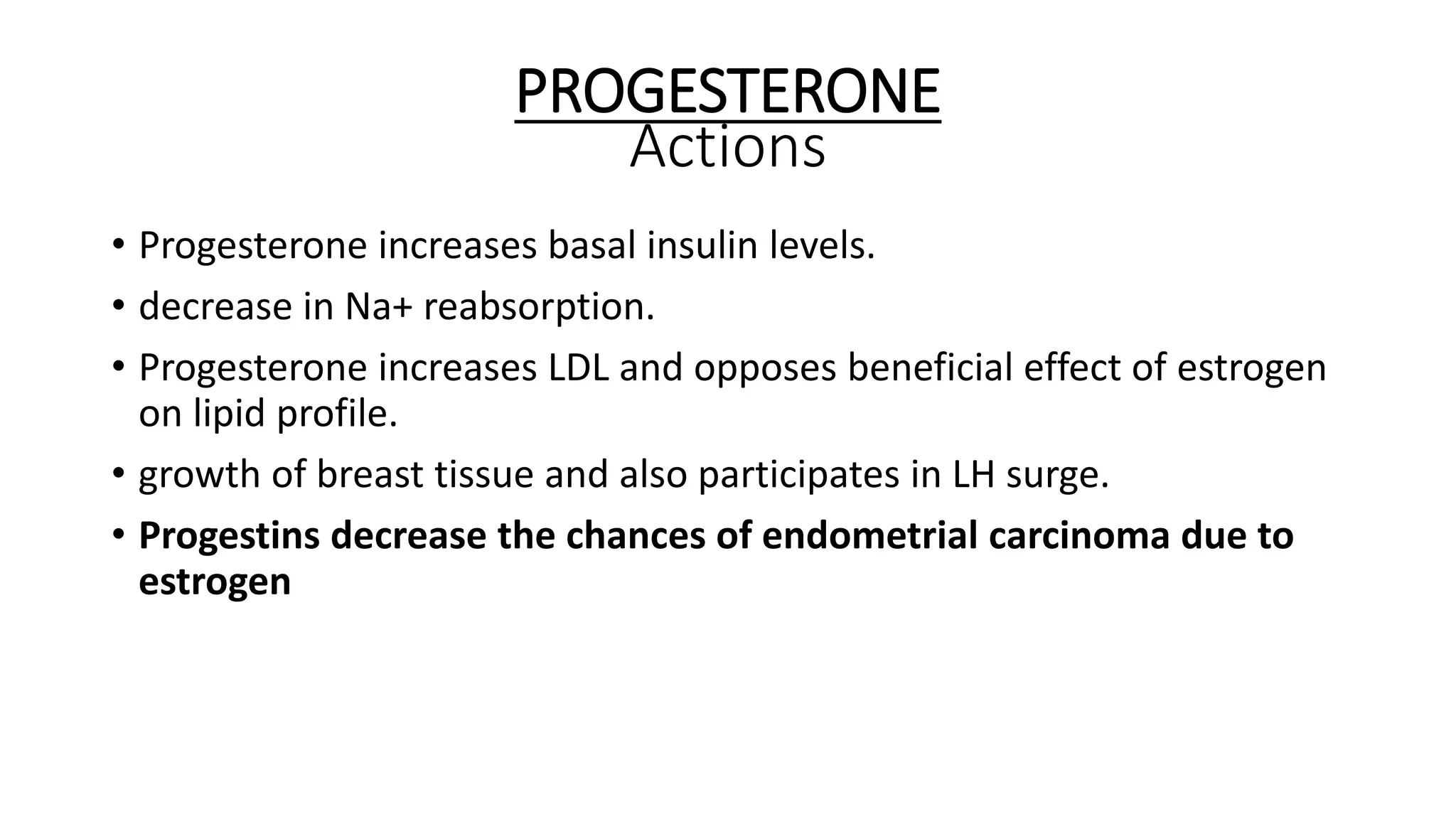
PROGESTERONE
• Progesterone increases basal insulin levels.
• decrease in Na+ reabsorption.
• Progesterone increases LDL and opposes beneficial effect of estrogen
on lipid profile.
• growth of breast tissue and also participates in LH surge.
• Progestins decrease the chances of endometrial carcinoma due to
estrogen
Actions
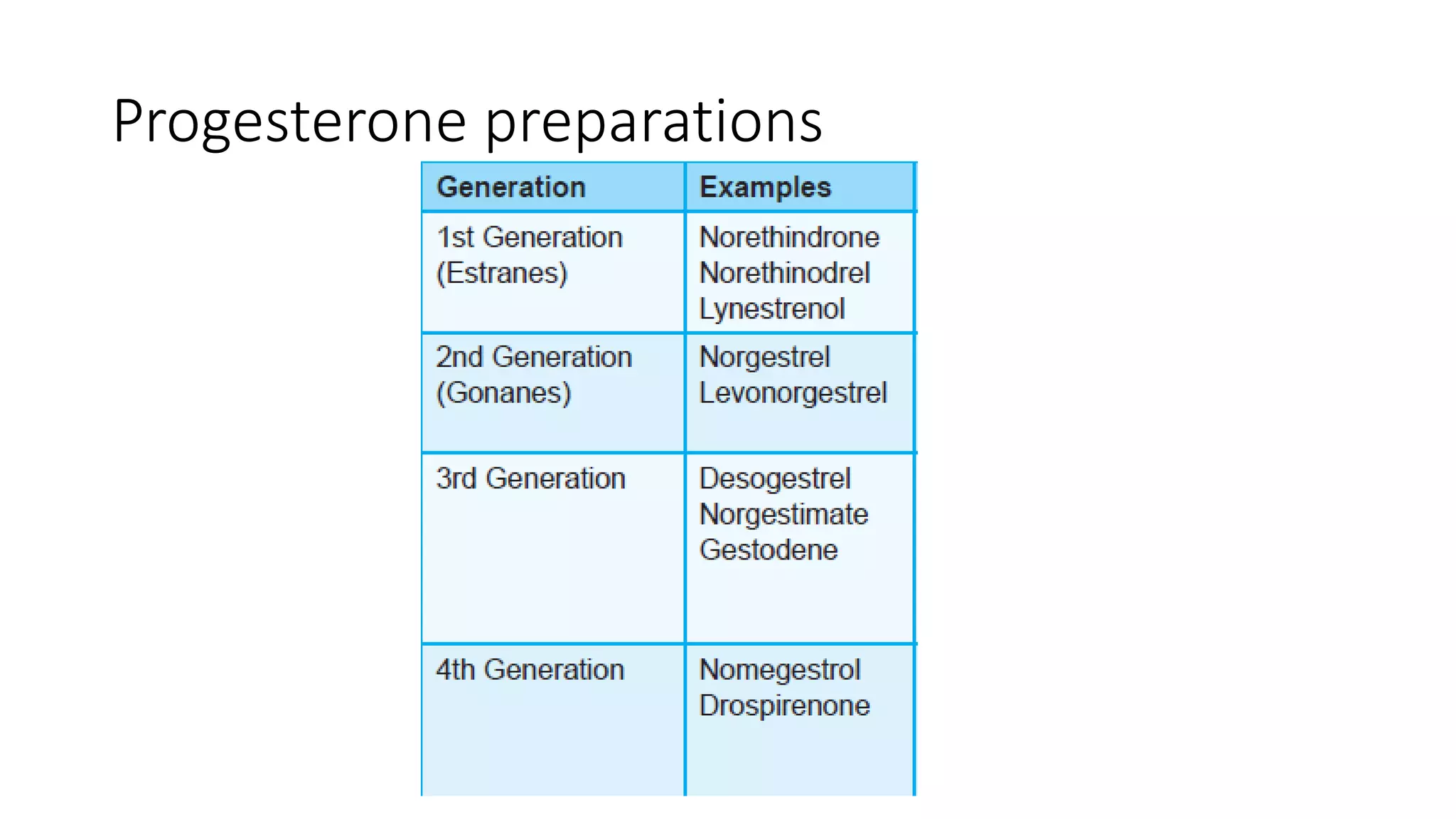
Progesterone preparations
pharmacokinetics
• Natural progesterone orally ineffective due to first pass metabolism
• Synthetic progesterones are orally active
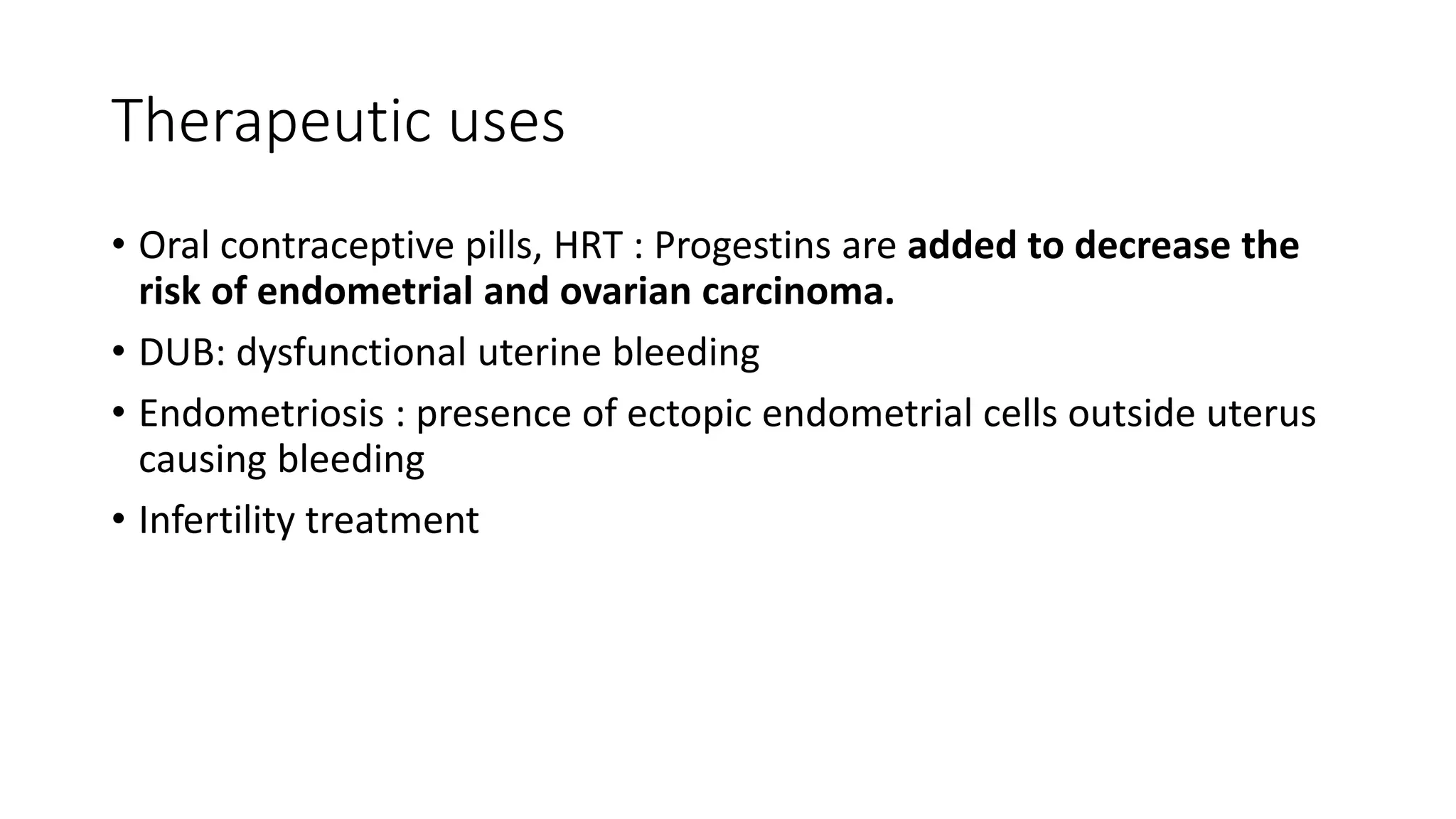
Therapeutic uses
• Oral contraceptive pills, HRT : Progestins are added to decrease the
risk of endometrial and ovarian carcinoma.
• DUB: dysfunctional uterine bleeding
• Endometriosis : presence of ectopic endometrial cells outside uterus
causing bleeding
• Infertility treatment
Adverse effects
• Breast engorgement
• Irregular mensturation cycle, breakthrough bleeding
• Depression, irritability
• Weight gain, decreased libido
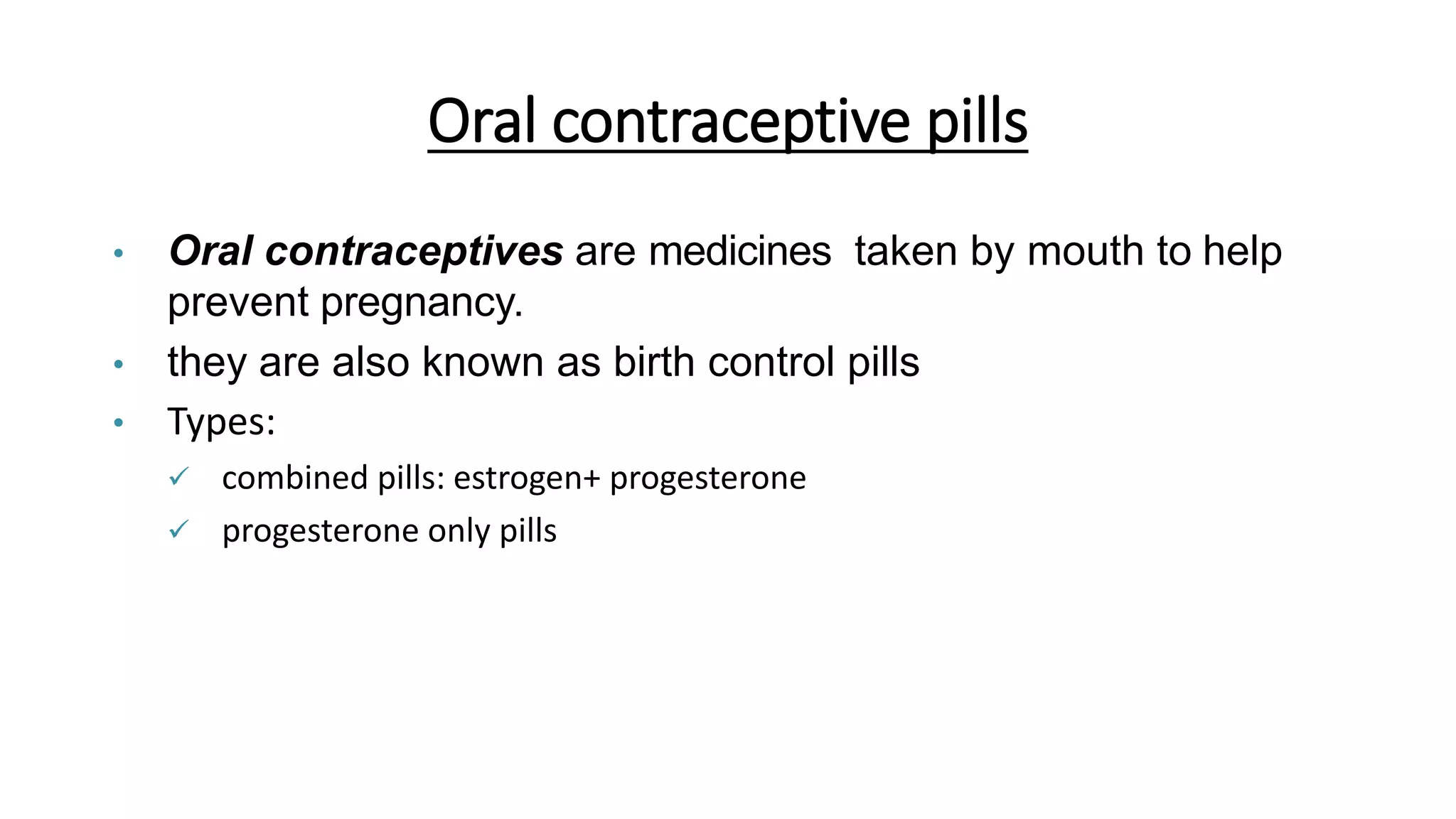
Oral contraceptive pills
• Oral contraceptives are medicines taken by mouth to help
prevent pregnancy.
• they are also known as birth control pills
• Types:
 combined pills: estrogen+ progesterone
 progesterone only pills
Formulations of OCPs
1. Monophasic (each tablet contains a fixed amount of
estrogen and progestin);
2. Biphasic (each tablet contains a fixed amount of estrogen,
while the amount of progestin increases in the second half
of the cycle); or
3. Triphasic (the amount of estrogen may be fixed or variable,
while the amount of progestin increases in 3 equal phases).
Mode of action
oestrogen inhibits secretion of FSH via negative feedback on
the anterior pituitary, and thus suppresses development of the
ovarian follicle
progestogen inhibits secretion of LH and thus prevents
ovulation; it also makes the cervical mucus less suitable for
the passage of sperm
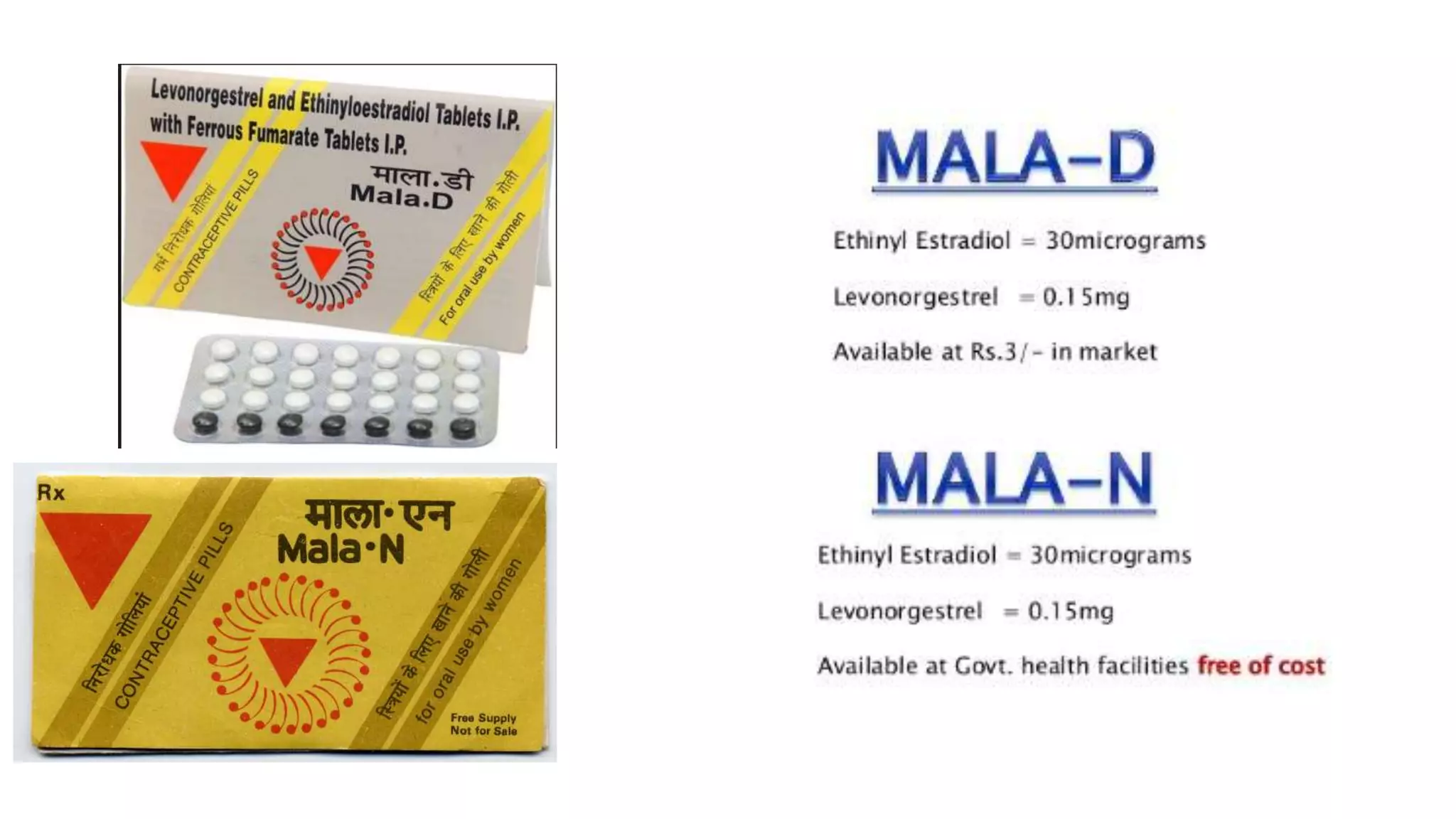
The oestrogen in most combined preparations (second-
generation pills) is ethinylestradiol, or mestranol
The progestogen may be norethisterone, levonorgestrel, or-
in 'third- generation' pills-desogestrel or gestodene
Common adverse effects
 weight gain, owing to fluid retention
 Glucose intolerance
 mild nausea, flushing, dizziness, depression or irritability
 skin changes (e.g. acne and/or an increase inpigmentation)
 amenorrhoea of variable duration oncessation of
taking the pill.
 CVS: thromboembolism, hypertension
 Increase risk of Breast carcinoma. Decrease risk of
ovarian and endometrial cancer
Non contraceptive beneficial effects
decreases menstrual symptoms such as irregular
periods and intermenstrual bleeding.
Iron deficiency anaemia and premenstrual tension are
reduced,
Reduce benign breast disease, uterine fibroids and functional
cysts of the ovaries.
Progesterone only pills / mini pills
These contain low dose of progestins (norethisterone or
levonorgestrel or ethynodiol ) without any estrogen. These
are less effective than combined OCPs.
• Minipills are preferred in women where estrogen is contra-indicated
e.g.
–– Smokers; >35 years of age; Risk factors of thromboembolism
• Progesterone only pills are given daily without any break.
Mifepristone
• Anti-progestin
• Binds to progesterone receptors, blocking activity of progesterone
• uses: termination of pregnancy, contraceptive, softening of cervix,
induction of labour
SERM
• Selective Estrogen Receptor Modulator
• Synthetic agents with tissue selective agonist and antagonist
activities on estrogen receptor ( ER)
• Beneficial estrogenic effects on some tissues: bone, brain, liver
• Prevent deleterious estrogenic effects on some tissues: endometrium,
breast
• Example: clomiphene, tamoxifen, raloxifene
• Uses: breast cancer ( raloxifene), HRT ( tamoxifen), infertility (
clomiphene)
Estrogen, progesterone and contraceptives

Estrogen, progesterone and contraceptives

  • 1.
  • 3.
    ESTROGENS • female reproductivesystem: 1. Growth and development • CNS: 1. Feedback inhibition of gonadotropin (LH/FSH) secretion. 2. stimulation of CTZ to cause nausea and vomiting. • BLOOD: 1. Increased predisposition to deep vein thrombosis and pulmonary embolism due to increased synthesis of factor VII, VIII, IX and X and decreased production of antithrombin III by the liver. 2. Favourable effect on lipid profile by decreasing LDL and increasing HDL. Actions:
  • 4.
    ESTROGENS • METABOLIC 1. Glucoseintolerance 2. sodium and water retention. 3. Maintain bone mass by decreasing the bone resorption. • Increased risk of gall bladder stones and cholestatic jaundice. • Can result in hepatic adenoma on prolonged use. • Vasodilation by increasing the production of NO. Actions:
  • 5.
    ESTROGEN PREPARATIONS • Naturalsteroidal estrogen Estrone, Estradiol ( maximum), Estriol • Synthetic steroidal estrogen Ethinyl estradil Mestranol Tibolone • Synthetic non steroidal estrogens Diethylstilbesterol Dienestrol
  • 6.
    Pharmacokinetics Natural estrogens: orallyinactive due to first pass metabolism Synthetic estrogens: orally active Estradiol is converted to estrone and estriol in liver/ peripheral tissue Orally administered estrogen  absorbed from intestine enterohepatic circulation  high hepatic to peripheral ratio hepatic side effects
  • 7.
    Therapeutic uses • Oralcontraceptive pills ( OCP) • Postmenopausal Hormone Replacement Therapy ( HRT) • No progesterone/estrogen production after menopause. • Leading to osteoporosis, hot flushes( due to LH), vaginal atrophy, insomnia • in HRT: Estrogen + Progesterone are given • Estrogen Replacement Therapy ( ERT) in primary ovarian failure • Dysmenorrhoea : painful menstrual bleeding • Acne, hirsuitism • Carcinoma prostrate • DUB: dysfunctional uterine bleeding
  • 8.
    Adverse effects • Inmales: gynaecomastia, feminisation and decreased libido • In females: • breast tenderness, breast cancer risk • withdrawal bleeding, amenorrhoea, endometrial hyperplasia • Risk of vaginal, cervical adenocarcinoma • Migraine, nausea • In both genders: • Gall stones, hepatic dysfunction • Thromboembolic disorders • Diabetes and fluid retention
  • 9.
    Contraindications • Pregnancy • Thromboembolicdisorders • Diabetes • Estrogen dependent breast carcinoma • Endometrial carcinoma
  • 10.
    PROGESTERONE • Progesterone increasesbasal insulin levels. • decrease in Na+ reabsorption. • Progesterone increases LDL and opposes beneficial effect of estrogen on lipid profile. • growth of breast tissue and also participates in LH surge. • Progestins decrease the chances of endometrial carcinoma due to estrogen Actions
  • 11.
  • 12.
    pharmacokinetics • Natural progesteroneorally ineffective due to first pass metabolism • Synthetic progesterones are orally active
  • 13.
    Therapeutic uses • Oralcontraceptive pills, HRT : Progestins are added to decrease the risk of endometrial and ovarian carcinoma. • DUB: dysfunctional uterine bleeding • Endometriosis : presence of ectopic endometrial cells outside uterus causing bleeding • Infertility treatment
  • 14.
    Adverse effects • Breastengorgement • Irregular mensturation cycle, breakthrough bleeding • Depression, irritability • Weight gain, decreased libido
  • 15.
    Oral contraceptive pills •Oral contraceptives are medicines taken by mouth to help prevent pregnancy. • they are also known as birth control pills • Types:  combined pills: estrogen+ progesterone  progesterone only pills
  • 16.
    Formulations of OCPs 1.Monophasic (each tablet contains a fixed amount of estrogen and progestin); 2. Biphasic (each tablet contains a fixed amount of estrogen, while the amount of progestin increases in the second half of the cycle); or 3. Triphasic (the amount of estrogen may be fixed or variable, while the amount of progestin increases in 3 equal phases).
  • 18.
    Mode of action oestrogeninhibits secretion of FSH via negative feedback on the anterior pituitary, and thus suppresses development of the ovarian follicle progestogen inhibits secretion of LH and thus prevents ovulation; it also makes the cervical mucus less suitable for the passage of sperm
  • 19.
    The oestrogen inmost combined preparations (second- generation pills) is ethinylestradiol, or mestranol The progestogen may be norethisterone, levonorgestrel, or- in 'third- generation' pills-desogestrel or gestodene
  • 21.
    Common adverse effects weight gain, owing to fluid retention  Glucose intolerance  mild nausea, flushing, dizziness, depression or irritability  skin changes (e.g. acne and/or an increase inpigmentation)  amenorrhoea of variable duration oncessation of taking the pill.  CVS: thromboembolism, hypertension  Increase risk of Breast carcinoma. Decrease risk of ovarian and endometrial cancer
  • 22.
    Non contraceptive beneficialeffects decreases menstrual symptoms such as irregular periods and intermenstrual bleeding. Iron deficiency anaemia and premenstrual tension are reduced, Reduce benign breast disease, uterine fibroids and functional cysts of the ovaries.
  • 23.
    Progesterone only pills/ mini pills These contain low dose of progestins (norethisterone or levonorgestrel or ethynodiol ) without any estrogen. These are less effective than combined OCPs. • Minipills are preferred in women where estrogen is contra-indicated e.g. –– Smokers; >35 years of age; Risk factors of thromboembolism • Progesterone only pills are given daily without any break.
  • 24.
    Mifepristone • Anti-progestin • Bindsto progesterone receptors, blocking activity of progesterone • uses: termination of pregnancy, contraceptive, softening of cervix, induction of labour
  • 25.
    SERM • Selective EstrogenReceptor Modulator • Synthetic agents with tissue selective agonist and antagonist activities on estrogen receptor ( ER) • Beneficial estrogenic effects on some tissues: bone, brain, liver • Prevent deleterious estrogenic effects on some tissues: endometrium, breast • Example: clomiphene, tamoxifen, raloxifene • Uses: breast cancer ( raloxifene), HRT ( tamoxifen), infertility ( clomiphene)