Bangabandhu SheikhMujiburRahmanScience & TechnologyUniversity
A presentation on Ganglion
Stimulants & Blocking agents
Presentedby
Md.ShimulBhuia
St.ID:16PHR003
Departmentof Pharmacy,BSMRSTU
Ganglion
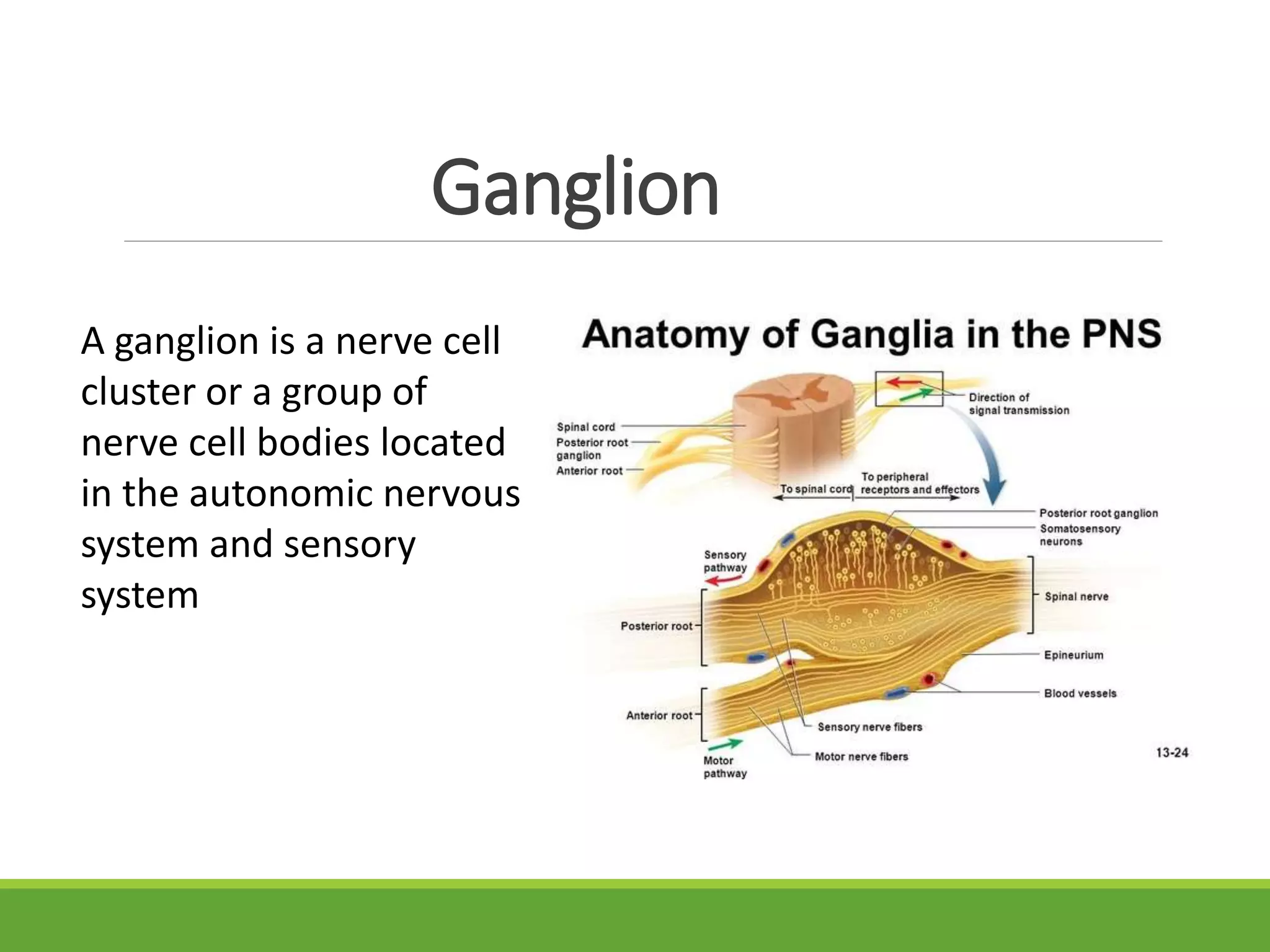
A ganglion is a nerve cell
cluster or a group of
nerve cell bodies located
in the autonomic nervous
system and sensory
system
Ganglion stimulants
Ganglionic stimulants
Agents that mimic neural transmission by
stimulation of the nicotinic receptors on
postganglionic autonomic neurons
e.g-Nicotine, lobeline, verenicline
Ganglion stimulants
Selective nicotinic
agonists
Nicotine(small dose)
Lobeline
Dimethyl phenyl
Tetramethyl ammonium(TMA)
Varenicline
• Non
Selective/Muscarinic
agonists
Acetylcholine
Carbachol
Pilocarpine
Anticholiester
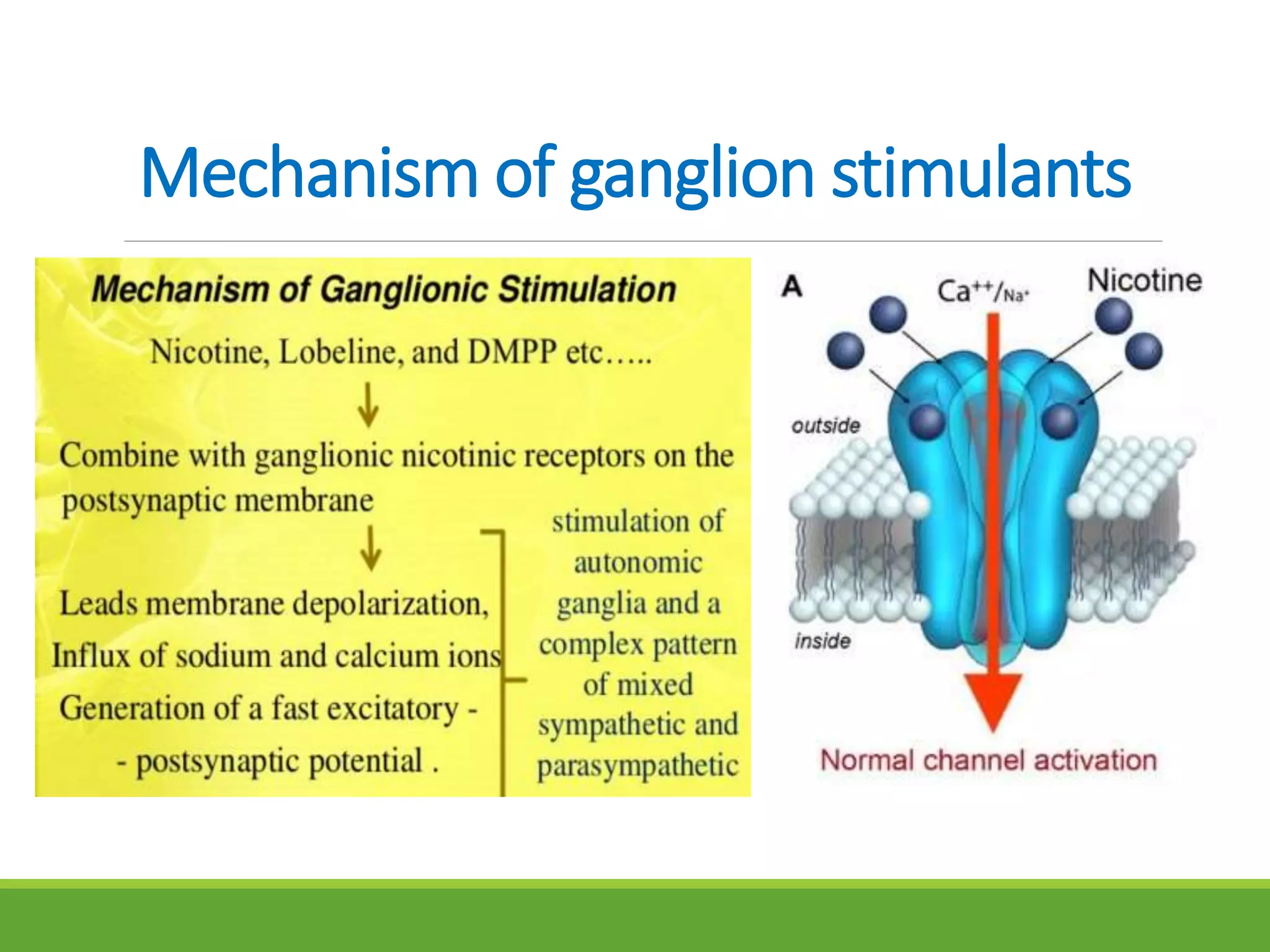
Mechanism of ganglion stimulants
Actions
Activation of nicotinic
receptors on the plasma
membrane of the cells of
the adrenal medulla
Exocytotic release of E and NE
• Stimulation of nicotinic
receptors at NMJ
Contraction of skeletal muscle
Actions
Treatment of smoking cessation/quiting
tobacco chewing
Majority of smokers ( tobacco chewers) wish to quit smoking/chewing,
but fail to do so because of nicotine dependence
Measure to help smokers quit is counseling and motivation
The goals of pharmacotherapy are
To reduce the craving foe the satisfying (reward) effects of nicotine
To suppress the physical withdrawal symptoms of nicotine
The drugs currently utilized for the above goals are
Nicotine replacement (nicotinic chewing gum)
Partial agonists of α4β2 NRs (Varenicline)
Antidepressants (Bupropion)
Ganglion blockers
Definition
A ganglionic blocker (ganglioplegic) is a type of medication that inhibits
transmission between preganglionic and postganglionic neurons in the
Autonomic Nervous System, often by acting as a nicotinic receptor
antagonist.
Muscarinic receptor subtypes in airways. M1 are localized to parasympathetic ganglia. M2
on postganglionic cholinergic nerve terminals inhibit the release of Ach. M3 that constrict
airway smooth muscle.
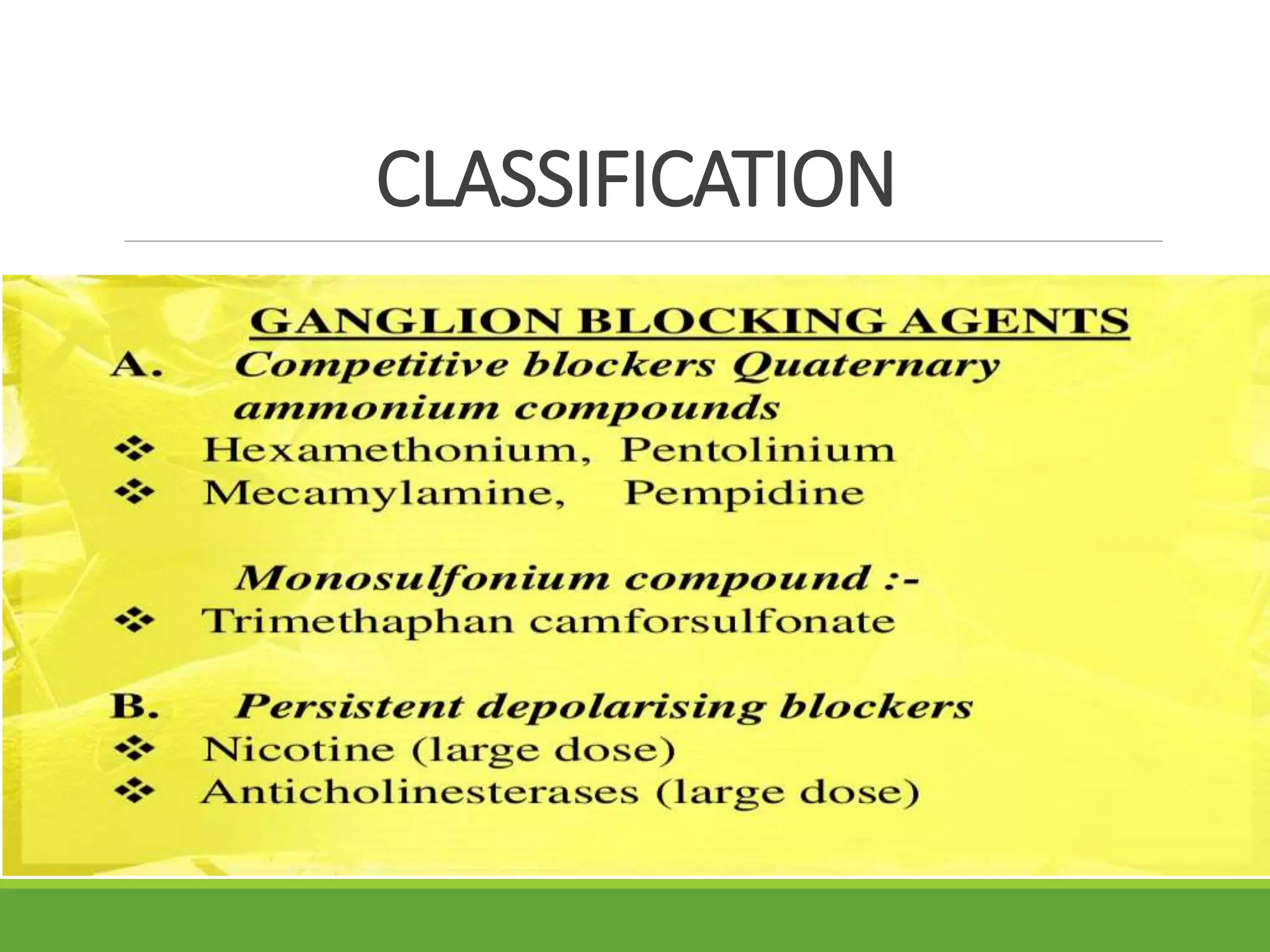
CLASSIFICATION
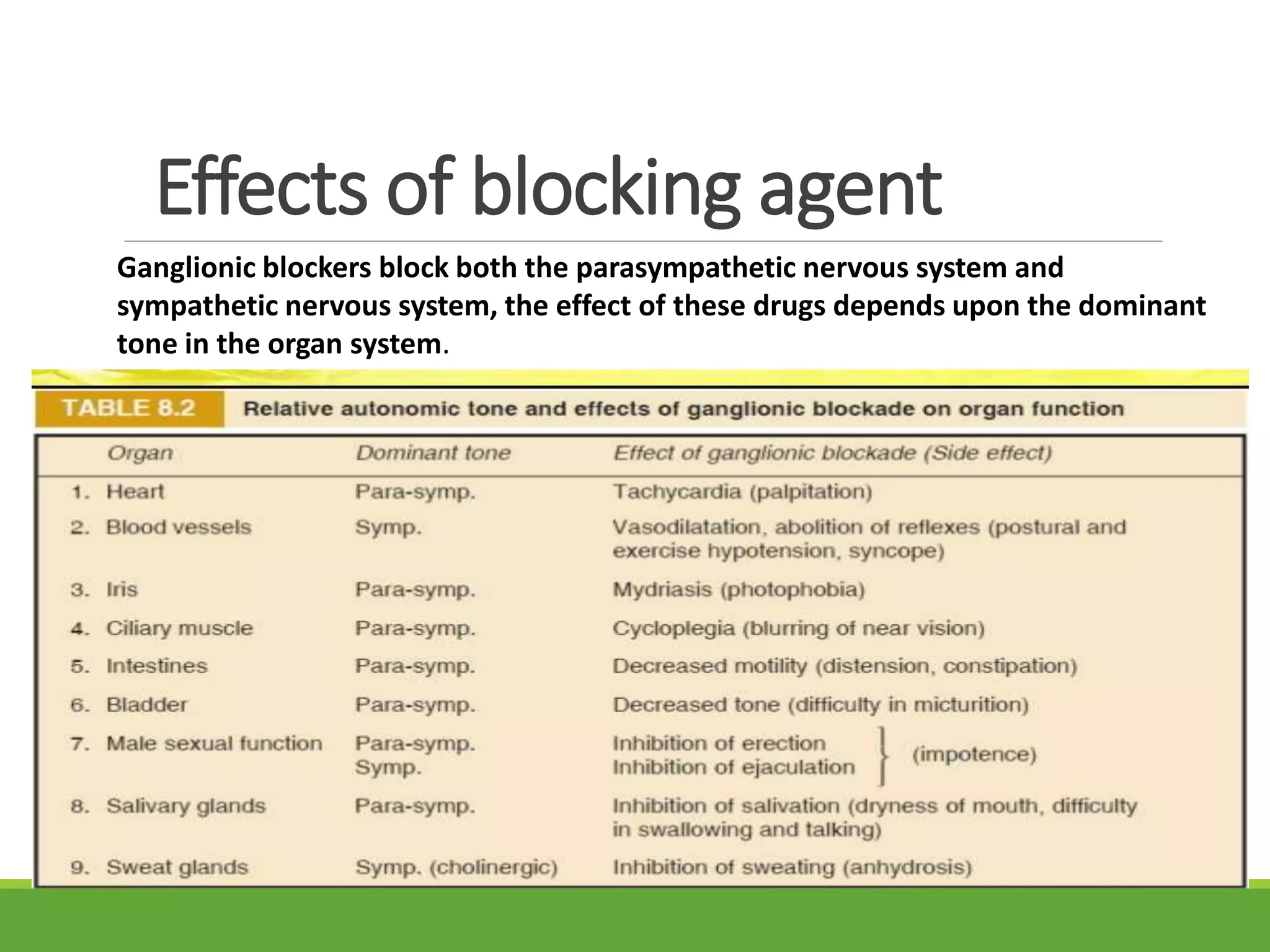
Effects of blocking agent
Ganglionic blockers block both the parasympathetic nervous system and
sympathetic nervous system, the effect of these drugs depends upon the dominant
tone in the organ system.
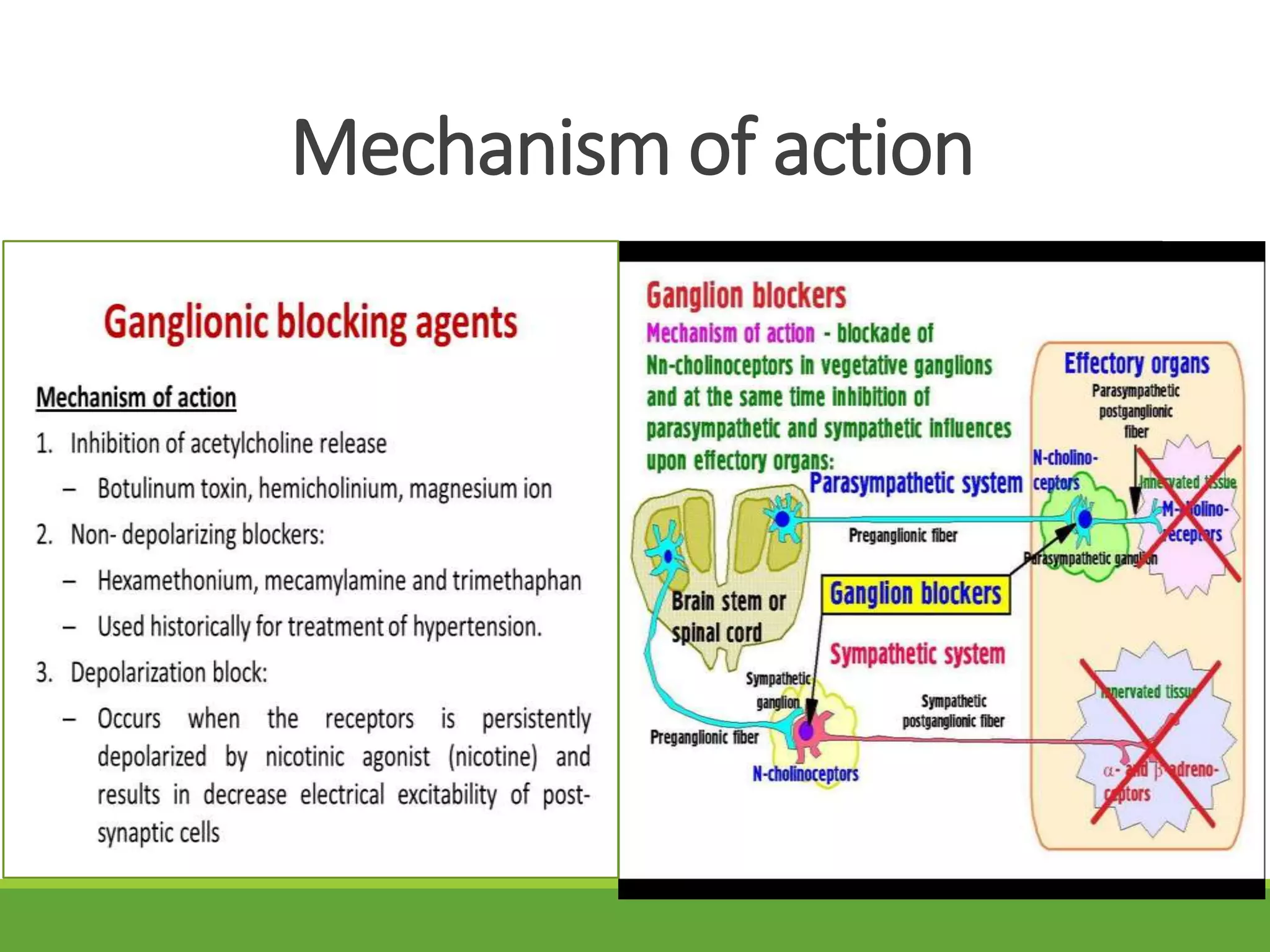
Mechanism of action
Antihypertensive use
The competitive ganglion blockers were used in the 1950s for hypertension and peptic
ulcer but have been totally replaced now because they produce a number of intolerable
side effects
Indication of ganglion blocker
Malignant hypertension.
Neurosurgery to control hypotension.
Orthopedic surgery to control hypotension.
Autonomic hyper reflexia.
Side effects
Cardiovascular: Orthostatic hypotension with or without reflex
tachycardia
ENT/glands: xerostomia, dry eyes, blurred vision, reduced bronchial
secretion, hypohidrosis
GIT: gastroparesis, constipation, urinary retention
Sexual dysfunction: failure of erection and ejaculation
in overdose risk of peripheral circulatory collapse (shock) and paralytic
ileus
Any question?
Thank you

Ganglion stimulants and blocking agents

  • 1.
    Bangabandhu SheikhMujiburRahmanScience &TechnologyUniversity A presentation on Ganglion Stimulants & Blocking agents Presentedby Md.ShimulBhuia St.ID:16PHR003 Departmentof Pharmacy,BSMRSTU
  • 2.
    Ganglion A ganglion isa nerve cell cluster or a group of nerve cell bodies located in the autonomic nervous system and sensory system
  • 3.
  • 4.
    Ganglionic stimulants Agents thatmimic neural transmission by stimulation of the nicotinic receptors on postganglionic autonomic neurons e.g-Nicotine, lobeline, verenicline
  • 5.
    Ganglion stimulants Selective nicotinic agonists Nicotine(smalldose) Lobeline Dimethyl phenyl Tetramethyl ammonium(TMA) Varenicline • Non Selective/Muscarinic agonists Acetylcholine Carbachol Pilocarpine Anticholiester
  • 6.
  • 7.
    Actions Activation of nicotinic receptorson the plasma membrane of the cells of the adrenal medulla Exocytotic release of E and NE • Stimulation of nicotinic receptors at NMJ Contraction of skeletal muscle Actions
  • 8.
    Treatment of smokingcessation/quiting tobacco chewing Majority of smokers ( tobacco chewers) wish to quit smoking/chewing, but fail to do so because of nicotine dependence Measure to help smokers quit is counseling and motivation The goals of pharmacotherapy are To reduce the craving foe the satisfying (reward) effects of nicotine To suppress the physical withdrawal symptoms of nicotine
  • 9.
    The drugs currentlyutilized for the above goals are Nicotine replacement (nicotinic chewing gum) Partial agonists of α4β2 NRs (Varenicline) Antidepressants (Bupropion)
  • 10.
  • 11.
    Definition A ganglionic blocker(ganglioplegic) is a type of medication that inhibits transmission between preganglionic and postganglionic neurons in the Autonomic Nervous System, often by acting as a nicotinic receptor antagonist.
  • 12.
    Muscarinic receptor subtypesin airways. M1 are localized to parasympathetic ganglia. M2 on postganglionic cholinergic nerve terminals inhibit the release of Ach. M3 that constrict airway smooth muscle.
  • 13.
  • 15.
    Effects of blockingagent Ganglionic blockers block both the parasympathetic nervous system and sympathetic nervous system, the effect of these drugs depends upon the dominant tone in the organ system.
  • 16.
  • 17.
    Antihypertensive use The competitiveganglion blockers were used in the 1950s for hypertension and peptic ulcer but have been totally replaced now because they produce a number of intolerable side effects
  • 18.
    Indication of ganglionblocker Malignant hypertension. Neurosurgery to control hypotension. Orthopedic surgery to control hypotension. Autonomic hyper reflexia.
  • 19.
    Side effects Cardiovascular: Orthostatichypotension with or without reflex tachycardia ENT/glands: xerostomia, dry eyes, blurred vision, reduced bronchial secretion, hypohidrosis GIT: gastroparesis, constipation, urinary retention Sexual dysfunction: failure of erection and ejaculation in overdose risk of peripheral circulatory collapse (shock) and paralytic ileus
  • 20.
  • 21.