
Handled by - g.yogapriyaTheory of Architecture
UNIT-3_CIRCULATION-PART-1Circulation- Movement through Space.Approach- The Distant ViewEntrance- From Outside to InsideConfiguration of Space- The Sequences of SpacePath-Space Relationships- Edges, Nodes, &Terminations of the pathForm of the Circulation Space- Corridors, Halls, Galleries, Stairways & Rooms.
Approach- The Distant ViewFirst phase of Circulation system, during which we are prepared to see, Experience & use the spaces within.
Make your path more legible in visual ways.
May vary in duration- compressed space to lengthy & circuitous routes.
Nature of approach contrasts in its termination to an interior.
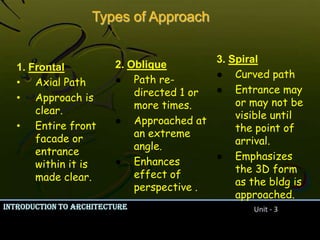
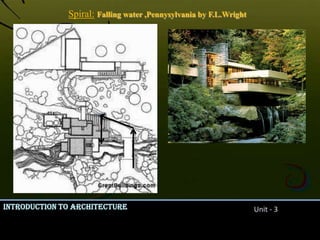
Portals & Gateways - Orient us to path & welcomes EntryTypes of Approach3. SpiralCurved path
Entrance may or may not be visible until the point of arrival.
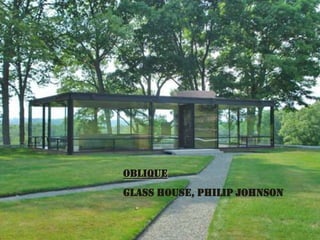
Emphasizes the 3D form as the bldg is approached.2. ObliquePath re-directed 1 or more times.
Approached at an extreme angle.
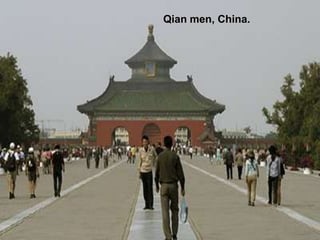
Enhances effect of perspective .1. FrontalAxial Path
Approach is clear.
Entire front facade or entrance within it is made clear.Frontal:Villa Barbaro, Andrea Palladio
Qian men, China.
ObliqueGlass House, Philip Johnson
Spiral:Falling water ,Pennysylvania by F.L.Wright
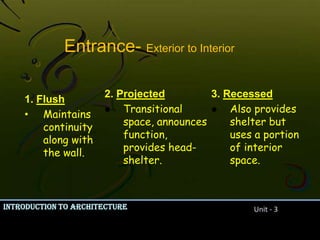
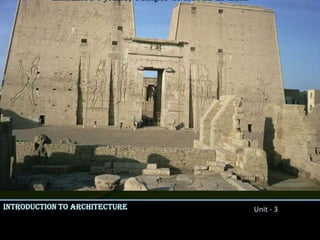
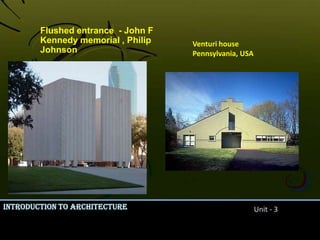
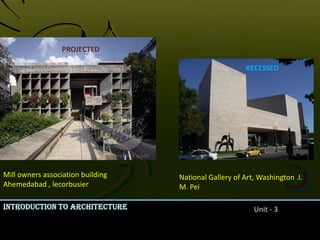
Entrance- Exterior to Interior2. Projected Transitional space, announces function, provides head-shelter.3. Recessed Also provides shelter but uses a portion of interior space.1. Flush Maintains continuity along with the wall.Entrance Pylons, Temple of Horus at Edfu
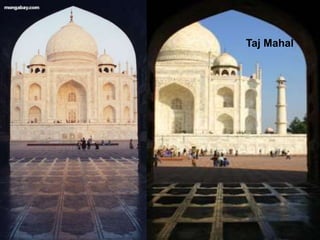
Taj Mahal
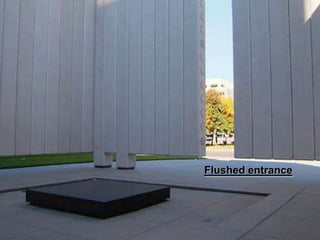
Flushed entranceJohn F Kennedy memorial
Flushed entrance  - John F Kennedy memorial , Philip JohnsonVenturi house Pennsylvania, USA
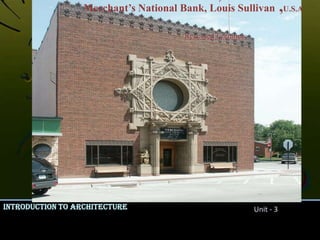
Merchant’s National Bank, Louis Sullivan ,U.S.ARecessed Entrance:
PROJECTED RECESSEDMill owners association buildingAhemedabad , lecorbusierNational Gallery of Art, Washington .I. M. Pei
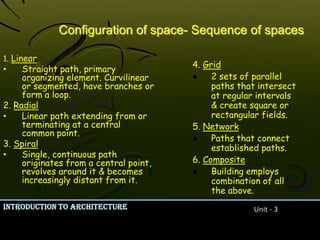
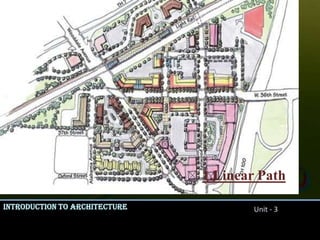
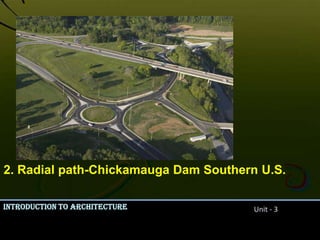
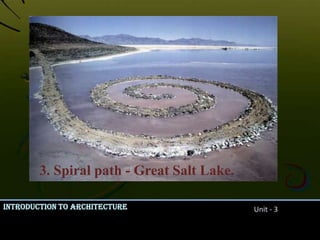
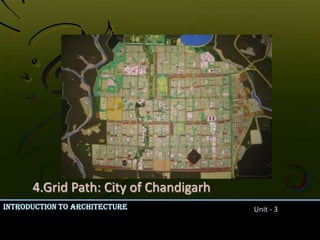
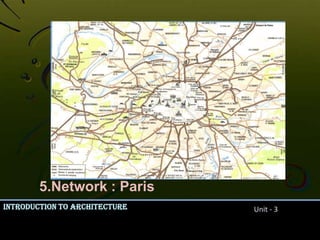
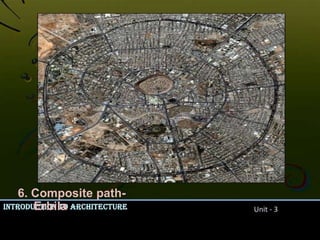
Configuration of space- Sequence of spaces1. LinearStraight path, primary organizing element. Curvilinear or segmented, have branches or form a loop. 2. RadialLinear path extending from or terminating at a central common point. 3. Spiral Single, continuous path originates from a central point, revolves around it & becomes increasingly distant from it.4. Grid2 sets of parallel paths that intersect at regular intervals & create square or rectangular fields.5. NetworkPaths that connect established paths.6. CompositeBuilding employs combination of all the above.1.Linear Path
2. Radial path-Chickamauga Dam Southern U.S.
3. Spiral path - Great Salt Lake.
4.Grid Path: City of Chandigarh
5.Network : Paris
6. Composite path- Erbila
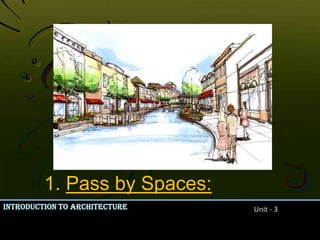
Path – space relationships,  Edges, Nodes & Termination of path1. Pass by Spaces:Integrity of each space maintained.
Configuration of path is flexible.
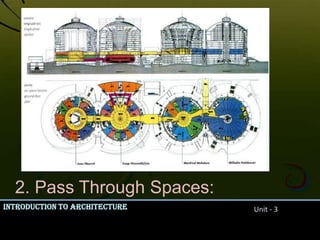
Mediating spaces used to link path with spaces.2. Pass Through Spaces:May pass through Axially, Obliquely or along its edge.
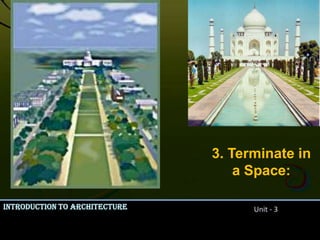
Cutting through the space creates patterns of rest & movement within it.3. Terminate in a Space:Location of the space establishes the path.
Used for functionally or symbolically important spaces.1. Pass by Spaces:
2. Pass Through Spaces:
3. Terminate in a Space:
Form of circulation Space-  Corridors, Halls, Galleries, Stairways & rooms.Form of circulation space varies according to:Its boundaries.
Its form relates to the form of the spaces it links.
Its qualities of scale, proportion, light & view are articulated.
Entrances open into it
It handles changes in level with stairs & ramps.Spaces of movement- occupies a significant amount of volume of a building.Form & scale of circulation space should accommodate movement of people as they promenade, pause, rest, or  take in a view along a path.
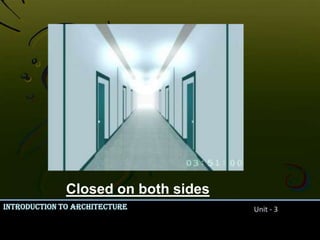
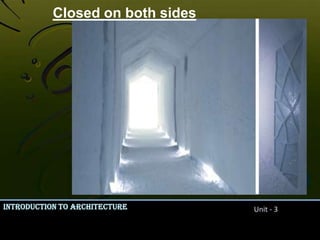
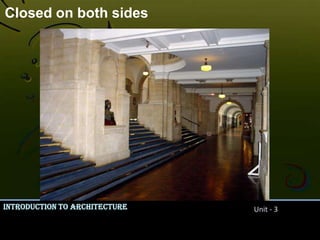
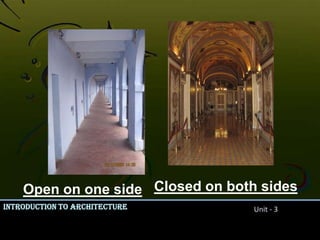
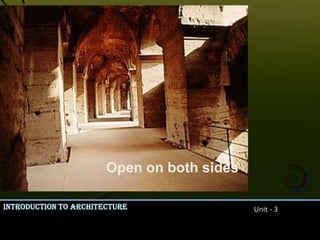
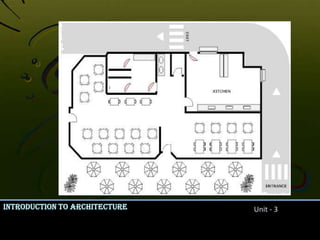
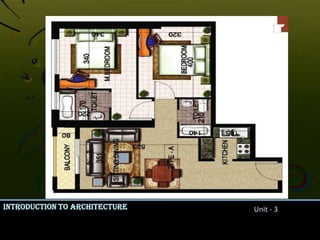
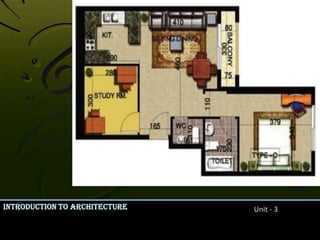
Various types:1. Closed:Public galleria or private corridor that relates to the spaces it links through entrances in wall plane. 2. Open on one Side:Balcony or gallery provides visual & spatial continuity with the spaces it links.3. Open on both Sides:Colonnaded passageways becomes a physical extension of the space it passes through.Width & Height should be proportionate- shows the difference in public promenade, private hall & service corridor
Narrow spaces can be enlarged by merging with spaces it passes through.
In large space, path can be random. They can be determined by activities & arrangements of furnishings within the space.Closed on both sides
Closed on both sides
Closed on both sidesOpen on one side
Open on both sides
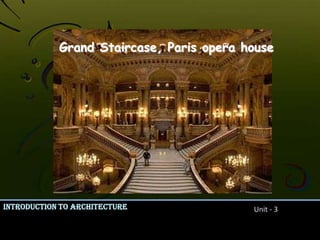
Grand Staircase, Paris opera house
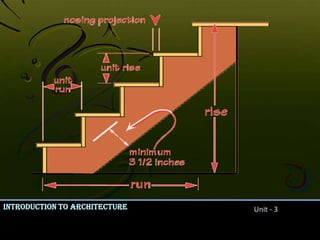
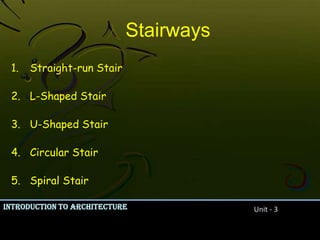
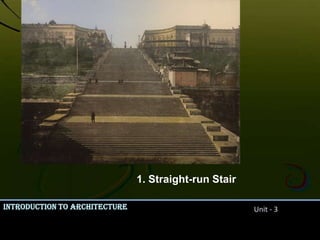
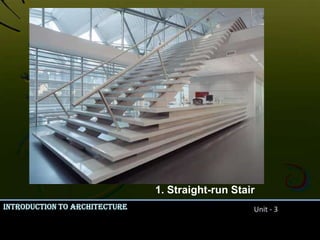
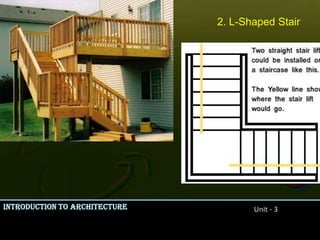
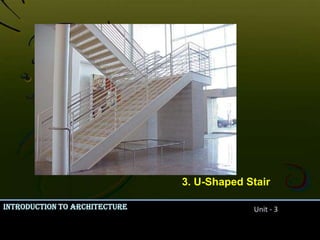
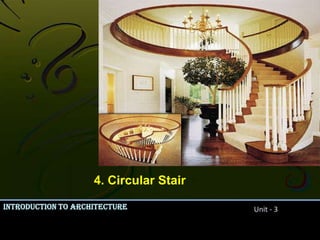
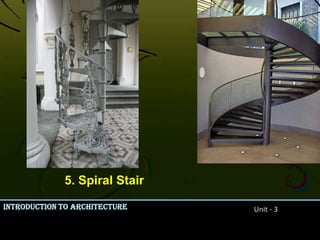
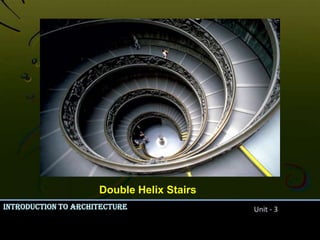
StairwaysProvide vertical movement b/w levels of building or outdoor space.Means of vertical transport.Traversing up-privacy, aloofness or detachmentGoing down-secure, protected or stable ground.Landings-Rest, change in direction, access & outlook form stairway.Pitch & location of landings determine movement of the user.
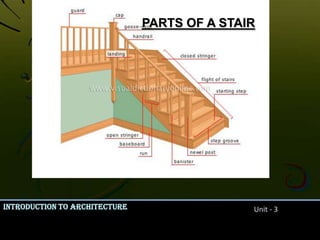
PARTS OF A STAIR

Unit 3

  • 1.
    Handled by -g.yogapriyaTheory of Architecture
  • 2.
    UNIT-3_CIRCULATION-PART-1Circulation- Movement throughSpace.Approach- The Distant ViewEntrance- From Outside to InsideConfiguration of Space- The Sequences of SpacePath-Space Relationships- Edges, Nodes, &Terminations of the pathForm of the Circulation Space- Corridors, Halls, Galleries, Stairways & Rooms.
  • 3.
    Approach- The DistantViewFirst phase of Circulation system, during which we are prepared to see, Experience & use the spaces within.
  • 4.
    Make your pathmore legible in visual ways.
  • 5.
    May vary induration- compressed space to lengthy & circuitous routes.
  • 6.
    Nature of approachcontrasts in its termination to an interior.
  • 7.
    Portals & Gateways- Orient us to path & welcomes EntryTypes of Approach3. SpiralCurved path
  • 8.
    Entrance may ormay not be visible until the point of arrival.
  • 9.
    Emphasizes the 3Dform as the bldg is approached.2. ObliquePath re-directed 1 or more times.
  • 10.
    Approached at anextreme angle.
  • 11.
    Enhances effect ofperspective .1. FrontalAxial Path
  • 12.
  • 13.
    Entire front facadeor entrance within it is made clear.Frontal:Villa Barbaro, Andrea Palladio
  • 14.
  • 15.
  • 16.
  • 17.
    Entrance- Exterior toInterior2. Projected Transitional space, announces function, provides head-shelter.3. Recessed Also provides shelter but uses a portion of interior space.1. Flush Maintains continuity along with the wall.Entrance Pylons, Temple of Horus at Edfu
  • 18.
  • 19.
    Flushed entranceJohn FKennedy memorial
  • 20.
    Flushed entrance - John F Kennedy memorial , Philip JohnsonVenturi house Pennsylvania, USA
  • 21.
    Merchant’s National Bank,Louis Sullivan ,U.S.ARecessed Entrance:
  • 22.
    PROJECTED RECESSEDMill ownersassociation buildingAhemedabad , lecorbusierNational Gallery of Art, Washington .I. M. Pei
  • 23.
    Configuration of space-Sequence of spaces1. LinearStraight path, primary organizing element. Curvilinear or segmented, have branches or form a loop. 2. RadialLinear path extending from or terminating at a central common point. 3. Spiral Single, continuous path originates from a central point, revolves around it & becomes increasingly distant from it.4. Grid2 sets of parallel paths that intersect at regular intervals & create square or rectangular fields.5. NetworkPaths that connect established paths.6. CompositeBuilding employs combination of all the above.1.Linear Path
  • 24.
  • 25.
    3. Spiral path- Great Salt Lake.
  • 26.
    4.Grid Path: Cityof Chandigarh
  • 27.
  • 28.
  • 29.
    Path – spacerelationships, Edges, Nodes & Termination of path1. Pass by Spaces:Integrity of each space maintained.
  • 30.
  • 31.
    Mediating spaces usedto link path with spaces.2. Pass Through Spaces:May pass through Axially, Obliquely or along its edge.
  • 32.
    Cutting through thespace creates patterns of rest & movement within it.3. Terminate in a Space:Location of the space establishes the path.
  • 33.
    Used for functionallyor symbolically important spaces.1. Pass by Spaces:
  • 34.
  • 35.
  • 36.
    Form of circulationSpace- Corridors, Halls, Galleries, Stairways & rooms.Form of circulation space varies according to:Its boundaries.
  • 37.
    Its form relatesto the form of the spaces it links.
  • 38.
    Its qualities ofscale, proportion, light & view are articulated.
  • 39.
  • 40.
    It handles changesin level with stairs & ramps.Spaces of movement- occupies a significant amount of volume of a building.Form & scale of circulation space should accommodate movement of people as they promenade, pause, rest, or take in a view along a path.
  • 41.
    Various types:1. Closed:Publicgalleria or private corridor that relates to the spaces it links through entrances in wall plane. 2. Open on one Side:Balcony or gallery provides visual & spatial continuity with the spaces it links.3. Open on both Sides:Colonnaded passageways becomes a physical extension of the space it passes through.Width & Height should be proportionate- shows the difference in public promenade, private hall & service corridor
  • 42.
    Narrow spaces canbe enlarged by merging with spaces it passes through.
  • 43.
    In large space,path can be random. They can be determined by activities & arrangements of furnishings within the space.Closed on both sides
  • 44.
  • 45.
  • 46.
    Closed on bothsidesOpen on one side
  • 47.
  • 48.
  • 49.
    StairwaysProvide vertical movementb/w levels of building or outdoor space.Means of vertical transport.Traversing up-privacy, aloofness or detachmentGoing down-secure, protected or stable ground.Landings-Rest, change in direction, access & outlook form stairway.Pitch & location of landings determine movement of the user.
  • 50.