1
UNIT 2. FRACTIONS
1 Fractions
A fraction is a number that expresses part of a unit or a part of a quantity. Fractions
are written in the form ba where a and b are whole numbers, and the number b is not 0.
They can be written also in the form a/b.
The number “a” is called the numerator, it is always an integer, and the number “b” is
called the denominator, it can be any whole number except zero.
The denominator is the number, which indicates how many parts the unit is divided into.
The numerator of a fraction indicates how many equal parts of the unit are taken.
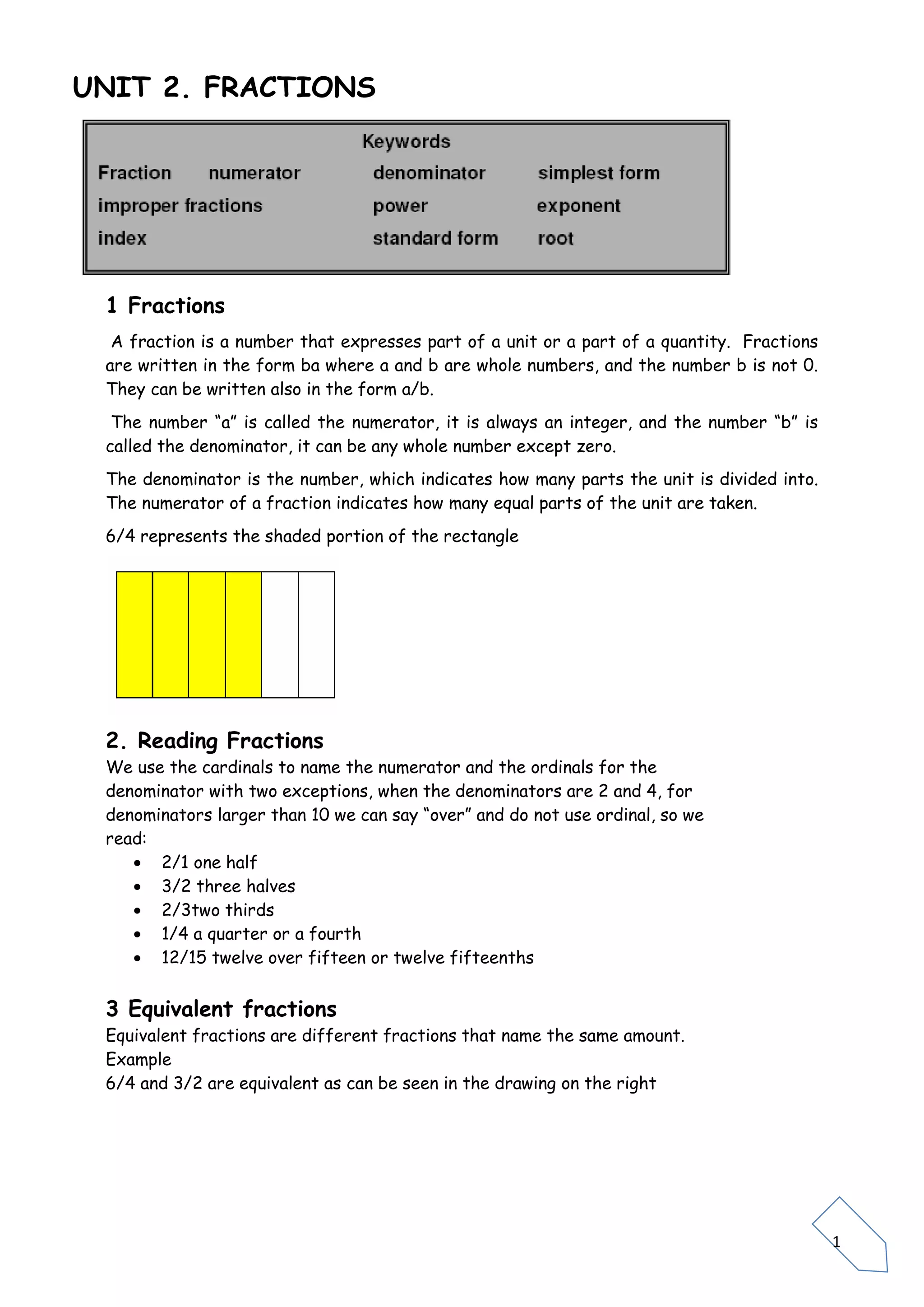
6/4 represents the shaded portion of the rectangle
2. Reading Fractions
We use the cardinals to name the numerator and the ordinals for the
denominator with two exceptions, when the denominators are 2 and 4, for
denominators larger than 10 we can say “over” and do not use ordinal, so we
read:
2/1 one half
3/2 three halves
2/3two thirds
1/4 a quarter or a fourth
12/15 twelve over fifteen or twelve fifteenths
3 Equivalent fractions
Equivalent fractions are different fractions that name the same amount.
Example
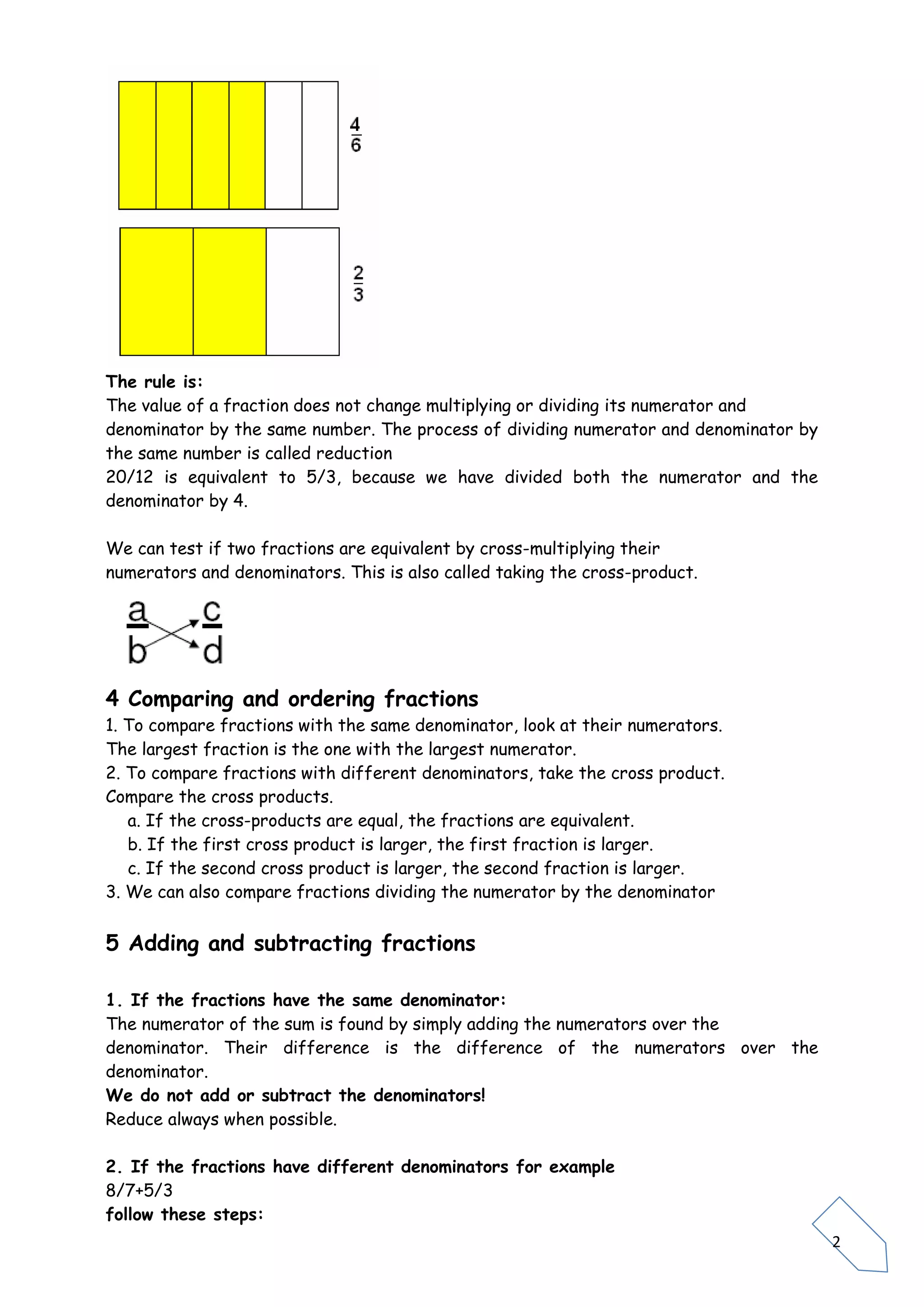
6/4 and 3/2 are equivalent as can be seen in the drawing on the right
2
The rule is:
The value of a fraction does not change multiplying or dividing its numerator and
denominator by the same number. The process of dividing numerator and denominator by
the same number is called reduction
20/12 is equivalent to 5/3, because we have divided both the numerator and the
denominator by 4.
We can test if two fractions are equivalent by cross-multiplying their
numerators and denominators. This is also called taking the cross-product.
4 Comparing and ordering fractions
1. To compare fractions with the same denominator, look at their numerators.
The largest fraction is the one with the largest numerator.
2. To compare fractions with different denominators, take the cross product.
Compare the cross products.
a. If the cross-products are equal, the fractions are equivalent.
b. If the first cross product is larger, the first fraction is larger.
c. If the second cross product is larger, the second fraction is larger.
3. We can also compare fractions dividing the numerator by the denominator
5 Adding and subtracting fractions
1. If the fractions have the same denominator:
The numerator of the sum is found by simply adding the numerators over the
denominator. Their difference is the difference of the numerators over the
denominator.
We do not add or subtract the denominators!
Reduce always when possible.
2. If the fractions have different denominators for example
8/7+5/3
follow these steps:
3
1) Reduce them to a common denominator.
For this problem complete the following steps:
a) We find the LCM of the denominators as it is the smallest number that
both denominators divide into. For 5 and 8, it is easy to see that 40 is the LCM. We look
for equivalent fractions with 40 as common denominator. In our example
b) We divide every new denominator by the previous one and then we multiply the result
by the numerator. we divide the new denominator 40 by the previous one that is
5, what gives us 8, we must multiply 3 by 8, so
6 Multiplying fractions
When two fractions are multiplied, the result is a fraction with a numerator
that is the product of the fraction’s numerators and a denominator that is the
product of the fraction’s denominators. Reduce when possible.
7 Dividing fractions
To divide fractions, multiply the first by the reciprocal of the second fraction.
The reciprocal of a fraction is obtained by switching its numerator and
denominator. We can also take the cross product. To divide a number by a fraction,
multiply the number by the reciprocal of the
fraction.
Now, We´re going to do some activities about these operations, some interactive
activities from that quiz and we´re going to play games from webpage funmaths.
ACTIVITIES.
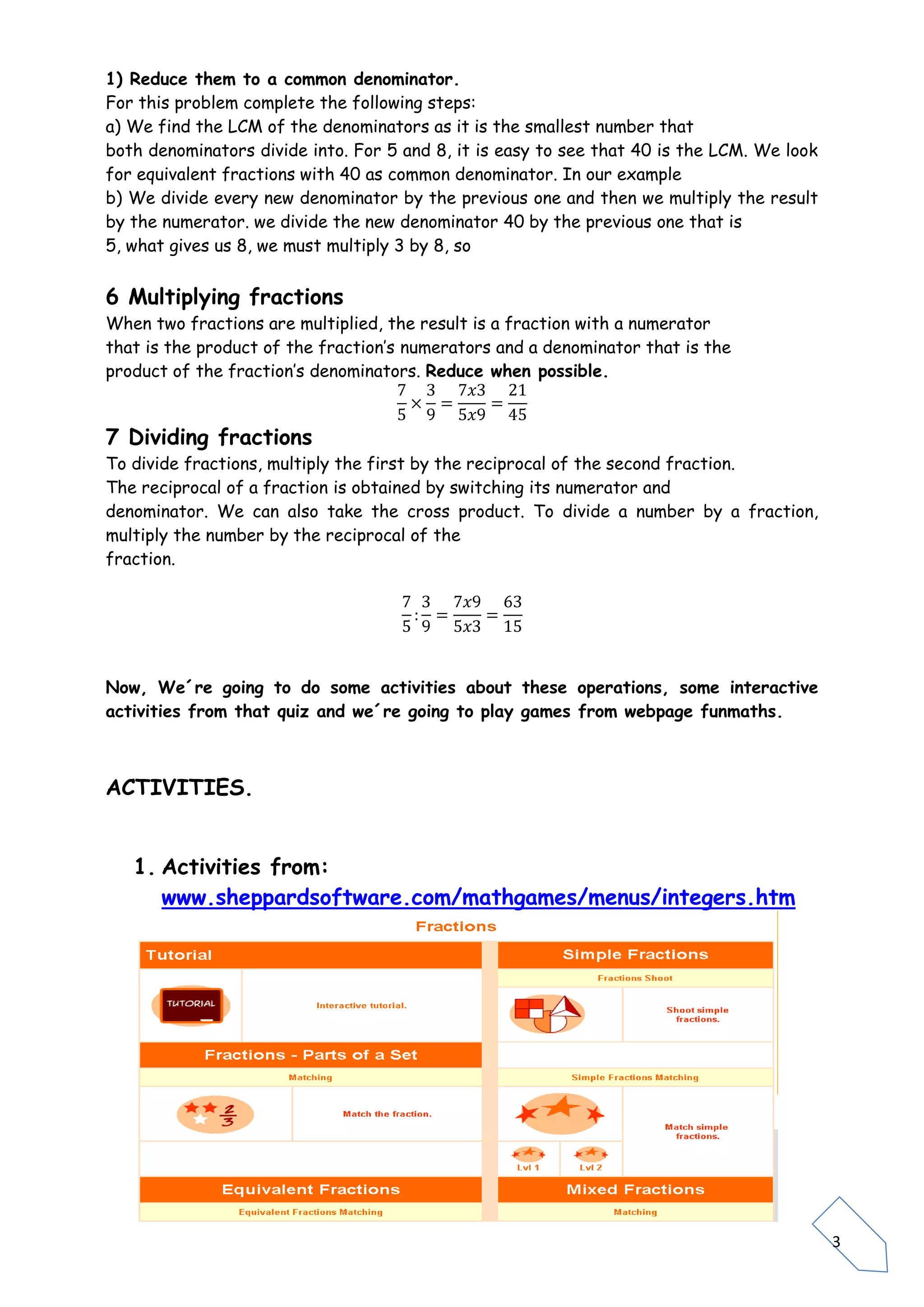
1. Activities from:
www.sheppardsoftware.com/mathgames/menus/integers.htm
4
2. Activities from www.thatquiz.org. Code: 7NORV347
3. When you finish this activities you can play, in pairs, the
following games.
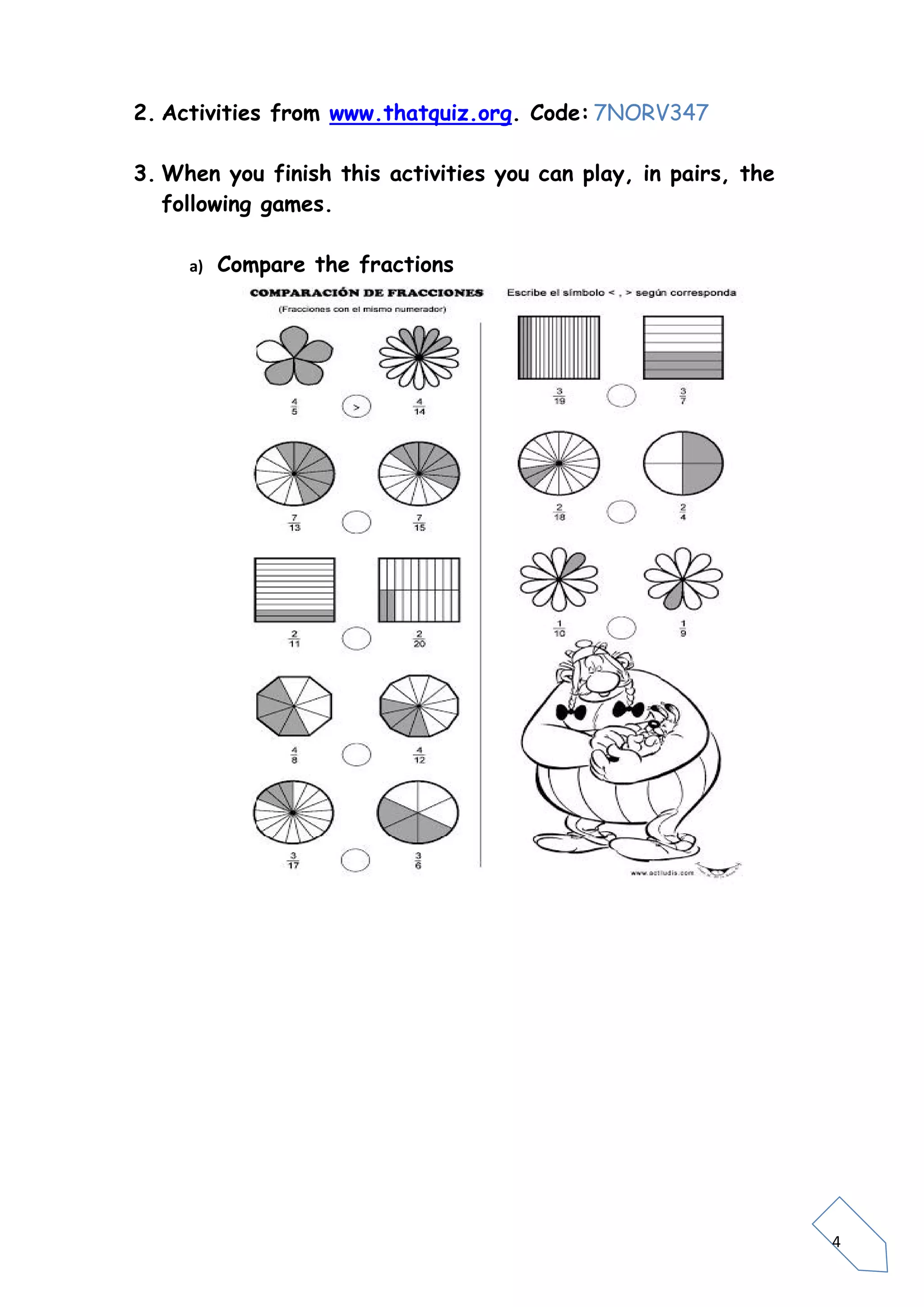
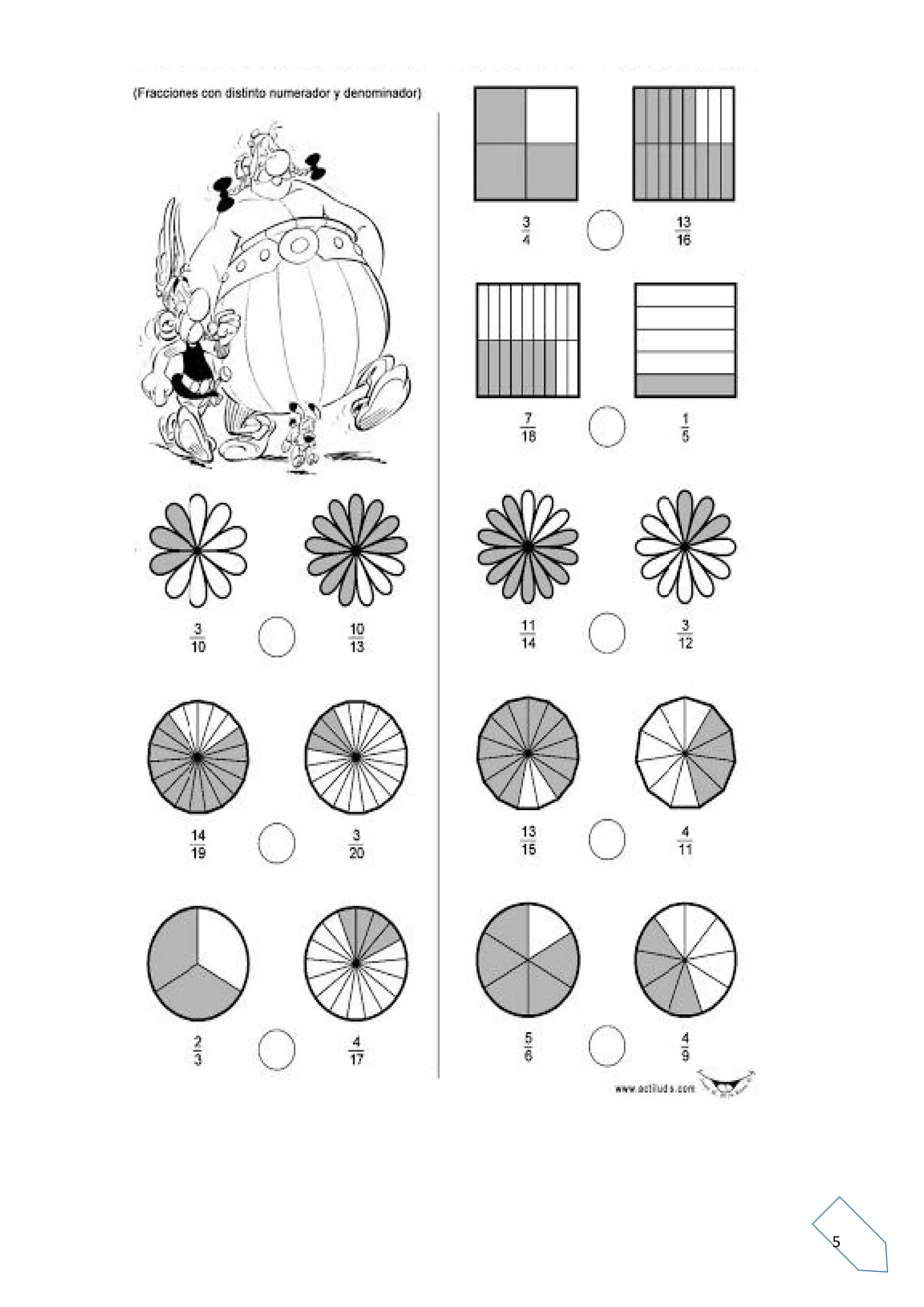
a) Compare the fractions
5
6
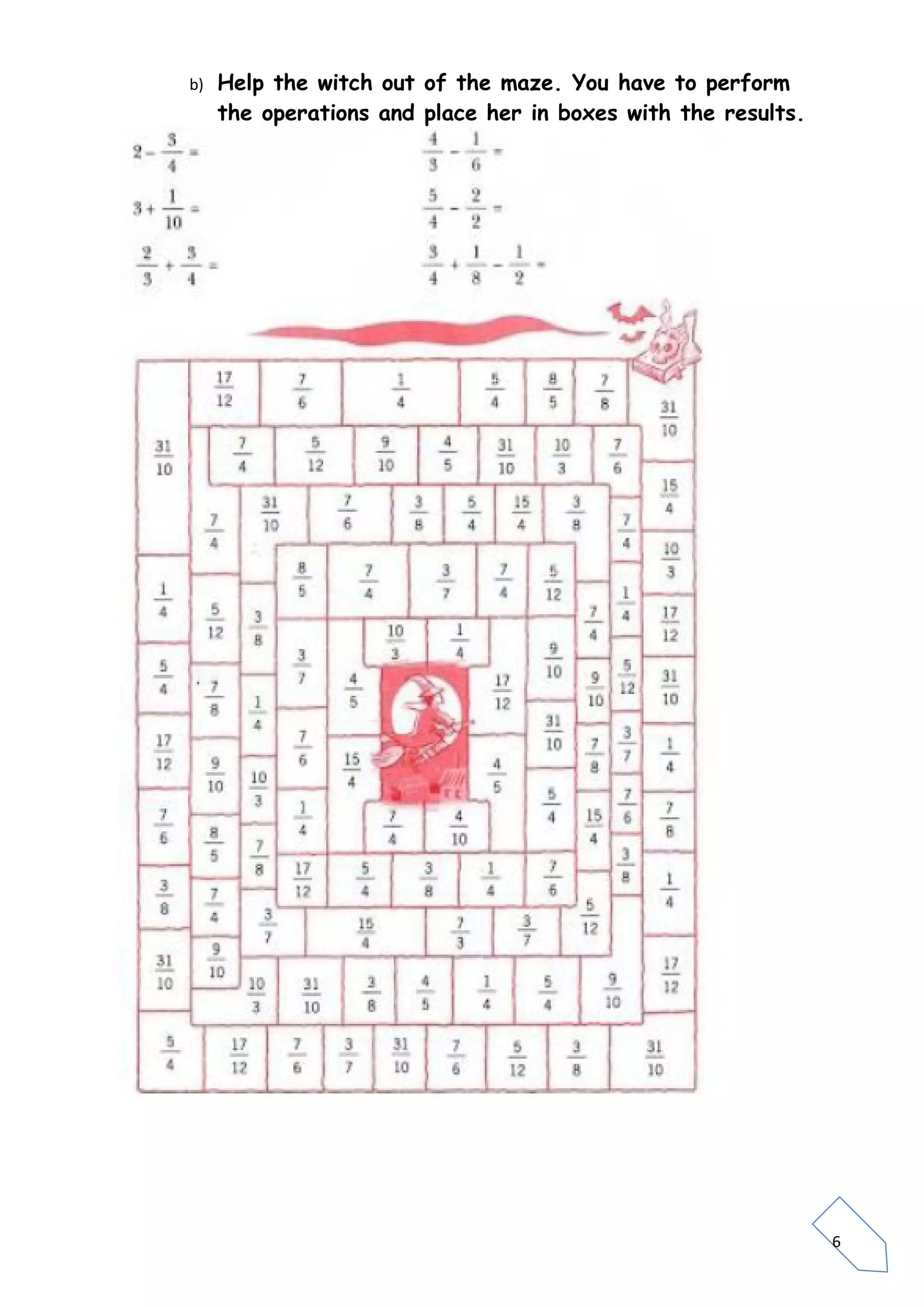
b) Help the witch out of the maze. You have to perform
the operations and place her in boxes with the results.
7
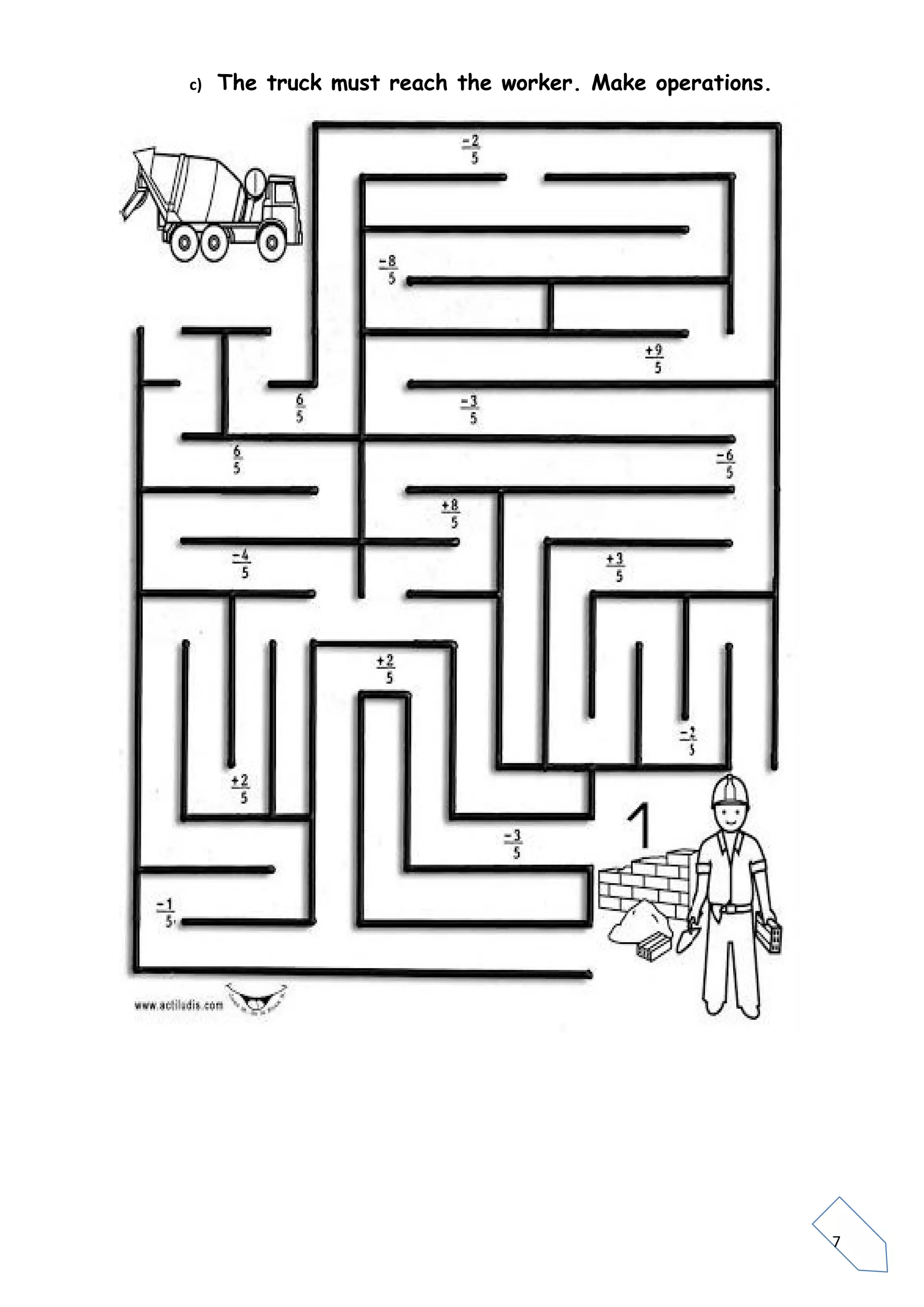
c) The truck must reach the worker. Make operations.

Unit 2

  • 1.
    1 UNIT 2. FRACTIONS 1Fractions A fraction is a number that expresses part of a unit or a part of a quantity. Fractions are written in the form ba where a and b are whole numbers, and the number b is not 0. They can be written also in the form a/b. The number “a” is called the numerator, it is always an integer, and the number “b” is called the denominator, it can be any whole number except zero. The denominator is the number, which indicates how many parts the unit is divided into. The numerator of a fraction indicates how many equal parts of the unit are taken. 6/4 represents the shaded portion of the rectangle 2. Reading Fractions We use the cardinals to name the numerator and the ordinals for the denominator with two exceptions, when the denominators are 2 and 4, for denominators larger than 10 we can say “over” and do not use ordinal, so we read: 2/1 one half 3/2 three halves 2/3two thirds 1/4 a quarter or a fourth 12/15 twelve over fifteen or twelve fifteenths 3 Equivalent fractions Equivalent fractions are different fractions that name the same amount. Example 6/4 and 3/2 are equivalent as can be seen in the drawing on the right
  • 2.
    2 The rule is: Thevalue of a fraction does not change multiplying or dividing its numerator and denominator by the same number. The process of dividing numerator and denominator by the same number is called reduction 20/12 is equivalent to 5/3, because we have divided both the numerator and the denominator by 4. We can test if two fractions are equivalent by cross-multiplying their numerators and denominators. This is also called taking the cross-product. 4 Comparing and ordering fractions 1. To compare fractions with the same denominator, look at their numerators. The largest fraction is the one with the largest numerator. 2. To compare fractions with different denominators, take the cross product. Compare the cross products. a. If the cross-products are equal, the fractions are equivalent. b. If the first cross product is larger, the first fraction is larger. c. If the second cross product is larger, the second fraction is larger. 3. We can also compare fractions dividing the numerator by the denominator 5 Adding and subtracting fractions 1. If the fractions have the same denominator: The numerator of the sum is found by simply adding the numerators over the denominator. Their difference is the difference of the numerators over the denominator. We do not add or subtract the denominators! Reduce always when possible. 2. If the fractions have different denominators for example 8/7+5/3 follow these steps:
  • 3.
    3 1) Reduce themto a common denominator. For this problem complete the following steps: a) We find the LCM of the denominators as it is the smallest number that both denominators divide into. For 5 and 8, it is easy to see that 40 is the LCM. We look for equivalent fractions with 40 as common denominator. In our example b) We divide every new denominator by the previous one and then we multiply the result by the numerator. we divide the new denominator 40 by the previous one that is 5, what gives us 8, we must multiply 3 by 8, so 6 Multiplying fractions When two fractions are multiplied, the result is a fraction with a numerator that is the product of the fraction’s numerators and a denominator that is the product of the fraction’s denominators. Reduce when possible. 7 Dividing fractions To divide fractions, multiply the first by the reciprocal of the second fraction. The reciprocal of a fraction is obtained by switching its numerator and denominator. We can also take the cross product. To divide a number by a fraction, multiply the number by the reciprocal of the fraction. Now, We´re going to do some activities about these operations, some interactive activities from that quiz and we´re going to play games from webpage funmaths. ACTIVITIES. 1. Activities from: www.sheppardsoftware.com/mathgames/menus/integers.htm
  • 4.
    4 2. Activities fromwww.thatquiz.org. Code: 7NORV347 3. When you finish this activities you can play, in pairs, the following games. a) Compare the fractions
  • 5.
  • 6.
    6 b) Help thewitch out of the maze. You have to perform the operations and place her in boxes with the results.
  • 7.
    7 c) The truckmust reach the worker. Make operations.