Unit 2 Visual communication
A game for creative people.
1. What is visual communication?
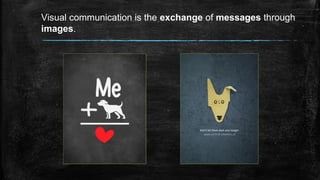
Visual communication is the exchange of messages through
images.
2. Which are the basic elements of visual communication?
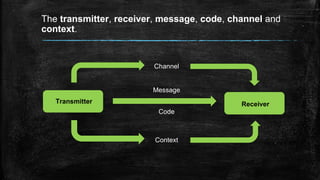
The transmitter, receiver, message, code, channel and
context.
Transmitter Receiver
Channel
Context
Message
Code
3. In visual communication, what are a symbol, a sign
and a logo considered?
They are considered images.
“The Eye of Horus”
An ancient Egyptian
symbol
A visual poem by Joan Brossa,
1984, Barcelona.
The alphabet is a group of
graphic signs.
“The Olympic Rings”
The logo of the Olympic Games
4. What have images been used for throughout history?
For informative, aesthetic, communicative and expressive
purposes.
Informative purpose
Communicative purpose
“Seated Man”, De Kooning,
1939. Expressive purpose
Aesthetic purpose
5. What aspects of an image make up its meaning?
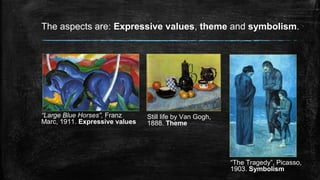
The aspects are: Expressive values, theme and symbolism.
“Large Blue Horses”, Franz
Marc, 1911. Expressive values
Still life by Van Gogh,
1888. Theme
“The Tragedy”, Picasso,
1903. Symbolism
6. What techniques have been used to create images
before photography was invented?
Before photography, the most common techniques for creating
images were drawing, painting and etching.
Head of an Infant.
Andrea de Sarto.
Circa 1523. Sanguine
Self portrait of Rembrandt.
Circa 1629. Oil on canvas
Bust of an old bearded man.
Rembrandt, 1631. Etching
6. Today, where do most of the visual messages that
we receive come from?
Today, most of the visual messages come from the press,
advertising, television and the internet.
8. From where do we receive “Mass Media” information?
From the press, advertising, television, the radio and the
internet.
9. What is the main aim of the use of images in advertising?
The main aim is to encourage the population to consume
products and buy services.
10. What is the main difference between television, the
cinema and video?
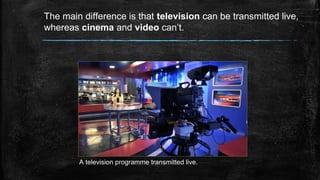
The main difference is that television can be transmitted live,
whereas cinema and video can’t.
A television programme transmitted live.
11. In a television studio, who is responsible for the budget
and the organization of a programme?
The Producer.
A Television Producer
12. What is the most powerful means of visual
communication today?
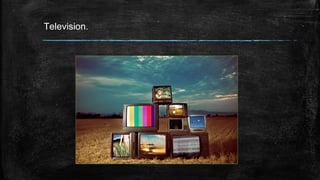
Television.
1st eso unit 2_quiz.docx

1st eso unit 2_quiz.docx

  • 1.
    Unit 2 Visualcommunication A game for creative people.
  • 2.
    1. What isvisual communication?
  • 3.
    Visual communication isthe exchange of messages through images.
  • 4.
    2. Which arethe basic elements of visual communication?
  • 5.
    The transmitter, receiver,message, code, channel and context. Transmitter Receiver Channel Context Message Code
  • 6.
    3. In visualcommunication, what are a symbol, a sign and a logo considered?
  • 7.
    They are consideredimages. “The Eye of Horus” An ancient Egyptian symbol A visual poem by Joan Brossa, 1984, Barcelona. The alphabet is a group of graphic signs. “The Olympic Rings” The logo of the Olympic Games
  • 8.
    4. What haveimages been used for throughout history?
  • 9.
    For informative, aesthetic,communicative and expressive purposes. Informative purpose Communicative purpose “Seated Man”, De Kooning, 1939. Expressive purpose Aesthetic purpose
  • 10.
    5. What aspectsof an image make up its meaning?
  • 11.
    The aspects are:Expressive values, theme and symbolism. “Large Blue Horses”, Franz Marc, 1911. Expressive values Still life by Van Gogh, 1888. Theme “The Tragedy”, Picasso, 1903. Symbolism
  • 12.
    6. What techniqueshave been used to create images before photography was invented?
  • 13.
    Before photography, themost common techniques for creating images were drawing, painting and etching. Head of an Infant. Andrea de Sarto. Circa 1523. Sanguine Self portrait of Rembrandt. Circa 1629. Oil on canvas Bust of an old bearded man. Rembrandt, 1631. Etching
  • 14.
    6. Today, wheredo most of the visual messages that we receive come from?
  • 15.
    Today, most ofthe visual messages come from the press, advertising, television and the internet.
  • 16.
    8. From wheredo we receive “Mass Media” information?
  • 17.
    From the press,advertising, television, the radio and the internet.
  • 18.
    9. What isthe main aim of the use of images in advertising?
  • 19.
    The main aimis to encourage the population to consume products and buy services.
  • 20.
    10. What isthe main difference between television, the cinema and video?
  • 21.
    The main differenceis that television can be transmitted live, whereas cinema and video can’t. A television programme transmitted live.
  • 22.
    11. In atelevision studio, who is responsible for the budget and the organization of a programme?
  • 23.
  • 24.
    12. What isthe most powerful means of visual communication today?
  • 25.