Visual Communication
1.- DEFINITION
VISUAL COMMUNICATION
IS A FORM OF COMMUNICATION
THAT USES VISUAL LANGUAGE TO
COMMUNICATE
VISUAL LANGUAGE IS MADE UP OF
ITS BASIC COMPONENTS WHICH ARE
DOTS, LINES, SHAPES, TEXTURES
AND COLORS
WITH ALL THESE ELEMENTS WE
CREATE IMAGES.
SO, WE CAN SAY THAT VISUAL
LANGUAGE USES IMAGES TO
COMMUNICATE.
VISUAL LENGUAGE is one of the most
important communication systems in our
world because everybody can understand
it, no matter what country they are from
or the language they speak.
IMAGES are everywhere to communicate
us some information: publicity, movies,
magazines, games…
2.- IMAGE AND ICONICITY
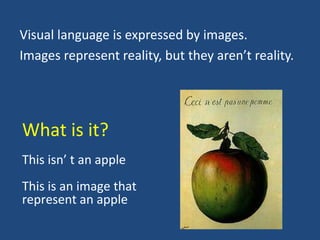
Visual language is expressed by images.
Images represent reality, but they aren’t reality.
What is it?
This isn’ t an apple
This is an image that
represent an apple
The similarity between an image and the reality
is called ICONICITY.
There are different degrees of iconicity,
depending on this similarity.
High degree of iconicity
Medium degree of iconicity
Low degree of iconicity
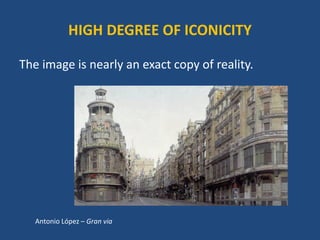
HIGH DEGREE OF ICONICITY
The image is nearly an exact copy of reality.
Antonio López – Gran via
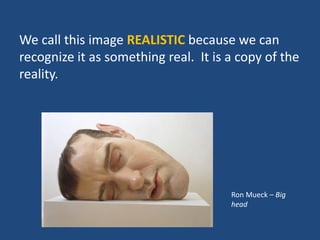
We call this image REALISTIC because we can
recognize it as something real. It is a copy of the
reality.
Ron Mueck – Big
head
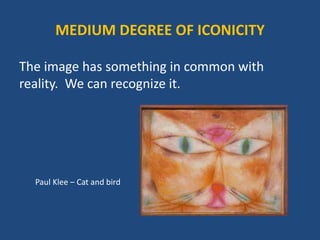
The image has something in common with
reality. We can recognize it.
Paul Klee – Cat and bird
MEDIUM DEGREE OF ICONICITY
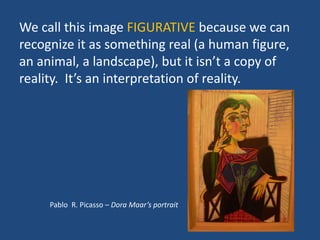
We call this image FIGURATIVE because we can
recognize it as something real (a human figure,
an animal, a landscape), but it isn’t a copy of
reality. It’s an interpretation of reality.
Pablo R. Picasso – Dora Maar’s portrait
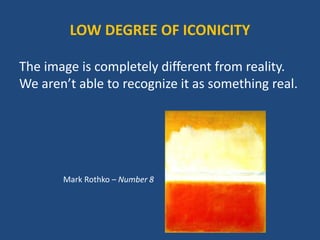
The image is completely different from reality.
We aren’t able to recognize it as something real.
Mark Rothko – Number 8
LOW DEGREE OF ICONICITY
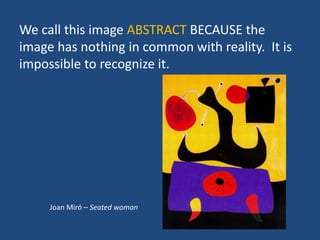
We call this image ABSTRACT BECAUSE the
image has nothing in common with reality. It is
impossible to recognize it.
Joan Miró – Seated woman
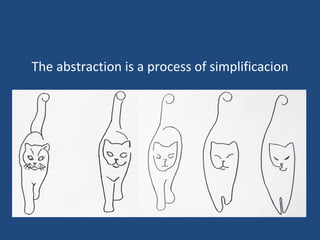
The abstraction is a process of simplificacion
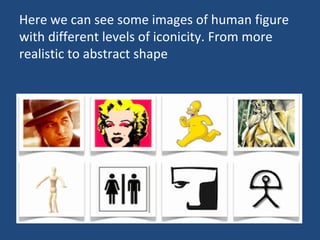
Here we can see some images of human figure
with different levels of iconicity. From more
realistic to abstract shape
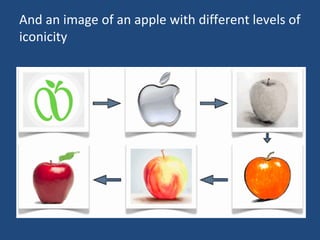
And an image of an apple with different levels of
iconicity

VISUAL LANGUAGE 2.pdf

  • 1.
  • 2.
  • 3.
    VISUAL COMMUNICATION IS AFORM OF COMMUNICATION THAT USES VISUAL LANGUAGE TO COMMUNICATE
  • 4.
    VISUAL LANGUAGE ISMADE UP OF ITS BASIC COMPONENTS WHICH ARE DOTS, LINES, SHAPES, TEXTURES AND COLORS
  • 5.
    WITH ALL THESEELEMENTS WE CREATE IMAGES. SO, WE CAN SAY THAT VISUAL LANGUAGE USES IMAGES TO COMMUNICATE.
  • 6.
    VISUAL LENGUAGE isone of the most important communication systems in our world because everybody can understand it, no matter what country they are from or the language they speak. IMAGES are everywhere to communicate us some information: publicity, movies, magazines, games…
  • 8.
    2.- IMAGE ANDICONICITY
  • 9.
    Visual language isexpressed by images. Images represent reality, but they aren’t reality. What is it? This isn’ t an apple This is an image that represent an apple
  • 10.
    The similarity betweenan image and the reality is called ICONICITY. There are different degrees of iconicity, depending on this similarity. High degree of iconicity Medium degree of iconicity Low degree of iconicity
  • 11.
    HIGH DEGREE OFICONICITY The image is nearly an exact copy of reality. Antonio López – Gran via
  • 12.
    We call thisimage REALISTIC because we can recognize it as something real. It is a copy of the reality. Ron Mueck – Big head
  • 13.
    The image hassomething in common with reality. We can recognize it. Paul Klee – Cat and bird MEDIUM DEGREE OF ICONICITY
  • 14.
    We call thisimage FIGURATIVE because we can recognize it as something real (a human figure, an animal, a landscape), but it isn’t a copy of reality. It’s an interpretation of reality. Pablo R. Picasso – Dora Maar’s portrait
  • 15.
    The image iscompletely different from reality. We aren’t able to recognize it as something real. Mark Rothko – Number 8 LOW DEGREE OF ICONICITY
  • 16.
    We call thisimage ABSTRACT BECAUSE the image has nothing in common with reality. It is impossible to recognize it. Joan Miró – Seated woman
  • 17.
    The abstraction isa process of simplificacion
  • 18.
    Here we cansee some images of human figure with different levels of iconicity. From more realistic to abstract shape
  • 19.
    And an imageof an apple with different levels of iconicity