
Course 6 (Sem. 2)
ASSESSMENT FOR
LEARNING
Module I: Fundamentals of Assessment
Unit I : Concept of Assessment
Presentation by: Prof. Janardan Mogare
Meaning:
Assessment is a process by which
information is obtained relative to
some known objective or goal.
Assessment is a broad term that
includes testing.
A test is a special form of
assessment.
Tests are assessments made under
contrived circumstances especially so
that they may be administered.
Assessment
In other words, all tests are
assessments, but not all assessments
are tests.
We test at the end of a lesson or
unit.
We assess progress at the end of a
school year through testing, and we
assess verbal and quantitative skills
Assessment
Definitions
Allen (2004):
Assessment involves the use of empirical data
on student learning to refine programs and improve
student learning.
Huba and Freed (2000):
Assessment is the process of gathering and
discussing information from multiple and diverse
sources in order to develop a deep understanding of
what students know, understand, and can do with
their knowledge as a result of their educational
experiences; the process culminates when assessment
results are used to improve subsequent learning.
Erwin (1991):
Assessment is the systematic basis for making
inferences about the learning and development of
students. It is the process of defining, selecting,
designing, collecting, analyzing, interpreting, and using
information to increase students’ learning and
development.
Palomba and Banta (1999):
Assessment is the systematic collection, review,
and use of information about educational programs
undertaken for the purpose of improving student
learning and development.
Nature of assessment
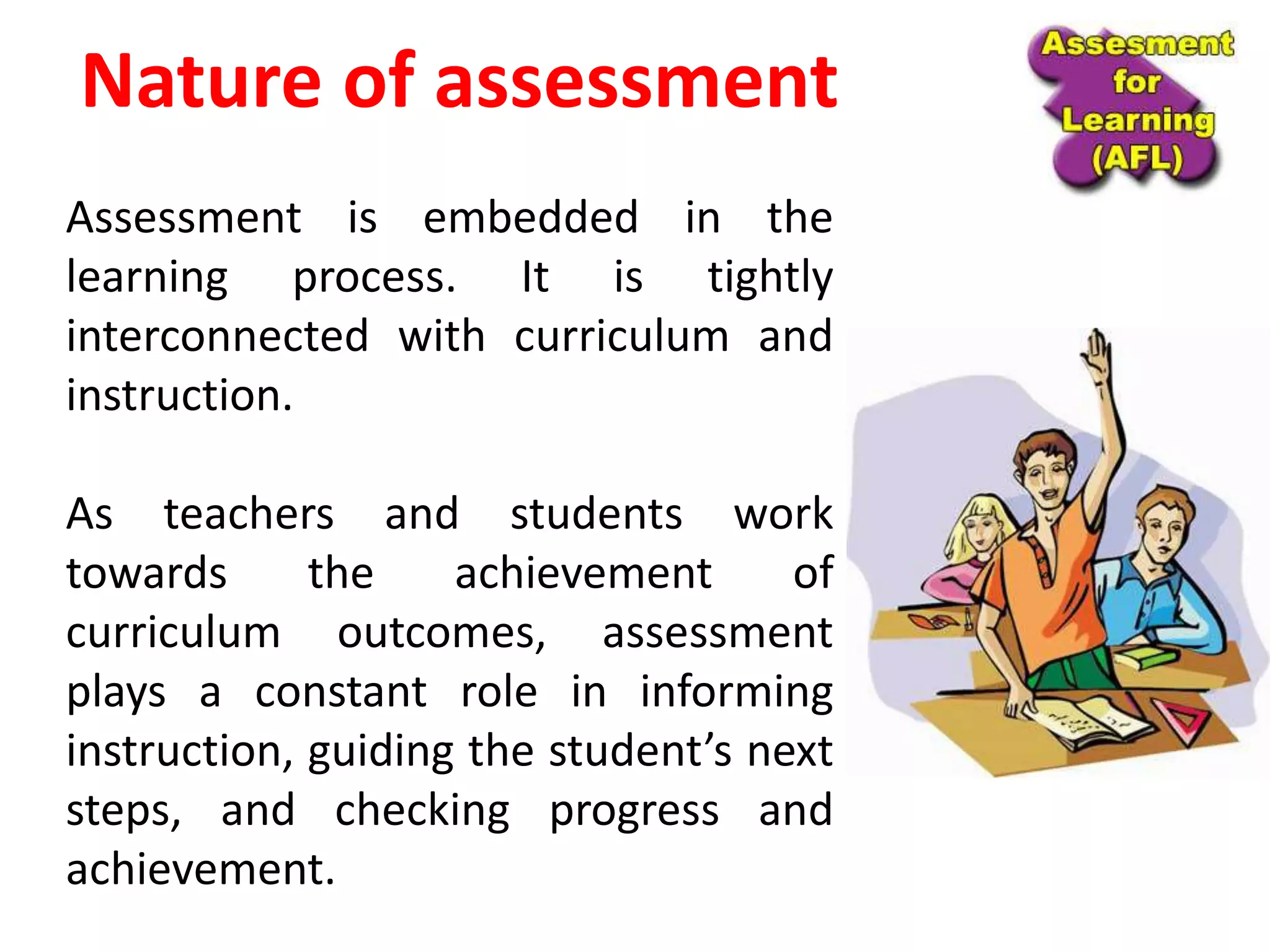
Assessment is embedded in the
learning process. It is tightly
interconnected with curriculum and
instruction.
As teachers and students work
towards the achievement of
curriculum outcomes, assessment
plays a constant role in informing
instruction, guiding the student’s next
steps, and checking progress and
achievement.
Nature of assessment
 Classroom assessment involves students and
teachers in continuous monitoring of students’
learning.
 It gives students a measure of their progress as
learners.
 It provides opportunity for close observation of
students in the process of learning.
 It helps in collection of frequent feedback on
students’ learning and how they respond to
particular teaching approaches.
 Assessment has profound impact on the self-
esteem of pupils, which is critical influence on
learning.
 Uses variety of strategies.
Thus ‘assessment’ includes all those activities
undertaken by teachers, and by their students
in assessing themselves, which provide
information to be used as feedback to modify
the teaching and learning activities in which
they are engaged.
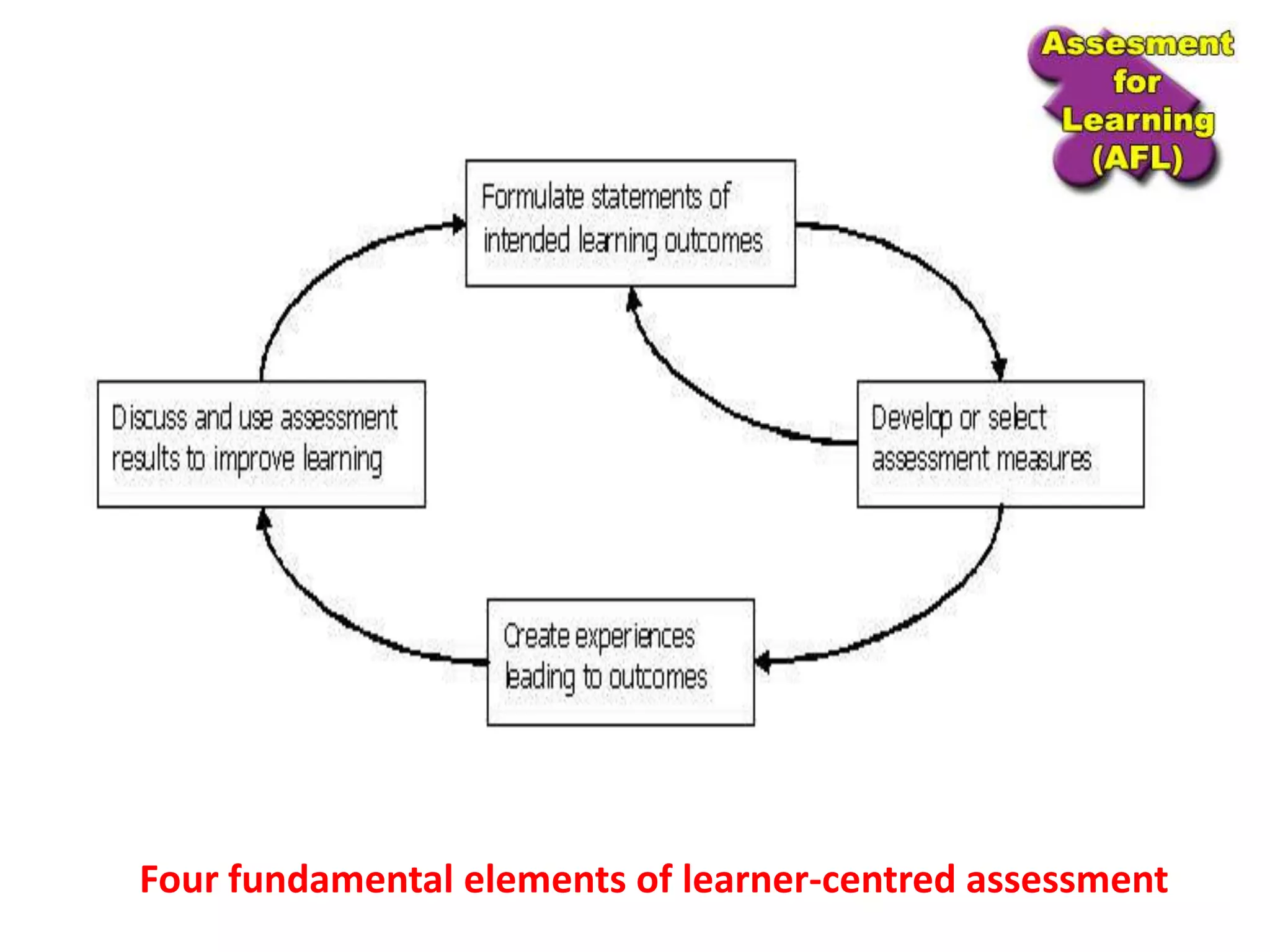
Four fundamental elements of learner-centred assessment
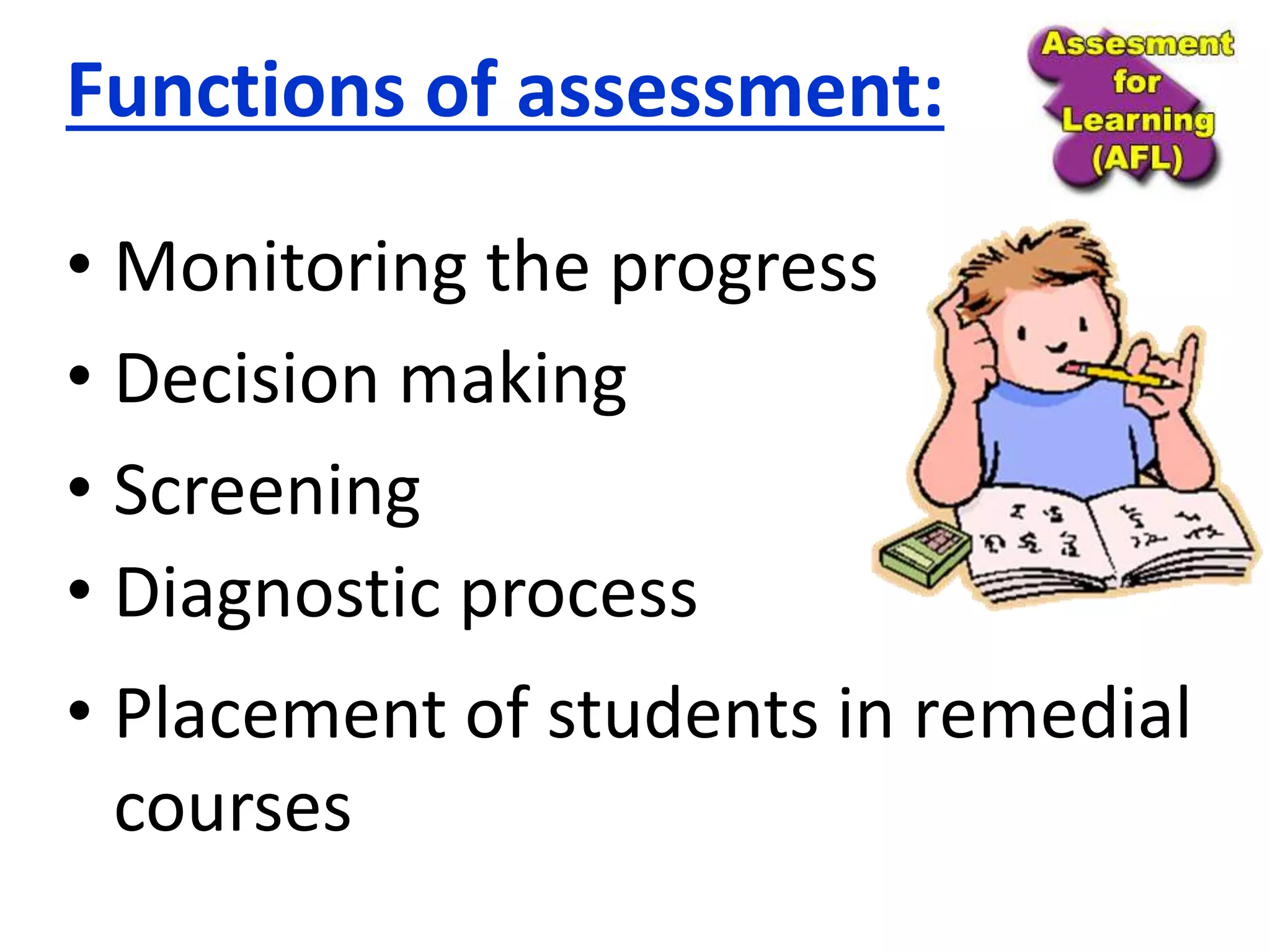
• Monitoring the progress
• Decision making
• Screening
• Diagnostic process
• Placement of students in remedial
courses
Functions of assessment:
• Instructional planning
• Evaluation of instructional
programme.
• Feedback
• Motivation
Functions of assessment:
Unit 1 a) Meaning nature and functions of Assessment

Unit 1 a) Meaning nature and functions of Assessment

  • 1.
    Course 6 (Sem.2) ASSESSMENT FOR LEARNING Module I: Fundamentals of Assessment Unit I : Concept of Assessment Presentation by: Prof. Janardan Mogare
  • 2.
    Meaning: Assessment is aprocess by which information is obtained relative to some known objective or goal. Assessment is a broad term that includes testing. A test is a special form of assessment. Tests are assessments made under contrived circumstances especially so that they may be administered. Assessment
  • 3.
    In other words,all tests are assessments, but not all assessments are tests. We test at the end of a lesson or unit. We assess progress at the end of a school year through testing, and we assess verbal and quantitative skills Assessment
  • 4.
    Definitions Allen (2004): Assessment involvesthe use of empirical data on student learning to refine programs and improve student learning. Huba and Freed (2000): Assessment is the process of gathering and discussing information from multiple and diverse sources in order to develop a deep understanding of what students know, understand, and can do with their knowledge as a result of their educational experiences; the process culminates when assessment results are used to improve subsequent learning.
  • 5.
    Erwin (1991): Assessment isthe systematic basis for making inferences about the learning and development of students. It is the process of defining, selecting, designing, collecting, analyzing, interpreting, and using information to increase students’ learning and development. Palomba and Banta (1999): Assessment is the systematic collection, review, and use of information about educational programs undertaken for the purpose of improving student learning and development.
  • 6.
    Nature of assessment Assessmentis embedded in the learning process. It is tightly interconnected with curriculum and instruction. As teachers and students work towards the achievement of curriculum outcomes, assessment plays a constant role in informing instruction, guiding the student’s next steps, and checking progress and achievement.
  • 7.
    Nature of assessment Classroom assessment involves students and teachers in continuous monitoring of students’ learning.  It gives students a measure of their progress as learners.  It provides opportunity for close observation of students in the process of learning.  It helps in collection of frequent feedback on students’ learning and how they respond to particular teaching approaches.  Assessment has profound impact on the self- esteem of pupils, which is critical influence on learning.  Uses variety of strategies.
  • 8.
    Thus ‘assessment’ includesall those activities undertaken by teachers, and by their students in assessing themselves, which provide information to be used as feedback to modify the teaching and learning activities in which they are engaged.
  • 9.
    Four fundamental elementsof learner-centred assessment
  • 10.
    • Monitoring theprogress • Decision making • Screening • Diagnostic process • Placement of students in remedial courses Functions of assessment:
  • 11.
    • Instructional planning •Evaluation of instructional programme. • Feedback • Motivation Functions of assessment: