Understanding Gluten Allergies & Celiac Diseaseby Digestive Health Ann Arbor
1 in 7 people in the US are allergic to gluten. (estimate)
But what is gluten? And what are allergies, really?
allergyal•ler•gy \"a-ler-je\ n, pl -giesthe immune system’s response to a protein usually found in a food - such as peanuts, eggs, wheat or milk - that crosses the gut wall. The body perceives this protein as a foreign body.
glutenglu•ten \"glüt-nGluten and gliadin are two proteins found in wheat, barley, and rye that give flour its elasticity and is also a popular food additive.Gluten is heavily used additive in baked goods, cereals, malt, caramel flavorings, and pastas. Gluten and gliadin can be found in cookies, breads, pastas, anything that uses flour and even certain types of alcohol.
Click herefor a detailed list of foods containing gluten and gliadin
What is Gluten Sensitivity, Gluten Intolerance & Celiac Disease?
“A delayed allergic response to the proteins gluten and gliadin.”This allergic reaction inflames the small intestine, the effects of which can be felt throughout the entire body.
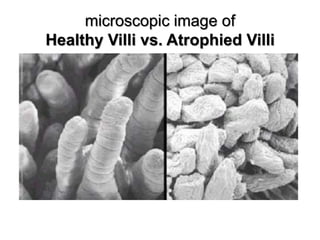
Over time, this inflammation causes the villi, which line the small intestines, to atrophy. The villi look like shag carpetingandare primarily responsible for nutrient absorption.
microscopic image ofHealthy Villi vs. Atrophied Villi
If the villi deteriorate, the body is challenged to absorb nutrients. When the villi are severely compromised,  Gluten Intolerance becomes Celiac Disease.
Therefore, Gluten Intolerance &Celiac Disease are the same illness, differing only in severity.
Gluten Sensitivity or Intolerance is often misdiagnosedor not diagnosed at all because most doctors test only for Celiac Disease.
That means that even if you ARE Gluten Intolerant you might NOT test positivefor Celiac disease.
SURPRISE!this may surprise you, but,60% of people with a gluten allergy DO NOT have digestive problems.This is why it is so important to be aware of other potential symptoms and talk with your health care provider if you have any concerns.
The good news is that the treatments for Celiac Disease and Gluten Intolerance are the same – eliminate all gluten from your diet
Warning Signs of Gluten Intolerance & Celiac DiseaseDiarrhea, flatulence, bloating, constipation, nausea, vomitingCrohn's disease, Ulcerative Colitis (IBD) & Irritable Bowel Syndrome (IBS)Tingling in the extremities, Alzheimer's, Parkinson's and even epilepsyImplicated in autoimmune conditions such as Rheumatoid Arthritis, Lupus and Type I Diabetes among othersFrequent headaches or migrainesFibromyalgia, bone and joint painPsoriasis and other skin disorders
Warning Signs of Gluten Intolerance & Celiac DiseaseChronic fatigueInterstitial cystitisAbnormal menses, infertility, miscarriageImplicated in neurological disorders such as unexplained numbness & tingling in the extremitiesMouth ulcers, are a clear sign of an exhausted immune system. Gradual weight change
Important Things to KnowDiscovering and treating gluten intolerance early is extremely important.A Gluten Intolerance is usually left undiagnosed until most people are 50 years old or older.	If not diagnosed until 10 years old, there is a 1 in 4 chance of developing an autoimmune disorder like Rheumatoid Arthritis, Hachimoto's Thyroidistis, Parksinson's Disease or lupus.Implicated in dental enamel defects, lower neo-natal weight in children, shorter life span, osteoporosis, schizophrenia, depression, & A.D.D.
Where to go from here?: TestingComprehensive 96 food allergy panelblood test checks for allergic reactions to gluten, gliadin, wheat, rye and barley AND other secondary food allergies that can result from Leaky Gut Syndrome
There are other blood tests available that can screen for Celiac disease as well as other aspects of gluten intolerance.Your journey of healing begins todayCall (734) 222-8210 to schedule a free consultation & evaluation

Understanding Gluten Allergies & Celiac Disease

  • 1.
    Understanding Gluten Allergies& Celiac Diseaseby Digestive Health Ann Arbor
  • 2.
    1 in 7people in the US are allergic to gluten. (estimate)
  • 3.
    But what isgluten? And what are allergies, really?
  • 4.
    allergyal•ler•gy \"a-ler-je\ n,pl -giesthe immune system’s response to a protein usually found in a food - such as peanuts, eggs, wheat or milk - that crosses the gut wall. The body perceives this protein as a foreign body.
  • 5.
    glutenglu•ten \"glüt-nGluten andgliadin are two proteins found in wheat, barley, and rye that give flour its elasticity and is also a popular food additive.Gluten is heavily used additive in baked goods, cereals, malt, caramel flavorings, and pastas. Gluten and gliadin can be found in cookies, breads, pastas, anything that uses flour and even certain types of alcohol.
  • 6.
    Click herefor adetailed list of foods containing gluten and gliadin
  • 7.
    What is GlutenSensitivity, Gluten Intolerance & Celiac Disease?
  • 8.
    “A delayed allergicresponse to the proteins gluten and gliadin.”This allergic reaction inflames the small intestine, the effects of which can be felt throughout the entire body.
  • 9.
    Over time, thisinflammation causes the villi, which line the small intestines, to atrophy. The villi look like shag carpetingandare primarily responsible for nutrient absorption.
  • 10.
    microscopic image ofHealthyVilli vs. Atrophied Villi
  • 11.
    If the villideteriorate, the body is challenged to absorb nutrients. When the villi are severely compromised, Gluten Intolerance becomes Celiac Disease.
  • 12.
    Therefore, Gluten Intolerance&Celiac Disease are the same illness, differing only in severity.
  • 13.
    Gluten Sensitivity orIntolerance is often misdiagnosedor not diagnosed at all because most doctors test only for Celiac Disease.
  • 14.
    That means thateven if you ARE Gluten Intolerant you might NOT test positivefor Celiac disease.
  • 15.
    SURPRISE!this may surpriseyou, but,60% of people with a gluten allergy DO NOT have digestive problems.This is why it is so important to be aware of other potential symptoms and talk with your health care provider if you have any concerns.
  • 16.
    The good newsis that the treatments for Celiac Disease and Gluten Intolerance are the same – eliminate all gluten from your diet
  • 17.
    Warning Signs ofGluten Intolerance & Celiac DiseaseDiarrhea, flatulence, bloating, constipation, nausea, vomitingCrohn's disease, Ulcerative Colitis (IBD) & Irritable Bowel Syndrome (IBS)Tingling in the extremities, Alzheimer's, Parkinson's and even epilepsyImplicated in autoimmune conditions such as Rheumatoid Arthritis, Lupus and Type I Diabetes among othersFrequent headaches or migrainesFibromyalgia, bone and joint painPsoriasis and other skin disorders
  • 18.
    Warning Signs ofGluten Intolerance & Celiac DiseaseChronic fatigueInterstitial cystitisAbnormal menses, infertility, miscarriageImplicated in neurological disorders such as unexplained numbness & tingling in the extremitiesMouth ulcers, are a clear sign of an exhausted immune system. Gradual weight change
  • 19.
    Important Things toKnowDiscovering and treating gluten intolerance early is extremely important.A Gluten Intolerance is usually left undiagnosed until most people are 50 years old or older. If not diagnosed until 10 years old, there is a 1 in 4 chance of developing an autoimmune disorder like Rheumatoid Arthritis, Hachimoto's Thyroidistis, Parksinson's Disease or lupus.Implicated in dental enamel defects, lower neo-natal weight in children, shorter life span, osteoporosis, schizophrenia, depression, & A.D.D.
  • 20.
    Where to gofrom here?: TestingComprehensive 96 food allergy panelblood test checks for allergic reactions to gluten, gliadin, wheat, rye and barley AND other secondary food allergies that can result from Leaky Gut Syndrome
  • 21.
    There are otherblood tests available that can screen for Celiac disease as well as other aspects of gluten intolerance.Your journey of healing begins todayCall (734) 222-8210 to schedule a free consultation & evaluation