Understanding Cholera:
Epidemiology, Prevention, and
Control
Cholera is a severe and potentially life-threatening diarrheal disease caused by the bacterium Vibrio cholerae.
Despite significant advances in modern medicine and public health, cholera outbreaks continue to pose a significant
threat, particularly in developing regions with limited access to clean water and sanitation. This comprehensive
presentation aims to provide a deep understanding of the epidemiology, prevention, and control strategies for this
global health challenge.
by Sasikiran Marri
Introduction to Cholera
Cholera is an ancient disease that has been recorded throughout history, with the first known pandemic occurring in
the early 19th century. The disease has had a devastating impact, causing millions of deaths worldwide.
Understanding the historical context and the ongoing burden of cholera is crucial in recognizing the importance of
addressing this public health issue.
Cholera is characterized by severe, watery diarrhea that can lead to rapid dehydration and, if left untreated, can be
fatal. The disease is primarily transmitted through the ingestion of contaminated water or food, making it a clear
indicator of inadequate access to safe water and sanitation infrastructure.
Epidemiology of Cholera
Global Distribution
Cholera is endemic in many
parts of the world, particularly in
areas with poor sanitation and
limited access to clean water.
The disease is most prevalent in
sub-Saharan Africa, South Asia,
and parts of the Middle East,
where it can cause sporadic
outbreaks and epidemics.
Risk Factors
Factors that contribute to the
spread of cholera include
inadequate access to safe water,
poor hygiene and sanitation
practices, overcrowding, and
natural disasters that disrupt
water and sanitation systems.
These factors are often
exacerbated in impoverished and
conflict-affected regions.
High-Risk Populations
Certain populations are at a
higher risk of contracting
cholera, including children, the
elderly, and individuals with
weakened immune systems.
These groups are more
vulnerable to the severe
dehydration and complications
associated with the disease.
Transmission of Cholera
1 Contaminated Water
The primary mode of cholera transmission is through the ingestion of contaminated water, such as
from unprotected water sources, inadequately treated drinking water, or water used for food
preparation.
2 Contaminated Food
Cholera can also be transmitted through the consumption of contaminated food, particularly raw or
undercooked seafood, fruits, and vegetables that have been grown or washed in contaminated
water.
3 Person-to-Person
In some cases, cholera can be transmitted from person to person, particularly in overcrowded
settings with poor hygiene and sanitation practices. This is primarily due to the fecal-oral route of
transmission.
Incubation and Symptoms
Incubation Period
The incubation period for cholera is typically
short, ranging from a few hours to 5 days, with
most cases occurring within 2-3 days after
exposure. This rapid onset of symptoms
underscores the importance of early detection and
treatment.
Common Symptoms
The primary symptom of cholera is severe, watery
diarrhea that can lead to rapid and severe
dehydration. Other symptoms include vomiting,
muscle cramps, and in some cases, a distinctive
"rice water" appearance of the stool.
Severity
While cholera can be life-threatening, particularly
in untreated cases, the majority of infected
individuals experience mild or moderate
symptoms. Prompt rehydration and treatment can
significantly reduce the risk of complications and
mortality.
Early Detection
Early recognition of cholera symptoms and rapid
initiation of treatment are crucial in preventing the
progression to severe dehydration and potential
death. Healthcare providers play a vital role in
educating communities and promoting early
detection.
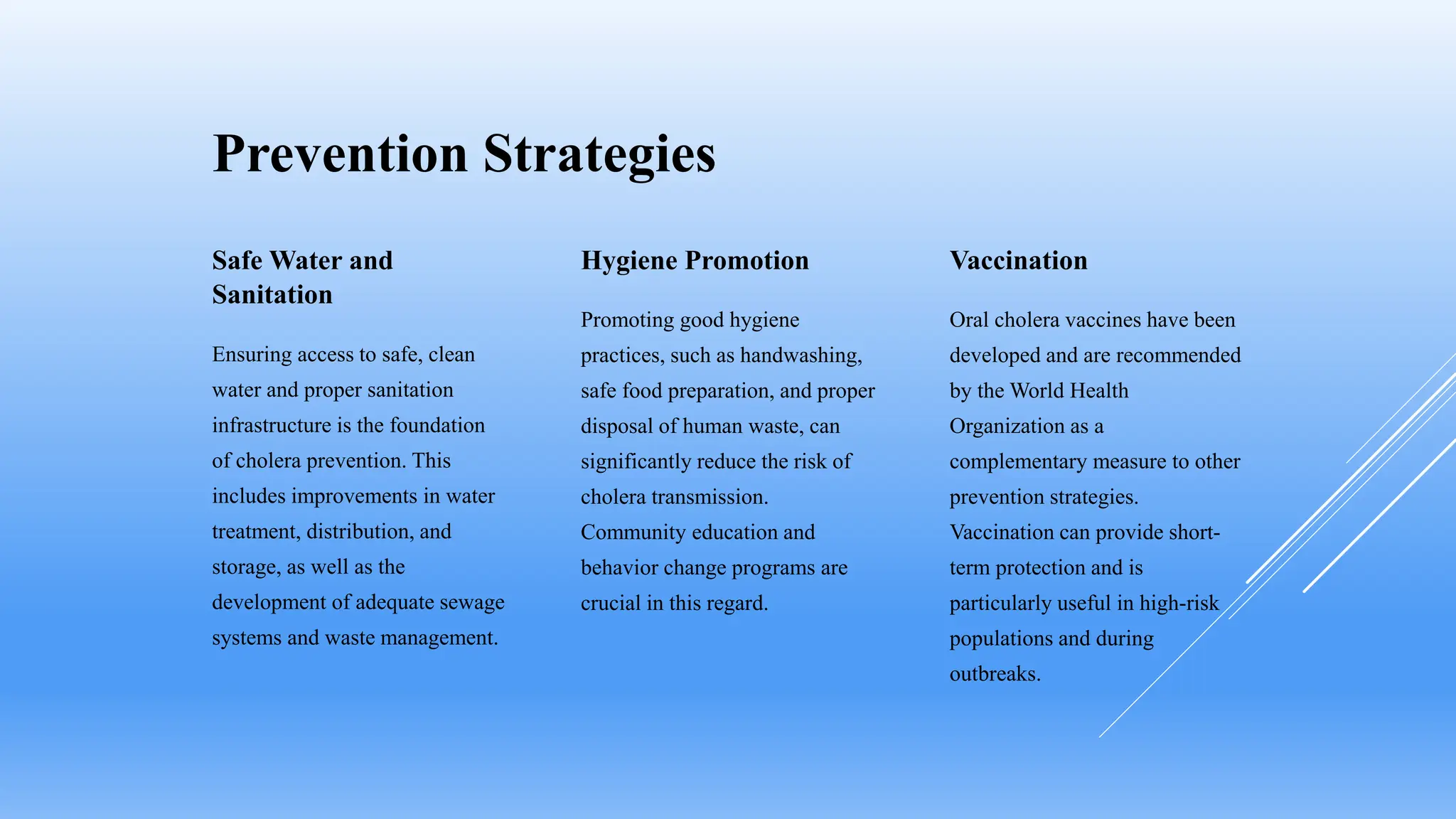
Prevention Strategies
Safe Water and
Sanitation
Ensuring access to safe, clean
water and proper sanitation
infrastructure is the foundation
of cholera prevention. This
includes improvements in water
treatment, distribution, and
storage, as well as the
development of adequate sewage
systems and waste management.
Hygiene Promotion
Promoting good hygiene
practices, such as handwashing,
safe food preparation, and proper
disposal of human waste, can
significantly reduce the risk of
cholera transmission.
Community education and
behavior change programs are
crucial in this regard.
Vaccination
Oral cholera vaccines have been
developed and are recommended
by the World Health
Organization as a
complementary measure to other
prevention strategies.
Vaccination can provide short-
term protection and is
particularly useful in high-risk
populations and during
outbreaks.
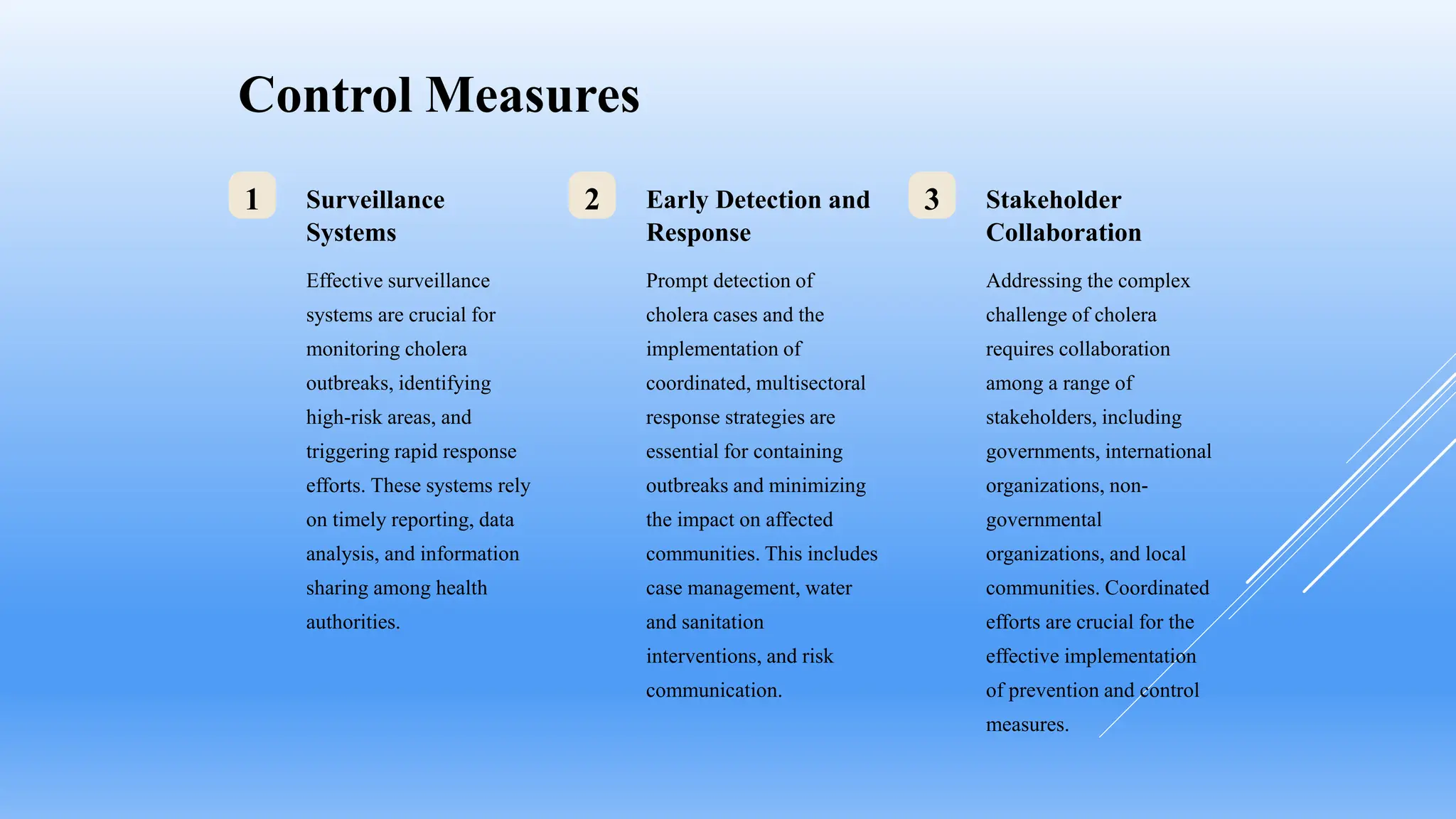
Control Measures
1 Surveillance
Systems
Effective surveillance
systems are crucial for
monitoring cholera
outbreaks, identifying
high-risk areas, and
triggering rapid response
efforts. These systems rely
on timely reporting, data
analysis, and information
sharing among health
authorities.
2 Early Detection and
Response
Prompt detection of
cholera cases and the
implementation of
coordinated, multisectoral
response strategies are
essential for containing
outbreaks and minimizing
the impact on affected
communities. This includes
case management, water
and sanitation
interventions, and risk
communication.
3 Stakeholder
Collaboration
Addressing the complex
challenge of cholera
requires collaboration
among a range of
stakeholders, including
governments, international
organizations, non-
governmental
organizations, and local
communities. Coordinated
efforts are crucial for the
effective implementation
of prevention and control
measures.
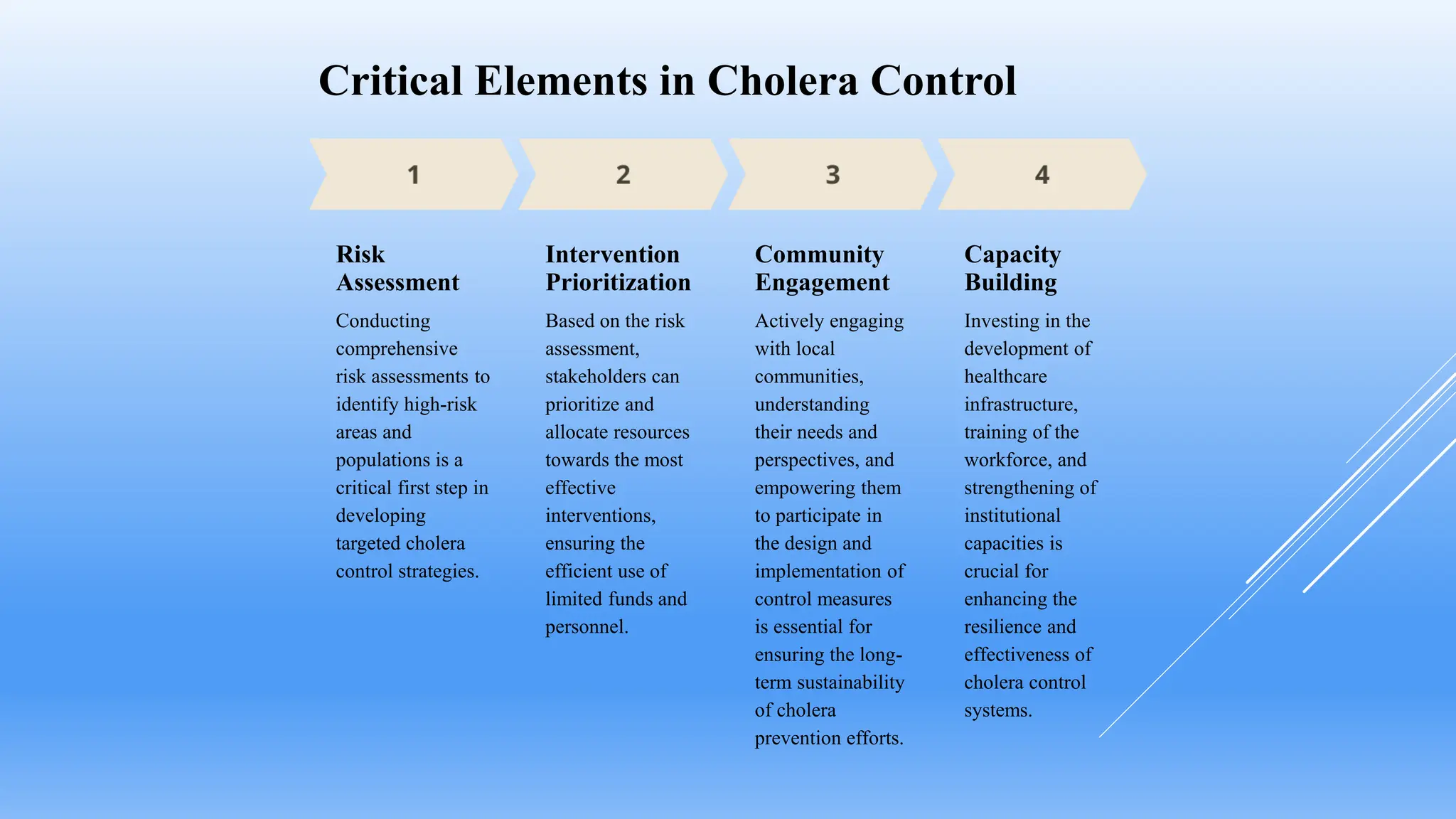
Critical Elements in Cholera Control
Risk
Assessment
Conducting
comprehensive
risk assessments to
identify high-risk
areas and
populations is a
critical first step in
developing
targeted cholera
control strategies.
Intervention
Prioritization
Based on the risk
assessment,
stakeholders can
prioritize and
allocate resources
towards the most
effective
interventions,
ensuring the
efficient use of
limited funds and
personnel.
Community
Engagement
Actively engaging
with local
communities,
understanding
their needs and
perspectives, and
empowering them
to participate in
the design and
implementation of
control measures
is essential for
ensuring the long-
term sustainability
of cholera
prevention efforts.
Capacity
Building
Investing in the
development of
healthcare
infrastructure,
training of the
workforce, and
strengthening of
institutional
capacities is
crucial for
enhancing the
resilience and
effectiveness of
cholera control
systems.
WHO Guidelines for Cholera Control
Surveillance
The World Health
Organization (WHO)
recommends the
establishment of robust
surveillance systems to
monitor cholera trends,
detect outbreaks, and
trigger timely response
efforts.
Case Management
WHO guidelines
emphasize the
importance of early
detection and prompt
treatment of cholera
cases, focusing on
rehydration therapy and
the appropriate use of
antibiotics.
Water and
Sanitation
The WHO highlights the
critical role of
improving access to safe
water, adequate
sanitation, and proper
hygiene practices as the
foundation for
sustainable cholera
control.
Outbreak
Response
The WHO guidelines
provide a framework for
coordinating
multisectoral efforts to
rapidly contain cholera
outbreaks, minimizing
the impact on affected
communities.
Conclusion and Call to Action
Cholera remains a significant global health challenge, particularly in regions with limited access to safe water,
sanitation, and healthcare. However, with a comprehensive approach that combines epidemiological understanding,
prevention strategies, and effective control measures, we can make significant strides in reducing the burden of this
devastating disease.
By working together, healthcare professionals, policymakers, and communities can drive progress in cholera
control. This includes strengthening surveillance systems, improving water and sanitation infrastructure, promoting
hygiene practices, and ensuring the availability of lifesaving treatments. Through sustained and coordinated efforts,
we can save lives, protect vulnerable populations, and build a healthier, more resilient world.

Understanding Cholera: Epidemiology, Prevention, and Control.pdf

  • 1.
    Understanding Cholera: Epidemiology, Prevention,and Control Cholera is a severe and potentially life-threatening diarrheal disease caused by the bacterium Vibrio cholerae. Despite significant advances in modern medicine and public health, cholera outbreaks continue to pose a significant threat, particularly in developing regions with limited access to clean water and sanitation. This comprehensive presentation aims to provide a deep understanding of the epidemiology, prevention, and control strategies for this global health challenge. by Sasikiran Marri
  • 2.
    Introduction to Cholera Cholerais an ancient disease that has been recorded throughout history, with the first known pandemic occurring in the early 19th century. The disease has had a devastating impact, causing millions of deaths worldwide. Understanding the historical context and the ongoing burden of cholera is crucial in recognizing the importance of addressing this public health issue. Cholera is characterized by severe, watery diarrhea that can lead to rapid dehydration and, if left untreated, can be fatal. The disease is primarily transmitted through the ingestion of contaminated water or food, making it a clear indicator of inadequate access to safe water and sanitation infrastructure.
  • 3.
    Epidemiology of Cholera GlobalDistribution Cholera is endemic in many parts of the world, particularly in areas with poor sanitation and limited access to clean water. The disease is most prevalent in sub-Saharan Africa, South Asia, and parts of the Middle East, where it can cause sporadic outbreaks and epidemics. Risk Factors Factors that contribute to the spread of cholera include inadequate access to safe water, poor hygiene and sanitation practices, overcrowding, and natural disasters that disrupt water and sanitation systems. These factors are often exacerbated in impoverished and conflict-affected regions. High-Risk Populations Certain populations are at a higher risk of contracting cholera, including children, the elderly, and individuals with weakened immune systems. These groups are more vulnerable to the severe dehydration and complications associated with the disease.
  • 4.
    Transmission of Cholera 1Contaminated Water The primary mode of cholera transmission is through the ingestion of contaminated water, such as from unprotected water sources, inadequately treated drinking water, or water used for food preparation. 2 Contaminated Food Cholera can also be transmitted through the consumption of contaminated food, particularly raw or undercooked seafood, fruits, and vegetables that have been grown or washed in contaminated water. 3 Person-to-Person In some cases, cholera can be transmitted from person to person, particularly in overcrowded settings with poor hygiene and sanitation practices. This is primarily due to the fecal-oral route of transmission.
  • 5.
    Incubation and Symptoms IncubationPeriod The incubation period for cholera is typically short, ranging from a few hours to 5 days, with most cases occurring within 2-3 days after exposure. This rapid onset of symptoms underscores the importance of early detection and treatment. Common Symptoms The primary symptom of cholera is severe, watery diarrhea that can lead to rapid and severe dehydration. Other symptoms include vomiting, muscle cramps, and in some cases, a distinctive "rice water" appearance of the stool. Severity While cholera can be life-threatening, particularly in untreated cases, the majority of infected individuals experience mild or moderate symptoms. Prompt rehydration and treatment can significantly reduce the risk of complications and mortality. Early Detection Early recognition of cholera symptoms and rapid initiation of treatment are crucial in preventing the progression to severe dehydration and potential death. Healthcare providers play a vital role in educating communities and promoting early detection.
  • 6.
    Prevention Strategies Safe Waterand Sanitation Ensuring access to safe, clean water and proper sanitation infrastructure is the foundation of cholera prevention. This includes improvements in water treatment, distribution, and storage, as well as the development of adequate sewage systems and waste management. Hygiene Promotion Promoting good hygiene practices, such as handwashing, safe food preparation, and proper disposal of human waste, can significantly reduce the risk of cholera transmission. Community education and behavior change programs are crucial in this regard. Vaccination Oral cholera vaccines have been developed and are recommended by the World Health Organization as a complementary measure to other prevention strategies. Vaccination can provide short- term protection and is particularly useful in high-risk populations and during outbreaks.
  • 7.
    Control Measures 1 Surveillance Systems Effectivesurveillance systems are crucial for monitoring cholera outbreaks, identifying high-risk areas, and triggering rapid response efforts. These systems rely on timely reporting, data analysis, and information sharing among health authorities. 2 Early Detection and Response Prompt detection of cholera cases and the implementation of coordinated, multisectoral response strategies are essential for containing outbreaks and minimizing the impact on affected communities. This includes case management, water and sanitation interventions, and risk communication. 3 Stakeholder Collaboration Addressing the complex challenge of cholera requires collaboration among a range of stakeholders, including governments, international organizations, non- governmental organizations, and local communities. Coordinated efforts are crucial for the effective implementation of prevention and control measures.
  • 8.
    Critical Elements inCholera Control Risk Assessment Conducting comprehensive risk assessments to identify high-risk areas and populations is a critical first step in developing targeted cholera control strategies. Intervention Prioritization Based on the risk assessment, stakeholders can prioritize and allocate resources towards the most effective interventions, ensuring the efficient use of limited funds and personnel. Community Engagement Actively engaging with local communities, understanding their needs and perspectives, and empowering them to participate in the design and implementation of control measures is essential for ensuring the long- term sustainability of cholera prevention efforts. Capacity Building Investing in the development of healthcare infrastructure, training of the workforce, and strengthening of institutional capacities is crucial for enhancing the resilience and effectiveness of cholera control systems.
  • 9.
    WHO Guidelines forCholera Control Surveillance The World Health Organization (WHO) recommends the establishment of robust surveillance systems to monitor cholera trends, detect outbreaks, and trigger timely response efforts. Case Management WHO guidelines emphasize the importance of early detection and prompt treatment of cholera cases, focusing on rehydration therapy and the appropriate use of antibiotics. Water and Sanitation The WHO highlights the critical role of improving access to safe water, adequate sanitation, and proper hygiene practices as the foundation for sustainable cholera control. Outbreak Response The WHO guidelines provide a framework for coordinating multisectoral efforts to rapidly contain cholera outbreaks, minimizing the impact on affected communities.
  • 10.
    Conclusion and Callto Action Cholera remains a significant global health challenge, particularly in regions with limited access to safe water, sanitation, and healthcare. However, with a comprehensive approach that combines epidemiological understanding, prevention strategies, and effective control measures, we can make significant strides in reducing the burden of this devastating disease. By working together, healthcare professionals, policymakers, and communities can drive progress in cholera control. This includes strengthening surveillance systems, improving water and sanitation infrastructure, promoting hygiene practices, and ensuring the availability of lifesaving treatments. Through sustained and coordinated efforts, we can save lives, protect vulnerable populations, and build a healthier, more resilient world.